 © Zakqary RoyCC BY 4.0 · iNaturalist
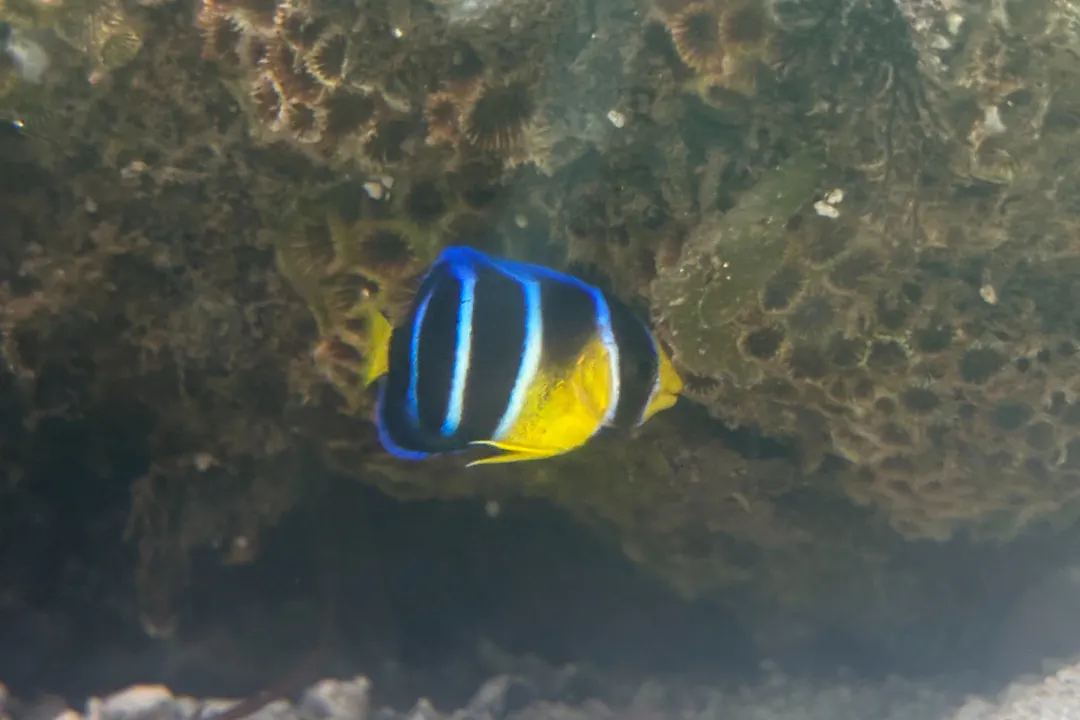
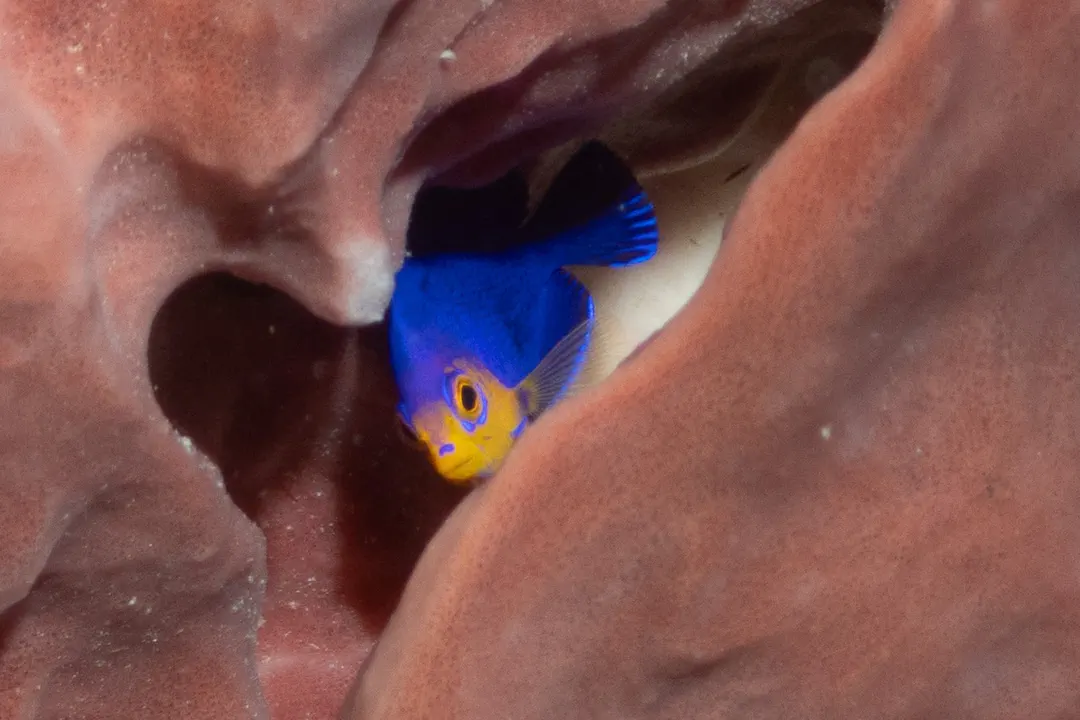
Bermuda Blue Angelfish (juvenile)
Holacanthus bermudensis
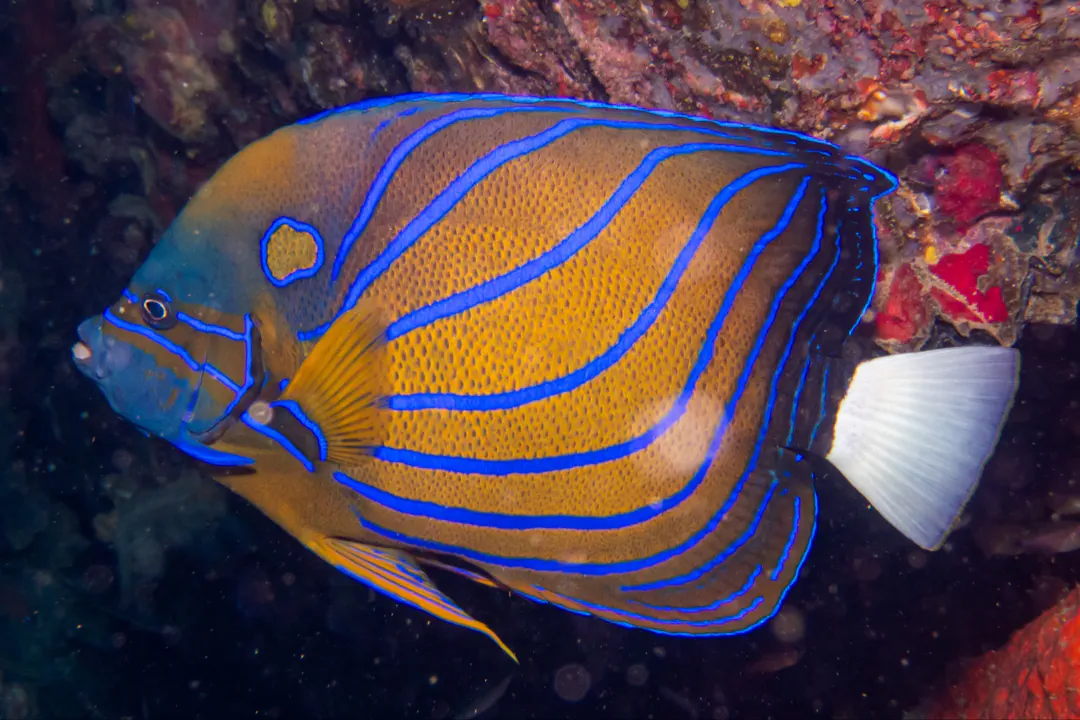
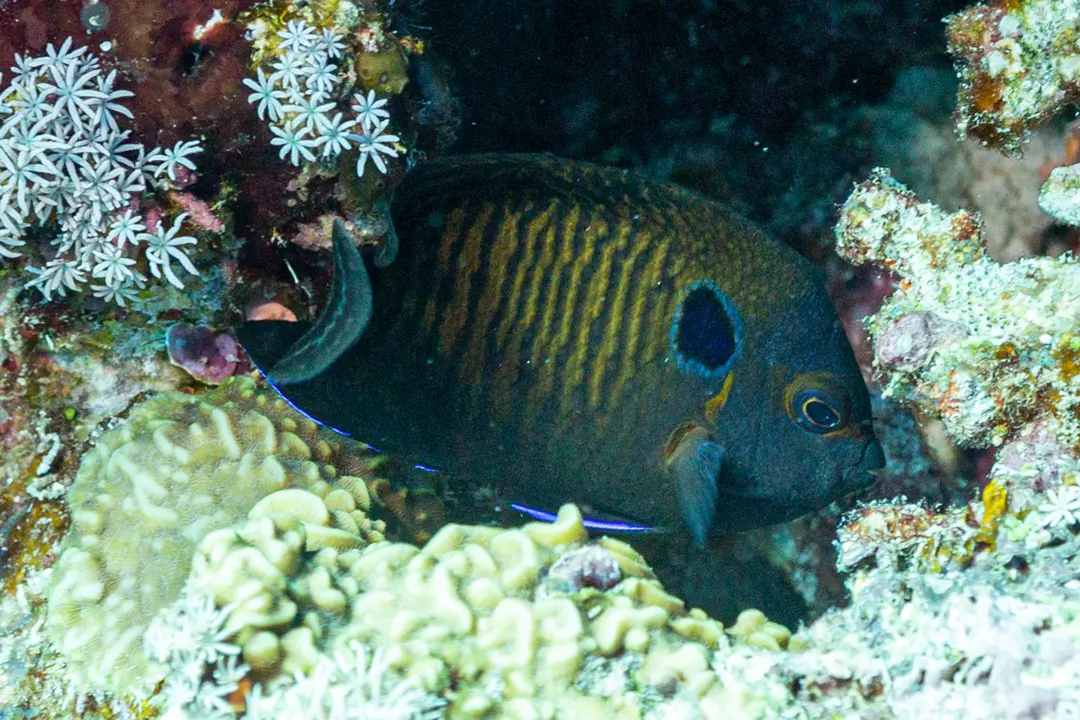
Pomacanthus annularis
Pomacanthus annularis is an angelfish of the family Pomacanthidae, found in the Indo-West Pacific oceans from East Africa, throughout Indonesia and New Guinea to New Caledonia, north to southern Japan.
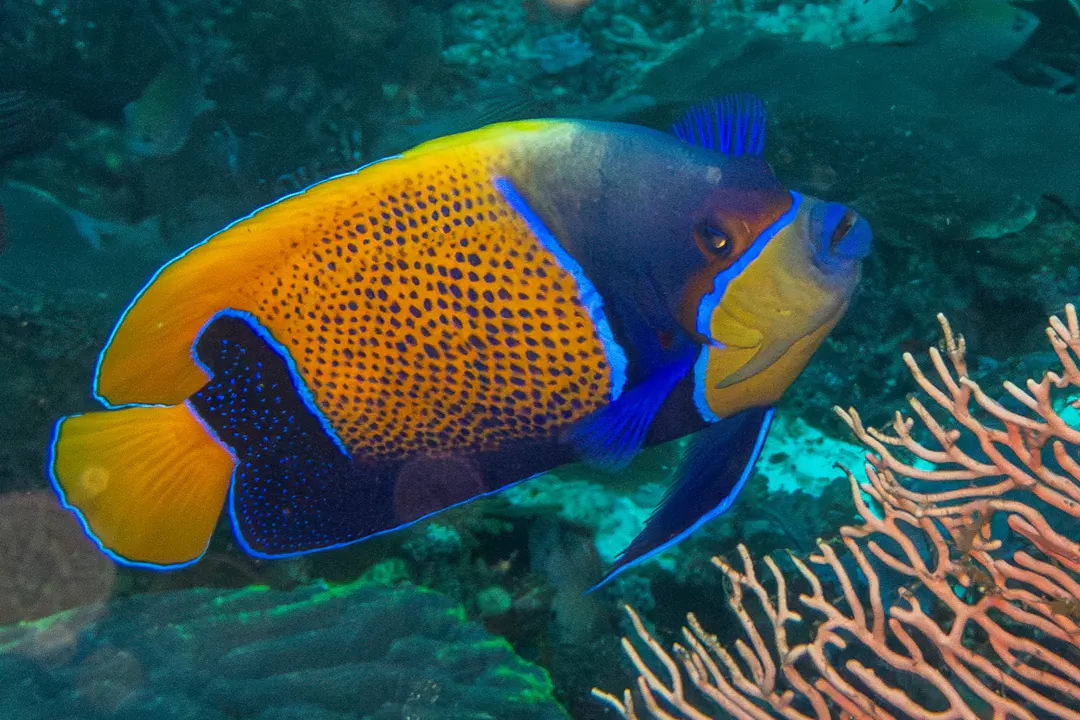
Pomacanthus annularis can reach a body length of about 45 cm (18 in), but usually the total body length get up to about 30 cm (12 in). Bodies are deeply compressed and the mouth is quite small. They have 13 dorsal spines, 20-21 dorsal soft rays, 3 anal spines and 20 anal soft rays. Adults of the blue ring angelfish exhibit a dark orange to brown or violet coloring with a blue ring near their head (hence the common name) and blue horizontal semicircular marks on the middle of the body. Two blue stripes cross the face. The caudal fin is white. Juveniles of the blue ring angelfishes are at first a dark blue, almost black, with broad turquoise and white vertical stripes. These fishes show a considerable resemblance to the Emperor Angelfish in that it undergoes changes in coloring in its development from youth to maturity.
This species can be found in the Indo-West Pacific oceans from East Africa, throughout Indonesia and New Guinea to New Caledonia, north to southern Japan.
These tropical marine fishes inhabits coastal rocky coral reefs and may be also encountered in caves or on wrecks, at depths of 3–30 m.
Blue ring angelfishes are frequently encountered in pairs. Similarly to other species of the genus Pomacanthus these angelfishes live in harem, as the male defends a territory and controls a few females. After a courtship ritual males and females release eggs and sperm. At the beginning of life all juveniles are females (protogynous hermaphrodites), becoming males during the development, with a complete color variation from the juvenile to adult stage. Juveniles prefer very shallow waters with rock or dead coral substrates and short filamentous algae. Adults mainly feed on zooplankton, sponges, filamentous algae and tunicates.
It is highly sought after and prized member of the Pomacanthus genus, composed of large marine angelfish. Blue ring angelfish can reach up to 12 inches in the wild and often obtain lengths near that in captivity.
In the aquarium blue ring angelfish are algae grazers but consume fish and coral flesh as well. They are known to eat shrimps and nibble on both large polyped stony and small polyped stony corals. Overall most seasoned reef aquarists do not recommend keeping this species in a reef aquarium due to these habits.
© Zakqary RoyCC BY 4.0 · iNaturalist 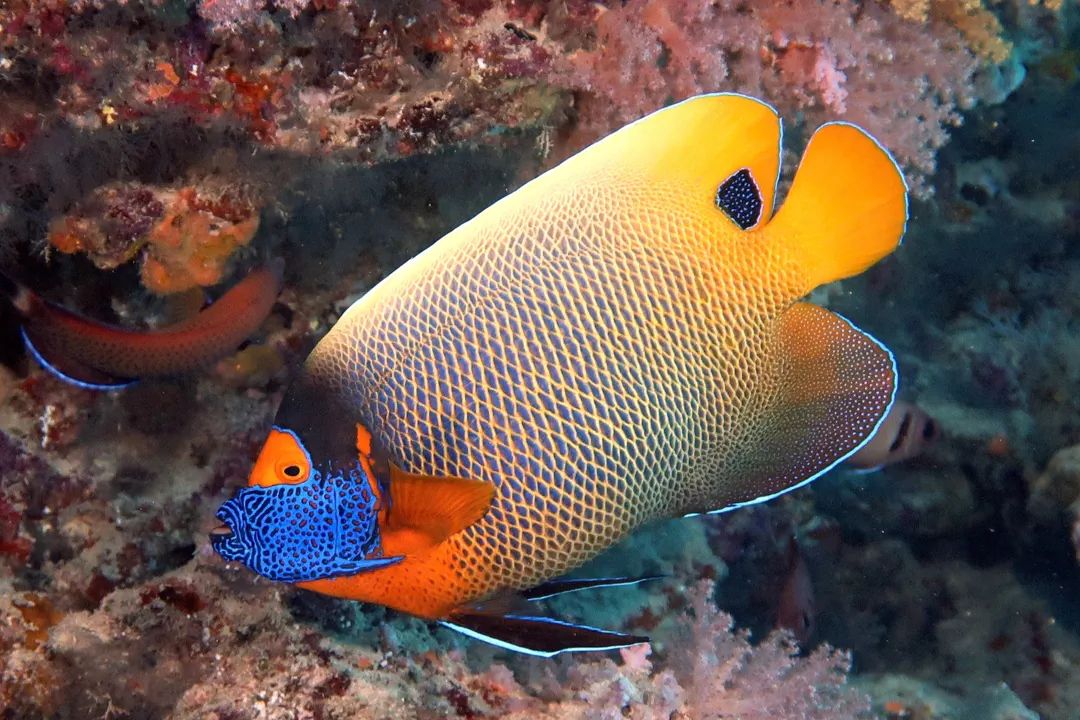 © Daniel BenákCC BY 4.0 · iNaturalist
  © Piotr LukasikCC BY 4.0 · iNaturalist
  © R VasconcellosCC BY 4.0 · iNaturalist
  Justin PhilboisCC0 · iNaturalist
  © Alberto AlcaláCC BY 4.0 · iNaturalist
 Bluering Angelfish has no known danger to humans. However, always observe marine life responsibly.
Bluering Angelfish can be found at depths of up to 60 meters.
Download Seabook free for iOS and Android.