 © Zakqary RoyCC BY 4.0 · iNaturalist
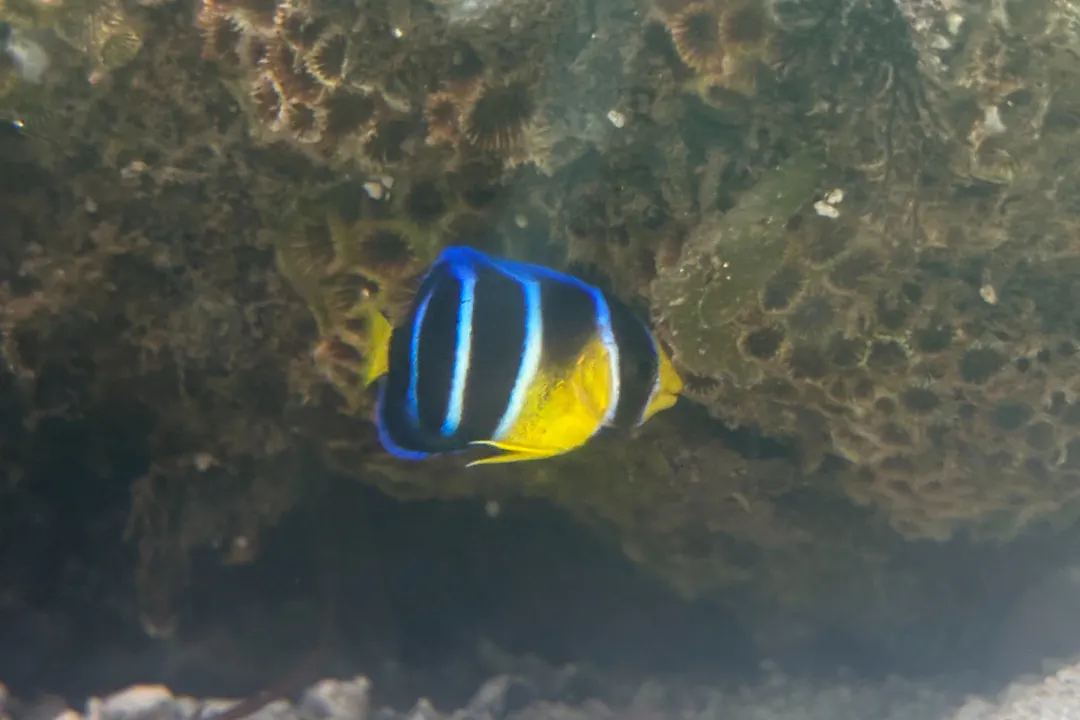
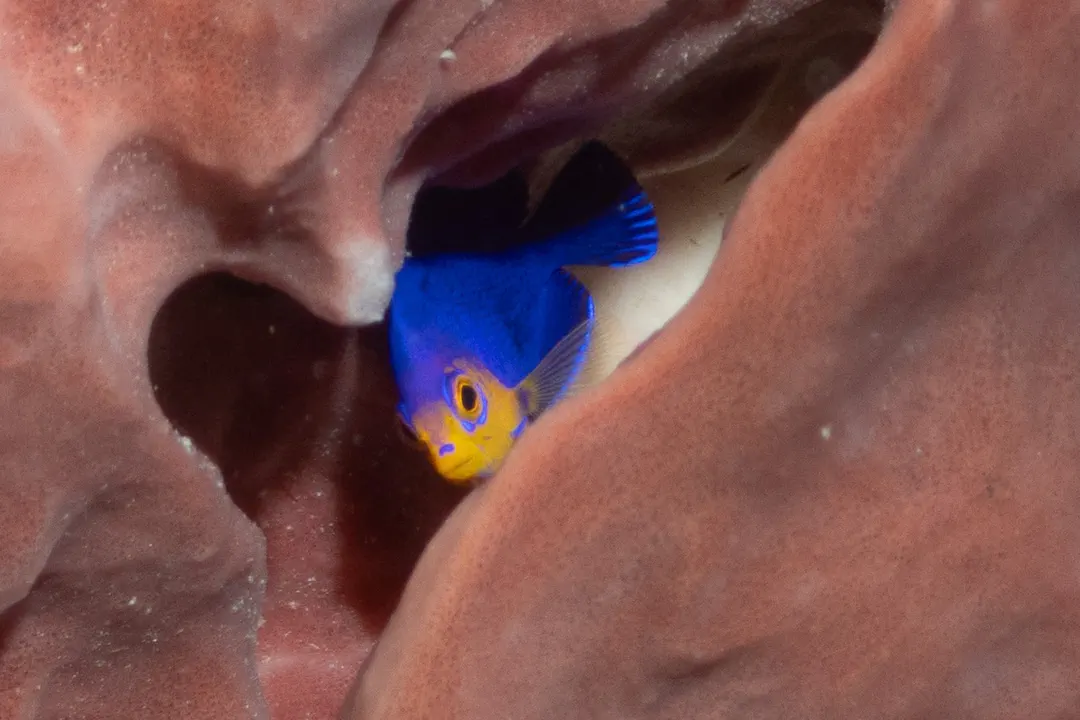
Bermuda Blue Angelfish (juvenile)
Holacanthus bermudensis
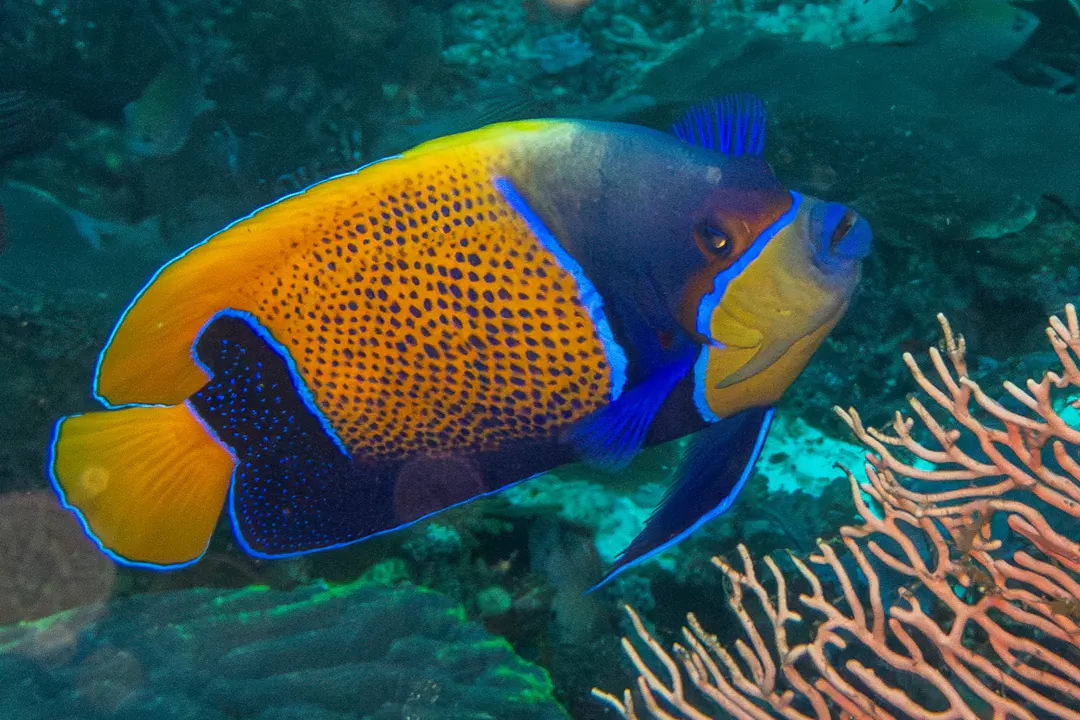
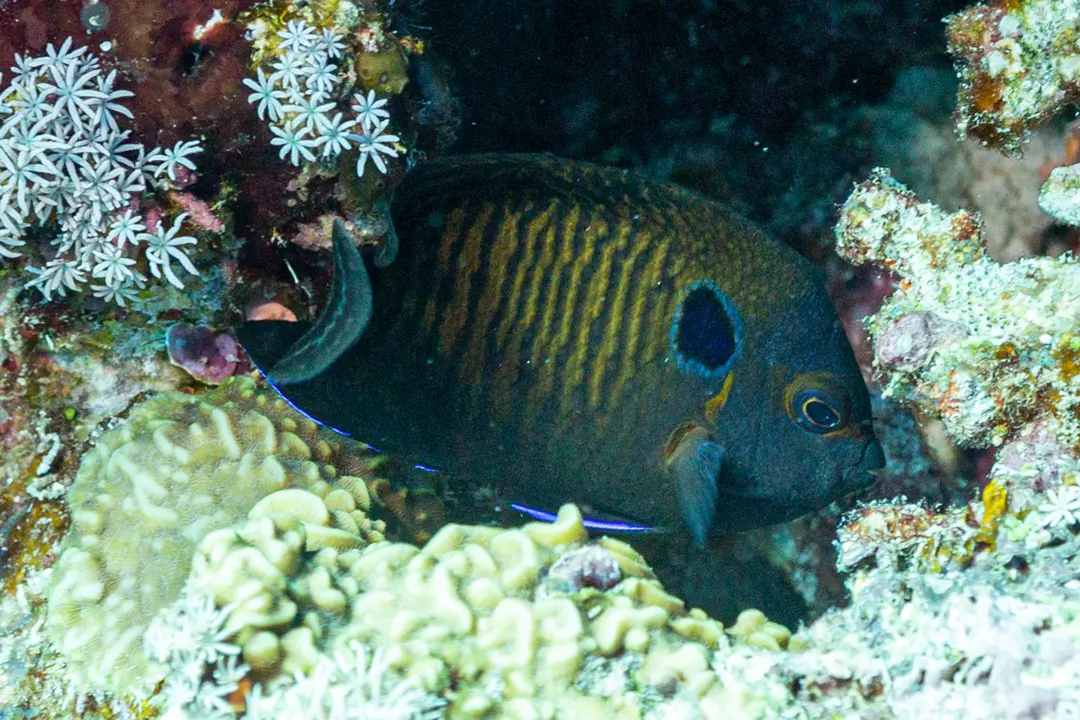
Pomacanthus navarchus
Pomacanthus navarchus is a marine angelfish from the Indo-Pacific ocean as well as some parts of the east Indian Ocean. The is one of the smallest of the larger species of angelfish. It occasionally makes its way into the aquarium trade.
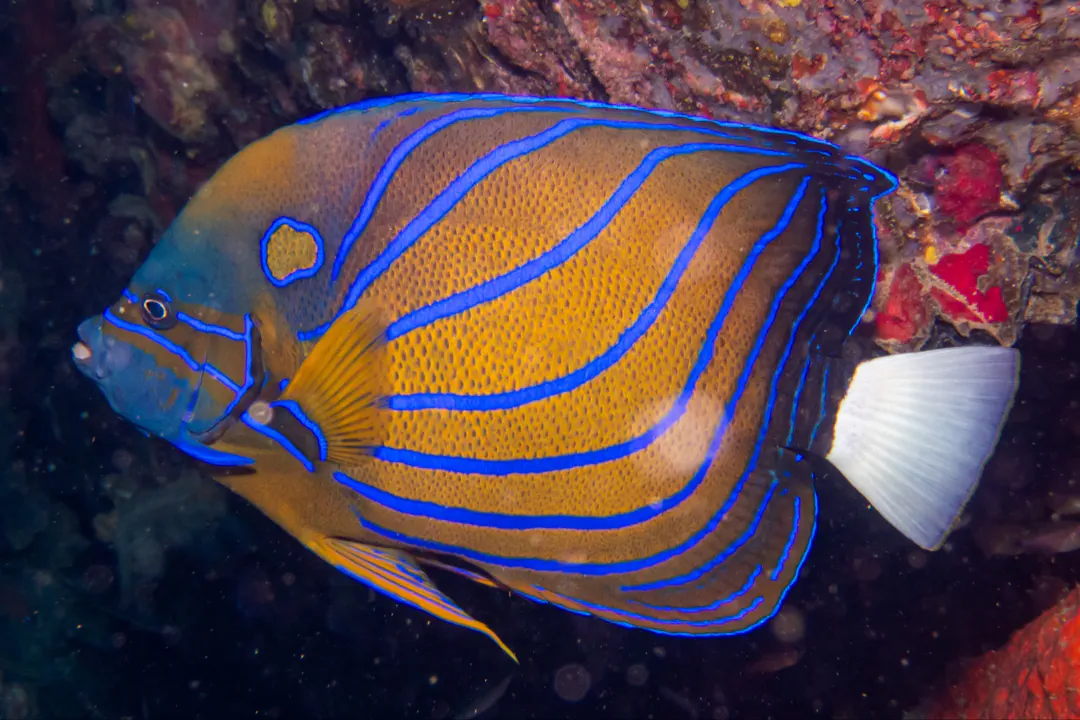
The body of this fish is laterally flattened. Adult fish have three main colored sections; the anterior section in front of the eyes and the front part of the body is lemon yellow; the central section is funnel-shaped and is deep blue, and the posterior section is reticulated in bright yellow and blue. The sections are separated by pale blue bands edged with black. The mouth and lips are blue as are the rays of the pectoral and anal fins, while the dorsal and caudal fins are yellow, edged with pale blue. There is a long spine on the gill cover which is used in defence. Juvenile fish are dark blue with slightly curved, white lateral stripes. The change from the juvenile to the adult coloring takes place quite abruptly, with little intermediate coloring. It grows to a size of 41 centimetres (16 in) in length, but usually much smaller, and can live to be up to 21 years old.
Pomacanthus navarchus is native to the tropical Indo-Pacific region, its range extending from Indonesia and the Philippines to northern and eastern Australia and Micronesia. It can be found at depths down to about 40 m (130 ft) on outer reef slopes, channels and lagoons in coral-rich habitats. Juveniles stay closer to the shallows, but the more mature fish can be found up to 120 feet (37 m) deep. It eats mainly sponges and tunicates.
This species is territorial and is generally found alone, but occasionally in pairs or small groups. It inhabits the demersal zone, feeding on sponges, algae, tunicates, zooplankton and small invertebrates. It is a protandric hermaphrodite, starting adult life as a female and later becoming a male.
© Zakqary RoyCC BY 4.0 · iNaturalist 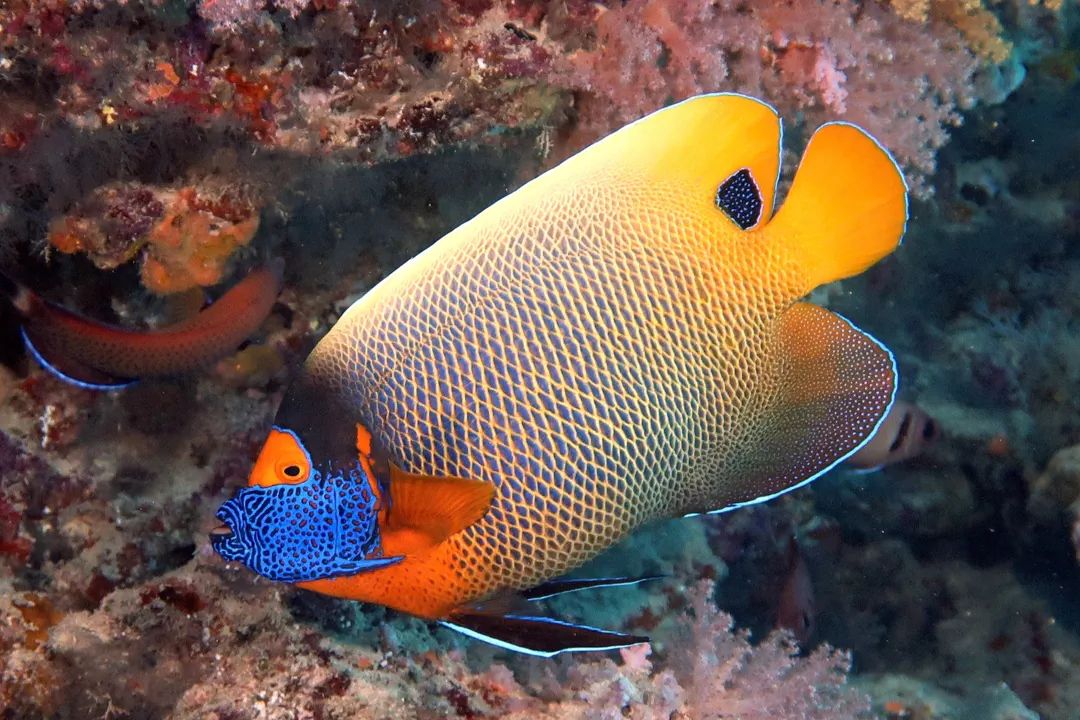 © Daniel BenákCC BY 4.0 · iNaturalist
  © portioidCC BY 4.0 · iNaturalist
  © R VasconcellosCC BY 4.0 · iNaturalist
  Justin PhilboisCC0 · iNaturalist
  © Alberto AlcaláCC BY 4.0 · iNaturalist
 Bluegirdled angelfish has no known danger to humans. However, always observe marine life responsibly.
Bluegirdled angelfish can be found at depths of up to 40 meters.
Download Seabook free for iOS and Android.