 © Zakqary RoyCC BY 4.0 · iNaturalist
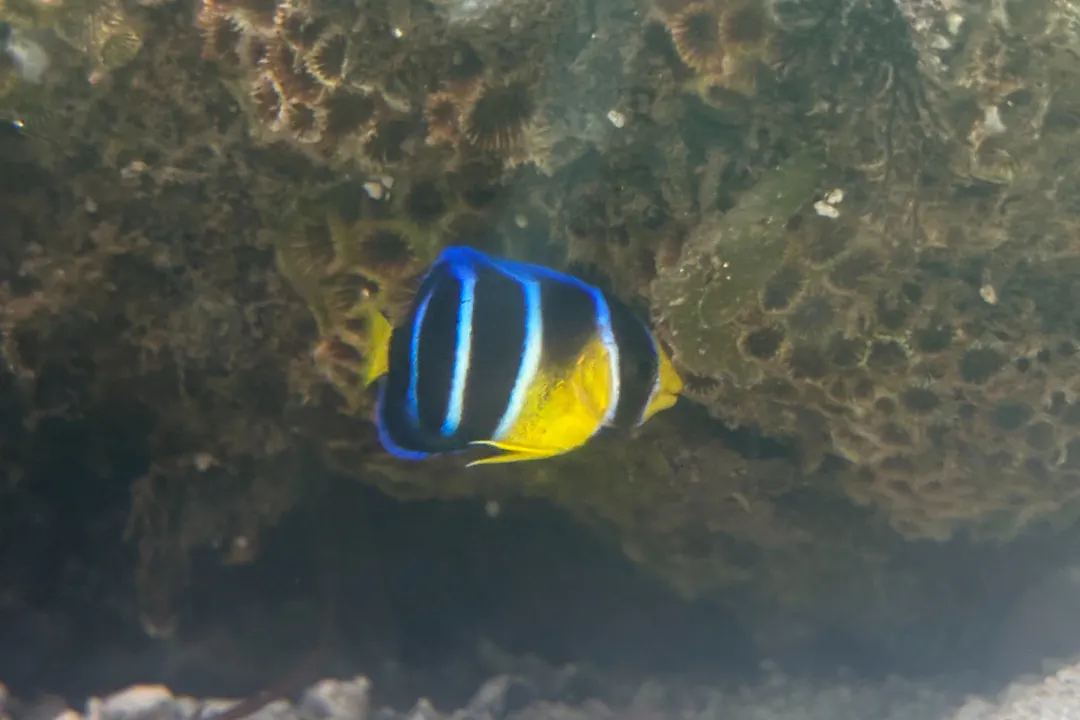
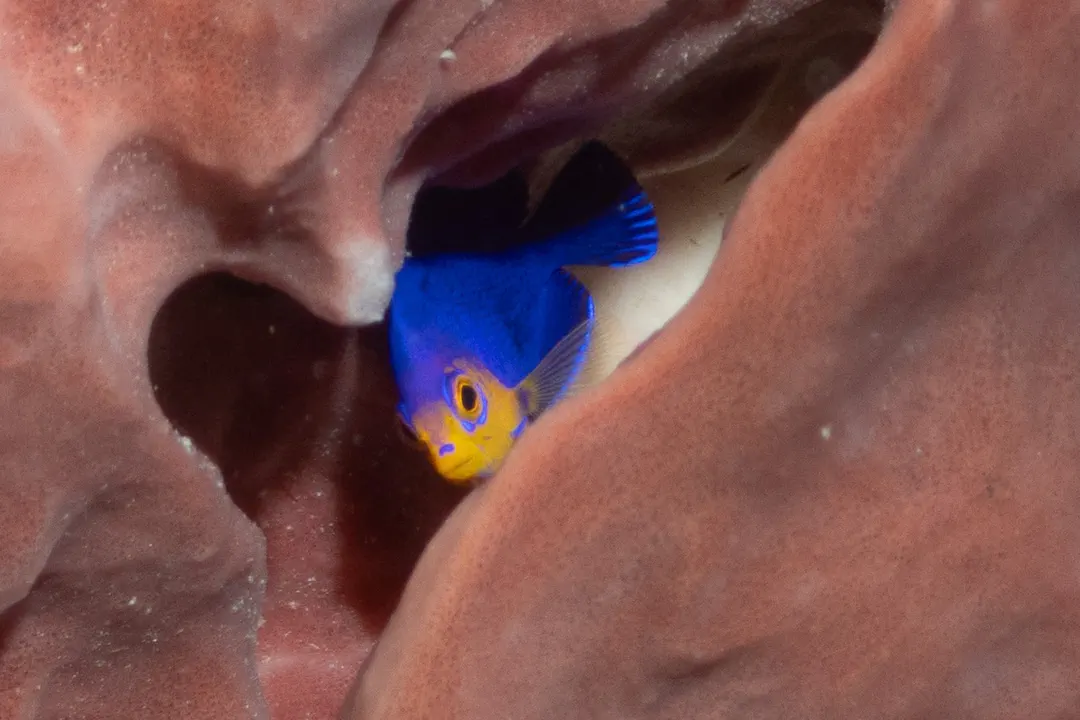
Bermuda Blue Angelfish (juvenile)
Holacanthus bermudensis
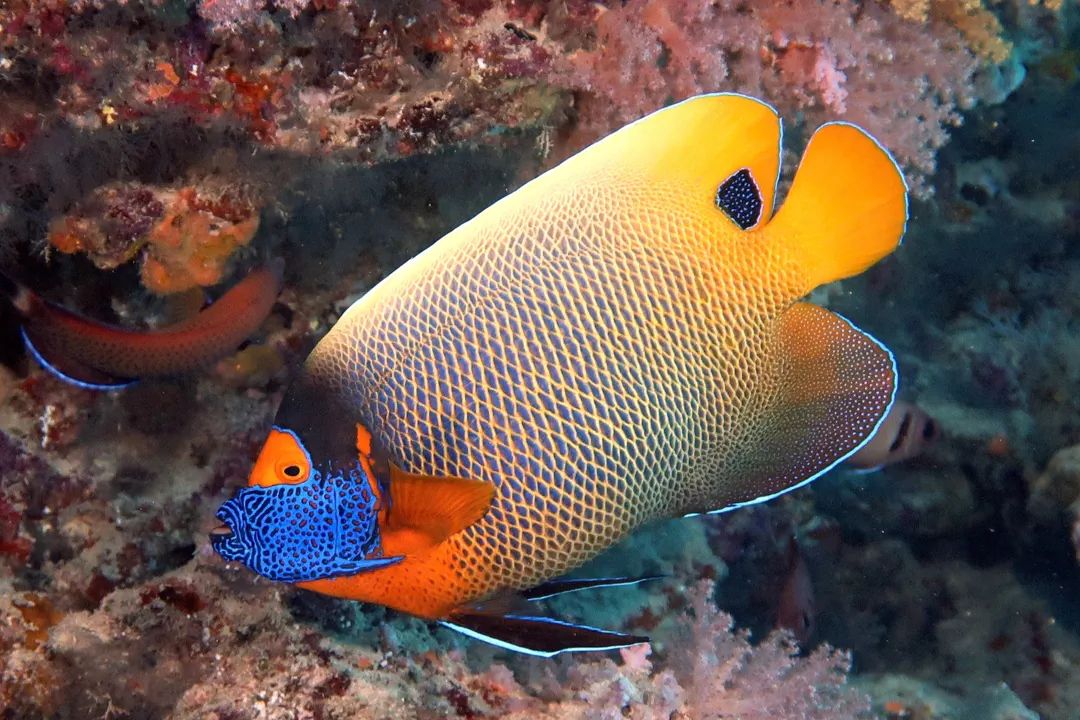
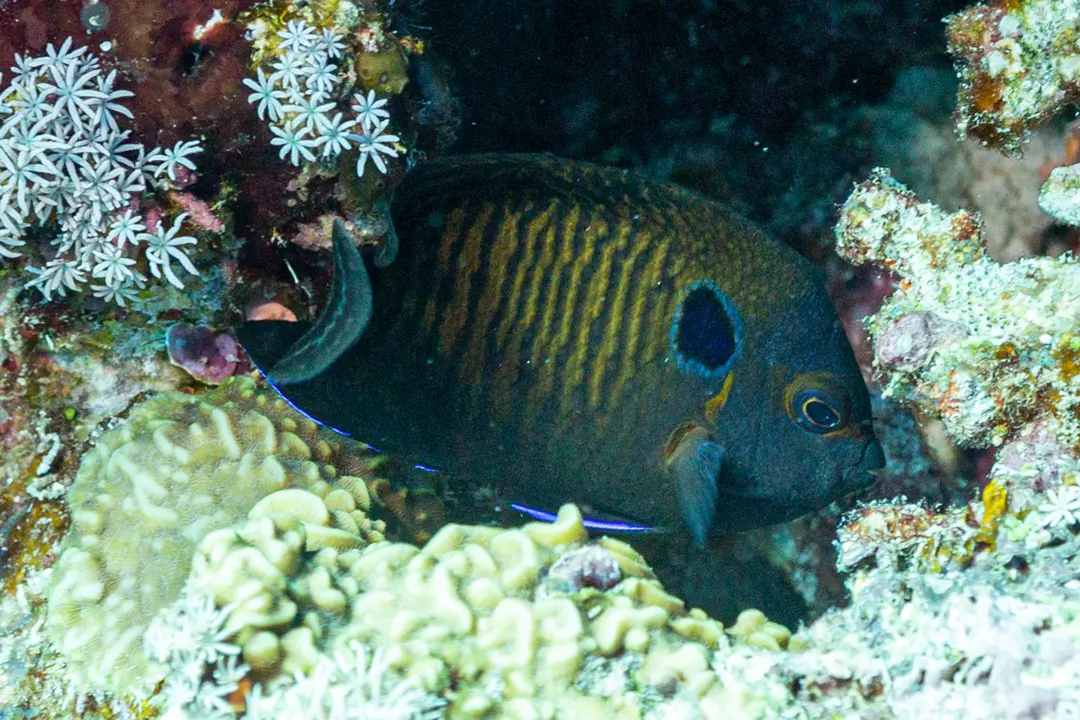
Pomacanthus xanthometopon
Pomacanthus xanthometopon is a ray-finned fish in the family Pomacanthidae found in shallow parts of the Indo-Pacific.
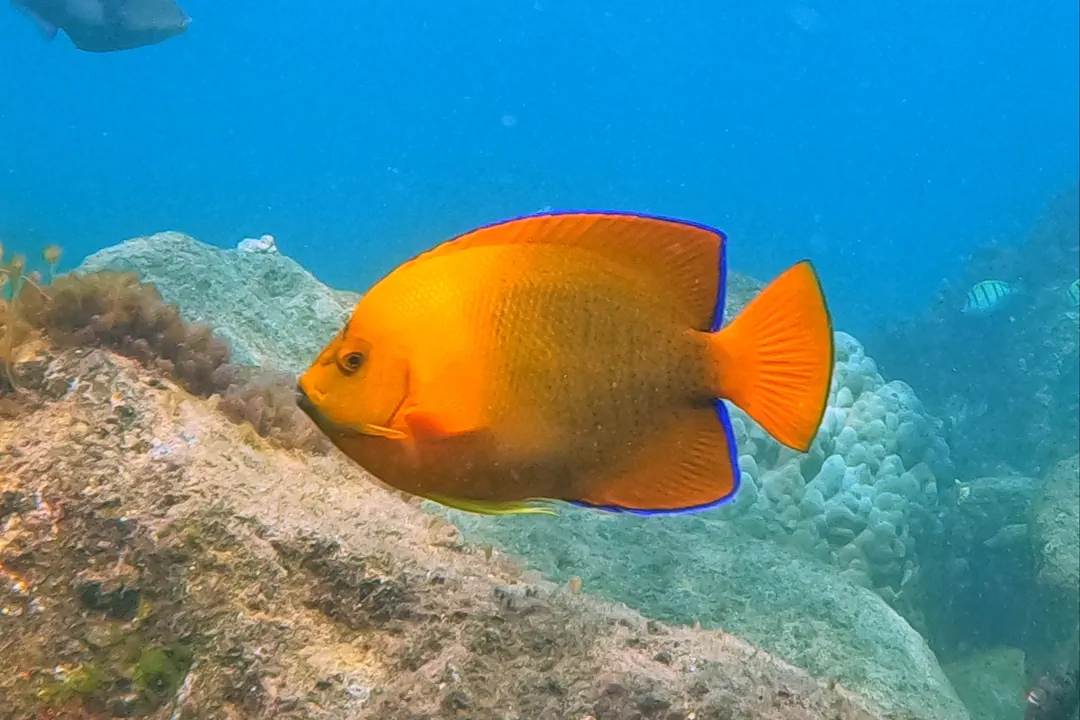
The yellowface angelfish grows to a maximum length of 38 centimetres (15 in) and is laterally compressed. The mouth is just above the tip of the snout. The fins are large and rounded and are yellow, some edged with blue round the margins. The dorsal fin is set just in front of the caudal region, has a distinctive black eyespot at the base and has 13–14 spines and 16–18 soft rays. The anal fin has 3 spines and 16–18 soft rays. The scales are pale blue edged with yellow giving a reticulated pattern. The face is yellow with a dense network of brilliant blue lines on the bottom half and a plain yellow mask around the eyes. Juveniles are quite differently coloured with 6 vertical white bars separated by pale blue lines and a caudal fin barred in 2 shades of blue. The juveniles change colour gradually after reaching a length of 7 to 12 centimetres (2.8 to 4.7 in). This species can be confused with the queen angelfish (Holacanthus ciliaris) or the blue angelfish (Holacanthus bermudensis), but both these have a completely blue face and lack the caudal eyespot.
The yellowface angelfish is found on coral reefs in the eastern part of the tropical Indo-Pacific. Its range includes the Maldive Islands, Malaysia, Indonesia, Japan, Taiwan, the Philippines, northern Australia and Micronesia. It has occasionally been observed off the coast of Florida. It favours lagoons, outer reef slopes and channels at depths down to about 25 metres (82 ft) and is often found among rocks and near caves. The juveniles frequently live inside caves.
The yellowface angelfish usually lives singly or in pairs and feeds on tunicates, sponges, other encrusting organisms and algae. It is an egg-laying species and scatters its eggs on the seabed.
The IUCN Red List of Threatened Species considers the yellowface angelfish of least concern because it is common over most of its wide range and has no major threats.
© Zakqary RoyCC BY 4.0 · iNaturalist 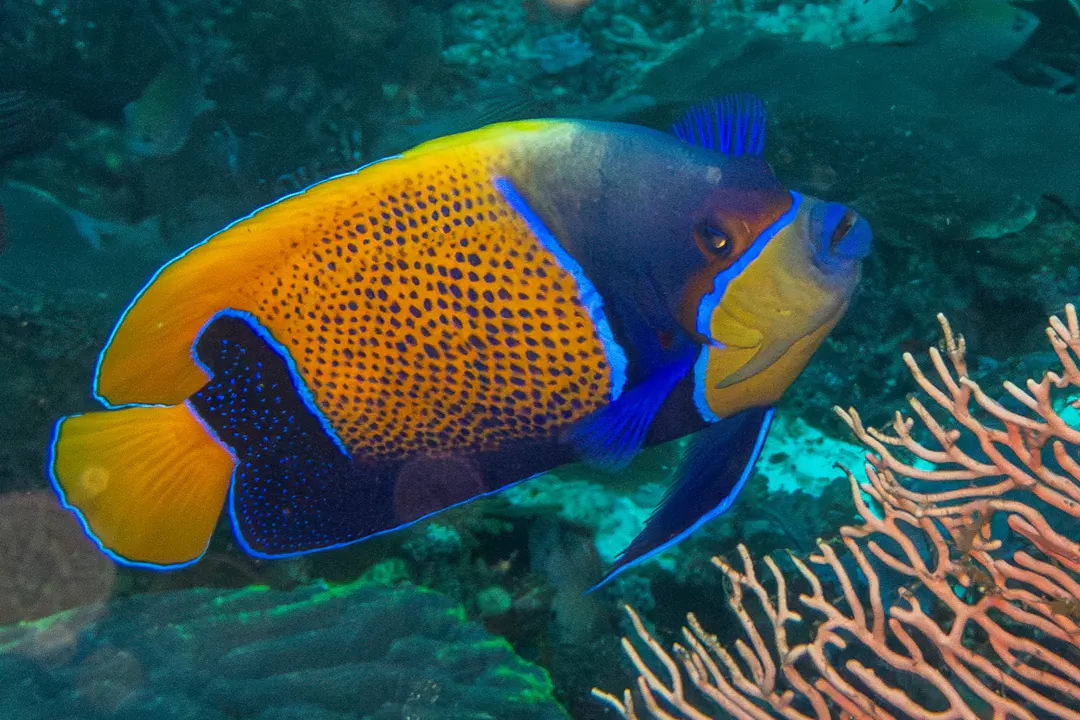 © Piotr LukasikCC BY 4.0 · iNaturalist
  © portioidCC BY 4.0 · iNaturalist
  © R VasconcellosCC BY 4.0 · iNaturalist
  Justin PhilboisCC0 · iNaturalist
  © Alberto AlcaláCC BY 4.0 · iNaturalist
 Blueface Angelfish has no known danger to humans. However, always observe marine life responsibly.
Blueface Angelfish can be found at depths of up to 30 meters.
Download Seabook free for iOS and Android.