 © Lin ScottCC BY 4.0 · iNaturalist
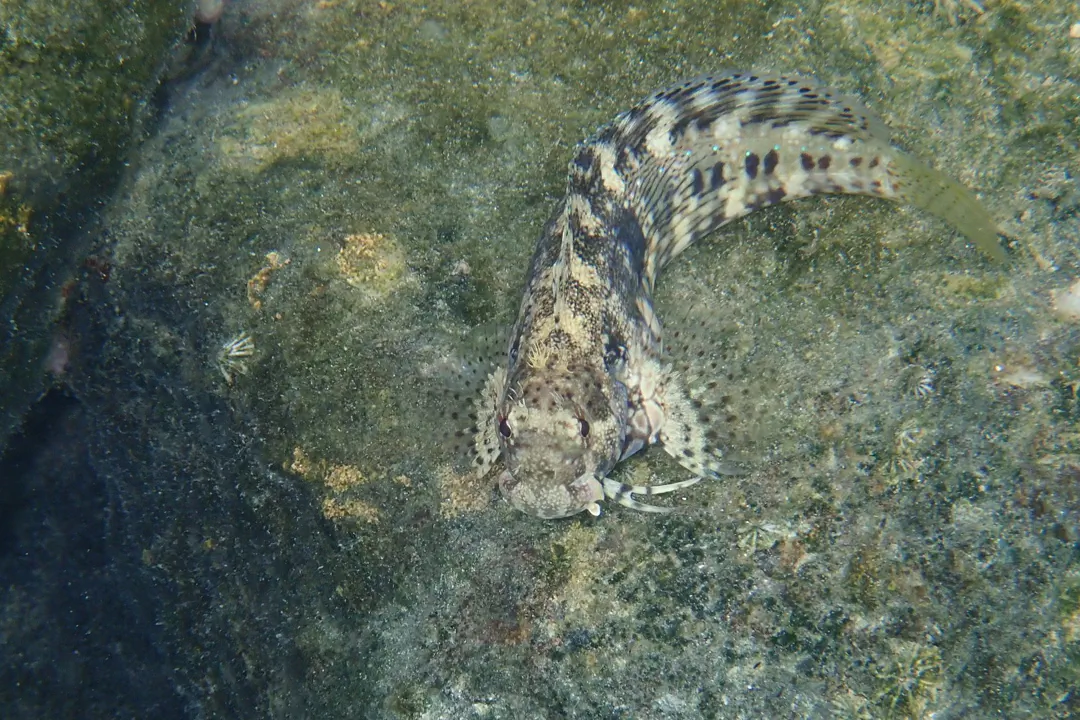
Banded Blenny
Salarias fasciatus
Plagiotremus rhinorhynchos
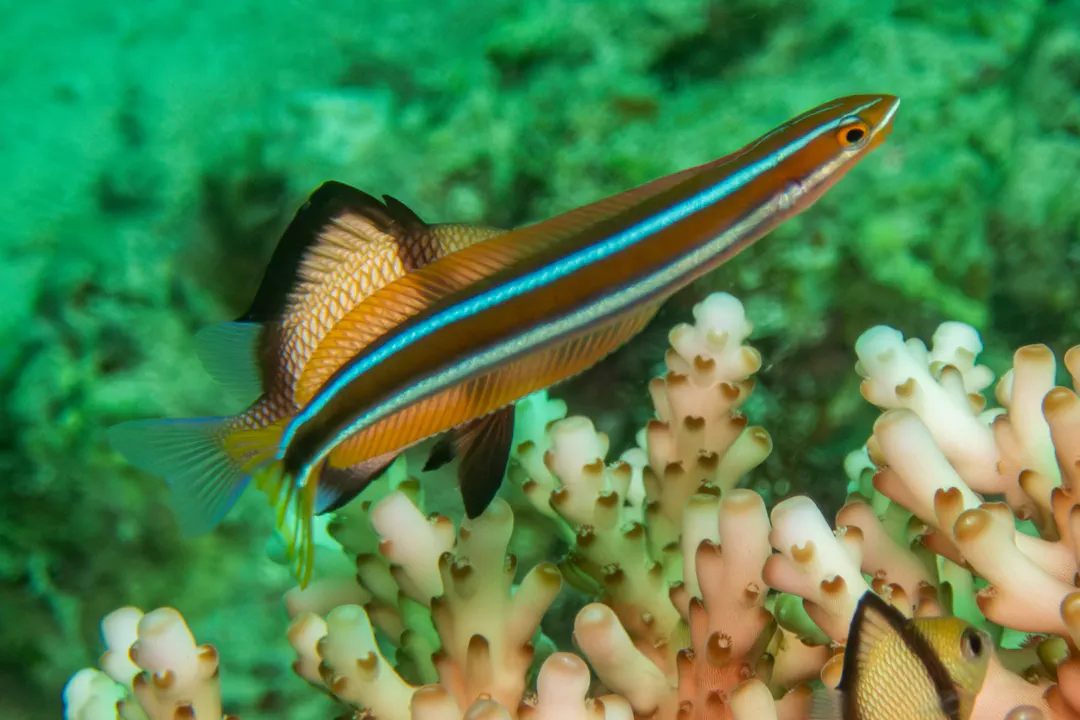
Plagiotremus rhinorhynchos is a species of combtooth blenny found in coral reefs in the Pacific and Indian ocean.
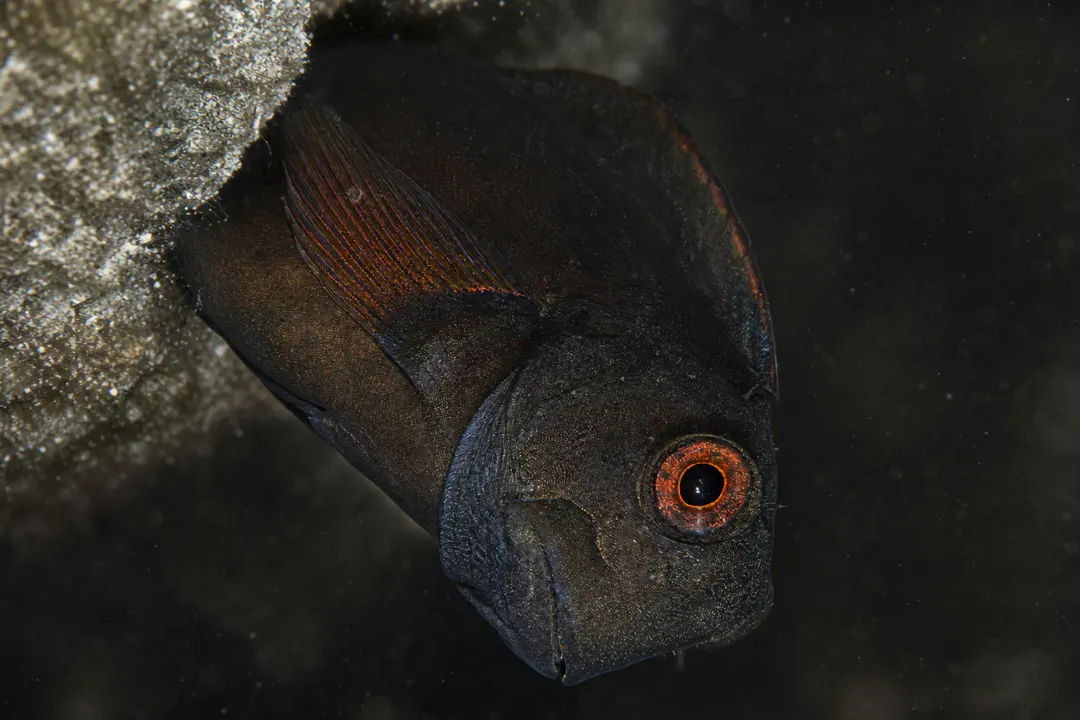
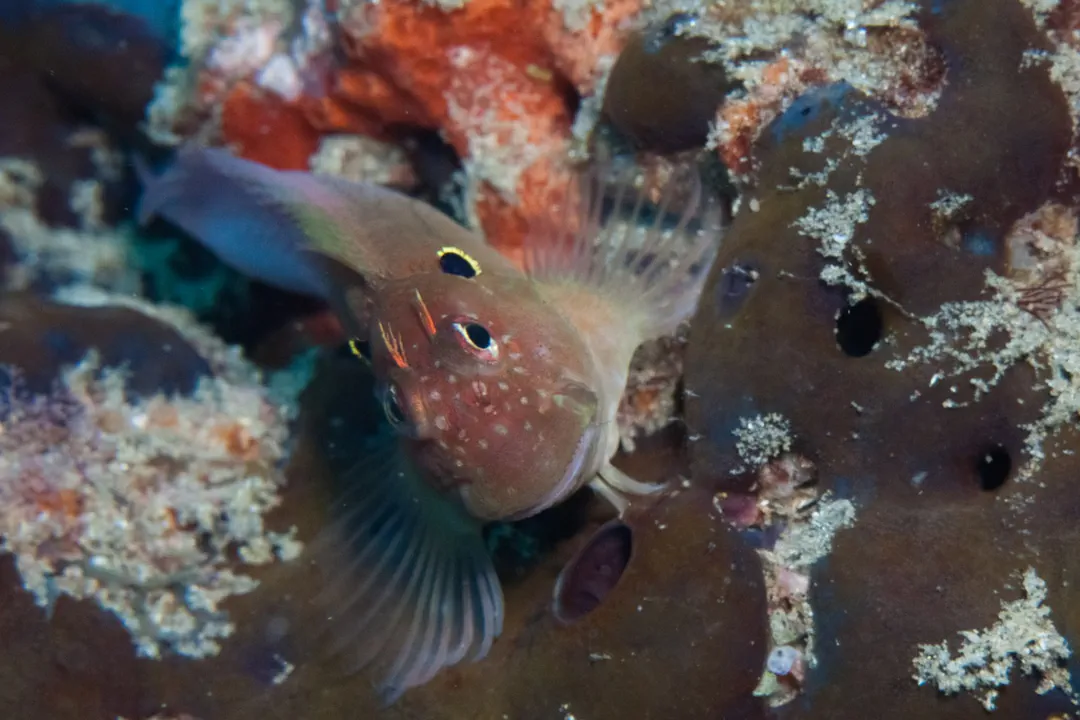
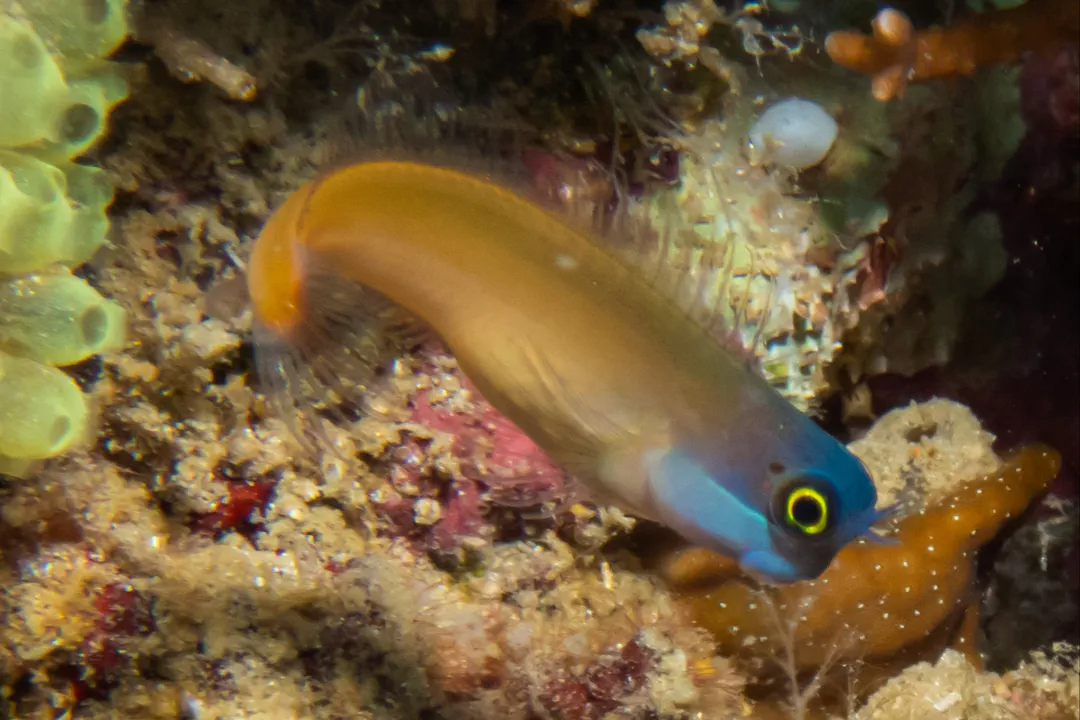
From before birth, their eggs are demersal and adhesive and attach to substrates via a filamentous adhesive pad or pedestal. The bluestriped fangblenny can attain around 9 cm in length. Maximum length is 12 cm. Two distinct colour phases of this fish are present; blue with a black stripe from snout to tail, or orange with two narrow blue lines from snout to tail.
Indo-Pacific: Red Sea south to Knysna, South Africa and east to the Line, Marquesan and Society islands, north to southern Japan, south to Lord Howe Island. Replaced by Plagiotremus ewaensis in the Hawaiian Islands.
They hide in deserted worm tubes or other small holes when alarmed, bite divers occassionally. They feed on the skin, mucus and sometimes scales of other fishes by quick attacks. Unlike most blennies, the bluestriped fangblenny is free swimming. Adults inhabit clear, coral-rich areas of lagoon and seaward reefs and it is fairly common on both coral and rocky reefs, usually occurring singly or in pairs. They are known for being aggressive and feed on skin, musus and sometimes other fish scales. They bite divers when alarmed.
Bluestriped fangblenny mimic the juveniles of bluestreak cleaner wrasse to enable them to loiter at cleaner stations and dupe clients waiting to be cleaned. Juveniles also mimic the cleaner wrasse Labroides dimidiatus. Their success in this aggressive mimicry is, like Batesian mimicry, frequency-dependent: it works best when the mimic is rare compared to the genuinely symbiotic cleaner fish.
© Lin ScottCC BY 4.0 · iNaturalist  © Debra BakerCC BY 4.0 · iNaturalist
  © portioidCC BY 4.0 · iNaturalist
  © seabook.appAll rights reserved
  © Georgina JonesCC BY-SA 4.0 · iNaturalist
  © portioidCC BY 4.0 · iNaturalist
 Bluestriped Fangblenny has no known danger to humans. However, always observe marine life responsibly.
Bluestriped Fangblenny can be found at depths of up to 40 meters.
Download Seabook free for iOS and Android.