 © Lin ScottCC BY 4.0 · iNaturalist
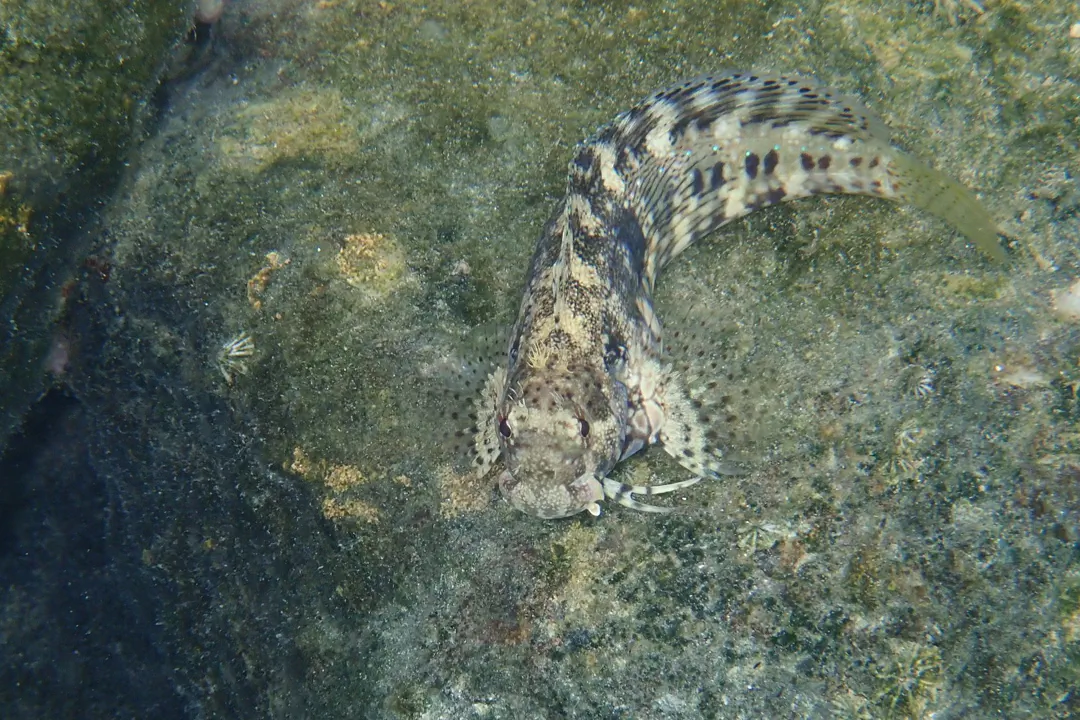
Banded Blenny
Salarias fasciatus
 © Debra BakerCC BY 4.0 · iNaturalist
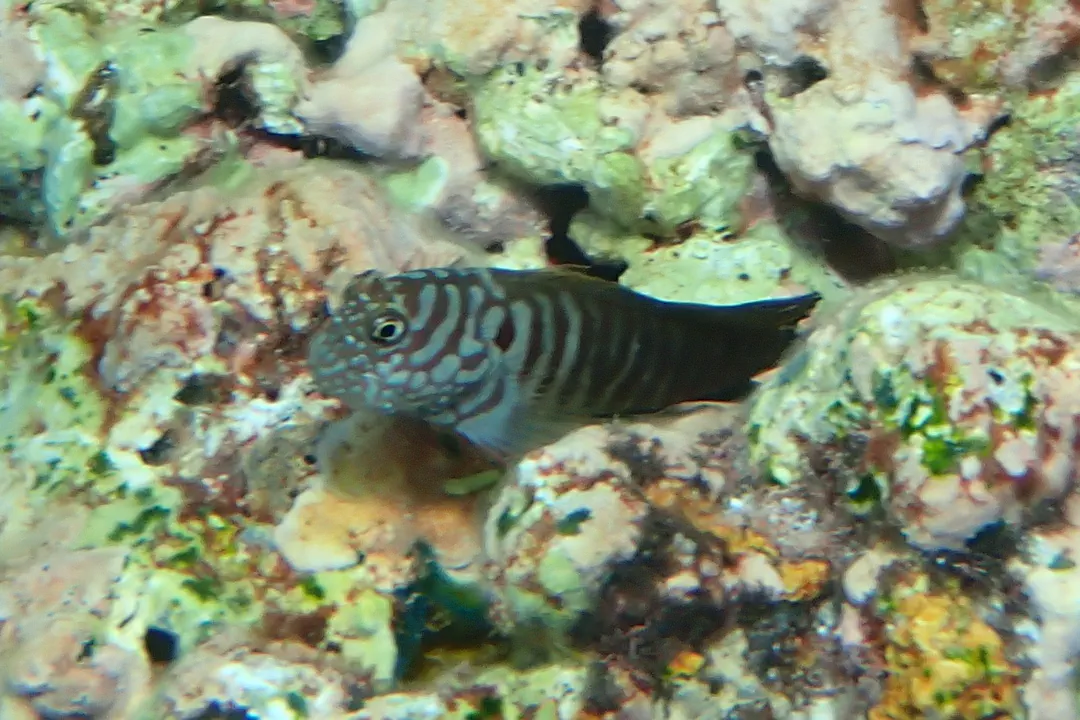
Cirripectes polyzona
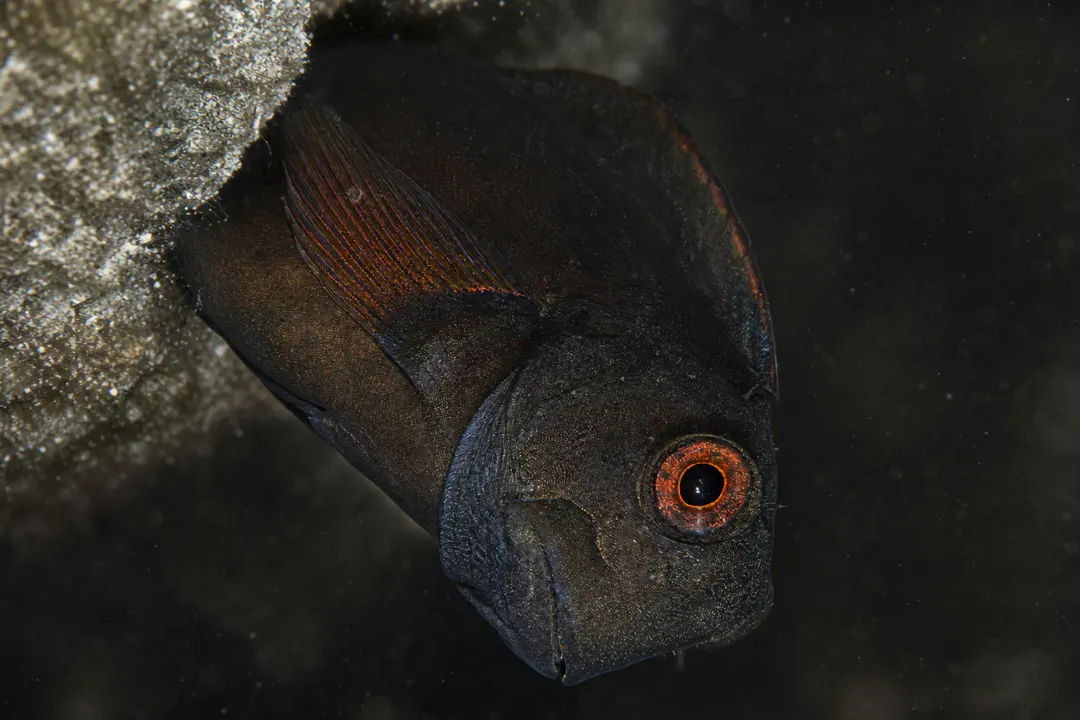
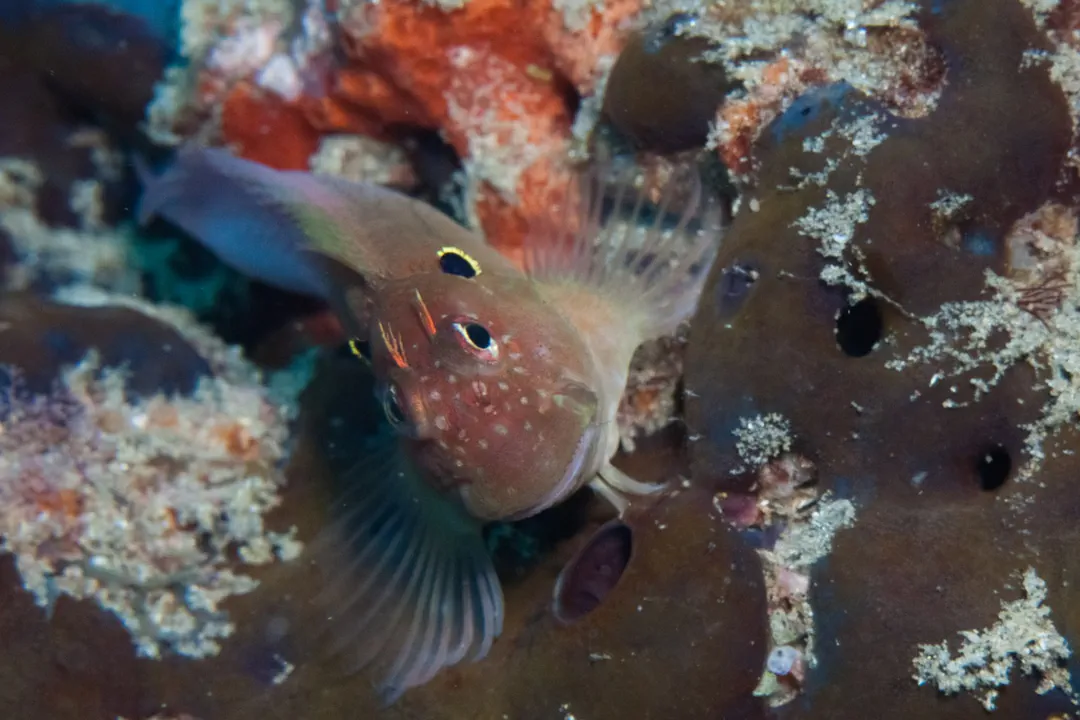
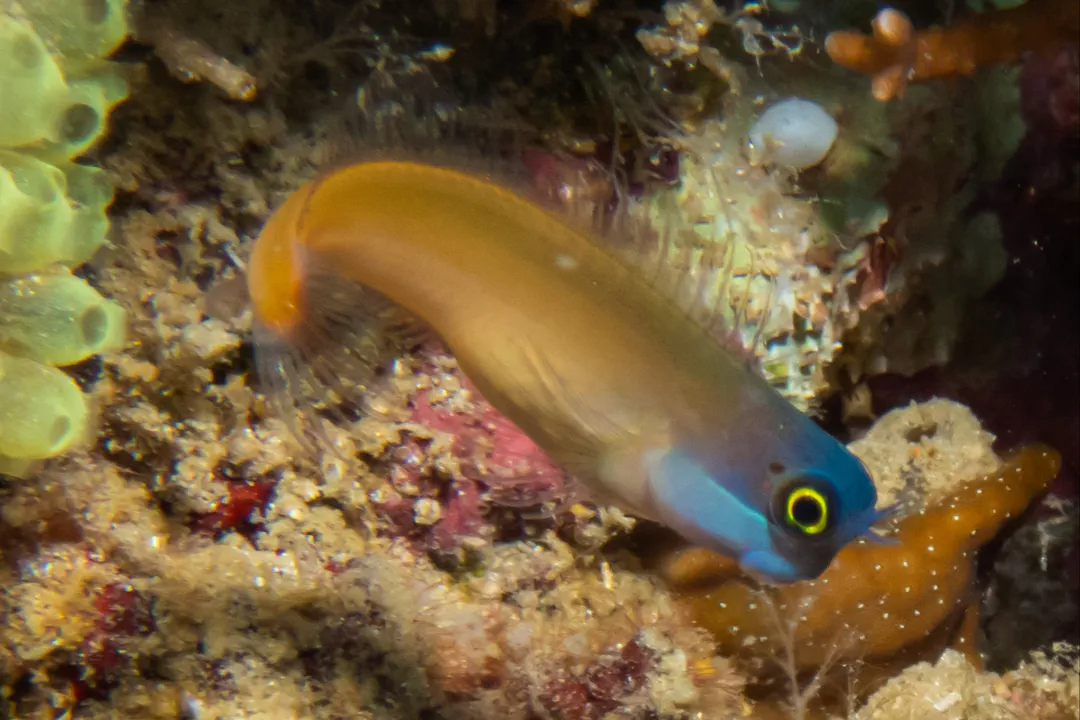
Cirripectes polyzona is a species of combtooth blenny found in coral reefs in the Indo-West pacific region. This species reaches a length of 13 centimetres (5.1 in) TL.
Head is reticulated with pale grey spots. Iris inner ring is yellow, outer ring is red. Body is dark brown with 12 pale grey bars. Juvenile is tan above, white to lavender below, with broad dark midlateral stripe, white eye bar, yellow spots on head underside and on operculum. Dorsal spines (total): 11 - 13; Dorsal soft rays (total): 13-15; Anal spines: 2; Anal soft rays: 14 - 16; Vertebrae: 29 - 31. Diagnosis: Dorsal fin XI-XIII (usually XII), 13-15, deeply incised above last spine, first spine almost equal to second; anal fin II, 14-16 (usually 15); pectoral rays 15; pelvic fin I, 3; caudal fin procurrent rays 9-12. Vertebrae 10 + 19-20; last pleural rib on 11th, last epipleural rib on 15-19th vertebral centrum. Without scales and scalelike flaps. LL tubes 2-9 (usually 4-7), series ends below dorsal fin ray 7 or after. Lower lip smooth mesially, plicate laterally. Upper lip crenulae 32-45. Gill rakers 18-25. Cephalic sensory pore system complex; 1 pore behind nuchal flap. Cirri supraorbital 4-15, nasal 5-24; nuchal 32-44. Nuchal cirri in 4 groups with slightly expanded nuchal flap.
Indo-Pacific: South Africa to Kiribati, north to Japan, south to Rowley Shoals and the southern Great Barrier Reef.
Occur in algal ridge and ridge crests between surge channels of exposed seaward reefs to a depth of about 20 m. Feed on algae and associated minute invertebrates like forams, ostracods, and gastropods.
© Lin ScottCC BY 4.0 · iNaturalist  © portioidCC BY 4.0 · iNaturalist
  © portioidCC BY 4.0
  © seabook.appAll rights reserved
  © Georgina JonesCC BY-SA 4.0 · iNaturalist
  © portioidCC BY 4.0 · iNaturalist
 Barred Blenny has no known danger to humans. However, always observe marine life responsibly.
Barred Blenny can be found at depths of up to 20 meters.
Download Seabook free for iOS and Android.