 © Debra BakerCC BY 4.0 · iNaturalist
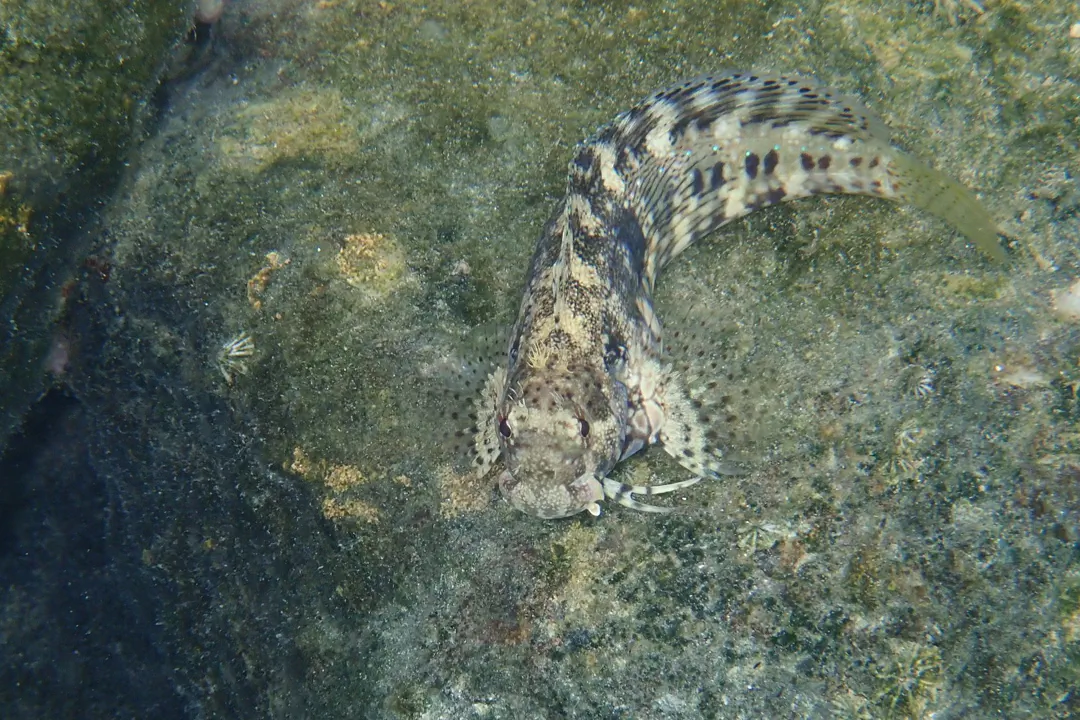
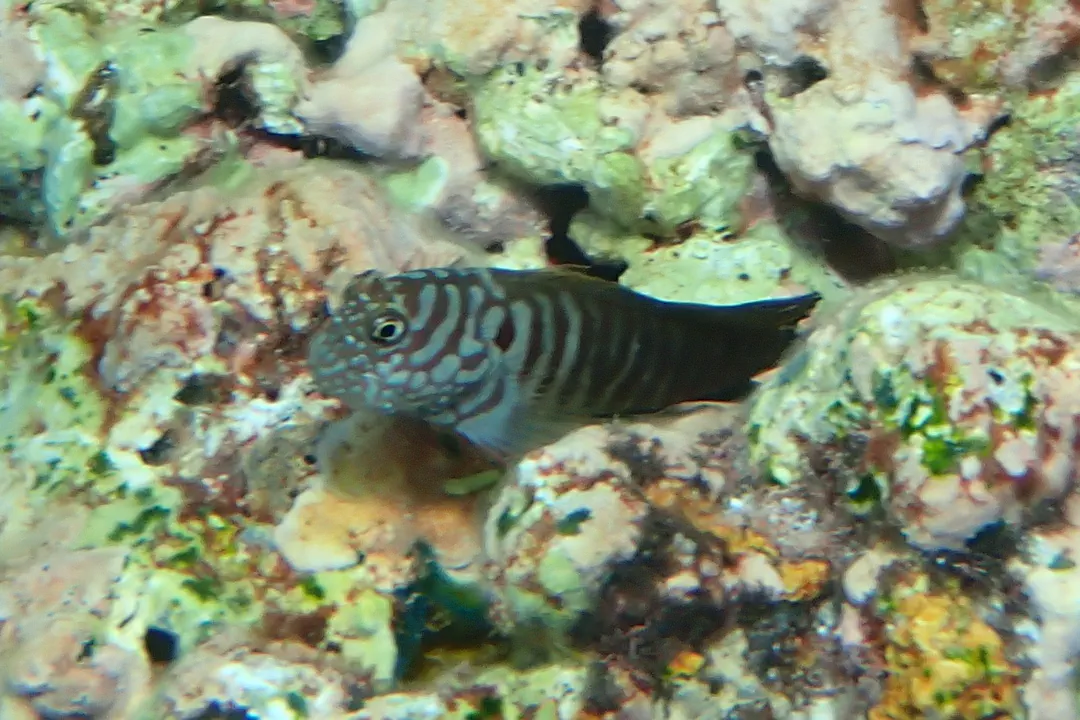
Barred Blenny
Cirripectes polyzona
Salarias fasciatus
Salarias fasciatus is a popular marine aquarium fish species in Australasia. Other names: Jeweled Rockskipper Blenny, Jewelled Blenny or Lawnmower Blenny.
This species reaches a length of 14 centimetres (5.5 in) TL.
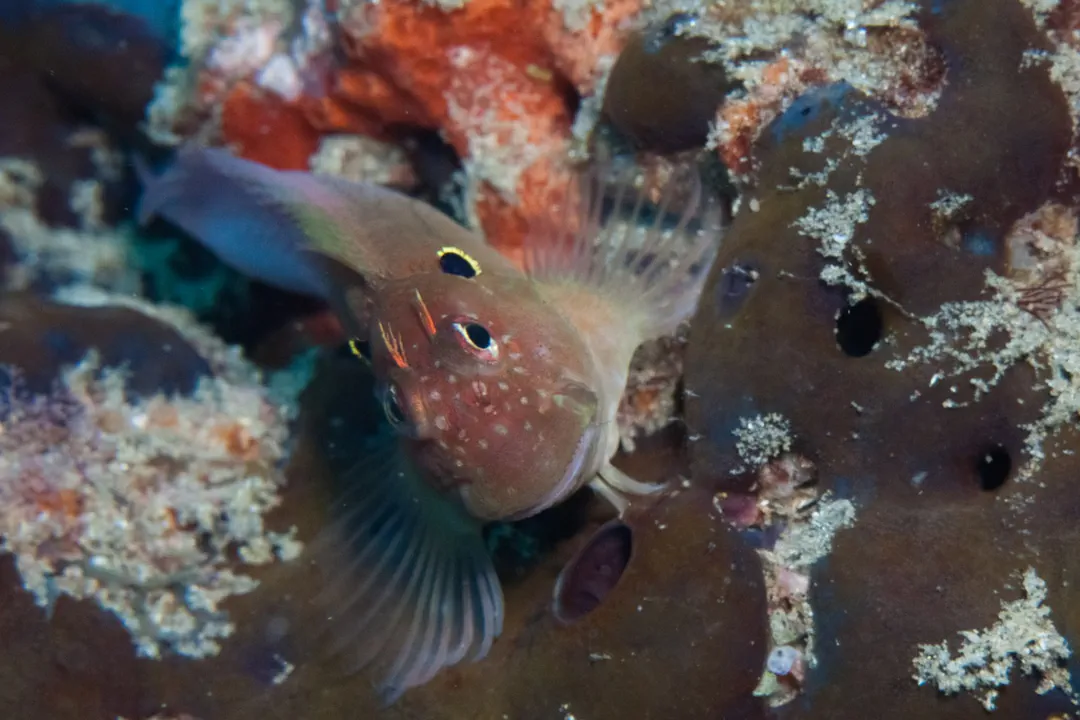
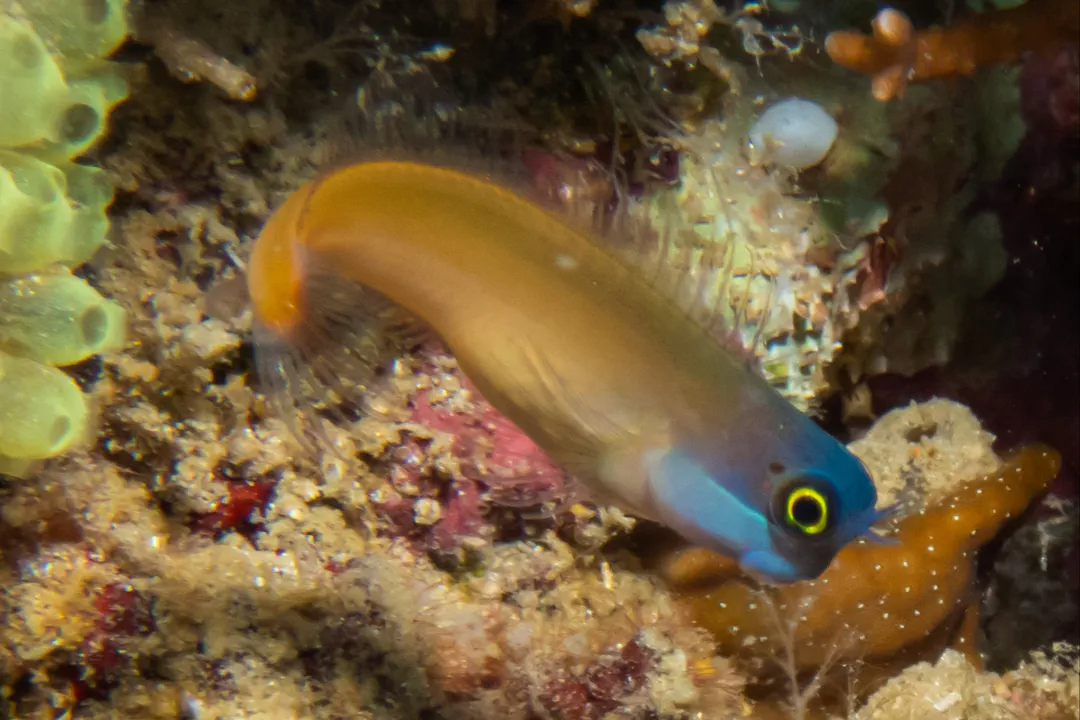
Body depth about 3.7 to 4.2 in length, head small, branched supraorbital and nuchal cirri. Lip margins smooth. It has large eyes high up on its head so it can keep an eye on what is going on above it. Above the eyes are two bifurcated skin flaps, which can easily be mistaken for eyebrows. No notch in dorsal fin, dorsal and anal fins attached to base of caudal fin by a membrane. Adult males have elongated anterior rays on the anal fin. Colour variable. Usually olive to brown with dark bars and a large number of round or elongated white spots of different sizes. There are usually dark longitudinal lines on the front part of the body, and small bright blue spots with dark outlines along the rear part of the body.
East Africa and the Red Sea to Samoa and the Islands of Micronesia
Usually seen on shallow reef flats with heavy algal cover. It occurs on the ocean floor on a rock, keeping an eye on other creatures. It guards its territory, when it is not swimming around above the rocks, scraping off algae with its special teeth.
The jewelled blenny feeds on algae growing on the hard surfaces of the coral reef. Using their small sharp teeth, they scrape off the algae. Despite being also known as the lawnmower blenny due to its propensity to consume algae growth from rocks and glass, it is principally a detritivore, with plant material making up only 15% of its diet.
After the jewelled blenny has mated, it lays the eggs under hard things such as seashells or even a soft drink can that has strayed into the ocean. This is where the male protects the eggs until they hatch.
© Debra BakerCC BY 4.0 · iNaturalist 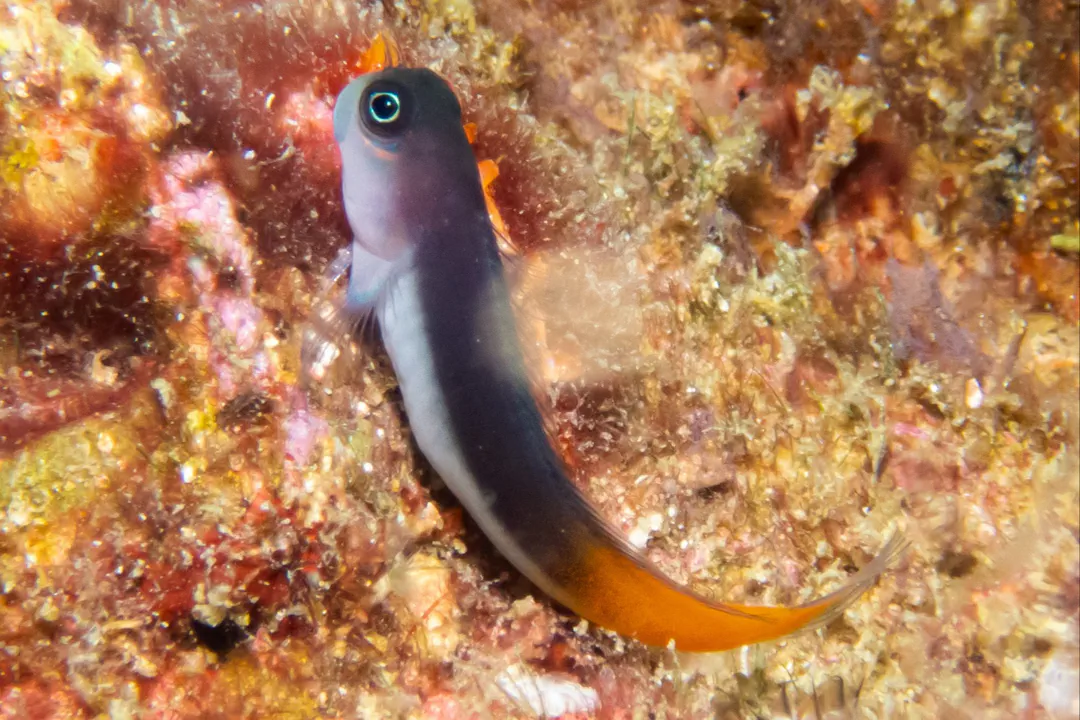 © portioidCC BY 4.0 · iNaturalist
  © portioidCC BY 4.0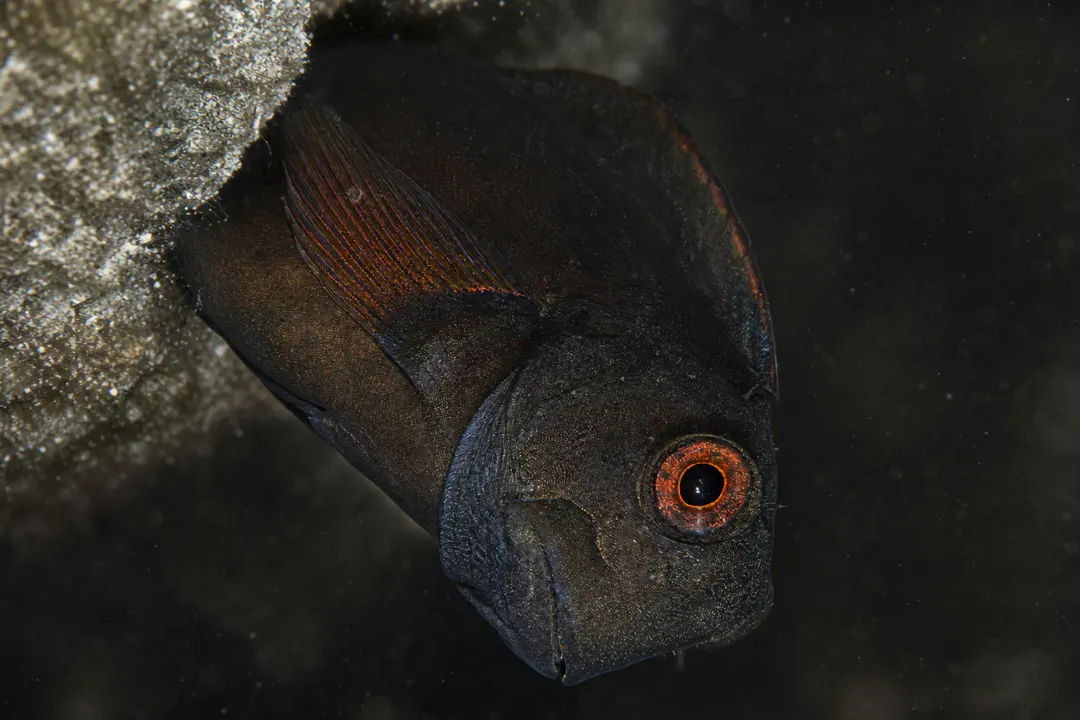
 © Georgina JonesCC BY-SA 4.0 · iNaturalist
  © portioidCC BY 4.0 · iNaturalist
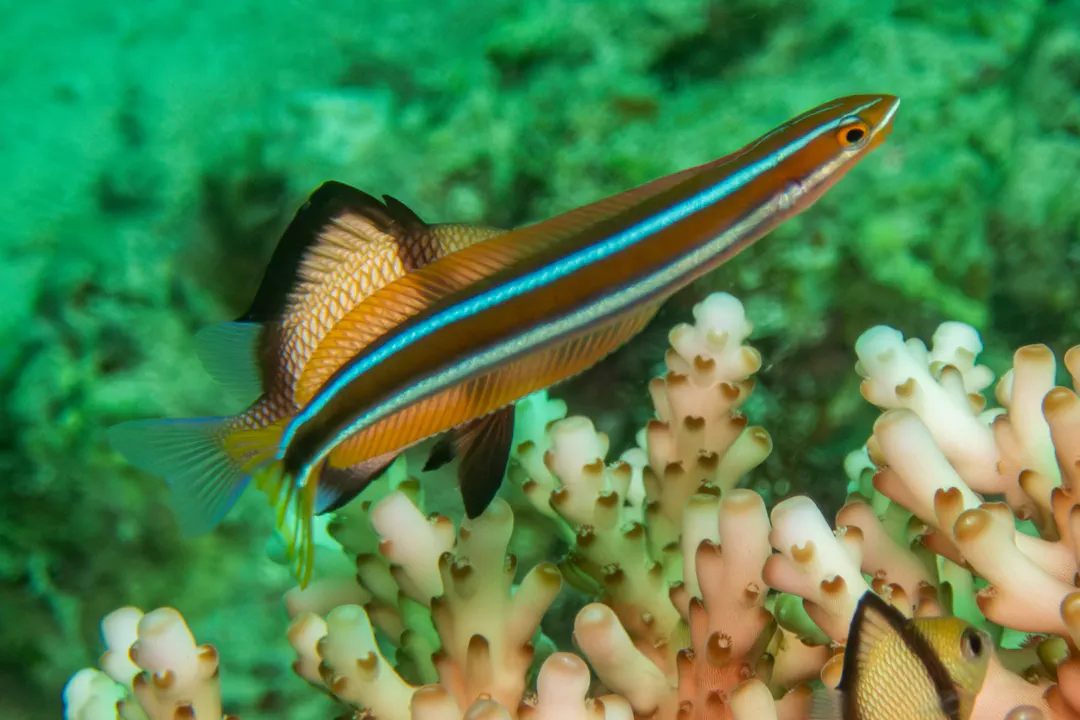
 Banded Blenny has no known danger to humans. However, always observe marine life responsibly.
Banded Blenny can be found at depths of up to 8 meters.
Download Seabook free for iOS and Android.