 © Lin ScottCC BY 4.0 · iNaturalist
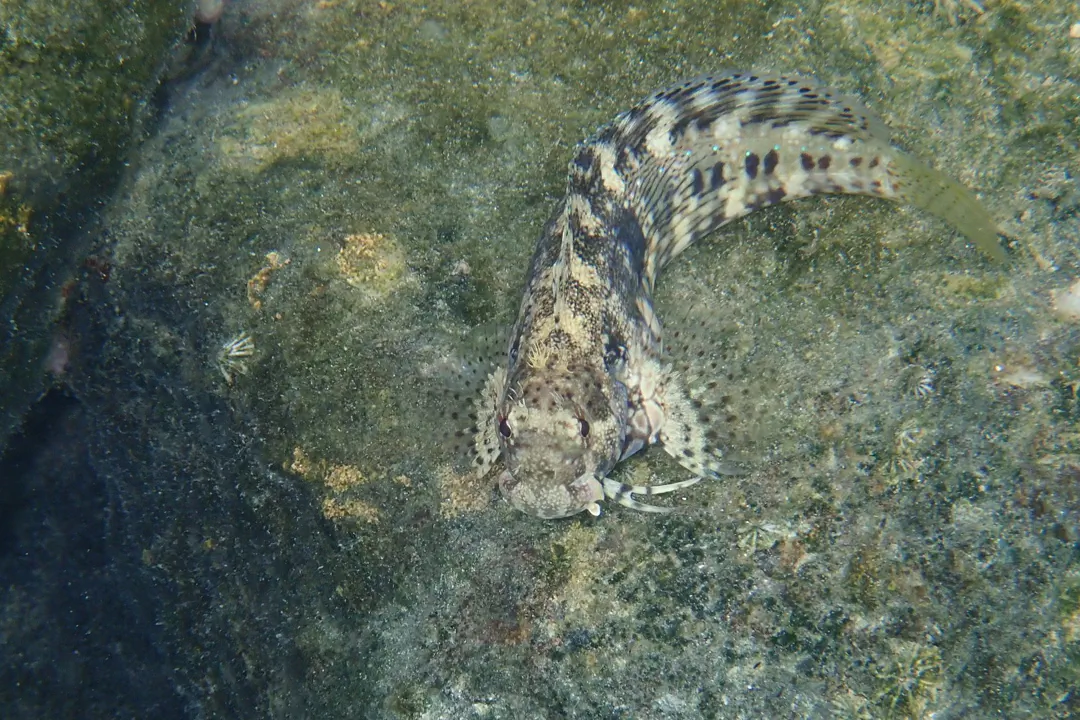
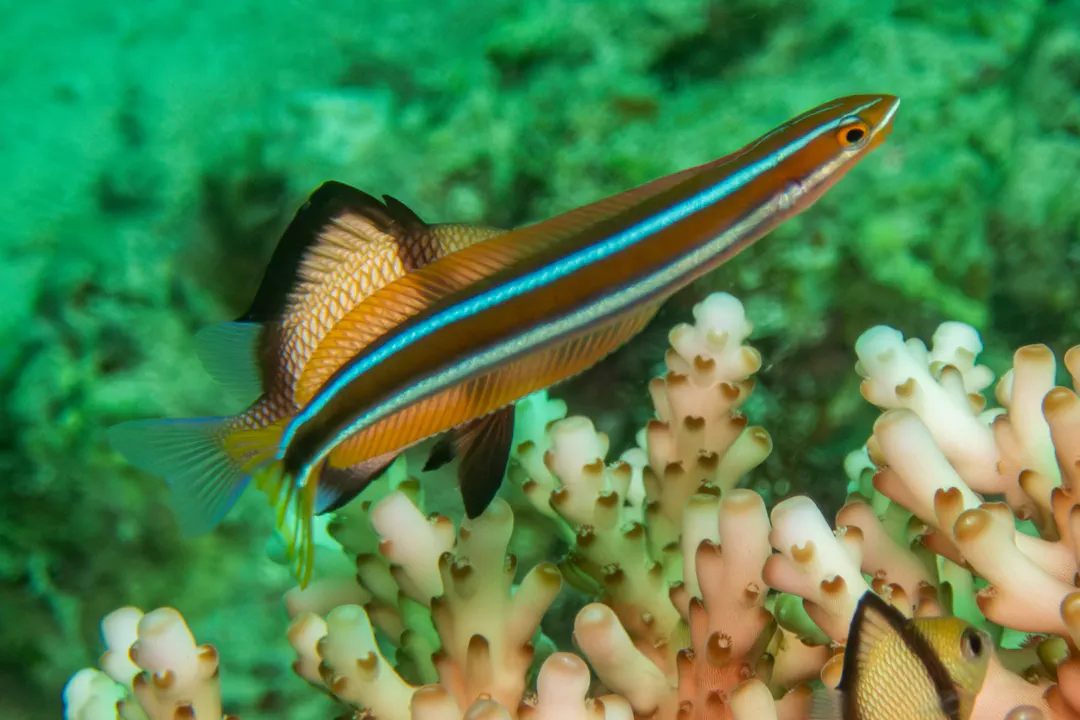
Banded Blenny
Salarias fasciatus
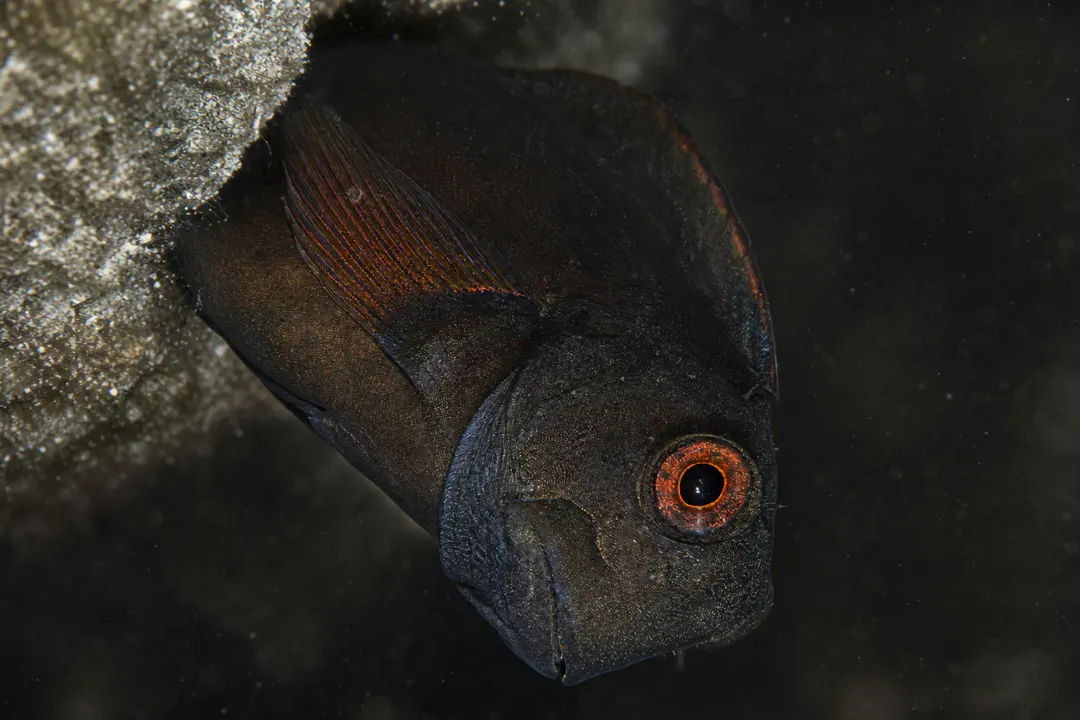
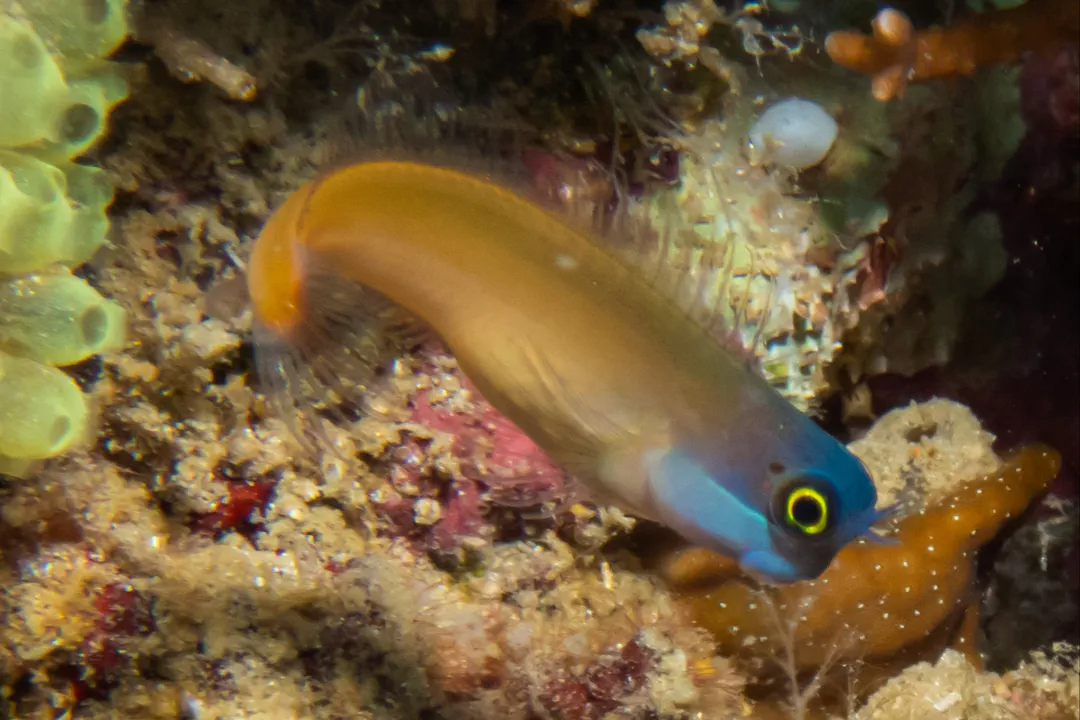
Cirripectes auritus
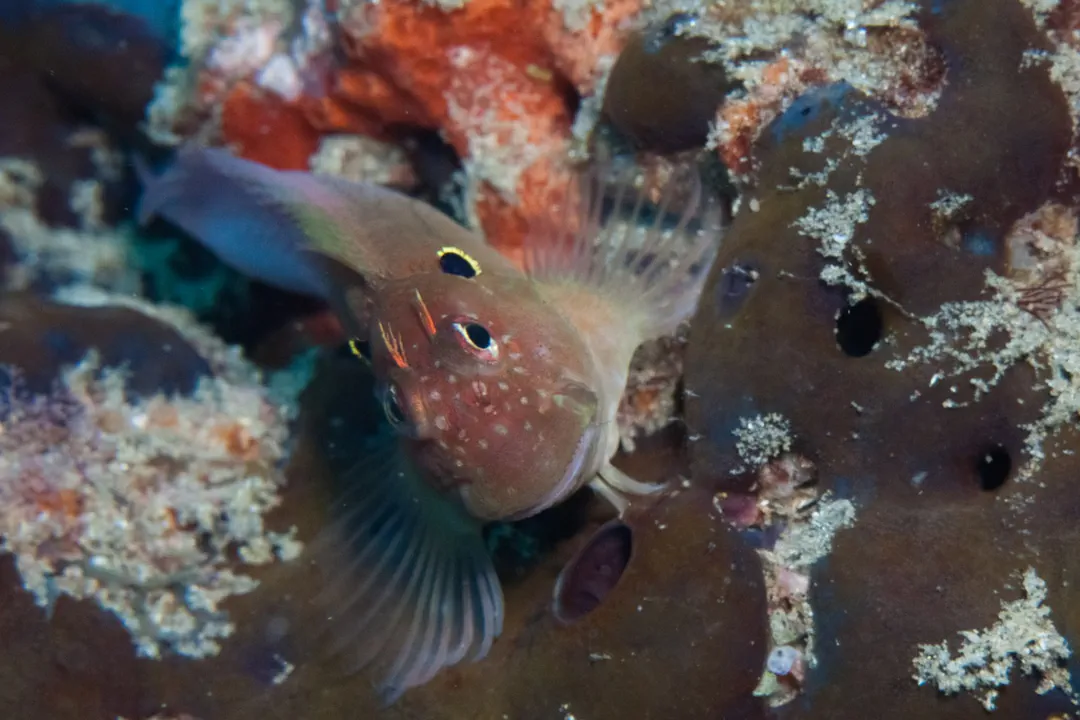
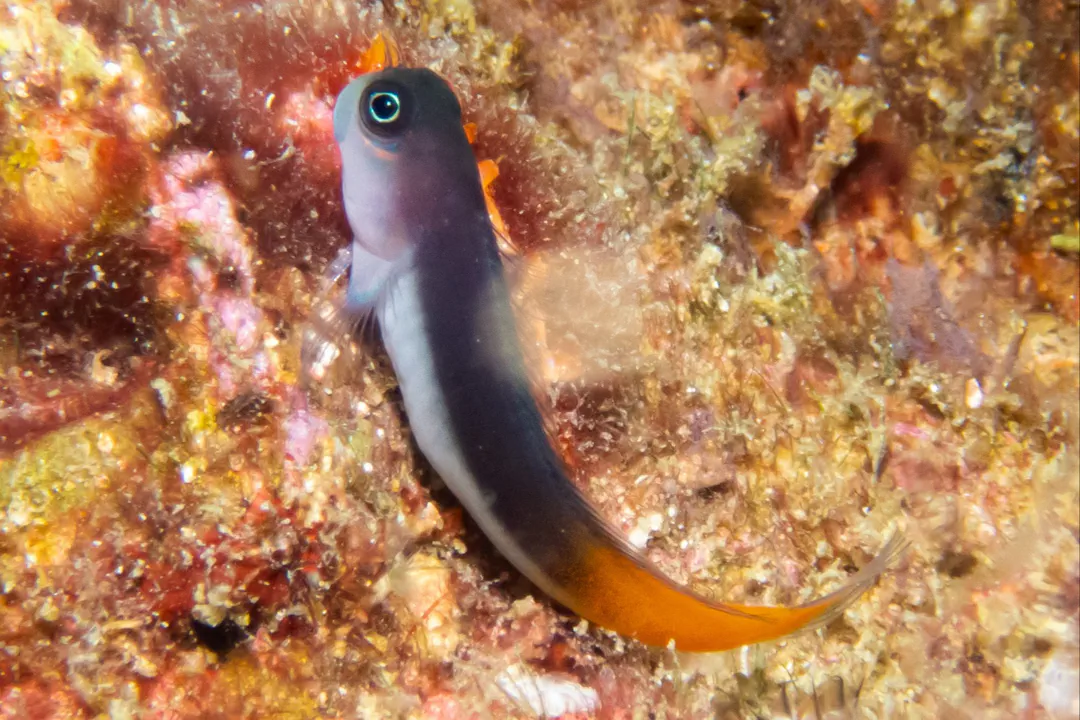
Cirripectes auritus, the Blackflap blenny, is a species of combtooth blenny found in coral reefs in the Indo-West Pacific region.
This species reaches a length of 9 centimetres (3.5 in) TL.
Body coloration of adults variable (varies in different areas and may also vary between sexes); may be pale, brown, or mottled pale and brown background but always with tiny dark spots on posterior 1/2 to 3/4 of the body and with pale spots or streaks from orbit to upper lip. Similan and Fanning Islands females head mottled strongly with reddish-brown and pinkish-white spots and streaks, body with broad irregular brown bars; in Fanning Islands the pale areas in the head are all faint pink and interspaces on body are cream or light brown instead of faint pink as in those from Similan Islands. Males in Fanning I. are also mottled but in Indian Ocean only females are mottled. Philippines female has uniformly dark brown color. South African males with darker cirri than those from other localities. Meristic and morphometric patterns does not vary geographically. Body depth at anal fin origin 4.8-5.1 in SL. Ophioblennius stage overall cream; mouth area without spots; cirri and nuchal flap pale; fins transluscent (in alcohol); with 2 canines on each dentary, posteriorly.
Dorsal spines (total): 12 - 13; Dorsal soft rays (total): 15-17; Anal spines: 2; Anal soft rays: 16 - 18; Vertebrae: 31 - 33. Diagnosis: Dorsal fin XII-XIII, 15-17 (usually XII,17), entire, only slightly or not at all incised above last spine, first spine equal to second; anal fin II, 15-16; pectoral rays 14; pelvic fin I, 4; caudal fin procurrent rays 10-13. Body depth at anal-fin origin 4.8-5.1 in SL. Vertebrae 10 + 21-23; vertebral centrum, last pleural ribs 11-12, last epipleural rib 17-19. Without scales and scalelike flaps. LL tubes 7-12, series ends below dorsal fin rays 5-13. Lower lip smooth mesially, plicate laterally. Upper lip crenulae 34-39. Gill rakers 21-25. Cirri, nuchal 22-34, supraorbital 2-7, nasal 4-6. Nuchal cirri minute, 5-8 independently distributed, in 2 greatly expanded flaps on each side of nape. Nuchal flaps black. Inner ring of iris yellow, outer ring reddish brown.
Indo-West Pacific: Kenya to South Africa, then Similan Islands (Thailand), Philippines and the Line Islands.
Found on coral rocks, some on sandy bottom in water about 5 m deep or on irregular rocky bottom with sparse live coral and no sand. Also in shallow protected reefs with rich coral and algae growth, usually found at depths less than about 10 m; occasionally deeper. Usually seen solitary.
© Lin ScottCC BY 4.0 · iNaturalist  © Debra BakerCC BY 4.0 · iNaturalist
  © portioidCC BY 4.0 · iNaturalist
  © portioidCC BY 4.0
  © seabook.appAll rights reserved
  © portioidCC BY 4.0 · iNaturalist
 Eared Blenny has no known danger to humans. However, always observe marine life responsibly.
Eared Blenny can be found at depths of up to 20 meters.
Download Seabook free for iOS and Android.