 © Bernard PictonCC BY 4.0 · iNaturalist
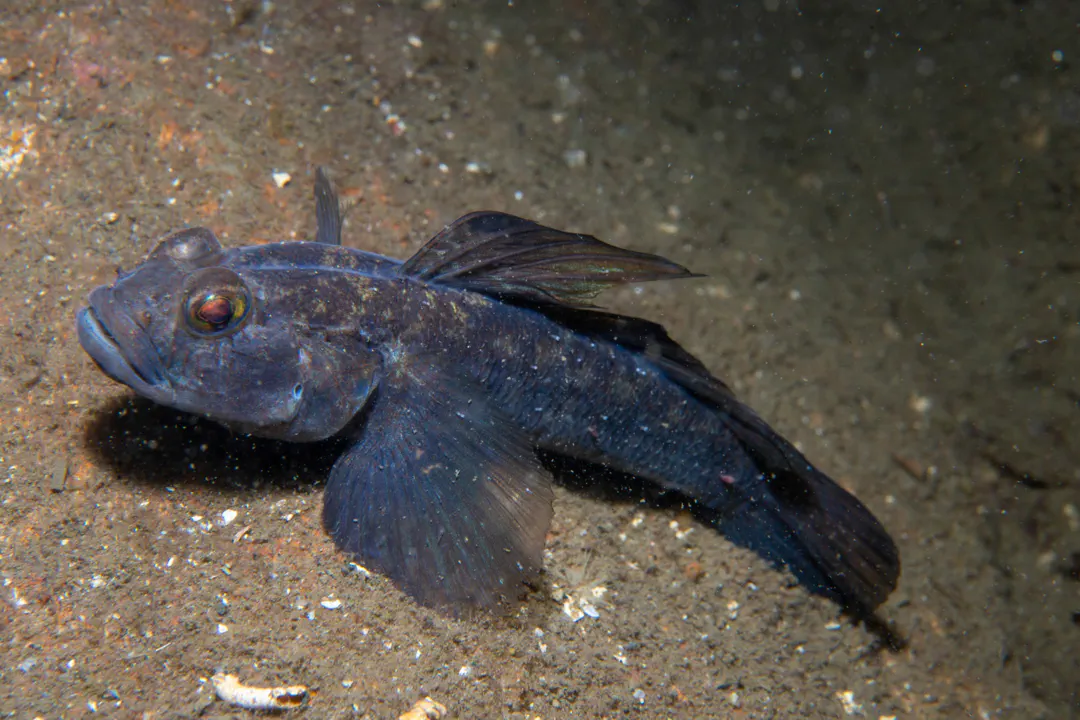
Black Goby
Gobius niger
Gnatholepis cauerensis
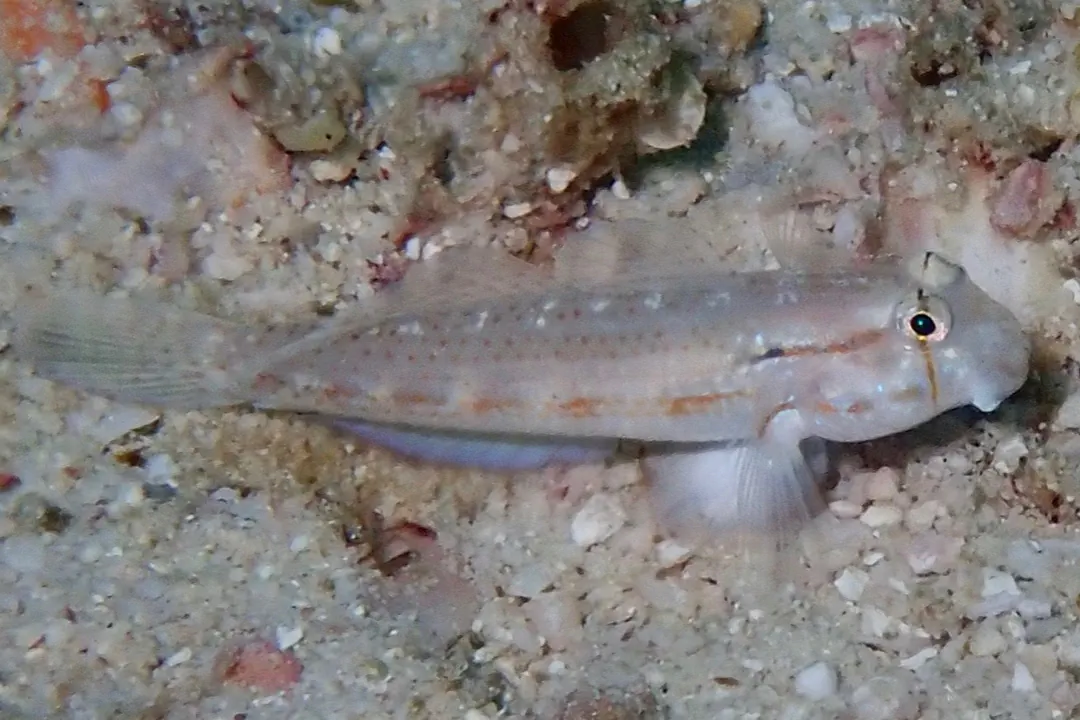
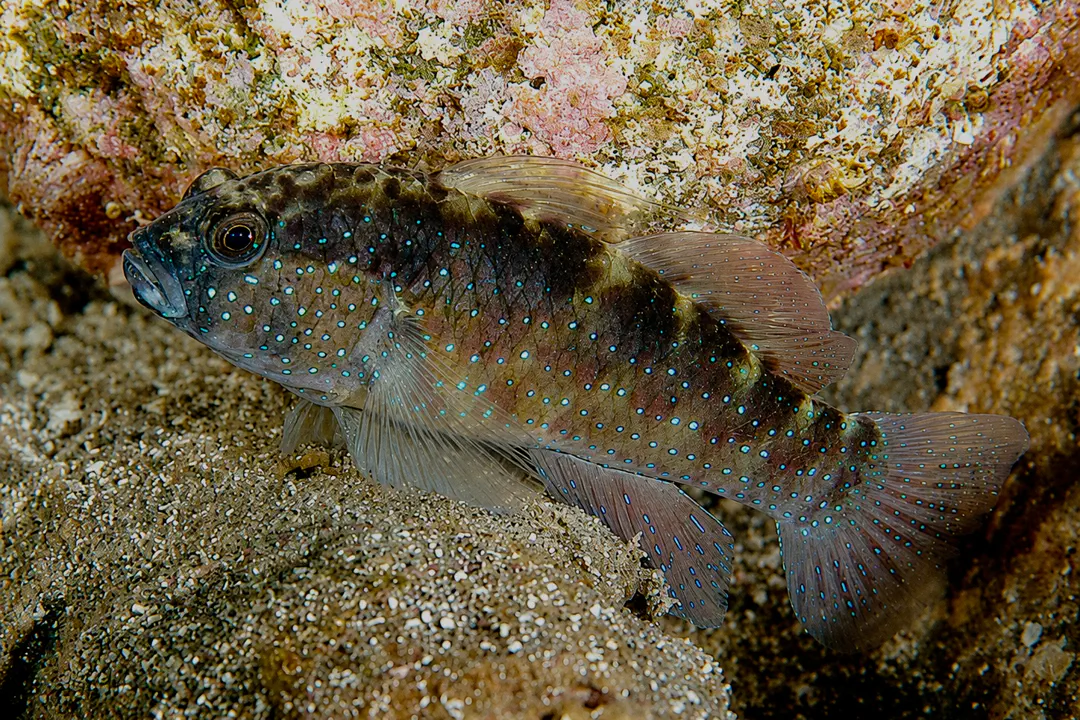
Gnatholepis cauerensis is a species of fish in the family Gobiidae, the gobies.
Distinguished by the following characteristics: moderate-sized (up to 56 mm SL) with wide range in live colour pattern; ctenoid body scales usually reaching rear corner of opercle, occasionally ctenoid scales reaching to above rear preopercular margin; nape midline scales always cycloid, distinct flap present at end of lower lip. Colour variable: body translucent white with five to seven rows of small variably coloured (dull orange, brown, red-brown to blackish) spots and/or thin lines and about six indistinct diffuse orange-brown to purple-brown blotches along midside; narrow vertical black mark on top of each eye, marks may join each other across interorbital space, and narrow black vertical line crossing cheek below eye; small dark mark of variable shape (often W-shaped) above pectoral fin base, with small yellow spot in centre; second dorsal and anal fin rays usually I,11; pectoral rays 12-18, modally 16; lateral scales 24-30, modally 27; 7-12 predorsal scales (modally 9).
Indo-Pacific: Natal, South Africa and Madagascar to the Hawaiian Islands, north to southern Japan, south to the southern Great Barrier Reef.
A common species that occurs in sheltered sandy areas from reef flats to seaward reefs; over sandy bottoms near pieces of rubble, rock, or coral (live or dead). Solitary or in small groups. Feeds on algae, detritus and small benthic invertebrates.
© Bernard PictonCC BY 4.0 · iNaturalist 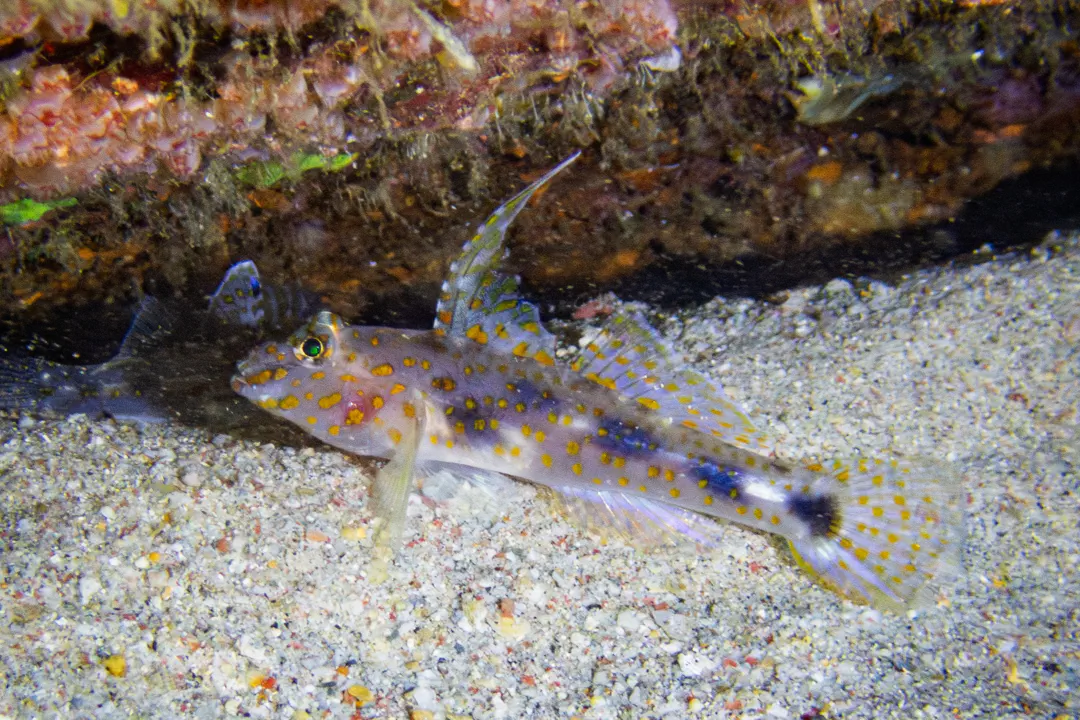 © Pierre PericardCC BY 4.0 · iNaturalist
  © IzuzukiCC BY 4.0
 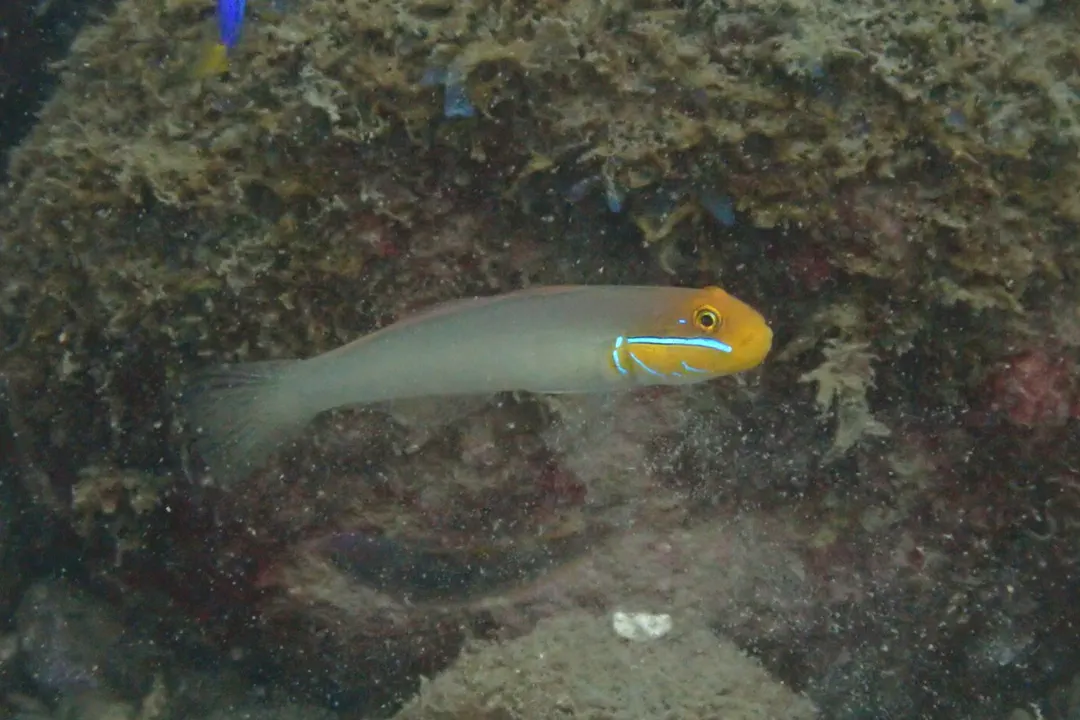 © 呂一起(Lyu yi-chi)CC BY 4.0 · iNaturalist
 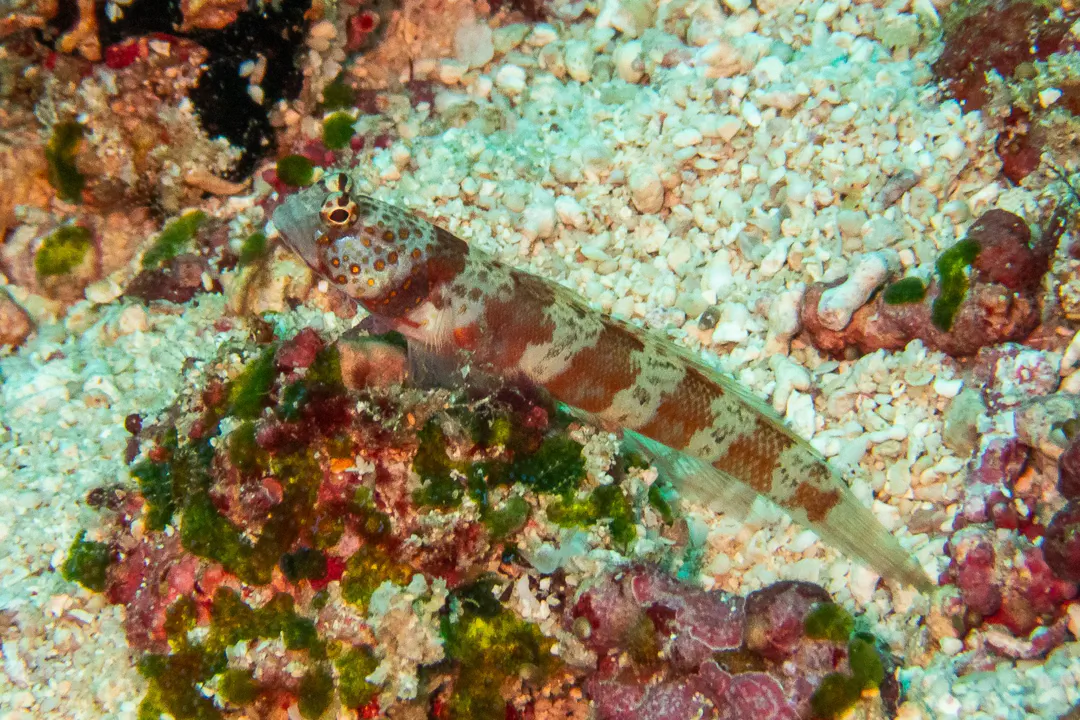 © Piotr LukasikCC BY 4.0 · iNaturalist
 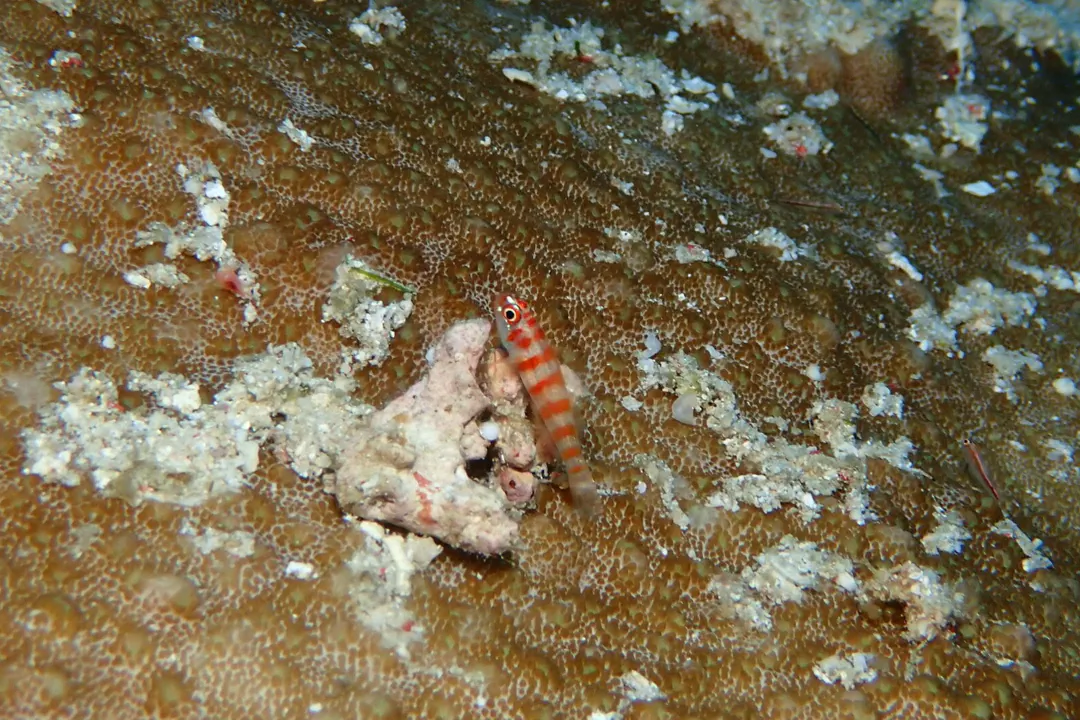 © 呂一起(Lyu yi-chi)CC BY 4.0 · iNaturalist
 Shoulderspot Goby has no known danger to humans. However, always observe marine life responsibly.
Shoulderspot Goby can be found at depths of up to 50 meters.
Download Seabook free for iOS and Android.