 © Cricket RaspetCC BY 4.0 · iNaturalist
Browncheek Blenny
Acanthemblemaria crockeri
Acanthemblemaria spinosa
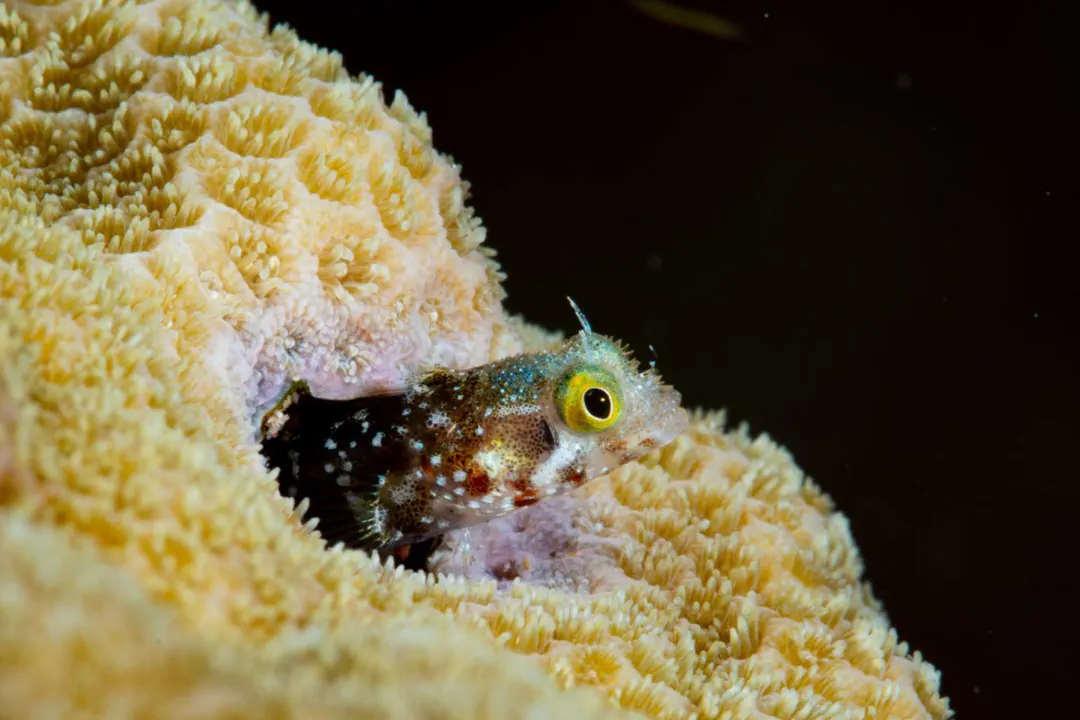
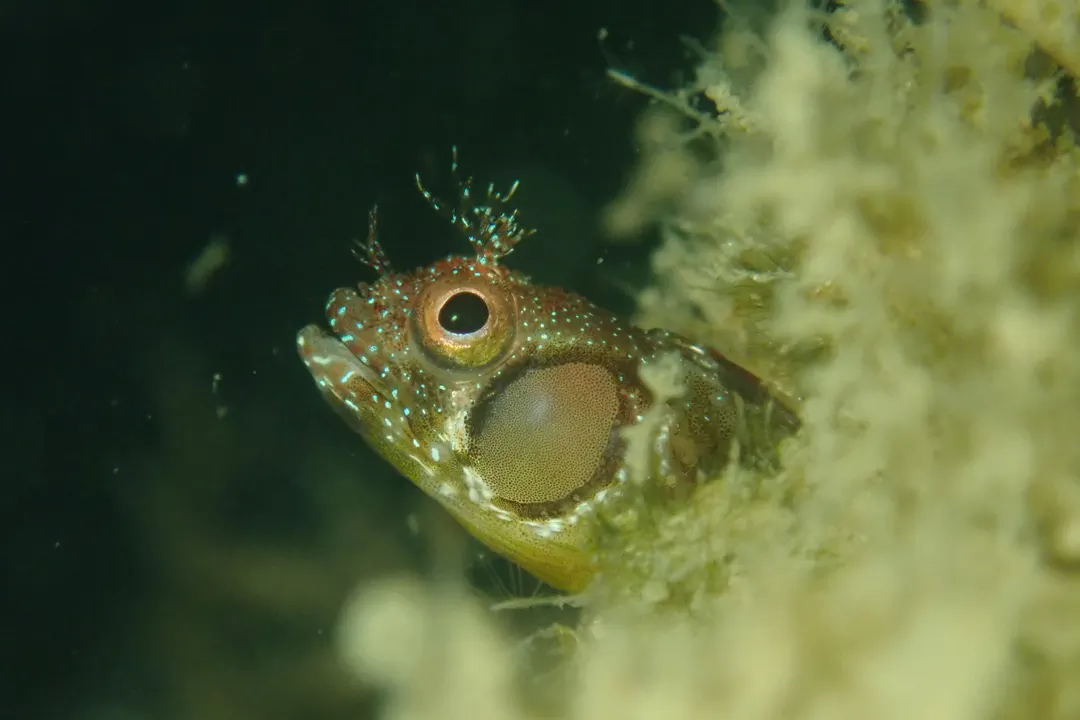
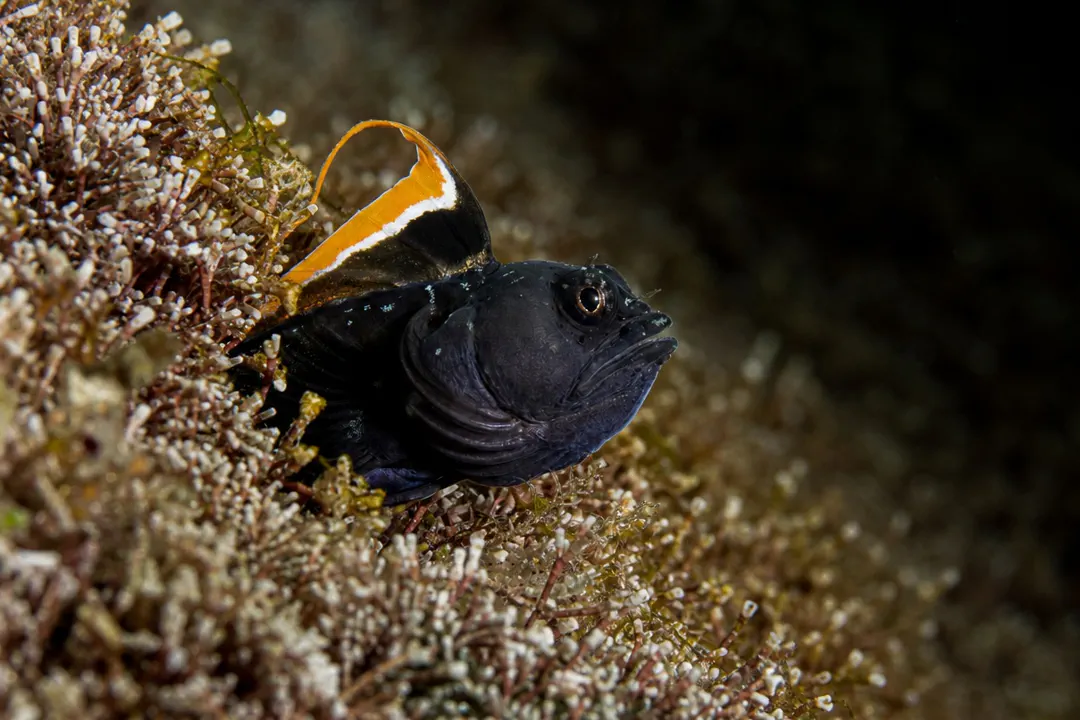
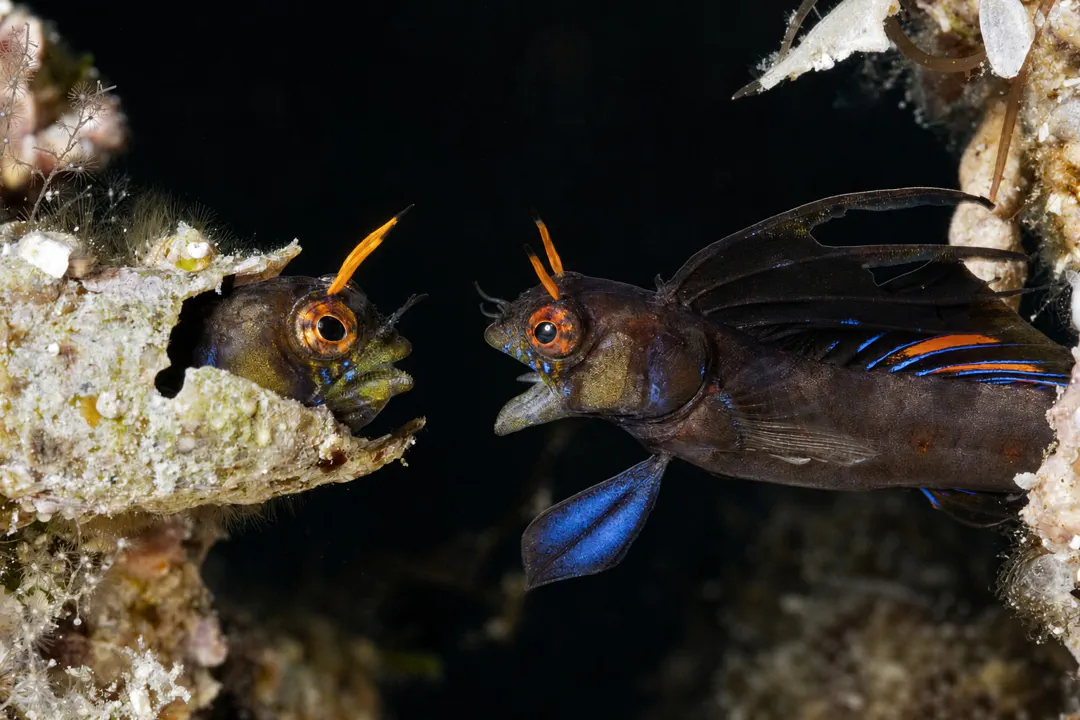
Acanthemblemaria spinosa is a species of blenny native to the tropical western Atlantic Ocean and Caribbean Sea.
The spinyhead blenny has a mottled black, white and red coloration over the entire body, which is rather elongated. As with most blennies, the head of this animal has small hair-like appendages over the eyes, which are large and red. The dorsal fin has twenty to twenty-two spines and thirteen to sixteen soft rays. The anal fin has two spines and twenty-one to twenty-five soft rays. It grows to a length of 2.8 cm (1.1 in) TL.
The spinyhead blenny is native to the tropical western central Atlantic Ocean and the Caribbean Sea. Its range extends from the Antilles, the Bahamas and Florida to Curaçao. It typically inhabits small rocky reefs surrounded by sand and is known as a tube blenny from its habit of occupying a hole in a coral or an empty worm tube from which it pokes out its head. Its depth range is down to about 20 m (66 ft).
The spinyhead blenny is most often found on elkhorn coral (Acropora palmata) and inhabits the empty tubes of vermetid mollusks and serpulid worms. Competition for suitable holes is high and any vacated hole is soon occupied by another blenny from the neighborhood. Each blenny remains in its hole but may be replaced by a larger fish after combat. It has been found that blennies displaced by 5 m (16 ft) are able to find their way back to their original hole so it is likely that they do sometimes leave their holes to explore their neighborhoods. They are opportunistic feeders, preferring to dart out quickly and retrieve food bits from the water column, as opposed to engaging in active foraging and hunting behavior. The diet mainly consists of small crustaceans and planktonic particles.
In the home aquarium, they are entertaining and only require a moderate degree of care. They are reef safe.
© Cricket RaspetCC BY 4.0 · iNaturalist 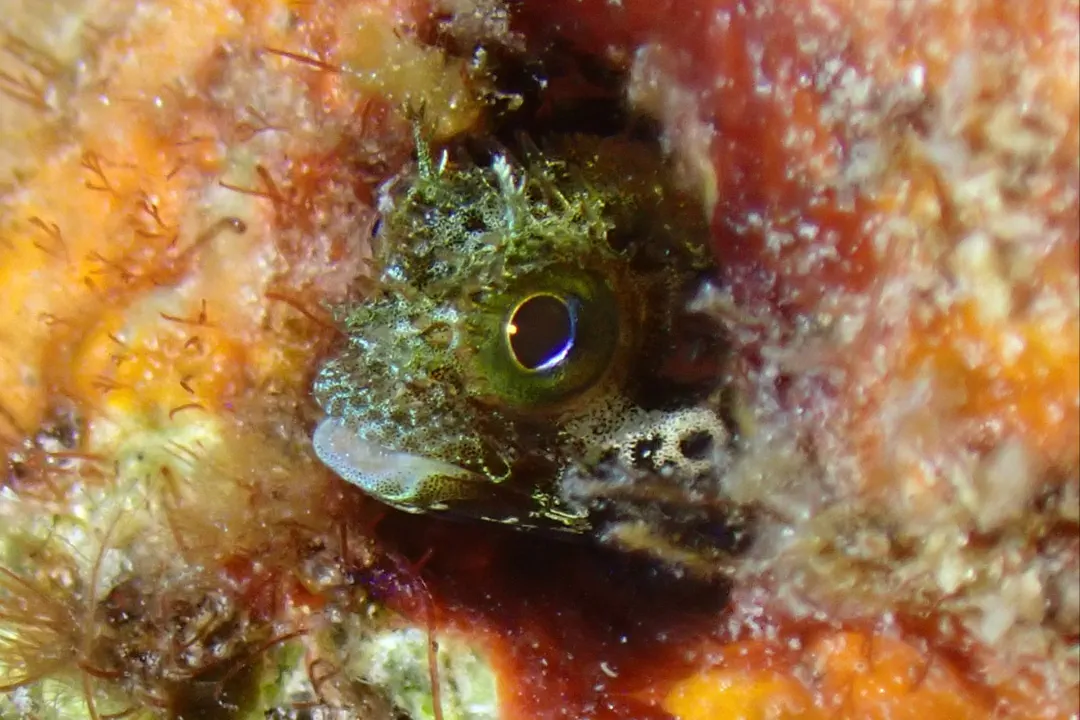 © Robin WhiteCC BY 4.0 · iNaturalist
  © seabook.appAll rights reserved
  © seabook.appAll rights reserved
 Spinyhead Blenny has no known danger to humans. However, always observe marine life responsibly.
Spinyhead Blenny can be found at depths of up to 12 meters.
Download Seabook free for iOS and Android.