 © Robin WhiteCC BY 4.0 · iNaturalist
Secretary Blenny
Acanthemblemaria maria
Acanthemblemaria crockeri
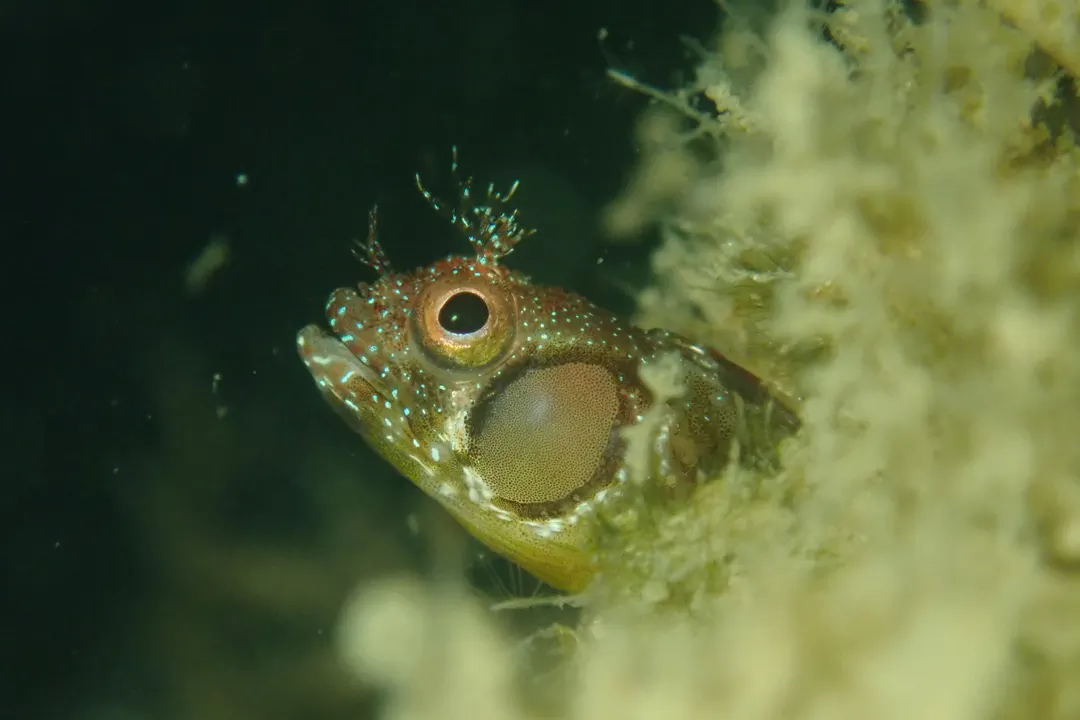
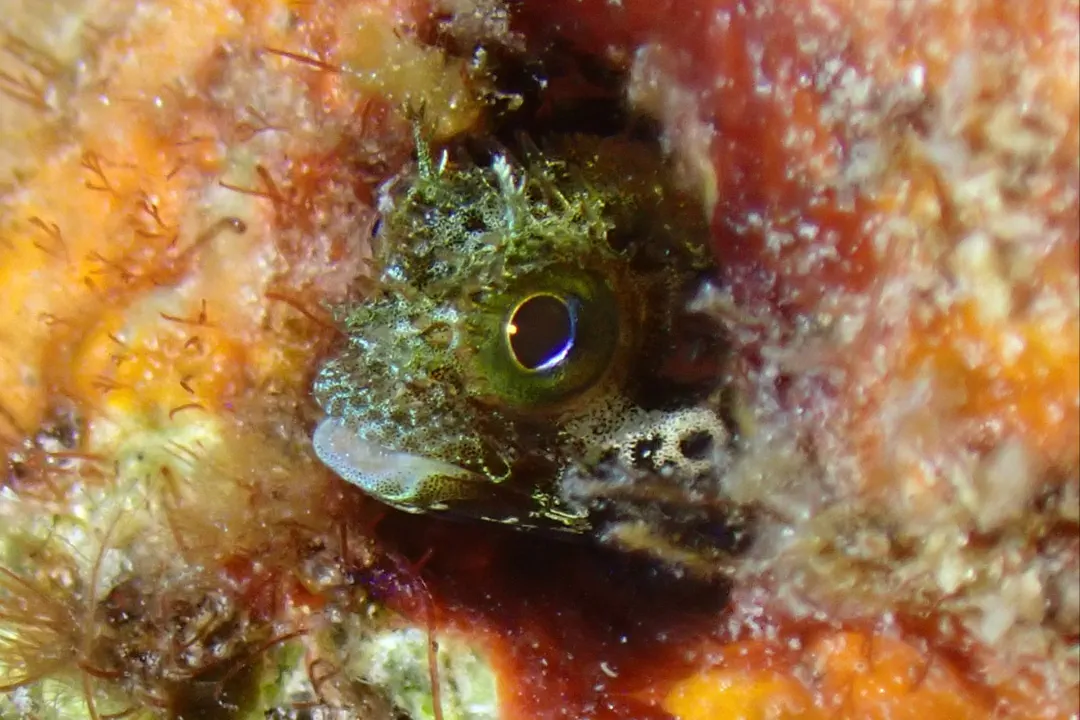
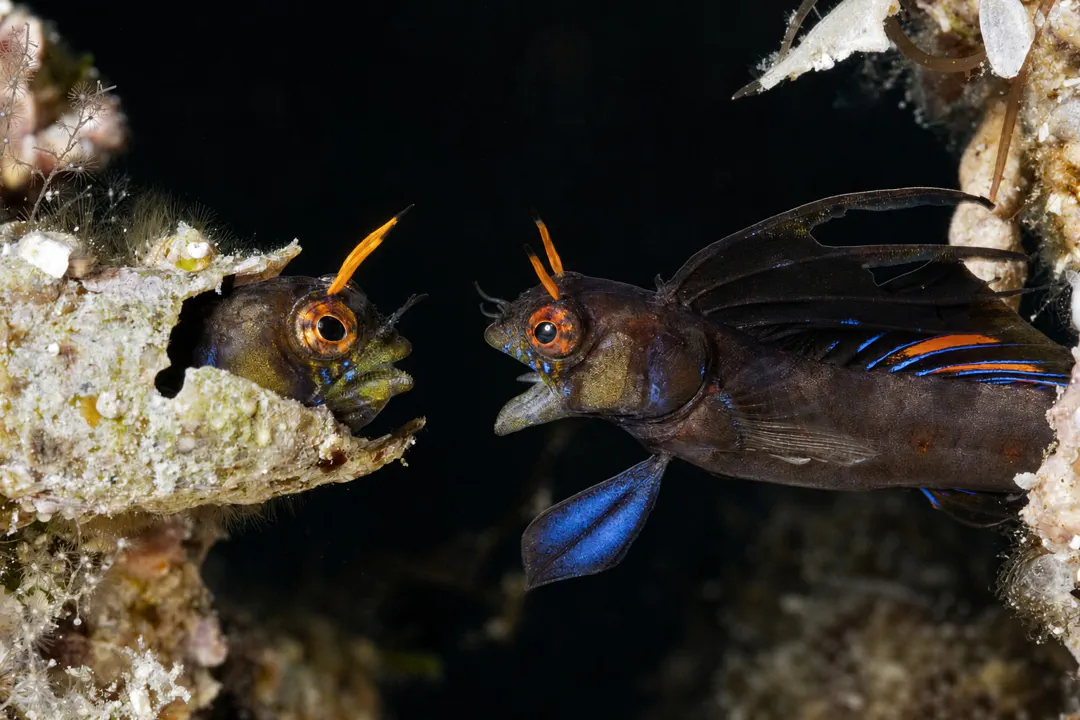
Acanthemblemaria crockeri is a species of chaenopsid blenny found in coral reefs in the Gulf of California, in the eastern central Pacific ocean. It can reach a maximum length of 6 centimetres.
It has an elongate body and short blunt head. The head spines strongly developed in two triangular patches on frontals separated by deep spineless depression; spines also present in 3 longitudinal rows on each side of central groove between eyes; cirri on nostrils, over eyes (1 pair, very bushy); but not on nape; 2 rows of well-developed teeth on side of roof of mouth; dorsal XXIII-XXVII, 12-15; anal II, 24-28; pectoral 13-14.
Both sexes have a large black-ringed dark brown mark covering most of gill cover and many small white spots on the head. Front of dorsal fin is orangish. Male: dark brownish, with numerous small white spots and lines. Female: pale (whitish), with red to orange blotches along mid-flank, internal white dashes along vertebral column; orange throat region.
Eastern Central Pacific: Gulf of California.
It is found in shallow, rocky areas. Inhabits empty worm and mollusk tubes on rocky reefs. It feeds primarily on zooplankton, benthic invertebrates and small fishes.
© Robin WhiteCC BY 4.0 · iNaturalist 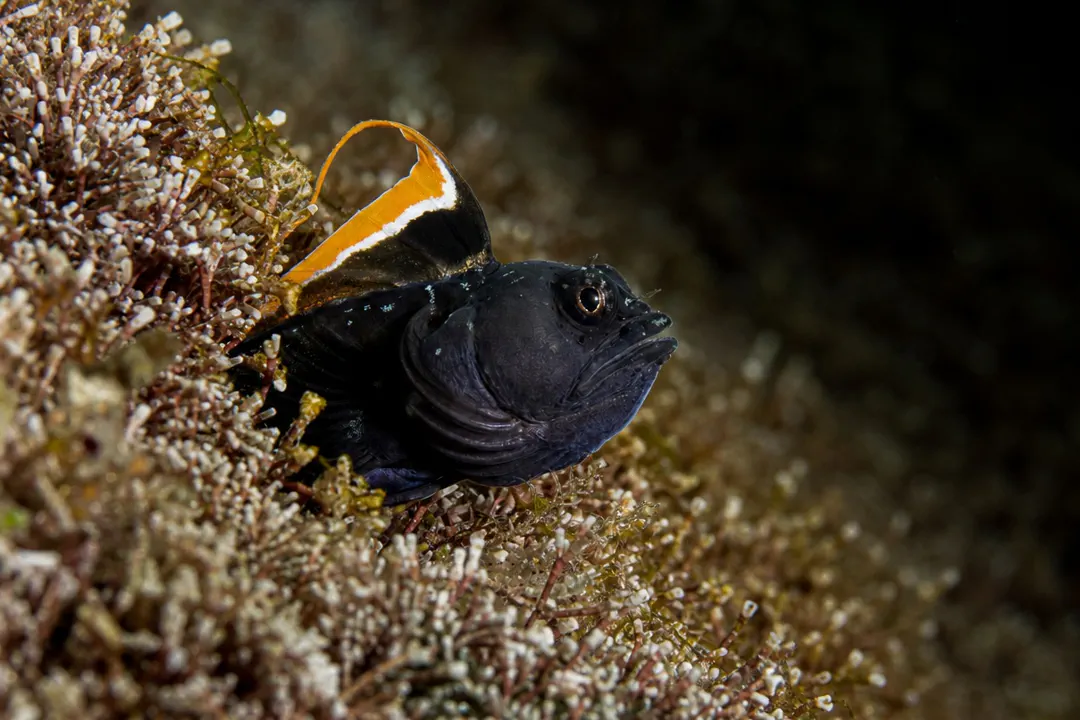 © seabook.appAll rights reserved
  © Dan SchofieldCC BY 4.0 · iNaturalist
  © seabook.appAll rights reserved
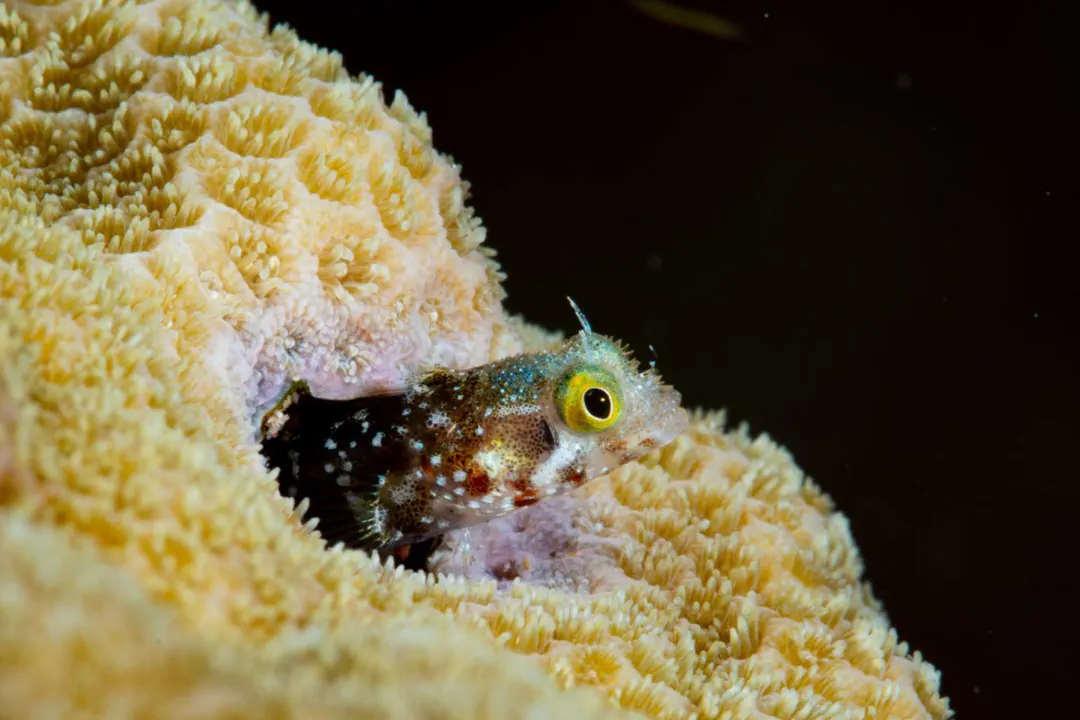
 Browncheek Blenny has no known danger to humans. However, always observe marine life responsibly.
Browncheek Blenny can be found at depths of up to 60 meters.
Download Seabook free for iOS and Android.