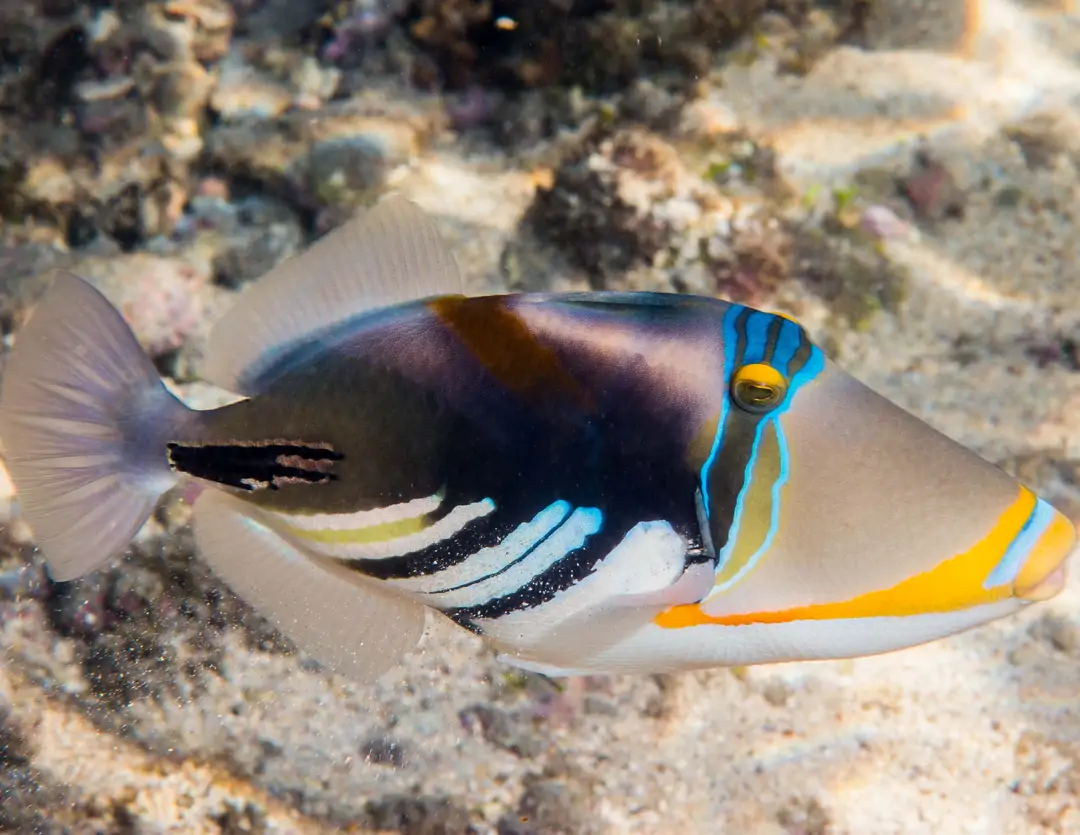
Arabian Picasso Triggerfish
Rhinecanthus assasi
Picasso Triggerfish
Rhinecanthus aculeatus
- Max size
- View in app
- Max depth
- 50 m
- Found in
- 91 regions
How to recognise it
- Colours
- whiteblackbrownyelloworangeblue
- Body shape
- Compressed
- Pattern
- Horizontal markings, Oblique markings
Rhinecanthus aculeatus is a triggerfish, up to 30 cm in length, found on reefs in the Indo-Pacific region.
This species has been studied in a range of research contexts, from locomotion to colour vision research.
Description
It is largely whitish with a dark region midlaterally. There are four white-blue stripes descending from the side of the body to that anal fin. Four blue lines cross between the eyes and there are three blue lines between the eyes and the pectoral fin bases. A yellow line enclosing a blue 'moustache' runs between the mouth and the pectoral fin base.
Distribution
Indo-Pacific: Red Sea south to South Africa and east to the Hawaiian, Marquesan, and Tuamoto islands, north to southern Japan, south to Lord Howe Island. Eastern Atlantic: Senegal to South Africa.
Behavior
Lagoon triggerfish live in the reefs and sandy areas of coral reefs where it eats just about everything that comes along. They are always restlessly swimming around and can vigorously protect their territory against intruders, including divers, especially when guarding their eggs during reproduction season. Fortunately, their relative small size makes them much less dangerous than the larger titan triggerfish of the same family. It feeds on algae, detritus and invertebrates. Sleep on its side; makes a whirring noise when alarmed.
Mating and reproduction
Both sexes guard territories, some maintaining a territory for eight years or longer (males holding territories for significantly longer than females). A typical male territory may overlap with one to five female territories, and their mating system is described as haremic, although not much is known about this (similar mating systems are seen in other Balistidae species). If a male or female is removed or disappears their territories are soon taken over by a new fish. They reproduce repeatedly over their lifetimes.
Pair-spawning takes place around sunrise, with the egg masses being attached to sand, coral rubble or algae. They hatch the same day around sunset. Although paternal care is normal in teleost fishes with external fertilization, it is the mothers in this species that guard and care for eggs until they hatch. The mother remains above the eggs for about 12–14 hours, fanning the eggs with her pectoral fins to improve aeration for perhaps 30% of the time. She chases away most fish that approach and remove other intruders like starfish by mouth. Maternal care is effective in preventing predation, and experimental removal of the mothers reduced survival to almost nothing suggesting this behaviour is adaptive. Unlike fathers, mothers forage less and over a smaller area near the egg mass while caring for the eggs. Since the males have multiple mates, caring for an egg mass would probably be more costly in terms of lost mating opportunities so maternal care is considered to be an evolutionarily stable strategy.
Vision
This species has one type of single cone (SC), with visual pigment peaking in sensitivity at 413 nm (S), and a double cone with different visual pigments in each member peaking at 480 nm (M) and 530 nm (L) respectively. Behavioural research has provided evidence that individual members of the double cones can act as independent channels of colour information, aiding in understanding double cone function. This research suggests the species has trichromatic vision, like humans.
Similar species
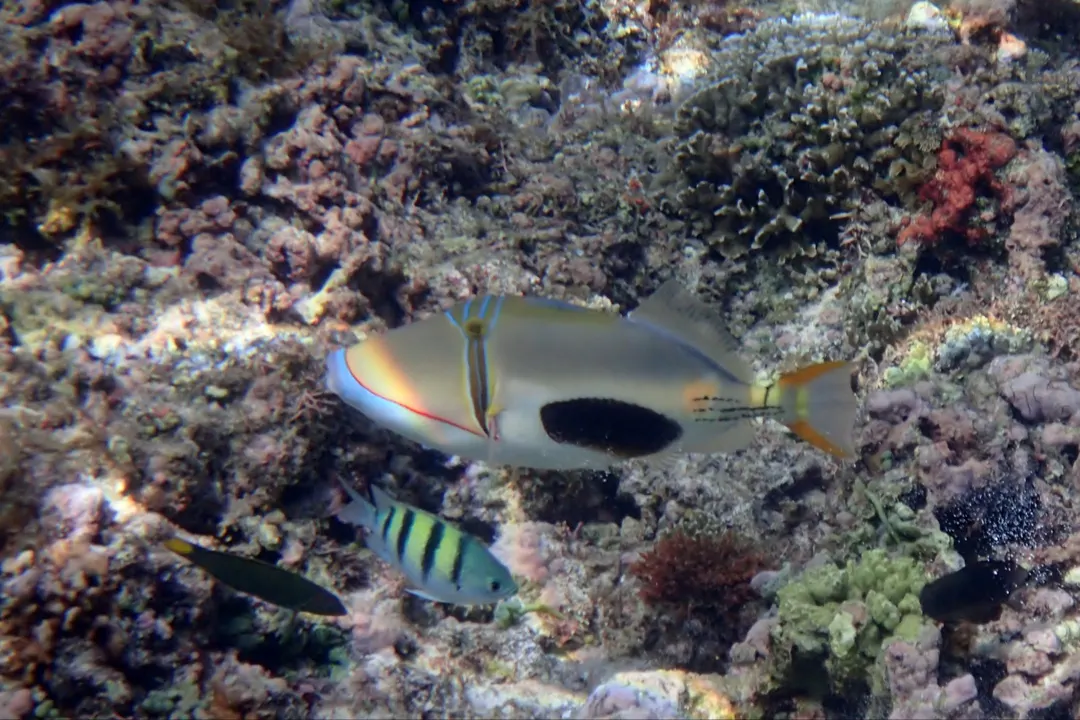 © Nicola CrockfordCC BY 4.0 · iNaturalist
Blackbelly Triggerfish
Rhinecanthus verrucosus
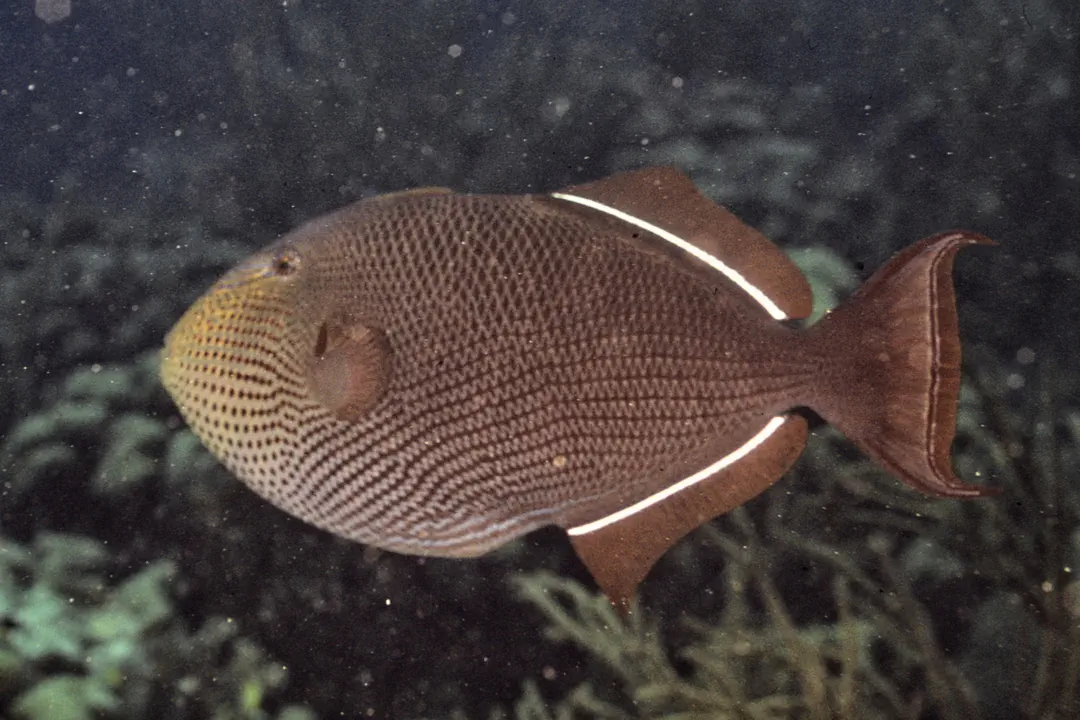 © Roger RittmasterCC BY 4.0 · iNaturalist
Black Triggerfish
Melichthys niger
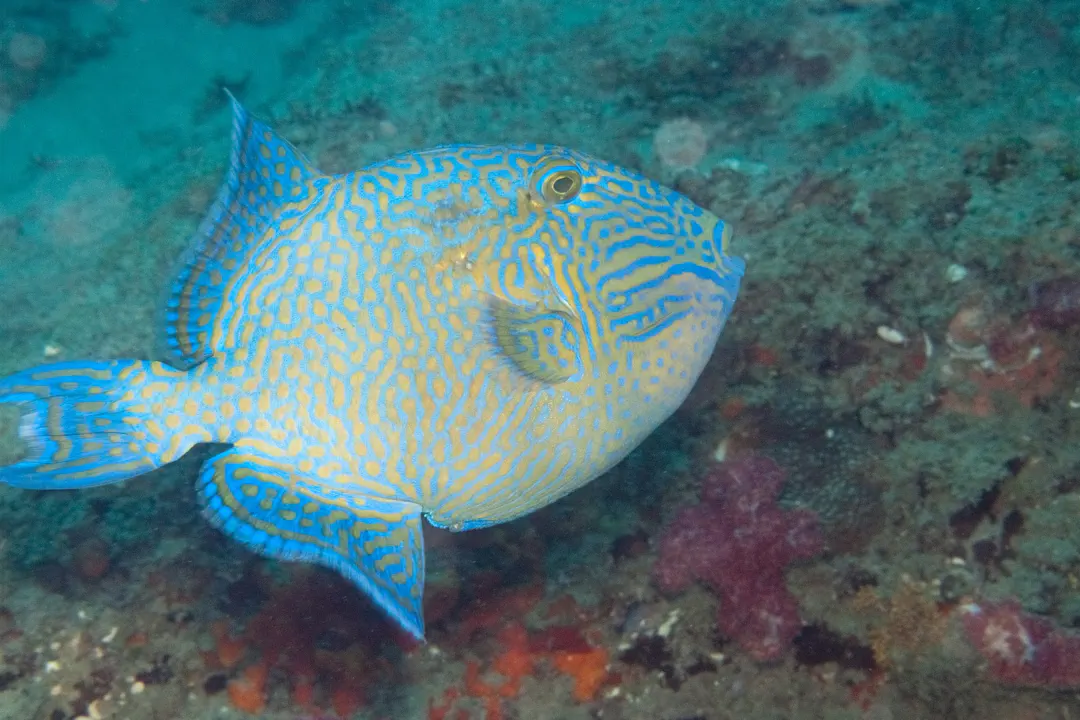 © Georgina JonesCC BY-SA 4.0 · iNaturalist
Blue Triggerfish
Pseudobalistes fuscus
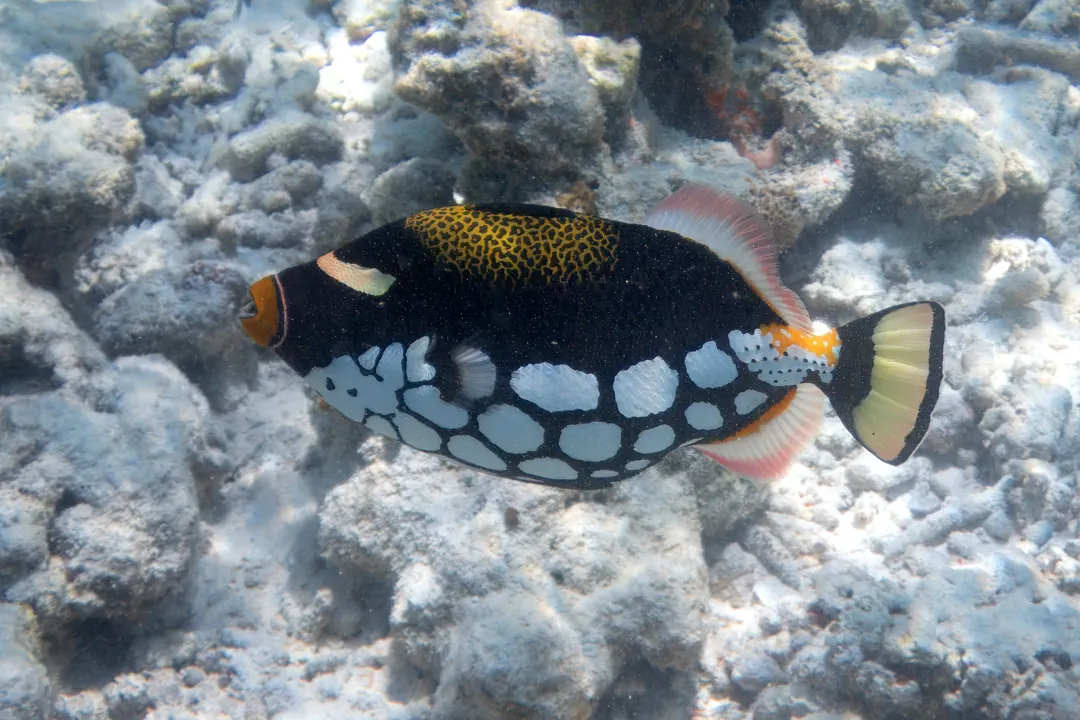 © Darren ObbardCC BY 4.0 · iNaturalist
Clown Triggerfish
Balistoides conspicillum
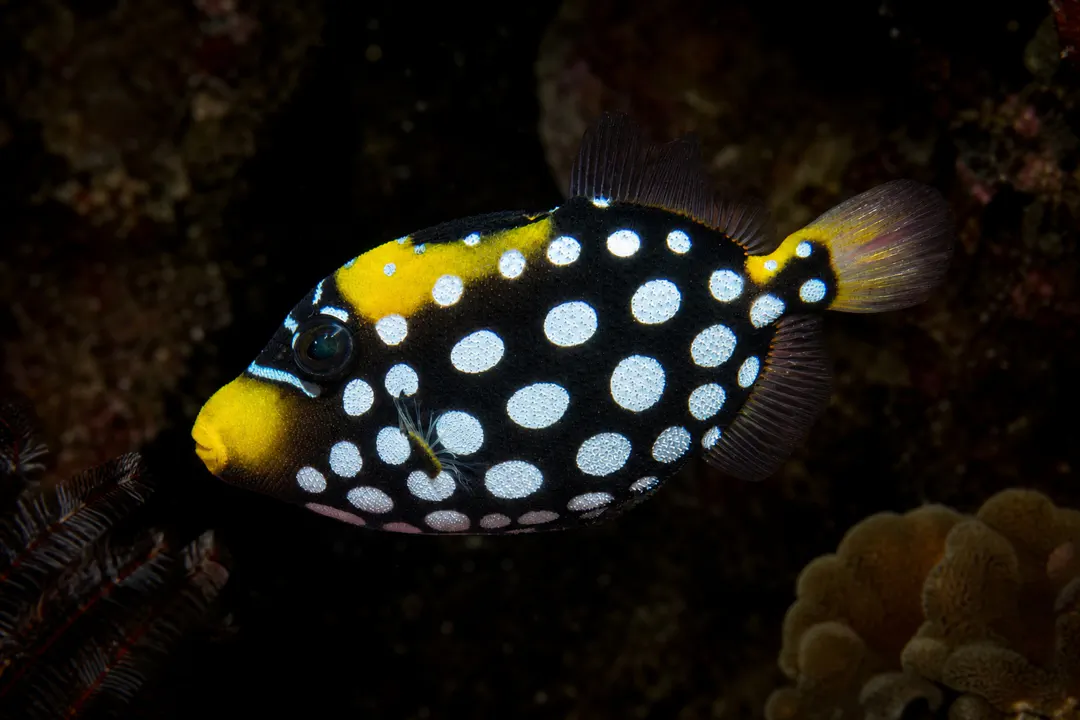 © seabook.appAll rights reserved
Clown Triggerfish (juvenile)
Balistoides conspicillum
Questions
Is Picasso Triggerfish dangerous?
Picasso Triggerfish is classified as poisonous. Always exercise caution and keep a safe distance.
Where can you find Picasso Triggerfish?
How deep does Picasso Triggerfish live?
Picasso Triggerfish can be found at depths of up to 50 meters.