Arabian Picasso Triggerfish
Rhinecanthus assasi
Reef Triggerfish (juvenile)
Rhinecanthus rectangulus
- Max size
- View in app
- Max depth
- 50 m
- Found in
- 60 regions
How to recognise it
- Colours
- whiteblackbrowngreyyelloworangeblue
- Body shape
- Compressed
- Pattern
- Vertical markings, Streaks pattern, Oblique markings
Rhinecanthus rectangulus is one of several species of triggerfish. Iit is found at reefs in the Indo-Pacific and is the state fish of Hawaii.
The name Humuhumunukunukuāpuaʻa serves for both singular and plural descriptions.
Description
The triggerfish's teeth and top lip are blue and the teeth are set close together inside its relatively chubby mouth. Dorsal spines (total): 3; Dorsal soft rays (total): 22-25; Anal spines: 0; Anal soft rays: 20 - 22. Body is orange-brown above; head and belly white; soft dorsal, anal and pectoral fins pale; caudal fin dusky. The most notable feature from this fish is the tilted V outlined with irredescent lines and black on the underside and just in front of the caudal fin. Differs from other Rhinecanthus species (picasso triggerfishes) in having large black oblique patch from eye to anal fin, black arrowhead patch at tail base, and 2 thin yellow chevron markings on rear body.
The fish has a small second spine, which it can use to lock its main spine into an upright position. Locking its spine while sheltering inside a small crevice makes it difficult for a predator to pull the fish out. When fleeing from predators, the triggerfish will sometimes make grunting noises, possibly a call to warn other nearby triggerfish of danger.
The triggerfish can blow jets of water from its mouth, which help the fish find benthic invertebrates that may be buried under the substrate. Triggerfish can often be seen spitting sand from their mouths in order to sift through the material in search of edible detritus or organisms.
Reef triggers are fairly aggressive and will generally not tolerate conspecific individuals in their general vicinity; thus the fish is often found solitary. This is particularly true in captivity. Triggers have the ability to rapidly alter their coloration. They can fade into a relatively drab appearance when sleeping or demonstrating submission, while their coloration is often the most vivid when the fish are healthy and unthreatened by their surroundings. They have also been known to bite and attack swimmers in their area, sometimes leaving marks often on the ankle area.
Distribution
Indo-Pacific: Red Sea south to East London, South Africa and east through Indonesia to the Marquesan Islands, north to southern Japan, south to Lord Howe Island.
Habitat
Occur in shallow outer reefs subject to surge. Commonly found over barren rock or the spur-and-groove zone where there is a mixture of bare rock, rubble, and coral. Juveniles on algae reef. Benthopelagic. Feed on algae, detritus, mollusks, crustaceans, worms, echinoderms, fishes, sponges, foraminiferans, and eggs. Territorial. Oviparous.
Hawaii state fish
The reef triggerfish was originally designated the official fish of Hawaii in 1985, but due to an expiration of a Hawaiian state law after five years, it ceased to be the state fish in 1990. On April 17, 2006, bill HB1982 was presented to the Governor of Hawaiʻi, which permanently reinstated the reef triggerfish (humuhumunukunukuapuaʻa) as the state fish of Hawaiʻi. The bill passed into law on May 2, 2006, and was effective upon its approval.
Decades prior to official recognition, humuhumunukunukuāpuaʻa were considered a symbol of Hawai'i. The song My Little Grass Shack in Kealakekua, Hawaii includes the line " . . .where the humuhumunukunukuāpuaʻa go swimming by . . ."
In the video games Pokémon Sun and Moon and their sequels Pokémon Ultra Sun and Ultra Moon, the main plot takes place in the Alola Region, which is based on the Hawaiian Islands. One of the new Pokémon introduced in these games is Bruxish, which takes its design from the humuhumunukunukuāpua.
Similar species
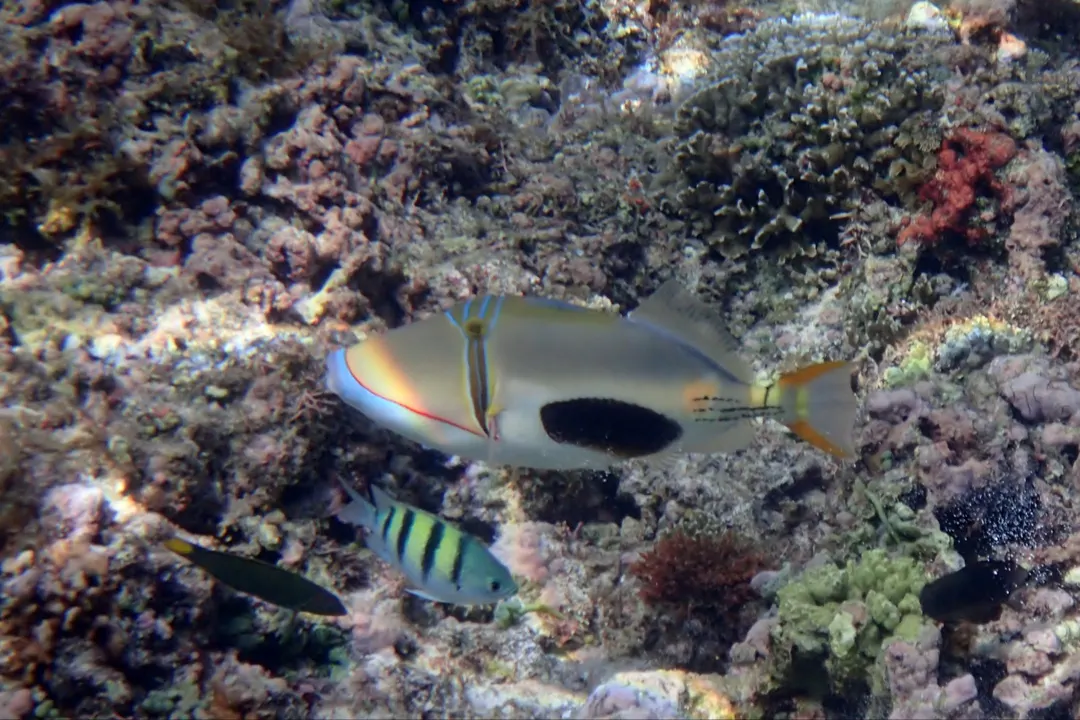 © Nicola CrockfordCC BY 4.0 · iNaturalist
Blackbelly Triggerfish
Rhinecanthus verrucosus
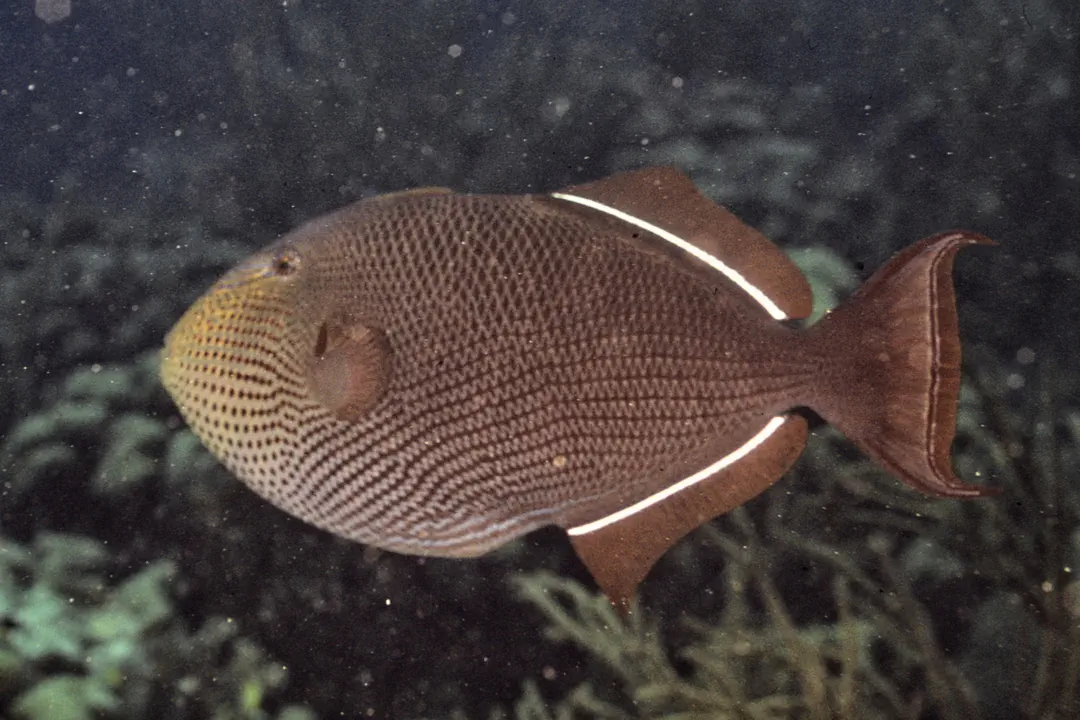 © Roger RittmasterCC BY 4.0 · iNaturalist
Black Triggerfish
Melichthys niger
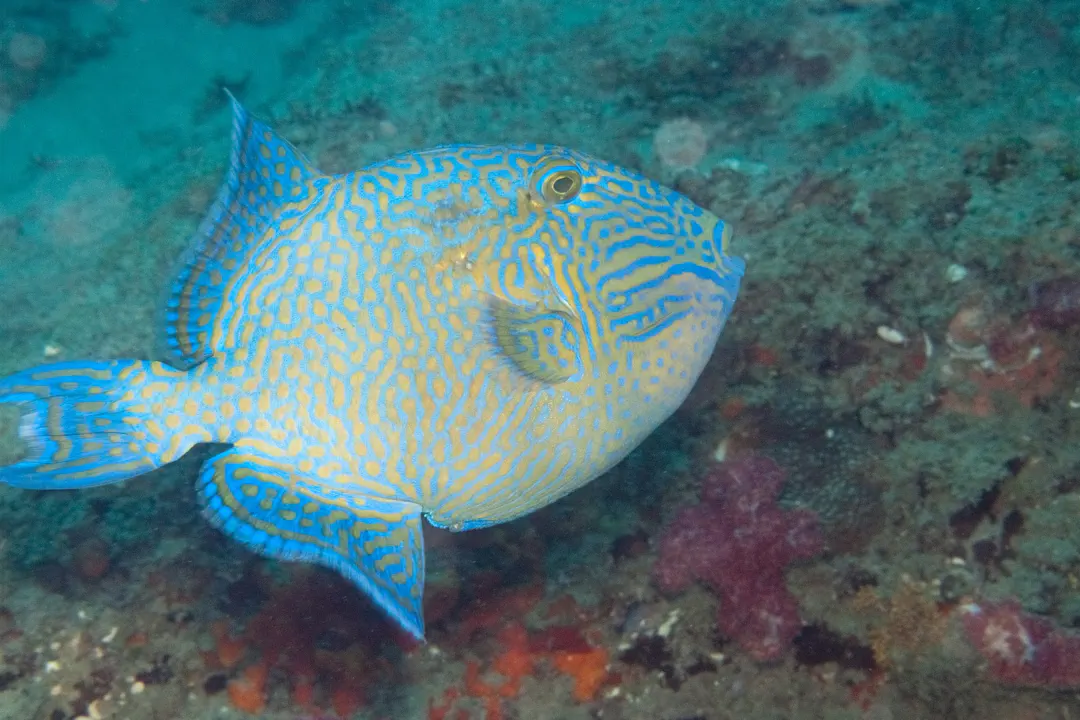 © Georgina JonesCC BY-SA 4.0 · iNaturalist
Blue Triggerfish
Pseudobalistes fuscus
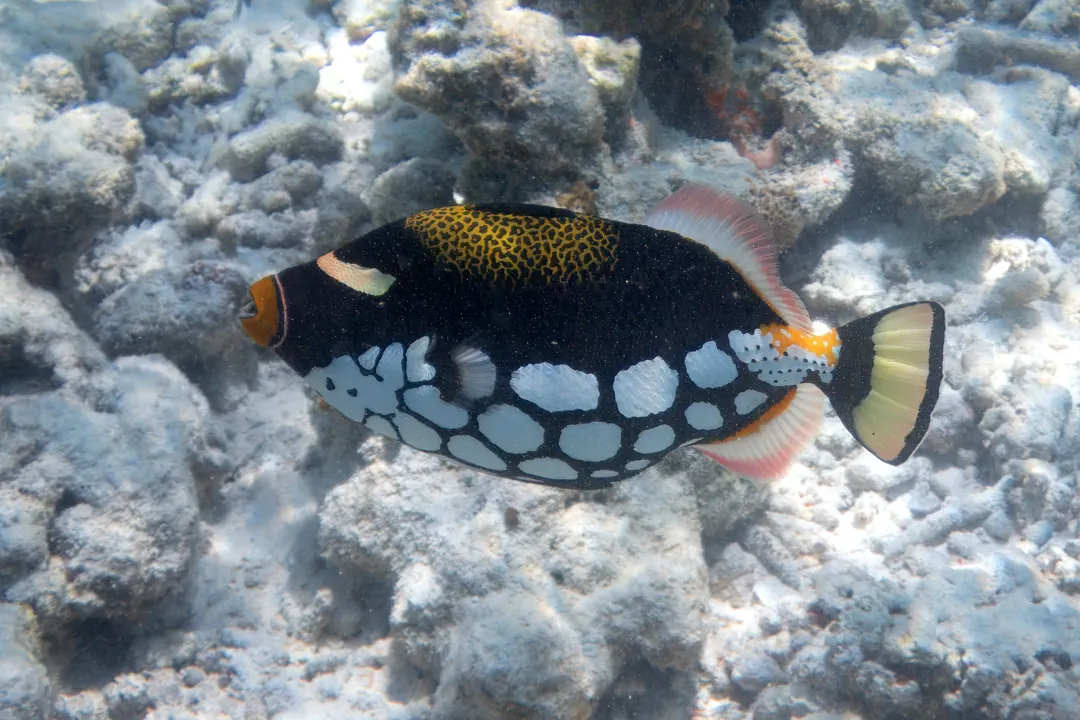 © Darren ObbardCC BY 4.0 · iNaturalist
Clown Triggerfish
Balistoides conspicillum
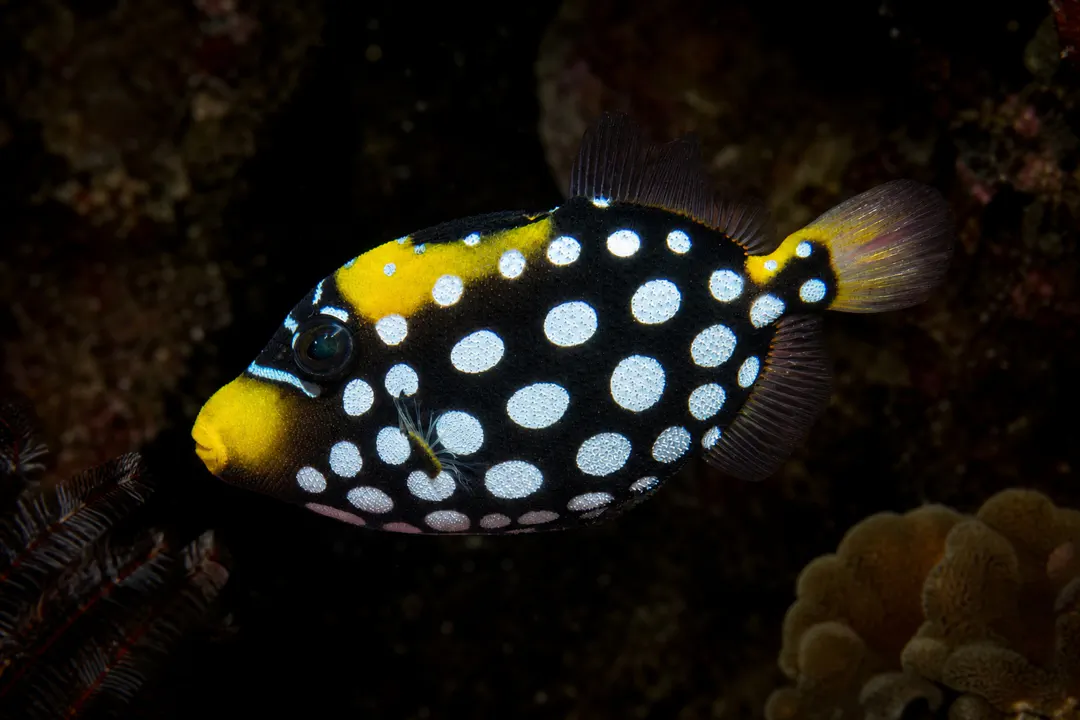 © seabook.appAll rights reserved
Clown Triggerfish (juvenile)
Balistoides conspicillum
Questions
Is Reef Triggerfish (juvenile) dangerous?
Reef Triggerfish (juvenile) has no known danger to humans. However, always observe marine life responsibly.
Where can you find Reef Triggerfish (juvenile)?
How deep does Reef Triggerfish (juvenile) live?
Reef Triggerfish (juvenile) can be found at depths of up to 50 meters.