 © Zakqary RoyCC BY 4.0 · iNaturalist
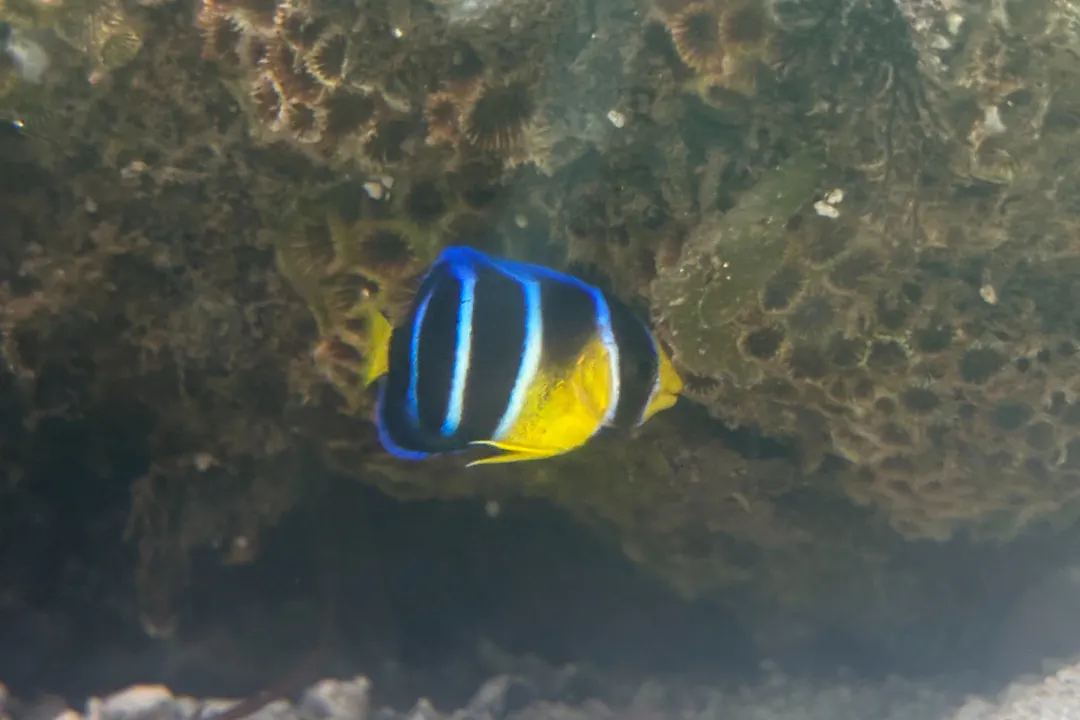
Bermuda Blue Angelfish (juvenile)
Holacanthus bermudensis
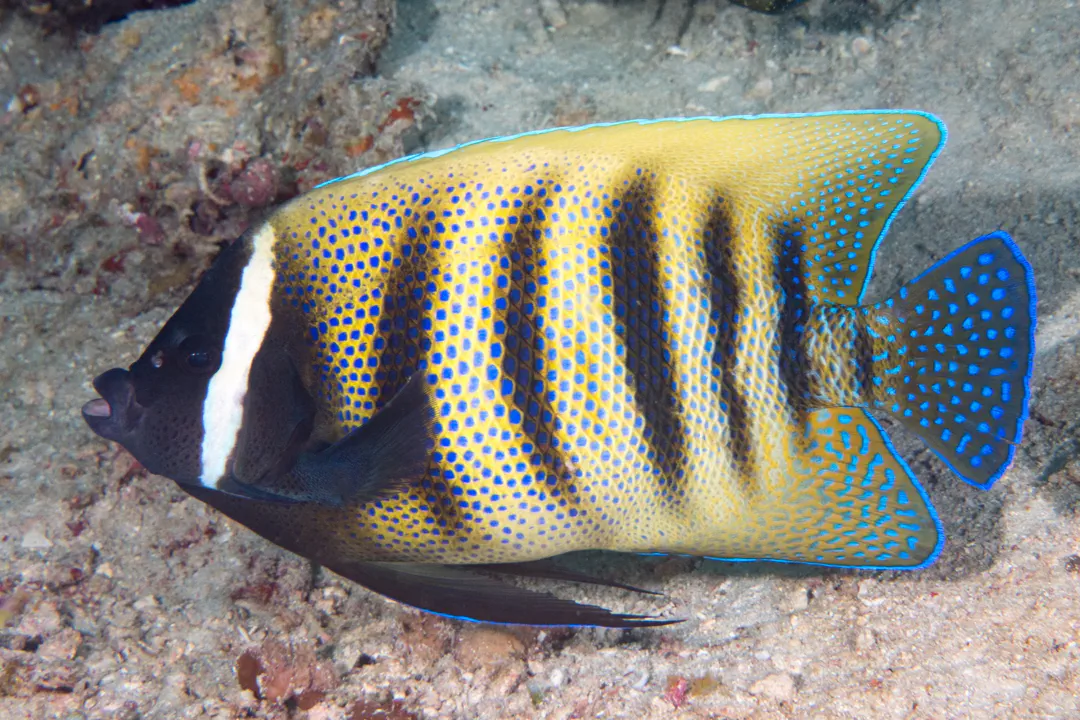
Pomacanthus sexstriatus
Pomacanthus sexstriatus is a marine angelfish, with an easily recognisable yellow body with black vertical stripes (usually six on each side, hence 'sixbar'), one white vertical stripe on each side of its black head, fluorescent blue spots on the body, fins and tail and fluorescent blue lines on the top and bottom fin and tail. They are common in South Pacific reefs, most commonly the Great Barrier Reef of Australia's north-east coast. The sixbar angelfish can grow to a maximum size of 46 cm in the ocean, though only around 30 cm in captivity. Despite being very sought after by many aquarists, the sixbar angelfish is very difficult to care for. The sixbar angelfish is an omnivore, eating sponges, corals and algae, and is also known to eat other fishes' eggs.
Pomacanthus sexstriatus can reach a total body length of about 46 cm (18 in) in the ocean. These angelfishes have 13-14 dorsal spines, 18-23 dorsal soft rays, 3 anal spines and 18-19 anal soft rays. They have an easily recognisable very dark brown head. Body may have a yellow, silver white or cream coloration with black or brown vertical stripes (usually six on each side, hence the common name sixbar and the species name sexstriatus). There is one white vertical stripe on each side of its head. Fluorescent blue spots speckle the entire body, fins and tail. On the top and bottom fin and tail are present fluorescent blue lines. Like many juvenile angelfish, also the juveniles of this species have a pattern of white and light blue horizontal stripes on a dark blue background. The adult coloring is formed when they reach a length of 8–15 cm (3.1–5.9 in).
This species is native to the western Pacific Ocean. It is present in Australia, Cambodia, Indonesia, Japan, Malaysia, Micronesia, Myanmar, New Caledonia, Palau, Papua New Guinea, Philippines, Singapore, Solomon Islands, Sri Lanka, Taiwan, Thailand, Vanuatu, Vietnam.
This species commonly occurs in South Pacific reefs, most commonly in the Great Barrier Reef of Australia's north-east coast, at depths of 3 to 60 m. It inhabits coastal, lagoon and outer reef slopes in clear water, with a preference for coral-rich areas.
The six-banded angelfish is often seen in pairs, as it mates with one partner and they stay together for life. These tropical marine reef-associated fishes are omnivore, eating worms, mollusks, and tunicates, sponges, corals and algae, and they are also known to eat other fishes' eggs. Adults prefer areas with rich coral growth. The juveniles are particualrly common on shallow waters of reefs.
© Zakqary RoyCC BY 4.0 · iNaturalist  © Daniel BenákCC BY 4.0 · iNaturalist
  © Piotr LukasikCC BY 4.0 · iNaturalist
 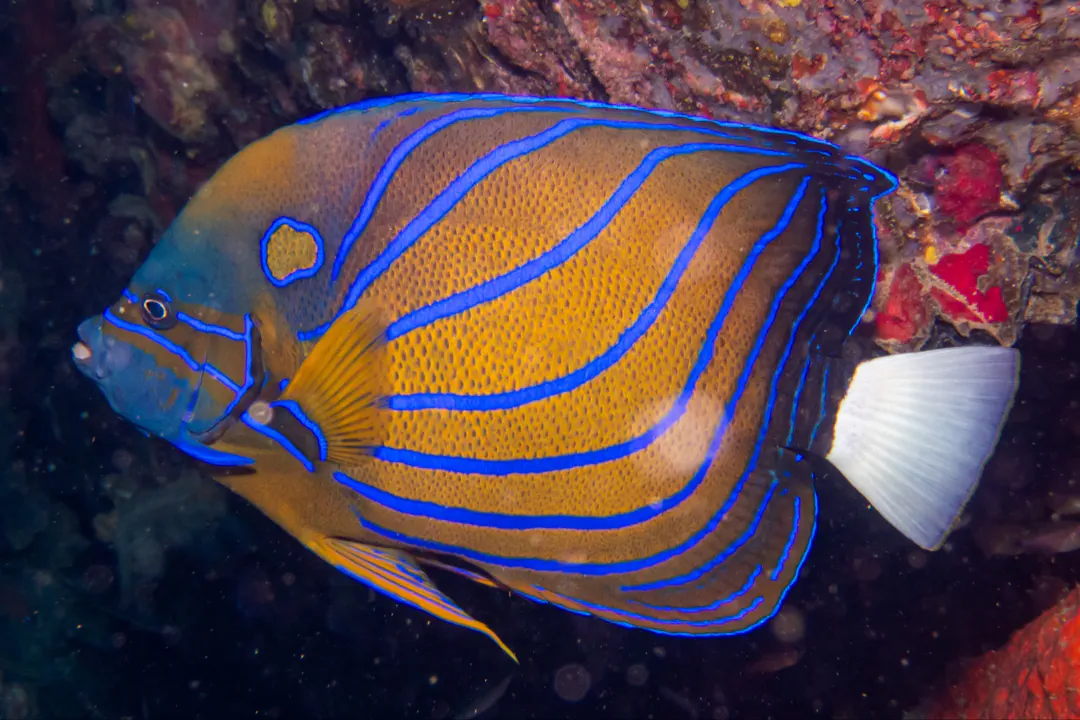 © portioidCC BY 4.0 · iNaturalist
 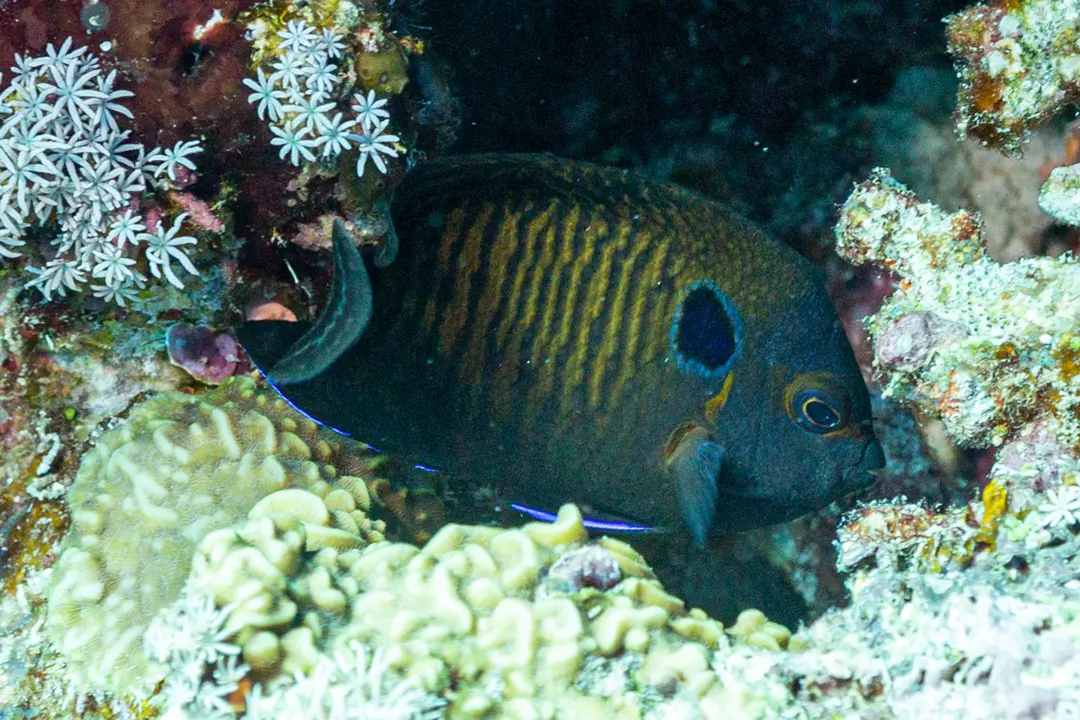 © R VasconcellosCC BY 4.0 · iNaturalist
 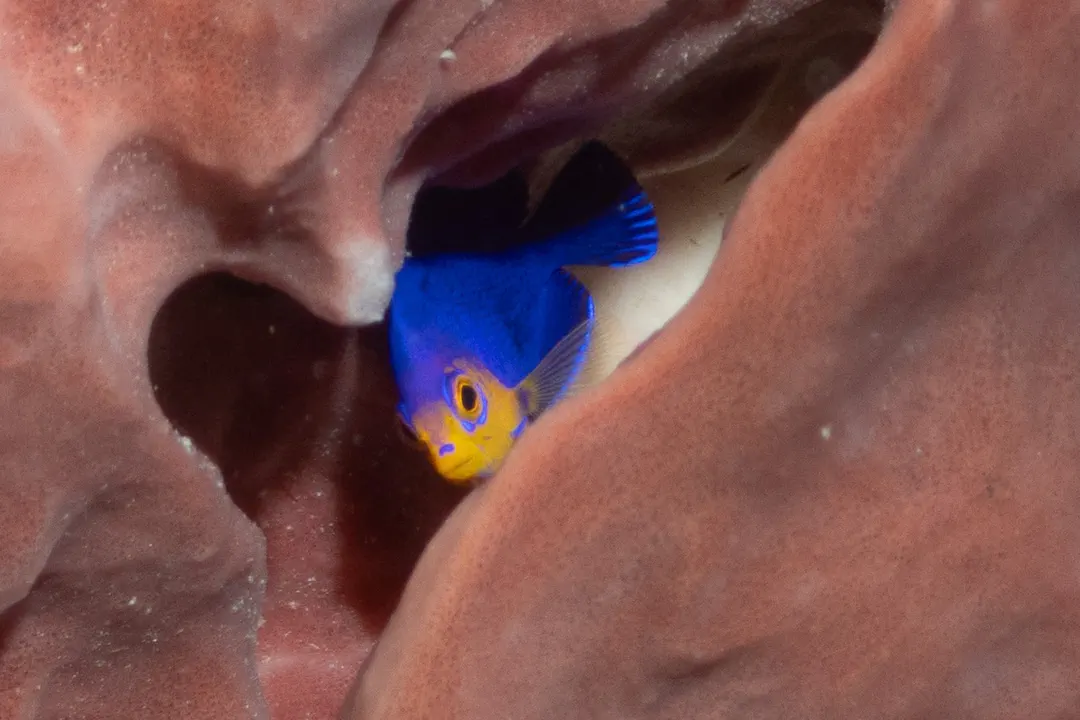 Justin PhilboisCC0 · iNaturalist
 Sixband Angelfish has no known danger to humans. However, always observe marine life responsibly.
Sixband Angelfish can be found at depths of up to 60 meters.
Download Seabook free for iOS and Android.