 © Bernard PictonCC BY 4.0 · iNaturalist
Brush Sponge
Ciocalypta penicillus
Niphates olemda
The Tube Sponge was first described by M. W. de Laubenfels in 1954. It was originally named Cribrochalina olemda de Laubenfels, 1954. The type locality for the original material is the West Caroline Islands, Micronesia, specifically the Palau region. Currently, the species is accepted under the genus Niphates as Niphates olemda (de Laubenfels, 1954). The documented taxonomic change involves a genus transfer from Cribrochalina to Niphates, with Cribrochalina olemda de Laubenfels, 1954 as the principal synonym. The etymology of the name 'olemda' is not reliably stated in the available sources. The genus name Niphates was established by Duchassaing and Michelotti in 1864, but its etymology is not documented in the retrieved sources.
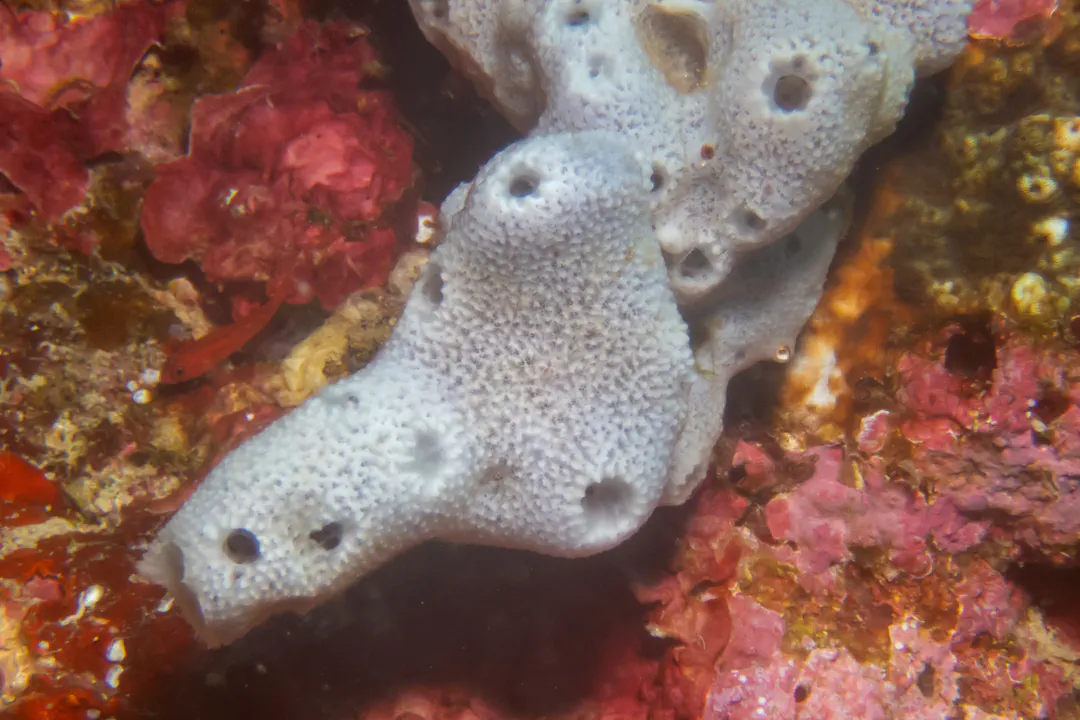
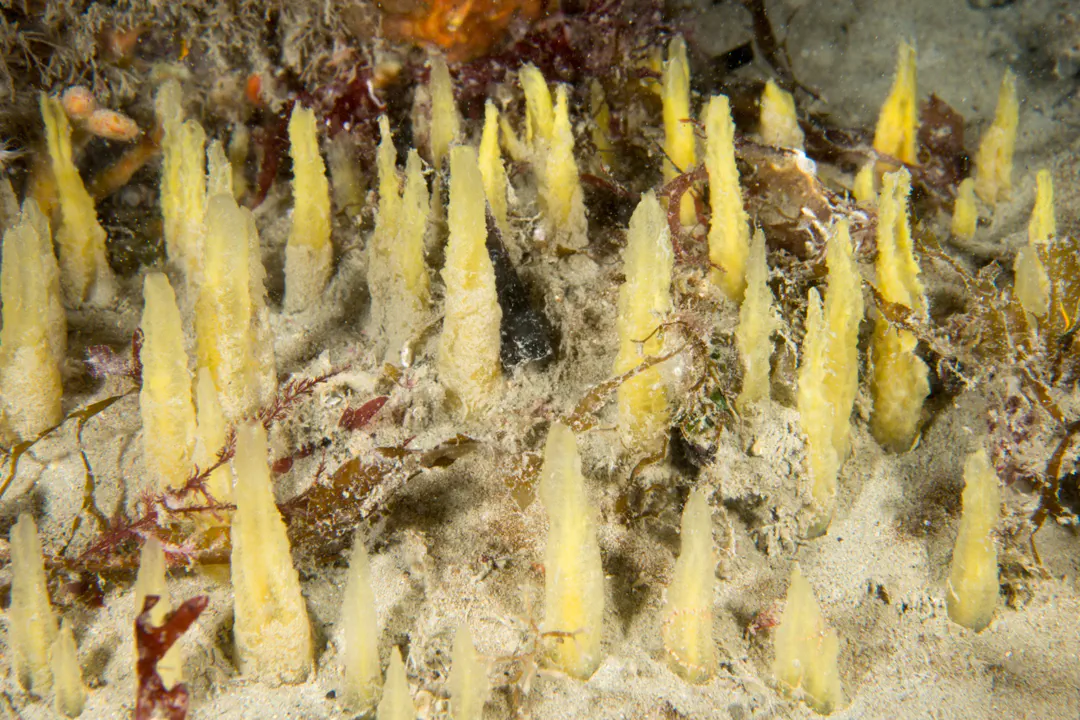
The Tube Sponge is best recognized underwater as a large, soft, gray to bluish sponge forming clusters of upright tubes. Its color can vary with depth, lighting, and sediment, typically appearing gray to blue-gray. The species does not have consistently reported stripes, spots, or other bold surface markings, making tube openings and irregularly clustered form more useful for identification than color alone. The body shape of the Tube Sponge is usually a conspicuous colony of thick, upright or spreading tubes, rather than a flat crust or compact ball. Individual tubes of the species may branch or merge, contributing to its distinctive appearance. It is a soft sponge with visible oscules, which are larger water-outflow openings located on or near the tube surfaces. Reliable species-level separation from other Niphates or tube-forming sponges generally cannot be made from color and body shape alone. For defensible identification, it is important to record the full-colony shape and whether tubes are separate, clustered, or fused, as well as the surface texture and arrangement of oscules. Taxonomic confirmation may require microscopic skeletal characters and comparison with a regional sponge key, as the available field source does not provide enough diagnostic detail to distinguish Niphates olemda from every similar species confidently.
The Tube Sponge is a shallow-water tropical sponge associated mainly with coral reefs. It occurs in reef flats and lagoon or pinnacle reefs, and may also be found on seaward reefs and turbid fringing reefs. The species is commonly attached to coral rubble, dead coral, limestone rock, and other hard substrates. Verified records of the Tube Sponge's depth range include approximately 8–25 m, with a specimen collected at 8 m from Samalona Island and records from North Sulawesi spanning 8–25 m. The Tube Sponge is recorded across the tropical Indo-Pacific, including regions such as Palau, the Philippines, Vietnam, Indonesia, Australia, and New Caledonia. Indonesian records of the Tube Sponge include locations such as Ambon, North Sulawesi, and the Spermonde Archipelago.
The Tube Sponge is sessile, and its water filtration is continuous without documented diel rhythms. It is not a social animal, growing in clusters or colonies of erect tubes that do not represent coordinated social groups. Details regarding the reproductive season, mating, larval release, or reproductive mode of the Tube Sponge are not verified in the available species accounts. The species can overgrow or compete with corals, with studies indicating that 95% of documented overgrowth contacts resulted in coral necrosis. There is no published evidence describing a behavioral response of the Tube Sponge to divers, although its tissues may be damaged by touch or sediment disturbance.
The Tube Sponge is a suspension-feeding marine sponge that likely consumes suspended microscopic particles, especially bacteria, phytoplankton, and organic detritus, rather than larger prey. It feeds by drawing seawater through tiny surface pores known as ostia, filtering food particles with choanocytes, and expelling filtered water through larger openings called oscula. The species digests captured particles intracellularly and may also absorb dissolved organic compounds from seawater.
There is no evidence that the Tube Sponge is a targeted fishery species or a significant fisheries resource. No reliable evidence was found of an established aquarium-trade market for the Tube Sponge. The Tube Sponge should not be considered edible, as no authoritative source documents human consumption, and many sponges contain defensive or bioactive compounds. There is no specific evidence that intact Tube Sponges are dangerous to swimmers or divers, although a methanol extract was toxic to brine shrimp in a laboratory assay. A formal global conservation assessment or IUCN Red List category for the Tube Sponge was not found, so its conservation status is reported as not evaluated/unknown. Practical precautions include not ingesting the Tube Sponge, using it medicinally, or handling extracts, and avoiding unnecessary collection while following local rules for removing reef organisms.
© Bernard PictonCC BY 4.0 · iNaturalist 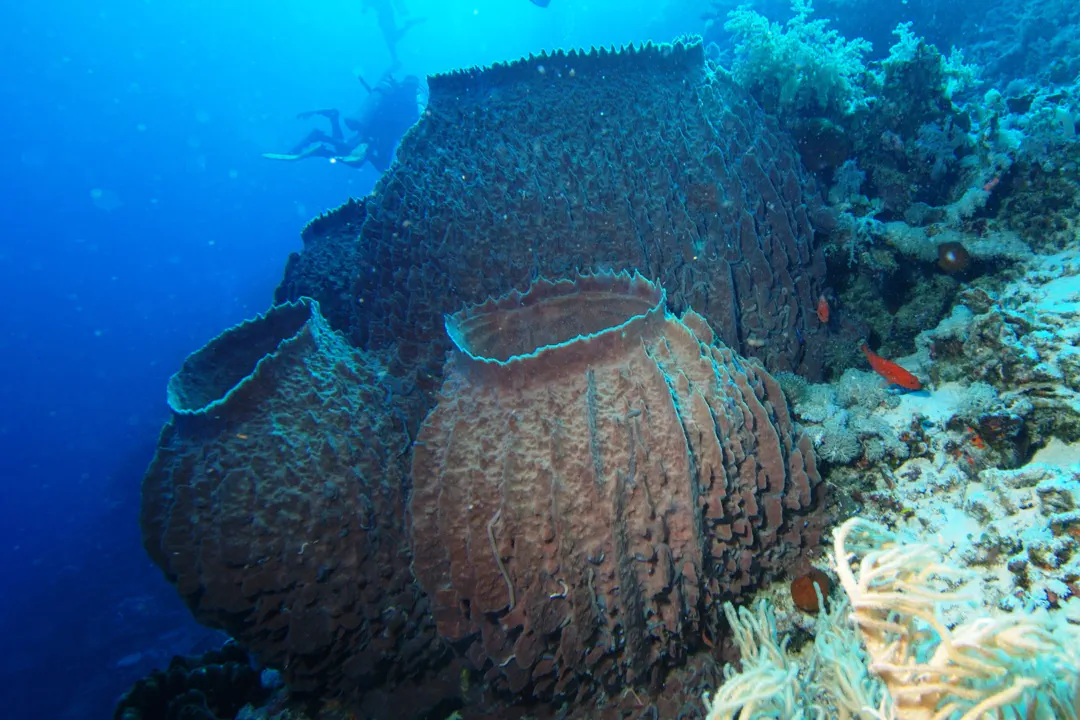 © Albert KokCC BY-SA 4.0 · iNaturalist
  © Pierre PericardCC BY 4.0 · iNaturalist
 Tube Sponge has no known danger to humans. However, always observe marine life responsibly.
Tube Sponge can be found at depths of up to 25 meters.
Download Seabook free for iOS and Android.