 © Tom HeijnenCC BY 4.0 · iNaturalist
Arabian Crust Sponge
Hemimycale arabica
Theonella swinhoei
John Edward Gray first described Swinhoe's Sponge in 1868. The original name given to the species was Theonella swinhoei Gray, 1868. Gray described both the species and the genus Theonella in the same publication, titled 'Note on Theonella, a new genus of coralloid sponges from Formosa.' The type locality for the species is Formosa, the historical name for Taiwan. The genus name Theonella does not have a documented etymology in the available authoritative sources. The specific epithet swinhoei honors Robert Swinhoe, the naturalist associated with Taiwan. The species has remained classified under the genus Theonella, currently placed in the family Theonellidae and order Tetractinellida. A named variety, Theonella swinhoei var. verrucosa, was described from the Philippines in 1925 but was later merged into T. swinhoei due to insufficient differences. Some specimens previously identified as T. swinhoei may actually be Theonella conica, indicating potential identification confusion rather than formal synonymy.
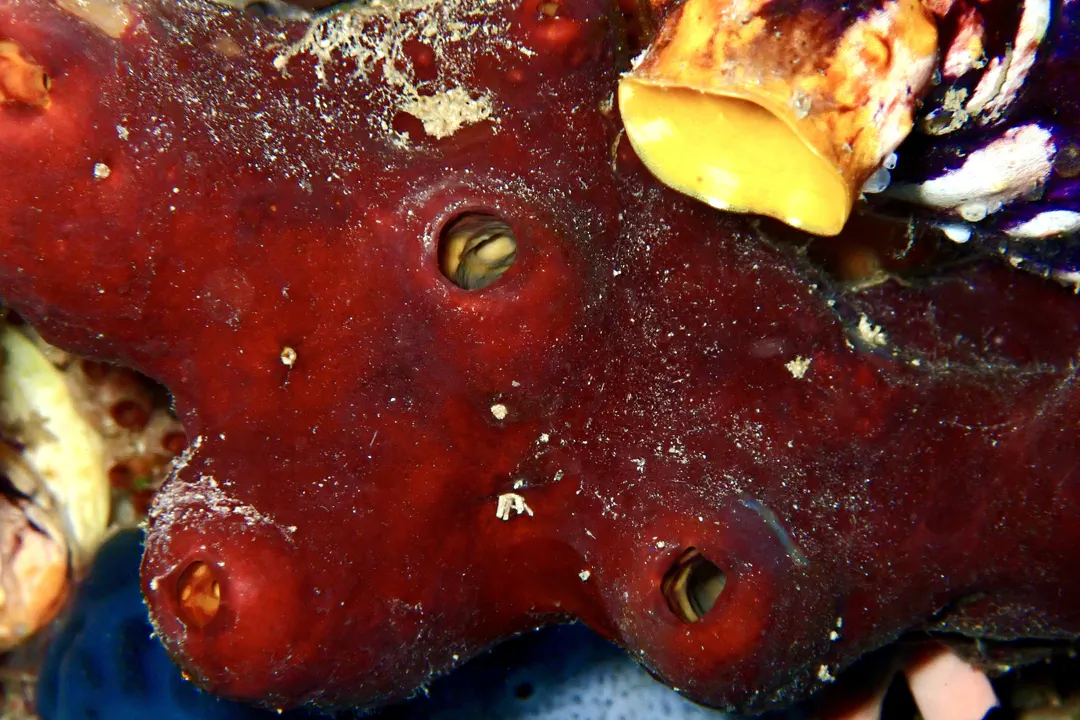
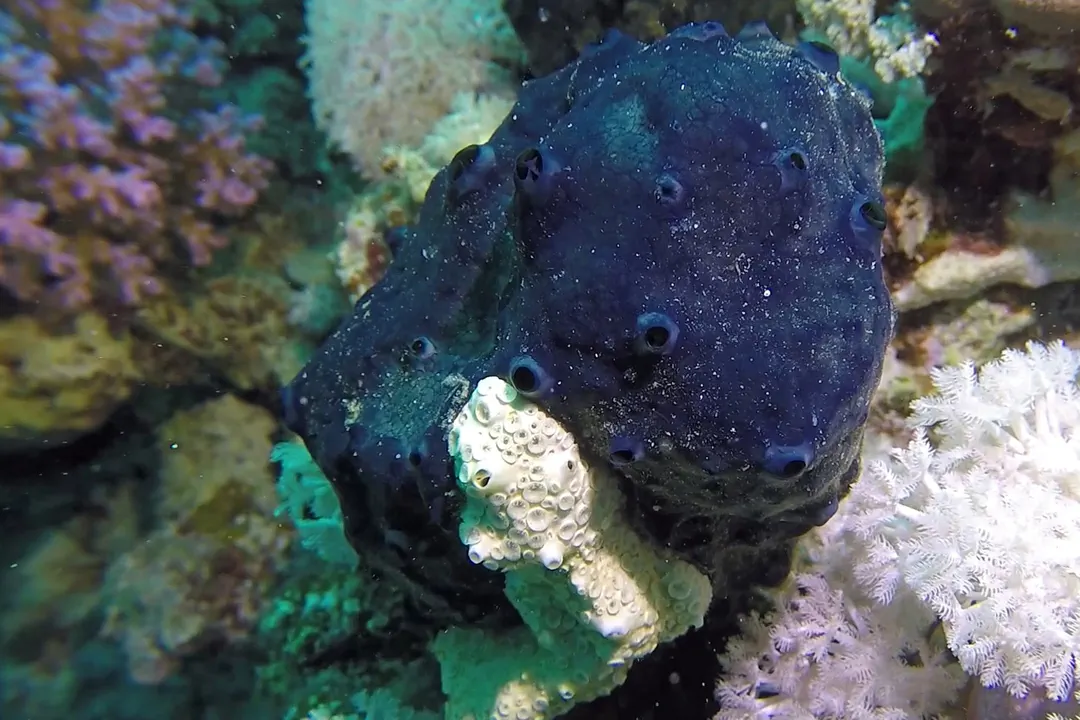
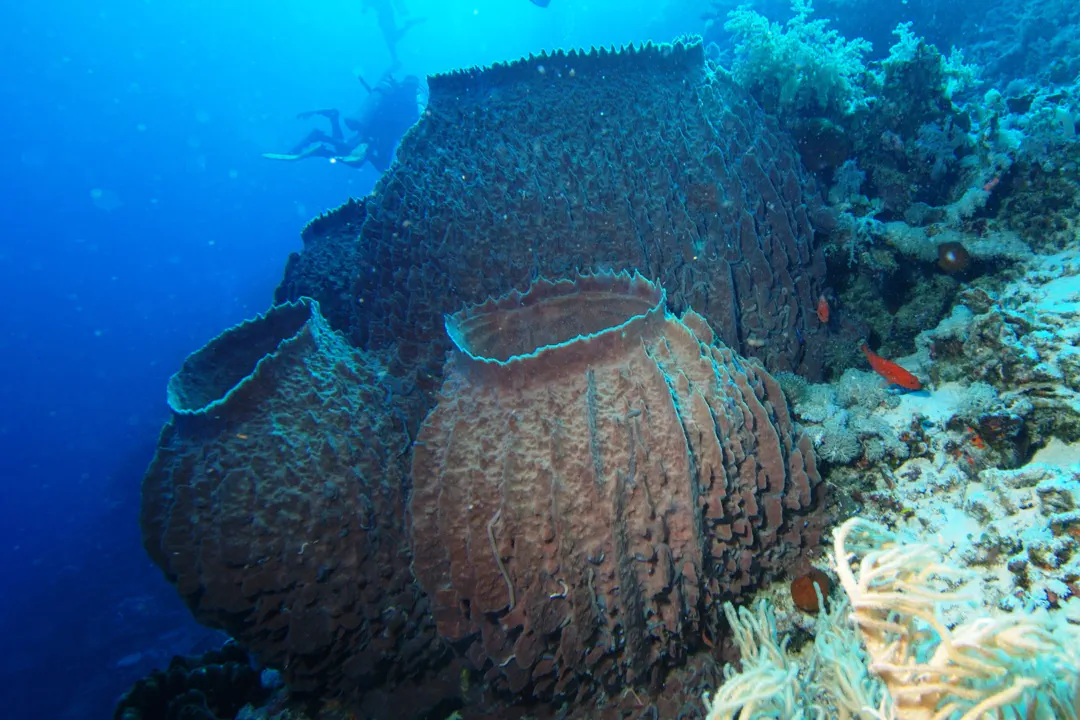
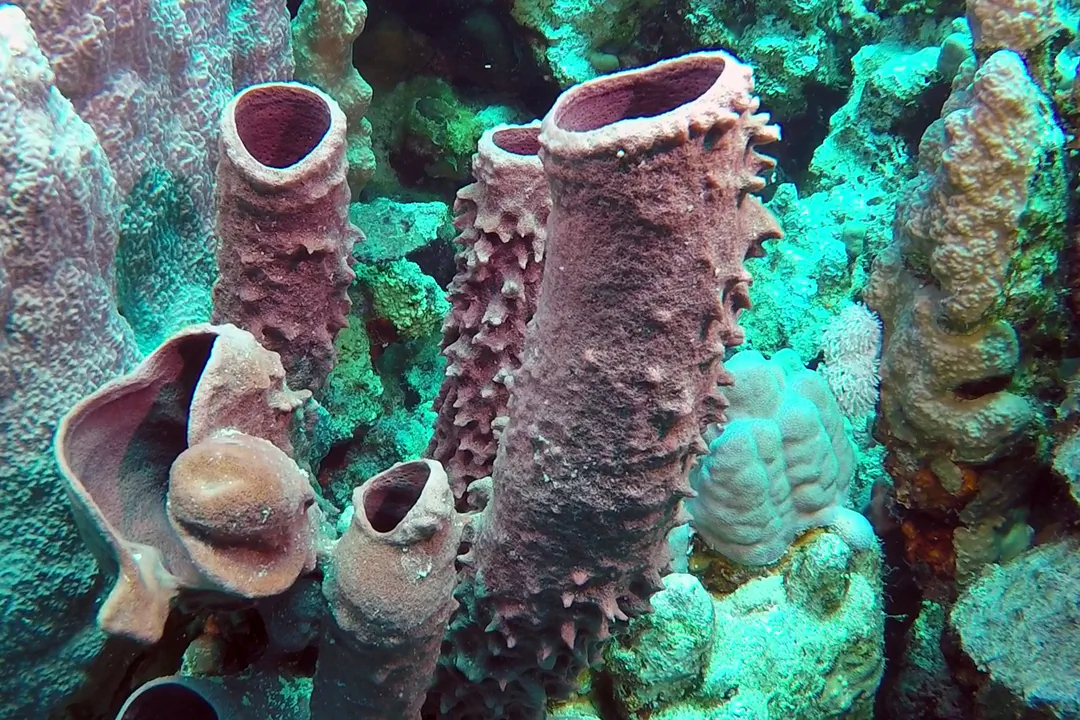
Swinhoe's Sponge has a massive, hard, generally low and broad body shape, commonly forming a solitary mound or several short, thick cylindrical chimneys with broad bases and a central terminal opening (osculum). The surface of the sponge is smooth to velvety, featuring irregular, thick ridges, and it is not characteristically covered in deep pits. Typically, the colour of Swinhoe's Sponge ranges from maroon-brown to dark brown, but this can vary with lighting, depth, and condition, making colour alone an unreliable identification feature. There is no reliable, species-specific contrasting stripe or spot pattern for field identification of Swinhoe's Sponge; instead, the combination of its dark brown colour, massive low profile, short broad chimneys, and ridged surface is more useful. Swinhoe's Sponge can be distinguished from Theonella conica, which is reported as lighter chocolate brown, much taller and thinner, with a very smooth, non-pitted surface and commonly grows in clumps. It can also be differentiated from Theonella cupola, which generally has more robust, irregular cylindrical chimneys that may be taller, while Swinhoe's Sponge has shorter, massive chimneys. Definitive identification of Swinhoe's Sponge may require examination of skeletal characters and spicules, as other dark, massive sponges can have overlapping colour and general shape.
Swinhoe's Sponge is associated with open reef bottoms and is found in reef environments rather than a narrowly defined reef zonation. The species is attached to hard substrates, including rocky bottoms, and may occur on or near coral-reef surfaces. Documented records of Swinhoe's Sponge indicate a depth range of approximately 10–65 m, with specific collections at 20–30 m in Palau and about 20 m in the South China Sea. Swinhoe's Sponge is broadly distributed across the Indo-Pacific, from the northern Red Sea and East African coast southward to South Africa, and eastward through the Indian and Pacific oceans to Japan and New Zealand.
Swinhoe's Sponge is a sessile sponge, and visible movement or locomotion is not expected. Individuals of Swinhoe's Sponge are generally solitary and do not form social groups or coordinated societies. The species is oviparous, with oocytes reported in most examined specimens except during March–June. Sperm was observed only once in August, suggesting a potential gonochoric reproductive strategy. No published observations document a behavioral response of Swinhoe's Sponge to divers, such as withdrawal or avoidance. Physical contact, sediment disturbance, or damage could affect Swinhoe's Sponge, so divers should maintain buoyancy and avoid touching it.
Swinhoe's Sponge is a suspension-feeding sponge whose main measured carbon source is dissolved organic carbon (DOC) in seawater, rather than living plankton. In field measurements, DOC accounted for more than 90% of the total organic carbon available in the inhaled water. The sponge obtained substantially more carbon from dissolved material than from captured phytoplankton and bacteria. It feeds by pumping seawater through numerous small pores using the beating of choanocyte flagella. Swinhoe's Sponge captures and ingests suspended microorganisms and small organic particles within its internal filtration system. The species absorbs dissolved organic compounds from the water, which is its dominant measured carbon pathway. Swinhoe's Sponge maintains abundant microbial symbionts, including Entotheonella-related bacteria, which likely process dissolved compounds and contribute to the sponge’s nutrition.
Swinhoe's Sponge is not a fishery species and is not harvested in conventional food, bait, or commercial fisheries. It may be collected incidentally or for scientific natural-products research, but the scale and importance of such collection are unknown. There is no reliable evidence that Swinhoe's Sponge is regularly traded in the aquarium industry, and it is not a standard aquarium-sponge species. The edibility of Swinhoe's Sponge has not been established, and it should not be eaten due to the presence of biologically active compounds and the potential to concentrate arsenic and barium to high levels. No well-documented pattern of direct human poisoning, stings, or attacks from Swinhoe's Sponge has been found, but handling or ingesting the sponge or its extracts should be avoided due to its potent cytotoxic or antifungal activity. The formal conservation status of Swinhoe's Sponge is unknown, as a specific global IUCN Red List assessment was not identified in the available authoritative sources. Although Swinhoe's Sponge is described as fairly common across parts of the Indian and Pacific Oceans, local abundance, population trends, and threats are insufficiently documented.
© Tom HeijnenCC BY 4.0 · iNaturalist 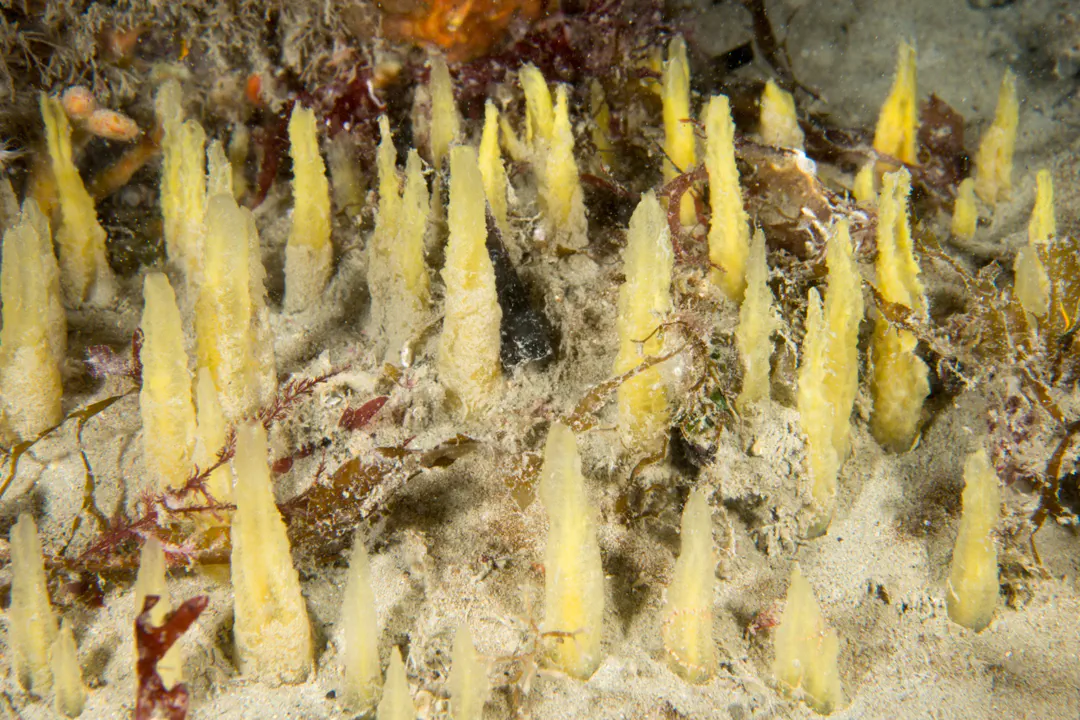 © Bernard PictonCC BY 4.0 · iNaturalist
  © Albert KokCC BY-SA 4.0 · iNaturalist
  © Pierre PericardCC BY 4.0 · iNaturalist
  © Tom HeijnenCC BY 4.0 · iNaturalist
  © Julien RenoultCC BY 4.0 · iNaturalist
 Swinhoe's Sponge has no known danger to humans. However, always observe marine life responsibly.
Download Seabook free for iOS and Android.