 © Lesley ClementsAll rights reserved
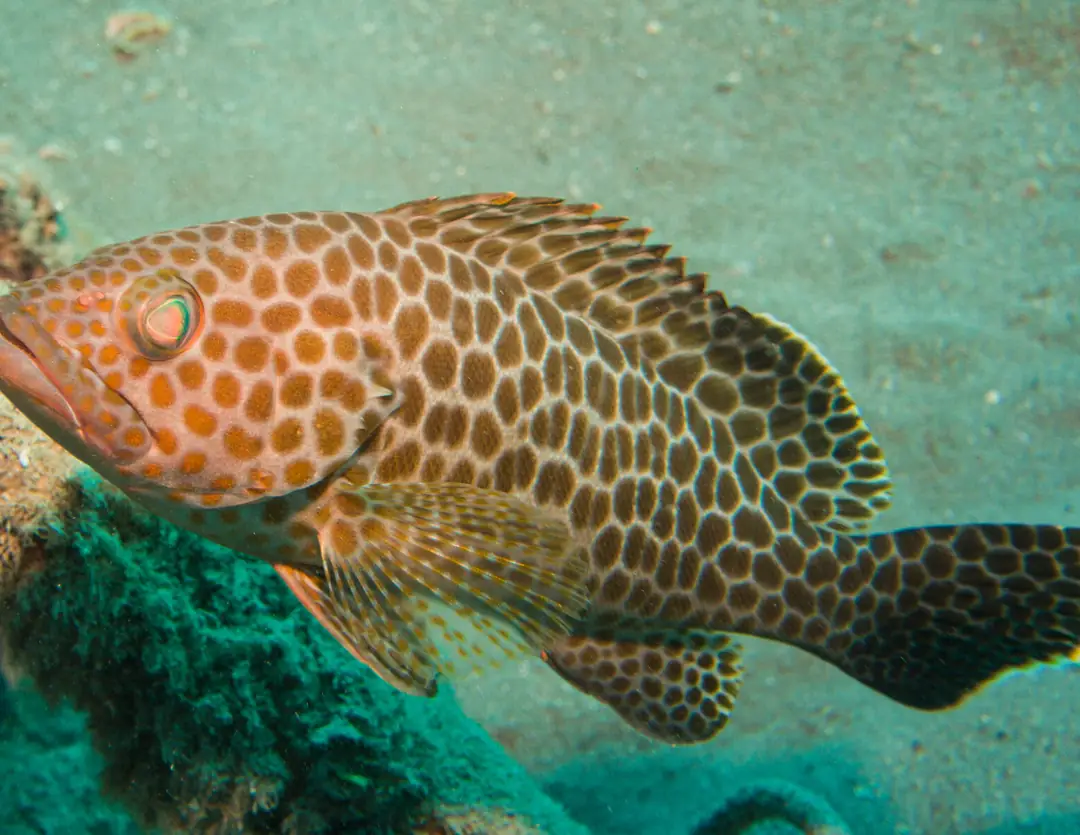
Areolate Rock Cod
Epinephelus areolatus
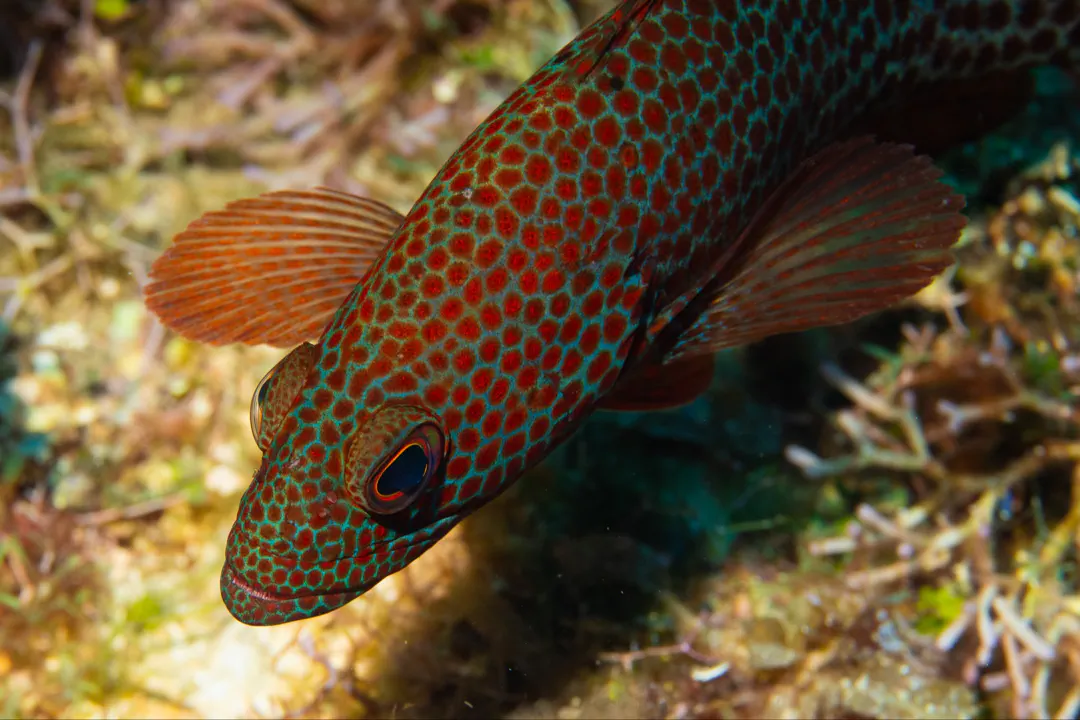
Cephalopholis cruentata
Cephalopholis cruentata is a species of marine ray-finned fish, a grouper from the subfamily Epinephelinae which is in the family Serranidae which also includes the anthias and sea basses.
It has an oblong-shaped, robust body with a long snout and, when the mouth is closed, a slightly protruding upper jaw and a bony protruberance at the maxilla. The dorsal profile of the head is flat or slightly convex between its eyes. The majority of the teeth are movable. The dorsal fin contains 9 spines and 13-15 soft rays while the anal fin has 3 spines and 8 soft rays. The rounded peropercule has fine serrations on its margin but has no spines or notches, the operculum or gill cover has 3 flat spines, the central spine being the largest and upper spine is longer than the lowest. The caudal fin is rounded[4] while the pelvic fins are shorter then the pectoral fins. The body is covered in rough scales and there are 69-81 scales in the lateral line. The head, body, and fins are grey, brown or olive in colour and are covered with orange-brown spots and there are normally four spots along their upper back, underneath the dorsal fin which can change colour between black and white. A white stripe runs from the tip of the lower jaw, between the eyes and on to the nape. Its typical size is 15 to 25 cm in length, with a maximum size of 42 cm. The heaviest specimen recorded was 1.1 kilograms.
It is found in the western Atlantic from North Carolina to southern Florida (USA), Bermuda, the Gulf of Mexico, the Bahamas, and the Caribbean.
It inhabits Thalassia beds and coral reefs. In the Gulf of Mexico, they are found on rocky reef ledge in depths greater than 27 metres. A solitary and secretive species, they usually stay near hiding places during the day. They prefer to remain within a small area of the home range of about 2,120 square metres, especially during the day. The graysby is a nocturnal predator, adults feed mainly on fishes, with preference on Chromis multilineata, juveniles feed on shrimps. These fishes are protogynous hermaphrodites they all start life as female to male becoming males in their middle age. Sex change takes place at 4 or 5 years old and at lengths of 20 to 23 centimetres. The change in sex occurs straight after the spawning period in August and September. The males vigorously guard a harem which have an average of one male to six female. When spawning, a female will releases between 260 and 600 eggs and the male then releases his milt to fertilise them. They can live for up to 13 years. It is parasitized by Pseudorhabdosynochus meganmarieae.
© Lesley ClementsAll rights reserved  © seabook.appAll rights reserved
  © Lesley ClementsAll rights reserved
 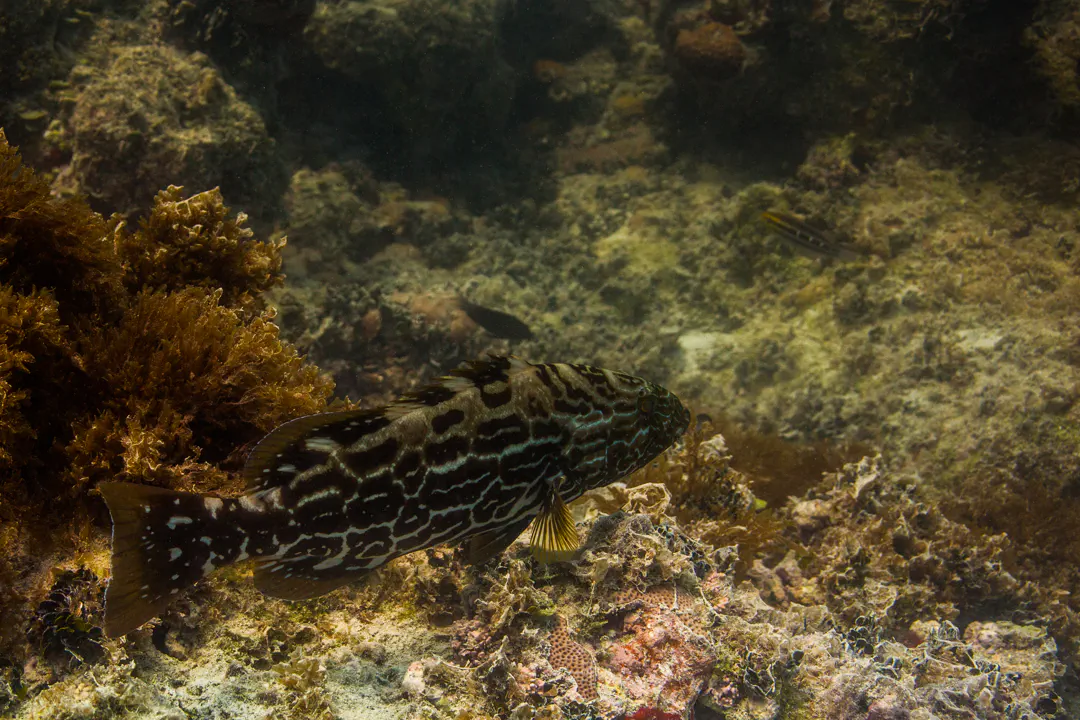 © João D'AndrettaCC BY 4.0 · iNaturalist
 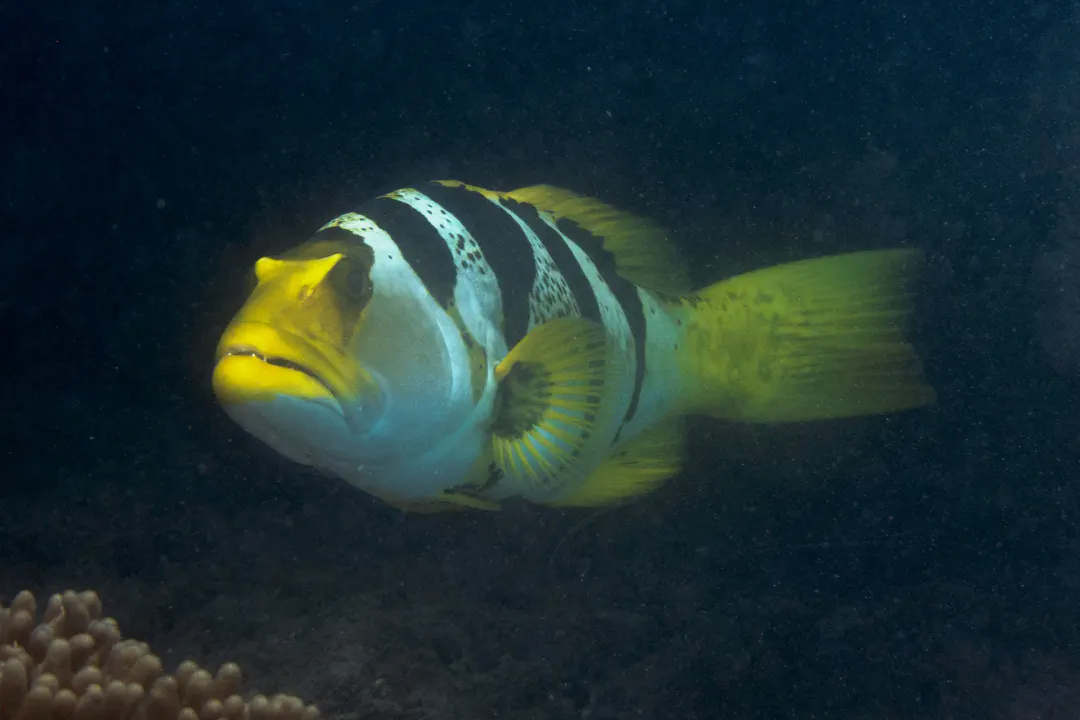 © Ewout KnoesterCC BY-SA 4.0 · iNaturalist
 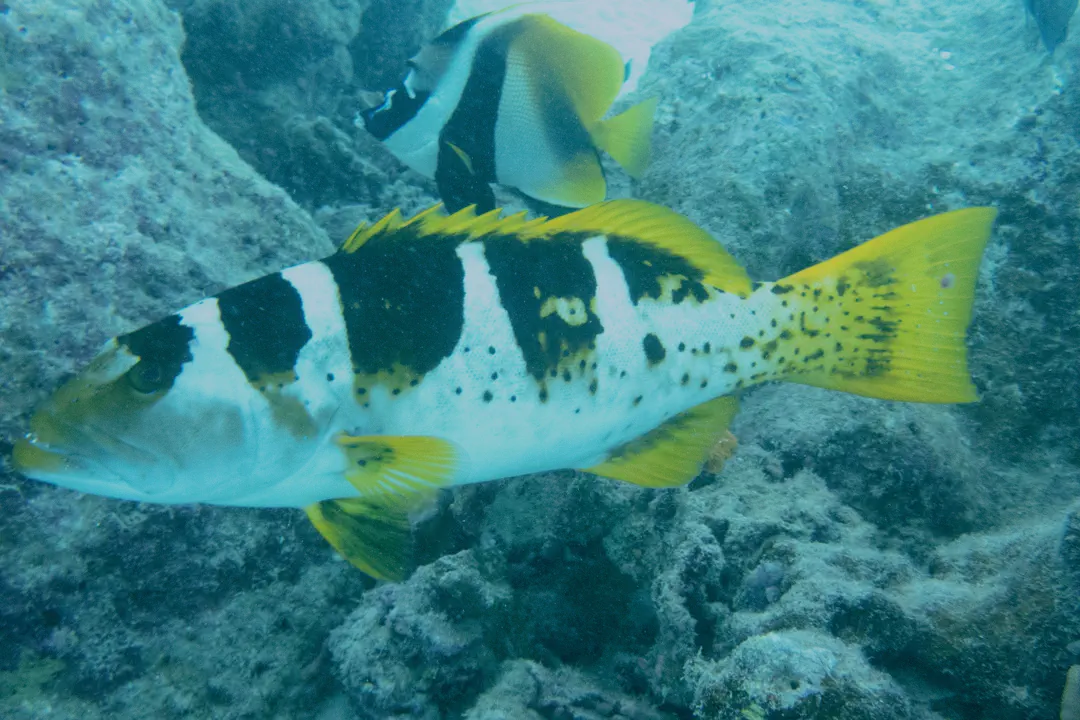 © Logan JonesCC BY 4.0 · iNaturalist
 Graysby is classified as poisonous. Always exercise caution and keep a safe distance.
Graysby can be found at depths of up to 170 meters.
Download Seabook free for iOS and Android.