 © Alberto AlcaláCC BY 4.0
African Pompano
Alectis ciliaris
Alectis ciliaris
Alectis ciliaris is a widely distributed species of tropical marine fish in the jack family, Carangidae. The species is found in tropical waters worldwide, with adults often inhabiting coastlines, while juveniles are usually pelagic, floating with ocean currents. The adult Pennantfish is similar in appearance to the other members of the genus Alectis, with the concave shape of the head near the eyes the clearest distinguishing feature. The juveniles are similar to other members of Alectis, having long, filamentous dorsal and anal fin tips which are thought to discourage predators. The species lives in depths less than 100 m, consuming a range of crustaceans and small fishes. The species is of minor economic importance, often taken amongst other tropical midwater fishes by hook and line, while juveniles are occasionally caught in beach seines.
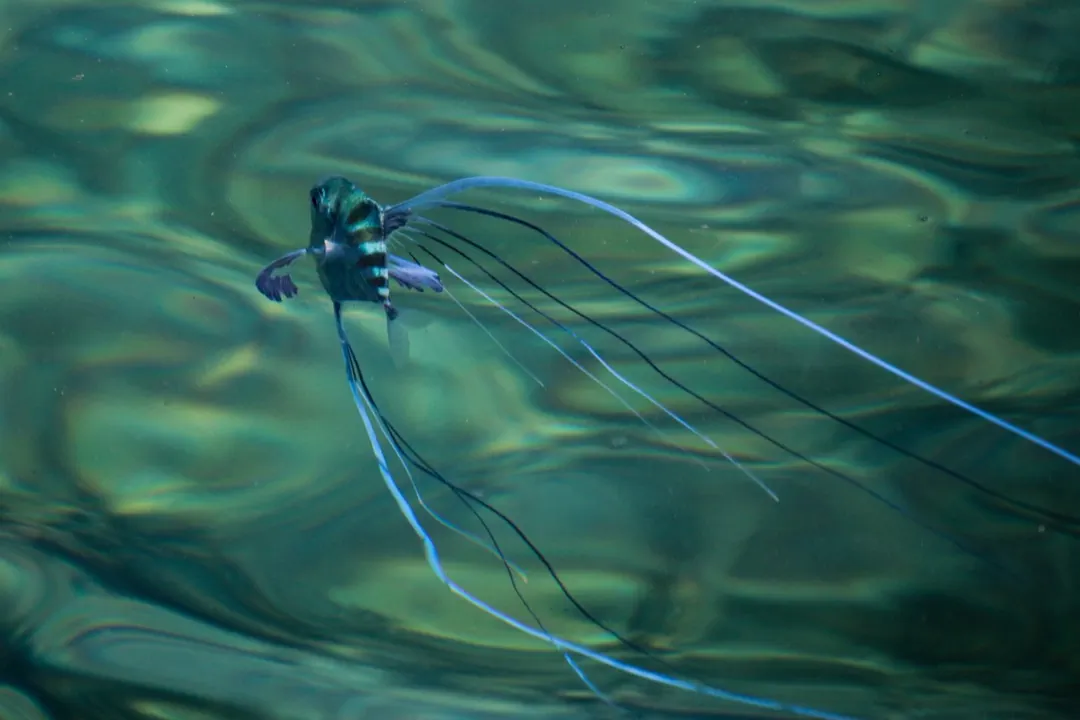
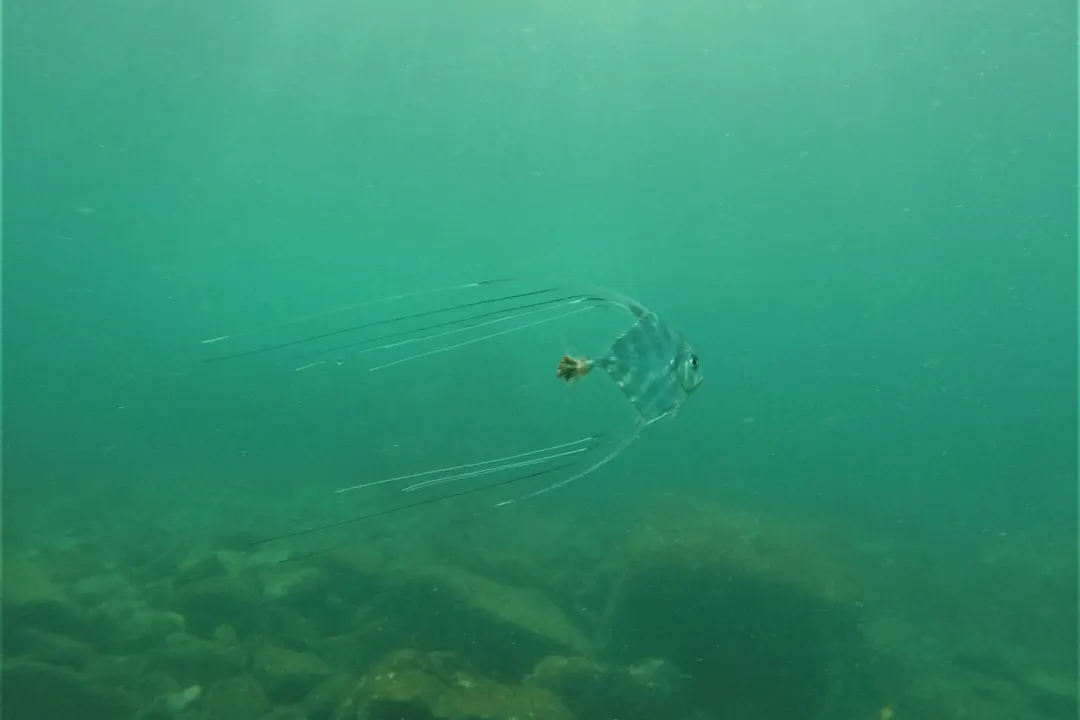
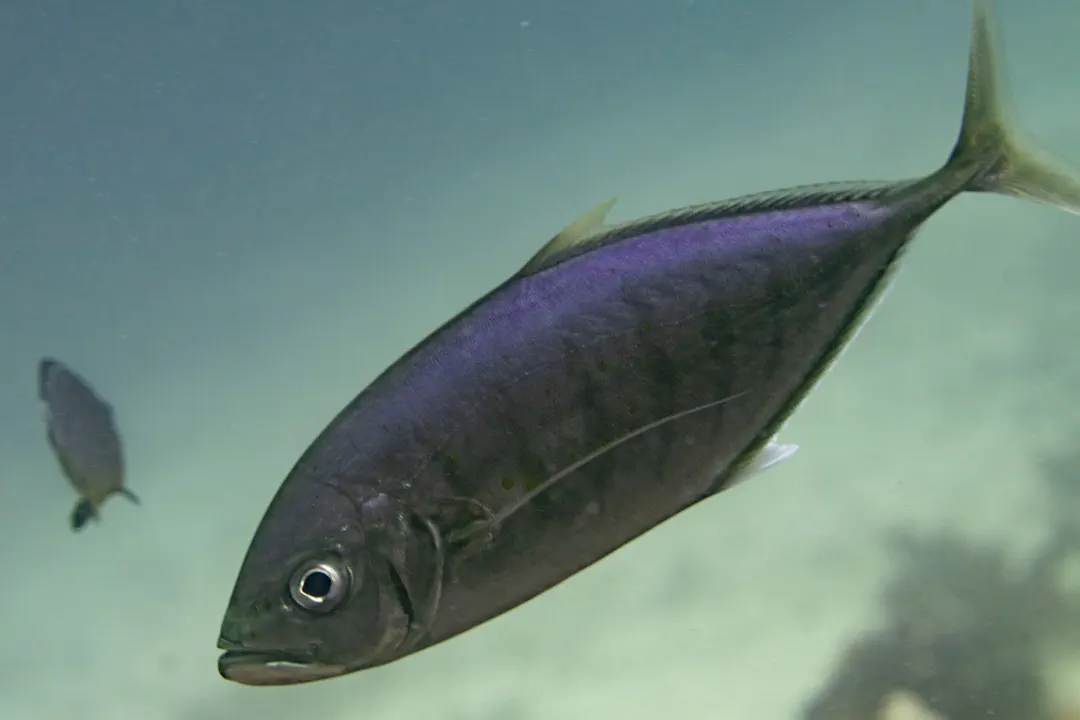
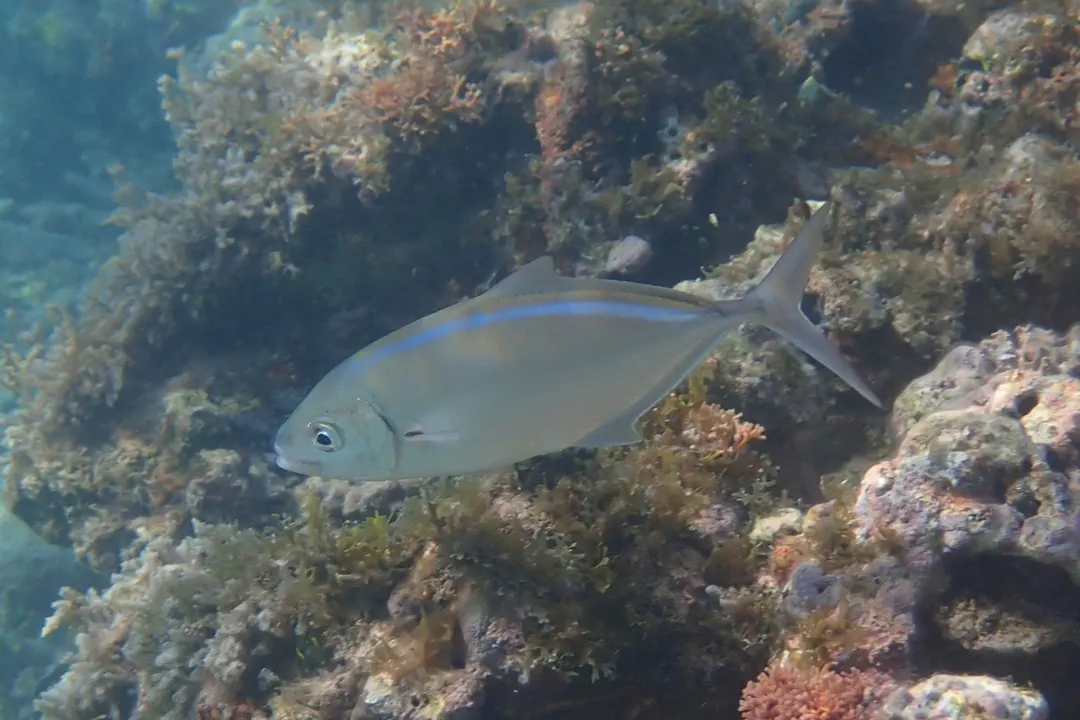
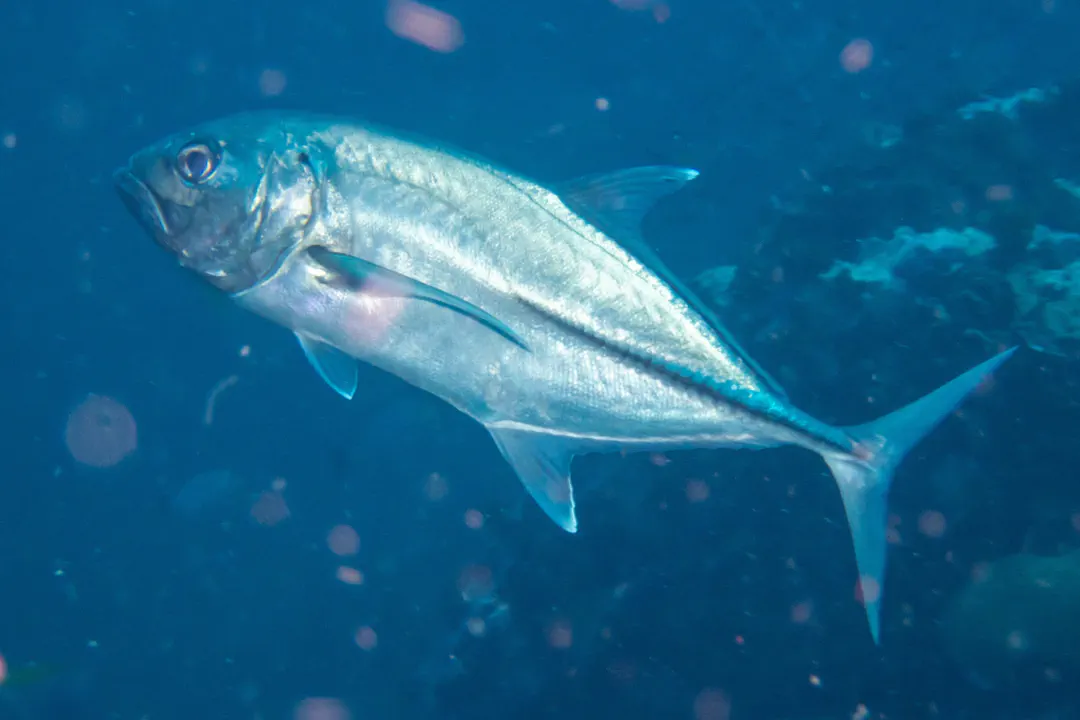
It is a deep and laterally compressed fish, with the deepest point of the body located between the origin of the dorsal and anal fins and having the head and tail tapering either side. The dorsal and ventral profiles are equally convex, with a major distinguishing feature of the adult being its more curved head compared to Alectis indicus' more angular head profile. The species has four to seven visible spines in the first dorsal fin followed by a single spine and 18 to 20 soft rays in the second dorsal. The anal fin has two spines followed by 15 or 16 soft rays, while the pectoral fin is long and curved. The skin of the fish appears scaleless, but has minute, embedded scales scattered on the body. The lateral line has a strong and moderately long arch dorsally, with its posterior section having 12 to 30 scutes. The juveniles are distinctive due to their 'threadfin' appearance of having trailing anal and dorsal fin filaments which recede with age. During maturation, the species also becomes more elongate and more like that of other genera of jacks. The body is a silvery-metallic blue to blue-green colour above, being darkest on the head and upper shoulders while the underside is more silvery. The juveniles have five chevron-shaped dark bars on their bodies, with a black blotch at the base of the third to sixth soft dorsal fin rays. The base of the filaments is a dark blue to black, with all other fins pale to hyaline in appearance.
It is known to definitely reach a length of 130 cm, although larger specimens to 150 cm have been reported, but are not considered reliable. The maximum published weight of the species is 22.9 kg.
It is distributed throughout the tropical oceans and seas of the world in a temperature range of 18 to 27 °C, although is more often found in coastal waters. The species has been recorded from both the east and west coasts of the USA, South America and Africa, throughout the Indian Ocean and along Asia and Australia, as well as many islands in the Pacific. The Pennantfish range into more temperate waters, with juveniles in particular captured off southeastern and western Australia, presumably carried by ocean currents.
The adults of the species prefer coastal waters to depths of 100 m, inhabiting reefs and wrecks throughout the water column. Juveniles are pelagic by nature, inhabiting coastal areas, as well as open ocean. Their reliance on water currents has seen them appear in estuarine waters in lower Australia, although due to cold winter temperatures, they do not survive the winters. In one unusual case, the abundance in the species off North Carolina was found to dramatically increase after a hurricane had passed through.
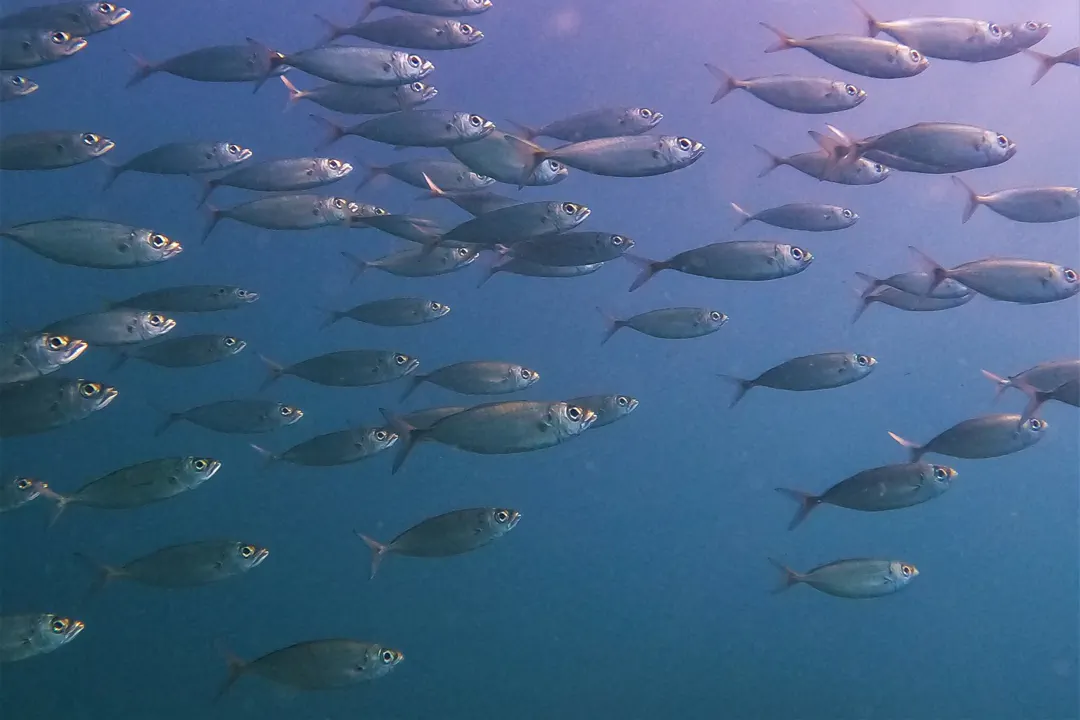
It is a schooling predatory fish which takes predominantly a variety of crustaceans, including decapods, carids and copepods, as well as cephalopods and small fish. They are preyed upon by larger fish, including mackerel and tunas, as well as sharks. The small pelagic juveniles' filamentous dorsal and anal fins resemble jellyfish medusae, and this mimicry may gain them some protection from predators. Little is known of their reproductive habits and maturation lengths, although a study in India determined a peak in the abundance of A. ciliaris larvae in April. The eggs were also found to be spherical, pelagic with a yolk and oil globule present, with the larvae also extensively described in the report. It is thought that in Mexico spawning occurs over sandy substrates in spring.
This is one of three members of the diamond trevally genus Alectis, which itself is one of 33 genera in the jack and horse mackerel family Carangidae. The Carangidae are perciform fishes in the suborder Percoidei.
The species was first scientifically described by the German naturalist Marcus Elieser Bloch in 1787 under the name of Zeus ciliaris, described from the type specimen collected from Surat, India. Following this description, a number of naturalists reclassified the species as the taxonomic literature of fishes grew in volume. Lacepède was the first to do so, giving it the name Gallus virescens, which although he intended to be a new genus, had been assigned to a group of birds previously. Rafinesque examined Gallus virescens in 1815, subsequently creating a new genus for the species; Alectis, and thus making Gallus virescens the type species, despite it being a junior synonym. A number of biologists also renamed the species completely, with Alectis crinitus and Carangoides ajax applied to the species. All names except Alectis ciliaris are now considered defunct under the ICZN nomenclature rules. Interestingly enough, the original genus name of Zeus has now also been applied to an ascomycete fungi.
It is not a true pompano of the genus Trachinotus, but is more closely allied with the fish commonly called jacks and trevallies. The various common names used for the species generally reflect the juvenile filamentous fins, with a number of variations on 'threadfin trevally' often used.
The large size and good table fare offered by the Pennantfish have made the species popular with both recreational and commercial fishermen, although different sources rate the flesh quality differently. The species has been implicated in a number of ciguatera cases, suggesting larger fish should probably not be consumed. The attractive appearance of juveniles make them possible aquarium fish, but they do not survive well in captivity.
Adult Pennantfish are most often taken by hook-and-line methods, such as trolling although they do not often make up a high percentage of catches. Juveniles are occasionally taken by beach seines. The species is marketed fresh and as dried and salted.
The fighting prowess and good table fare attract anglers to the species in many parts of the world, with easily accessed areas such as Florida having a strong recreational fishery for the species, as well as more remote areas such as Thailand and a number of Pacific and Indian Ocean islands. Tackle for larger fish is more robust, with 50-lb line on a large overhead or threadline type reel used to prevent the fish from taking cover in underwater structures on their first run, especially on reefs and wrecks. Smaller fish are often taken on light tackle, often requiring a skilled angler to be able to land the fish in these situations. They can be caught on both bait and lures, with small live baitfish or large prawns the choice of baits rigged on strong gauge hooks. Lures are often jigs or streamers worked on deep reefs and wrecks, although they have been known to take a trolled lure or rigged bait. In rare cases, they have even been known to take saltwater flies on sinking lines and poppers at the surface.
© Alberto AlcaláCC BY 4.0 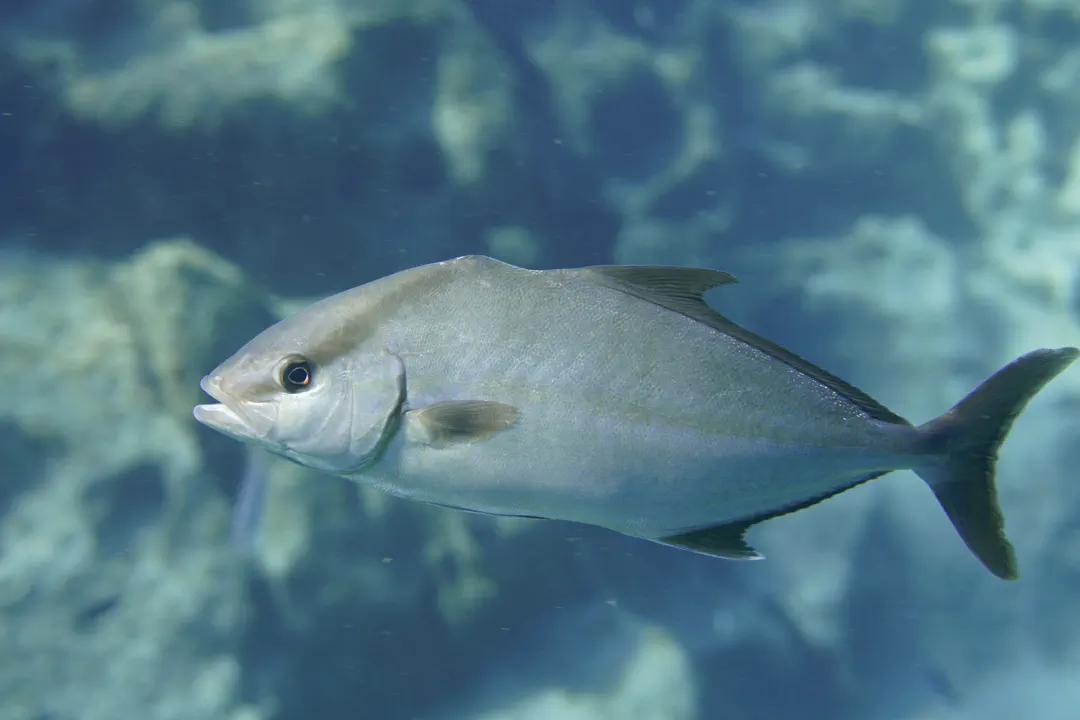 © Michael BommererCC BY 4.0
  © cello caruso-turielloCC BY 4.0 · iNaturalist
  © Fish and DiveCC BY 4.0 · iNaturalist
  © Alberto AlcaláCC BY 4.0 · iNaturalist
  © portioidCC BY 4.0 · iNaturalist
 Pennantfish (juvenile) is classified as poisonous. Always exercise caution and keep a safe distance.
Pennantfish (juvenile) can be found at depths of up to 100 meters.
Download Seabook free for iOS and Android.