 © Zakqary RoyCC BY 4.0 · iNaturalist
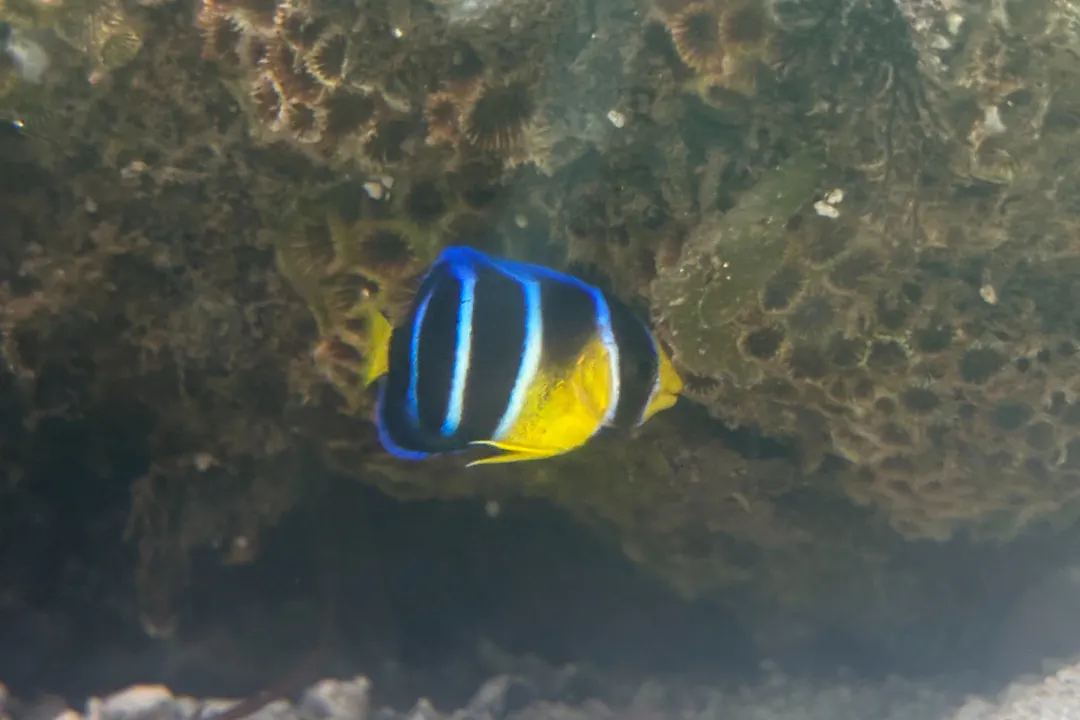
Bermuda Blue Angelfish (juvenile)
Holacanthus bermudensis
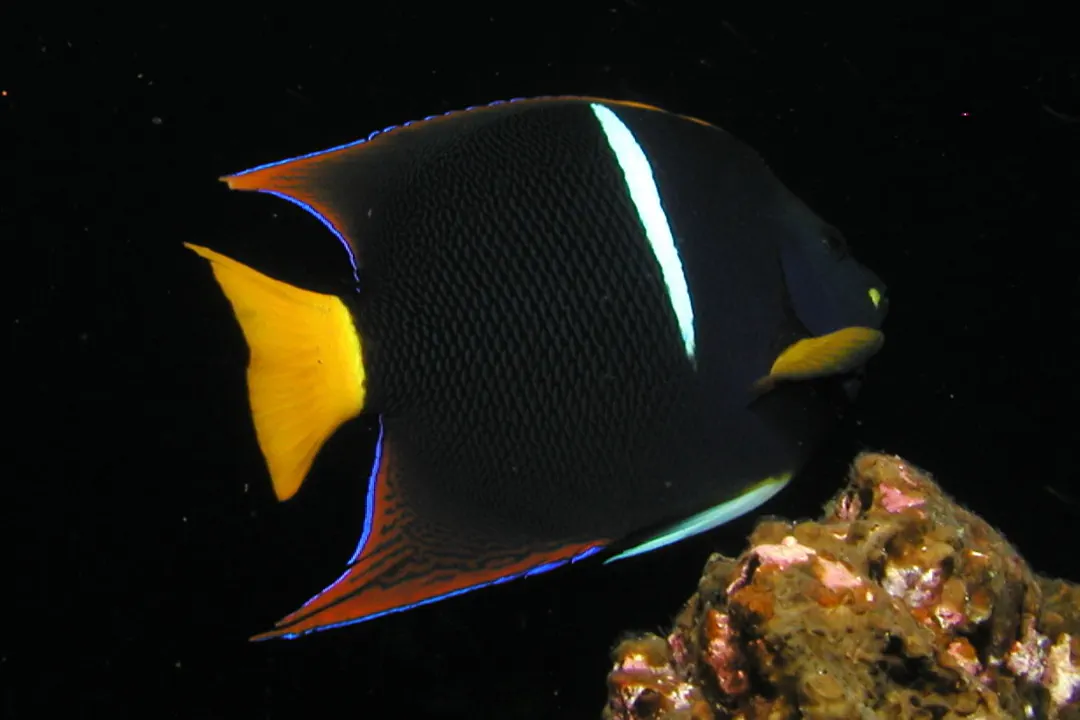
Holacanthus passer
Holacanthus passer is a large marine angelfish of the family Pomacanthidae.
King angelfish are sexually isomorphic, meaning males and females are visually identical on the outside. They do, however undergo significant changes in coloration and to a lesser degree shape as they mature. Juvenile king angelfish are primarily yellow, with iridescent-blue-rimmed fins and blue striping towards the posterior of their bodies, and an orange mask around the eye. Sexually mature king angelfish, on the other hand, have mostly brown or blue bodies (depending on the light) with the same blue rimming around the fins and a yellow dorsal fin. King angelfish generally grow to 35 cm long. They have between 18 to 20 rays in their dorsal fin and each of their pectoral fins, and 17 to 19 in their anal fin. They also have a strong spike under their lower cheek for defensive purposes.
The king angelfish is a non-migratory tropical fish that inhabits reefs in the eastern Pacific ocean from the coast of Peru north to the California gulf, including offshore islands as far west as the Galapagos, generally at a depth of between 4–30 metres.
King angelfish primarily inhabit the middle and bottom of the water column of rocky tropical reefs, including in the larger crevices between rocks, and juveniles can occasionally be found in tide pools. They are diurnal and feed on sponges, other sessile invertebrates, zooplankton, and certain species of benthic microalgae.
King angelfish are somewhat popular as aquarium fish, however their large size, specialized diet, and prohibitive cost make them comparatively poor captive pets. They have not bred in captivity and hence can be very difficult to find in most hobby shops, although they are slightly more available through mail order companies, for a price. King angelfish also have a well-deserved reputation for being difficult to keep, largely because they require sponges and tunicates as a food source and will often not accept even prepared foods with such things as ingredients. Besides their diet, they are not particularly picky about salinity or pH, so long as they are kept stable and the water quality high. Angelfish in general are not generally good community inhabitants, king angels being no exception. If introduced when young, a lucky aquarist may be able to keep two angels in one appropriately size aquarium, but such experiences tend to be the exception, not the norm. King angelfish are quite dominant and can be abusive to smaller or more docile tankmates, or angelfish that are lower on the social hierarchy for whatever reason.
King angelfish are monogamous within their pairs and, during their spawning cycle, will mate daily around sunset. During a spawning cycle a pair can produce upwards of ten million fertilized eggs, averaging about 25–75,000 daily. These eggs then drift in the water column for about 20 hours, at which point they hatch. After hatching, the fin-less fry live off their yolk sack until it is completely absorbed, at which point they begin to eat small zooplankton.
© Zakqary RoyCC BY 4.0 · iNaturalist  © Daniel BenákCC BY 4.0 · iNaturalist
  © Piotr LukasikCC BY 4.0 · iNaturalist
 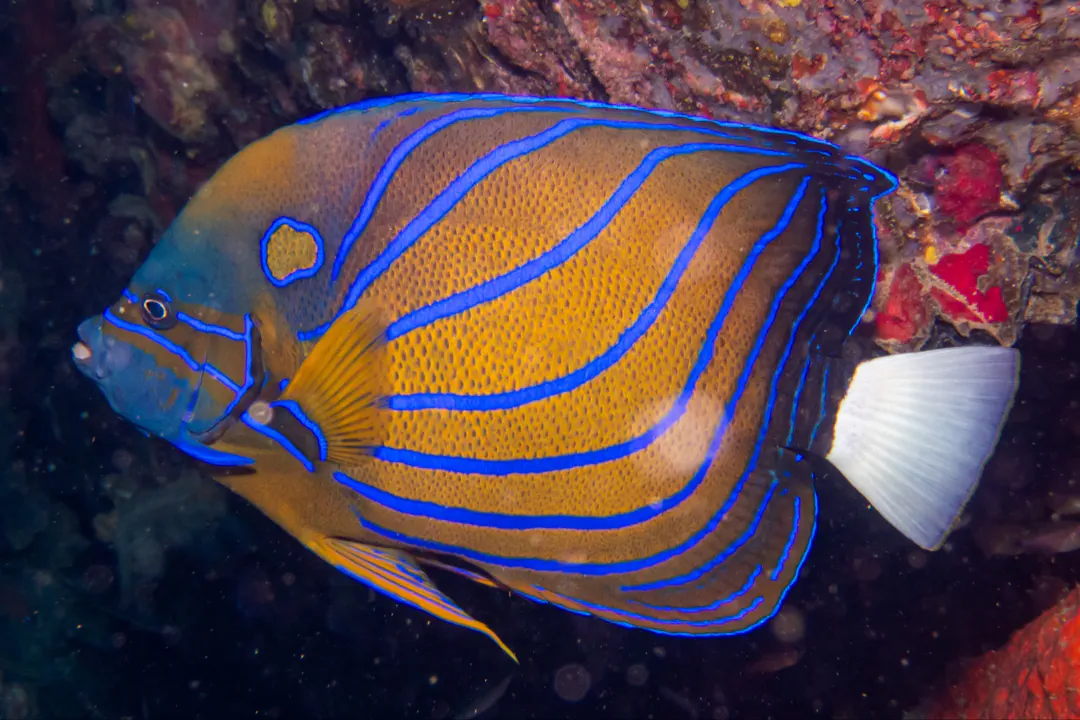 © portioidCC BY 4.0 · iNaturalist
 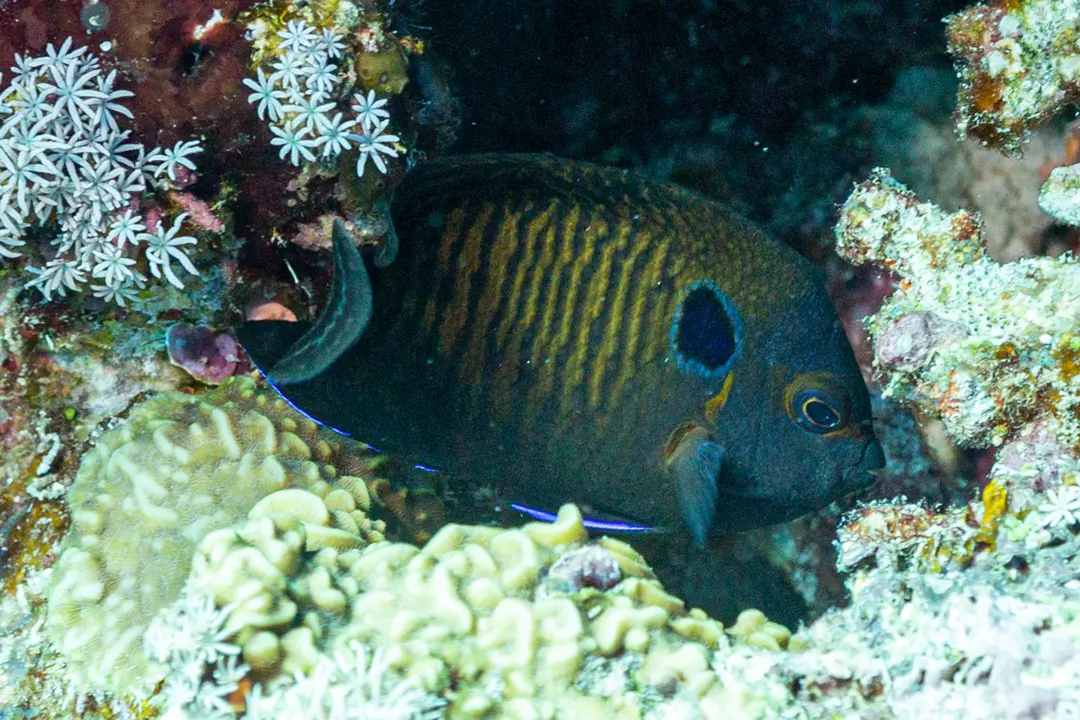 © R VasconcellosCC BY 4.0 · iNaturalist
 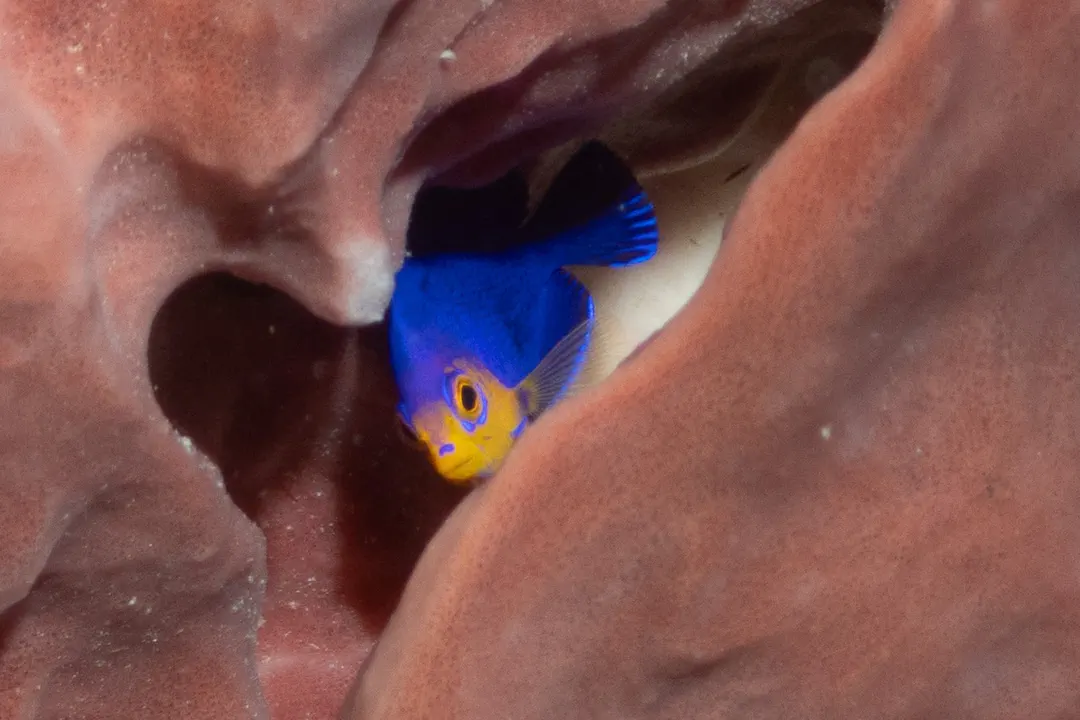 Justin PhilboisCC0 · iNaturalist
 King Angelfish has no known danger to humans. However, always observe marine life responsibly.
King Angelfish can be found at depths of up to 30 meters.
Download Seabook free for iOS and Android.