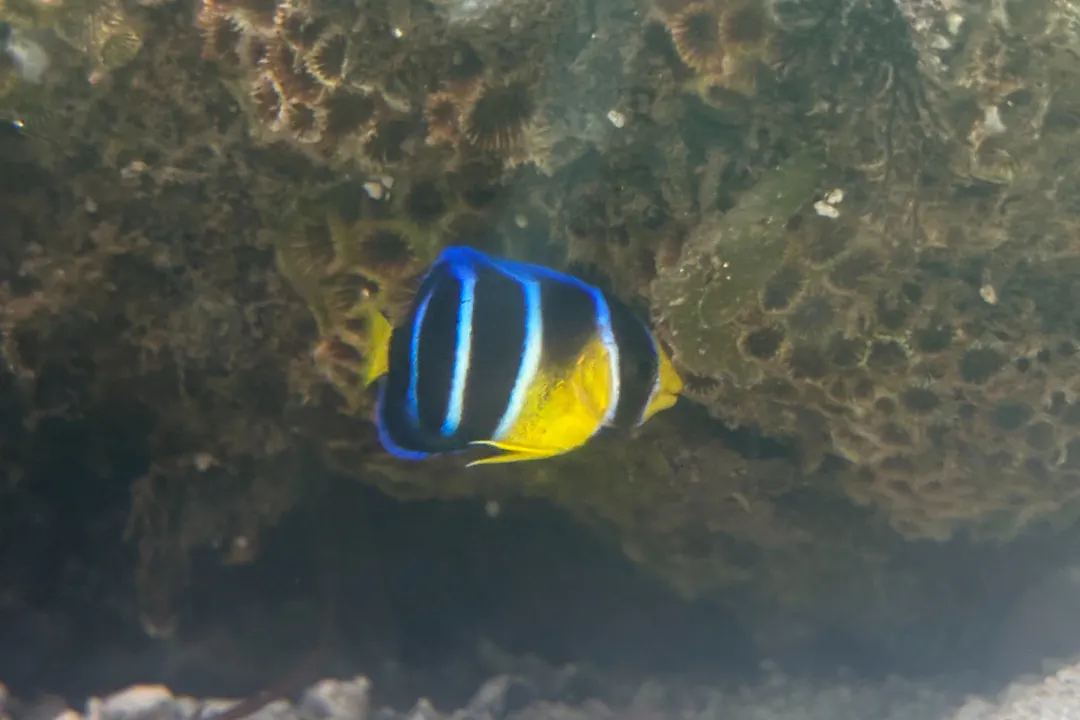
 © Zakqary RoyCC BY 4.0 · iNaturalist
Bermuda Blue Angelfish (juvenile)
Holacanthus bermudensis
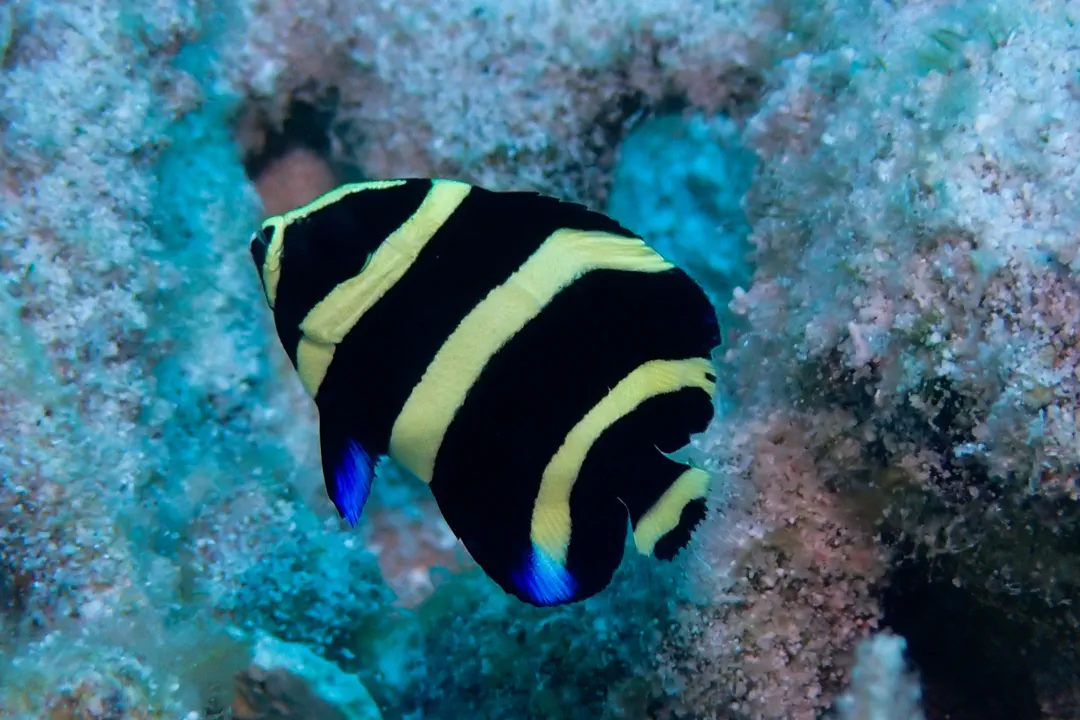 © Dan SchofieldCC BY 4.0 · iNaturalist
Pomacanthus arcuatus
Pomacanthus arcuatus is a large angelfish of the family Pomacanthidae.
It can grow up to 60 cm in length, making it one of the largest members of its family. Its body is tall and laterally compressed, giving it a rounded shape. The primary color of adult individuals is dark gray or gray-brown, adorned with numerous small white or pale spots evenly distributed across its body.
The head is robust, with a small mouth and a prominent forehead. A distinctive feature is the dark stripes running across the gill covers, adding a refined look. The fins of adult fish are dark, with the edges of the dorsal, caudal, and anal fins often outlined in a lighter or white shade.
Juveniles look entirely different. They are black with bright vertical yellow stripes, which help them camouflage among coral reefs. As they mature, this pattern fades, and they develop the characteristic adult coloration.
In the western Atlantic from New England to the vicinity of Rio de Janeiro, Brazil, and also the Bahamas, the Gulf of Mexico, and the Caribbean, including the Antilles.
It is found at depths of between 2 and 30 m. It feeds mainly on sponges, it is usually found in warm water, in coral reefs, and in oceans.
© Zakqary RoyCC BY 4.0 · iNaturalist  © Daniel BenákCC BY 4.0 · iNaturalist
  © Piotr LukasikCC BY 4.0 · iNaturalist
 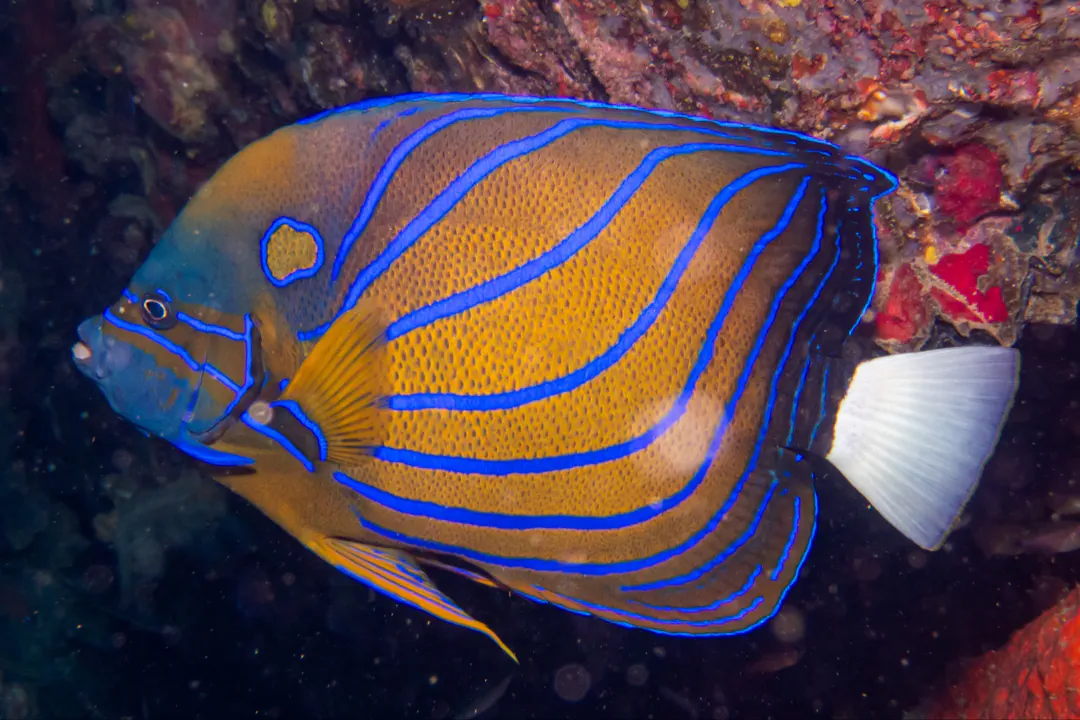 © portioidCC BY 4.0 · iNaturalist
 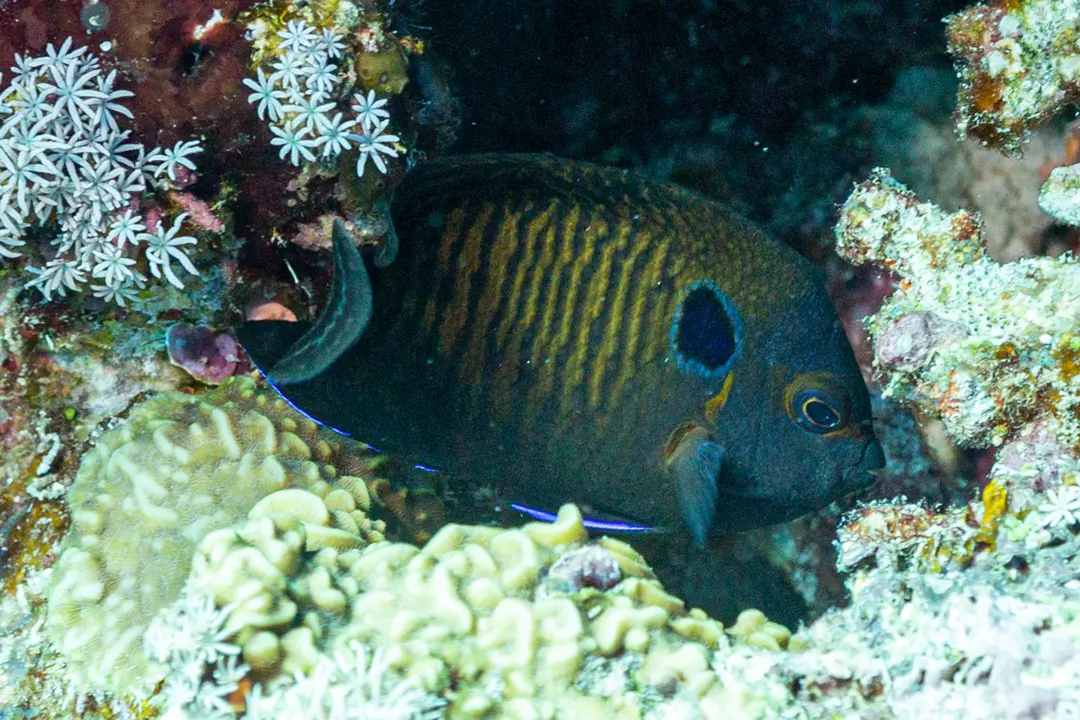 © R VasconcellosCC BY 4.0 · iNaturalist
 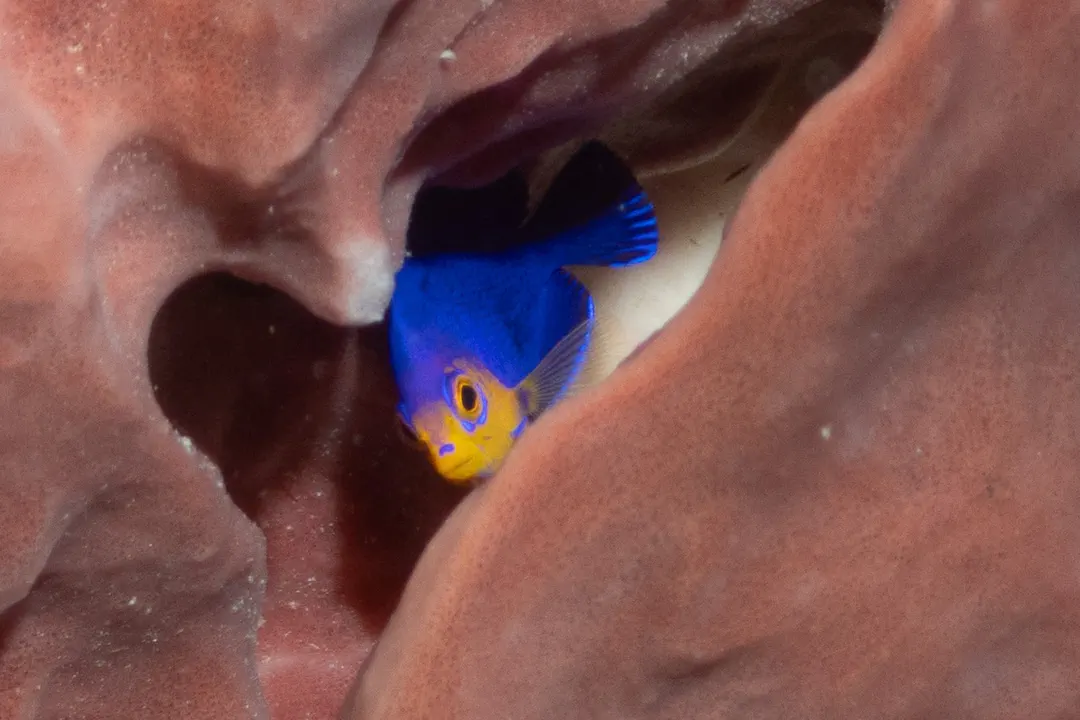 Justin PhilboisCC0 · iNaturalist
 Grey Angelfish (juvenile) is classified as poisonous. Always exercise caution and keep a safe distance.
Grey Angelfish (juvenile) can be found at depths of up to 60 meters.
Download Seabook free for iOS and Android.