 © Zakqary RoyCC BY 4.0 · iNaturalist
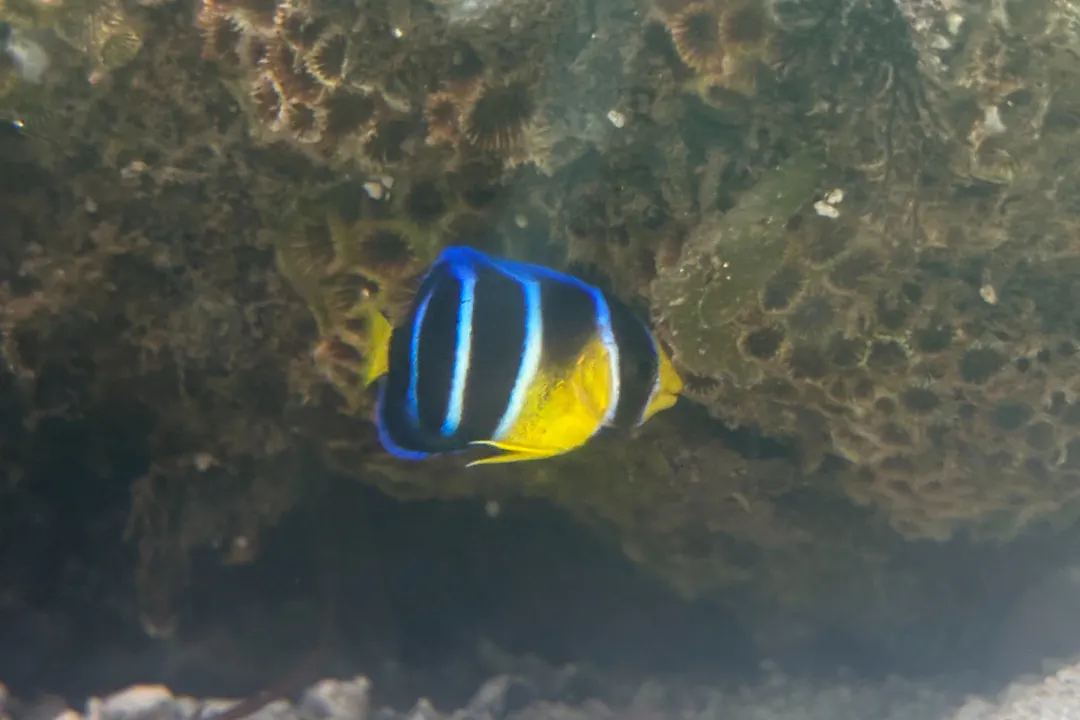
Bermuda Blue Angelfish (juvenile)
Holacanthus bermudensis
Holacanthus tricolor
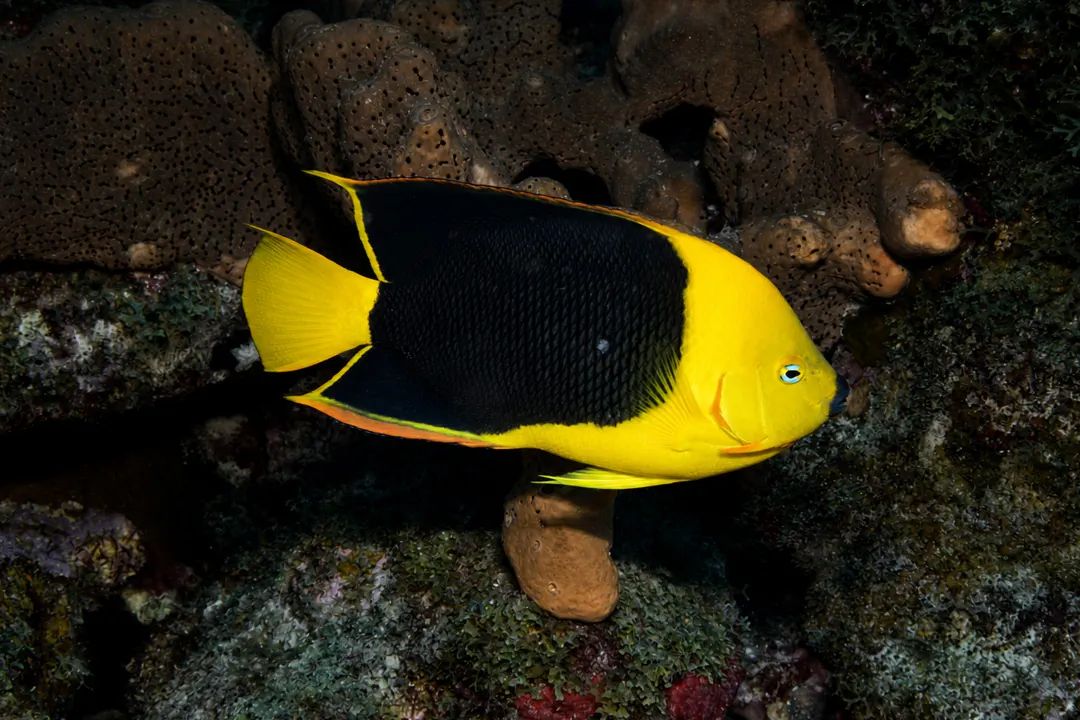
Holacanthus tricolor is a species of marine angelfish of the family Pomacanthidae.
Front of body is yellow. Remaining parts of body, dorsal fin, and front of anal fin are black. Caudal fin is entirely yellow. Front margin of anal fin and edge of gill are covered orange. Bright blue color is on upper and lower part of iris. Juveniles are about an inch in length are entirely yellow except for a blue-edged black spot on the upper side of the body posterior to the midpoint. With growth the black spot soon expands to become the large black area covering most of the body and dorsal and anal fins. The adult measures up to 10 inches (25 cm).
The rock beauty feeds primarily on sponges. It may also eat tunicates, jellyfish, and corals, as well as plankton and algae. In home aquaria, keepers have had limited success with diets of meat- and algae-based fish foods. The fish requires sponges to survive.
The fish inhabits reefs from the tropical western Atlantic Ocean to the northern Gulf of Mexico. It can be found at depths between 3 and 92 metres (9.8 and 301.8 ft).
The adults stay in pairs year-round, perhaps suggesting a long-term monogamous bond. The pairs reproduce by rising up in the water, bringing their bellies close together, and releasing clouds of sperm and eggs. The female produces 25,000 to 75,000 eggs per day, and up to ten million eggs during each spawning cycle. The eggs are transparent, buoyant, and pelagic, floating in the water column. They hatch after 15 to 20 hours into larvae that lack effective eyes, fins, or even a gut. The large yolk sac is absorbed after 48 hours, during which time the larvae begin to develop normal characteristics of free-swimming juveniles. They feed on plankton for 3 to 4 weeks, reaching 1.5 to 2 centimetres (0.59 to 0.79 in) in length, and then settle on the bottom as juveniles.
© Zakqary RoyCC BY 4.0 · iNaturalist  © Daniel BenákCC BY 4.0 · iNaturalist
  © Piotr LukasikCC BY 4.0 · iNaturalist
 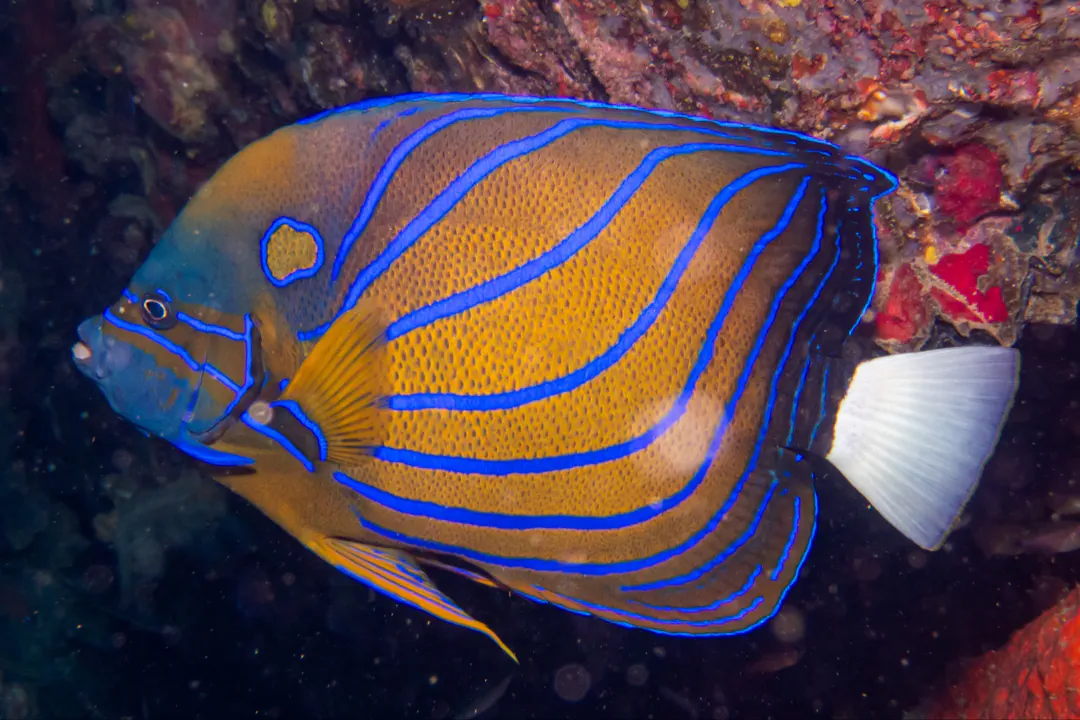 © portioidCC BY 4.0 · iNaturalist
 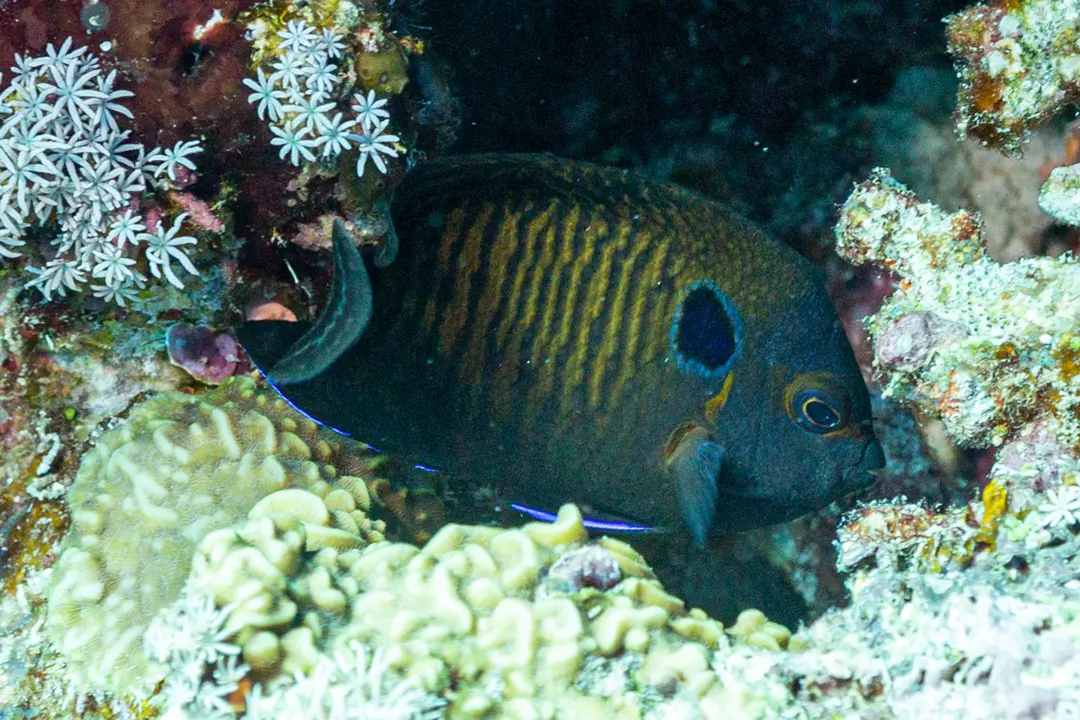 © R VasconcellosCC BY 4.0 · iNaturalist
 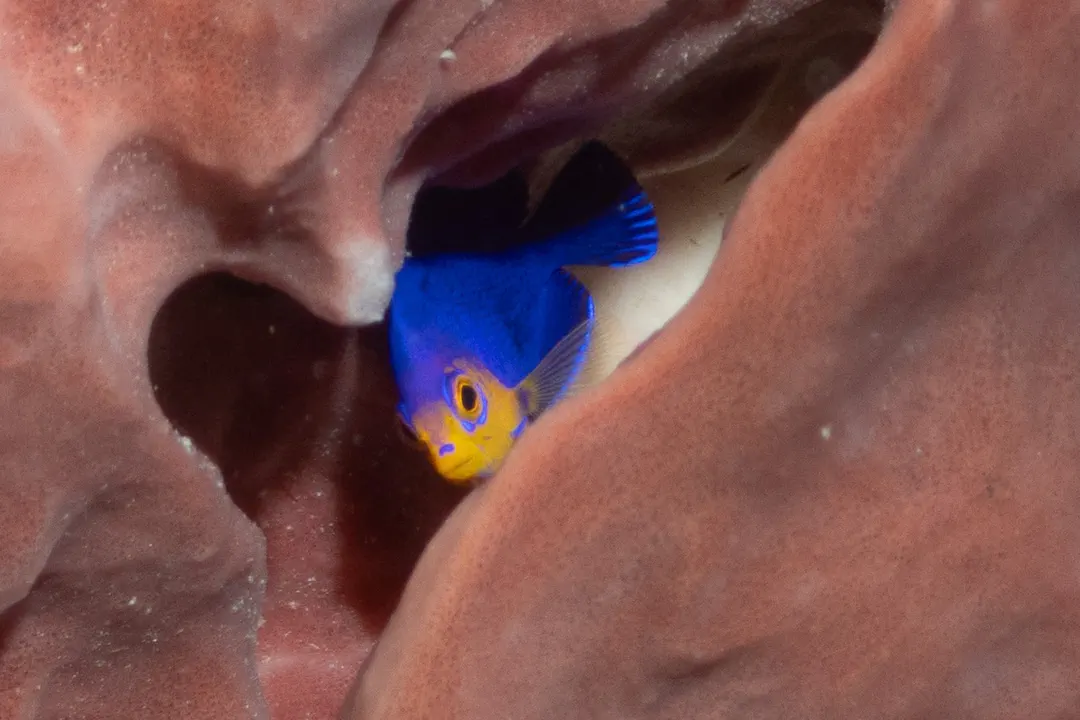 Justin PhilboisCC0 · iNaturalist
 Rock Beauty is classified as poisonous. Always exercise caution and keep a safe distance.
Rock Beauty can be found at depths of up to 92 meters.
Download Seabook free for iOS and Android.