 © Zakqary RoyCC BY 4.0 · iNaturalist
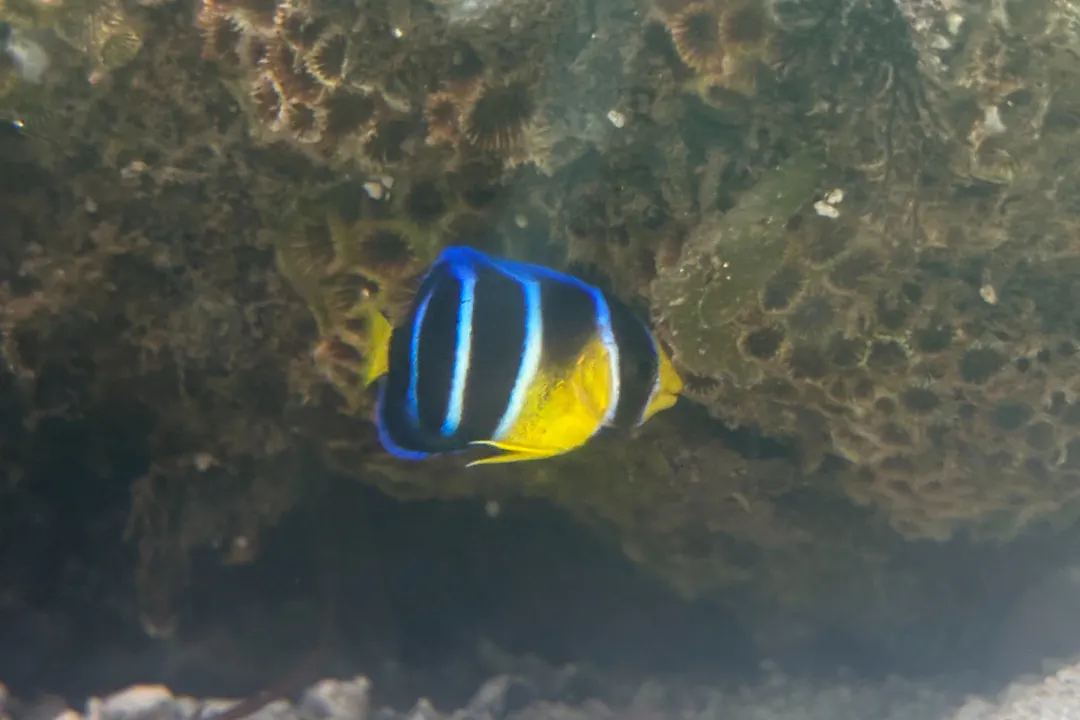
Bermuda Blue Angelfish (juvenile)
Holacanthus bermudensis
Pomacanthus paru
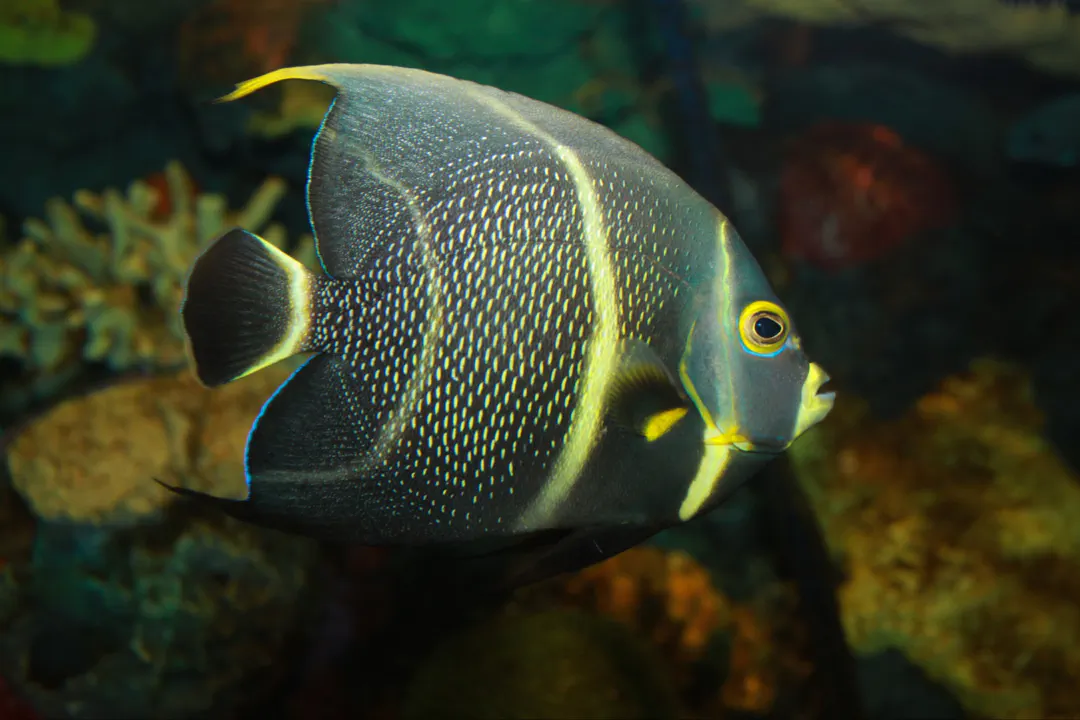
Pomacanthus paru is a large angelfish of the family Pomacanthidae, found in the western Atlantic from New York and the Bahamas to Brazil, and also the Gulf of Mexico and the Caribbean, including the Antilles, Roatan, and the eastern Atlantic from around Ascension Island and St. Paul's Rocks, at depths of between 2 and 100 m. Length is up to 41 cm, common length is 28 cm.
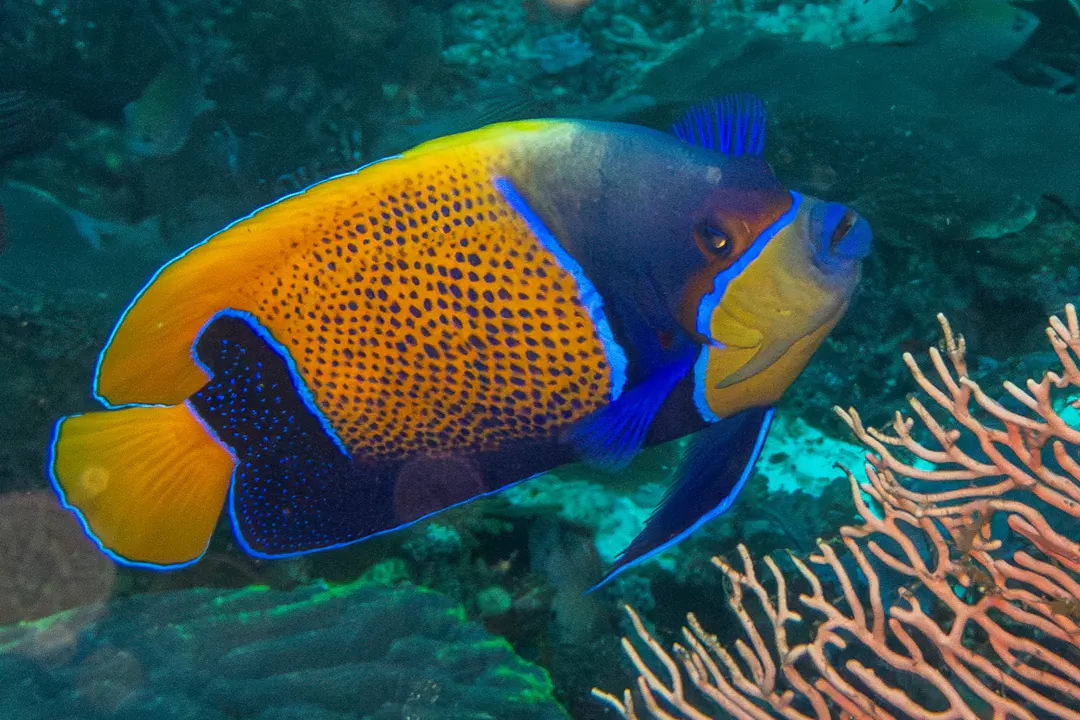
The adult background coloration is black but the scales of the body, except those at the front from nape to abdomen, are rimmed with golden yellow. Furthermore, the pectoral fins have a broad orange-yellow bar, the dorsal filament is yellow, the chin is whitish, the outer part of the iris is yellow, and the eye is narrowly rimmed below with blue. Juveniles are black with vertical yellow bands.
Western Atlantic: Florida, USA and Bahamas to Brazil, including the Gulf of Mexico and the Caribbean. Eastern Atlantic: off Ascension Island and St. Paul's Rocks.
The French angelfish is common in shallow reefs, occurs usually in pairs often near sea fans. It feeds on sponges, algae, bryozoans, zoantharians, gorgonians and tunicates. Juveniles tend cleaning stations where they service a broad range of clients, including jacks, snappers, morays, grunts, surgeonfishes, and wrasses. At the station the cleaner displays a fluttering swimming and when cleaning it touches the clients with its pelvic fins.
This species is oviparous and monogamous. Spawning pairs are strongly territorial and usually both partners defend vigorously their territory against neighboring pairs. During the day you will mostly see these fish out and about, but come night they seek shelter in their designated hiding spot where they return every night.
The flesh of the French angel has good taste and the fish is sold on fish markets. The species has been reared in captivity.
Sponges constitute 70% of the species' diet and since sponges are plentiful the fish is normally well fed. It covers sponge pieces in thick mucous to help digestion.
© Zakqary RoyCC BY 4.0 · iNaturalist 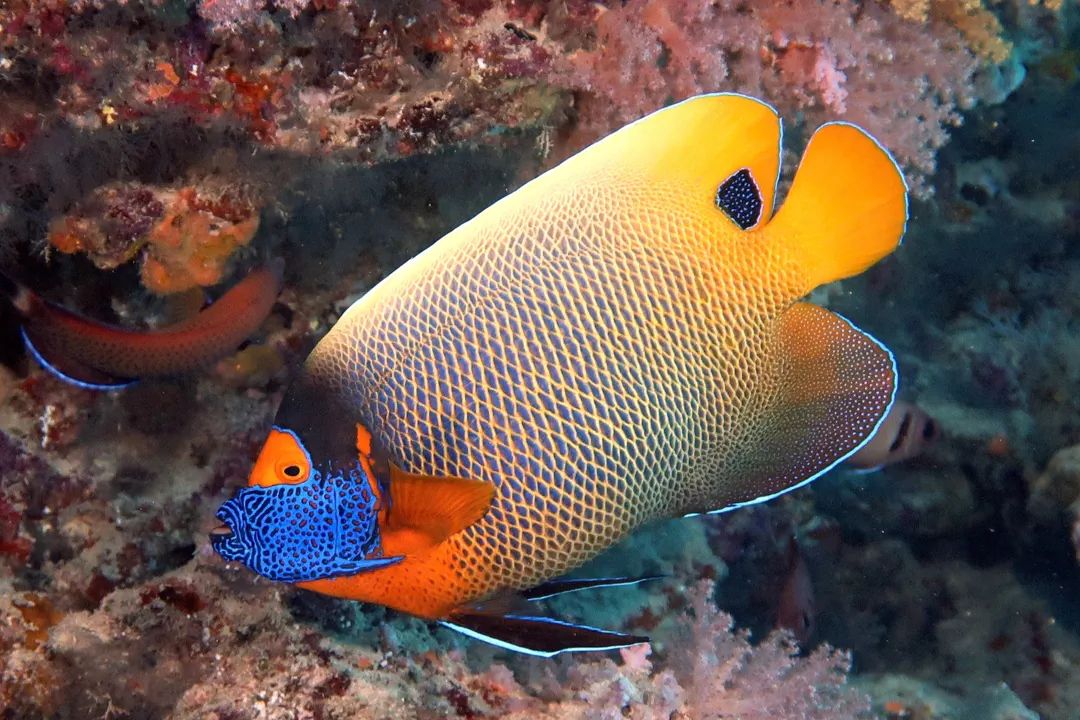 © Daniel BenákCC BY 4.0 · iNaturalist
  © Piotr LukasikCC BY 4.0 · iNaturalist
 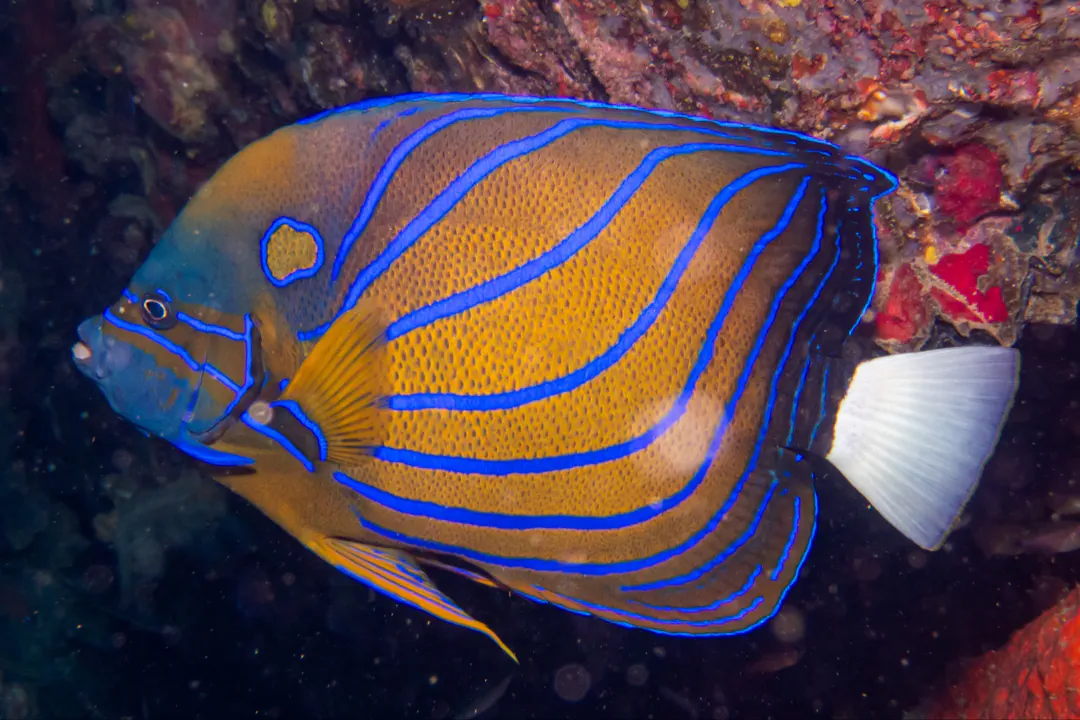 © portioidCC BY 4.0 · iNaturalist
 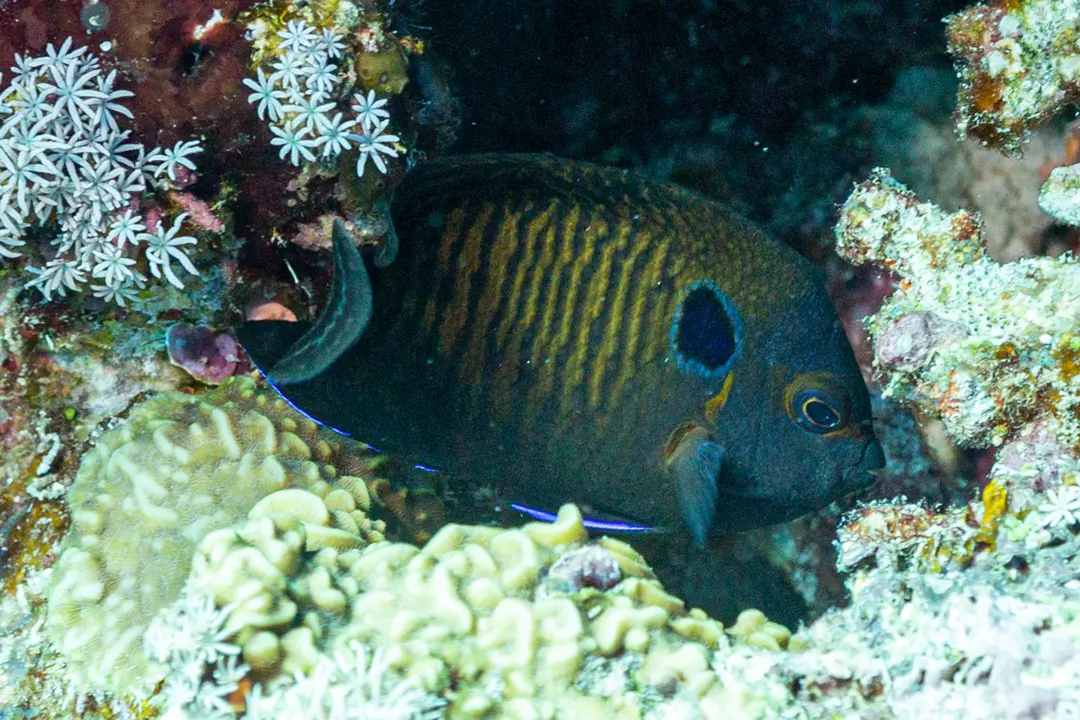 © R VasconcellosCC BY 4.0 · iNaturalist
 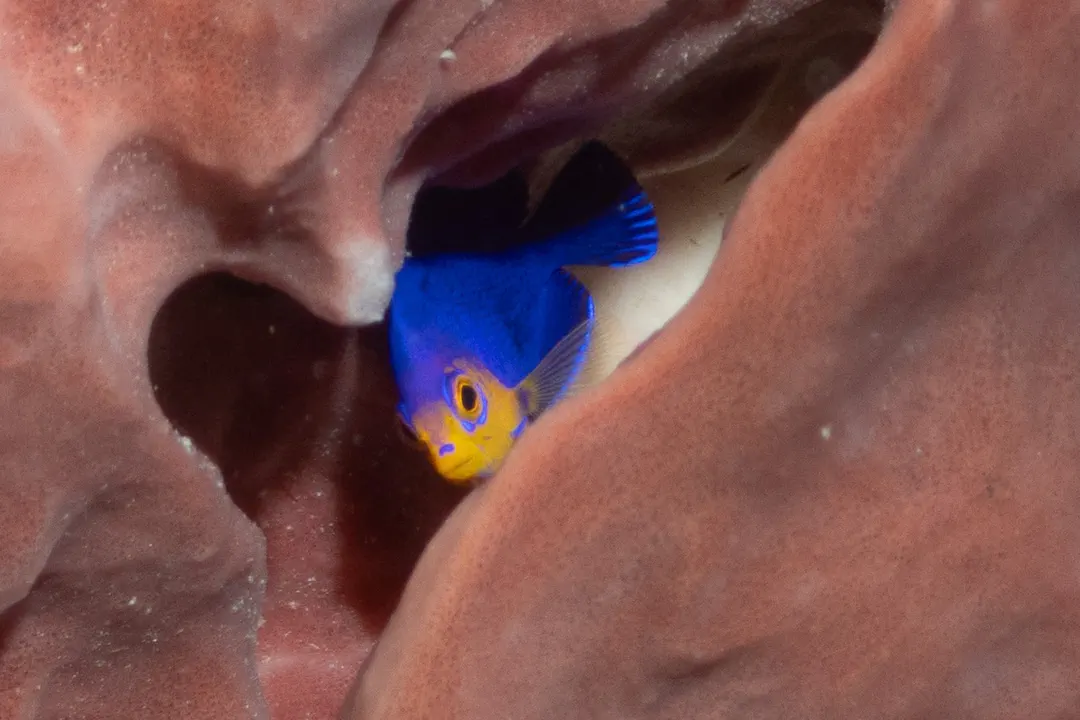 Justin PhilboisCC0 · iNaturalist
 French Angelfish (juvenile) is classified as poisonous. Always exercise caution and keep a safe distance.
French Angelfish (juvenile) can be found at depths of up to 100 meters.
Download Seabook free for iOS and Android.