
At a depth of 15 metres along the sheer drop-off of North Horn at Osprey Reef, a grey reef shark pivots through the blue current while an olive sea snake glides out from a coral crevice. Sunbeams pierce the ocean surface, illuminating pale patterns on the snake's skin as it heads toward the surface for air. Down in the shadows, a camouflaged stonefish sits motionless on a coral ledge, its venomous dorsal spines erect and ready for defence.
Australia's marine hazards vary dramatically between the tropical north and the temperate south. Water temperatures range from 18°C in southern seas during winter to 29°C in northern tropical bays during summer, with visibility spanning 10 to 30 metres depending on offshore tides. Tropical waters host box jellyfish, Irukandji, and saltwater crocodiles during the summer stinger season from October to May, while southern reefs shelter blue-ringed octopuses, stingrays, and white sharks.
Divers and snorkellers can explore sites along the Great Barrier Reef, Ningaloo Reef, and southern temperate drop-offs safely by matching exposure suits to the region and recognizing local species behaviors.
What Makes Australian Marine Animals Hazardous?
Marine organisms in Australian waters deploy specialized physiological adaptations for hunting prey or defending their territory. Venomous jellyfish use microscopic stinging structures called nematocysts that fire automatically upon physical contact, releasing cardiotoxins and neurotoxins into tissue. Venomous bottom fish rely on stiff dorsal spines capable of puncturing neoprene boots, injecting heat-sensitive proteins that trigger immediate, severe pain.
Mechanical force represents another hazard along the coastline. Large white sharks rely on serrated teeth and high jaw pressure, while saltwater crocodiles employ crushing bite forces exceeding 3,700 pounds per square inch in estuarine habitats. In contrast, tetrodotoxin found in blue-ringed octopuses blocks nerve sodium channels, inducing motor paralysis without damaging muscle tissue directly.
Most defensive strikes occur when humans accidentally step on, corner, or handle concealed marine life rather than through unprovoked animal aggression. A stationary stonefish resting in shallow rubble blends seamlessly into the substrate, making foot placement the primary risk factor for beachgoers and divers.
Which Venomous Jellyfish Live in Australian Waters?
Tropical northern waters from Gladstone in Queensland around to Exmouth in Western Australia harbour two primary groups of lethal cubozoan jellyfish. The Australian box jellyfish (Chironex fleckeri) features a translucent bell up to 30 centimetres wide with up to 60 trailing tentacles that extend 3 metres into the water column. A single mature box jellyfish carries enough venom to trigger cardiac arrest within minutes if tentacles contact bare skin.
Microscopic Irukandji jellyfish, including Carukia barnesi and Malo kingi, measure only 1 to 2 centimetres across their bells yet produce Irukandji syndrome. Stings initially cause only a mild itch, but within 5 to 40 minutes, victims experience severe back pain, muscle cramps, vomiting, and extreme spikes in blood pressure. Healthdirect Australia guidance on jellyfish stings notes that major box-jellyfish stings require emergency assistance, CPR when necessary, tentacle removal, and vinegar after the tentacles are addressed.
Stinger season across northern Australia extends from October through May, coinciding with warmer waters and seasonal rains that bring jellyfish closer to shore. Non-tropical bluebottle siphonophores (Physalia physalis) drift onto eastern and southern ocean beaches during strong onshore winds. Full-body Lycra or neoprene stinger suits provide effective physical protection across northern dive sites.
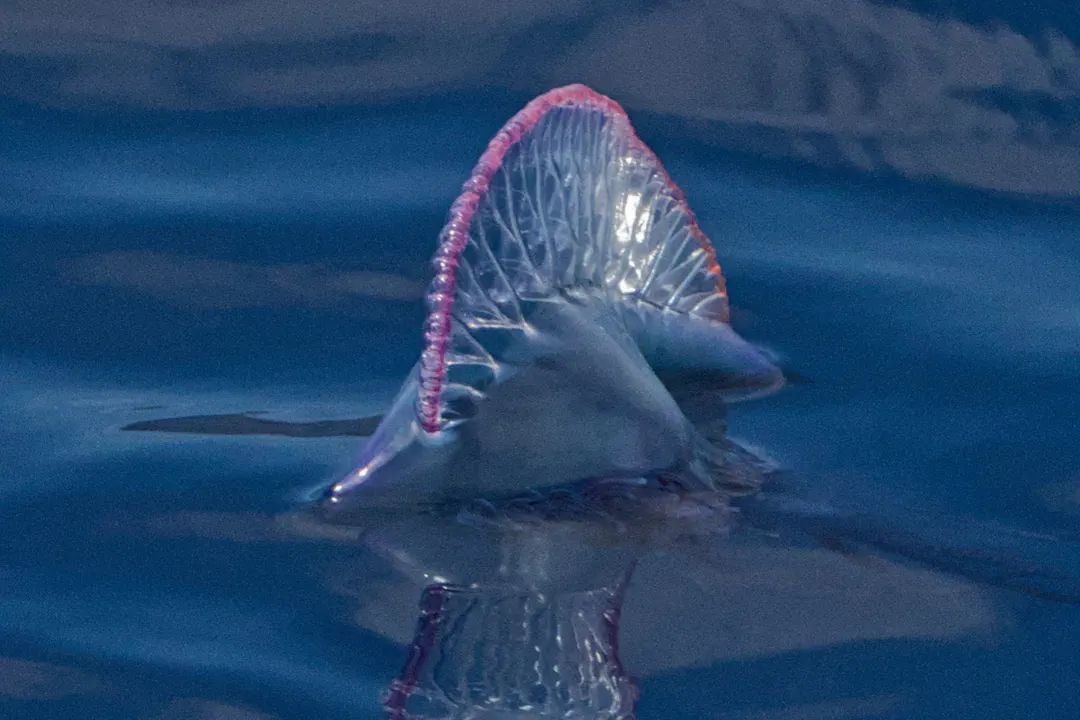 © Michael, Antoni and Nihat HinczewskiCC BY 4.0 · iNaturalist
Where Are Blue-Ringed Octopuses Found in Australia?
Blue-ringed octopuses inhabit intertidal rock pools, shallow coral rubble, and seagrass beds across southern and eastern Australia at depths from 0 to 20 metres. The southern blue-ringed octopus (Hapalochlaena maculosa) frequents temperate reefs from Western Australia to New South Wales, while the blue-lined octopus (Hapalochlaena fasciata) occupies eastern coastal waters. The greater blue-ringed octopus (Hapalochlaena lunulata) ranges across northern tropical reef flats.
These small cephalopods usually measure under 12 centimetres across their expanded arms, blending into mottled brown rocks using specialized chromatophores. When disturbed, their pale skin darkens rapidly while iridescent blue rings flash across their mantle as a warning display. Handling shells or reaching into unlit tide pool crevices without gloves creates the primary exposure risk.
Their salivary glands host symbiotic bacteria that produce tetrodotoxin, a neurotoxin that stops nerve signal transmission to voluntary muscles. Envenomation causes rapid numbness around the lips, loss of speech, double vision, and complete respiratory paralysis within 10 to 30 minutes while the victim remains fully conscious. Because no antivenom exists, continuous emergency rescue breathing until the toxin clears naturally remains the vital life-saving intervention.
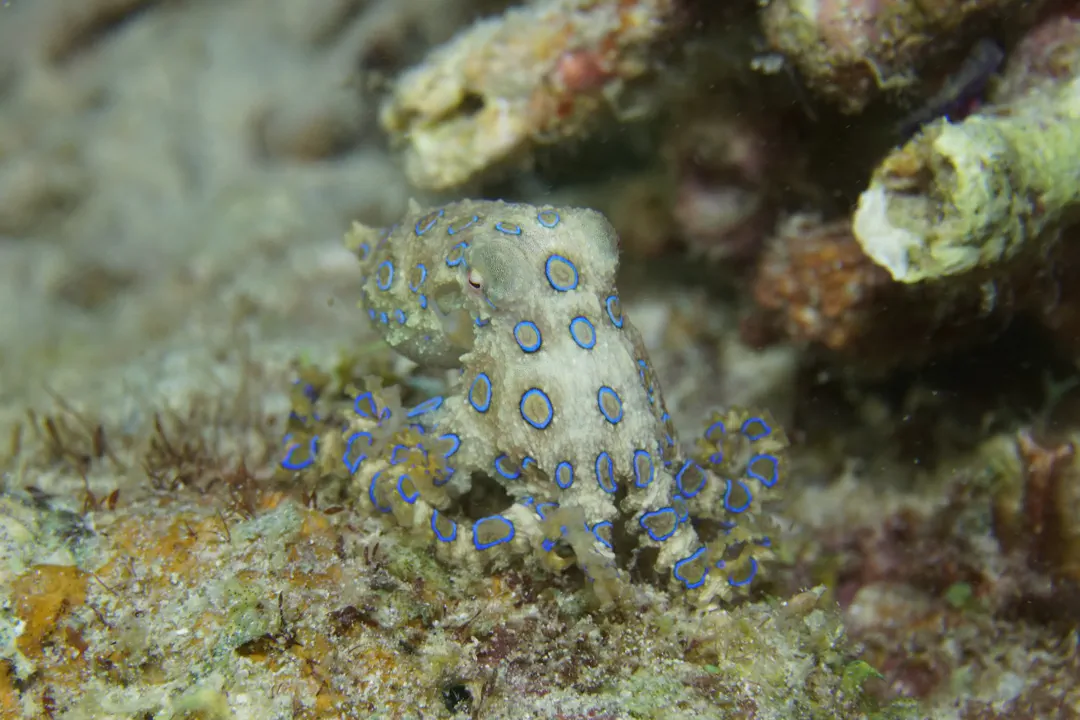 © Stas KuryanAll rights reserved
How Dangerous Are Stonefish and Scorpionfish in Australia?
Reef stonefish (Synanceia verrucosa) and estuarine stonefish (Synanceia horrida) rest along shallow reef tops and muddy bottoms down to 30 metres. Their encrusted, warty skin mimics algae-covered rocks and sand, concealing them from unsuspecting divers. Thirteen thick dorsal spines connected to venom glands stand erect when weight presses against the fish's back.
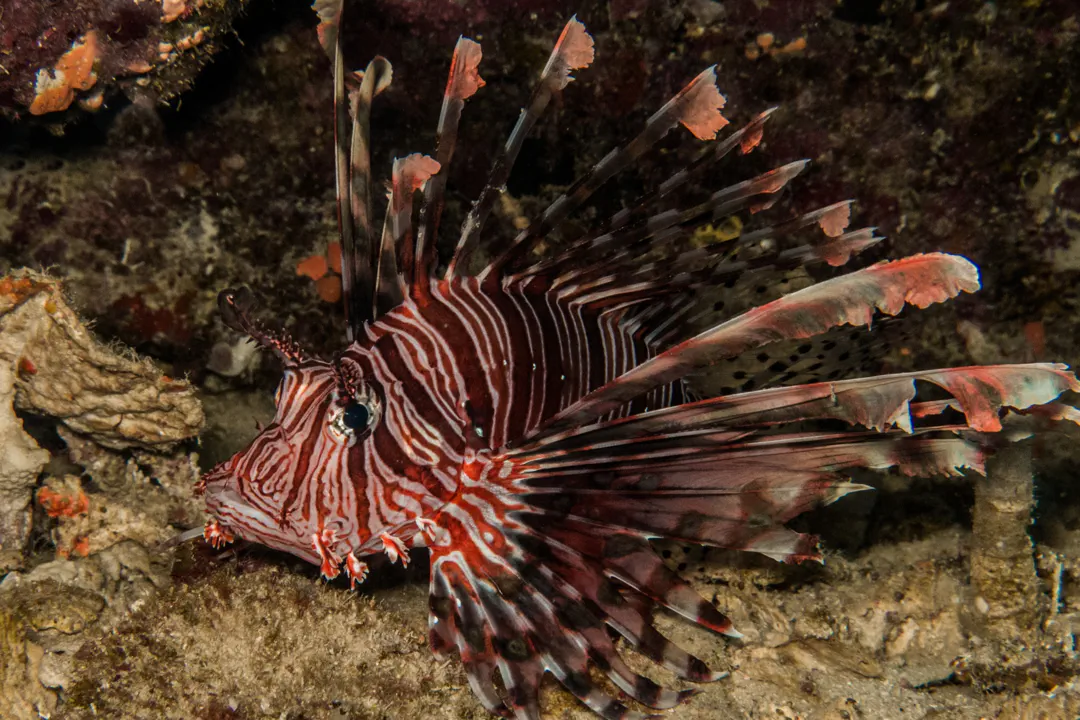
Red lionfish (Pterois volitans) and spiny devilfish (Inimicus caledonicus) also inhabit Australian reefs, presenting additional venomous spine hazards along coral heads and silty slopes. Lionfish display long, fan-like pectoral fins and bold reddish-brown bands, extending their needle-sharp dorsal spines defensively when approached closely. Logging species sightings on the Seabook app helps divers track where scorpionfish and sea snakes have been observed across local dive sites.
When a stonefish spine punctures boot soles or skin, pressure compresses the venom glands, driving neurotoxic proteins deep into tissue. The resulting pain is immediate and severe, carrying risks of delirium and localized tissue destruction. Immersing the affected limb in hot water helps neutralize the heat-labile toxins, while leaving embedded spines undisturbed avoids escalating hemorrhage before medical treatment.
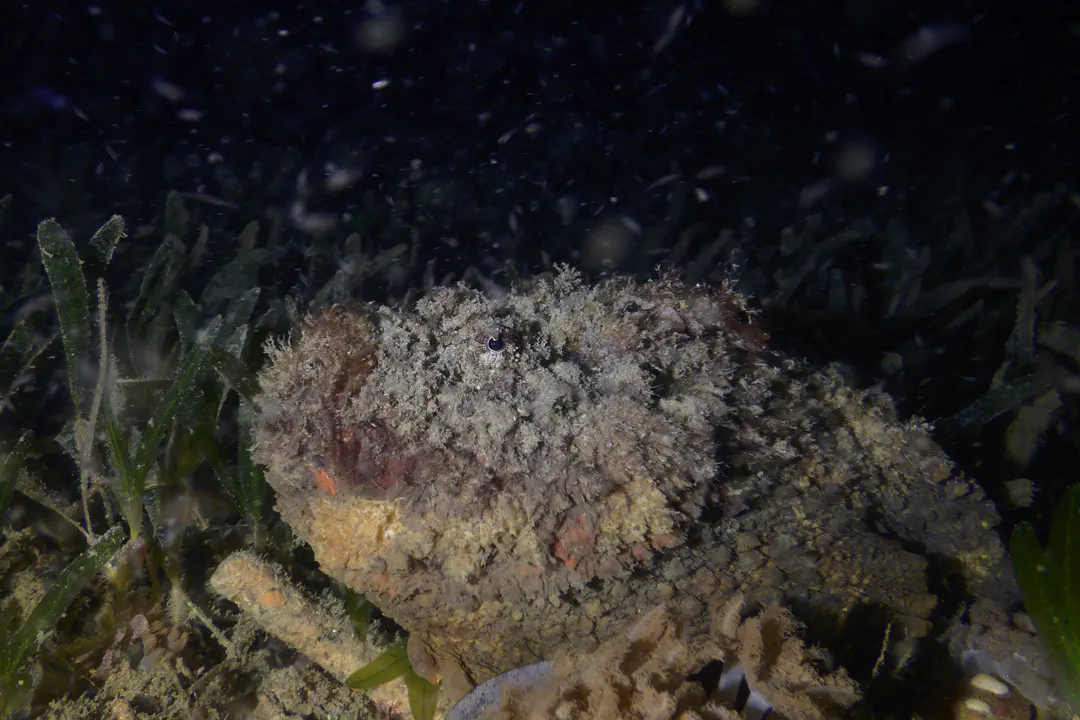 © Ewout KnoesterCC BY-SA 4.0
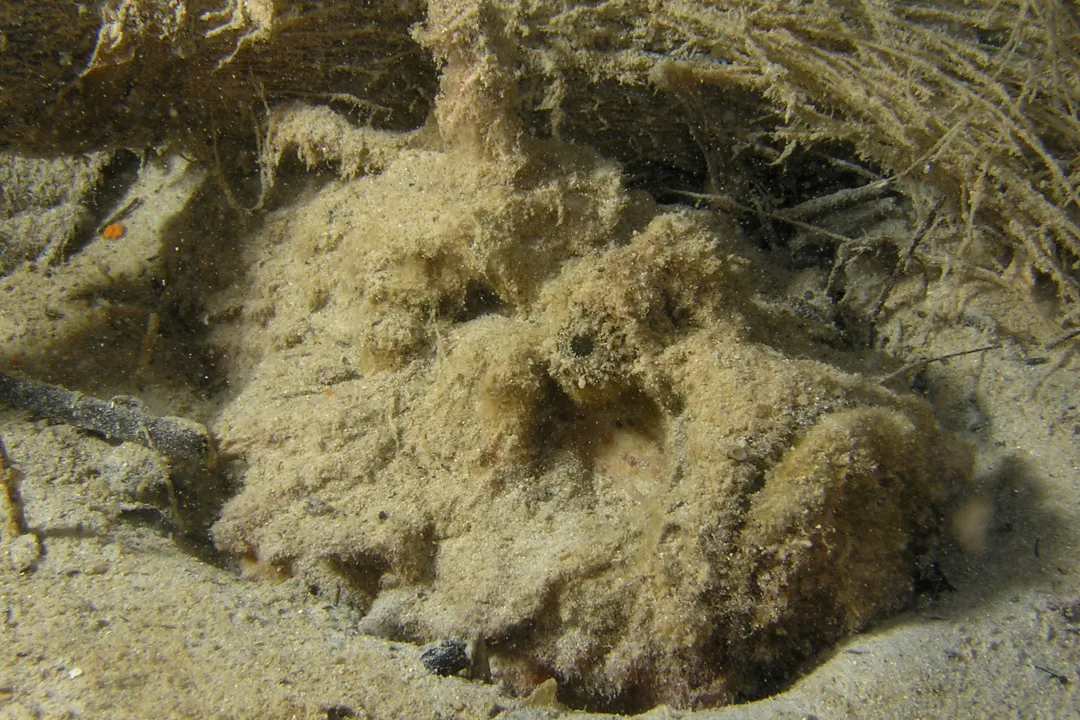 © Ditch TownsendCC BY-SA 4.0 · iNaturalist
 © João D'AndrettaCC BY 4.0 · iNaturalist
Which Sharks Pose a Hazard in Australia?
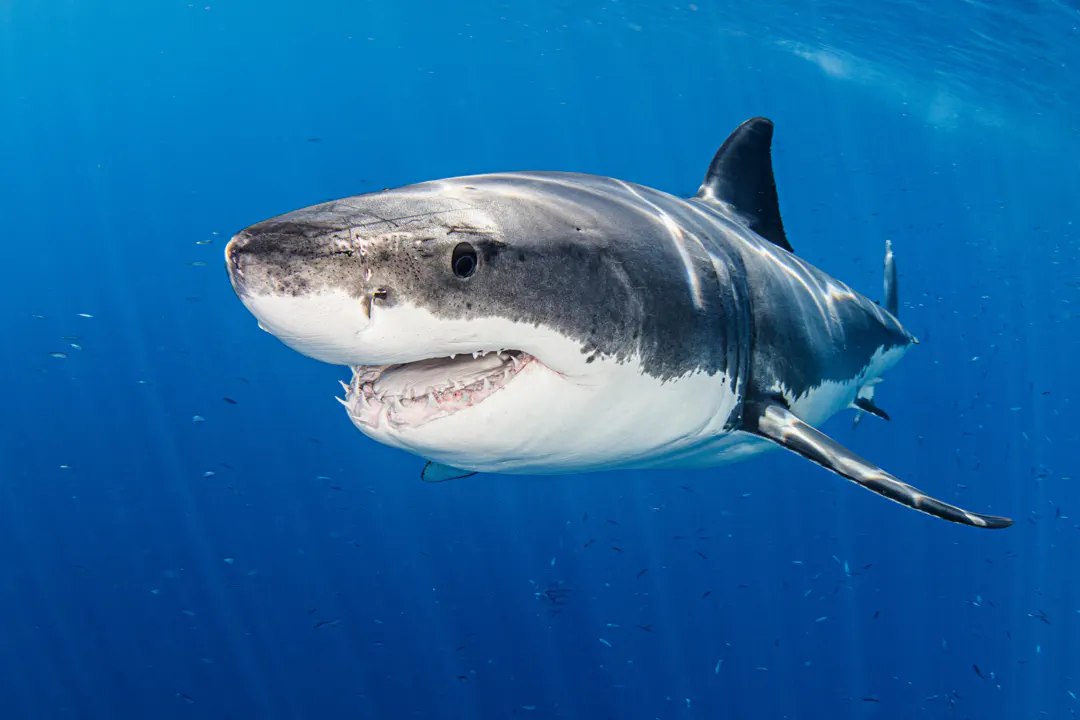
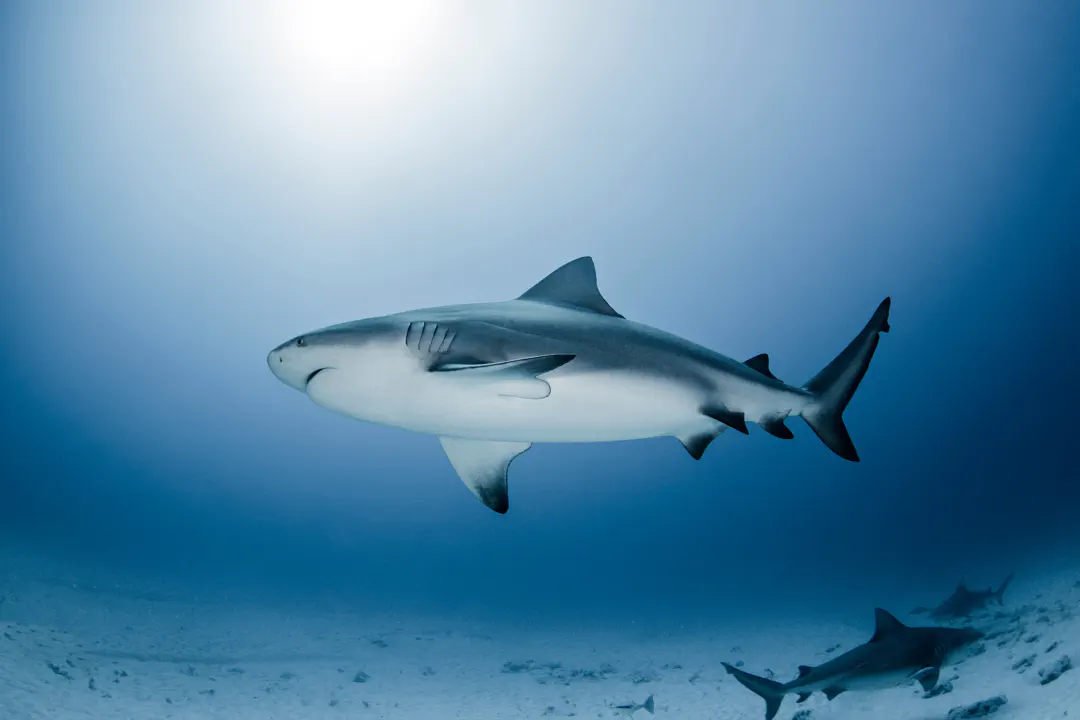
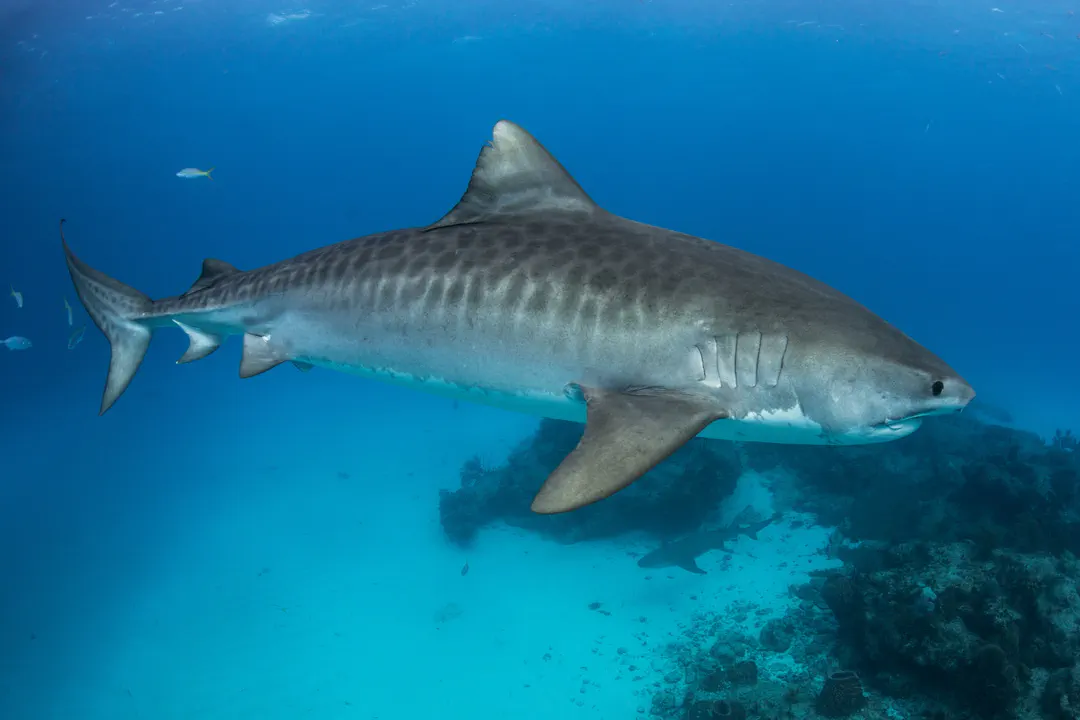
Four primary shark species account for the majority of serious encounters in Australian waters. White sharks (Carcharodon carcharias) prefer temperate southern waters between 12°C and 22°C, patrolling seal colonies off South Australia and Victoria. Tiger sharks (Galeocerdo cuvier) roam tropical and subtropical reefs, while bull sharks (Carcharhinus leucas) navigate murky estuaries, rivers, and shallow bays.
Grey reef sharks (Carcharhinus amblyrhynchos) frequent outer reef drop-offs along the Great Barrier Reef and Coral Sea at depths from 5 to 50 metres. Unprovoked shark bites remain statistically rare relative to the millions of swimmers and divers in the water each year. Most predatory interactions stem from poor visibility, fishing activity, or territorial displays where sharks arch their backs and drop their pectoral fins.
Migratory prey movements, such as whale carcasses or fish spawning aggregations, can draw larger sharks into coastal channels. Divers minimize risk by avoiding turbid river mouths after rain, refraining from spearfishing near deep passes, and ascending calmly if a shark exhibits agitated close-approach patterns.
 © seabook.appAll rights reserved
 © seabook.appAll rights reserved
 © seabook.appAll rights reserved
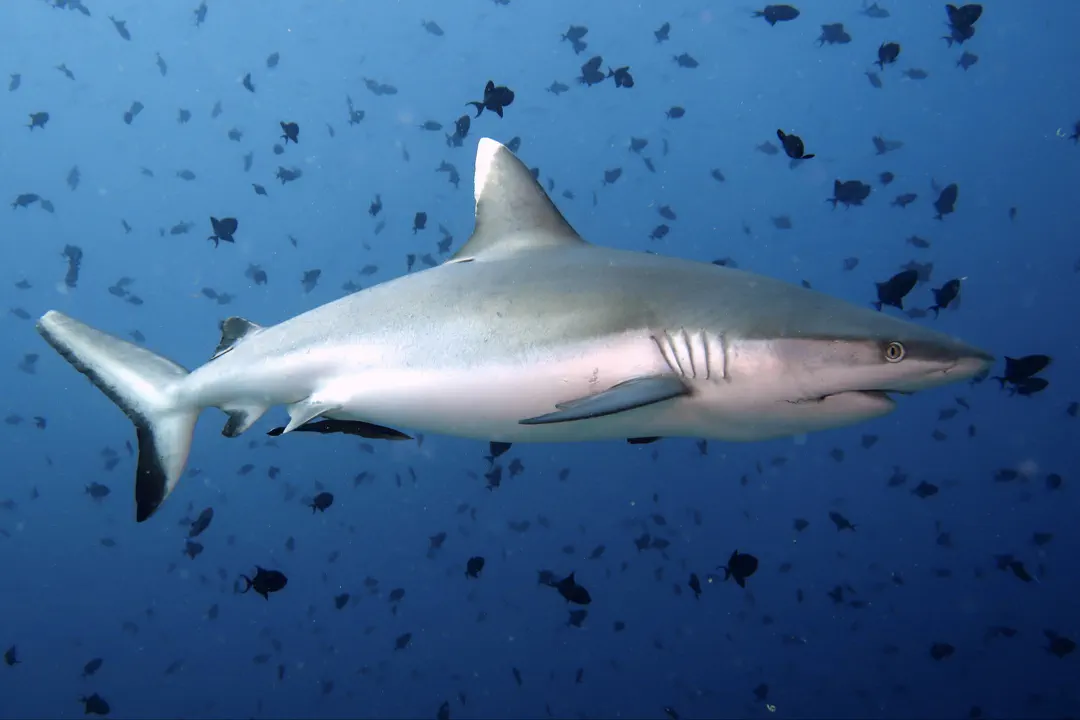 © Daniel BenákCC BY 4.0 · iNaturalist
Where Do Saltwater Crocodiles Threaten Swimmers in Australia?
Saltwater crocodiles (Crocodylus porosus) are apex estuarine reptiles ranging across northern Australia from the Kimberley in Western Australia across the Top End to central Queensland. Growing beyond 5 metres in length, these predators inhabit tidal rivers, mangrove creeks, billabongs, and coastal ocean waters. They are strong swimmers capable of crossing open ocean bays between river mouths and offshore islands.
Unlike freshwater crocodiles, saltwater crocodiles defend territories aggressively. They hunt as ambush predators at the water's edge, remaining submerged for long periods with only eyes and nostrils above water. Their dark greenish-brown scutes blend into muddy banks and turbid coastal waters, making early detection difficult.
Warning signs mark active crocodile habitats across northern beaches, boat ramps, and tidal rivers. Swimmers and divers should strictly avoid entering unmonitored waterways or turbid ocean beaches in crocodile country. Offshore diving should take place well away from estuarine entry points, relying on local operator updates for safety clearances.
Are Sea Snakes and Stingrays Dangerous in Australia?
Hydrophiine sea snakes, including the elegant sea snake (Hydrophis elegans) and olive sea snake (Aipysurus laevis), inhabit warm coral reefs and sandy seafloors from 5 to 45 metres deep across northern Australia. These air-breathing reptiles possess potent neurotoxic venom used to immobilize reef fish. Despite their venom strength, olive sea snakes are non-aggressive toward divers, often approaching out of curiosity to inspect equipment or bubbles.
Stingrays, such as the smooth stingray (Bathytoshia brevicaudata) in southern waters and the bluespotted maskray (Neotrygon kuhlii) on tropical reefs, lie buried in shallow sand flats. Equipped with serrated venomous barbs near the tail base, rays strike defensively when stepped on or pinned down. A barb can puncture wetsuits, delivering protein-based venom that causes sharp pain and risk of infection.
Maintaining neutral buoyancy and keeping clear of sandy bottoms prevents unwanted encounters with both animals. Shuffling feet while wading in shallow sand alerts buried rays, allowing them to glide away safely. When a sea snake approaches to surface for air or inspect gear, staying calm and avoiding sudden movements ensures a safe observation.
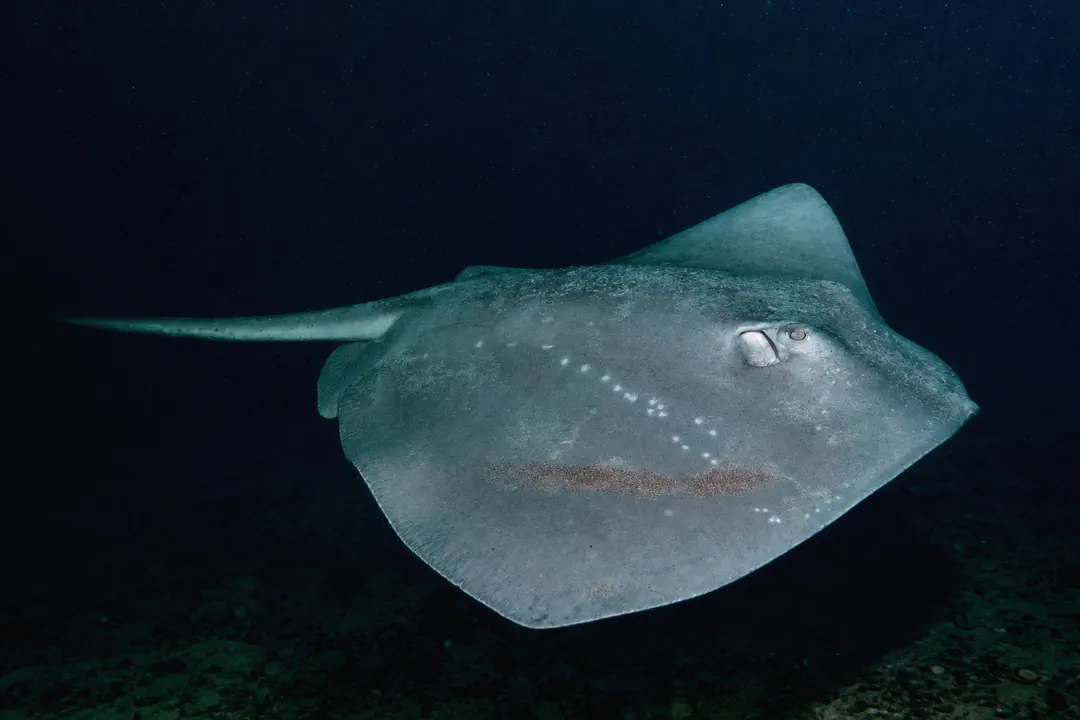 © seabook.appAll rights reserved
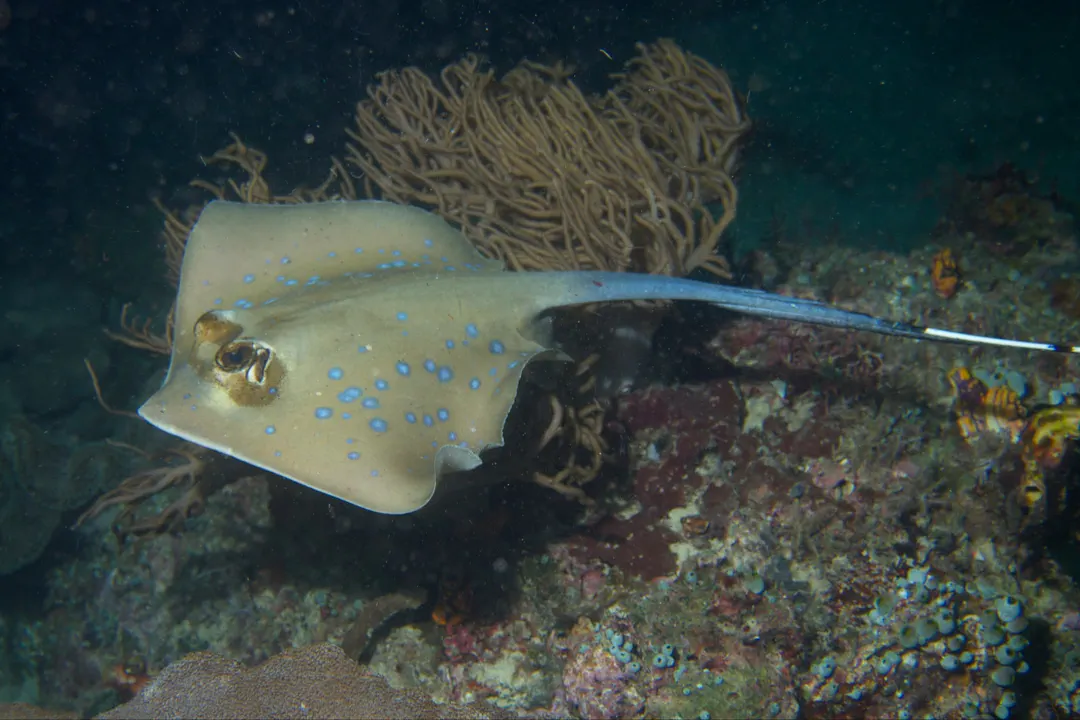 © Elias LevyCC BY 4.0 · iNaturalist
How Should You Treat Marine Stings and Bites in Australia?
First-aid treatment for marine stings depends on the species involved. For suspected tropical box jellyfish or Irukandji stings, immediately call emergency services (000) and douse the affected area with household vinegar for at least 30 seconds to immobilize unfired stinging cells. If cardiac arrest or respiratory failure occurs, begin cardiopulmonary resuscitation (CPR) immediately while awaiting emergency response.
For venomous spine punctures from stonefish, lionfish, or stingrays, immerse the affected limb in hot water (as hot as comfortably tolerated, up to 45°C) for up to 30 minutes to reduce pain and break down heat-sensitive proteins. Leave embedded spines in place to avoid triggering secondary bleeding before hospital treatment. Never apply a pressure-immobilisation bandage or tourniquet to stonefish punctures.
Suspected blue-ringed octopus bites and sea snake envenomation require a firm pressure-immobilisation bandage applied over the entire limb, starting from the fingers or toes. Keep the patient completely still to slow venom transport through the lymphatic system while monitoring breathing. If respiratory paralysis develops, provide continuous rescue breathing until medical teams arrive with artificial ventilation equipment.
How Can Divers Avoid Dangerous Encounters in Australia?
Avoiding marine hazards in Australian waters begins with proper equipment selection and regional dive planning. During northern stinger season from October to May, a full-body Lycra or 3mm neoprene stinger suit protects skin against fine jellyfish tentacles. Wearing thick rubber-soled boots when entering shallow rocky shorelines guards against stonefish spines and ray barbs.
Maintaining good underwater spatial awareness protects both divers and camouflaged marine life. Stay neutrally buoyant at least 1 metre off the reef bed, keeping hands tucked in rather than reaching into unlit rock crevices or coral ledges. Carrying a dive torch helps spot hidden scorpionfish or blue-ringed octopuses before positioning yourself for photography.
Steer clear of murky estuarine channels, river mouths after heavy rainfall, or active spearfishing areas where predators hunt. Heed local beach warning signs and lifeguard advisories before entering the ocean. Respecting wildlife boundaries and carrying proper emergency contacts ensures safe diving across every Australian season.
Questions
What is the most dangerous marine animal in Australia?
The Australian box jellyfish (Chironex fleckeri) is considered the most dangerous marine animal in Australia due to its rapid cardiotoxin delivery. A severe sting can cause cardiac arrest within minutes in tropical northern waters. Full-body stinger suits and immediate vinegar application are essential during northern stinger season from October to May.
Are shark attacks common in Australia?
Unprovoked shark bites remain statistically rare in Australia relative to the millions of aquatic visitors each year. Risk increases in murky water near river mouths, around fish spawning aggregations, or during low-light dawn and dusk hours.
When is stinger season in tropical northern Australia?
Stinger season across tropical northern Queensland, the Northern Territory, and northern Western Australia runs from October through May. Jellyfish numbers increase during these warm summer months, making full-body stinger suits necessary for swimmers and divers.
Can you survive a blue-ringed octopus bite?
Yes, victims can survive a blue-ringed octopus bite if artificial respiration begins immediately. Tetrodotoxin paralyzes respiratory muscles without damaging tissue directly, so continuous CPR and prolonged medical ventilation allow the body time to clear the toxin naturally.
Should you wear a stinger suit when diving in Australia?
Wearing a full-body Lycra or 3mm neoprene stinger suit is recommended when diving in tropical northern Australia between October and May. Stinger suits prevent bare skin contact with dangerous box jellyfish and tiny Irukandji tentacles while offering sun protection.
What should you do if stung by a stonefish in Australia?
Call emergency services (000) immediately and immerse the sting site in hot water (up to 45°C) for up to 30 minutes to reduce pain and neutralize venom proteins. Leave embedded spines intact to avoid severe bleeding until medical professionals evaluate the wound.
Sources
- Sea creature bites and stings · 2026-11-01
- Jellyfish stings - types, symptoms and treatment | healthdirect · 2026-11-01

