
Three miles offshore from Haleiwa Harbor on Oahu's North Shore, sunlight cuts through thirty meters of deep blue ocean as a three-meter Galapagos shark circles below. The shark moves without apparent effort, its broad pectoral fins resting flat against the upward surge. Two sandbar sharks join the circle from the blue gloom, their high dorsal fins slicing through the clear water while small drift fish shelter behind their flanks.
Diving with sharks in Hawaii centers on three key regions: the pelagic drifts off Haleiwa (Oahu), the lava tubes of the Kona Coast (Big Island), and the volcanic walls of Molokini Crater (Maui). Water temperatures range from 24°C in February to 27°C in September, with visibility between 25 and 40 meters year-round. Signature species include whitetip reef sharks, Galapagos sharks, sandbar sharks, scalloped hammerheads, and tiger sharks.
May through October brings calm seas ideal for offshore pelagic dives, while winter months bring humpback whales and tiger sharks to coastal channels. Protected bays and shallow lava arches suit Open Water divers and snorkelers, while blue-water pelagic drifts require Advanced Open Water certification.
What Sharks Are Found in Hawaii?
Over forty species of sharks live within the coastal and pelagic zones of the Hawaiian archipelago. The isolated location of these volcanic islands, positioned over two thousand miles from any continental shelf, creates distinct ecological zones that support both resident reef species and wide-ranging open-ocean travelers. Smaller reef-dwelling sharks spend their entire lives among coral shelves, while migratory species pass through deep channels between islands.
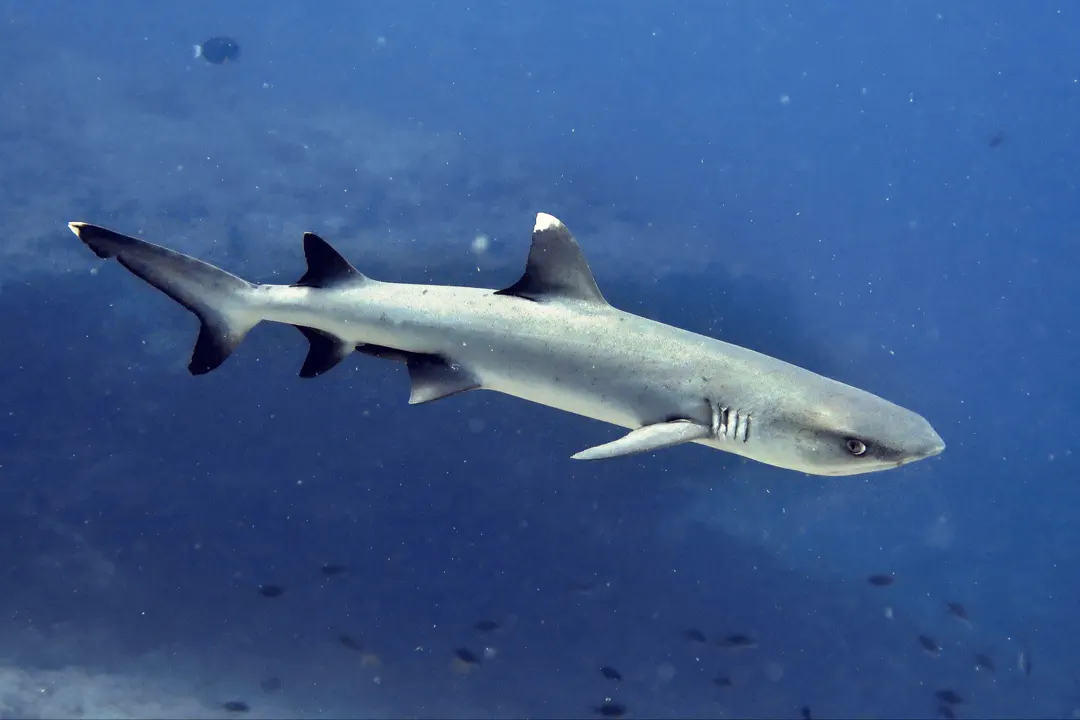
In shallow coastal waters and coral reef habitats, whitetip reef sharks dominate the bottom terrain. These slender predators measure between 1.2 and 1.6 meters and spend daylight hours resting quietly inside underwater caverns, under basalt ledges, or across sandy patches between coral formations. Their ability to pump water across their gills while stationary allows them to remain motionless, unlike many open-water species that must swim constantly to breathe.
Beyond the outer reef drop-offs, pelagic species claim the upper water column down to depths exceeding two hundred meters. Galapagos sharks, sandbar sharks, and smooth-sailing silky sharks gather near offshore banks and drop-offs where upwelling currents push nutrient-dense water toward the surface. In deeper passages between Maui, Molokai, and Lanai, schools of scalloped hammerheads navigate deep underwater ridges, while massive tiger sharks roam from shallow shorelines to oceanic depths.
 © Daniel BenákCC BY 4.0 · iNaturalist
  © R VasconcellosCC BY 4.0 · iNaturalist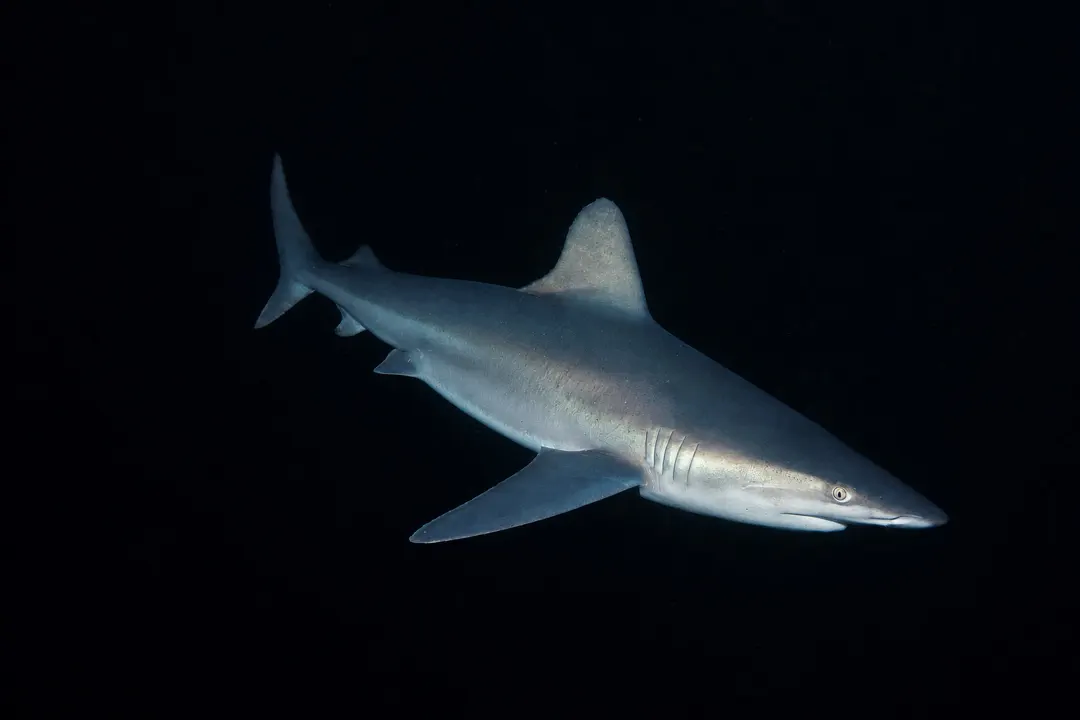
Most Common Shark Species in Hawaii
The whitetip reef shark is the most frequent sight for coastal divers, identifiable by the crisp white enamel markings tipping its dorsal and upper caudal fins. Reaching lengths of 1.2 to 1.6 meters, these nocturnal hunters remain calm during daylight hours, resting in groups inside volcanic arches between depths of 6 and 30 meters. At dusk, their behavior changes completely as they maneuver through tight reef crevices to ambush sleeping parrotfish, damselfish, and octopus.
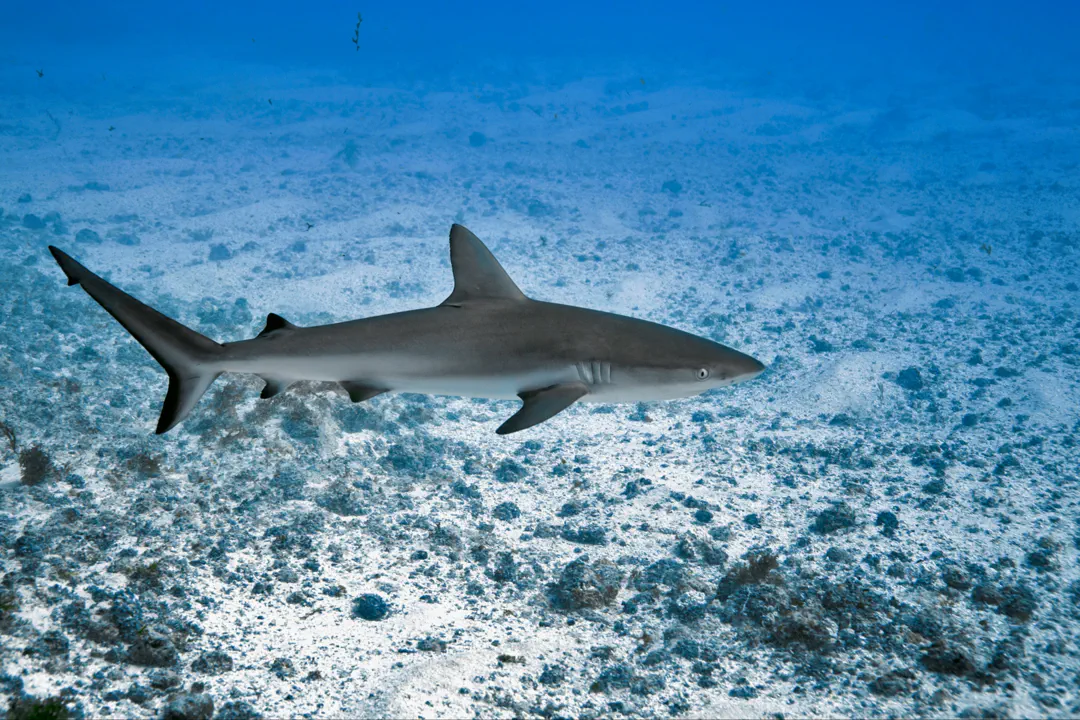
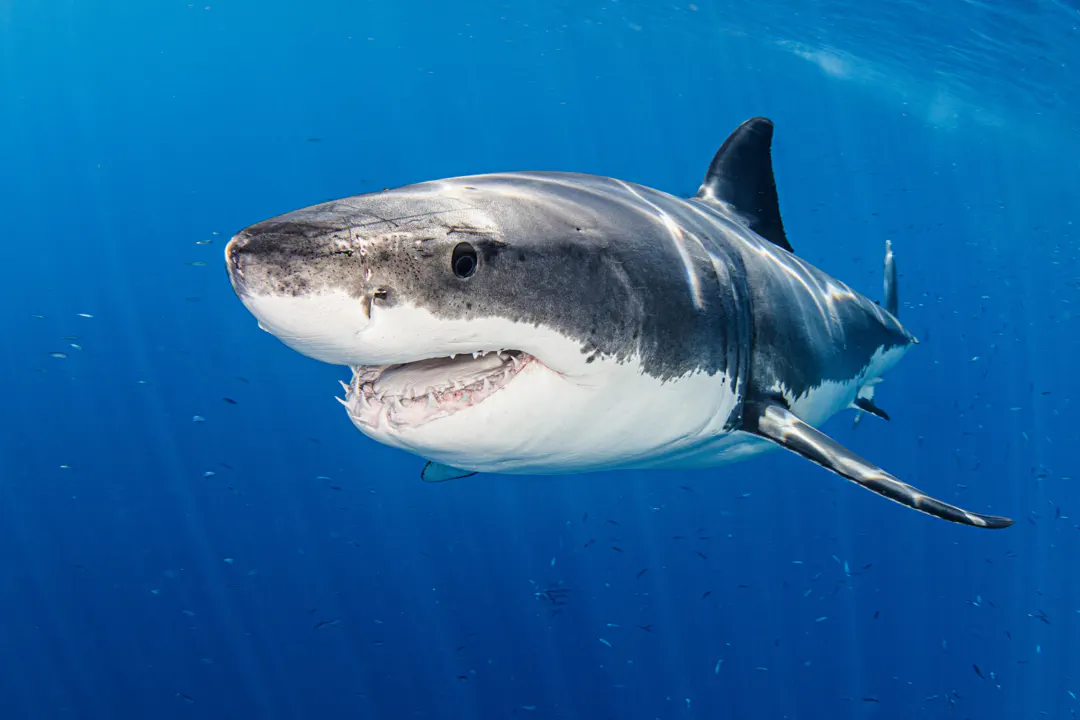
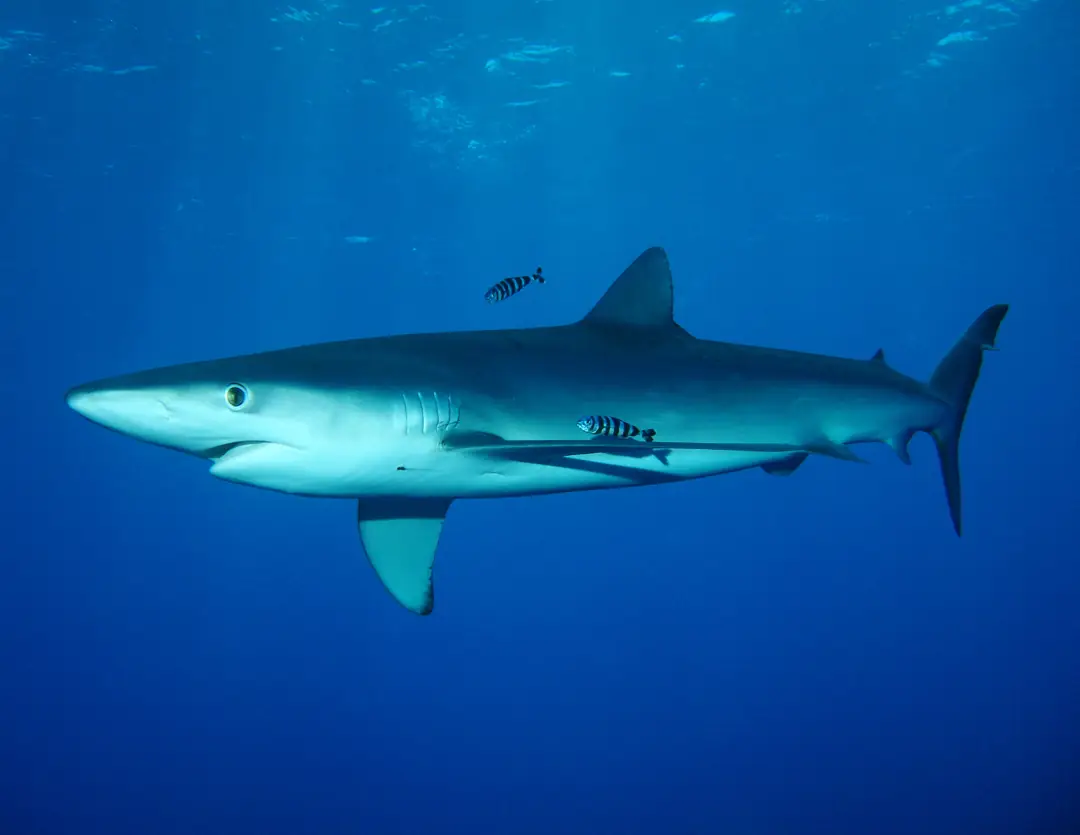
Galapagos sharks and sandbar sharks represent the primary pelagic species observed along offshore drop-offs. Galapagos sharks grow up to 3.3 meters long and feature a heavy body with a rounded snout and a thick ridge running between their dorsal fins. Sandbar sharks are easily distinguished by their high, triangular first dorsal fin, which accounts for nearly ten percent of their total body length. Both species patrol depths from 15 to over 80 meters along deep pelagic drop-offs.
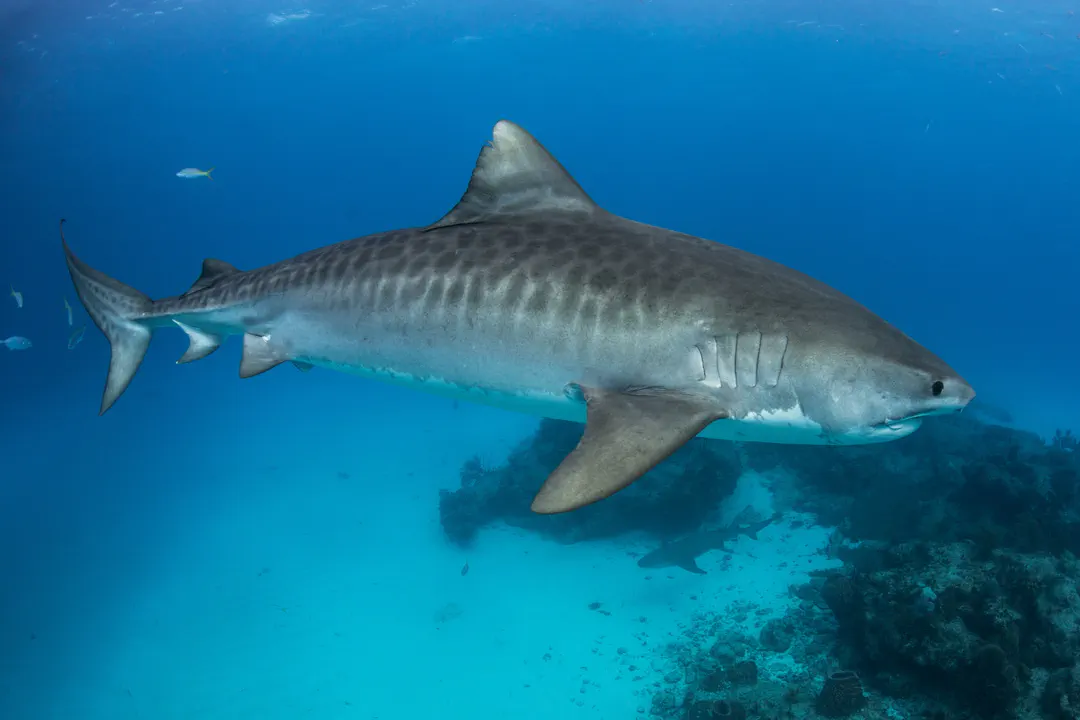
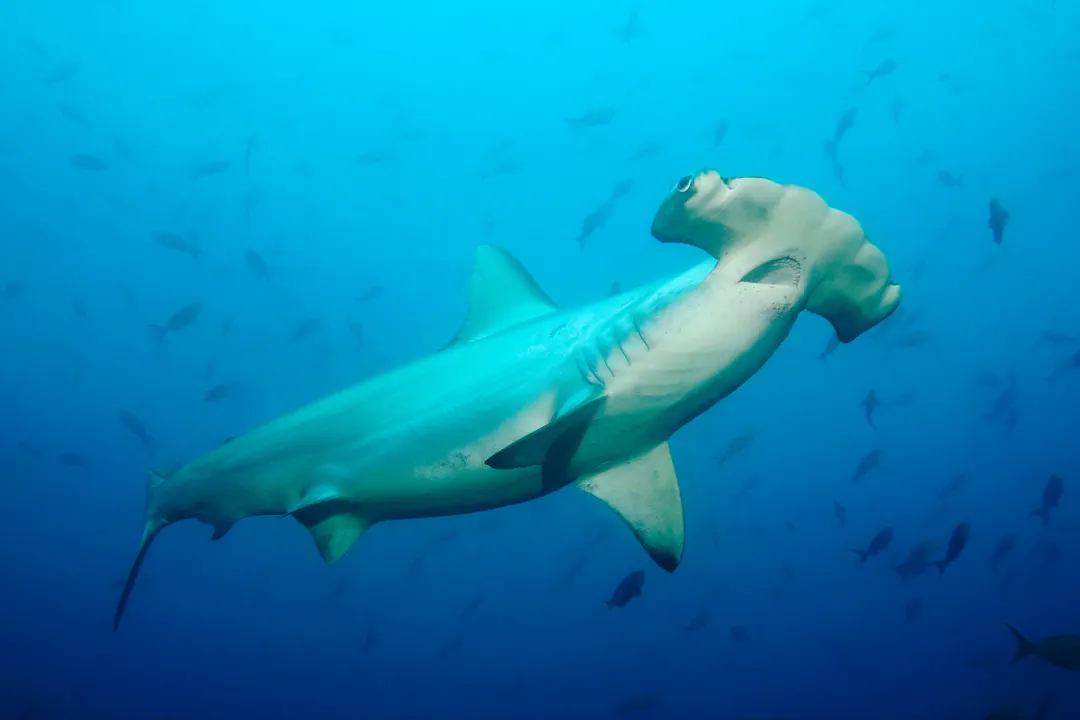
Scalloped hammerheads and tiger sharks occupy distinct ecological positions in Hawaiian waters. Scalloped hammerheads feature a notched head margin and gather in social groups along deep ocean ridges and drops at depths from 20 to 100 meters. Tiger sharks, growing up to 4.5 meters or more, possess wide, blunt snouts and dark vertical bar markings along their flanks that fade with age. Divers can log their encounters and verify shark identification features using the Seabook app to keep an accurate record of species spotted during Hawaiian dives.
Best Places to See Sharks in Hawaii
Hawaii features contrasting underwater landscapes shaped by basaltic lava flows and deep oceanic trenches. Sightings remain consistent across specific island locations where bottom topography drops quickly into open water.
North Shore (Oahu): Pelagic Shark Encounters
Three to five miles off Haleiwa Harbor, the ocean floor drops rapidly from 40 meters to depths exceeding 300 meters. This dramatic bathymetry brings pelagic sharks within minutes of the shoreline, drawing high numbers of Galapagos sharks and sandbar sharks throughout the year. Blue water drifting over these deep drop-offs offers visibility that regularly exceeds 30 meters.
Divers and pelagic snorkelers slip into deep blue water tethered to or floating alongside specialized charter vessels. Encounters here occur in open water far above the bottom, where dozens of sharks circle gracefully in the gentle ocean swell. The animals display calm, inquisitive curiosity, frequently swimming within two to three meters of stationary observers.
Conditions on the North Shore vary significantly by season due to Pacific swell patterns. Summer months from May through September bring flat, glass-like surface water ideal for pelagic drift dives, while winter months between November and March produce heavy northern swells that can make boat transits challenging.
Depth: 10-40 m. Access: boat, 15 minutes from Haleiwa Harbor. Level: Advanced Open Water. Best months: May-October.
 © Patrick DollCC BY-SA 4.0
 Kona Coast (Big Island): Night Dives and Deep Drop-Offs
The western coast of the Big Island sits in the lee of Mauna Loa and Hualalai volcanoes, creating calm water conditions nearly 300 days a year. Volcanic lava tubes, arches, and basalt overhangs dominate the substrate from shallow bays down to deep drop-offs. Whitetip reef sharks populate these volcanic structures in high concentrations, resting in shadowed lava tubes by day.
Deep offshore sites like Golden Arches and Turtle Pinnacle feature steep drop-offs where deep water upwellings attract pelagic visitors. Scalloped hammerheads surface along deep outer walls during early morning hours, while solitary tiger sharks cruise past outer reef ledges at depths of 18 to 30 meters. Water visibility regularly reaches 35 meters along this coastline.
Night dives along the Kona Coast present an entirely different view of shark behavior. As darkness falls, whitetip reef sharks leave their daytime resting arches and hunt actively across the reef matrix. Guided night dives around garden reefs reveal these slender predators weaving through tight coral branches, using their sensitive olfactory and electrical senses to detect concealed prey.
Depth: 5-35 m. Access: boat, 20 minutes from Honokohau Harbor. Level: Open Water. Best months: Year-round.
Molokini Crater and South Maui: Reef Sharks and Wall Dives
Molokini Crater is a submerged volcanic caldera located three miles off Maui's southern coast. The islet's crescent shape creates a sheltered inner basin with clear water and depths from 6 to 30 meters, while its back wall drops vertically into 100 meters of open ocean. Whitetip reef sharks inhabit the coral shelves along the crater's interior floor, resting on clean white sand.
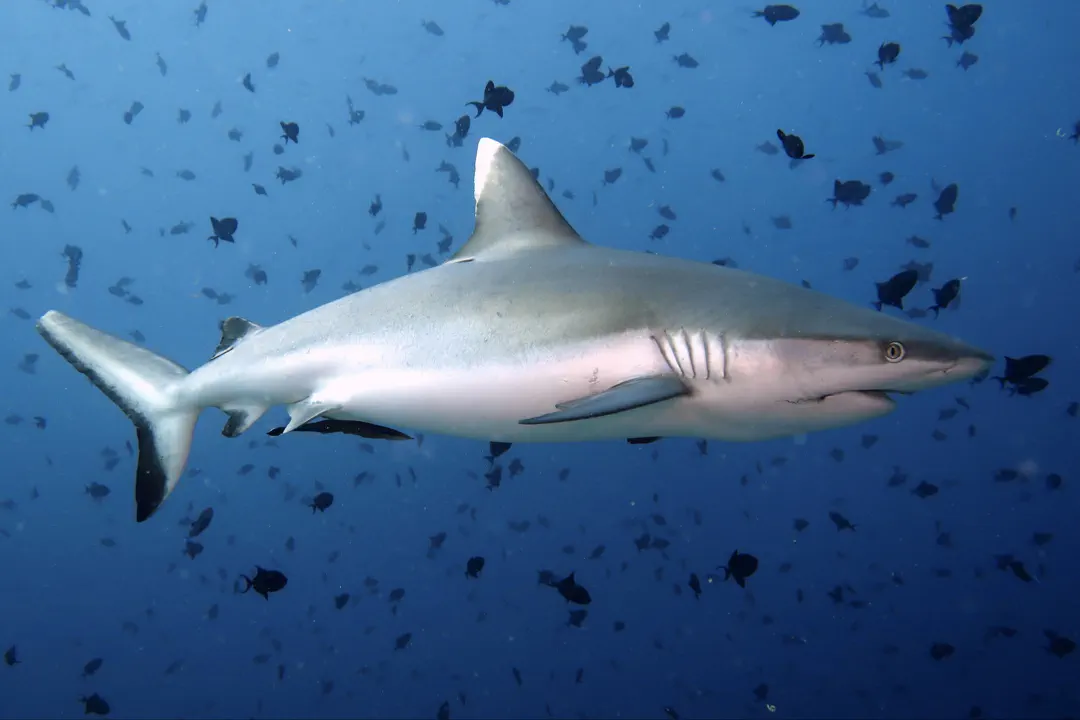
The outer wall of Molokini offers dramatic vertical wall diving exposed to ocean currents. Advanced divers drifting along this outer wall frequently encounter grey reef sharks and Galapagos sharks cruising parallel to the wall at depths between 20 and 40 meters. Deep upwellings along the crater wall bring cooler water and pelagic species into view.
South Maui's coastal reefs, including site locations off Makena and Wailea, host turtle cleaning stations where green sea turtles gather to have algae picked from their shells. Whitetip reef sharks frequent these same shallow reef complexes, resting under basalt ledges adjacent to turtle cleaning sites at comfortable depths of 8 to 18 meters.
Depth: 6-40 m. Access: boat, 30 minutes from Maalaea Harbor. Level: Open Water. Best months: December-May.
 © Daniel BenákCC BY 4.0 · iNaturalist
 Best Time to See Sharks in Hawaii
Shark encounters in Hawaii occur reliably throughout all twelve months, but seasonal marine events shift species concentrations and dive conditions. Summer months from June through September bring warm surface water, minimal ocean swell along north-facing shores, and optimal surface visibility for pelagic boat excursions.
Autumn brings a notable biological transition as large female tiger sharks migrate south from the Northwestern Hawaiian Islands. Between September and November, these mature females arrive around the main islands to give birth in shallow, sheltered coastal waters. Dive operators along Oahu, Maui, and the Big Island report an increase in coastal tiger shark sightings during these autumn months.
Winter from December to April brings thousands of humpback whales to the Hawaiian Islands to mate and calve. The presence of whales influences shark behavior, as pelagic species including tiger sharks, Galapagos sharks, and occasionally great white sharks follow whale pods through inter-island channels. Northern swells during winter restrict boat access on north shores, making southern and western sheltered lee shores the prime diving locations.
Hawaii Water Temperature by Month
Water temperature
Hawaii, monthly average
Reference point: Honolulu, Oahu (nearshore reef/diving areas; typical surface conditions around the main Hawaiian Islands).
Sea surface temperatures across the main Hawaiian Islands remain remarkably consistent throughout the year, fluctuating within a narrow range of roughly three degrees Celsius. Water temperatures reach their lowest point in February and March at 24°C, before gradually warming through the summer to peak at 27°C in September and October.
Thermal layer stratification is minimal in shallow coastal waters, though deep drop-offs and open-ocean drift sites feature subtle thermoclines below 25 meters depth. A full 3mm neoprene wetsuit provides sufficient insulation for most divers during the summer months, while a 5mm wetsuit or a 3mm suit paired with a hooded vest is recommended for extended or deep dives during the cooler late-winter period.
Water clarity around Hawaii is among the highest in the Pacific basin, with horizontal visibility averaging between 25 and 40 meters. Runoff during heavy tropical rains can temporarily reduce coastal clarity near river mouths, but offshore volcanic reefs and crater walls remain clear year-round regardless of surface weather.
Cultural Significance: Sharks as Aumakua in Hawaiian Culture
In Native Hawaiian culture and tradition, sharks are known as 'mano' and hold a profound position within spiritual and ecological belief systems. Rather than being feared as indiscriminate predators, sharks were recognized as vital components of ocean life and integrated into traditional Hawaiian genealogy and cosmology.
Certain individual sharks were venerated as 'aumakua'—deified ancestral guardian spirits. Hawaiian families believed that after death, a family member could be transformed into a spirit guide, including a shark. These aumakua mano were believed to recognize and protect their living relatives, driving fish into fishermen's nets or guiding lost swimmers safely back to shore.
Fishermen and coastal communities maintained respect for these guardian spirits through offerings, specific chants, and strict taboos. Families who held the shark as their aumakua were strictly forbidden from harming or consuming shark meat, forming an early, culturally enforced system of marine conservation that protected shark populations across the archipelago for centuries.
Is Diving with Sharks in Hawaii Safe?
Diving with sharks in Hawaii on organized ecotours is a highly controlled activity with an exceptional safety record. Commercial operators adhere to strict safety protocols, including comprehensive pre-dive briefings, steady positioning in the water column, and constant divemaster supervision to ensure safe interactions between humans and sharks.
Sharks are apex predators that act on instinct and sensory input, but they rarely view humans as prey. Unprovoked shark bites in Hawaii are statistically extremely rare, with the vast majority involving surface waters, murky conditions, or spear-fishermen carrying dead fish. For scuba divers submerged beneath the surface with clear visibility, sharks display cautious, curious, or indifferent behavior.
Guided shark encounters require divers to follow key safety behaviors: maintaining vertical awareness, avoiding sudden splashing or flailing arms, keeping hands folded near the chest, and maintaining direct eye contact with approaching animals. By remaining calm and composed in the water column, divers communicate non-threatening posture and can observe natural shark behaviors safely.
Practical Tips for Shark Diving in Hawaii
Selecting a responsible ecotour operator is the most important step in planning a Hawaiian shark dive. Look for operators that employ certified marine biologists, practice non-invasive wildlife viewing, adhere to state regulations, and prioritize educational conservation over sensationalism or force feeding.
Gear selection plays a role in creating smooth, low-impact shark interactions. Wear dark or neutral-colored neoprene suits, fins, and masks, as bright high-contrast colors or shiny metallic jewelry can attract unwanted interest from curious predators. Carry a surface marker buoy (SMB) and a whistle for offshore pelagic dives where surface currents can carry divers away from the vessel.
Always evaluate sea conditions before entering the water, avoiding harbor entrances, river mouths, and areas with poor visibility under 10 meters, especially during early morning or late afternoon feeding hours. Respecting local cultural guidelines and recognizing sharks as vital ecosystem guardians ensures a safe, educational, and respectful ocean experience.
Questions
Are there sharks in Hawaii?
Yes, over 40 species of sharks inhabit Hawaiian waters, ranging from small reef-dwelling whitetip reef sharks to large pelagic ocean species. Divers regularly encounter five primary species on guided dive tours across the islands. Most encounters occur in clear offshore waters or protected marine sanctuaries where water visibility exceeds 25 meters.
What is the most common shark in Hawaii?
The whitetip reef shark (Triaenodon obesus) is the most frequently sighted shark on Hawaiian coral reefs. These docile, slender sharks reach 1.2 to 1.6 meters in length and spend daytime hours resting in groups inside volcanic lava tubes and beneath coral ledges. They are commonly seen at depths between 6 and 30 meters off Maui, Kona, and Oahu.
Can you see great white sharks in Hawaii?
Great white sharks do visit Hawaiian waters during the cooler winter months between December and April. They migrate from North America following humpback whale pods into deep inter-island channels. However, underwater encounters by recreational divers are exceptionally rare due to their low numbers and deep open-ocean preferences.
Is it safe to swim with sharks in Hawaii?
Yes, swimming and diving with sharks in Hawaii on guided tours is considered very safe when following professional protocols. Licensed tour operators conduct detailed safety briefings and keep groups supervised in open water. Unprovoked shark incidents involving submerged divers in clear water are extremely rare.
Where is the best place to dive with sharks in Hawaii?
The North Shore of Oahu off Haleiwa is famous for open-water pelagic shark dives with Galapagos and sandbar sharks. For reef species, the Kona Coast on the Big Island offers high concentrations of whitetip reef sharks in lava tubes, while Molokini Crater off Maui features clear wall dives with reef and pelagic sharks.
How warm is the water in Hawaii for diving?
Water temperatures in Hawaii range from a low of 24°C (75°F) in February and March to a high of 27°C (81°F) from August through October. A 3mm wetsuit is ideal during the warm summer months, while a 5mm wetsuit provides sufficient thermal protection for late winter dives.