
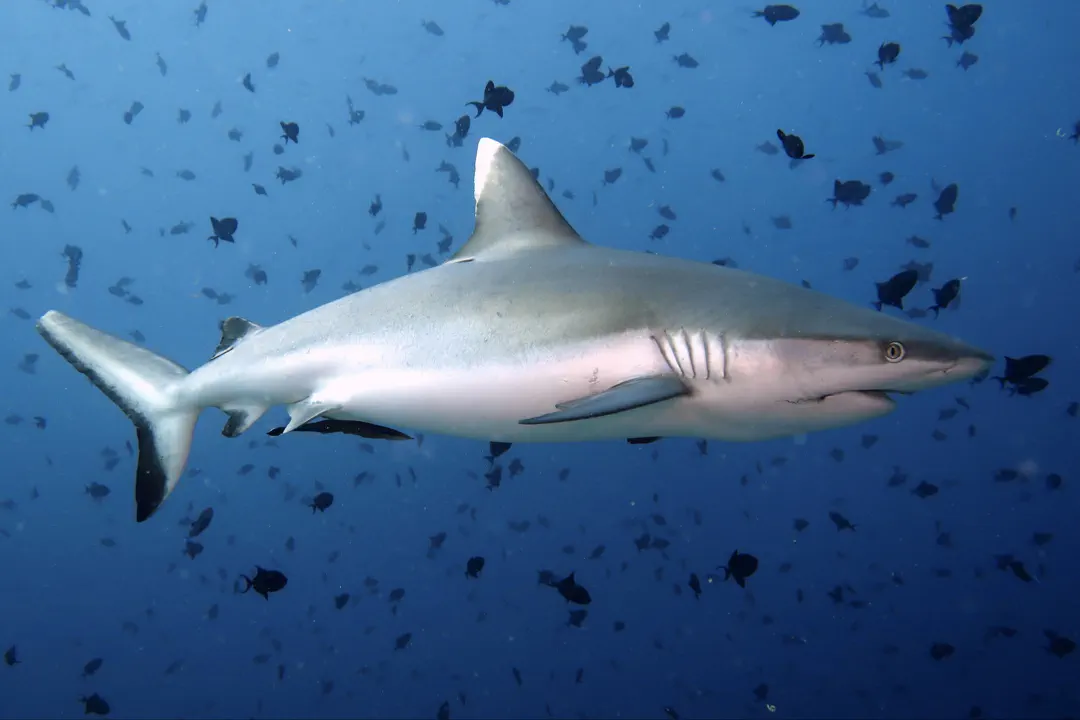
At a depth of 22 metres inside Miyaru Kandu, an incoming tidal rush sweeps blue ocean water through the narrow pass. Hooked onto a bare limestone ledge, you hold position against the flow while twenty grey reef sharks patrol the channel mouth. Sunlight cuts through 30 metres of clear water, illuminating the dark trailing edges of their tails as they hold motionless against the current.
Diving with sharks in the Maldives offers consistent encounters with over 30 recorded species across 26 geographical atolls. Water temperatures remain stable between 27°C and 30°C throughout the year, while underwater visibility regularly ranges from 25 to 40 metres during the dry northeast monsoon. Peak conditions run from December through April, though resident populations allow rewarding shark dives in every season.
Top destinations include Miyaru Kandu for channel drifts, Fuvahmulah for tiger sharks, South Ari Atoll for surface-dwelling whale sharks, and Rasdhoo Madivaru for early-morning hammerheads. Novices can enjoy shallow lagoon encounters with blacktip reef sharks, while experienced divers tackle deep oceanic drop-offs and high-energy current passes.
What Sharks Can You See in the Maldives?
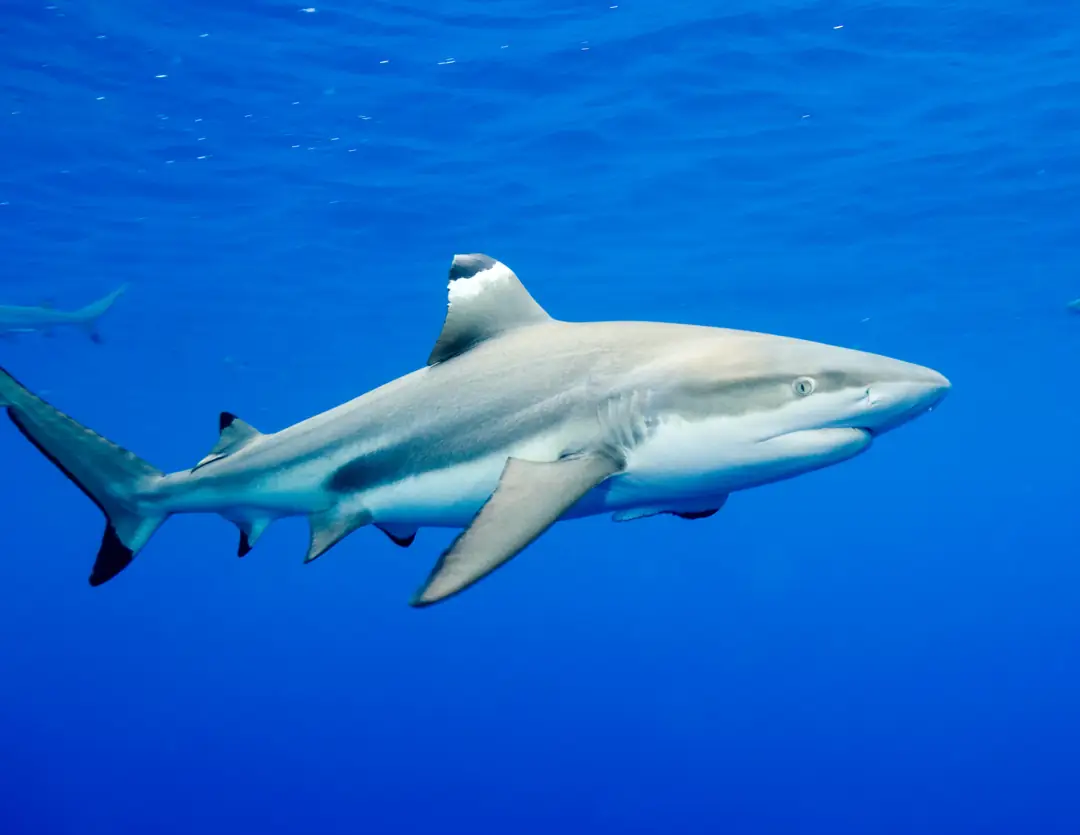
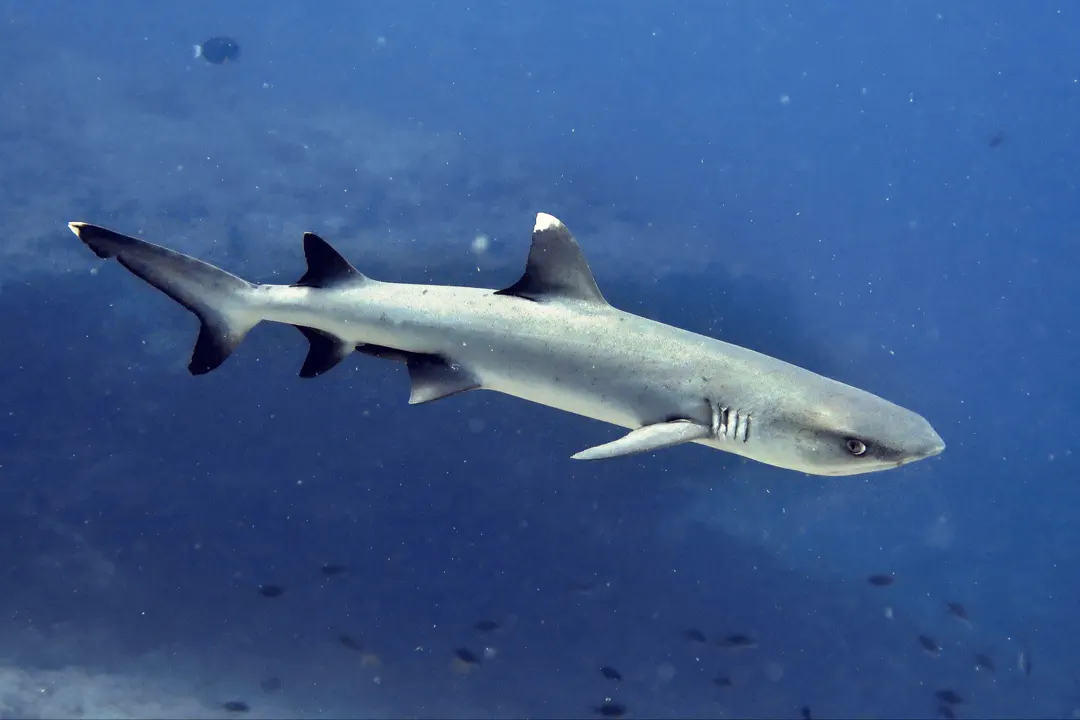
Shallow turquoise lagoons and sheltered reef flats host juvenile blacktip reef sharks (Carcharhinus melanopterus), which patrol in water under two metres deep. Along reef slopes down to 20 metres, whitetip reef sharks (Triaenodon obesus) rest beneath Acropora overhangs during the day before emerging to hunt reef fish at dusk. Tawny nurse sharks (Nebrius ferrugineus) gather on sandy substrates, using suction feeding to target crustaceans inside coral crevices.
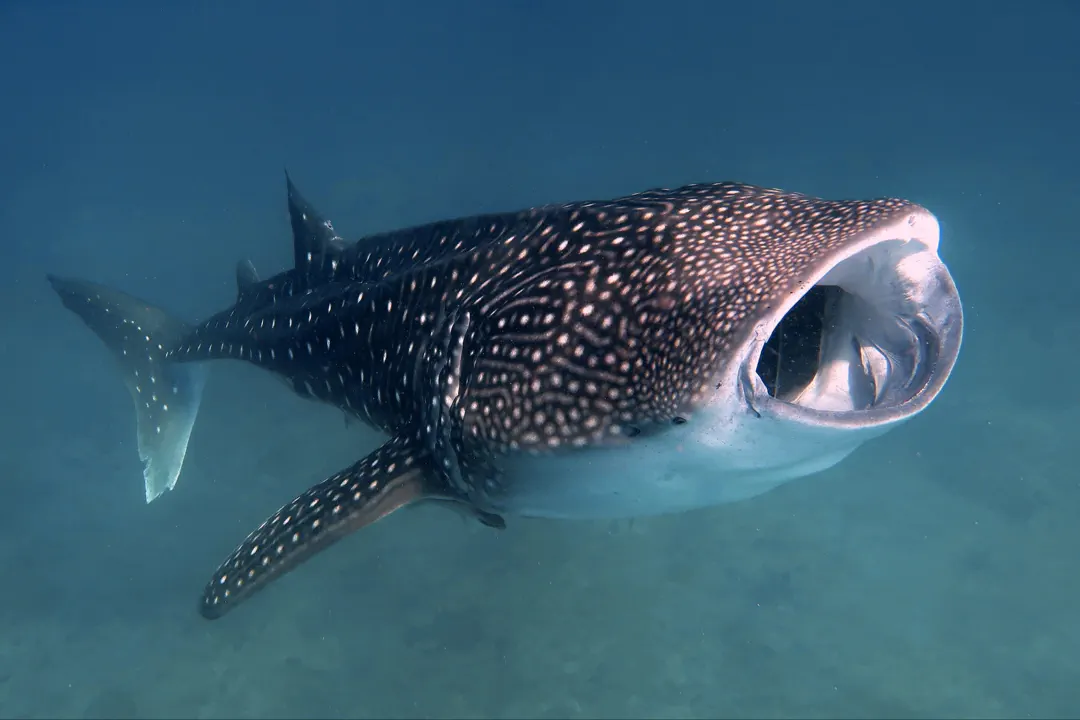
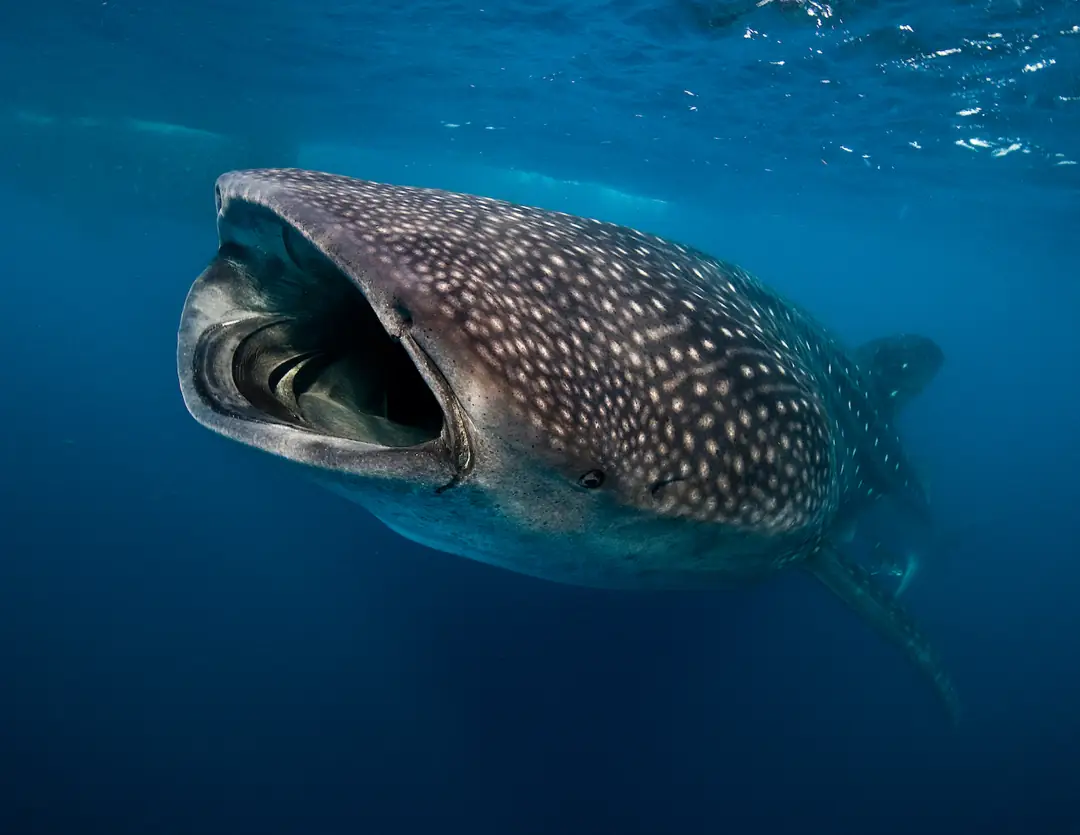
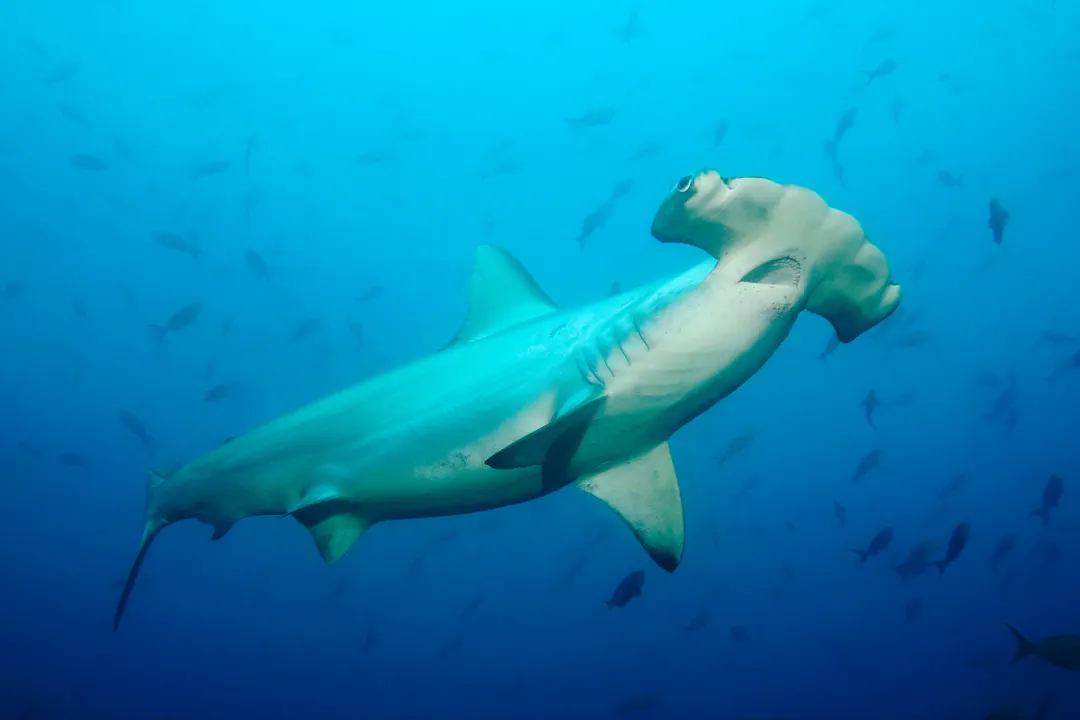
In deeper channels and outer drop-offs, grey reef sharks (Carcharhinus amblyrhynchos) dominate current-swept passes between 10 and 30 metres. Open-ocean predators also visit these atoll borders. Scalloped hammerheads (Sphyrna lewini) rise from deep pelagic water at dawn, while massive filter-feeding whale sharks (Rhincodon typus) cruise shallow shelves to feed on plankton aggregations. Zebra sharks (Stegostoma tigrinum), formerly known as leopard sharks, rest on sandy channels between 15 and 25 metres.
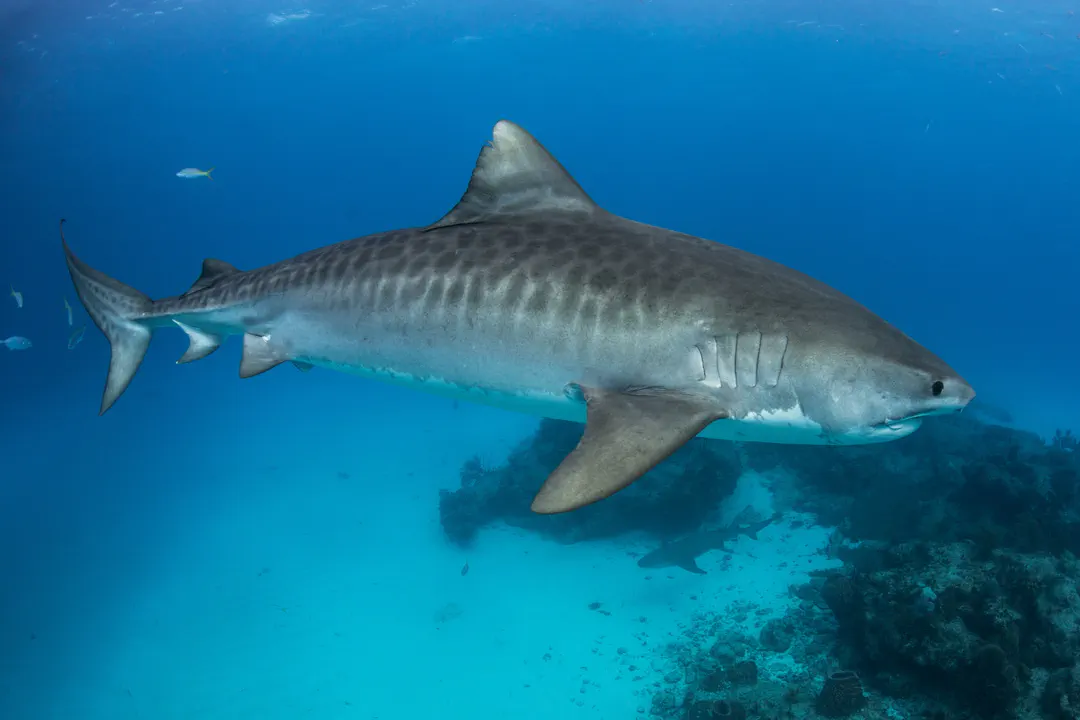
Fuvahmulah Atoll in the far south supports large tiger sharks (Galeocerdo cuvier), which patrol deep drop-offs and coastal shelf edges year-round. Identifying these animals underwater relies on fin markings and head shapes rather than size alone. Divers using the Seabook app can cross-reference physical traits like dorsal fin coloration and snout profiles directly from their dive log to identify exact species on site.
 © Daniel BenákCC BY 4.0 · iNaturalist
  © Daniel BenákCC BY 4.0 · iNaturalist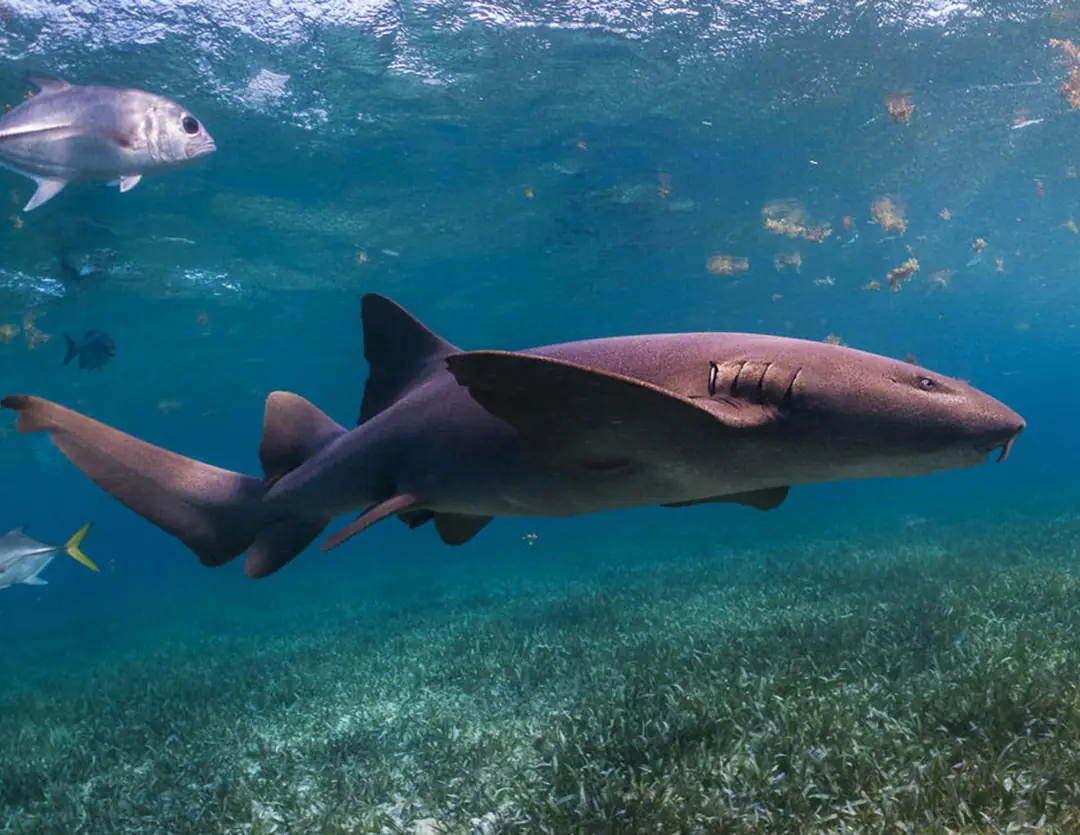
Best Time to See Sharks in the Maldives
Monsoon wind patterns dictate water conditions and shark movements across the archipelago. The northeast monsoon, running roughly from December through April, brings dry weather, calm seas, and visibility reaching 25 to 40 metres along eastern reef walls. Incoming ocean currents draw cold, clear water into eastern channels, bringing dozens of grey reef sharks and eagle rays directly to channel mouths.
The southwest monsoon, lasting from May through November, shifts wind direction and brings higher rainfall and surface swell. Increased plankton concentrations during these months reduce visibility to 15 or 20 metres in central atolls, but create dense feeding grounds for filter feeders. South Ari whale sharks remain active along shallow coastal shelves throughout this period, while eastern channel sites experience outgoing flow that pushes pelagic species further off the reef wall.
Water temperatures stay between 27°C and 30°C across both monsoons. Rasdhoo Atoll's scalloped hammerheads are targeted at first light from approximately December through April when calm sea states allow early departures. Fuvahmulah's tiger shark encounters take place year-round, with favorable surface conditions prevailing between August and November.
Maldives Water Temperature by Month
Ocean temperatures across the central and southern atolls remain tropical and uniform throughout the calendar year, averaging 28°C to 29°C at the surface. January and February register minor seasonal drops to 27°C in deep southern passes, while April and May bring maximum surface warmth reaching 30°C. Thermoclines occur along deep channel floors below 25 metres, where temperatures can drop suddenly by 2°C during strong tidal changes.
A 3 mm full neoprene wetsuit provides sufficient thermal protection for repetitive three-dive days in these conditions. Divers who chill easily during long, stationary hook-ins at current-swept channel lips often prefer a 3 mm to 5 mm suit to offset heat loss over 50-minute dive times. A thin 2 mm shorty suit works for shallow, warm lagoon dives, but offers less protection against accidental contact with sharp dead coral along current edges.
Plankton density varies with monsoon cycles, directly affecting underwater clarity without altering water temperature. Clear blue water during the dry season simplifies spotting pelagic silhouettes at 30 metres, while nutrient-rich green water during the wet season concentrates fish biomass near the surface. Plan exposure gear for repetitive immersion rather than single-dive surface temperatures.
Water temperature
Maldives, monthly average
Malé area (North Malé Atoll), central Maldives; typical scuba diving depths 10-30m where surface temps apply
Top Dive Sites for Sharks in the Maldives
Shark distributions vary widely across the 26 atolls of the Maldives depending on depth, channel topography, and current strength. Deep southern oceanic islands attract large pelagics, central channel passes concentrate schooling reef sharks, and shallow inner lagoons provide nursery grounds for juveniles.
Choosing specific sites depends on certification level and target species. Strong channel currents demand precise buoyancy control and drift experience, whereas sheltered pinacles and outer reef walls allow relaxed observations under mild flow.
Selecting the appropriate atoll ensures divers match their technical ability with local ocean conditions. The following dive sites represent the most reliable locations for encounters with distinct shark species across the archipelago.
Fuvahmulah Atoll: Tiger Sharks and Pelagics
Fuvahmulah sits as an isolated single-island atoll in the far south, surrounded by deep open ocean drop-offs that plunge past 200 metres. This location supports a large resident aggregation of tiger sharks (Galeocerdo cuvier). Female tiger sharks measuring 3 to 4.5 metres patrol the shallow plateau near the harbour entrance daily.
Beyond tiger sharks, the deep oceanic walls around Fuvahmulah attract pelagic thresher sharks (Alopias pelagicus), oceanic whitetip sharks, and occasional schools of scalloped hammerheads. Visibility off the island wall frequently exceeds 30 metres, though strong surge, swell, and unpredictable downcurrents require constant vigilance from divers.
Guided entry procedures require divers to stay in tight group formations along the harbour slope at 15 metres without straying into open water. Hands and cameras must remain close to the torso, avoiding rapid movements or chasing approaching animals.
Depth: 10-30 m. Access: boat, 5 minutes from Fuvahmulah Harbour. Level: Advanced Open Water. Best months: August-November.
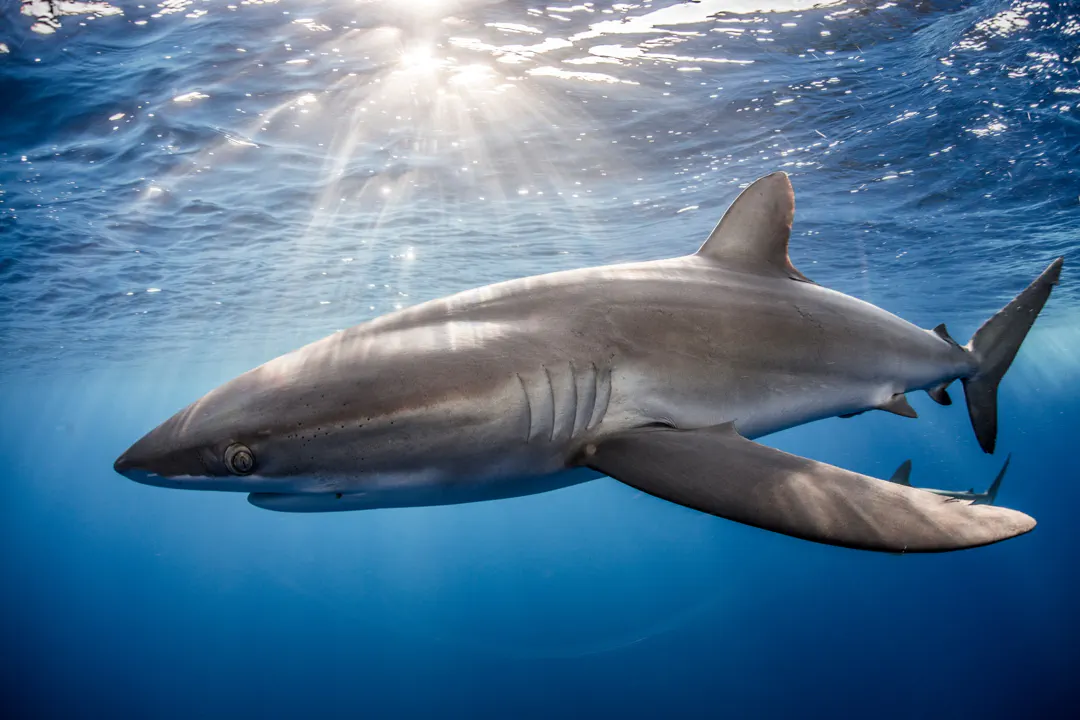
South Ari Marine Protected Area: Year-Round Whale Sharks
The southern outer reef of Ari Atoll features a shallow coastal plateau that drops from 5 metres down to a sand floor at 30 metres. South Ari delivers year-round whale shark (Rhincodon typus) encounters, where juvenile individuals measuring between 4 and 8 metres aggregate along the shallow reef shelf.
These filter-feeding giants cruise slowly parallel to the reef edge to feed on concentrated plankton near the surface. Because the sharks swim close to the surface, both divers and snorkellers can observe them in broad daylight. Blacktip reef sharks and reef manta rays (Mobula alfredi) frequently feed along the same shallow edge.
Local marine regulations enforce strict distance guidelines to protect the animals from boat strikes and stress. Swimmers must maintain a distance of at least 3 metres from the shark's body and 4 metres from its tail. Strobes, touching, and blocking the animal's path of travel are prohibited.
Depth: 5-20 m. Access: boat, 15 minutes from Maamigili. Level: Open Water / Snorkeller. Best months: Year-round.
Alimatha Jetty (Vaavu Atoll): Nurse Sharks in the Shallows
Alimatha Jetty in Vaavu Atoll hosts a dense night aggregation of tawny nurse sharks (Nebrius ferrugineus) over a flat sandy bottom at 12 metres depth. Dozens of nurse sharks, reaching lengths of 2.5 metres, swarm around divers alongside feathertail stingrays (Pastinachus ater) and hunting giant trevally.
The sharks move continuously along the seabed, brushing past diver fins as they search the sand and rubble for food. While daylight hours find nurse sharks resting passively inside cave ledges, nighttime transforms the site into an active feeding area driven by local fish-cleaning activities near the jetty.
Divers descend to the sand floor, kneel in a single circle, and maintain steady torch position angled downward. Keeping hands tucked against chest straps prevents accidental contact with passing rays or nurse sharks moving low through the water column.
Depth: 12-15 m. Access: boat, 10 minutes from Alimatha Resort. Level: Open Water. Best months: November-April.
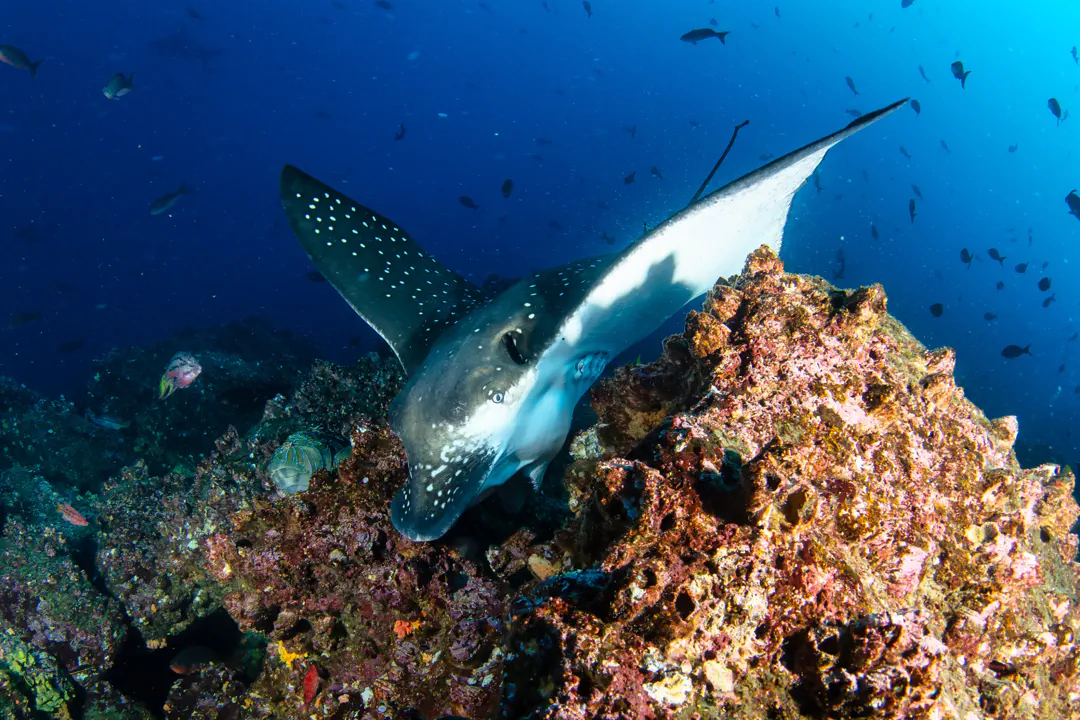
Maaya Thila (North Ari Atoll): Night Hunting Action
Maaya Thila is an isolated underwater pinnacle rising from a sea floor depth of 30 metres up to 6 metres below the surface. At nightfall, the current along the pinnacle face activates dozens of whitetip reef sharks (Triaenodon obesus) that leave their daytime resting ledges to hunt across the reef flat.
Grey reef sharks patrol the deeper outer drop-offs, while day octopuses (Octopus cyanea) emerge from coral crevices to hunt crustaceans. Dive lights illuminate the reef crest, where whitetip reef sharks dart between table corals in fast maneuvers to trap sleeping damselfish and soldierfish against the substrate.
Divers stay close to the reef structure at 12 to 18 metres to stay clear of the crest current. Maintaining precise neutral buoyancy prevents collisions with fragile coral heads during sudden shark feeding passes.
Depth: 6-30 m. Access: boat, 20 minutes from Ukulhas. Level: Advanced Open Water. Best months: December-April.
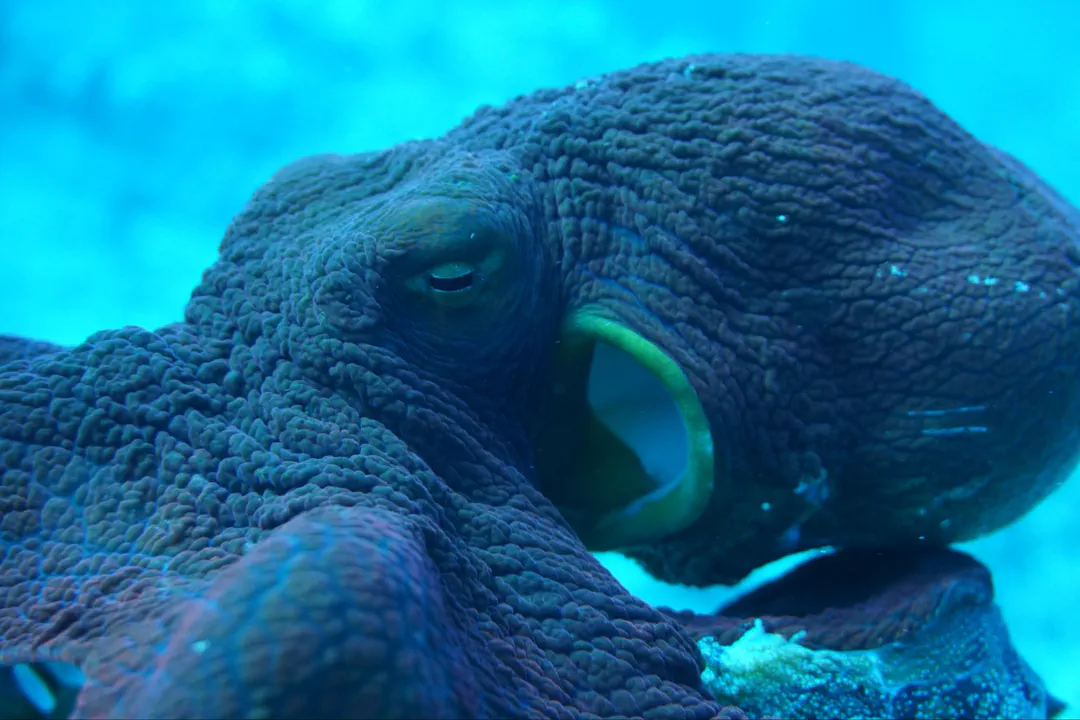 © cello caruso-turielloCC BY 4.0 · iNaturalist
 Rasdhoo Madivaru (Rasdhoo Atoll): Hammerhead Sunrise Dives
Rasdhoo Madivaru sits on an outer corner where a shallow reef flat drops vertically into a deep oceanic trench exceeding 200 metres. Before sunrise, divers roll off the boat into dark ocean water and descend rapidly to 30 metres along the blue drop-off.
Scalloped hammerheads (Sphyrna lewini) rise from deep water to cruise along the wall edge before full daylight drives them back into the abyss. Grey reef sharks patrol the shallower reef corner, while whitespotted eagle rays (Aetobatus narinari) glide overhead in formation against the dawn light.
This dive requires a fast descent in open water without a mooring line, followed by strict monitoring of depth, non-decompression limits, and air supply. Sightings depend on water clarity, low surface noise, and early arrival before competing dive boats arrive.
Depth: 25-30 m. Access: boat, 15 minutes from Rasdhoo Island. Level: Advanced Open Water. Best months: December-April.
Miyaru Kandu (Vaavu Atoll): Classic Channel Drift
Miyaru Kandu, which translates to "Shark Channel" in Dhivehi, is a narrow ocean pass in Vaavu Atoll where incoming tides channel nutrient-rich water into the inner lagoon. At a depth of 25 metres along the outer channel lip, dozens of grey reef sharks hold position against incoming current speeds exceeding two knots.
Silvertip sharks (Carcharhinus albimarginatus) and large whitetip reef sharks cruise the deeper channel floor at 30 metres. When incoming current brings clear ocean water, visibility reaches 35 metres, allowing divers to watch schooling sharks patrol the entire channel entrance simultaneously.
Divers drop onto the outer reef edge, secure a single reef hook into bare rock, and inflate their buoyancy compensator slightly to float above the substrate. Once the dive plan finishes, unhooking allows a smooth drift along the inner channel wall into the lagoon.
Depth: 15-30 m. Access: boat, 25 minutes from Thinadhoo. Level: Advanced Open Water. Best months: January-April.
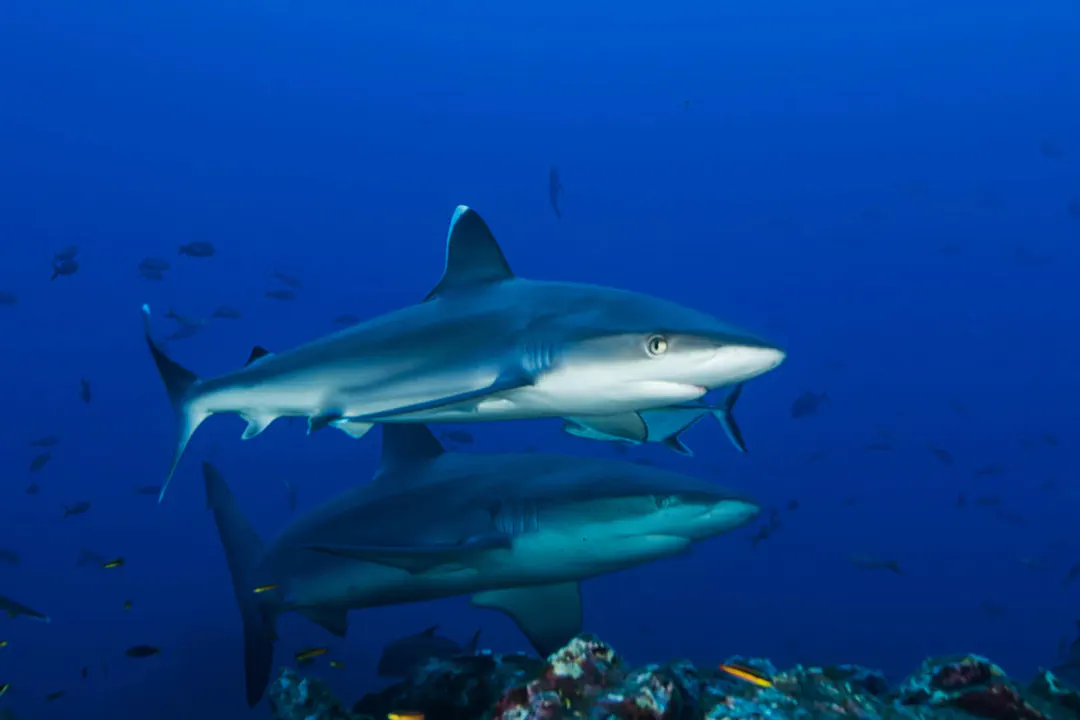
Are Sharks in the Maldives Dangerous?
Unprovoked shark bites in the Maldives are extraordinarily rare, with tens of thousands of recreational dives completed safely every year. Reef sharks, nurse sharks, and whale sharks treat divers with indifference, viewing them as large non-prey objects rather than food sources.
Maintaining safety requires recognizing key shark posture indicators underwater. A shark that feels cornered or threatened will drop its pectoral fins, arch its back, or swim in tight, jerky S-curves. If an animal exhibits these stress behaviors, divers should cross their arms, avoid direct eye contact, and swim calmly back toward the dive group.
Responsible dive practices mandate keeping hands and split-fins close to the body, avoiding bright reflective gear, and never chasing, cornering, or touching any marine life. Staying grouped together on channel floors reduces perceived clutter and ensures sharks navigate freely around the team.
Diving with Sharks in the Maldives: Practical Tips
Diving in high-energy Maldivian channels requires demonstrated buoyancy control and experience handling strong drift currents. While shallow lagoon encounters suit Open Water divers, channel passes like Miyaru Kandu and deep dawn dives at Rasdhoo mandate Advanced Open Water certification and a minimum of 30 logged dives.
Liveaboards offer the most efficient access to multiple atolls, remote channel passes, and early sunrise dive sites. Resort-based stay options suit divers targeting specific locations like South Ari for whale sharks or Fuvahmulah for dedicated tiger shark itineraries, offering daily boat departures directly to target reefs.
Essential safety gear includes a surface marker buoy (SMB) with a 30-metre line reel, an audible surface signaling whistle, and a non-damaging reef hook attached to a webbed lanyard. Checking local current conditions with dive guides before entry ensures appropriate entry timing and safe surface pickup plans.
Questions
Are there sharks in the Maldives?
Yes, over 30 shark species inhabit Maldivian waters, including blacktip reef sharks, grey reef sharks, whitetip reef sharks, nurse sharks, whale sharks, and tiger sharks. Encounters occur across all 26 atolls in depths ranging from 1 to 30 metres.
Is it dangerous to swim with sharks in the Maldives?
No, guided encounters are very safe when standard dive protocols are followed. Divers should avoid touching, feeding, or chasing animals, stay in tight group formations, and maintain a respectful distance of at least 3 metres.
What is the best month to see sharks in the Maldives?
December through April offers the best visibility, reaching 25 to 40 metres, and optimal conditions for channel dives. Whale sharks in South Ari and tiger sharks in Fuvahmulah are encountered year-round, while hammerhead sunrise dives in Rasdhoo peak from December through April.
Can beginners dive with sharks in the Maldives?
Yes, beginners can see blacktip reef sharks and nurse sharks at shallow, sheltered lagoon sites like South Ari or Alimatha. Advanced Open Water certification is required for current-swept channel drifts like Miyaru Kandu and deep morning hammerhead dives.
Where can you see tiger sharks in the Maldives?
Tiger sharks are seen at Fuvahmulah Atoll in the far south of the Maldives. Daily guided dives operate at Tiger Zoo along the harbour mouth in depths between 10 and 30 metres year-round.
Can you see whale sharks while snorkelling in the Maldives?
Yes, South Ari Atoll allows snorkellers and divers to view juvenile whale sharks along the shallow outer reef wall. Swimmers must stay at least 3 metres from the shark's head and 4 metres from its tail.