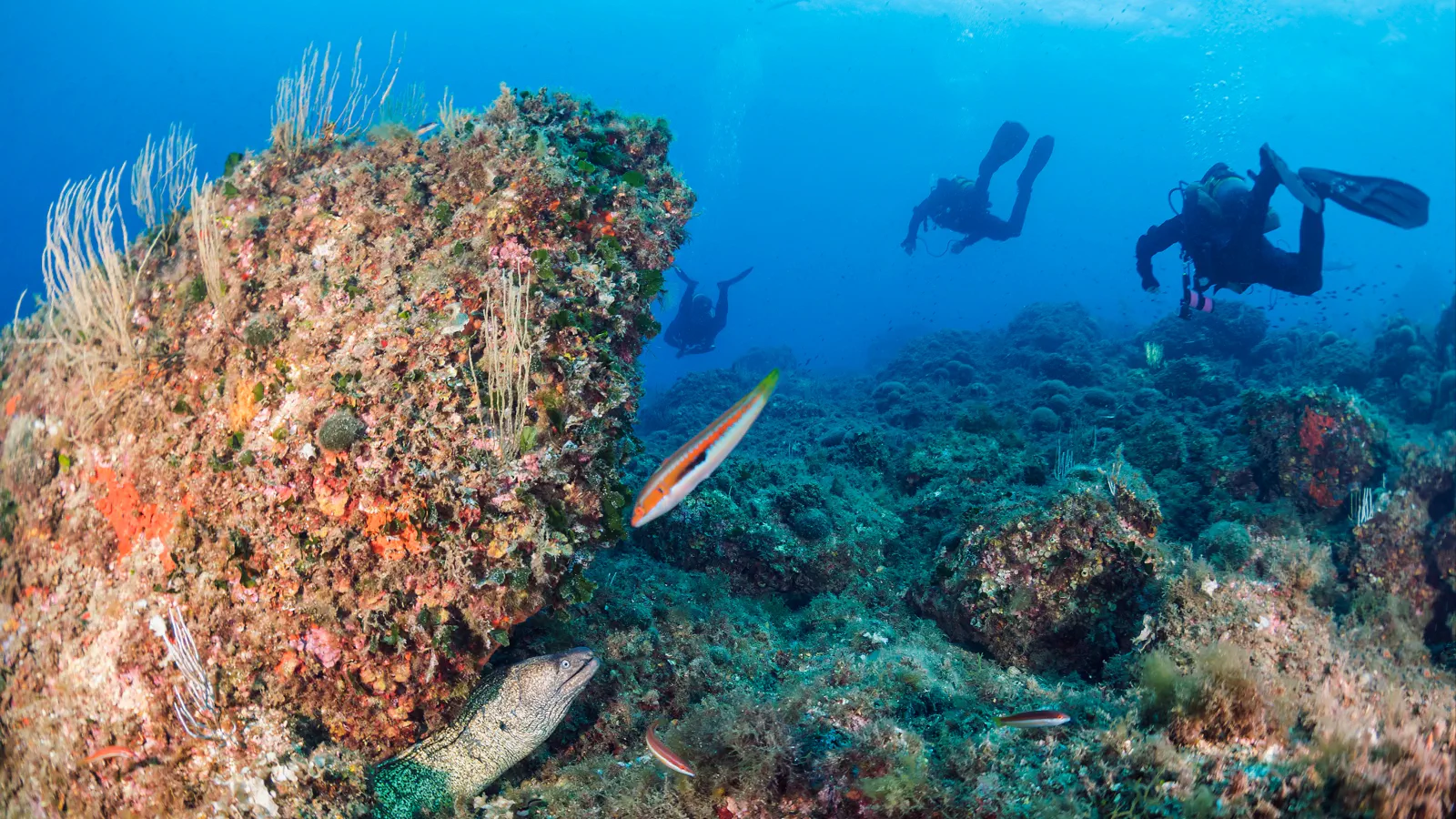
A European lobster, its antennae twitching, slowly backs deeper into a crevice carved from ancient granite, 22 meters down off the Côtes d’Armor coast. Around it, a dense tapestry of white dead man's fingers and crimson jewel anemones clings to the current-swept rock face, catching the plankton carried in the Channel’s insistent flow. The cool, green light filters through 12 meters of water, revealing the intricate life thriving in this dynamic temperate realm.
This particular underwater tableau unfolds near Saint-Cast-le-Guildo, a coastal town on Brittany’s Emerald Coast. For divers, the appeal here lies in the contrast between exposed sites swept by current and calmer pockets around coves and island groups, supporting a productive temperate ecosystem with lobsters, cuttlefish, wrasse, congers, and anemones.
Saint-Cast-le-Guildo has developed as a seaside and boating destination, preserving much of its nearshore landscape. Its reputation among divers has grown because the surrounding sites can be reached in relatively short navigation times, offering a distinctly Breton mix of scenery, current, and cold-water marine life. A 7 mm wetsuit or drysuit is the practical choice for diving from May to October.
Geography and Marine Environment
Saint-Cast-le-Guildo lies on the north coast of Brittany in the Côtes-d’Armor department, facing the English Channel in an area where tidal flow strongly structures the seabed. The coastline combines sandy beaches, rocky points, and offshore islets, especially toward the Ebihens and the Cap Fréhel sector, creating habitat mosaics that favor both mobile predators and sessile invertebrates.
The Channel’s tidal pulse is a defining ecological force here. Brittany’s north coast can experience very large spring tides, and local planning often revolves around slack periods because current can accelerate around headlands, reefs, and narrow channels. This movement oxygenates the water, transports nutrients, and helps support productive benthic communities.
Geologically, the area is dominated by hard rock and mixed sand-and-rock bottoms rather than broad soft-sediment plains. That matters biologically because hard substrata support kelps, sponges, hydroids, ascidians, and algae that provide cover for juvenile fish and invertebrates. In shallower zones, surge and wave action can reshape conditions quickly, so sheltered sites are better for training dives.
Seasonally, the marine environment changes less in temperature than in visibility, weather, and plankton density. Summer and early autumn, from July through September, offer the calmest surface conditions, while winter and early spring, from December through April, bring stronger swell and colder water. Divers should expect water movement to be the main environmental factor, not depth alone, because many attractive sites sit in the 5 to 30 meter range but are tide-sensitive.
Best Time to Visit and Water Conditions
The most reliable diving window in Saint-Cast-le-Guildo spans late spring through early autumn, from May to October, when air temperatures are milder and the sea is most comfortable for repeated entries. Water in Brittany rises to 13-16°C in summer and falls to 8-10°C in late winter, so thermal protection is essential even on sunny days.
Visibility is best offshore and around slack tide, reaching 10 to 15 meters or more on good days, though plankton blooms and storm runoff can reduce it quickly. Summer offers the greatest chance of calm boat access, but September can be especially attractive because the sea remains relatively warm (around 15°C) while crowds thin and many species stay active around the reefs.
Winter diving is possible for well-equipped teams, but it demands stronger cold-water protection and tighter timing around the tide. The water may be rougher and daylight shorter, yet some of the clearest conditions of the year can occur after periods of settled weather. Divers planning around Saint-Cast should treat tide tables as more important than the calendar, because current windows can determine whether a site is safe or enjoyable.
Practical planning should include a drysuit or at minimum a thick 7 mm wetsuit, plus hood, gloves, and boots for comfort and heat retention. Surface intervals on land can be cold and windy, especially on exposed headlands, so carrying spare dry layers is worthwhile even in July. A local guide or club is strongly advisable for first visits because site names, access points, and optimal slack windows vary from one reef to the next.
Water temperature
Saint-Cast-le-Guildo, monthly average
Saint-Cast-le-Guildo, Emerald Coast, Brittany, France (English Channel coast near Saint-Malo); based on NOAA satellite-derived and coastal station averages for sea surface temperature
Exploring the Underwater Ecosystems
The waters around Saint-Cast-le-Guildo host a dynamic temperate ecosystem, shaped by strong tidal currents and a mosaic of rocky reefs, kelp patches, and sandy bottoms. These varied habitats support life from the large European lobsters and edible crabs sheltering in crevices to common cuttlefish camouflaged against the sand. During spring tides, currents can reach 3 knots, shaping the distribution of sessile invertebrates and mobile fish.
Rocky areas are carpeted with a dense growth of hydroids, sponges, and anemones, providing cover and food for blennies, gobies, and corkwing wrasse. Conger eels, some exceeding 2 meters, lurk in deeper rock formations and small wrecks, while common starfish move slowly across the substrate at depths from 5 to 25 meters.
This blend of coastal geology and tidal energy creates a productive environment where marine life adapts to the ebb and flow of the Channel. Divers will find a fascinating world of smaller, often cryptic creatures alongside larger, more familiar temperate species.
Notable Dive Sites in Saint-Cast-le-Guildo
Les Iles des Ebihens
Les Îles des Ebihens, accessed by boat, offers dives from 5 to 20 meters, suitable for novice to intermediate divers. It is renowned for its tide-swept rocky structure and dense sessile communities. The best dives occur close to slack water, when the strong currents around the islands ease, revealing thriving temperate reef life.
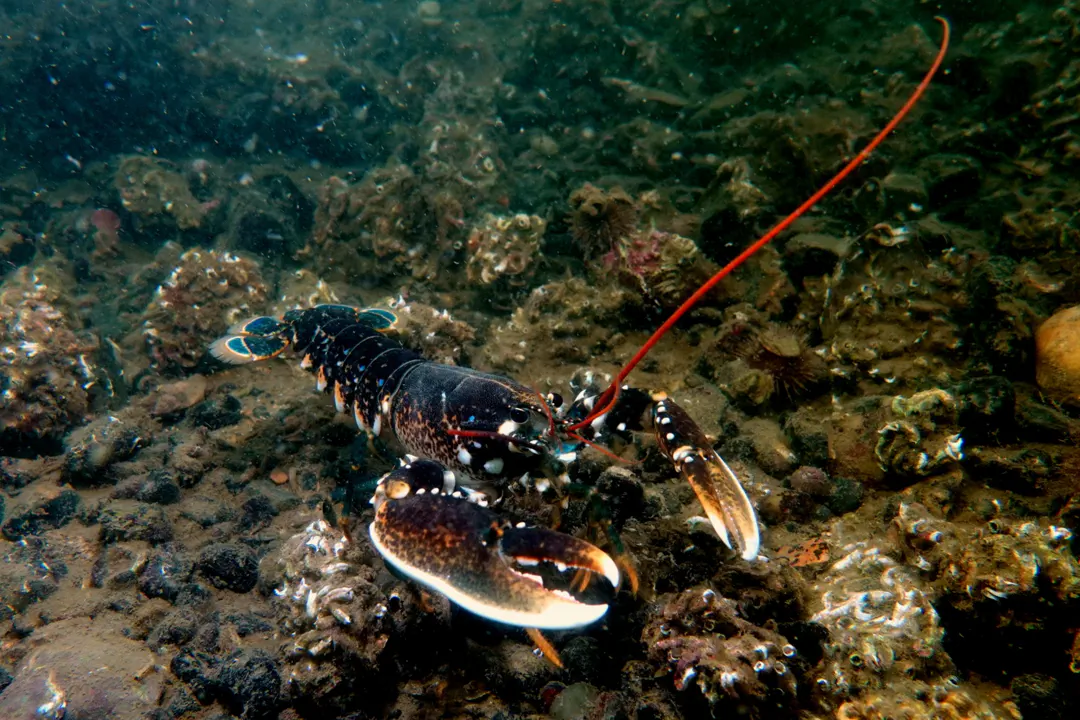
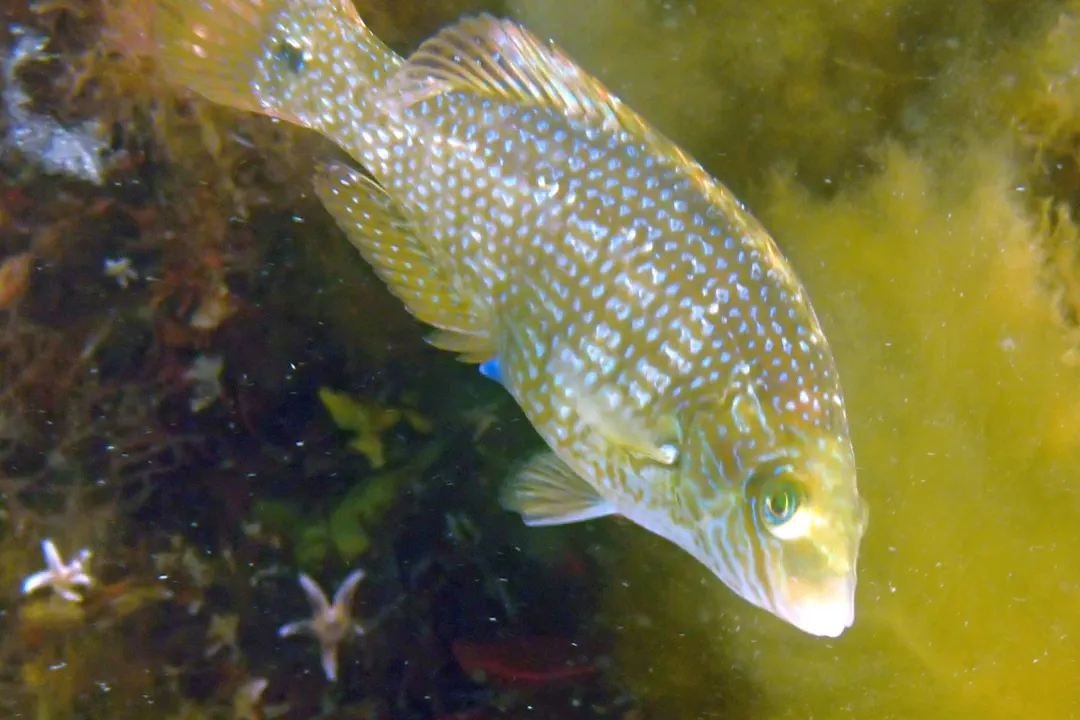
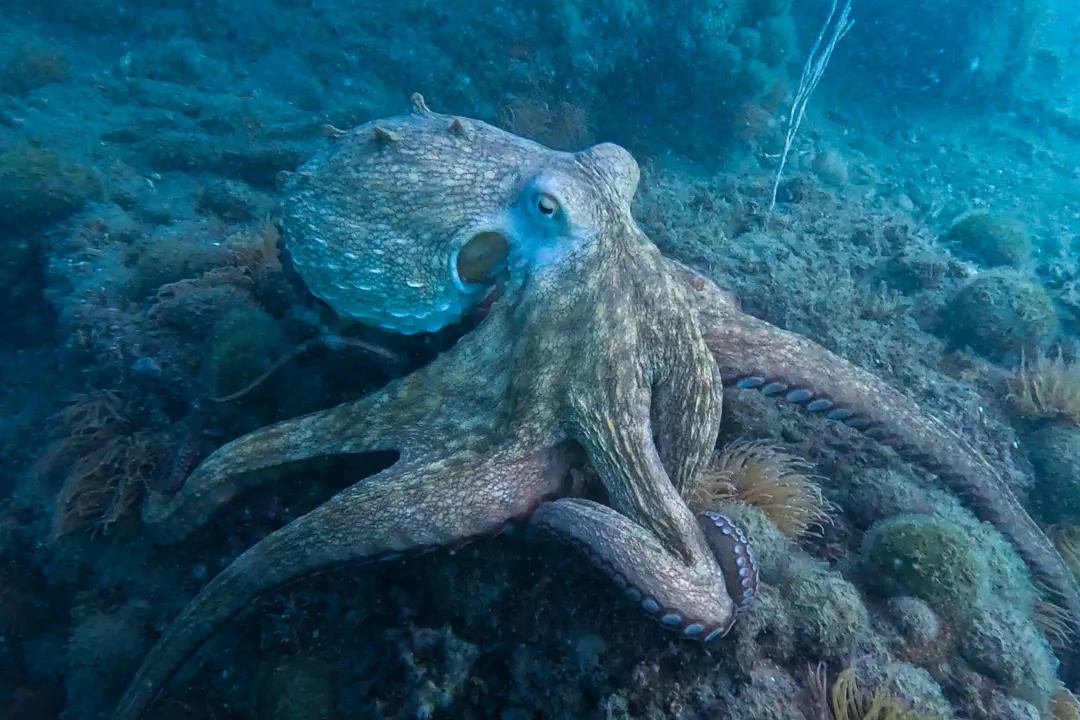
The ecological value of the Ebihens lies in the mix of habitat edges: bare rock, algae-covered ledges, sand channels, and crevices that shelter European lobsters, edible crabs, corkwing wrasse, and common cuttlefish. Such complexity supports a high diversity of invertebrates, including beadlet anemones, dahlia anemones, common starfish, and sea squirts, which in turn attract smaller fish and predators.
Divers should expect changing conditions across a single dive, from bright shallow areas to darker gullies and current-exposed points. Because the islands sit in a highly tidal part of the coast, the safest and most rewarding dives are timed near slack tide, and navigation around the rocks is best left to local operators who know the layout and the surface hazards. On good days, the site offers clarity and classic cold-water Brittany scenery.
The strength of the Ebihens is the living rock face and the dense temperate assemblages that cling to it. This distinction matters for expectations and for photography, because the best subjects are often small and cryptic rather than large and colorful in a tropical way. The site rewards slow movement, close focus, and careful buoyancy.
 © Klaus Kevin KristensenCC BY 4.0 · iNaturalist
  © Micha BaumCC BY-SA 4.0 · iNaturalist
 The Wreck of the Plaisanterie
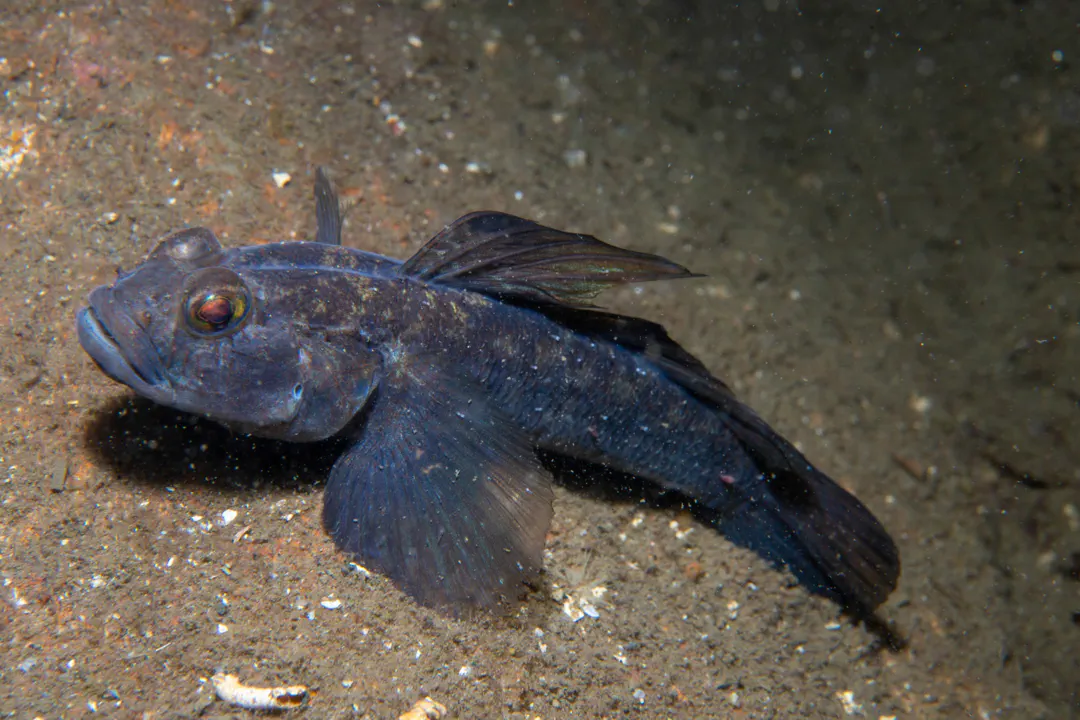
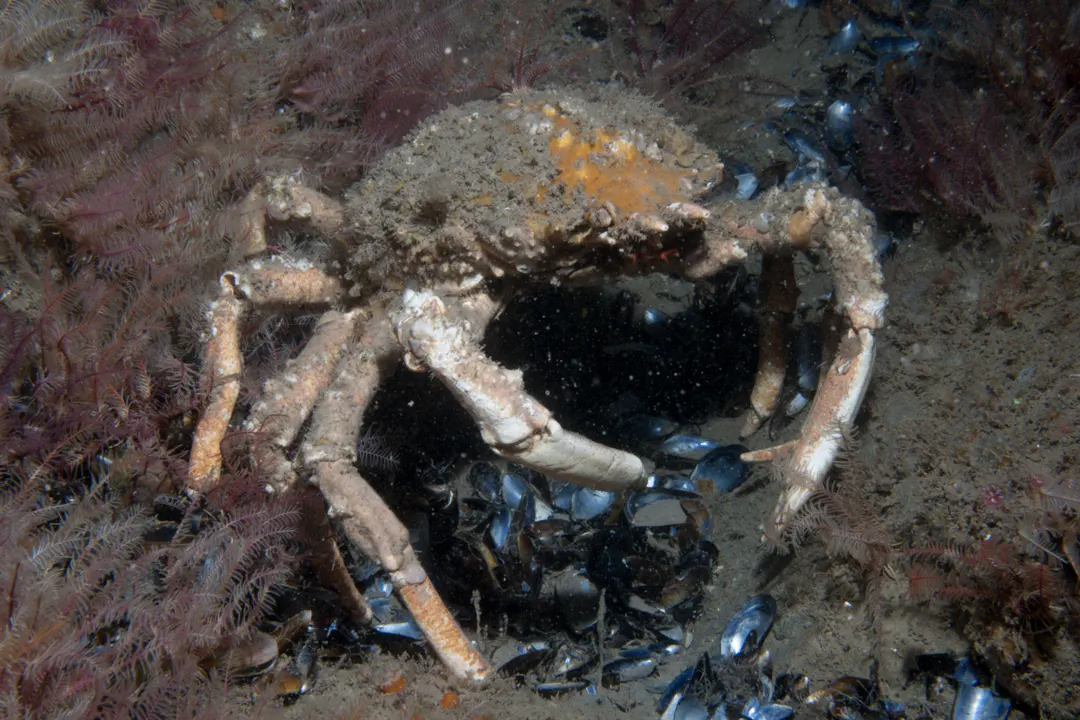
The wreck of the Plaisanterie, a boat-accessed site between 15 and 30 meters, is suitable for intermediate to experienced divers. It functions as a local artificial reef, attracting a community of encrusting life and providing shelter for fish and conger eels. Many smaller vessel wrecks in Brittany, like this one, attract encrusting life, fish sheltering in the structure, and predators using the relief as an ambush point.
Divers can expect sponges, hydroids, dead man's fingers, sea squirts, anemones, edible crabs, and juvenile fish colonizing beams, rails, and shadowed sections. Over time, biofouling turns bare metal and timber into habitat, increasing local complexity and drawing in species that would otherwise avoid open sand. The ecological function is similar to a reef: it creates vertical relief, refuge, and feeding stations in an area of otherwise flatter seabed.
For safety and enjoyment, wreck dives in this region should be planned with current, visibility, and penetration limits in mind. Even a shallow wreck can become demanding if the tide is running hard or if silt has accumulated inside the structure, so line discipline and conservative buoyancy are important.
Because public documentation on the Plaisanterie can be inconsistent, the most accurate description is to treat it as a locally known wreck site with expected colonization by conger eels, crabs, wrasse, and other shelter-seeking fauna. Divers should verify the exact location, depth, and access method with the operator before committing to the dive.
 Justin PhilboisCC0 · iNaturalist
  © Bernard PictonCC BY 4.0 · iNaturalist
  © Bernard PictonCC BY 4.0 · iNaturalist
 Pointe de l'Isle
Pointe de l’Isle, a boat-accessed site from 8 to 25 meters, is an experienced diver's current-influenced headland, offering rocky relief, gutters, and opportunities for drift diving when conditions align. The moving water delivers oxygen and plankton, concentrating life around the rocks that provide attachment points for algae and invertebrates.
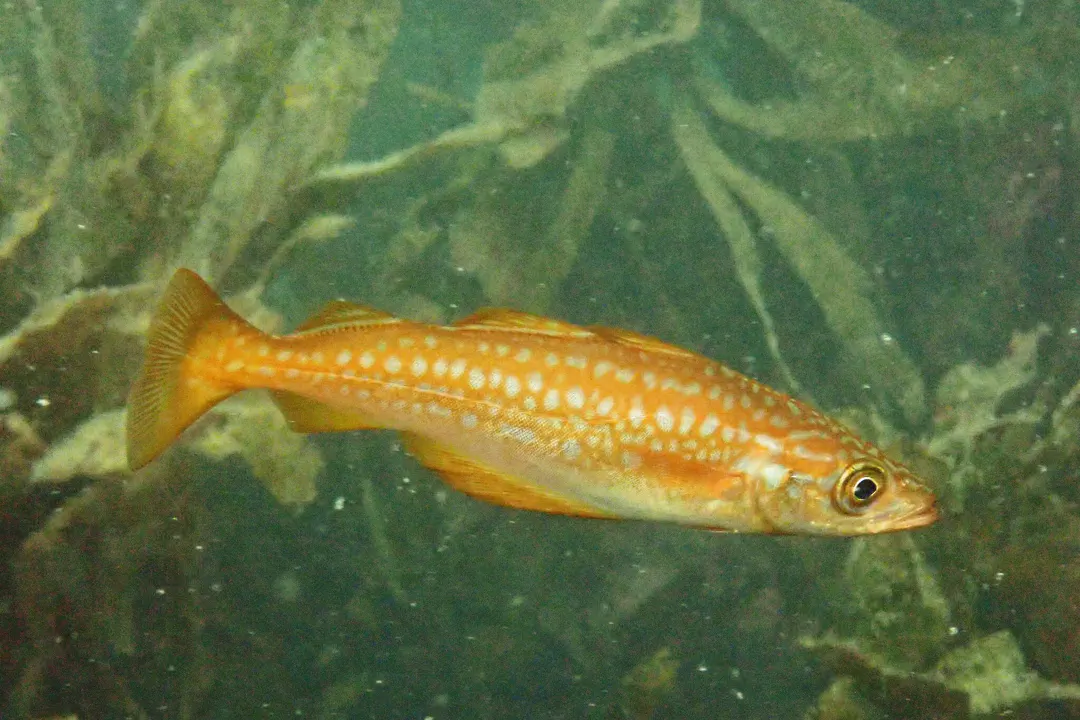
Large schooling fish are more likely here than on sheltered sand flats, particularly when seasonal prey movements bring baitfish close to shore. Pollack, pout, Atlantic mackerel, and European seabass pass through coastal headland zones, while edible crabs, European lobsters, and common starfish hold position in crevices below. Harbour porpoise can occur offshore in the region, but they are occasional sightings.
These headland dives are highly tide-dependent. Strong water movement may make a site unsuitable outside slack periods, yet the same movement can improve encounters when timed correctly, especially for divers comfortable with negative entries, precise buoyancy, and current awareness. Visibility is best on settled days or after the tide turns.
 © Donald DavesneCC BY 4.0 · iNaturalist
 Le Grand Roen
Le Grand Roen, a boat-accessed site from 5 to 18 meters, is a small-scale rocky reef suitable for novice to intermediate divers, known for its strong macro-diving profile. Ledges, cracks, and microhabitats combine algae, encrusting invertebrates, and shelter for small fishes, producing more biological diversity per square meter than open sand.
Macro life here includes various nudibranchs such as the fronded nudibranch, green sea slug, and sea hare, alongside small blennies, gobies, hermit crabs, common prawns, and colonial tunicates. This is especially true in spring and early summer when many invertebrates are breeding and algal cover is healthy, creating a visually busy environment that rewards slow, precise finning.
For underwater photographers, the best strategy is to stay close to the substrate without stirring silt, because many of the best subjects are only a few centimeters long. A good torch helps reveal color in the green-blue water, where reds and oranges quickly fade with depth. Late spring offers the richest macro activity, while late summer provides the best stability and warmth.
The site is not primarily a kelp-forest dive in the classic sense; it is more accurately a temperate rocky reef with patches of algae and turf that support small cryptic species. This distinction matters because expectations should focus on texture, behavior, and abundance rather than on big-feature scenery. A patient diver sees more life by hovering still for several minutes than by swimming continuously along the reef.
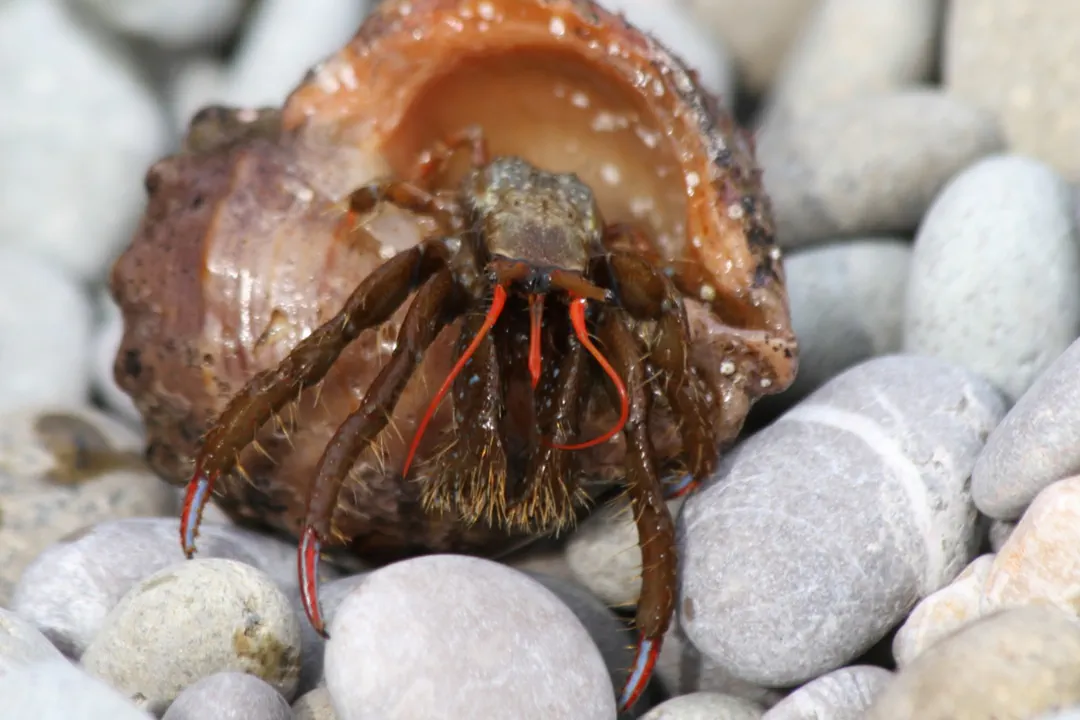 © Dmitry KulakovCC BY 4.0 · iNaturalist
 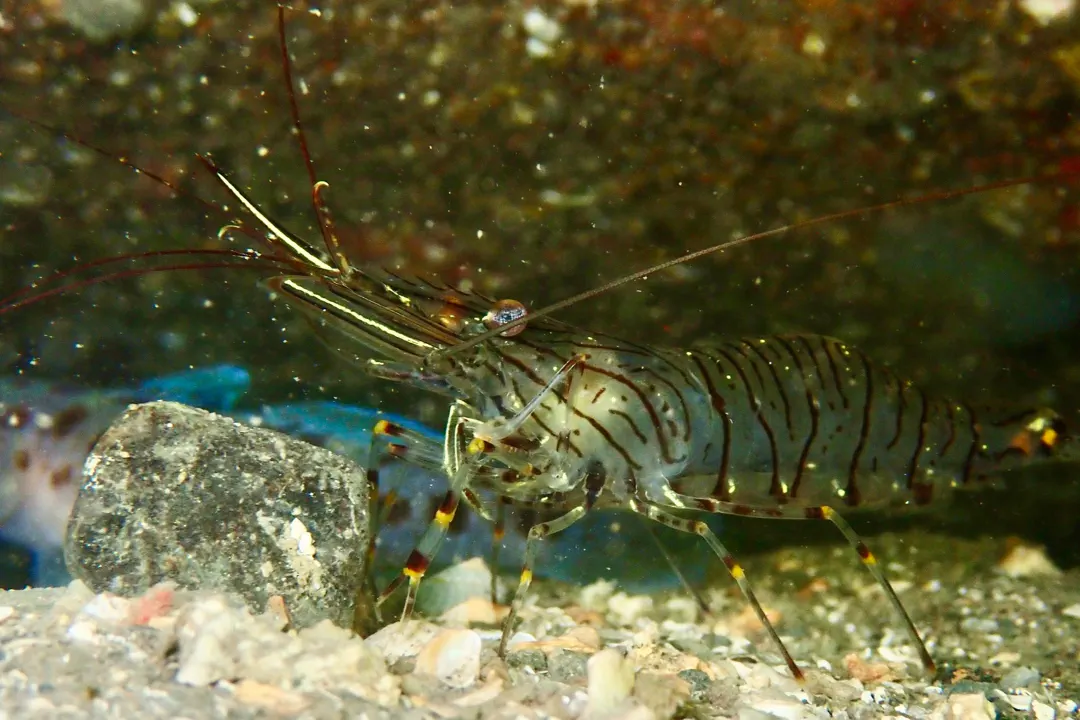 © Libby KeatleyCC BY 4.0 · iNaturalist
 Practical Tips for Divers
Diving in Saint-Cast-le-Guildo works best with local planning, tide awareness, and equipment suited to cold temperate water. Because the region’s strongest feature is current, not depth alone, the most important safety step is to dive the slack window recommended by a local club or guide. Sites can change character quickly, and a reef that feels benign at one phase of the tide may become strenuous an hour later.
Local operators in and around Saint-Cast-le-Guildo offer guided dives, training, and gear rental, which is useful for visitors who do not want to transport bulky equipment. For the season from May to October, a 7 mm wetsuit with hood, gloves, and boots is the minimum comfortable setup; many regular divers prefer a drysuit because water temperatures remain cool and repeated boat dives can become tiring. A surface marker buoy, audible signaling device, and dive computer are sensible additions for open-coast conditions.
Beginner divers should choose sheltered sites, low-current windows, and shallower depths, under 15 meters, until they are comfortable with the local environment. Experienced divers can take advantage of stronger sites and wrecks, but only with careful gas management and a briefing on surge, entry/exit points, and emergency procedures. Because Brittany weather can change rapidly, checking wind, swell, and tide together is essential rather than relying on one forecast alone.
Seasonally, May through October offers the broadest range of options, with September providing a good balance of relatively warm water and stable conditions. Visibility improves offshore, but plankton and rainfall can alter it day by day, so flexibility helps. For photographers and naturalists, late spring and early summer are prime months for juvenile fish, breeding invertebrates, and active macro life on the reefs.
Questions
What is the best time of year to dive in Saint-Cast-le-Guildo?
The most practical season is May through October, when the sea is milder (13-16°C), boat access is easier, and surface conditions are more stable. September is a sweet spot, with water around 15°C and fewer crowds.
Do I need special equipment for diving in Brittany?
Yes. A 7 mm wetsuit is the minimum for comfort, but many divers prefer a drysuit given the cool water (8-16°C year-round) and repeated dives. A hood, gloves, boots, and a torch are strongly recommended for all dives, especially on shaded reefs and wrecks.
Are there dive centers in Saint-Cast-le-Guildo?
Yes, Saint-Cast-le-Guildo has local dive operations and clubs. They offer guided dives, training, and equipment rental. For visiting divers, using local staff is highly beneficial as they know the tide windows, specific access points, and the safest sites for daily conditions.
What kind of marine life can I expect to see?
Expect classic temperate Atlantic life such as European lobster, edible crab, common cuttlefish, conger eels, wrasse, starfish, and a wide range of anemones, small crustaceans, and ascidians. Spring (April-June) brings a peak in macro life and breeding activity, while late summer (August-September) can offer more sightings of larger mobile fish.
Is Saint-Cast-le-Guildo suitable for beginner divers?
Yes, Saint-Cast-le-Guildo is suitable for beginner divers, but only on specific sheltered sites and always with local guidance. Depths typically range under 15 meters for training. Strong currents, surge, and precise timing around the tide are significant factors, making local expertise crucial for safe and enjoyable dives.