
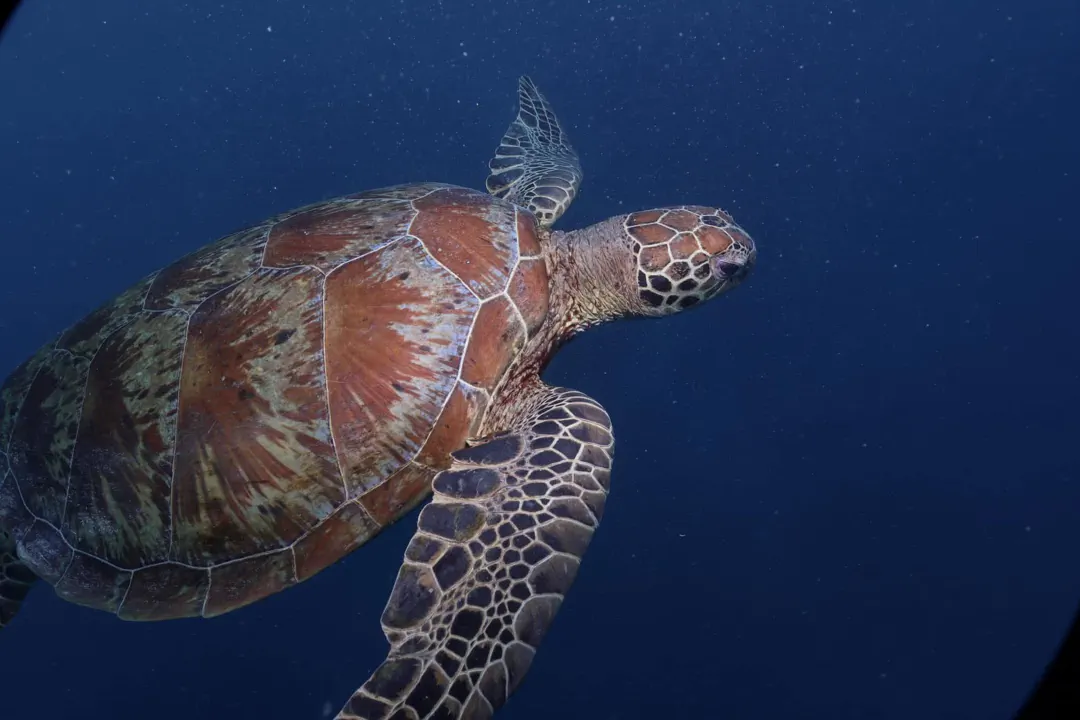
At Abu Dabbab reef in the Egyptian Red Sea, shafts of late afternoon sunlight cut through twelve metres of clear blue water onto a sand ridge dotted with seagrass patches. A green sea turtle rests near a patch of Halophila grass, its wide front flippers anchored gently against the sandy seabed while a pair of yellowbar angelfish pick small parasites from its shell. Every few minutes, the reptile pushes upward with two slow, rhythmic strokes to breach the calm surface for breath before sinking silently back down.
Learning how to identify sea turtles underwater requires looking beyond shell colour, which changes with lighting, age, and algae growth. All seven living marine turtle species can be separated underwater by checking three physical markers: the number and layout of costal scutes along the carapace, the count of prefrontal scales between the eyes, and overall head shape. Water temperature across tropical feeding grounds typically ranges from 24 to 30 °C, where divers regularly encounter green, hawksbill, loggerhead, and ridley turtles cruising along reef slopes from 3 to 30 metres depth.
While green and hawksbill turtles dominate warm coral reefs worldwide, loggerheads, olive ridleys, Kemp's ridleys, leatherbacks, and flatbacks inhabit distinct ecological niches ranging from deep open ocean to shallow continental shelves. Recognizing these diagnostic physical traits allows divers to contribute valuable data to long-term monitoring and photo-identification databases without disturbing the animals. Keeping a respectful distance of at least 3 metres ensures natural behaviour continues while you inspect these key anatomical features.
How to Identify Sea Turtle Species Underwater
Reliable sea turtle identification starts with the carapace, specifically the rigid plates known as scutes. According to NOAA sea-turtle curriculum materials, Kemp’s ridley and loggerhead turtles generally have five lateral scutes, while green, hawksbill, and flatback turtles generally have four. Counting these costal scutes on one side of the central ridge immediately narrows the possibilities down into two main structural groupings.
Facial anatomy provides the second decisive anatomical check when a turtle approaches head-on or swims in profile. Look directly between the eyes for the prefrontal scales, which sit above the snout. Green turtles feature a single pair of elongated prefrontal scales, whereas hawksbills, loggerheads, and ridleys possess two or more pairs. The beak shape also reflects feeding adaptations, ranging from the narrow hooked bill of sponge eaters to the crushing jaws of mollusc predators.
Plastron features and overall body proportions offer additional confirmation when viewing a turtle from below or alongside. As documented in NOAA sea-turtle identification materials, sea-turtle species can be identified using carapace scutes, head scales, shell shape, and other external features, but variation and rare hybrids can complicate identification. Observing several traits simultaneously prevents misidentification caused by worn shell margins or irregular scute development.
Green Sea Turtle vs Hawksbill Turtle: Key Differences
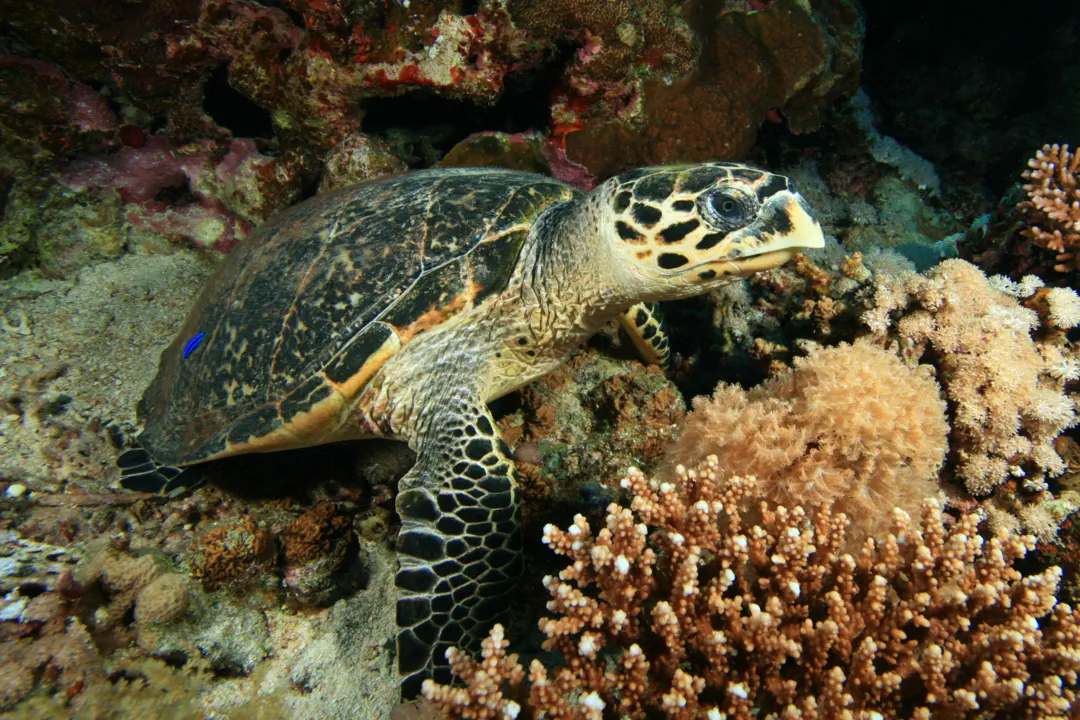
Green turtles (Chelonia mydas) and hawksbill turtles (Eretmochelys imbricata) share tropical coral reefs worldwide, yet their head features and shell structures diverge completely. A hawksbill exhibits a narrow, sharply pointed beak reminiscent of a raptor, designed to pry sponges out of narrow reef crevices. As detailed in NOAA Technical Memorandum NMFS-SEFC-82, the principal identification traits include the numbers and patterns of body scutes and head scales; hawksbills have four costal scutes on each side and overlapping scutes.
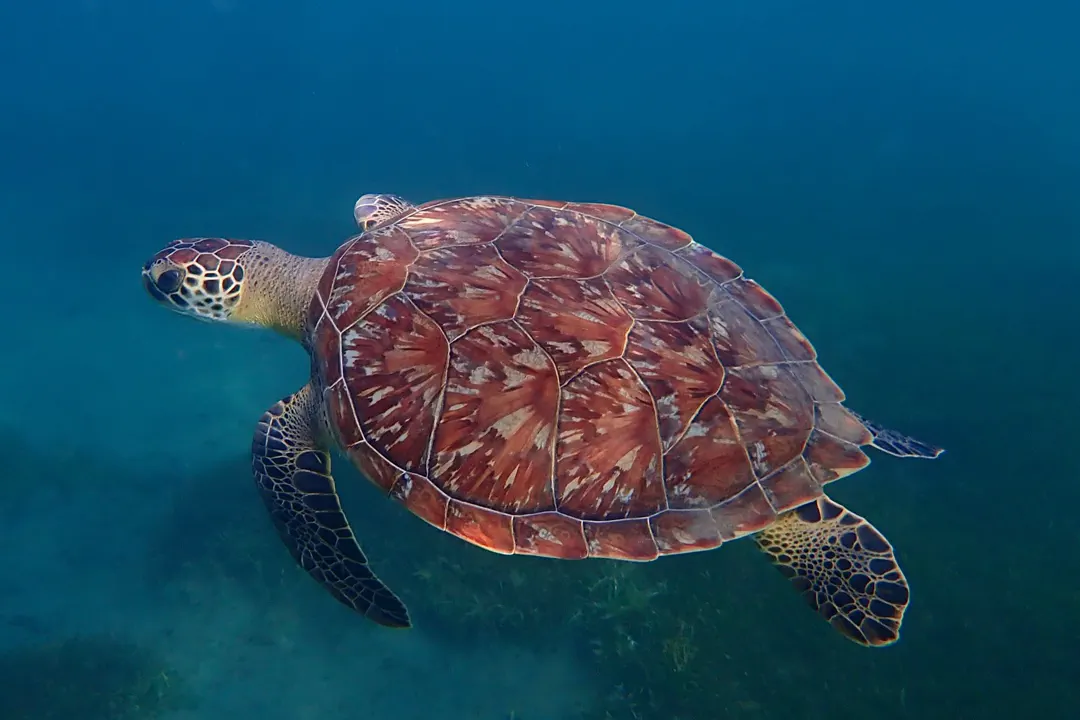
In contrast, green turtles have a short, rounded snout with fine serrations along the lower jaw adapted for cropping seagrass blades and macroalgae. Research published by NOAA Fisheries notes that green turtles typically have five vertebral scutes and four costal scutes on each side. Their carapace plates fit side-by-side without overlapping, creating a smooth shell contour that terminates in rounded edges rather than serrated rear points.
Differentiating these two species underwater takes only a glance at the head and shell margin once you know what to look for. Green turtles show a single pair of prefrontal scales between their eyes, while hawksbills display two distinct pairs. While green turtle shells range from olive-brown to nearly black, hawksbill carapaces showcase rich amber and dark brown radiating patterns across overlapping tiles.
 © Matteo BellucciCC BY 4.0 · iNaturalist
 © seabook.appAll rights reserved
Identifying Loggerhead and Olive Ridley Sea Turtles
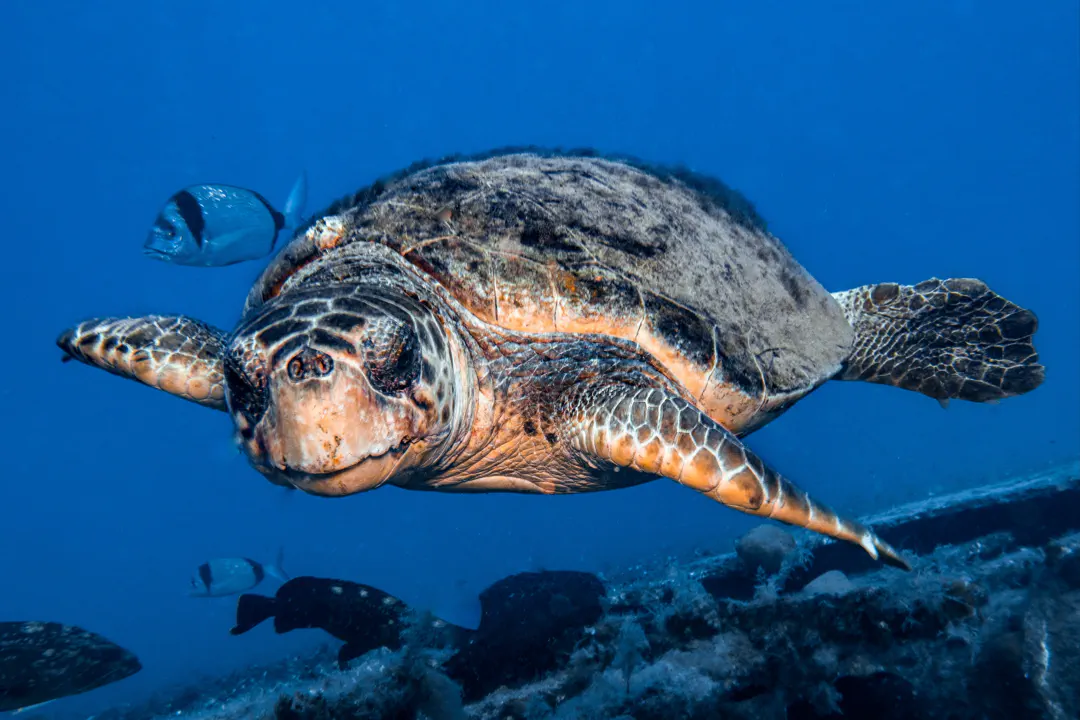
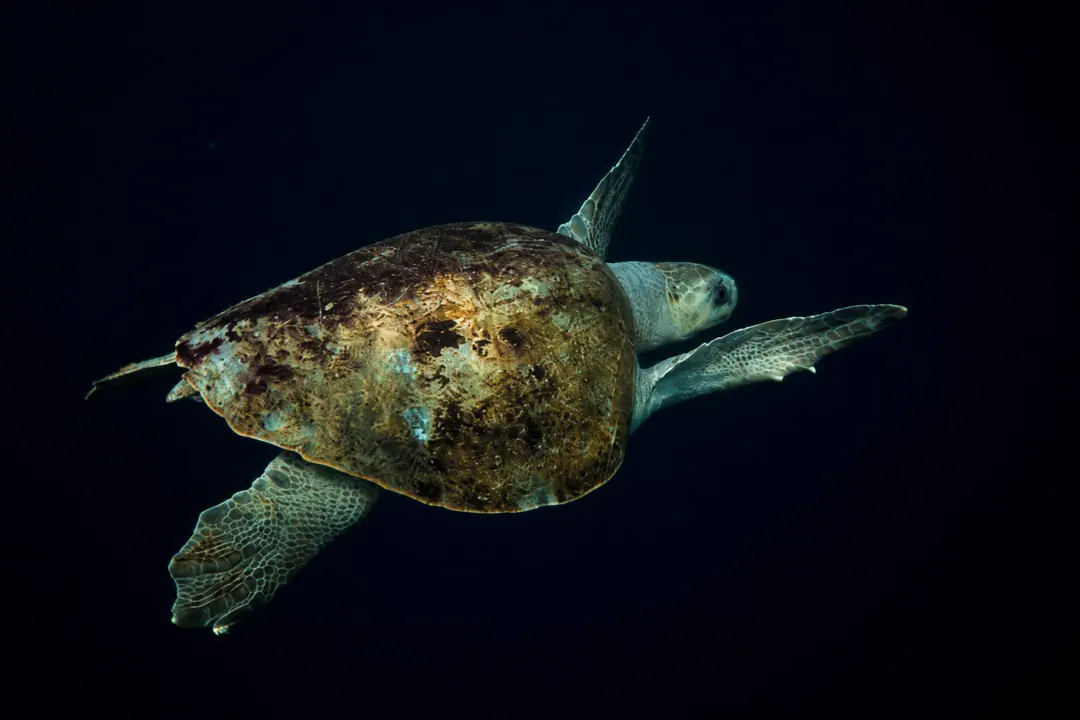
Loggerhead turtles (Caretta caretta) are instantly recognizable by their massive, wide heads and reddish-brown heart-shaped carapaces. Their extra-large head accommodates powerful jaw muscles designed to crush hard-shelled prey such as crabs, clams, and sea urchins along the seafloor. Loggerheads typically feature five pairs of costal scutes along the upper shell, underlain by a yellow-to-orange plastron beneath.
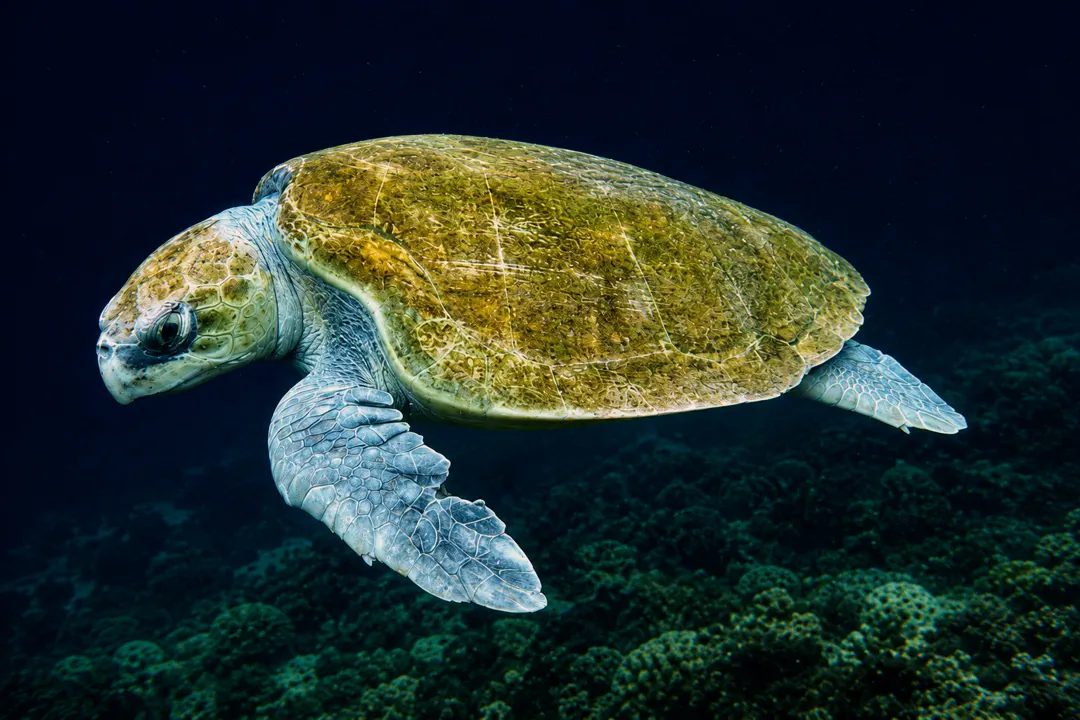
Olive ridleys (Lepidochelys olivacea) and their close relatives, Kemp's ridleys (Lepidochelys kempii), are the smallest hard-shelled marine turtles, rarely exceeding 70 centimetres in carapace length. An olive ridley has a circular, dome-like shell with an olive-green hue and often carries six to nine pairs of costal scutes—the highest count among all sea turtle species. Beneath the shell, four pairs of inframarginal scutes on the plastron each feature a small, distinctive pore near the trailing edge.
Kemp's ridley turtles are primarily restricted to the shallow coastal waters of the Gulf of Mexico and the western North Atlantic, featuring a broad grey-green shell with five costal scutes. While olive ridleys aggregate by the thousands for synchronized mass nesting events called arribadas along Pacific and Indian Ocean shores, loggerheads range far into temperate coastal shelves across the globe.
 © seabook.appAll rights reserved
 © seabook.appAll rights reserved
 © seabook.appAll rights reserved
Recognizing Rare Sea Turtles: Leatherback and Flatback
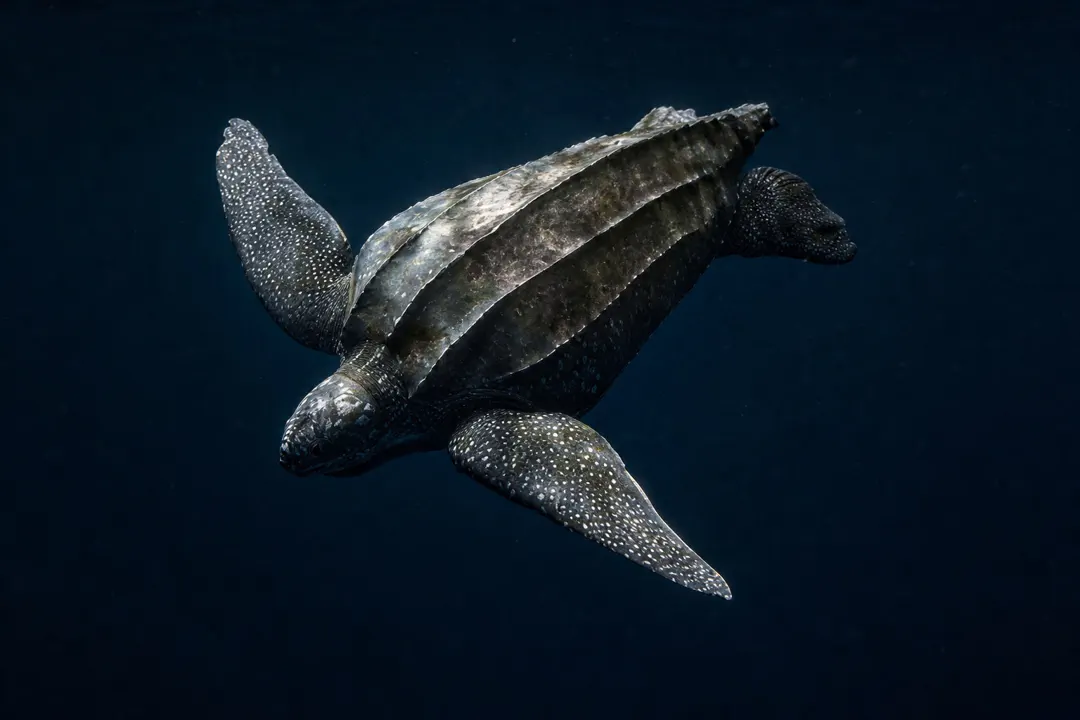
The leatherback turtle (Dermochelys coriacea) stands entirely apart from all other marine turtles due to its giant size and unique anatomy. As documented by Smithsonian Ocean, leatherbacks lack hard scutes, have a leathery shell with longitudinal ridges, and can dive beyond 1,000 m. Growing up to two metres long and weighing over 500 kilograms, their dark, flexible carapace features seven prominent ridges running from head to tail.
Flatback turtles (Natator depressus) possess the most geographically restricted distribution of any sea turtle, residing almost exclusively on the shallow continental shelf of northern Australia, southern Papua New Guinea, and eastern Indonesia. Their shell is low, smooth, and noticeably flattened with upturned lateral edges, colored in pale greyish-green to dark olive tones. Flatbacks carry four pairs of costal scutes that do not overlap, covered by a thin skin layer.
Encountering either of these rare species underwater requires being in specific ocean environments. Leatherbacks spend most of their lives in open pelagic waters hunting jellyfish and salps across deep oceans, occasionally approaching coastal shelves to nest. Flatbacks prefer inshore waters, muddy bays, and shallow coral reefs down to 40 metres, avoiding deep oceanic passages altogether.
 © seabook.appAll rights reserved
Sea Turtle Carapace and Scute Count Chart
Memorizing a quick structural reference chart allows divers to verify turtle species rapidly during or after a dive. Hard-shelled species with four costal scutes include the green, hawksbill, and flatback turtles. Hard-shelled species with five or more costal scutes include the loggerhead (usually five pairs), Kemp's ridley (five pairs), and olive ridley (five to nine pairs).
Head scale configurations provide the secondary filter in this field identification matrix. Green turtles have one pair of prefrontal scales; hawksbills, flatbacks, loggerheads, and both ridley species have two pairs. Inspecting the beak completes the visual key: hawksbills have a sharp hooked bill, green turtles have a smooth serrated jaw, loggerheads have broad crushing heads, and leatherbacks have a notched upper jaw designed for soft gelatinous prey.
When logging your observations in the Seabook mobile app, combining scute counts with clear head photos ensures accurate species identification even when shell coloration is obscured by algae or silt. Documenting exact depth, geographic coordinates, and observed behaviors helps marine scientists track population health and individual migration patterns worldwide.
How to Photograph Sea Turtles for Identification
Capturing high-quality identification photos underwater requires good buoyancy control and zero physical disturbance to the animal. Positioning yourself to the side of the turtle at eye level allows you to capture a clear profile showing the beak, eye, and prefrontal scales without blocking its path to the surface. Maintain a minimum separation of 3 metres at all times and let the turtle control the interaction.
A good photo-identification portfolio requires two essential shots: a direct profile of the side of the head, and a clear top-down view of the entire carapace. Facial scales act like human fingerprints, displaying unique scale patterns behind the eye that allow researchers to identify individual turtles over decades. Turn off artificial flashes when shooting close up to avoid startling resting or feeding reptiles.
Record context details immediately upon surfacing, including exact dive depth, water temperature, time of day, and specific habitat type. Keep original, unedited image files for citizen science database submissions, as aggressive color correction can alter scale boundary visibility. Photographers should avoid chasing turtles or positioning themselves directly above a surfacing animal, ensuring safe, natural encounters for both diver and wildlife.
Questions
What is the easiest way to tell a green turtle from a hawksbill?
Look closely at the head and shell edges underwater. Hawksbill turtles possess a narrow, sharply hooked beak like a hawk and serrated carapace edges with overlapping scutes. Green turtles feature a shorter rounded snout, a smooth shell edge, and only one pair of prefrontal scales between their eyes compared to the hawksbill's two pairs.
How many species of sea turtles exist in the world?
There are seven recognized living species of sea turtles divided across six genera. These include the green, hawksbill, loggerhead, leatherback, olive ridley, Kemp's ridley, and flatback turtles. Six of these species belong to the hard-shelled Cheloniidae family, while the leatherback is the sole surviving member of the leathery-shelled Dermochelyidae family.
Why is it called a green sea turtle if its shell is brown?
The green sea turtle receives its common name from the greenish tinge of its internal subdermal fat and cartilage, not its outer shell color. Adult green turtle carapaces range from olive, dark brown, or yellow to near black. The green coloration of their internal fat develops from their strictly herbivorous adult diet of seagrasses and macroalgae.
Which sea turtle species is the largest?
The leatherback sea turtle is by far the largest marine turtle, reaching carapace lengths of up to 2 metres and body weights over 500 kilograms. Unlike hard-shelled species, leatherbacks feature a flexible leathery shell with seven longitudinal ridges. They are also extraordinary divers, recorded reaching depths beyond 1,000 metres in search of jellyfish.
Where can you see flatback sea turtles?
Flatback sea turtles have the most localized geographical distribution of any marine turtle species. They live exclusively on the shallow continental shelf waters of northern Australia, southern Papua New Guinea, and parts of eastern Indonesia. Divers and researchers can observe flatbacks in coastal bays, shallow coral reefs down to 40 metres, and nesting beaches along the northern Australian coastline.
Sources
- A Guide to Nesting Sea Turtles in Florida · 2026-11-09
- Sea turtles NOAA Technical MEMO NMFS-SEFC-82 · 2026-10-10
- Sea Turtles | Smithsonian Ocean · 2023-05-11
- Green Turtle: Conservation & Management · 2025-01-08
- Sea Turtle 5th Grade Curriculum Lesson 2 · 2026-11-05

