
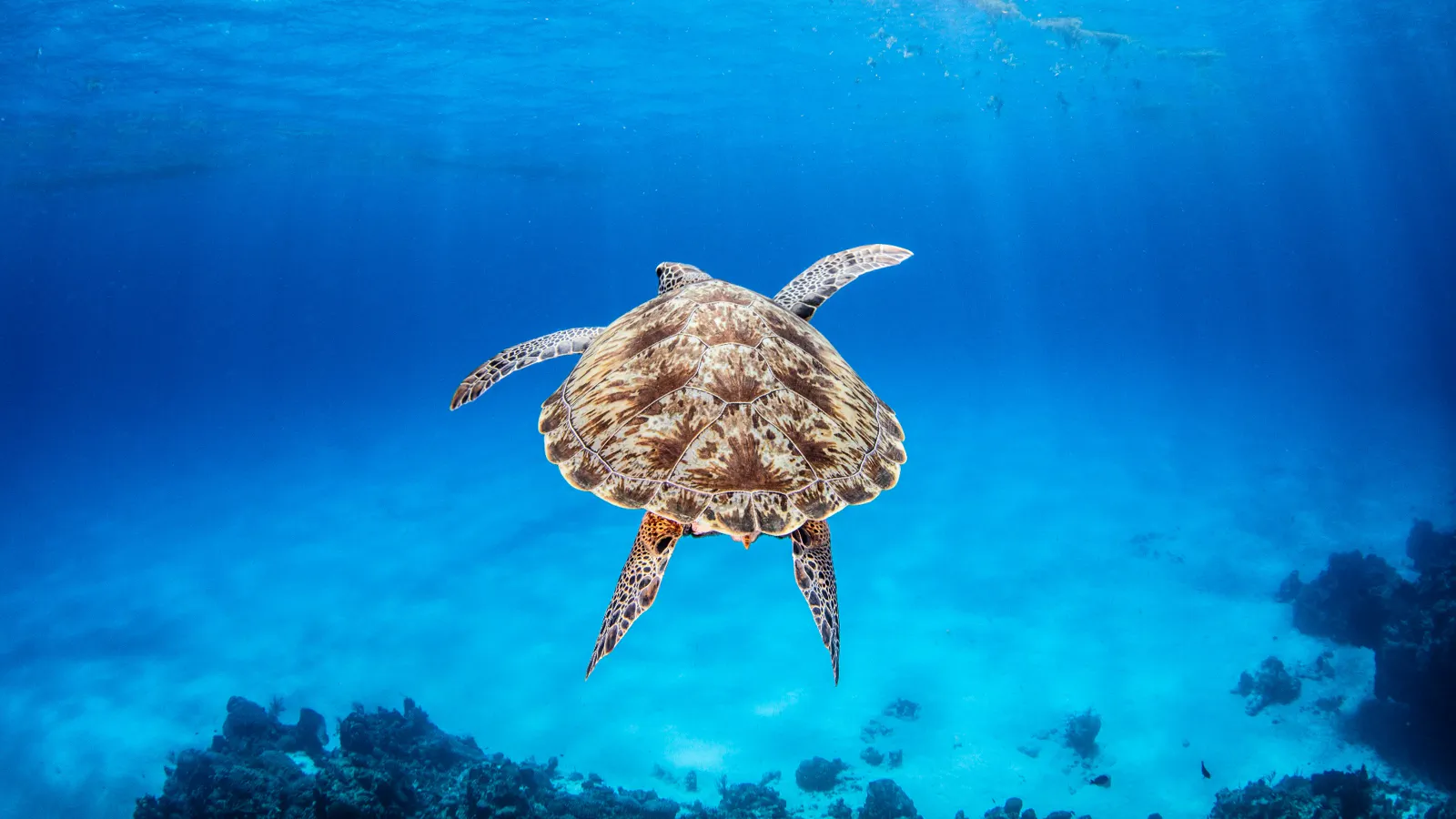
Eight metres below the surface at Turtle Canyons off southern Oahu, sunbeams cut through blue water and light up the shell of a Hawaiian green sea turtle. She hovers over a basalt ridge while two yellow tangs pick algae from her carapace. Her flippers extend like dark paddles, holding her stationary against a gentle Pacific swell before she pushes upward for a single breath.
Swimming alongside sea turtles in Hawaii is one of the North Pacific's most accessible marine encounters, with water temperatures ranging from 23°C in winter to 27°C in summer and clarity frequently reaching 15 to 30 metres. Resident populations inhabit shallow coastal reefs across all main islands, allowing divers and snorkellers to observe these ancient reptiles year-round in their natural habitat.
Five distinct sea turtle species traverse or inhabit Hawaiian waters, led by the abundant green sea turtle, locally named honu, and the rare hawksbill turtle, known as honu‘ea. Offshore waters host migratory leatherbacks, loggerheads, and olive ridleys crossing open ocean corridors. Whether floating over shallow coral gardens in Maui or watching turtles bask on sandy beaches along Oahu's North Shore, visitors of all experience levels can observe these animals safely by maintaining respectful distances.
What Sea Turtle Species Live in Hawaii?
Five marine turtle species are recorded from Hawaiian waters: the green turtle (Chelonia mydas), hawksbill (Eretmochelys imbricata), loggerhead (Caretta caretta), olive ridley (Lepidochelys olivacea), and leatherback (Dermochelys coriacea). As detailed by NOAA Fisheries, Pacific Islands Region Frequently Asked Questions, these five marine turtle species occur across the Pacific Islands region, though their habits and coastal presence differ sharply.
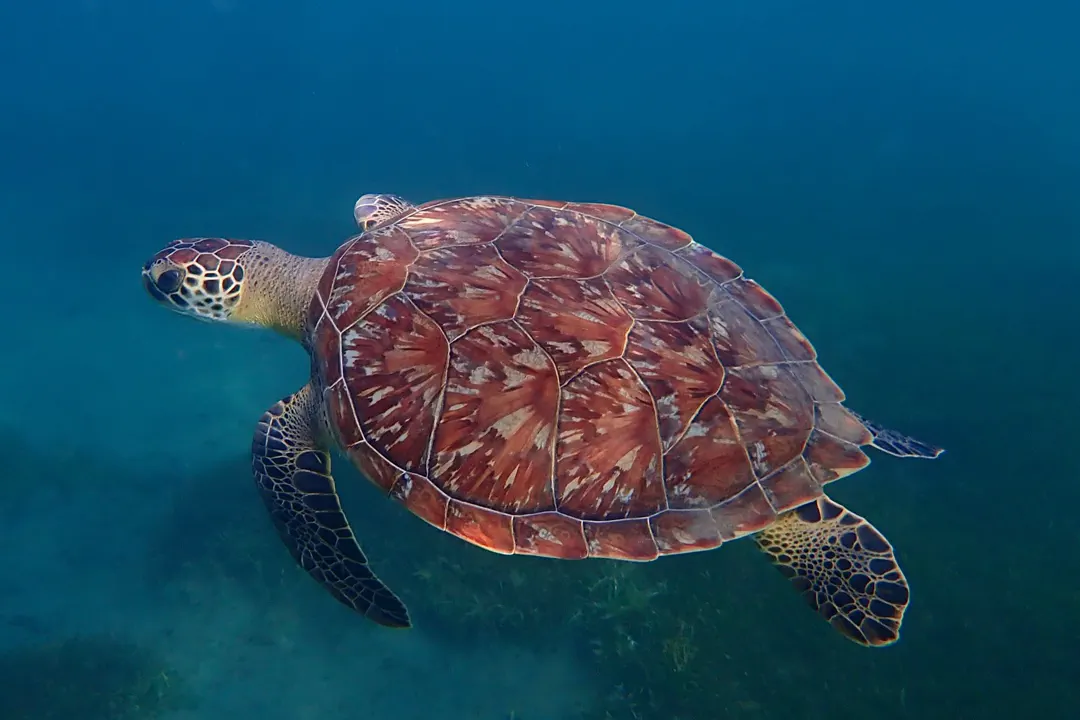
Green sea turtles make up the vast majority of coastal sightings around the main Hawaiian Islands. Adults and juveniles occupy shallow reefs, rocky coastlines, and sheltered bays year-round where they feed on marine algae. Their smooth, teardrop-shaped carapaces and rounded heads make them easy to distinguish from other marine reptiles resting on ledges or grazing along shallow boulder fields.
In contrast, hawksbills are far less common and remain restricted to specific foraging and nesting areas around Hawaii Island and Maui. The remaining three species—leatherbacks, loggerheads, and olive ridleys—are pelagic wanderers that inhabit deep ocean waters far from shore. Recreational divers and snorkellers rarely encounter these ocean-going species on nearshore reefs, making any offshore sighting an exceptional marine event.
 © Matteo BellucciCC BY 4.0 · iNaturalist
 © seabook.appAll rights reserved
 © seabook.appAll rights reserved
 © seabook.appAll rights reserved
 © seabook.appAll rights reserved
How Do Green Sea Turtles (Honu) Live in Hawaii?
The green sea turtle, or honu, holds a central place in Hawaiian marine ecosystems and traditional culture. Juvenile honu start life as omnivores in the open ocean before settling onto coastal reefs, where their diet transitions almost entirely to seaweeds and turf algae. This grazing keeps reef surfaces clear, enabling stony corals to settle and grow.
Hawaiian green turtles belong to a single, genetically distinct Central North Pacific stock. According to NOAA Fisheries, Sea Turtle Week 2023 conservation history, the Hawaiian green turtle population was severely depleted during the 1950s through early 1970s; Hawai‘i protected it in 1974 and NOAA listed it under the Endangered Species Act in 1978. Decades of legal protection have allowed the population to rebound significantly across the archipelago.
Honu are unique among sea turtles for their frequent shore basking behaviour. On quiet sandy beaches, green turtles crawl out of the waves to sleep and absorb warmth from the sun for hours at a time. Divers equipped with the Seabook app can easily log these encounters and double-check field identification characteristics, such as the single pair of prefrontal scales between their eyes, while maintaining a safe viewing distance.
Where Do Hawksbill Sea Turtles (Honu'ea) Nest in Hawaii?
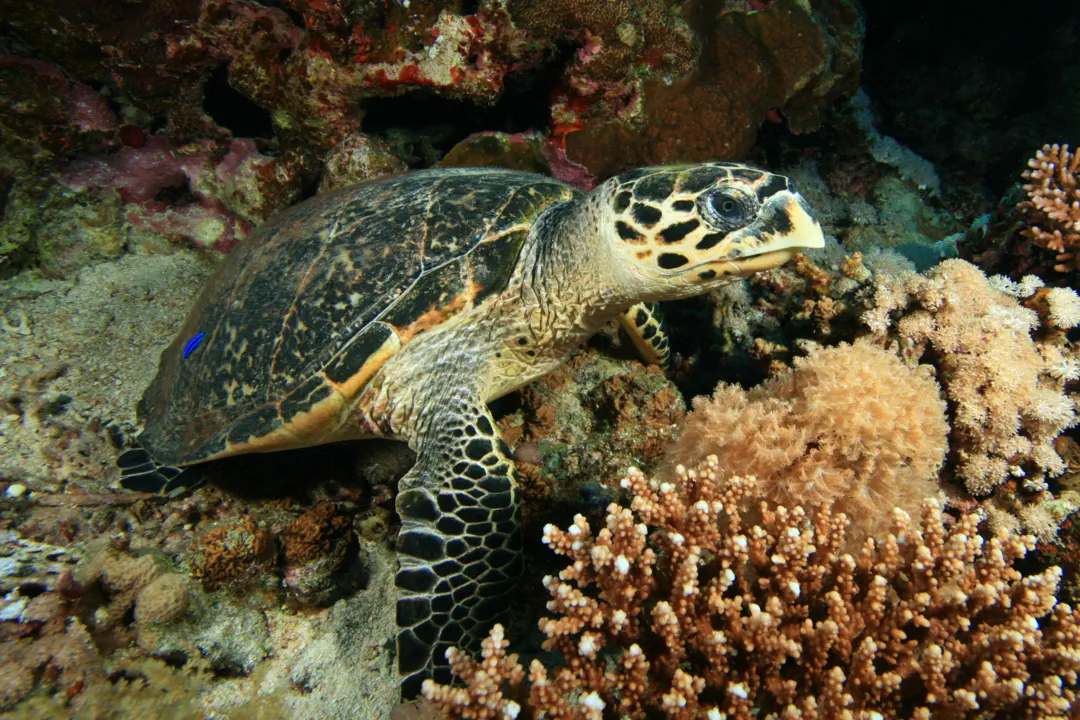
Known locally as honu‘ea, the hawksbill sea turtle is a critically endangered resident of Hawaiian waters. Unlike the herbivorous green turtle, the hawksbill uses its narrow head and sharp, bird-like beak to extract sea sponges, anemones, and small invertebrates from narrow reef crevices. This specialized feeding prevents fast-growing sponges from overgrowing slow-growing reef corals.
Nesting for honu‘ea is highly concentrated on a handful of secluded beaches, primarily along the southern coast of Hawaii Island (the Big Island) and targeted sites on Maui. Female hawksbills come ashore at night between May and November, crawling above the high-tide line to dig deep sand pits where they deposit clutches of over one hundred eggs at two-week intervals.
Because hawksbill populations in Hawaii remain exceptionally small, protecting their fragile nesting sites and foraging reefs is vital. Divers who encounter a hawksbill underwater should refrain from using bright lights or cornering the animal in shallow swim-throughs. Preserving their coastal habitats ensures these rare reptiles continue to find food and safe nesting grounds.
Which Pelagic Sea Turtles Visit Hawaiian Waters?
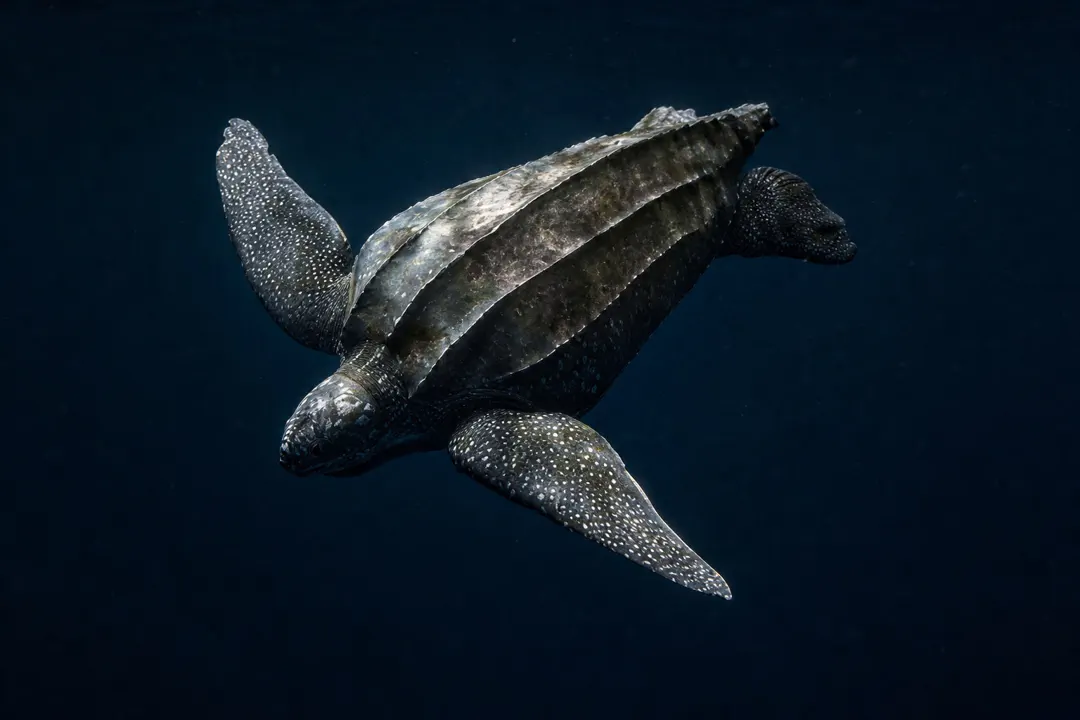
Three open-ocean sea turtle species cross the vast marine expanses surrounding the Hawaiian archipelago. The leatherback turtle (Dermochelys coriacea), the largest of all living reptiles, dives to depths exceeding 1,000 metres in pursuit of jellyfish. Lacking a hard bony shell, the leatherback relies on a flexible, leathery carapace to withstand immense hydrostatic pressure during deep foraging dives.
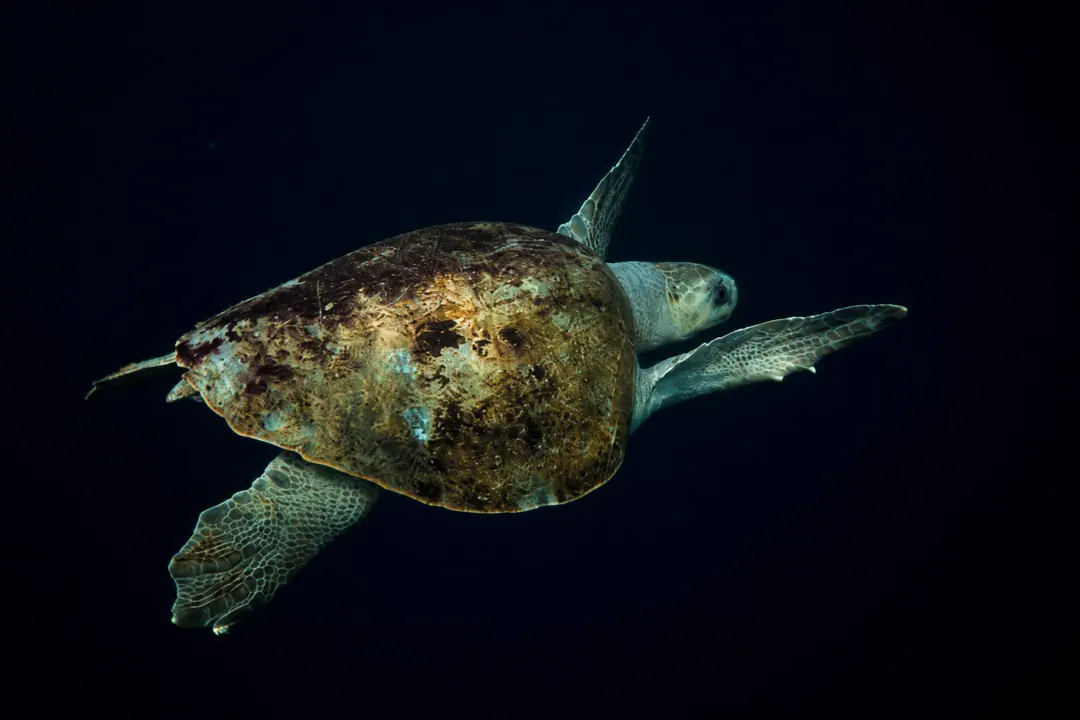
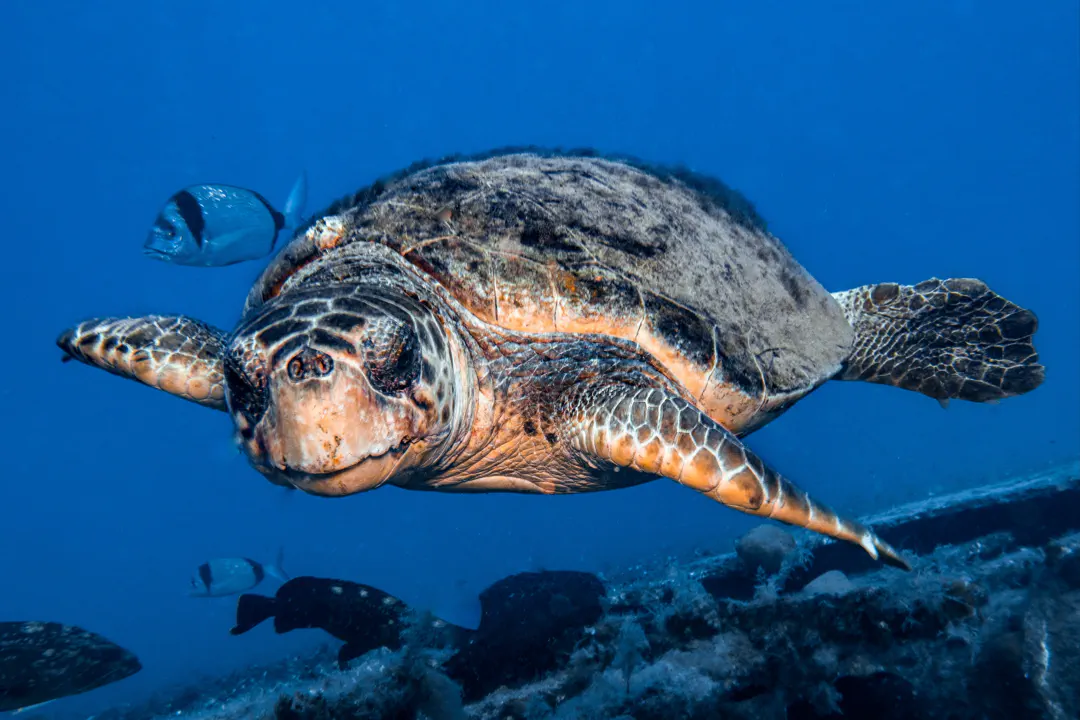
Loggerhead turtles (Caretta caretta) and olive ridley turtles (Lepidochelys olivacea) also migrate through North Pacific pelagic waters. Loggerheads feature powerful jaws designed to crush hardshelled crabs and molluscs, while olive ridleys feed on oceanic salps, crustaceans, and jellyfish. As documented in NOAA Fisheries, Sea Turtle Research in the Pacific, NOAA research in the North Pacific covers green, loggerhead, olive ridley, leatherback, and hawksbill turtles across life stages and monitors Hawaiian green turtle recovery.
Sightings of these pelagic species near shore are rare and usually coincide with deep water ocean passages or rescue interventions. Pelagic turtles spend their lives following major ocean currents and thermal fronts far beyond the outer reef drop-offs. Boat captains operating in deep offshore waters maintain sharp watches to avoid collisions with surface-basking leatherbacks and loggerheads.
Where Are the Best Places to See Sea Turtles in Hawaii?
Reliable sea turtle sightings occur across all major Hawaiian islands, though specific locations offer particularly consistent encounters. On Oahu, Turtle Canyons off Waikiki provides a famous underwater cleaning station where green turtles gather in 6 to 12 metres of water. Along Oahu's North Shore, beaches such as Laniakea offer shore watchers opportunities to view honu basking on the golden sand.
Maui features extensive shallow habitat along its sheltered western and southern coastlines. Areas commonly called Turtle Town near Makena Beach feature volcanic lava arches and shallow reef ledges where turtles rest in 5 to 15 metres of water. On Hawaii Island, the calm, clear waters along the Kona Coast—including Kahaluu Beach Park and Honaunau Bay—provide exceptional snorkeling entry points over rocky coral ledges.
Hawaii's garden isle of Kauai offers rewarding encounters in protected southern bays such as Lawai Beach and Tunnels Beach on the north shore during calm summer months. Ocean conditions vary significantly with seasonal swells, so divers and snorkellers should always evaluate surf reports before entering the water. Winter surf can create heavy surge on northern shores, shifting turtle activity toward more protected southern reefs.
When Is Sea Turtle Nesting Season in Hawaii?
Green sea turtle nesting in Hawaii follows a dramatic seasonal migration cycle that begins every spring. Between April and May, hundreds of adult green turtles leave their feeding grounds around the main Hawaiian Islands and swim hundreds of kilometres northwest against prevailing currents.
Their destination is Lalo, also known as French Frigate Shoals, an isolated atoll inside the Papahānaumokuākea Marine National Monument. As stated in the NOAA Fisheries, Hawaiian Green Sea Turtle brochure, Hawaiian green turtles primarily nest at Lalo, formerly French Frigate Shoals, in the Papahānaumokuākea Marine National Monument. Nesting peaks between May and August, when females dig multiple sand nests across low-lying sand islets.
Hatchlings emerge from incubation after 50 to 70 days, scrambling into the ocean at night to begin their pelagic juvenile phase. While adult turtles migrate to breeding grounds during late spring and summer, resident juvenile and non-breeding adult honu remain accessible on main-island reefs throughout the entire calendar year.
How to Responsibly Swim with Sea Turtles in Hawaii
Responsibly swimming alongside wild sea turtles requires adhering to established wildlife viewing guidelines. According to the Hawai‘i Department of Land and Natural Resources, Division of Aquatic Resources, the recommended public viewing distance for Hawaiian sea turtles is at least 10 feet, or 3 metres, on land and in the water. Swimming directly above a turtle can trap it against the reef, preventing it from reaching the surface to breathe.
On land, basking turtles must be granted plenty of space to sleep without disruption. As noted in the Hawai‘i Department of Land and Natural Resources, wildlife-respect protocols, basking is normal behaviour for Hawaiian green turtles, and turtles may rest on land for hours; visitors should not approach them. Crowding a basking turtle causes stress and may force the animal back into the ocean prematurely before it has adequately rested.
Divers and snorkellers should also practice good reef etiquette by maintaining neutral buoyancy and avoiding contact with coral structures. Wearing protective rashguards reduces the need for sunscreen, while any exposed skin should be covered with non-nano mineral sunscreens free of oxybenzone and octinoxate. Keeping waterways clean and observing wildlife from a respectful distance ensures Hawaii's sea turtles thrive for generations to come.
Questions
What is the native Hawaiian name for sea turtles?
Hawaiian green sea turtles are called honu, while Hawaiian hawksbill turtles are called honu‘ea. These names identify the two turtle species most closely associated with Hawaiian coastal habitats and cultural traditions.
Is it illegal to touch sea turtles in Hawaii?
Yes. Sea turtles are protected under the U.S. Endangered Species Act and Hawai‘i law. Approaching closer than 10 feet (3 metres), touching, chasing, or feeding them can result in state and federal fines.
Can you see sea turtles year-round in Hawaii?
Yes, green turtles inhabit Hawaiian coastal waters throughout the year. They can be regularly observed feeding on shallow reefs, resting under ledges, or basking on sandy beaches across all main islands.
Where is the best island in Hawaii to see sea turtles?
Maui (Turtle Town in Makena), Oahu (Turtle Canyons and North Shore beaches like Laniakea), the Big Island (Kona coast), and Kauai all offer high-quality turtle sightings in shallow waters.
Why do sea turtles lay on the beach in Hawaii?
Hawaiian green turtles haul out onto sandy beaches to bask in the sun to warm their body temperature, conserve energy, and rest away from marine predators like tiger sharks. Nesting females come ashore at night to lay eggs.
Sources
- Frequent Questions: Sea Turtles in the Pacific Islands Region · 2026-02-03
- Sea Turtle Week 2023: Reflecting on Sea Turtle Recovery · 2023-06-15
- Hawaiian Green Sea Turtle Brochure - NOAA Fisheries · 2026-04-29
- Sea Turtles - Department of Land and Natural Resources · 2026-10-27
- Respect wildlife protocols · 2026-02-03
- Sea Turtle Research in the Pacific · 2025-04-24