
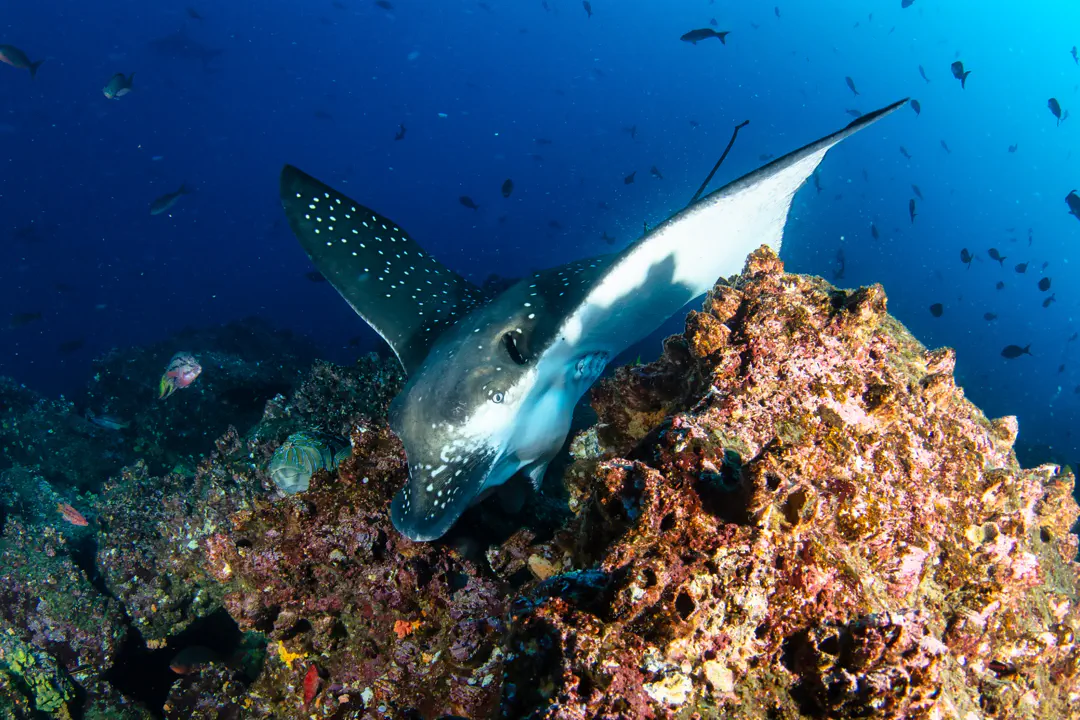
At a depth of 15 meters along the sheer limestone cliff of Bloody Bay Wall off Little Cayman, morning light cuts through the surface in narrow blue shafts. A spotted eagle ray, Aetobatus narinari, sweeps past the vertical reef face, its dark back speckled with white spots like a star map as its long tail trails into the abyss. Down on a lower ledge, a queen angelfish picks at a purple chimney sponge while two yellow goatfish sift through a patch of coarse sand.
Understanding Caribbean marine life begins with its geography: an enclosed sea of warm tropical currents, limestone drop-offs, expansive seagrass meadows, and fringing coral reefs. The region experiences surface water temperatures ranging between 24°C in the cooler winter months and 29°C during late summer, while underwater visibility frequently reaches 20 to 30 meters at exposed offshore sites. The dry season from December through April offers calm seas and optimal diving conditions across most island chains.
From the barrier reefs of Belize and the drop-offs of the Cayman Islands to the shallow shore reefs of Bonaire and the shark plateaus of the Bahamas, these waters accommodate every level of underwater explorer. Snorkellers float above shallow coral gardens filled with stoplight parrotfish and green sea turtles, while certified divers descend along deep walls frequented by Caribbean reef sharks, Nassau groupers, and eagle rays.
What Is Caribbean Marine Life Like?
The structure of Caribbean marine ecosystems rests on a tight network of connected habitats, where shallow coastal mangroves, expansive seagrass beds, and structural coral reefs function as a single biological engine. Red mangrove roots form tangled underwater forests along sheltered shorelines, trapping sediment and providing sheltered nurseries for juvenile fish. According to the NOAA Fisheries shallow coral reef habitat overview, coral reefs cover less than 1% of the global ocean floor yet provide critical habitat for nearly one-quarter of all marine species, making their health central to regional ocean life.
Juvenile grunts, snappers, barracudas, and spiny lobsters spend their early life stages hidden among mangrove prop roots and dense blades of turtle grass. As these animals mature, they migrate outward toward shallow patch reefs and eventually take up residence along outer reef slopes and drop-offs. Over recent decades, however, baseline reef structures have shifted dramatically; data from the NOAA Fisheries shallow coral reef habitat overview indicates that populations of foundational elkhorn coral (Acropora palmata) and staghorn coral (Acropora cervicornis) have declined by more than 90% across parts of the Caribbean.
Beyond the sunlit shallows lies another layer of biological diversity. Findings from the NOAA Office for Coastal Management Caribbean Mesophotic Coral Reef project show that mesophotic coral ecosystems thrive between depths of 30 to 40 meters and extend beyond 100 meters, harbouring specialized communities of groupers, snappers, reef sharks, hard corals, and massive sponges. Further down into the dark, research cited by the NOAA deep-sea coral taxa inventory has documented at least 139 deep-sea coral species within U.S. Caribbean waters, with cold-water coral communities flourishing at depths ranging from 200 to 3,000 meters.
Which Apex Predators Live in the Caribbean?
Apex predators maintain ecological equilibrium across Caribbean marine ecosystems by regulating prey populations and controlling smaller mid-level carnivores. Caribbean reef sharks (Carcharhinus perezi) dominate the drop-offs and channels of protected marine reserves, patrolling depths between 10 and 30 meters with steady, rhythmic tail sweeps. Nurse sharks (Ginglymostoma cirratum) occupy a lower predatory niche, resting beneath coral ledges during daylight hours before hunting crustaceans and small fish along the seabed at night.
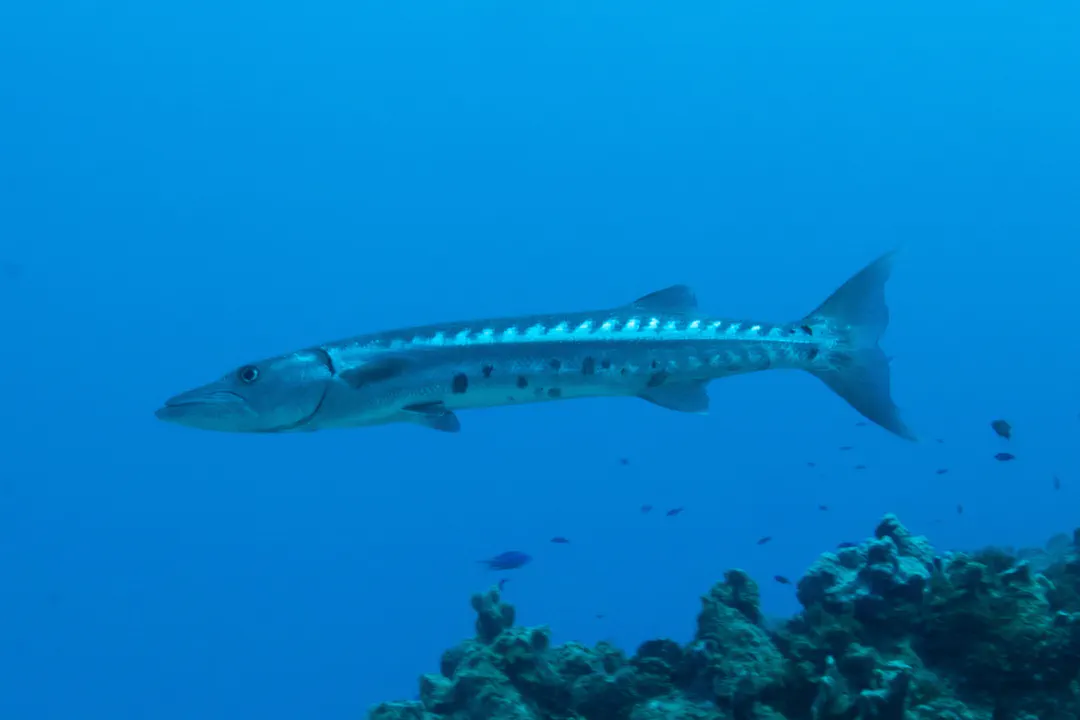
In deeper channels, sand flats, and open-water passes, larger migratory predators make seasonal appearances. Great hammerheads (Sphyrna mokarran) and tiger sharks (Galeocerdo cuvier) cruise deep reef margins, while lemon sharks (Negaprion brevirostris) frequent shallow mangrove creeks and sand flats around the Bahamas. Solitary great barracudas (Sphyraena barracuda) hover motionless near the surface or beside coral pinnacles, using keen eyesight and sudden bursts of speed to capture silver reef fish.
Encountering these large predators requires clear underwater etiquette and strict compliance with local dive safety guidelines. Divers should maintain neutral buoyancy, keep hands tucked near the chest, and avoid blocking a shark's swim path or cornering an animal inside a ravine. Chasing, touching, or harassing marine predators disrupts their natural hunting rhythms and increases unnecessary stress on wild populations.
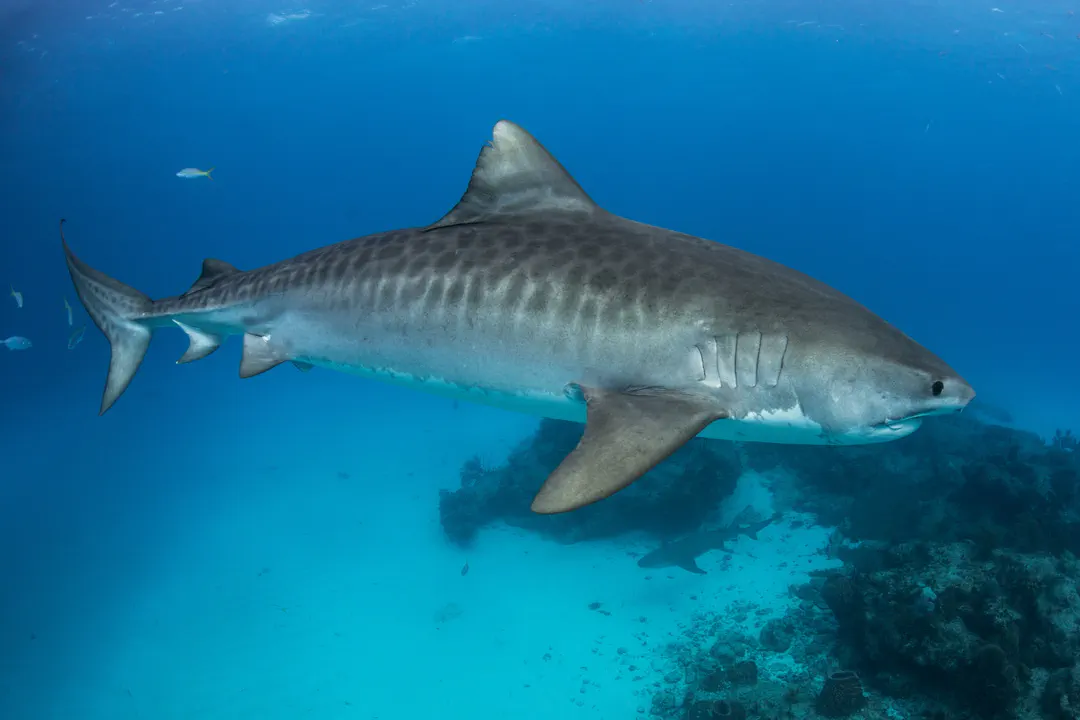 © seabook.appAll rights reserved
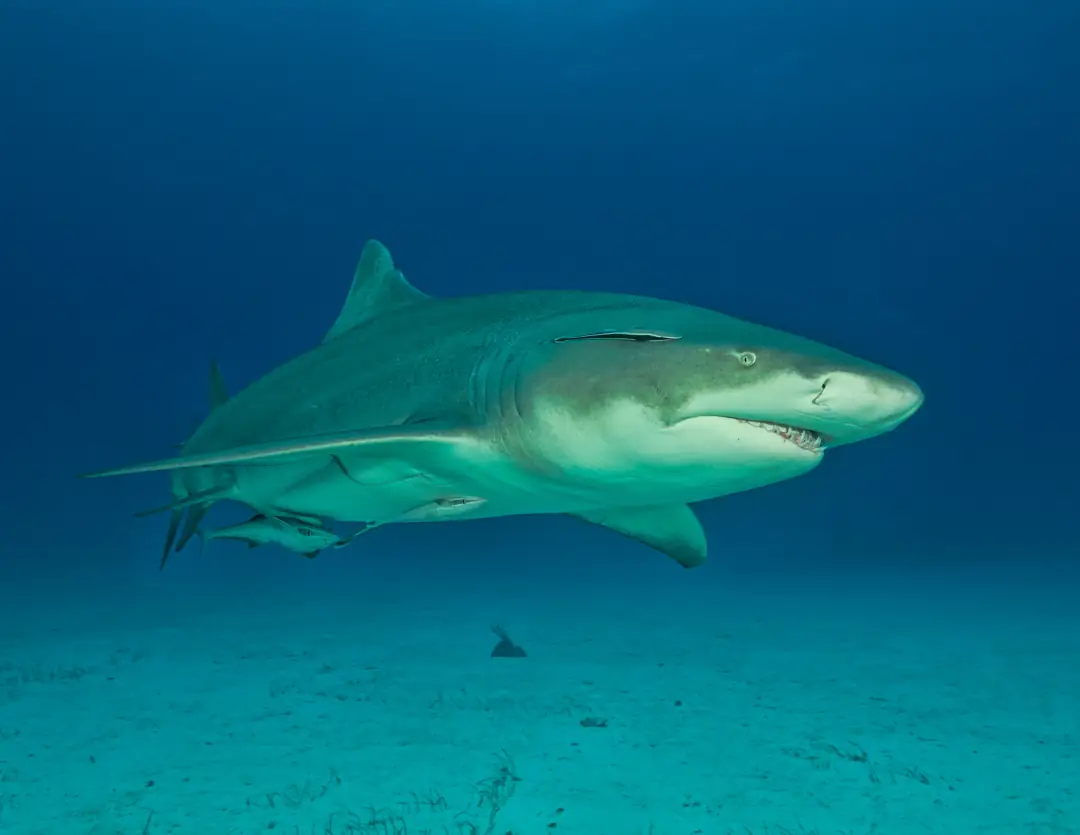 © seabook.appAll rights reserved
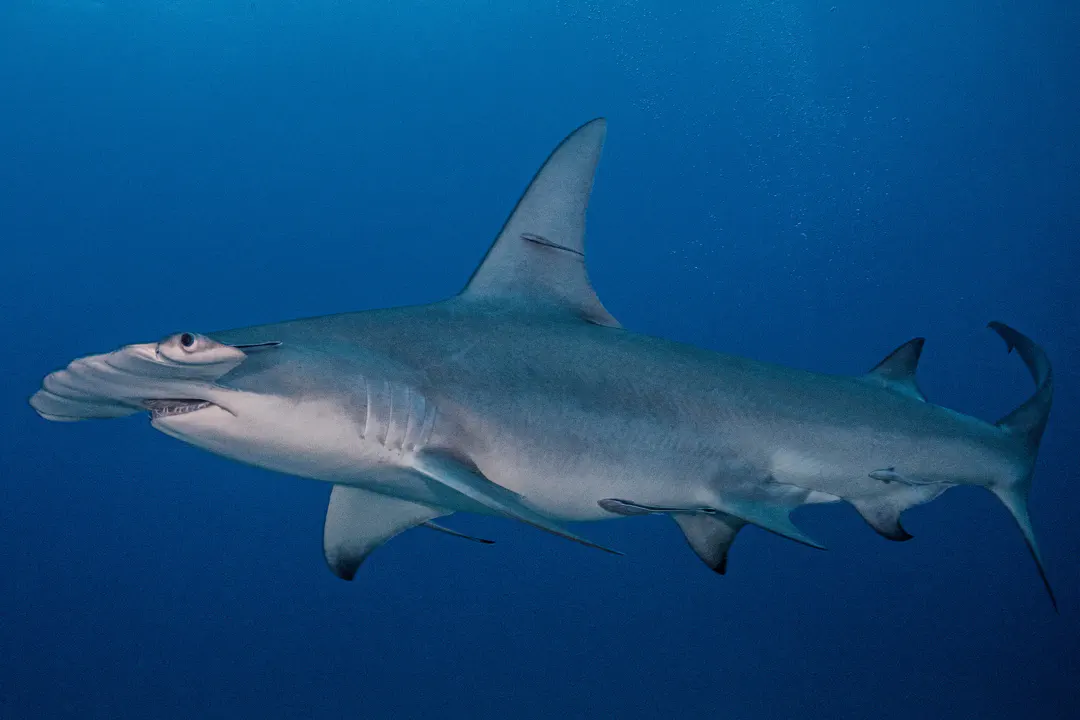 © seabook.appAll rights reserved
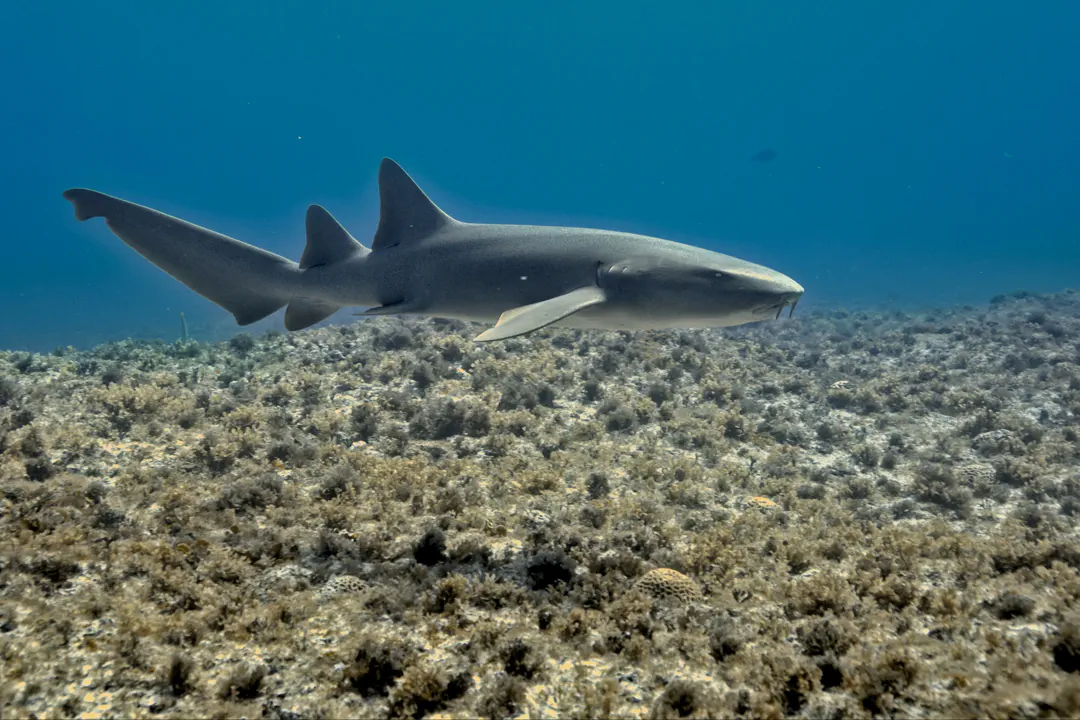 © R VasconcellosCC BY 4.0 · iNaturalist
 © Dan SchofieldCC BY 4.0 · iNaturalist
Which Sea Turtles and Rays Inhabit Caribbean Reefs?
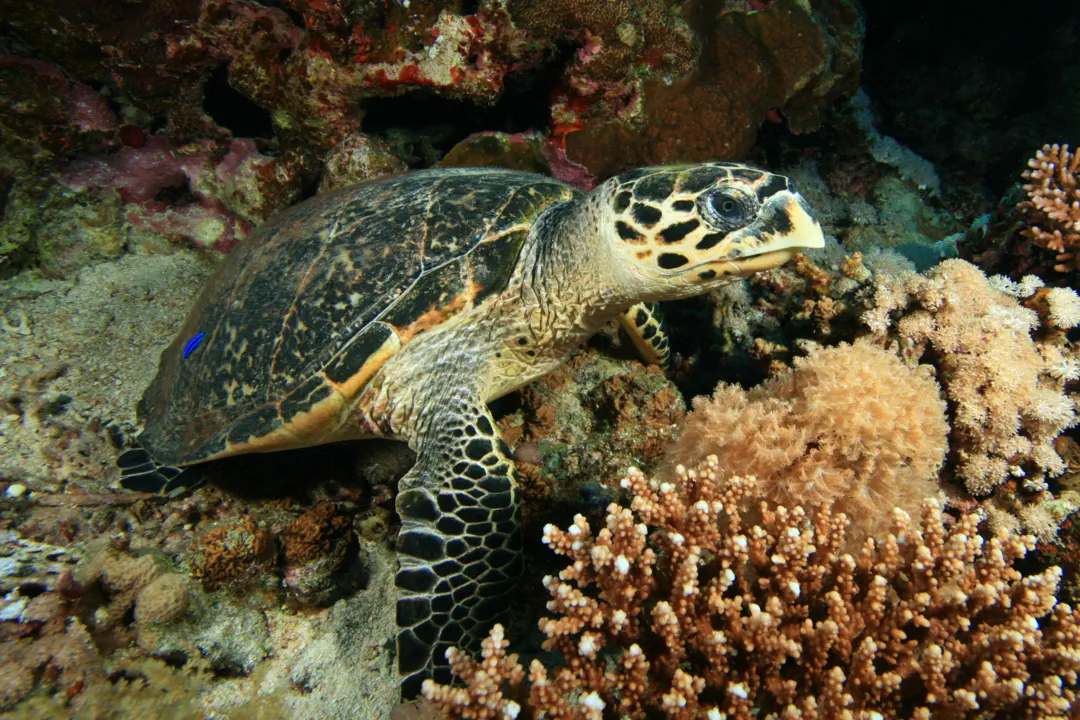
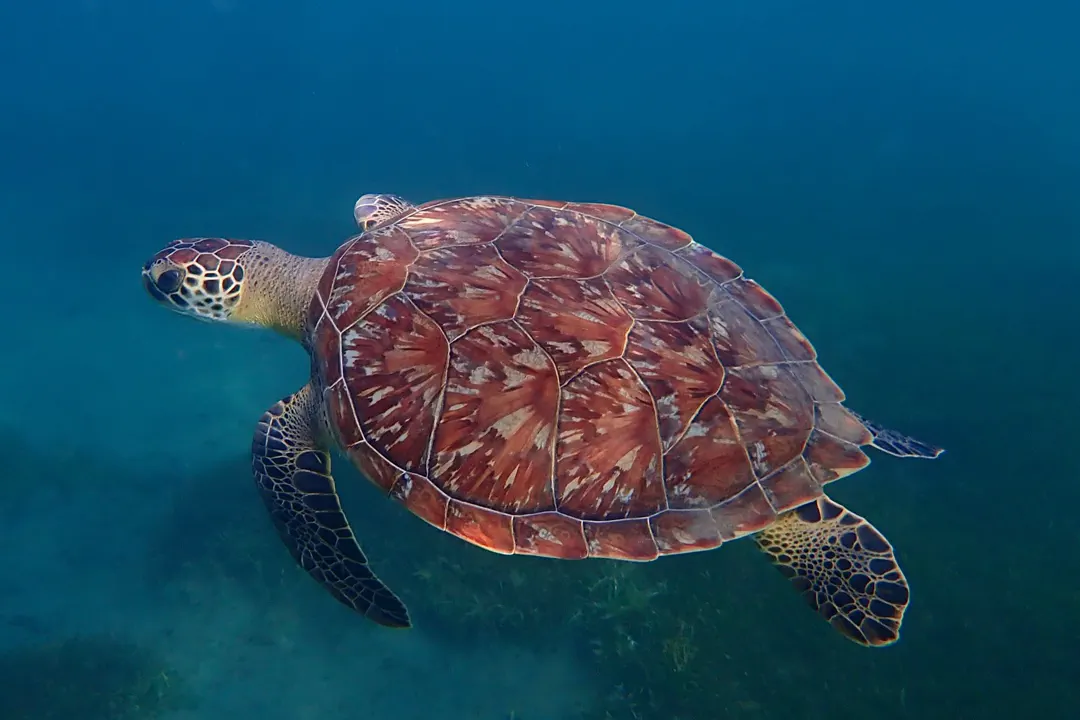
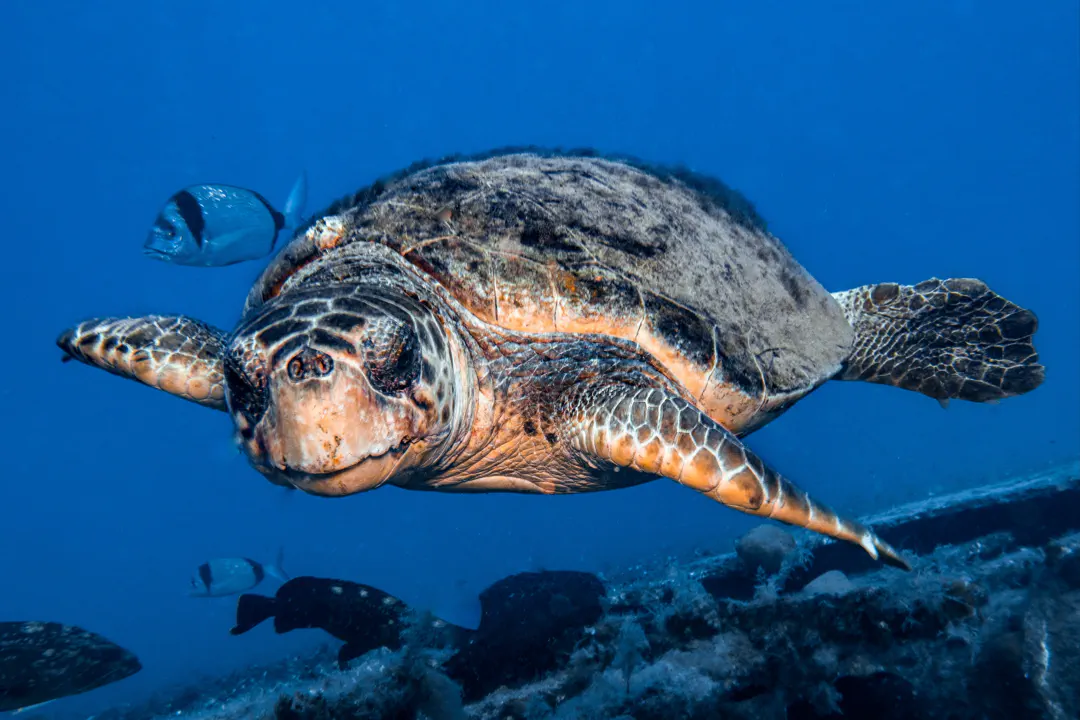
Three main species of sea turtles navigate the coastal waters and open stretches of the Caribbean. Hawksbill sea turtles (Eretmochelys imbricata) rely on sharp, hooked beaks to extract glass-like sponges from tight coral crevices, spending long periods along shallow walls and patch reefs. Green sea turtles (Chelonia mydas) graze extensively on wide seagrass meadows in shallow lagoons, while heavy-jawed loggerhead sea turtles (Caretta caretta) crush hard-shelled molluscs and crabs along deeper sandy plateaus.
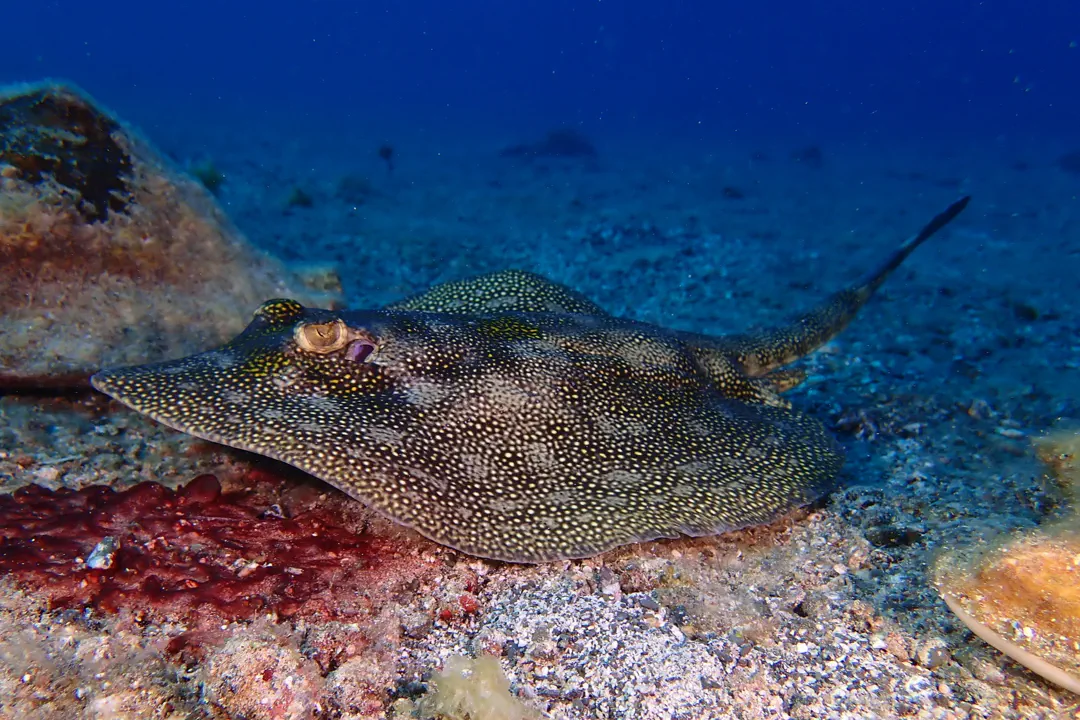
Rays glide effortlessly over the seabed, using specialized electro-receptors to locate buried invertebrate prey. Spotted eagle rays (Aetobatus narinari) travel singly or in small formations along reef drop-offs, using broad pectoral fins to soar through open water. Along the sandy bottom, southern stingrays (Hypanus americanus) flap their wing-like bodies to blow away surface sediment, while smaller yellow stingrays (Urobatis jamaicensis) camouflage themselves under thin layers of silt in shallow coastal zones.
Responsible interaction ensures these long-lived marine reptiles and rays remain unbothered by human presence. Divers and snorkellers must maintain a minimum distance of 3 meters, never attempt to touch or ride a turtle, and always leave an unobstructed path to the surface so air-breathing reptiles can surface comfortably. When exploring shallow sand flats, divers should avoid shuffling or kneeling on the seabed to prevent accidental contact with buried stingrays.
 © seabook.appAll rights reserved
 © Matteo BellucciCC BY 4.0 · iNaturalist
 © seabook.appAll rights reserved
 © seabook.appAll rights reserved
 © Robin WhiteCC BY 4.0 · iNaturalist
What Reef Fish Can You Encounter in the Caribbean?
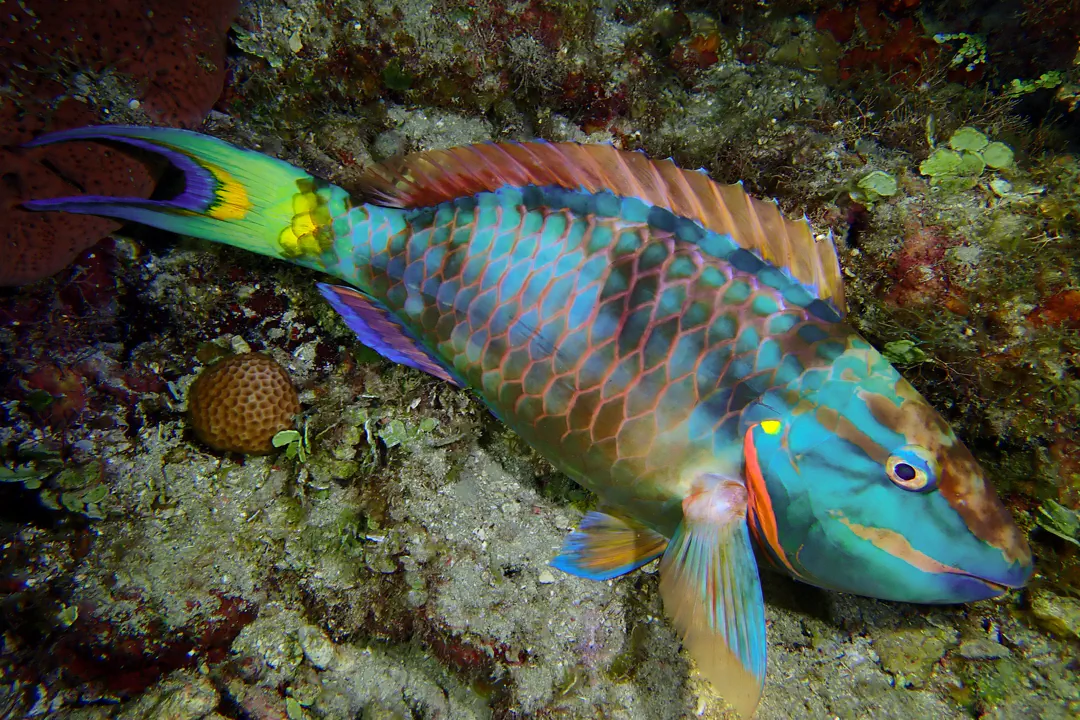
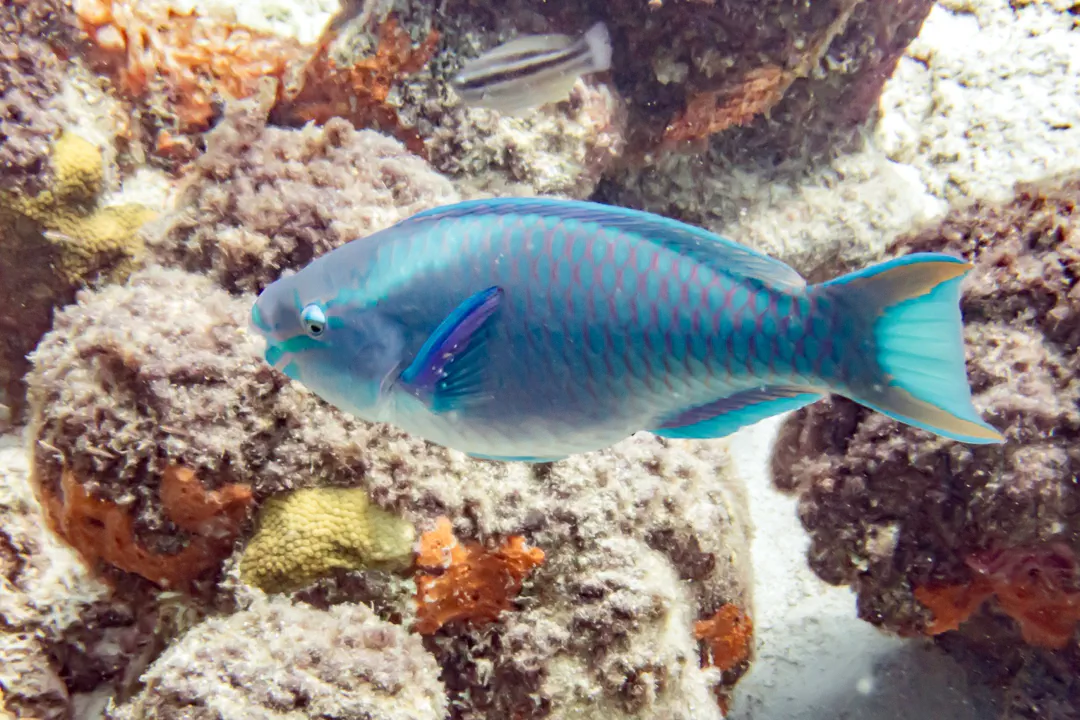
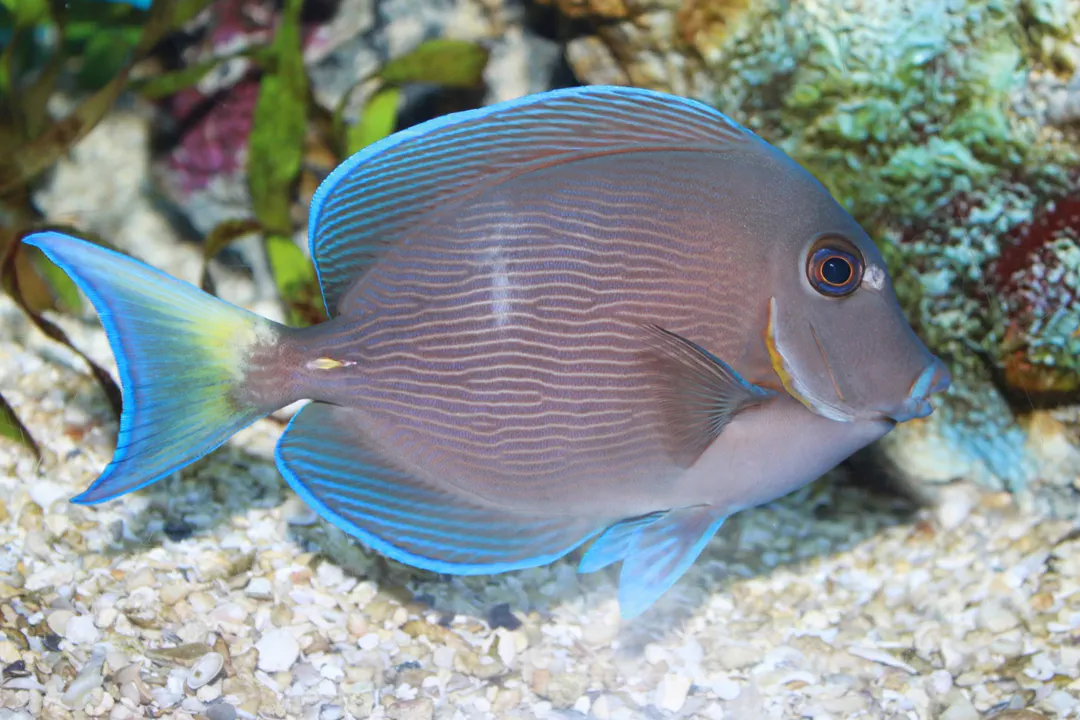
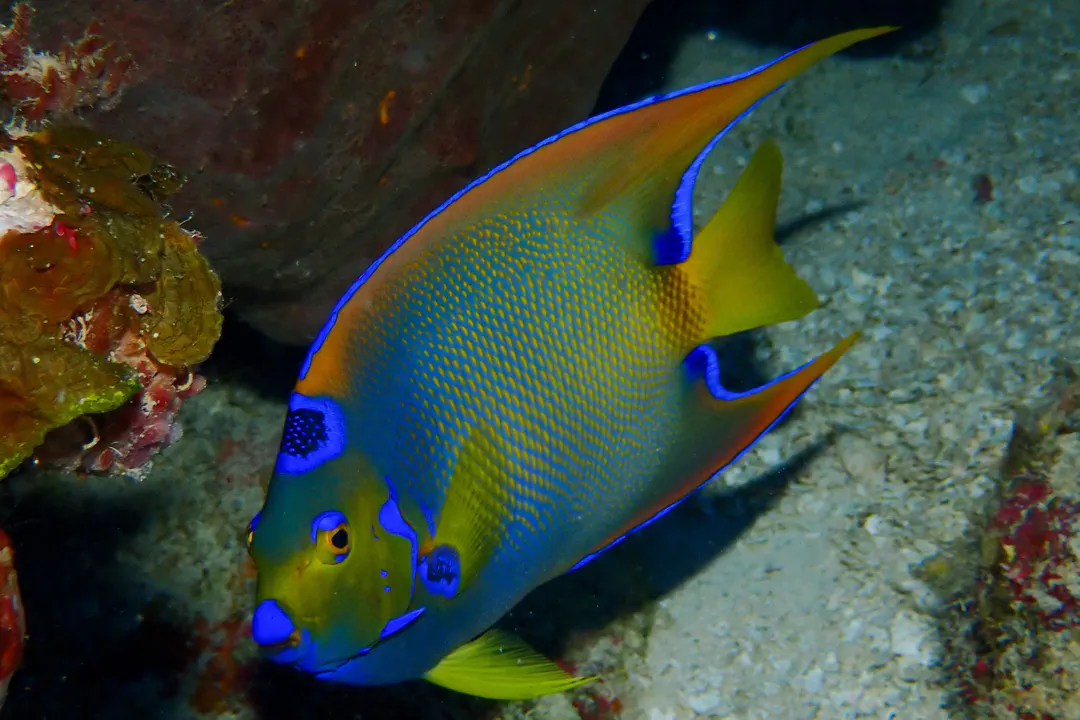
Herbivorous reef fish perform essential work keeping macroalgae from smothering hard coral colonies. Stoplight parrotfish (Sparisoma viride) and queen parrotfish (Scarus vetula) use fused, beak-like teeth to scrape algae off limestone substrate, grinding down coral rock and excreting fine white sand. Schools of bright blue tangs (Acanthurus coeruleus) sweep across reef crests in disciplined feeding herds, while solitary queen angelfish (Holacanthus ciliaris) display blue and yellow markings as they browse on encrusting sponges.
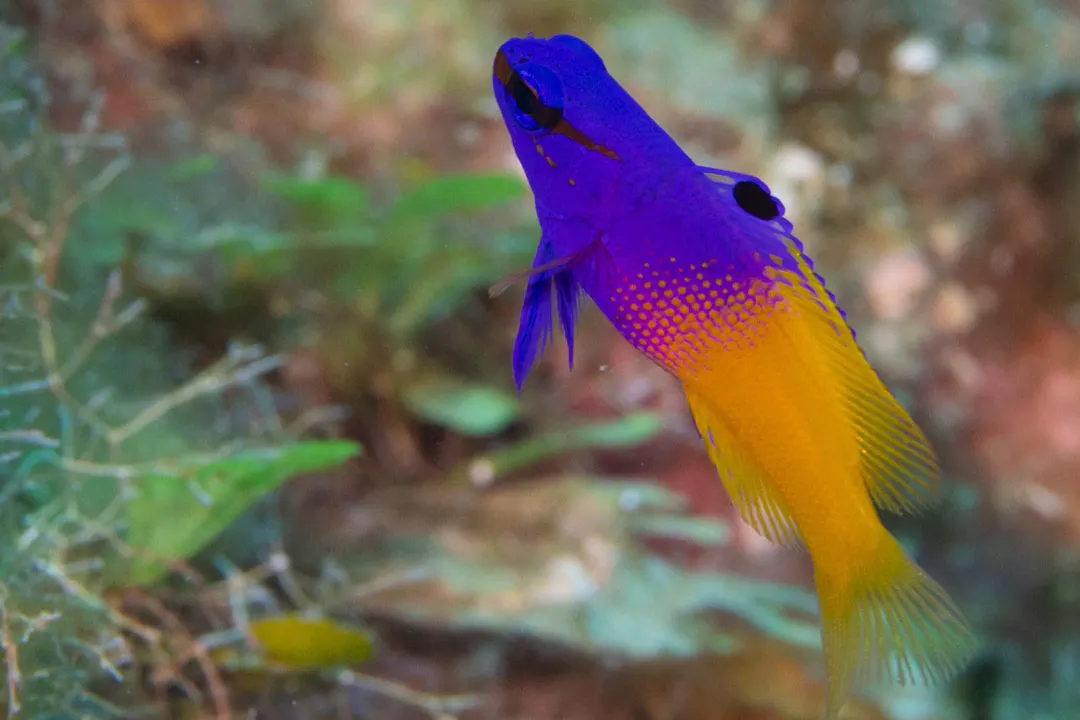
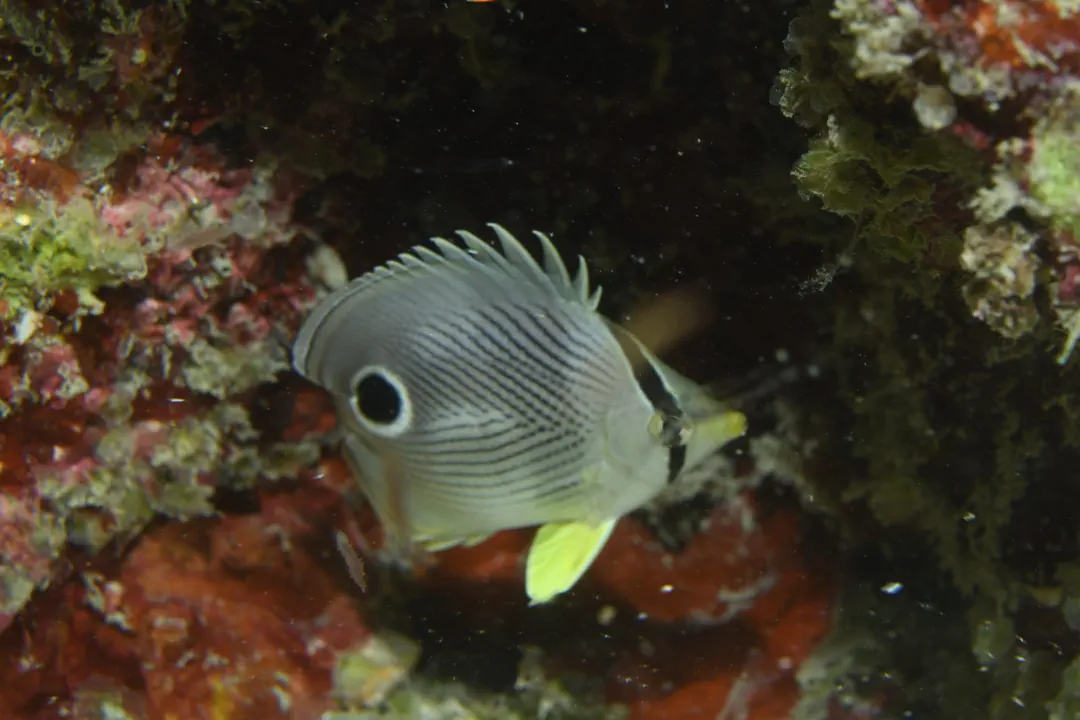
Deeper along coral ledges and overhangs, smaller reef species create dense pockets of activity. Magenta and yellow fairy basslets (Gramma loreto) hover upside down beneath limestone ceilings, while foureye butterflyfish (Chaetodon capistratus) search for coral polyps in pairs. Predatory Nassau groupers (Epinephelus striatus) lie in ambush near coral heads, while queen triggerfish (Balistes vetula) and spotted trunkfish (Lactophrys bicaudalis) search the lower reef for sea urchins and crabs. Divers can use the Seabook app to log species sightings and identify unknown reef fish observed during their dives.
The daily activity cycle on a Caribbean reef shifts smoothly between light and dark hours. As daylight fades, herbivorous parrotfish produce protective mucous cocoons inside coral crevices, making way for nocturnal predators such as moray eels and cardinalfish. Observing these behavioral transitions reveals how every niche on the limestone slope is occupied throughout the 24-hour cycle.
 © Robin WhiteCC BY 4.0 · iNaturalist
 © Jay BrasherCC BY 4.0 · iNaturalist
 © Brian GratwickeCC BY 4.0 · iNaturalist
 © Dan SchofieldCC BY 4.0 · iNaturalist
 © cello caruso-turielloCC BY 4.0 · iNaturalist
 © Robin WhiteCC BY 4.0 · iNaturalist
Macro Life and Invertebrates of the Caribbean
A closer look into coral fractures and rubble zones reveals an intricate world of cryptic macro organisms. Caribbean spiny lobsters (Panulirus argus) tuck their long antennae under limestone ledges during the day, emerging at dusk to scavenge over open sand. Nearby in seagrass meadows, heavy queen conchs (Aliger gigas) drag their spiral shells across sandy substrate, while the Caribbean reef octopus (Octopus briareus) shifts color and skin texture in milliseconds to blend with surrounding algae and coral.
Cleaner species set up dedicated stations where larger fish gather to have parasites removed. Banded coral shrimp (Stenopus hispidus) wave long white antennae from small crevices to attract passing client fish, while the giant Caribbean anemone (Condylactis gigantea) extends pink-tipped tentacles that shelter tiny cleaner shrimp. Moving slowly across dead coral branches, bearded fireworms (Hermodice carunculata) feed on soft tissues, their white bristle tufts standing out against dark rock.
Spotting small marine life requires slow movement, precise buoyancy control, and steady light placement. Divers should hover several feet clear of the substrate, scanning overhangs and coral bases without leaning on living structures. Taking 60 to 90 minutes to explore a single patch reef often yields far more invertebrate sightings than covering large distances along a wall.
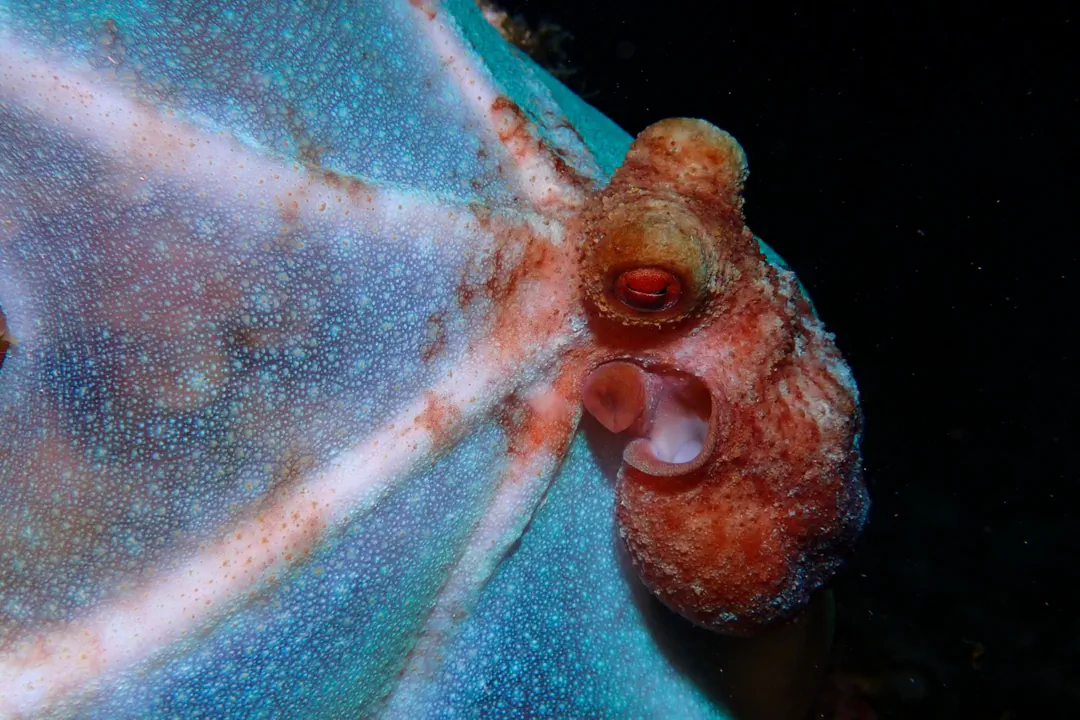 © Dan SchofieldCC BY 4.0 · iNaturalist
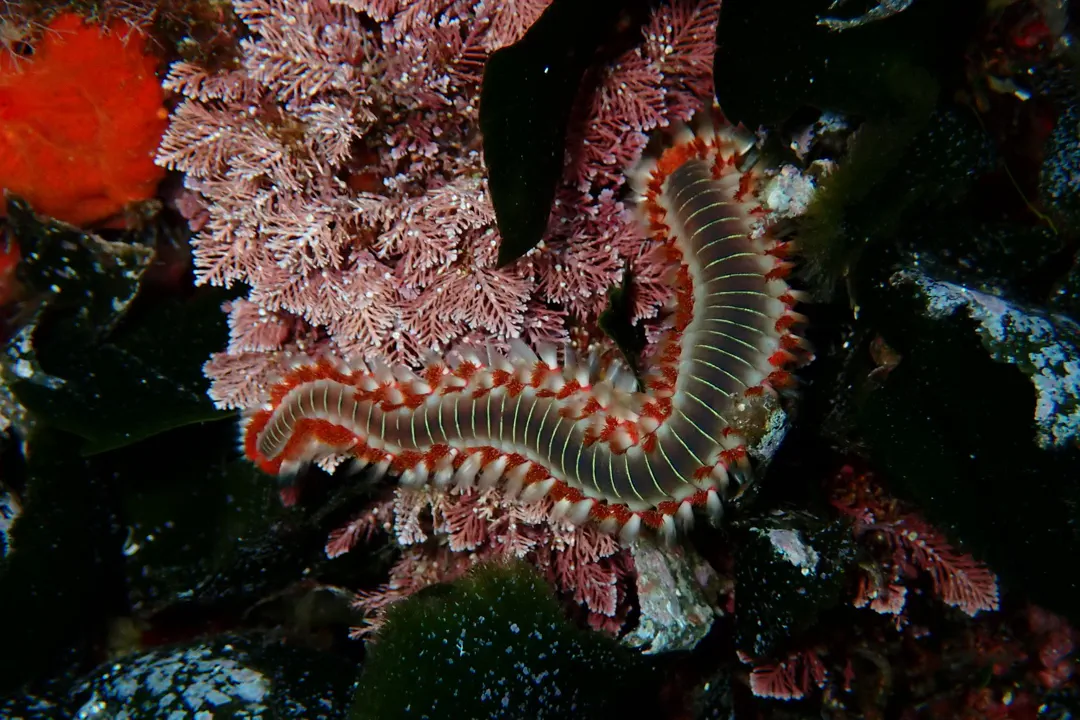 © Juraj AhelCC BY 4.0 · iNaturalist
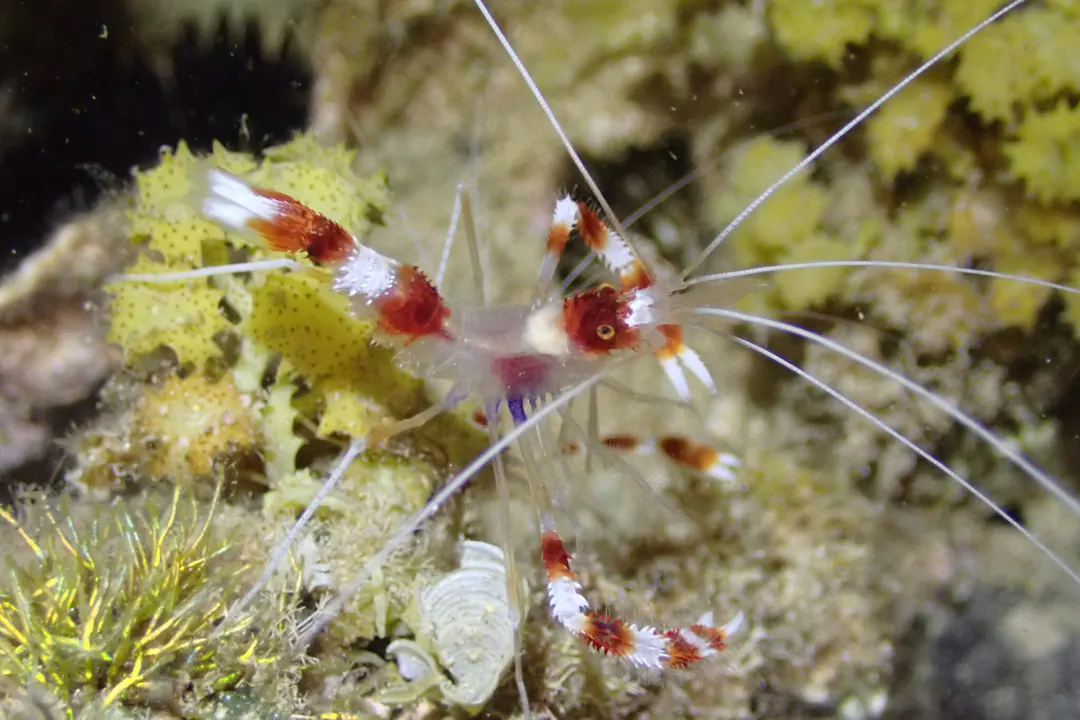 © Cricket RaspetCC BY 4.0 · iNaturalist
Are Caribbean Creatures Safe for Divers and Snorkellers?
Most Caribbean marine life is docile and poses little risk to divers who observe proper underwater space and buoyancy control. However, a few organisms possess passive chemical or physical defenses that can inflict painful injuries if brushed against or touched. Fire corals (Millepora species) cause sharp skin stinging upon contact, while the hollow bristles of bearded fireworms (Hermodice carunculata) break off in human skin, releasing irritating toxins.
Invasive Indo-Pacific lionfish (Pterois volitans) represent both an ecological threat and a sting hazard along Caribbean reefs. Lionfish carry neurotoxic venom in their long dorsal, anal, and pelvic spines, requiring divers to give them clear berth during reef exploration. Stingrays and scorpionfish also carry defensive venomous spines, making careful eye contact with the seabed essential whenever divers or snorkellers enter shallow water.
Maintaining safety requires simple, consistent habits: wear a full light exposure suit, maintain neutral buoyancy at all times, and keep hands clear of dark crevices. If a sting or puncture occurs, exit the water safely, notify dive staff, and seek prompt medical attention. Soaking affected areas in non-scalding hot water can help neutralize certain fish venom proteins while awaiting professional healthcare.
Where Are the Best Habitats to See Marine Life in the Caribbean?
Selecting the right destination in the Caribbean depends heavily on the specific habitats and marine animals an underwater explorer hopes to encounter. Wall diving reaches its peak around the Cayman Islands, where sheer drop-offs plunging thousands of meters attract pelagic visitors, large sea turtles, and sprawling tube sponges. Fringing shore reefs in Bonaire allow divers to walk directly into shallow water to observe dense populations of reef fish, octopus, and seahorses at their own pace.
Mangrove networks and sheltered lagoon channels serve as critical nursery zones across the region. Marine reserves in Belize and Roatán feature extensive back-reef grass beds and mangrove roots where juvenile barracudas, snappers, and rays feed safely before migrating to the outer reef wall. Meanwhile, shallow sand banks around the Bahamas offer world-renowned locations for encounters with wild sharks, stingrays, and bottlenose dolphins in exceptional clarity.
Planning a trip to the Caribbean should factor in regional weather patterns and seasonal sea conditions. According to the NOAA National Marine Ecosystem Status, the Caribbean supports roughly 1,400 species of fish and marine mammals across its varied marine zones. The settled period from December through April offers lower humidity and calm sea conditions, while the official Atlantic hurricane season from June 1 through November 30 can bring sudden weather changes, reduced visibility, and rougher surface swells.
Questions
What fish can you see in the Caribbean?
Divers and snorkellers can spot hundreds of species including queen angelfish (Holacanthus ciliaris), blue tangs (Acanthurus coeruleus), stoplight parrotfish (Sparisoma viride), royal grammas (Gramma loreto), Nassau groupers, and barracudas on almost every coral reef.
Are there sharks in the Caribbean?
Yes, Caribbean reef sharks, nurse sharks, lemon sharks, and hammerheads are common throughout the region, particularly in protected marine reserves like the Bahamas and Roatán.
Is it dangerous to swim with Caribbean marine life?
No, Caribbean marine species are generally docile and safe to observe. Standard diving practices such as maintaining good buoyancy and avoiding touching wildlife ensure a safe experience.
Can you see turtles in the Caribbean?
Hawksbill, green, and loggerhead sea turtles are widely seen throughout the Caribbean, especially around seagrass beds in Barbados, Saint Martin, and the Virgin Islands.
What is the best time of year to see marine life in the Caribbean?
Marine life is abundant year-round, but December through May generally offers the best combination of calm seas, high water clarity, and comfortable temperatures.
Sources
- Caribbean Region | National Marine Ecosystem Status - NOAA · 2026-10-27
- Ecology, Integrity and Status of Caribbean Mesophotic Coral ... · 2024-12-13
- Deep-Sea Coral Communities in the U.S. Caribbean Region · 2018-10-18
- Diversity and time-series analyses of Caribbean deep-sea coral and ... · 2026-03-24
- Shallow Coral Reef Habitat - NOAA Fisheries · 2026-10-26

