
Hooked onto the limestone ledge at Blue Corner in Palau at 18 metres depth, incoming current pulls your safety tether taut as light rays pierce the sea. A 1.8-metre grey reef shark glides through the surge, its dark caudal fin margin cutting cleanly across blue water before turning toward the drop-off. Two whitetip reef sharks rest on a sandy patch 5 metres below, their gill slits pulsing steadily in the shadows.
Mastering reef shark identification requires focusing on four diagnostic traits: fin tip patterns, snout geometry, body proportions, and habitat depth. Distinguishing between species like the blacktip reef shark, grey reef shark, and silvertip shark becomes straightforward when you know where to look. Water temperature across tropical reef systems typically spans 24 °C to 30 °C, with visibility ranging from 15 to 40 metres depending on current and season.
Whether you are an Open Water diver exploring shallow coral gardens at 8 metres or an advanced diver watching deep wall drop-offs at 30 metres, key field markers allow quick identification. This guide breaks down the physical features, behavioral clues, and geographic distributions of six primary reef shark species encountered on global dive sites.
What Are the Main Features for Reef Shark Identification?
Evaluating four key physical characteristics underwater allows divers to quickly classify any shark encounter before the animal moves away. First, observe the fin tips on the first dorsal fin, caudal fin, and pectoral fins for distinct white, black, or dark borders. Next, note the overall body silhouette, comparing a slender frame with a stocky build, followed by inspecting whether the snout is pointed, bluntly rounded, or flattened.
At depths below 15 metres, water selectively filters out red and orange light wavelengths, turning high-contrast markings into shades of grey and muted dark tones. This light attenuation means silhouette and snout shape become vital secondary identifiers when color contrast decreases. According to the Florida Museum of Natural History, Discover Fishes species profile, examining the presence or absence of dark tips and white pigmentation provides crucial classification clues even in reduced visibility.
Logging these key physical traits on your slate or scanning your footage post-dive helps build reliable field notes. An IUCN Species Survival Commission shark assessment document notes that silvertip, grey reef, and blacktip reef sharks are listed as Near Threatened, making accurate identification essential for citizen-science population tracking. Logging your observations in the Seabook app allows you to record exact depth, site location, and observed species features to track reef predator health worldwide.
 © Daniel BenákCC BY 4.0 · iNaturalist
 © seabook.appAll rights reserved
 © Daniel BenákCC BY 4.0 · iNaturalist
 © R VasconcellosCC BY 4.0 · iNaturalist
 © seabook.appAll rights reserved
 © seabook.appAll rights reserved
How to Spot a Whitetip Reef Shark vs Blacktip Reef Shark?
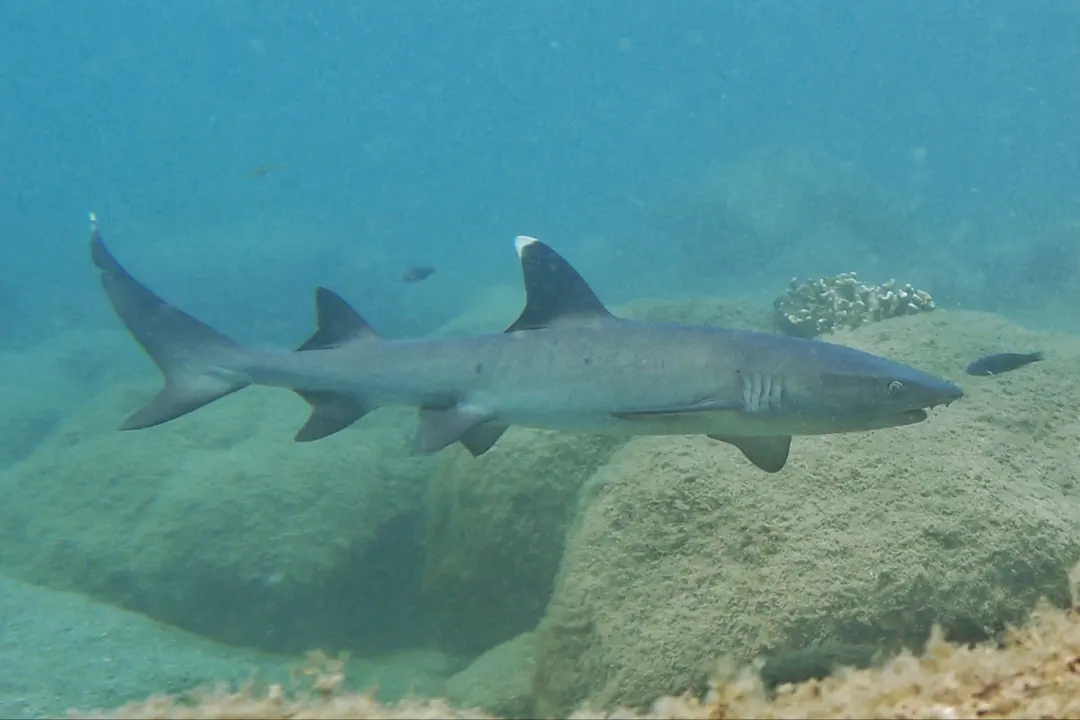
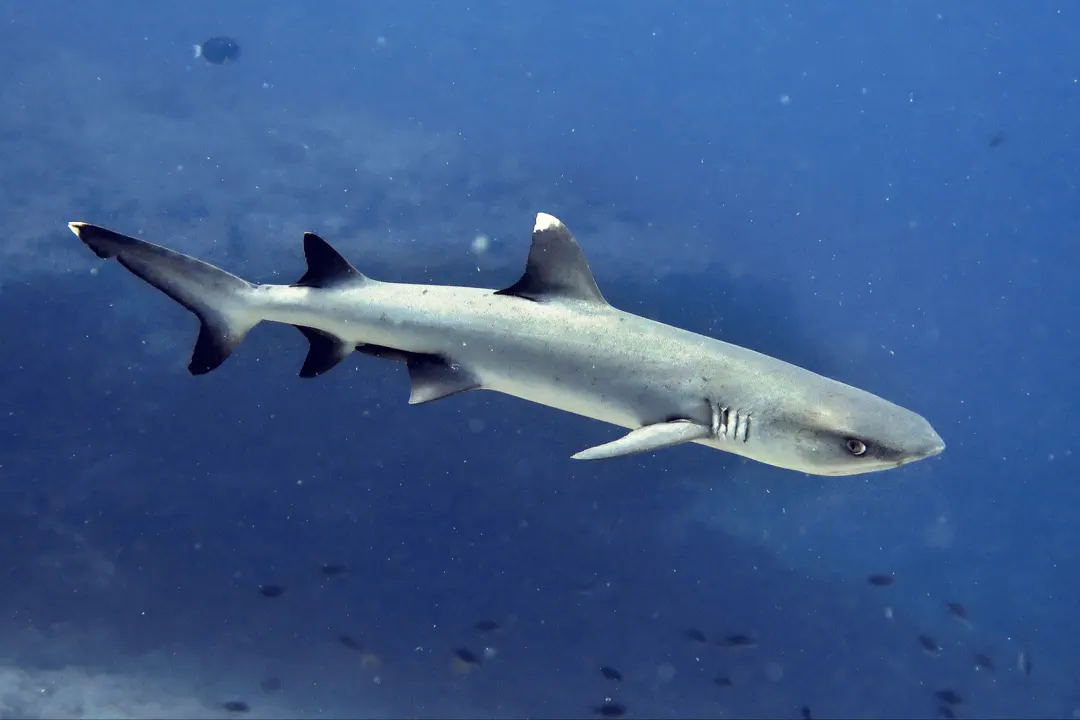
Whitetip reef sharks (Triaenodon obesus) and blacktip reef sharks (Carcharhinus melanopterus) present contrasting fin patterns and body shapes that separate them instantly. The whitetip reef shark features distinct, solid white tips on its first dorsal fin and upper caudal fin, set against a slender, flexible body with a flattened head and horizontal oval eyes. It frequently measures between 1.2 and 1.6 metres in length, patrolling shallow to mid-depth reef structures.
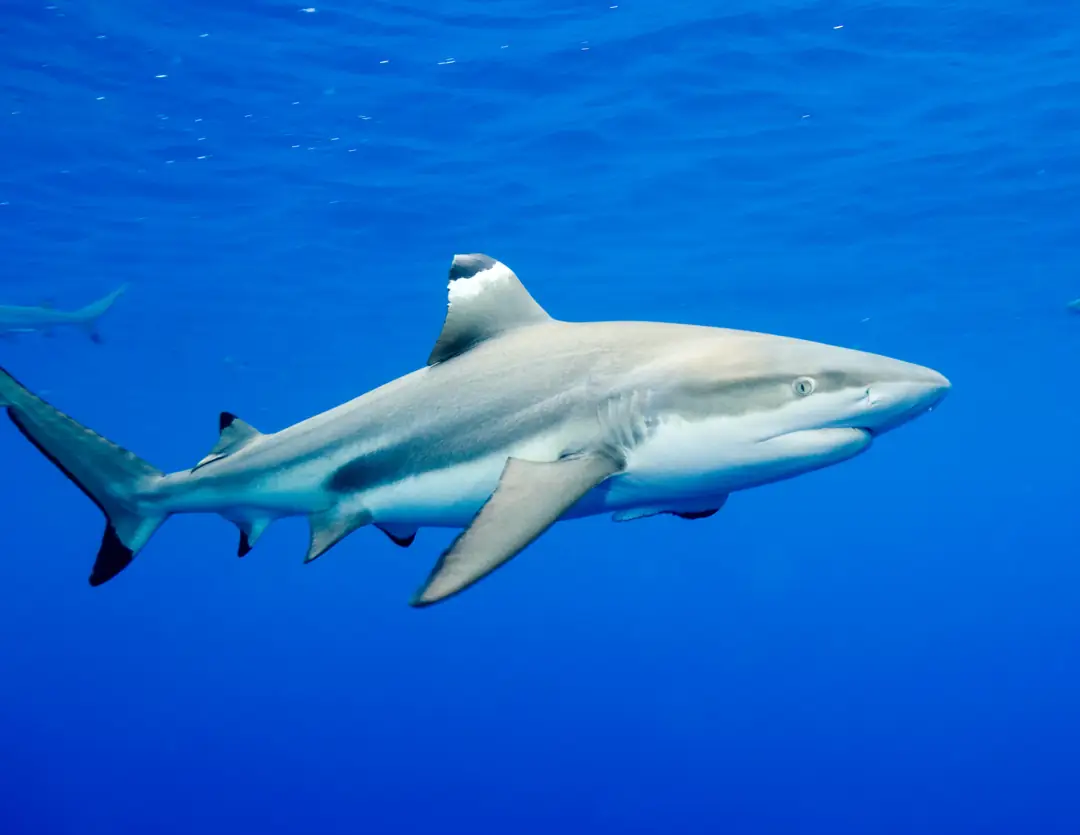
In contrast, the blacktip reef shark displays sharp black highlights on all fin tips, underlined by bright white bands near the base of the markings. As described in the Florida Museum of Natural History, Discover Fishes species profile, the blacktip reef shark has black-tipped fins with white pigment nearer the body, a short bluntly rounded snout, and a brown-tan dorsal surface. The first dorsal fin is particularly striking, featuring a pitch-black cone tip bordered by a pale crescent.
Behavior and micro-habitat further distinguish these two common Indo-Pacific species during a dive. Whitetip reef sharks spend long daylight hours resting motionless on sandy cave floors or under coral overhangs from 5 to 30 metres deep. Blacktip reef sharks swim continuously in shallow water, frequently patrolling reef flats, sand bars, and lagoons in depths under 10 metres, rarely resting on the substrate.
How to Recognize Grey Reef Sharks and Silvertip Sharks?
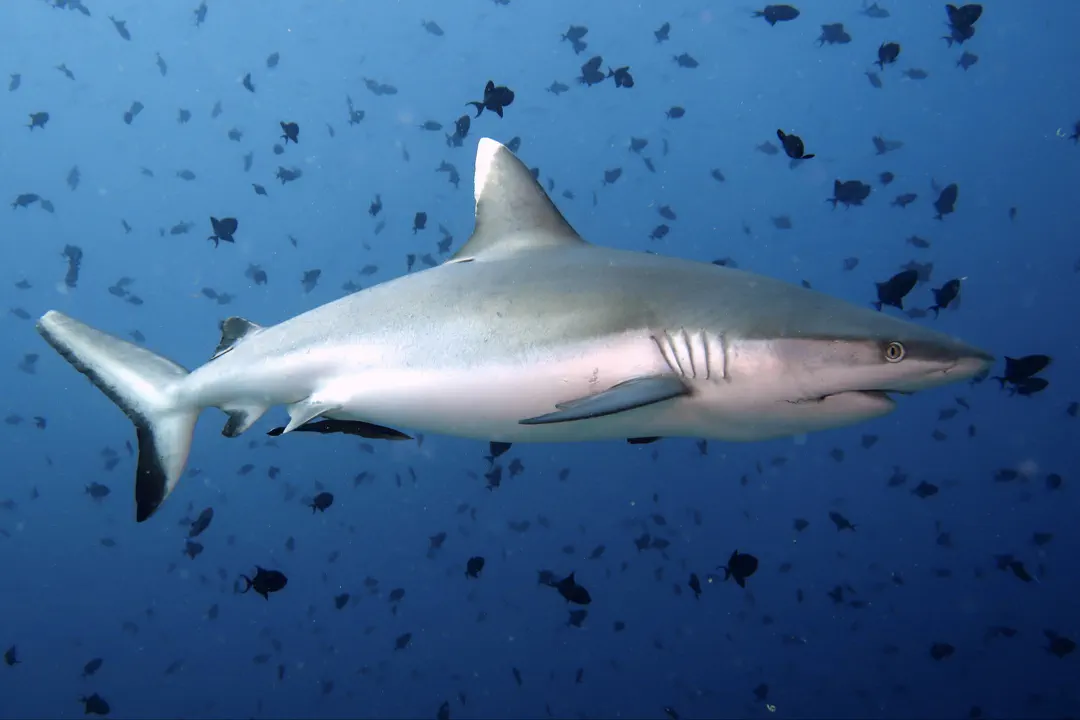
Grey reef sharks (Carcharhinus amblyrhynchos) and silvertip sharks (Carcharhinus albimarginatus) inhabit exposed outer reef slopes and deep current channels where oceanic waters meet coral walls. The grey reef shark possesses a thick, robust frame reaching 1.5 to 1.9 metres, distinguished by a solid grey body and a broad, dark black border running along the entire posterior edge of its tail fin. Its dorsal fin is usually solid grey or slightly pale at the trailing edge, lacking sharp white caps.
Silvertip sharks present a heavier, larger profile, often growing to 2.5 metres or more, making them easily distinguishable by size alone on deep reef walls. The Florida Museum of Natural History, Discover Fishes species profile notes that silvertip sharks have white tips and pale borders on their fins and are heavier-bodied than whitetip reef sharks. Their prominent first dorsal fin features a broad white tip, while white trailing edges extend along the pectoral, pelvic, second dorsal, and caudal fins.
Differentiating these deep-water predators relies on examining the trailing margins of the caudal and pectoral fins rather than quick glances at the main dorsal fin. Grey reef sharks exhibit dark, black-edged tail margins and congregate in schooling packs along drop-offs from 10 to 40 metres depth. Silvertip sharks patrol deeper outer slopes between 20 and 60 metres, keeping solitary or paired search paths across oceanic currents.
Identifying Caribbean Reef Sharks and Nurse Sharks
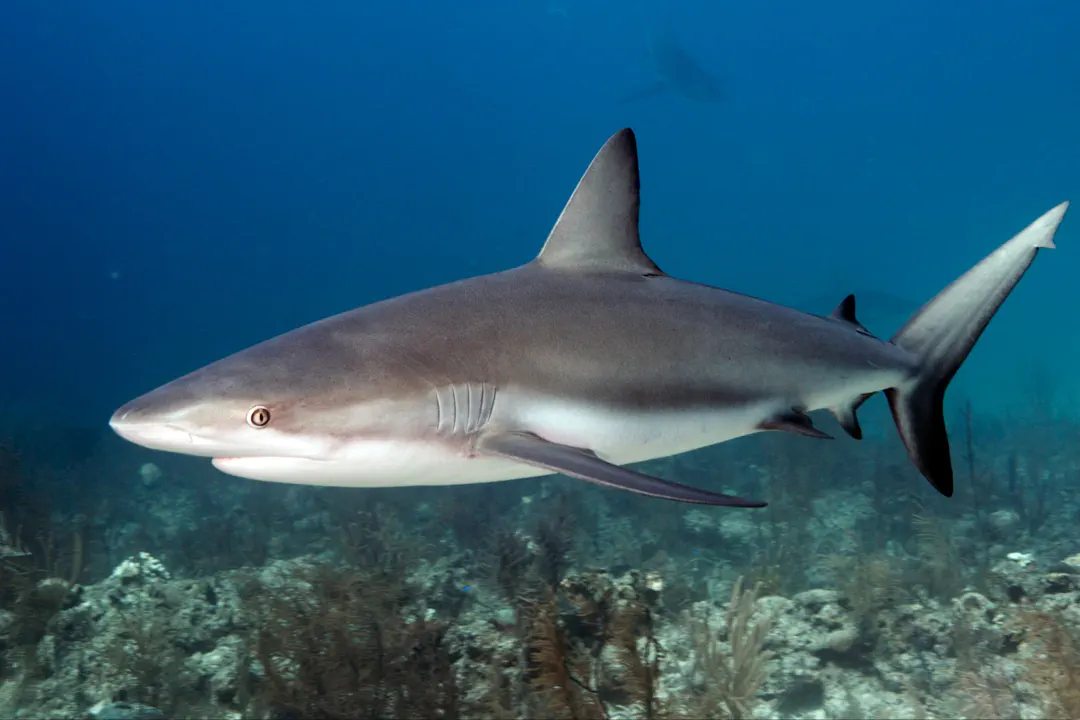
In Atlantic and Caribbean waters, species identification shifts away from Indo-Pacific requiem sharks to region-specific predators. The Caribbean reef shark (Carcharhinus perezii) is the dominant apex predator along Atlantic coral drop-offs, reaching lengths up to 3 metres. It features a broad, rounded snout, a grey-brown upper body, and dusky or slightly darkened fin tips that blend into deeper blue water.
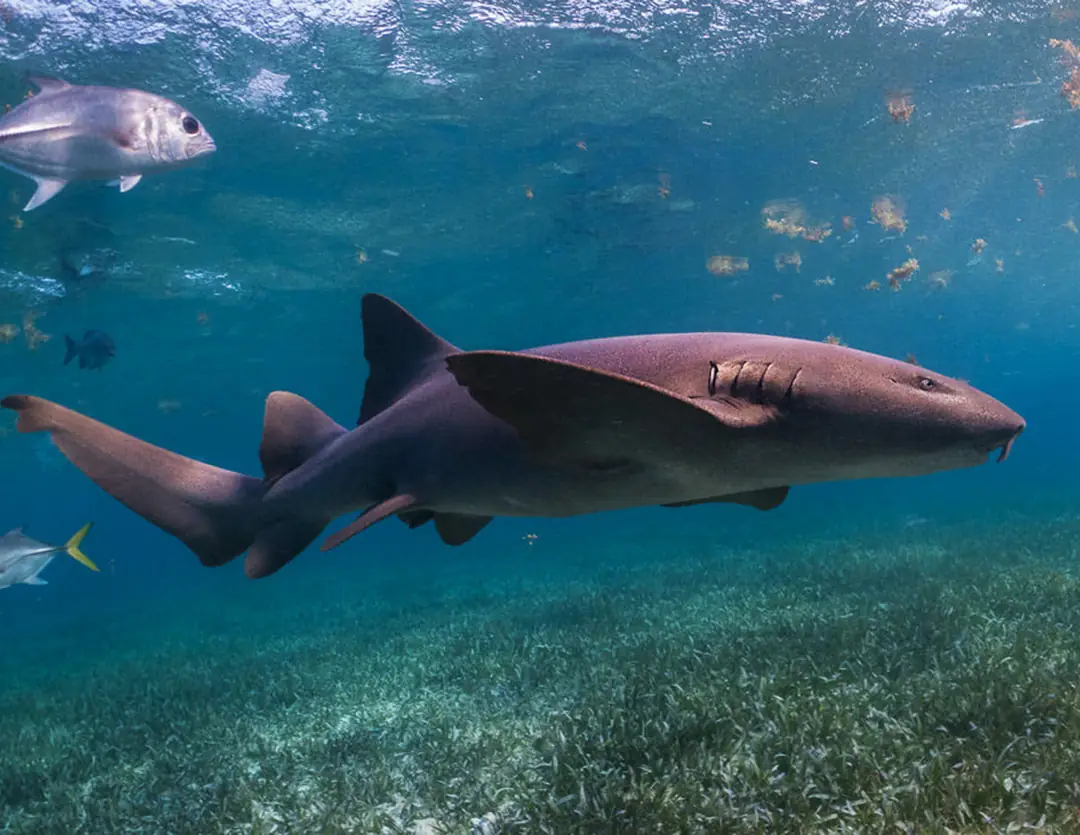
Nurse sharks (Ginglymostoma cirratum) share these Atlantic reef channels but look completely different from sleek requiem sharks. They possess broad, flattened heads with small eyes, thick yellowish-brown skin, and two fleshy sensory barbels protruding near the nostrils. Nurse sharks frequently wedge themselves beneath ledges or rest in social piles on sandy bottoms from 3 to 20 metres depth.
Geographic location is a critical factor when cataloging bottom-dwelling nurse species across global oceans. While the nurse shark resides across the western Atlantic and eastern Pacific, the tawny nurse shark (Nebrius ferrugineus) replaces it in the Indo-Pacific region. An IUCN Species Survival Commission shark assessment document lists tawny nurse sharks as Vulnerable, emphasizing the importance of distinguishing native species when logging observations in different ocean basins.
 © R VasconcellosCC BY 4.0 · iNaturalist
What Swimming Styles and Behaviors Help Identify Reef Sharks?
Swimming rhythm and spatial behavior offer immediate identification clues before you move close enough to inspect fin margins. Requiem sharks like grey reef and blacktip reef sharks maintain continuous forward motion, balancing with rhythmic tail beats to push water over their gills. In contrast, species capable of buccal pumping can remain perfectly stationary on the sea floor for extended periods without suffocating.
Whitetip reef sharks and nurse sharks spend daylight hours resting in dark caverns, coral overhangs, or open sand beds. Nurse sharks generate suction feeding by rapidly expanding their mouth and buccal cavity, creating strong negative pressure to pull prey from tight crevices. This specialized feeding technique allows them to extract lobsters and crabs without chasing prey into open water.
Observing how a shark navigates current channels also assists field classification. Grey reef sharks often hover effortlessly in strong head currents along reef passes, using minimal fin movements to hold position near cleaning stations. Blacktip reef sharks make quick, darting turns across shallow reef tops, while silvertip sharks make wide, measured passes in deep, open water outside the reef wall.
Where Are You Most Likely to Encounter Reef Sharks?
Reef shark distribution follows distinct depth zones, current exposures, and benthic habitats across tropical marine ecosystems. Blacktip reef sharks dominate shallow water zones, frequently swimming in knee-deep reef flats, sandy lagoons, and shallow mangrove margins where water temperatures range from 26 °C to 30 °C. They rarely venture into deep open ocean passes or drop-offs below 30 metres.
Grey reef sharks and silvertip sharks prefer dynamic outer reef ecosystems where strong tidal currents deliver fresh prey. Channels, passes, and deep wall drop-offs between 15 and 50 metres depth provide ideal hunting grounds for grey reef shark packs. Silvertips occupy the deepest boundaries of these exposed reefs, patrolling oceanic drop-offs and deep pinnacles down to 60 metres.
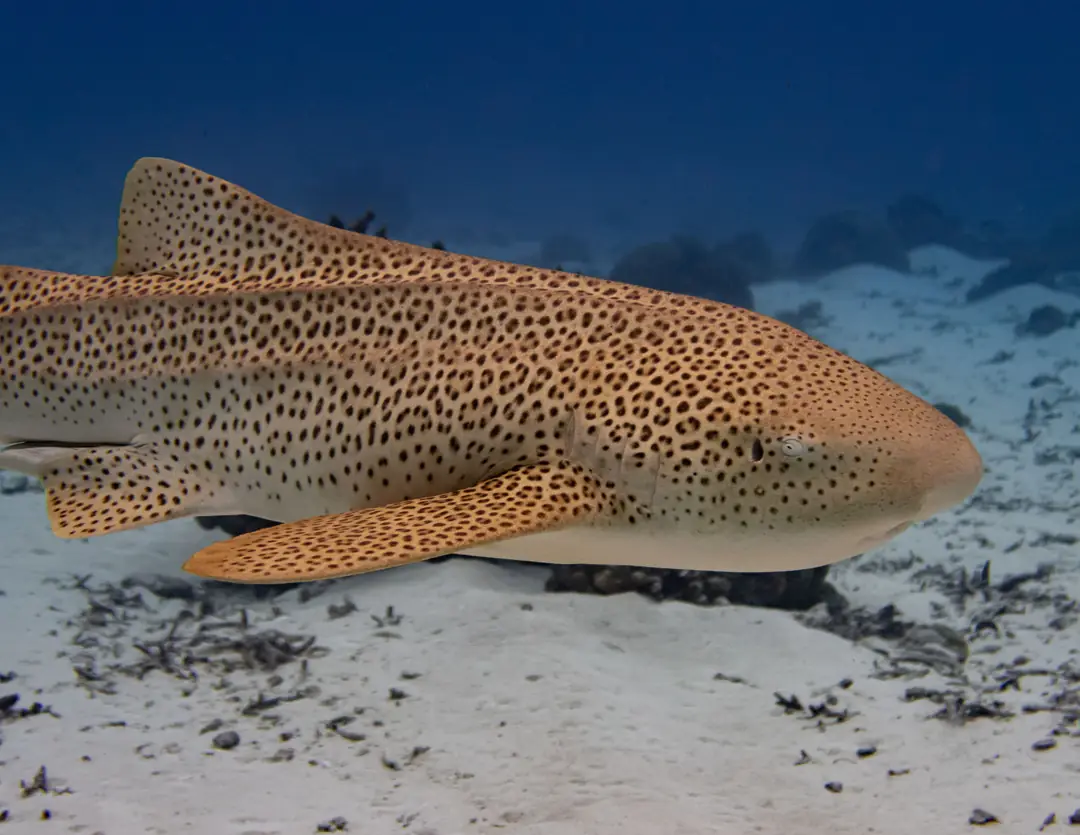
Whitetip reef sharks occupy the interior structure of the coral reef, moving through swim-throughs, caves, and overhangs at depths from 5 to 40 metres. During night dives, these stationary daytime dwellers transform into active nocturnal hunters, swarming coral heads to flush out sleeping fish. Spotting leopard sharks (Stegostoma tigrinum) on sandy rubble flats between 10 and 25 metres adds another distinct bottom-dwelling species to your dive log.
 © Pauline FeyAll rights reserved
Safe Diving Practices Near Reef Sharks
Diving safely around reef sharks depends on maintaining precise neutral buoyancy and practicing calm, predictable body positioning. Divers should keep their arms tucked close to their chest, avoid flailing hand movements, and stay clear of a shark's direct line of sight or escape route. Giving sharks space allows them to maintain their normal patrol patterns without feeling cornered or threatened.
Never pursue, touch, or block a resting shark inside a cave or beneath a reef overhang. Cornering a whitetip or nurse shark in an enclosed space creates stress and may provoke defensive behavior or force the animal to bolt past divers. On night dives, adjust torch beams away from sharks' eyes to avoid blinding or disorienting them while they navigate complex coral terrain.
Pay close attention to changes in shark body language underwater. If a grey reef shark begins swimming in exaggerated S-curves, drops its pectoral fins downward, or arches its back sharply, it is displaying a clear threat signal. When observing this behavior, remain calm, face the animal without making sudden movements, keep your dive group together, and slowly swim back toward the boat or reef wall while maintaining visual contact.
Questions
How do you tell a whitetip reef shark from a silvertip shark?
A whitetip reef shark (Triaenodon obesus) is relatively slender and has distinct white tips on the first dorsal fin and upper caudal lobe. A silvertip shark (Carcharhinus albimarginatus) is heavier-bodied, features a larger first dorsal fin, and displays white tips with continuous pale trailing borders on multiple fins.
Are reef sharks dangerous to scuba divers?
Most reef sharks do not treat calm scuba divers as prey, and unprovoked incidents are uncommon. They remain powerful wild predators, so divers should maintain neutral buoyancy, keep arms tucked in, avoid feeding or touching animals, and give sharks clear exit routes.
Which reef shark can stay still on the sandy bottom?
Whitetip reef sharks and nurse sharks can remain stationary on the sandy sea floor because they use buccal pumping to actively draw water over their gills. Tawny nurse sharks (Nebrius ferrugineus) in the Indo-Pacific and Atlantic nurse sharks (Ginglymostoma cirratum) also rest motionless under ledges.
What is the difference between a grey reef shark and a blacktip reef shark?
Blacktip reef sharks (Carcharhinus melanopterus) have conspicuous black tips on several fins, especially the first dorsal fin, and inhabit shallow lagoons and reef flats. Grey reef sharks (Carcharhinus amblyrhynchos) are stockier, lack black dorsal tips, show a dark rear margin on the tail fin, and prefer deeper reef drop-offs and channels.
Where can you see Caribbean reef sharks?
Caribbean reef sharks (Carcharhinus perezii) occur across the tropical western Atlantic, including the Caribbean Sea, the Bahamas, and parts of the Gulf of Mexico. Divers frequently encounter them patrolling deep coral walls, drop-offs, and offshore banks at depths between 10 and 40 metres.