
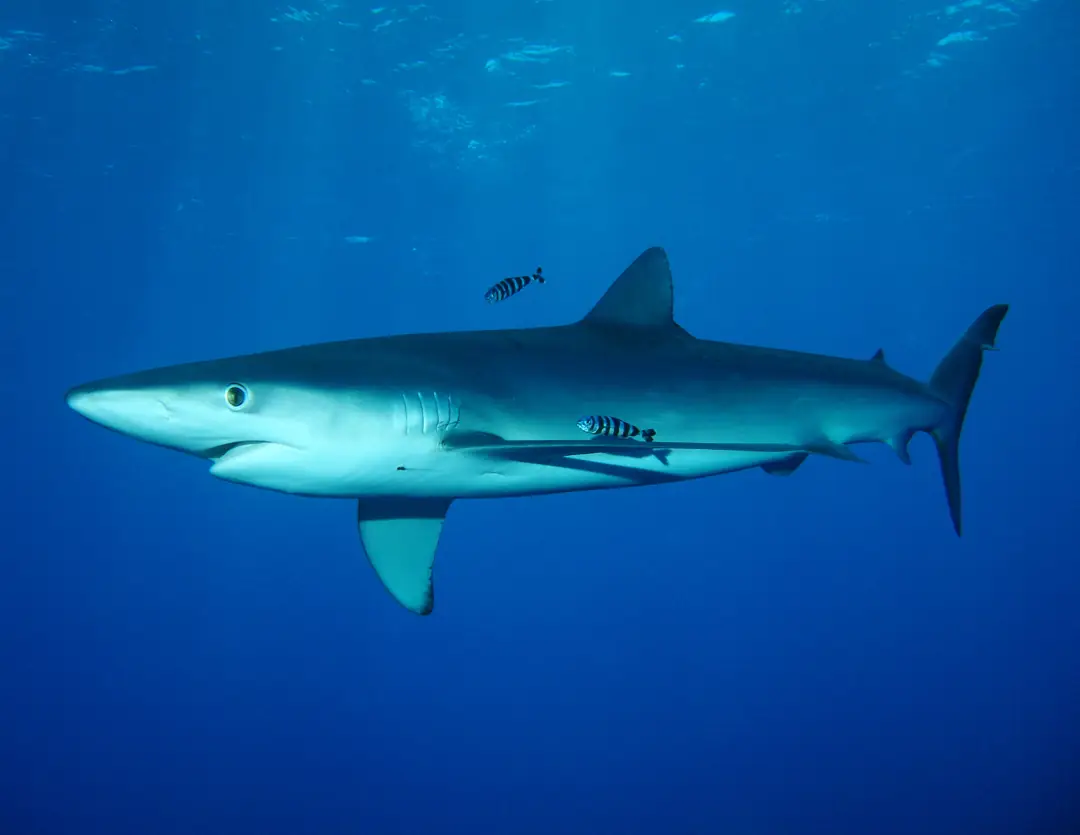
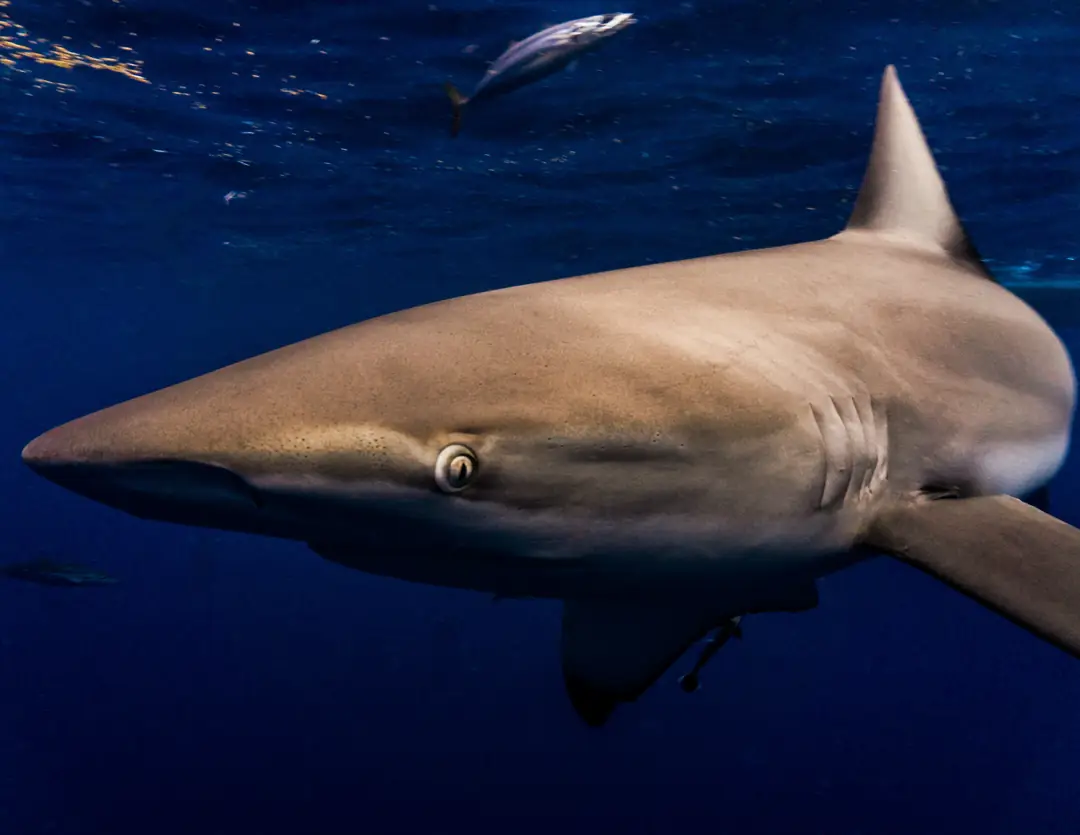
Off the drop-off at Punta Campanella along Italy's Tyrrhenian coast, at a depth of 35 metres, blue light filters through the pelagic realm as a blue shark (*Prionace glauca*) glides through open water. Her narrow pectoral fins spread wide like glider wings, turning gently against a mild offshore current as she scans the deep water column for squid. Sunlight flickers off her metallic indigo back before she fades into the indigo depths.
Yes, sharks in the Mediterranean Sea inhabit both coastal shelves and deep oceanic basins. Water temperatures range from 14 °C in winter up to 26 °C at the surface in mid-summer, with underwater visibility reaching 15 to 30 metres across offshore zones. The optimal window for offshore water expeditions runs from May to October when sea conditions remain calm.
Divers in the basin can encounter species ranging from small bottom-dwelling lesser-spotted dogfish (Scyliorhinus canicula) to migratory pelagic species like blue sharks and thresher sharks (Alopias vulpinus). Key locations for shark-focused excursions include the Ligurian Sea, the Sicilian Channel, and the Northern Adriatic. Standard reef dives suit beginners and recreational divers, while offshore pelagic expeditions require advanced open water certification and experience in open ocean conditions.
Are There Sharks in the Mediterranean Sea?
The Mediterranean Sea supports approximately 50 shark species within its distinct marine ecosystems. According to an IUCN Mediterranean Cartilaginous Fishes assessment, an inventory identified 71 shark, ray and chimaera species living and breeding in the Mediterranean, with 42% considered threatened within the region. These cartilaginous fishes occupy diverse habitats, spanning shallow coastal seagrass beds to submarine trenches over 4,000 metres deep.
Coastal continental shelves harbour small bottom-dwelling species such as the lesser-spotted dogfish (*Scyliorhinus canicula*) and smoothhounds (*Mustelus mustelus*). Further offshore, the water column shelters oceanic wanderers, including shortfin makos (Isurus oxyrinchus), blue sharks (*Prionace glauca*), and tope sharks (Galeorhinus galeus). Divers exploring local reefs can log their encounters in the Seabook app to track regional species distribution and log observational data.
Regional biodiversity reflects the oceanographic connections between the Atlantic Ocean and the Mediterranean basin. Deep straits like the Strait of Gibraltar allow migratory species to enter seasonal feeding grounds. While historical overfishing has lowered population densities, localized monitoring confirms that resident populations continue to breed across both the western and eastern basins.
 © Patrick DollCC BY-SA 4.0
 © Charles HoodAll rights reserved
 © Ed CoreyAll rights reserved
 © Brad CrookAll rights reserved
 © seabook.appAll rights reserved
 © Petr KnotekCC BY 4.0 · iNaturalist
Pelagic Sharks of the Mediterranean Sea
Pelagic sharks inhabit the open-water zones of the Mediterranean, operating as top predators within the offshore food web. The blue shark (*Prionace glauca*) remains the most widely recorded pelagic species in the basin, preferring water temperatures between 12 °C and 20 °C. These slender hunters spend long periods cruising between depths of 50 and 350 metres, occasionally rising near the surface during dawn and dusk feeding windows.
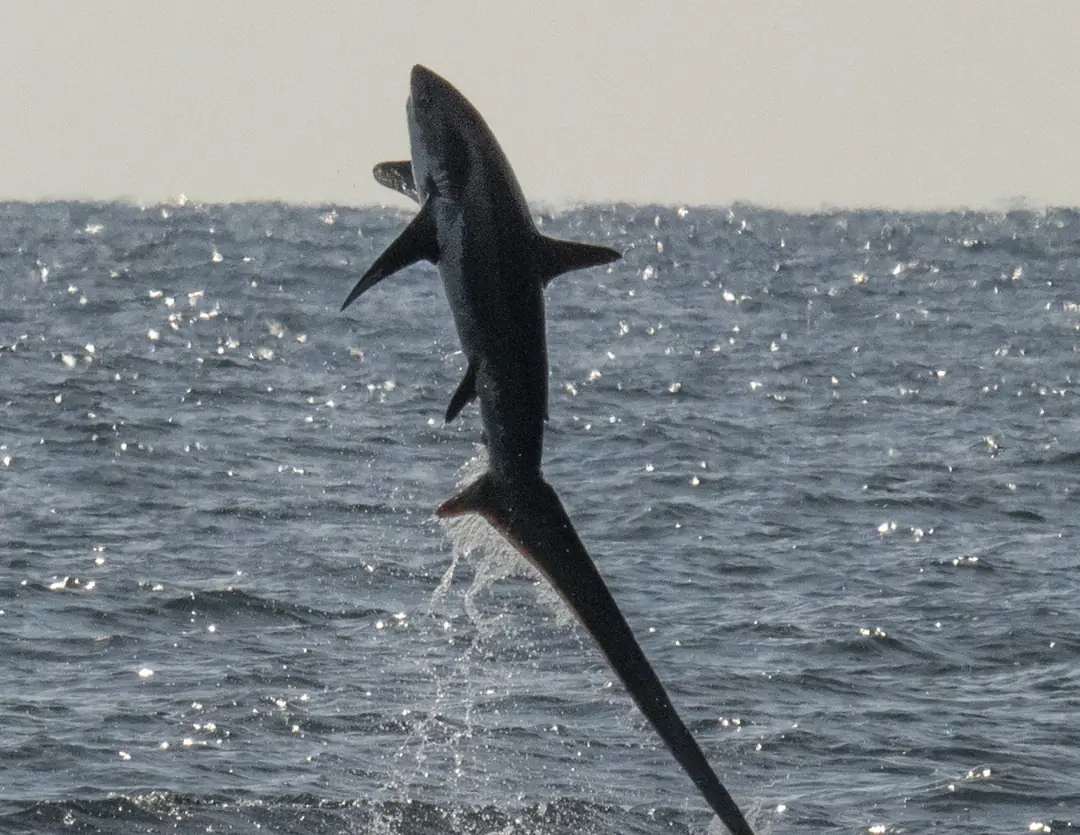
The common thresher shark (*Alopias vulpinus*) uses its scythe-like caudal fin, which equals half its total body length, to stun schooling fish like sardines and mackerel. Threshers inhabit offshore seamounts and continental shelf edges down to 650 metres depth. Shortfin mako sharks (*Isurus oxyrinchus*) also patrol pelagic corridors, relying on endothermic muscle structures to burst through the water column at speeds exceeding 50 kilometres per hour.
Encountering pelagic sharks requires dedicated offshore boat operations equipped with safety buoys and trained crew. Divers stay stationary in the upper 10 metres of the water column while maintaining a solid horizontal posture. Because pelagic sharks are sensitive to erratic movements, maintaining group cohesion and keeping clear sightlines to the dive vessel ensures controlled, safe interactions.
© Patrick DollCC BY-SA 4.0Prionace glauca
The blue shark (Prionace glauca), also known as the great blue shark, is a species of requiem shark, in the family [Carcharhinidae](seabook://category?id=fe242683-eae0-47fd-b6b6-1144a93b6471) and the ...
© Ed CoreyAll rights reservedAlopias vulpinus
The common thresher (Alopias vulpinus), also known as Atlantic thresher, is the largest species of thresher shark, family [Alopiidae](seabook://category?id=6e4e8c14-953c-4770-821c-4440dcacefc4), reach...
Large Filter Feeders and Coastal Species
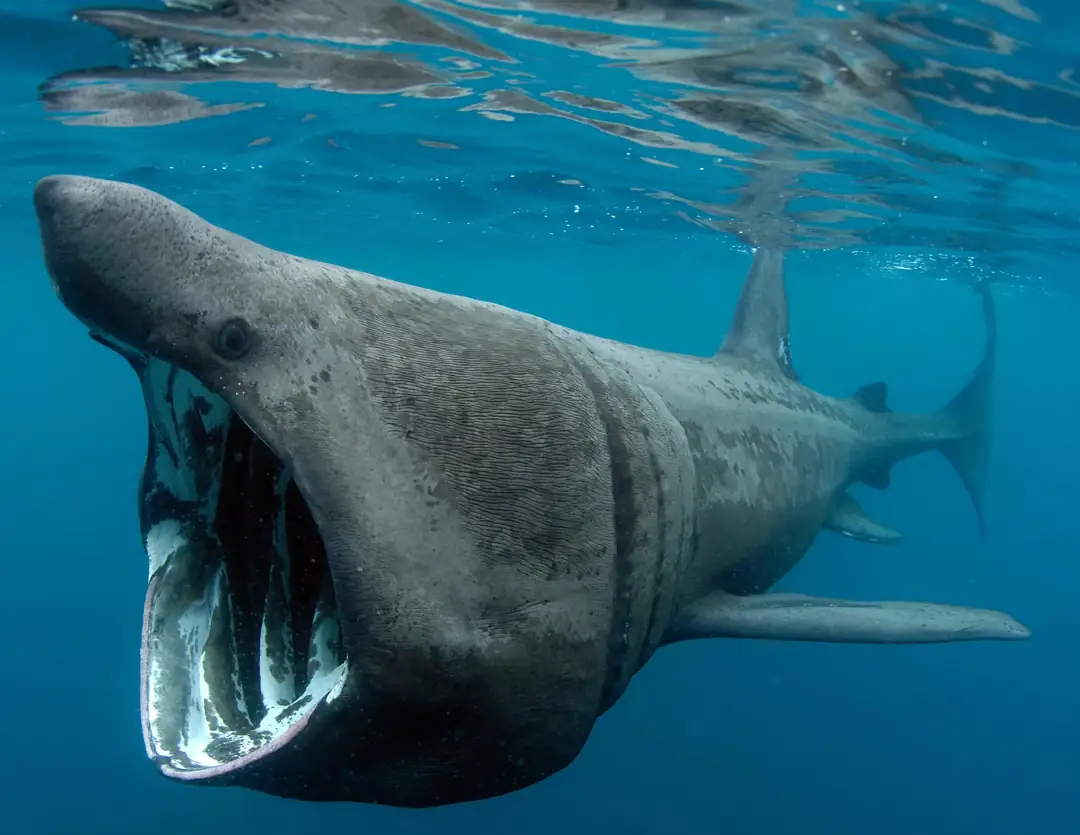
The basking shark (*Cetorhinus maximus*) represents the largest fish species in the Mediterranean Sea. As noted in the IUCN Status and Conservation of Sharks in the Mediterranean Sea information kit, the basking shark reaches approximately 9–10 m and is the Mediterranean’s largest shark and the world’s second-largest fish. These harmless giants swim with open mouths to filter zooplankton from surface waters through specialized gill rakers.
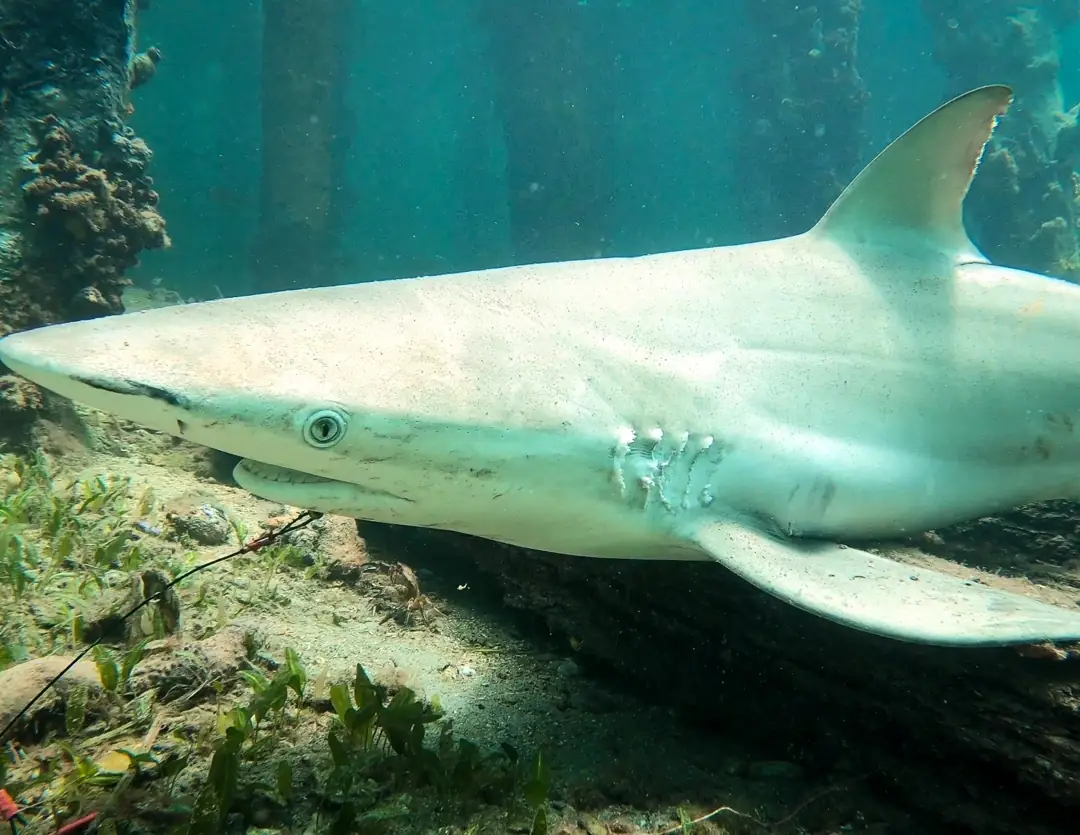
Coastal warm-temperate waters occasionally host requiem sharks such as the bronze whaler shark (*Carcharhinus brachyurus*) and dusky shark (*Carcharhinus obscurus*). Bronze whaler sharks grow to 3.3 metres and hunt schooling mullet along sandy bays and rocky headlands down to depths of 100 metres. Dusky sharks occupy continental shelf waters down to 400 metres, although encounters near shore remain uncommon due to low regional numbers.
Observing large filter feeders requires strict distance guidelines to prevent disturbing their natural movements. Divers and snorkellers must remain at least 4 metres away from the side of a basking shark and 6 metres clear of its powerful tail sweep. Boaters must keep engine speeds below 5 knots when within 300 metres of a surface-feeding shark to avoid accidental collision.
© Charles HoodAll rights reservedCetorhinus maximus
*Cetorhinus maximus* is the second largest living fish, after the [whale shark](seabook://creature?id=a032caa6-df0a-4ef0-b607-5e15368b9083), and one of three plankton-eating sharks besides the whale s...
© Brad CrookAll rights reservedCarcharhinus brachyurus
The copper shark (Carcharhinus brachyurus), bronze whaler, or narrowtooth shark is a species of requiem shark found mostly in temperate latitudes. It is distributed in a number of separate populations...
Where to See Sharks in the Mediterranean Sea
Specific geographic regions within the Mediterranean present higher chances of observing shark species due to localized oceanographic conditions. The Ligurian Sea Pelagic Sanctuary in the northern Mediterranean features deep submarine canyons that bring nutrient-rich upwellings to the surface. Between May and September, blue sharks and occasional basking sharks enter this area, where offshore depths drop rapidly past 1,000 metres within miles of the Italian coast.
The Sicilian Channel acts as a migration bottleneck linking the eastern and western Mediterranean basins. Ocean currents push deep water through this shallow ridge, attracting pelagic prey species, shortfin makos, and historical records of great white sharks (Carcharodon carcharias). Further north, the offshore waters of the Northern Adriatic Sea host seasonal blue shark aggregations, where specialized dive charters operate chumming expeditions under local research permits during late summer.
Offshore approaches near the Strait of Gibraltar and the Alboran Sea offer access to migrating Atlantic species. Depth ranges across these pelagic sites vary from 15 to 40 metres for floating blue-water dives, with boat transits taking 1 to 3 hours from shore. Advanced Open Water certification, comfortable open-ocean buoy control, and calm weather conditions are essential requirements for these offshore expeditions.
Are Sharks in the Mediterranean Sea Dangerous?
Human risk regarding sharks in the Mediterranean Sea remains exceptionally low. Over the past century, millions of swimmers, snorkellers, and scuba divers have used Mediterranean waters annually without incident. Scientific records indicate that unprovoked bites are remarkably rare across the entire 2.5-million-square-kilometre basin.
Most Mediterranean shark species are small bottom-dwellers like catsharks and smoothhounds, which pose no physical threat to humans. Large pelagic species such as blue sharks or thresher sharks inhabit deep offshore zones far removed from public swimming beaches. When large sharks do encounter divers, their primary response is avoidance or neutral curiosity rather than aggressive territorial behavior.
Standard ocean safety guidelines further mitigate the risk of negative interactions. Swimmers should avoid entering open water near active commercial fishing lines, at river mouths after heavy rains, or during low-light hours like dawn and dusk. Divers who observe a large shark should maintain visual contact, avoid sudden splashing, and ascend smoothly back to the boat in a controlled group formation.
Conservation Status of Mediterranean Sharks
Mediterranean shark populations face severe environmental threats, placing them among the most endangered marine groups on Earth. According to a 2021 Scientific Reports study by Nicholas Dulvy and colleagues, the proportion of threatened shark and ray species in the Mediterranean rose to 65% by 2015, representing 47 of 72 species in the regional Red List Index analysis. Furthermore, the IUCN Shark Specialist Group, IUCN Global Species Programme and Mediterranean regional experts noted that at least 53% of sharks, rays and chimaeras native to the Mediterranean were assessed as at risk of extinction in the IUCN regional assessment published in 2016.
As detailed by an IUCN Mediterranean Cartilaginous Fishes assessment, bycatch in trawls is identified as the greatest threat to Mediterranean cartilaginous fishes, alongside habitat loss, pollution and biological vulnerability caused by slow growth and reproduction. Deep-sea bottom trawlers and pelagic longlines accidentally capture non-target sharks in large numbers. Because sharks grow slowly and produce small litters, depleted populations require decades to recover from intensive fishing pressure.
Conservation action is gradually expanding across the Mediterranean to protect vulnerable shark species. An IUCN Mediterranean shark conservation brochure summarizing General Fisheries Commission for the Mediterranean measures highlights that regional fisheries measures include a Mediterranean shark-finning ban and restrictions addressing protected species, drift nets and deep-water fishing. Marine protected areas and public sighting databases continue to play critical roles in preserving remaining shark strongholds.
Questions
Are there sharks in the Mediterranean Sea?
Yes, approximately 50 shark species inhabit the Mediterranean Sea. These range from small bottom-dwelling lesser-spotted dogfish to open-ocean pelagic species such as blue sharks and common thresher sharks.
Are there great white sharks in the Mediterranean?
Yes, great white sharks have a documented historical presence in the Mediterranean Sea, particularly around the Sicilian Channel. However, their regional population is critically endangered, and encounters are exceptionally rare.
Can scuba divers swim with sharks in the Mediterranean?
While sightings on standard coastal dives are rare, specialized offshore pelagic charters operate in specific zones like the Adriatic and Ligurian Seas. These day-trips target blue sharks in open water under strict safety protocols.
Is it safe to swim in the Mediterranean Sea?
Swimming in the Mediterranean is extremely safe regarding sharks. Population densities are very low, most species live far offshore, and unprovoked interactions with swimmers are virtually non-existent.
Why are Mediterranean shark populations declining?
The main causes of decline are accidental bycatch in commercial trawls and longlines, overfishing of prey stocks, coastal habitat degradation, and slow reproductive rates that hinder population recovery.
Sources
- Tracking the rising extinction risk of sharks and rays in ... · 2021-07-28
- More than half of the sharks, rays and chimaeras native to ... - IUCN · 2016-12-04
- Mediterranean Cartilaginous Fishes · 2026-09-25
- iucn.org · mediterranean_shark_information_kitStatus and Conservation of Sharks in the Mediterranean Sea - IUCN · 2026-07-16
- The Conservation Status of Sharks, Rays and Chimaeras in the ... · 2026-11-05

