
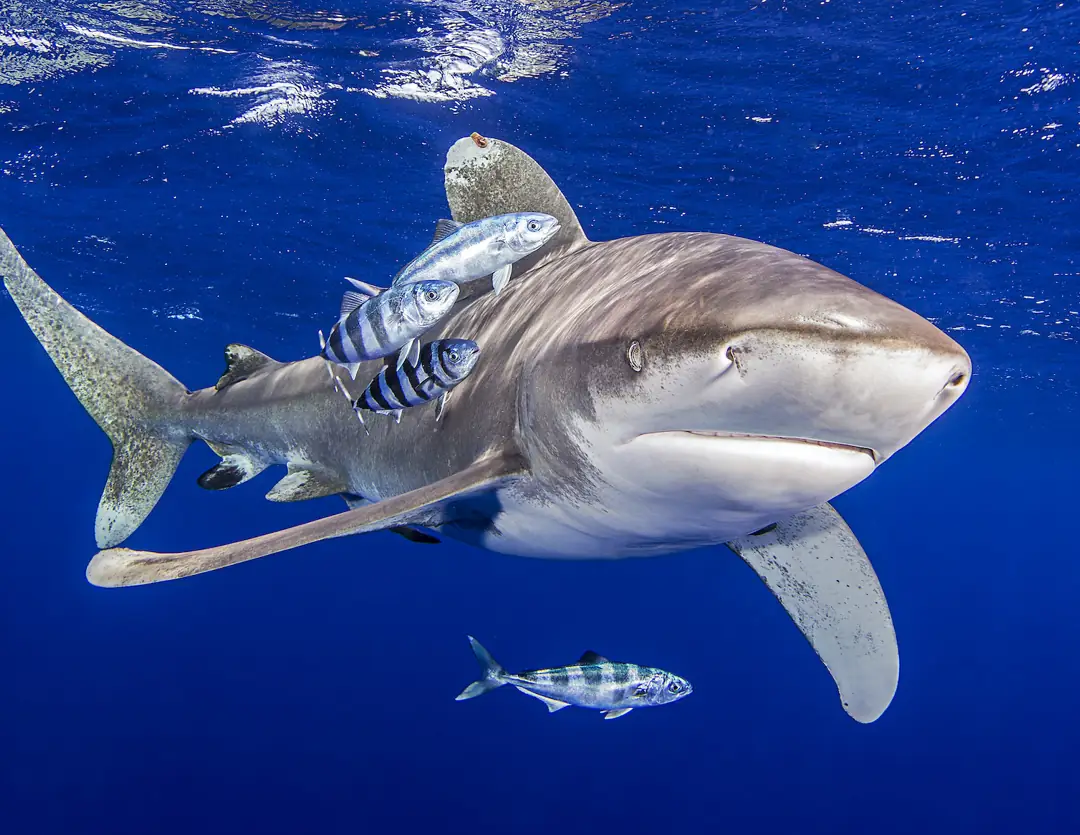
A shadow detaches itself from the deep blue offshore drop-off at Daedalus Reef, 20 meters below the surface. The high-finned silhouette of an oceanic whitetip shark glides toward the dive group, its broad pectoral fins tipped in clean white edges that reflect the sunlight breaking through the swell. The shark turns smoothly along the reef wall, maintaining a steady pace before vanishing into the pelagic blue.
Divers searching for sharks in the Red Sea encounter both resident reef dwellers and migratory open-ocean predators across offshore pinnacles and coral drop-offs. Water temperatures range from 22°C in January to 30°C in August, with underwater visibility consistently reaching 30 meters or more across the region. The optimal months for viewing large shark species extend from May through December, depending on the target location and water temperature.
Key dive sites include Daedalus Reef, the Brother Islands, Elphinstone Reef, and Jackson Reef in the Strait of Tiran. Experienced divers frequently encounter oceanic whitetip sharks, scalloped hammerhead schools, grey reef sharks, and whitetip reef sharks along these current-swept structures. Because these offshore sites sit in open water with strong currents, they are best suited for Advanced Open Water certified divers.
What Sharks Live in the Red Sea?
The Red Sea hosts a distinct community of apex predators, ranging from small nocturnal reef hunters to heavy-bodied oceanic species. Coastal reef walls support resident populations that stay within defined home ranges year-round. Open-ocean pinnacles attract larger pelagic species that follow seasonal temperature shifts and prey availability across deep basin waters.
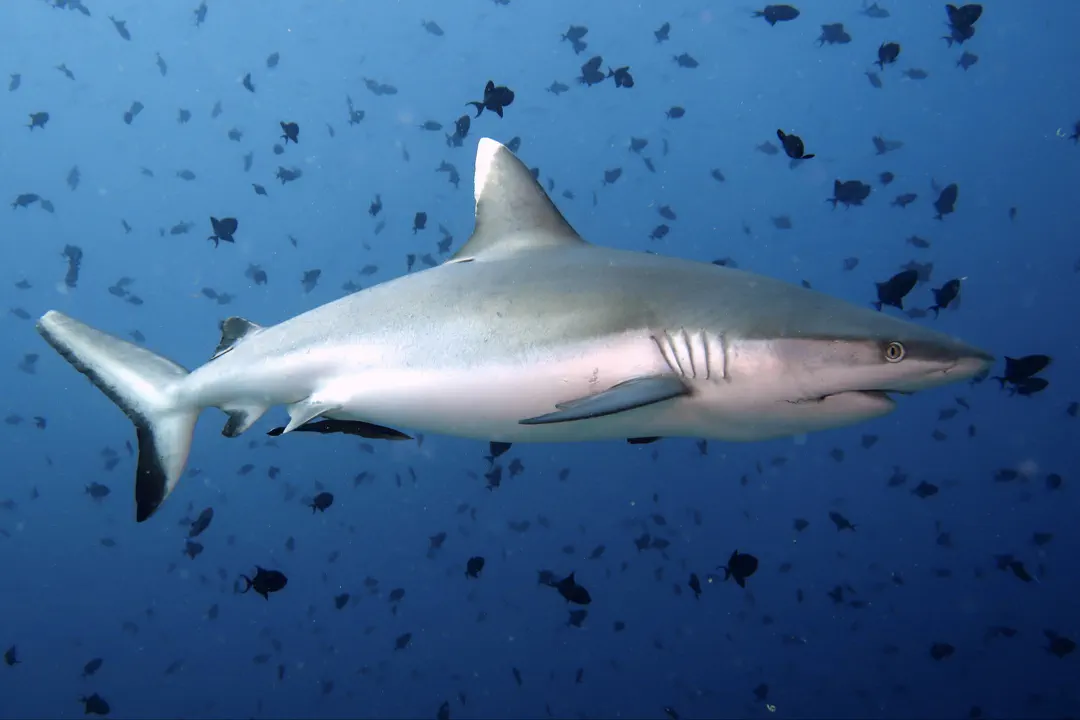
Among the resident species, whitetip reef sharks spend daylight hours resting in sandy caves before hunting along the hard coral slopes at dusk. Grey reef sharks patrol outer reef drop-offs where current hits the coral, maintaining territorial patrols along steep walls. Oceanic whitetip sharks and scalloped hammerheads prefer the exposed offshore marine parks where deep ocean currents upwell against submerged plateaus.
Sightings of larger pelagic species like whale sharks occur periodically, though these animals move opportunistically across broad geographic areas. Identifying these varied species during a dive requires paying close attention to dorsal fin shapes, pectoral fin markings, and swimming patterns.
 © seabook.appAll rights reserved
 © seabook.appAll rights reserved
 © Jenvit SeriburiAll rights reserved
 © Daniel BenákCC BY 4.0 · iNaturalist
 © Daniel BenákCC BY 4.0 · iNaturalist
 © seabook.appAll rights reserved
Oceanic Whitetip Sharks in the Red Sea
The oceanic whitetip shark, Carcharhinus longimanus, is recognized by its broad, paddle-like pectoral fins and rounded dorsal fin, both heavily mottled with white tips. This pelagic predator inhabits warm offshore waters, frequently patrolling the upper 30 meters of the water column along vertical drop-offs. Adults can grow to over 3 meters in length, displaying an inquisitive nature that brings them close to stationary dive groups.
Offshore pinnacles such as Elphinstone Reef, Daedalus Reef, and the Brother Islands provide primary habitat for this species. These sites combine steep walls, strong currents, and direct access to open ocean prey. Encounter rates reach their peak between October and December, when water temperatures begin to cool from summer highs.
When diving near oceanic whitetips, maintaining group cohesion and neutral buoyancy is critical. Divers should avoid swimming away alone into open water or making sudden movements toward the animal. Remaining calm and keeping the shark within line of sight allows for safe observations during these open-ocean encounters.
Hammerheads and Thresher Sharks in Deep Waters
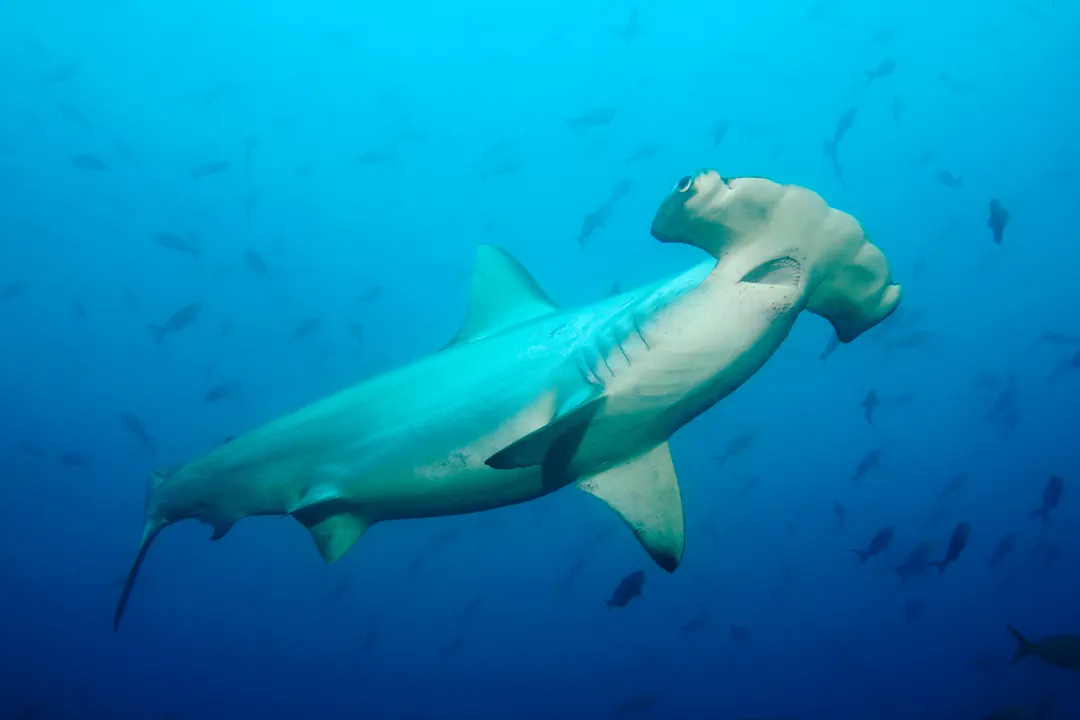
Scalloped hammerheads, Sphyrna lewini, are known for their distinct hammer-shaped heads and schooling behavior along deep offshore walls. During warmer months, these pelagic sharks aggregate near exposed pinnacles like Daedalus Reef and Jackson Reef in the Strait of Tiran. Schools often hover in deep blue water just beyond the reef edge, rising closer to the surface during early morning hours.
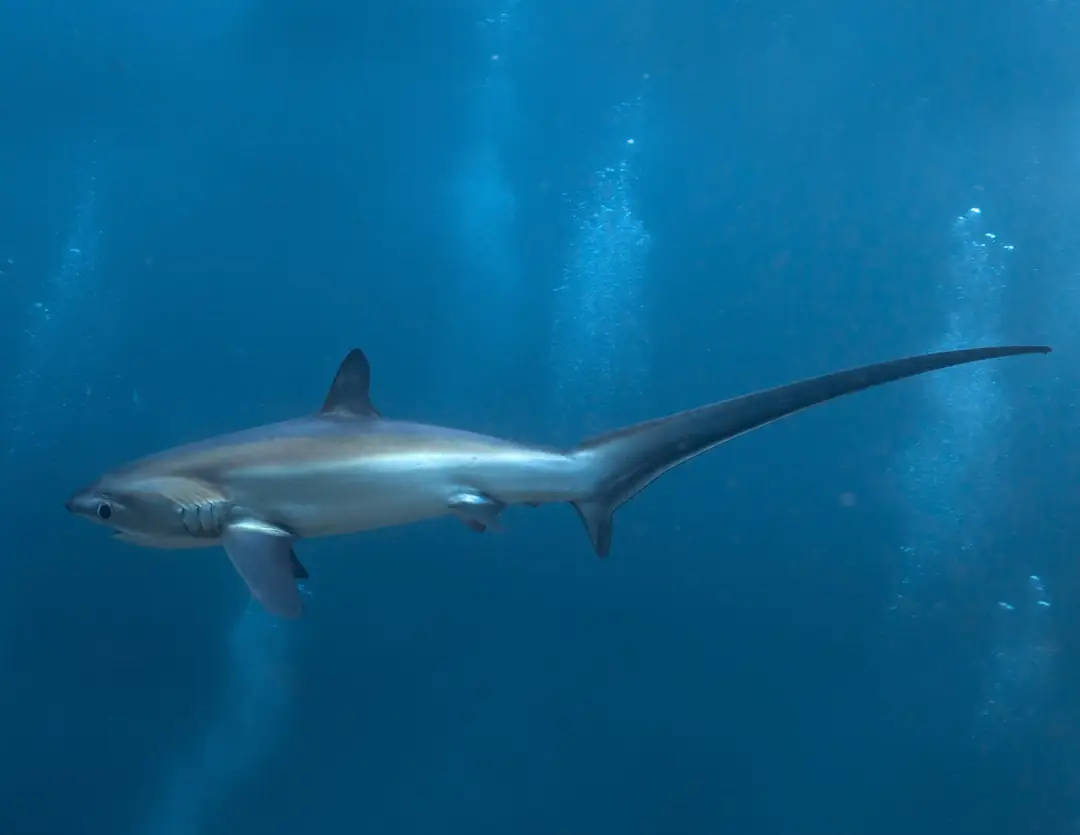
Pelagic thresher sharks, Alopias pelagicus, visit these same offshore pinnacles from deep pelagic zones. Recognized by an exceptionally long upper tail fin that can equal the length of their body, threshers use this tail to stun schooling fish. Encountering a thresher shark occurs near deep drop-offs where cleaning stations sit between 20 and 30 meters depth.
Deep-water pelagic dives require careful monitoring of depth and bottom time. Divers must stay within non-decompression limits and avoid dropping down into deep water to chase approaching sharks. Early morning descents offer the highest probability of viewing hammerheads and threshers before boat traffic increases.
Reef Sharks of Coral Wall Reefs
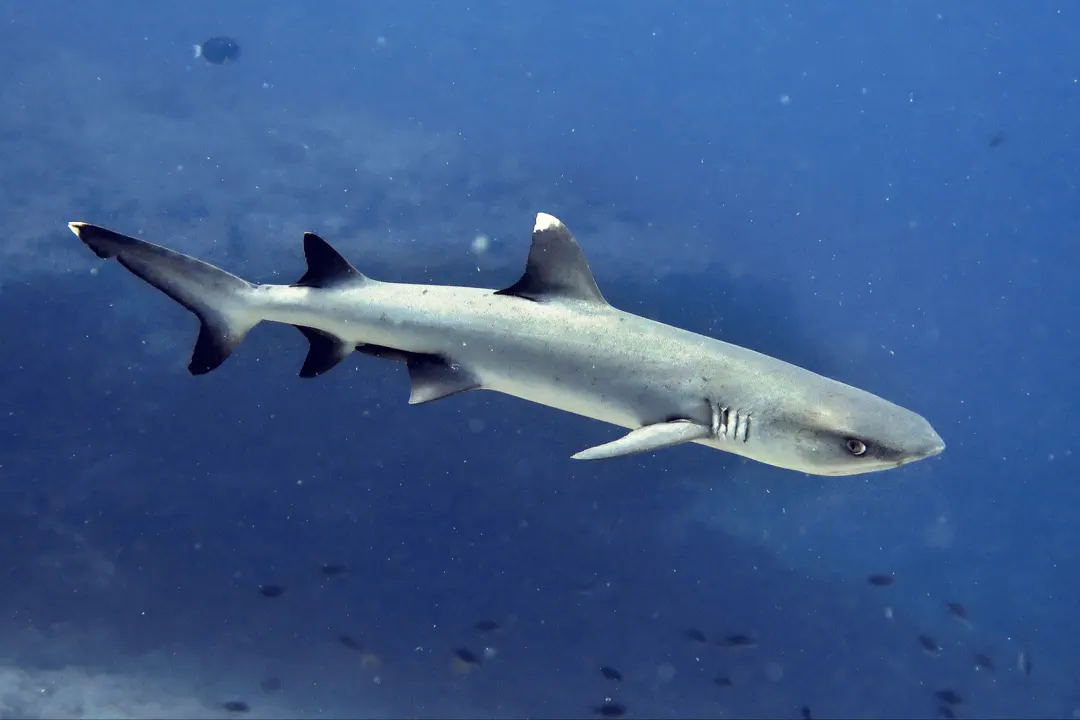
Coastal reefs and sheltered plateaus host resident shark species that rely on hard coral habitats for shelter and food. The whitetip reef shark, Triaenodon obesus, is the most frequently sighted resident, recognizable by its slender body and white-tipped dorsal fin. These sharks spend daylight hours motionless on sandy cave floors, as their ability to pump water over their gills eliminates the need for continuous swimming.
Grey reef sharks, Carcharhinus amblyrhynchos, occupy the current-swept outer corners of wall reefs. Growing up to 2 meters long, they patrol along drop-offs in small groups, displaying agile swimming maneuvers as they hunt reef fish. Using the Seabook app allows divers to log these reef shark encounters and cross-reference fin markings to confirm species identification right after returning to the boat.
Protecting these resident reef sharks depends heavily on healthy coral structures and clear water conditions. Avoiding contact with coral heads during dives preserves the structural crevices where resting whitetips shelter. Responsible diving ensures these coastal predators remain present along Red Sea walls.
Best Dive Sites to See Sharks in the Red Sea
The offshore marine parks of Egypt contain the highest concentration of shark encounters in the Red Sea. Isolated pinnacles and deep reef walls intersect with open ocean currents, attracting migrating pelagics and resident predators.
Daedalus Reef An isolated pinnacle topped by a 19th-century lighthouse, Daedalus sits 90 kilometers offshore. Its vertical walls drop past 100 meters, creating upwellings that bring schools of scalloped hammerheads into shallow waters at dawn during summer, followed by inquisitive oceanic whitetips in autumn. Depth: 5–100+ m | Access: Liveaboard (Marine Park permit) | Level: Advanced Open Water | Best months: June–December
Brother Islands Big Brother and Little Brother are twin ocean spires sheer to the deep seabed. Strong currents sweep past walls carpeted in soft corals, bringing grey reef sharks, threshers, and oceanic whitetips alongside the historic shipwrecks of the Numidia and Aida. Depth: 5–40+ m | Access: Liveaboard (Marine Park permit) | Level: Advanced Open Water | Best months: October–December
Jackson Reef Located in the Strait of Tiran near Sharm El Sheikh, Jackson Reef anchors a high-current channel. The northern wall drops sharply into deep water where scalloped hammerheads gather in the blue during summer months. Depth: 5–40 m | Access: Day boat or liveaboard | Level: Advanced Open Water | Best months: July–September
Elphinstone Reef A narrow finger-shaped plateau stretching 300 meters long off Marsa Alam, Elphinstone features steep east and west drop-offs. Offshore currents drive oceanic whitetip sharks to patrol near southern and northern plateaus, often approaching divers at safety stop depths. Depth: 5–40 m | Access: Day boat from Marsa Alam or liveaboard | Level: Advanced Open Water | Best months: October–December
Red Sea Water Temperature and Shark Seasons
Water temperatures in the Red Sea shift considerably across seasons, directly influencing shark movements and depth distribution. Winter surface temperatures dip to 22–24°C between January and March, while summer months bring surface waters up to 28–30°C. These thermal shifts prompt pelagic species to move between deep basin water and shallow reef plateaus.
In an archival tag study, researchers at King Abdullah University of Science and Technology found that tagged sharks spent substantial time in approximately 26–27 °C water and shifted their depth use seasonally, including occupancy of roughly 70–100 m during warmer periods. This depth movement explains why summer hammerhead encounters often occur along deep reef walls early in the morning before upper waters warm up.
Selecting the right exposure gear ensures diver comfort during long shark watches along exposed walls. A 5mm wetsuit is recommended for winter dives and deep offshore walls, while a 3mm suit suffices during peak summer months. Wind-driven surface chop at offshore reefs can create challenging surface conditions regardless of water temperature.
Are Red Sea Sharks Dangerous? Safety Rules for Divers
Diving with large sharks in the Red Sea is a safe activity when proper procedures and marine park guidelines are followed. Sharks are apex predators that react to movement, sound, and spatial boundaries in their environment. Staying calm, maintaining neutral buoyancy, and keeping a vertical orientation in the water column helps divers present an unnatural silhouette that sharks inspect without aggressive intent.
When oceanic whitetips approach, divers should maintain eye contact and keep their arms close to their body. Groups should stay compact near the reef wall or under the mooring line rather than scattering into open blue water. Avoid swimming near the surface directly under zodiac ladders when boats are operating, as surface splashing can trigger exploratory investigation from pelagic sharks.
Understanding shark body language allows divers to assess animal behavior accurately during an encounter. A shark displaying rigid, dropped pectoral fins, exaggerated side-to-side swimming, or tight circular passes is showing signs of agitation or intense curiosity. In such cases, divers should slowly pull back toward the reef, maintain visual contact, and exit the water following the guide's instructions.
Questions
Are there sharks in the Red Sea?
Yes, over 40 species of sharks inhabit the Red Sea, ranging from small reef-dwelling whitetip reef sharks to oceanic species like hammerheads and oceanic whitetips.
Is it safe to dive with sharks in the Red Sea?
Diving with sharks in the Red Sea is safe when following established marine park protocols, keeping eye contact, remaining calm, and listening to dive guide briefings.
What is the best month to see sharks in the Red Sea?
Summer months from June to September offer the best chance to see hammerhead sharks, while October to December is peak season for oceanic whitetip sharks.
Can you see hammerhead sharks in Sharm El Sheikh?
Yes, Jackson Reef in the Strait of Tiran near Sharm El Sheikh is famous for summer sightings of scalloped hammerhead shark schools.
How deep do you need to dive to see thresher sharks?
Thresher sharks often rise from deep water to cleaning stations on reef plateaus at depths between 20 and 30 meters early in the morning.
Are there whale sharks in the Red Sea?
Yes, whale sharks are seasonal visitors to the Red Sea, most frequently spotted in the northern and central regions between May and July.