
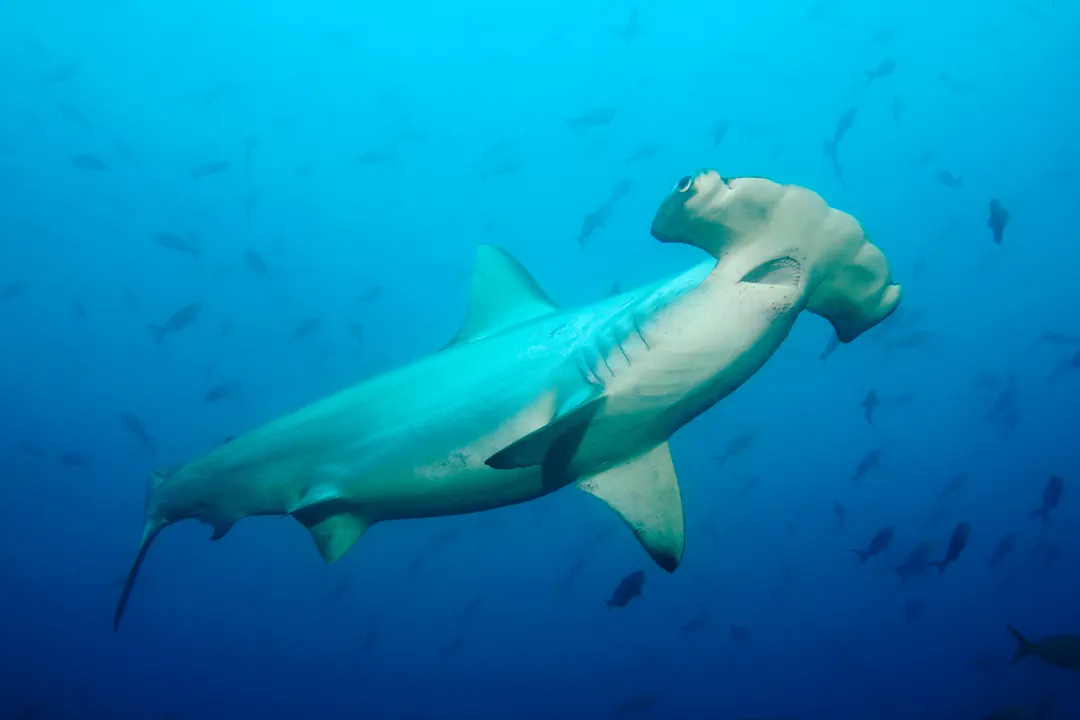
At thirty metres down on the swept rock face of Alcyone, an oceanic ridge 500 kilometres off Costa Rica, thermoclines cut through the dark blue water. Silver belly lights flash as fifty scalloped hammerheads tilt into the surge, their wide heads oscillating rhythmically while barberfish dart out to pick parasites from their flanks. Current pulls hard against the volcanic ledge as the school wheels toward the open ocean drop-off.
Hammerhead shark diving spans distinct oceanic environments globally, from nutrient-heavy currents in the Eastern Pacific to quiet, shallow white-sand bars in the Caribbean. Peak windows depend on location, ranging from June through November in the Eastern Tropical Pacific to December through April in the Bahamas and June through September in the Egyptian Red Sea. Water temperatures across these major destinations vary between 18 °C and 30 °C, while visibility spans from 10 metres in plankton-rich upwellings to more than 30 metres in deep offshore waters.
Prime locations include Darwin and Wolf in the Galápagos Islands, Alcyone at Cocos Island, South Bimini in the Bahamas, Daedalus Reef in the Red Sea, and the deep southern drop-offs of Fuvahmulah in the Maldives. Encounters feature scalloped hammerheads, solitary great hammerheads, whale sharks, tiger sharks, and manta rays. These sites cater primarily to divers comfortable with strong currents, deep drop-offs, and blue-water ascents, though shallow sites like Bimini offer accessible conditions for less experienced divers.
Understanding Hammerhead Shark Species and Behavior
Three primary species dominate diver encounters across the globe: the scalloped hammerhead (Sphyrna lewini), the great hammerhead (Sphyrna mokarran), and the smooth hammerhead (Sphyrna zygaena). Scalloped hammerheads are the most social of the group, forming massive daytime aggregations around seamounts and oceanic islands where cleaning organisms gather. Adults disperse into deep water at night to hunt squid, teleost fish, and stingrays before returning to the pinnacles at dawn.
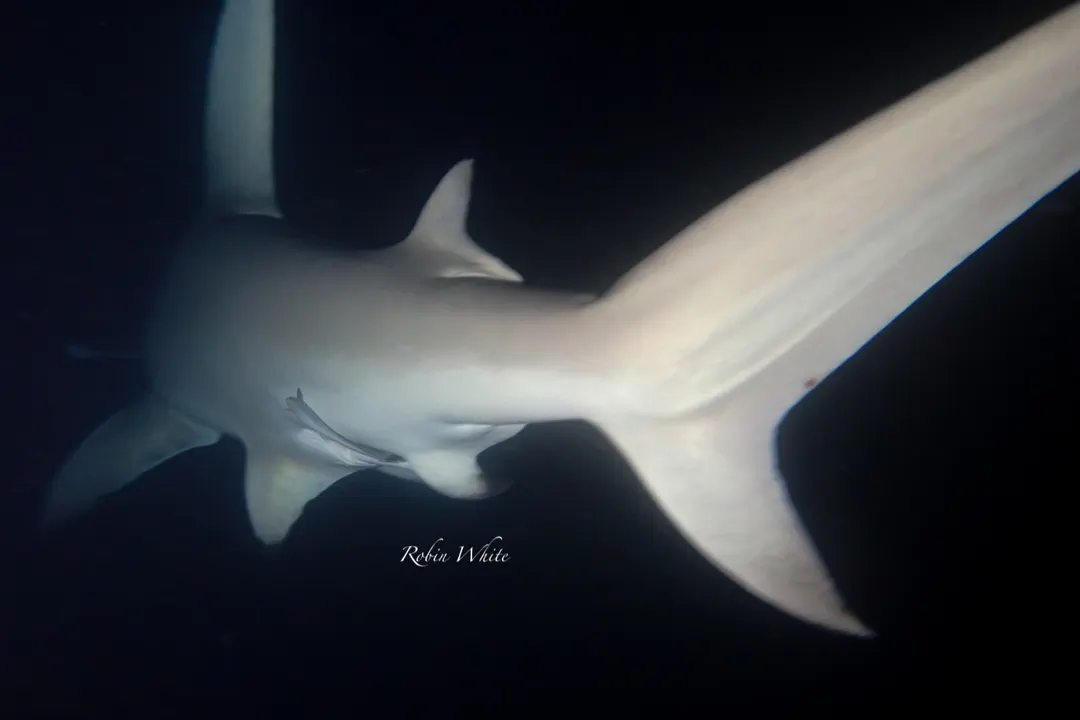
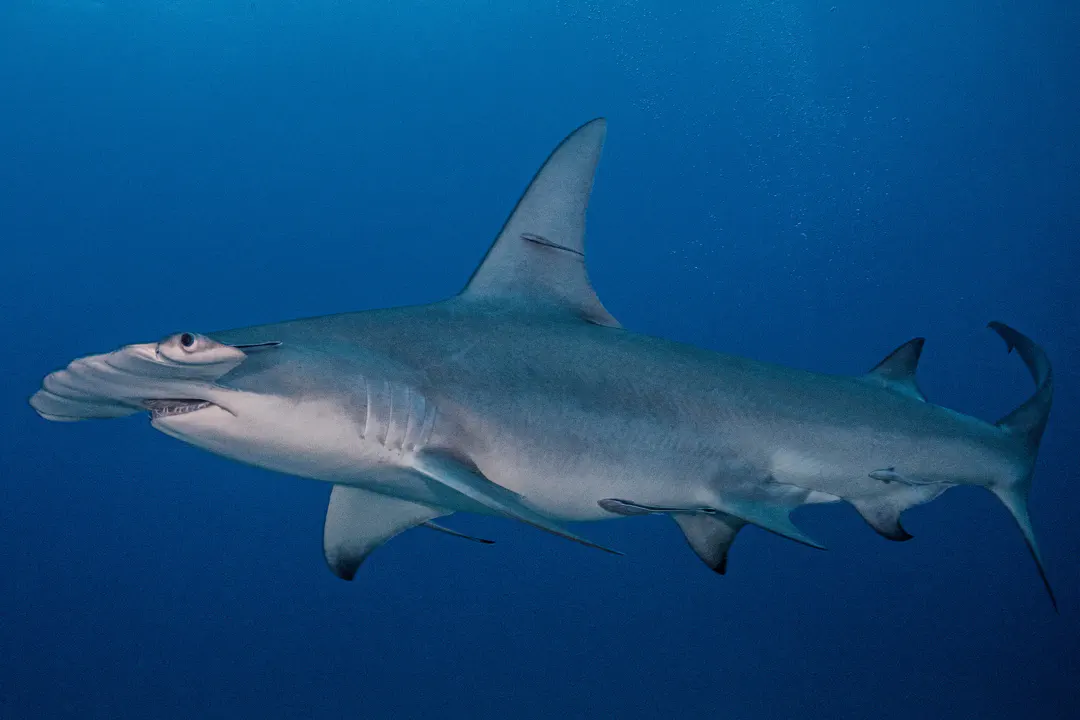
Great hammerheads lead a solitary existence, reaching lengths up to 6 metres as they traverse open coastal sand flats, channels, and reef margins. They rely on their massive dorsal fin and broad head to pin stingrays against the seafloor during hunting maneuvers. Smooth hammerheads lack the central notch found on the front edge of the scalloped hammerhead's head, preferring temperate pelagic zones over tropical reef cleaning stations. Divers can log their encounters and verify species features using the Seabook app to distinguish head profiles and anatomical markers recorded during a dive.
Depth preferences vary significantly across species and feeding strategies. Scalloped hammerheads typically hold position between 20 and 40 metres along deep thermoclines during the day, whereas great hammerheads frequently cruise over shallow sand flats just 4 to 12 metres deep. Tracking data shows these animals adjust their spatial positions based on water temperature, tidal current velocity, and prey availability across coastal and oceanic habitats.
Galápagos Islands, Ecuador: Schooling Scalloped Hammerheads
Located 900 kilometres off mainland Ecuador, the northern islands of Darwin and Wolf form the epicenter of scalloped hammerhead aggregations in the Galápagos Marine Reserve. Volcanic drop-offs intercept strong equatorial currents, forcing cold, nutrient-dense water upward toward the surface. Hundreds of scalloped hammerheads gather around underwater rocky platforms between 15 and 30 metres depth to be cleaned by king angelfish and barberfish.
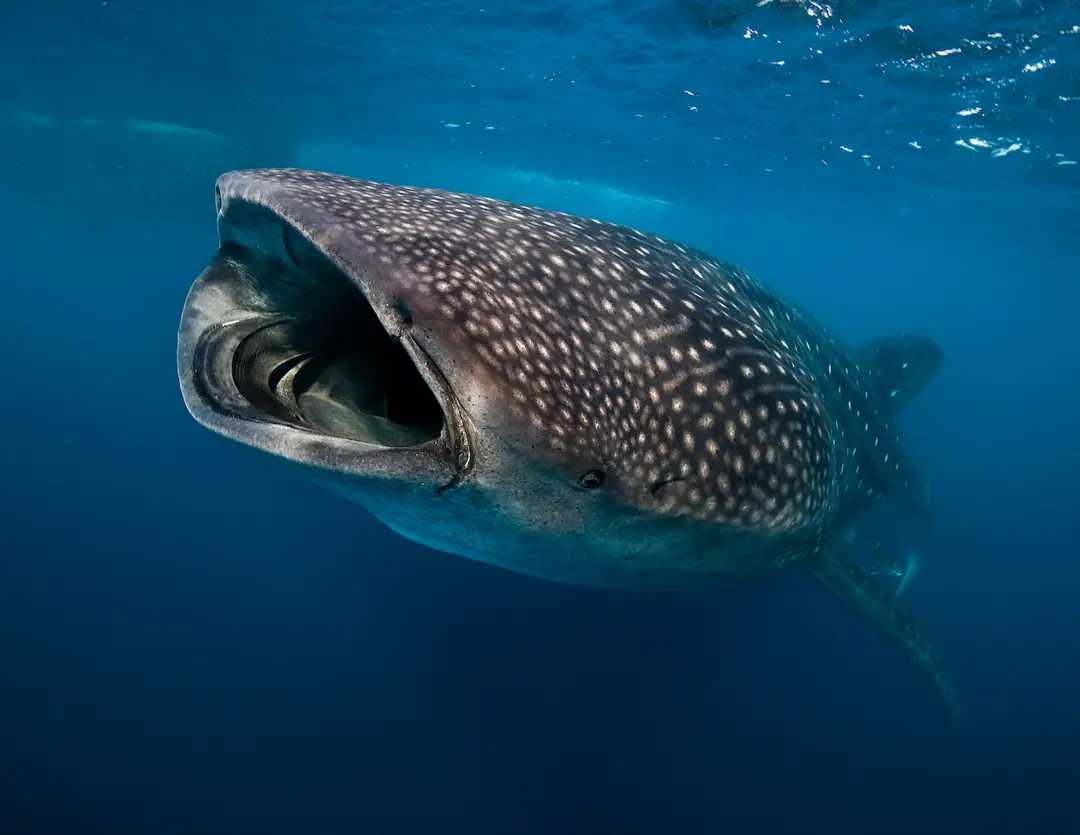
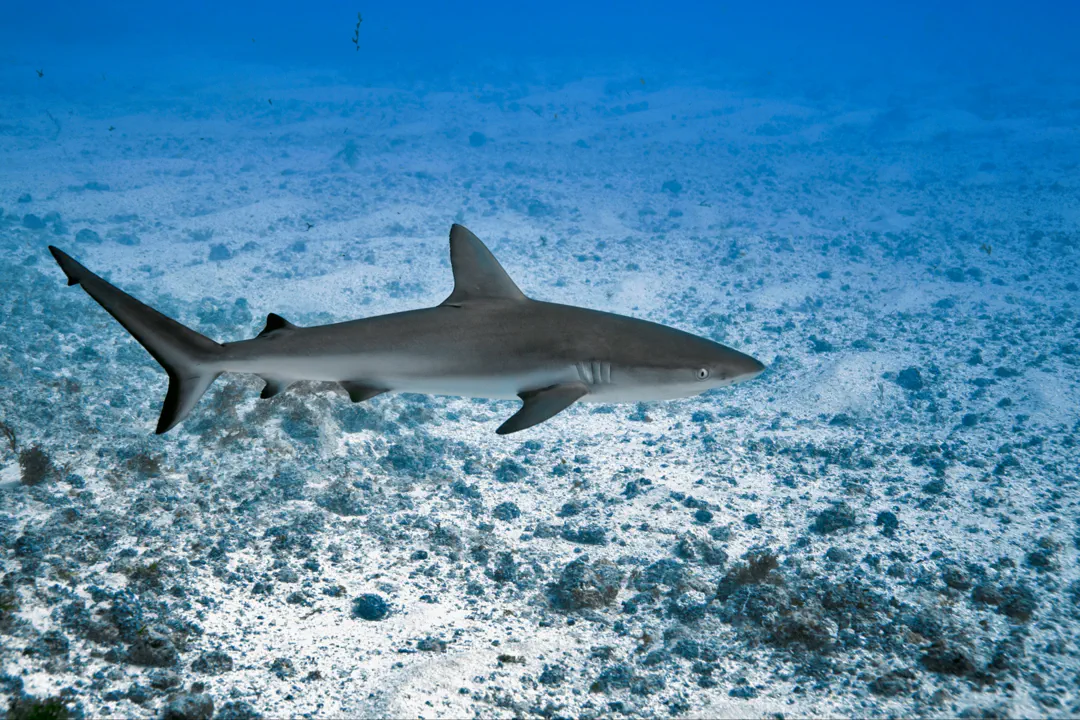
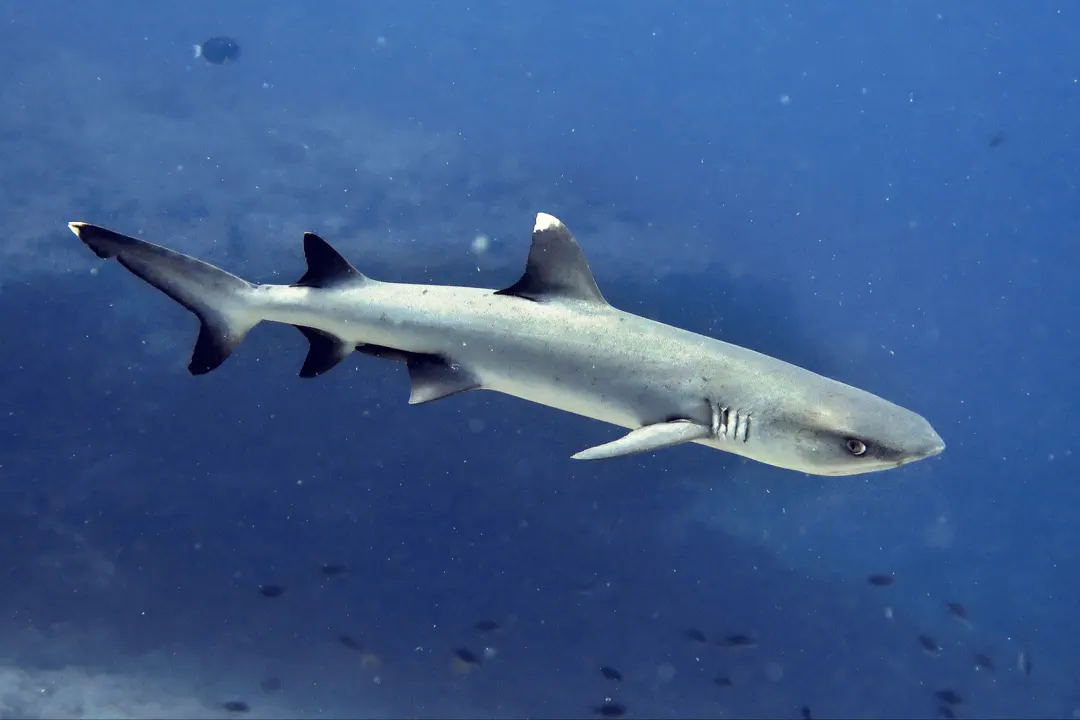
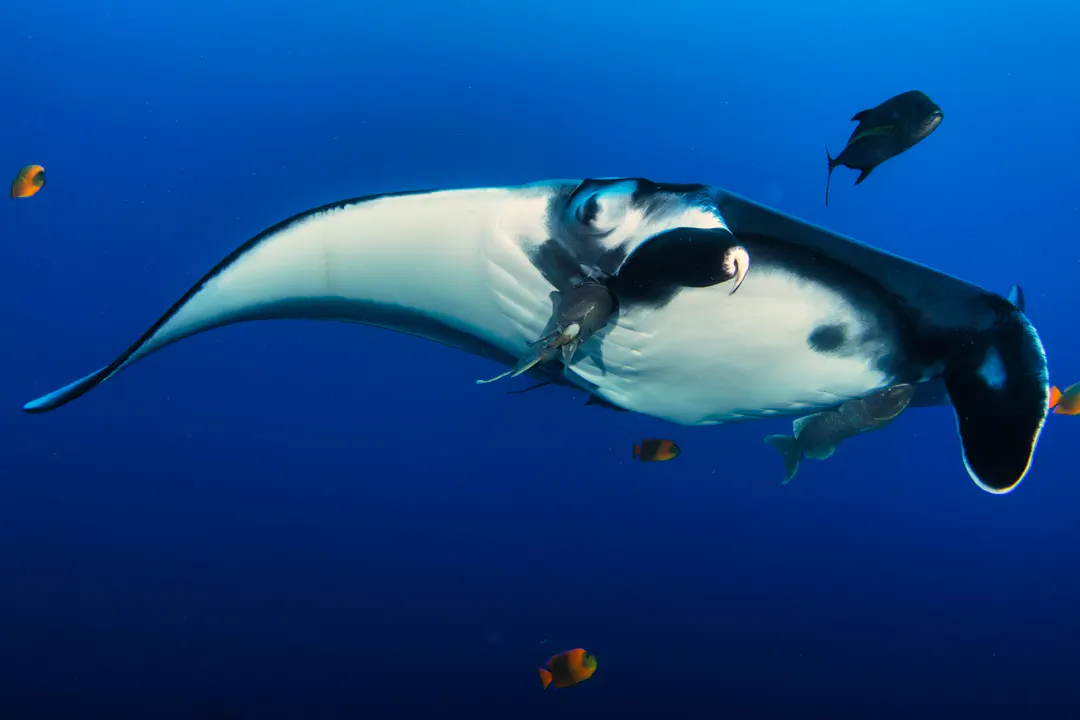
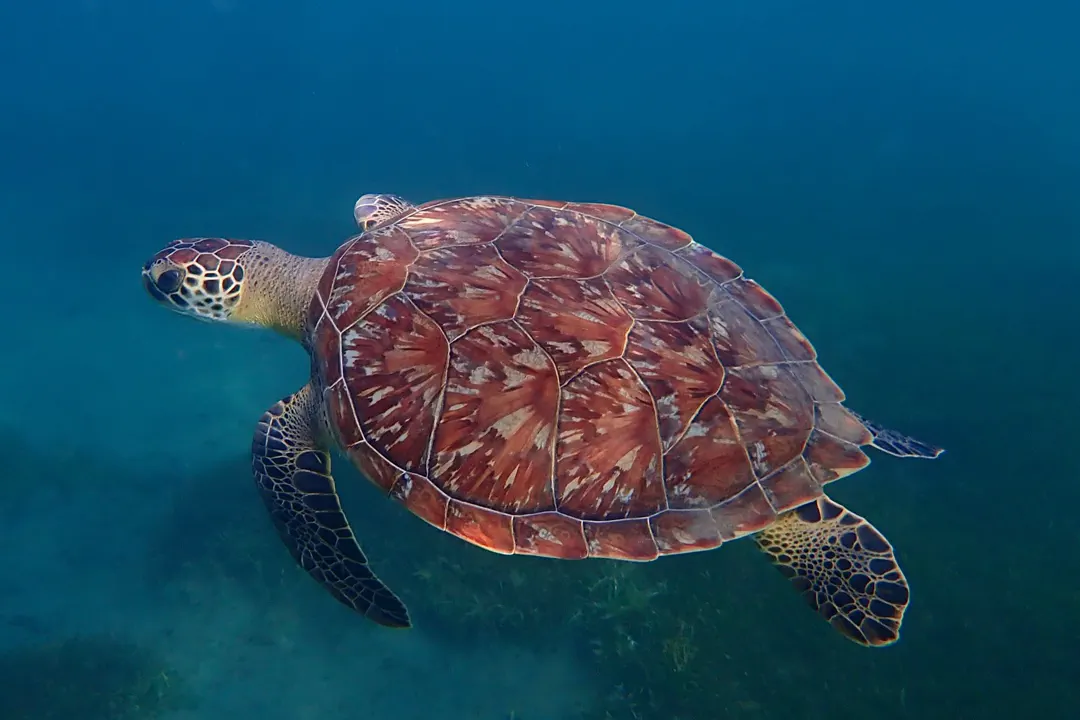
The window from June through November brings the cool Humboldt Current, dropping water temperatures to between 18 °C and 22 °C while attracting pelagic species. Divers wedge themselves carefully into basalt ledges to observe schools passing overhead in the surge. Alongside scalloped hammerheads, encounters often include whale sharks, Galápagos sharks, whitetip reef sharks, giant oceanic manta rays, and green sea turtles.
Conditions require advanced skills, as current speeds often exceed 3 knots and visibility ranges from 10 to 25 metres depending on plankton density. All diving takes place from specialized liveaboard vessels capable of navigating the open sea surrounding the northern islets.
 © seabook.appAll rights reserved
 © seabook.appAll rights reserved
 © R VasconcellosCC BY 4.0 · iNaturalist
 © Daniel BenákCC BY 4.0 · iNaturalist
 © seabook.appAll rights reserved
 © Matteo BellucciCC BY 4.0 · iNaturalist
Bimini, Bahamas: Shallow Encounters with Great Hammerheads
South Bimini sits on the edge of the Gulf Stream, offering clear, shallow sand flats where solitary great hammerheads assemble during the winter months. Encounters occur in water depths ranging from 5 to 10 metres, providing exceptional sunlight and visibility exceeding 30 metres. Divers kneel on the white sand seabed while individual sharks measuring up to 4.5 metres sweep slowly past at arm's length.
Research using photo-identification documented that great hammerheads show strong seasonal residency to Bimini, as noted in a 2017 study in Frontiers in Marine Science by Guttridge and colleagues, which tracked tagged individuals making movements spanning approximately 3,030 kilometres before returning to Bimini during winter. Food provisioning at established dive sites encourages extended interactions with specific returning individuals. Further findings detailed in a 2021 study in Frontiers in Marine Science confirmed that localized feeding practices influence daily spatial use of these shallow sand flats.
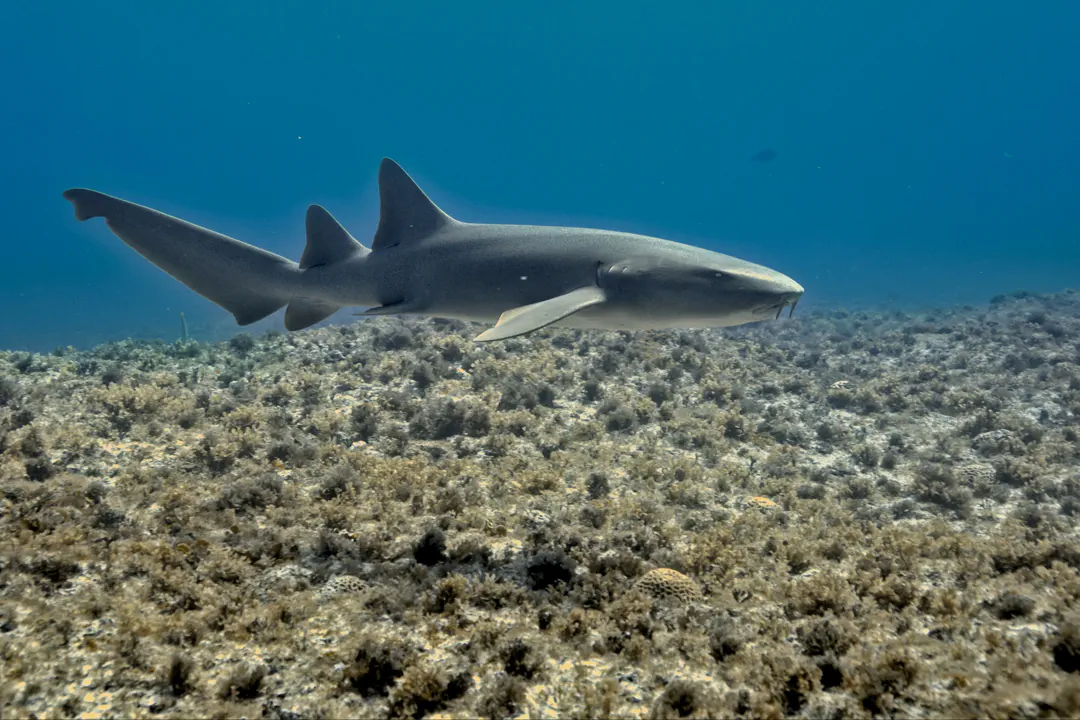
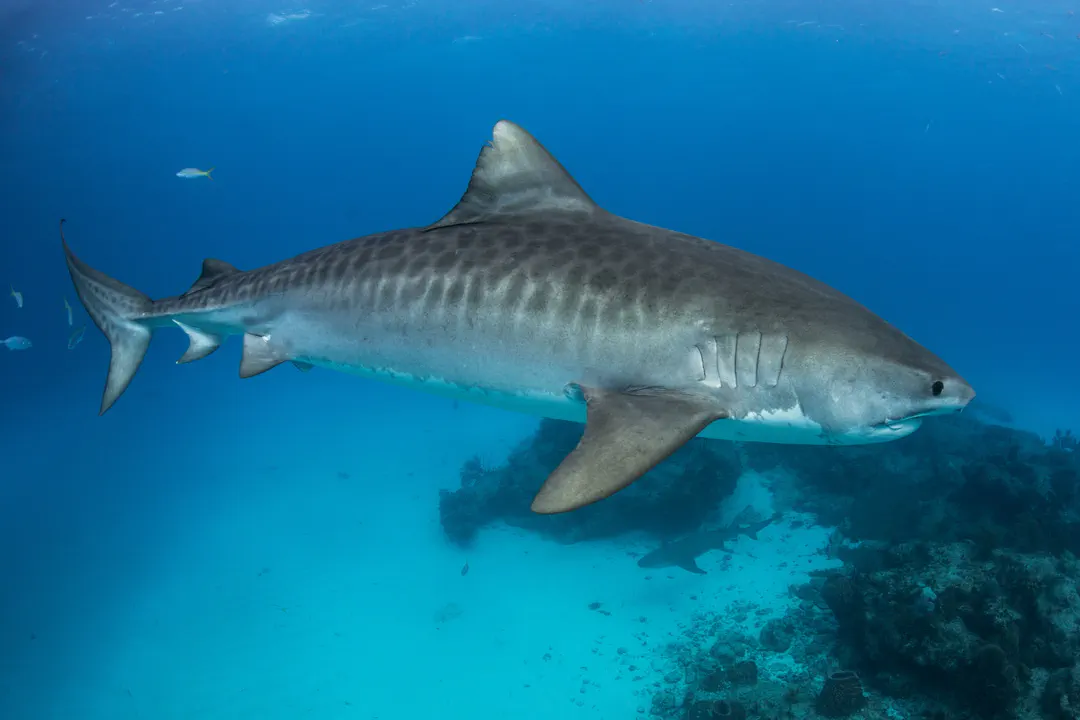
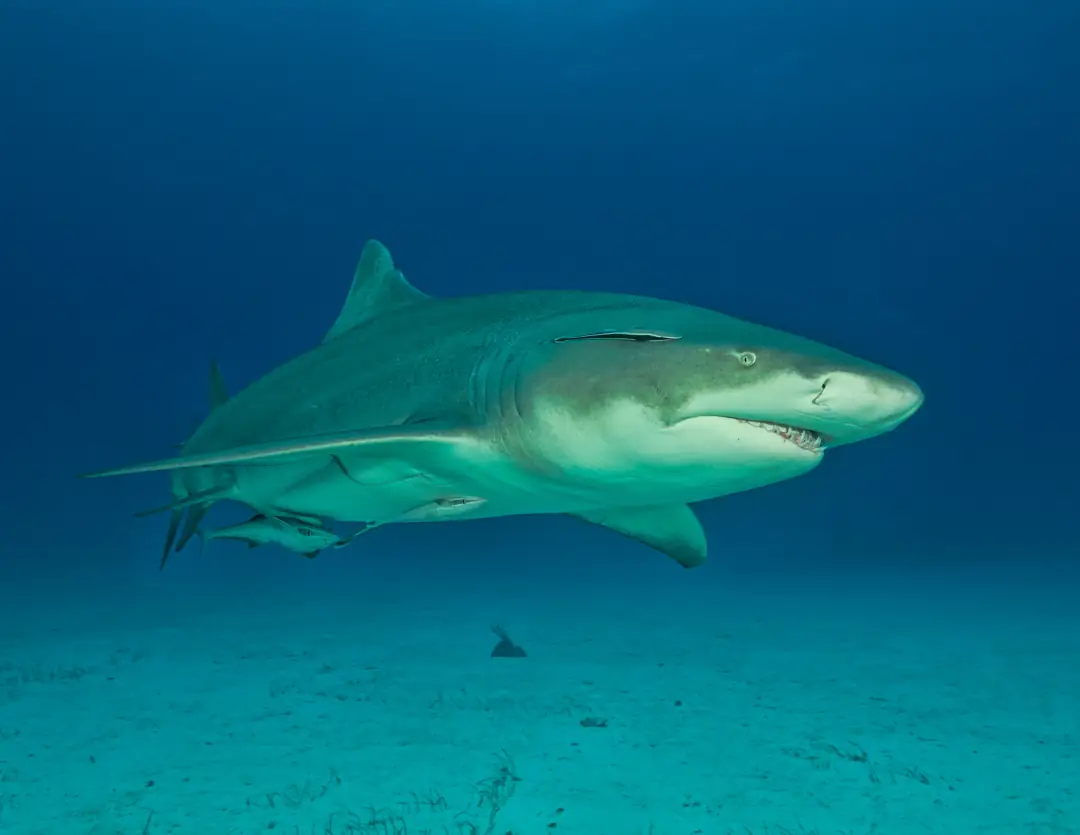
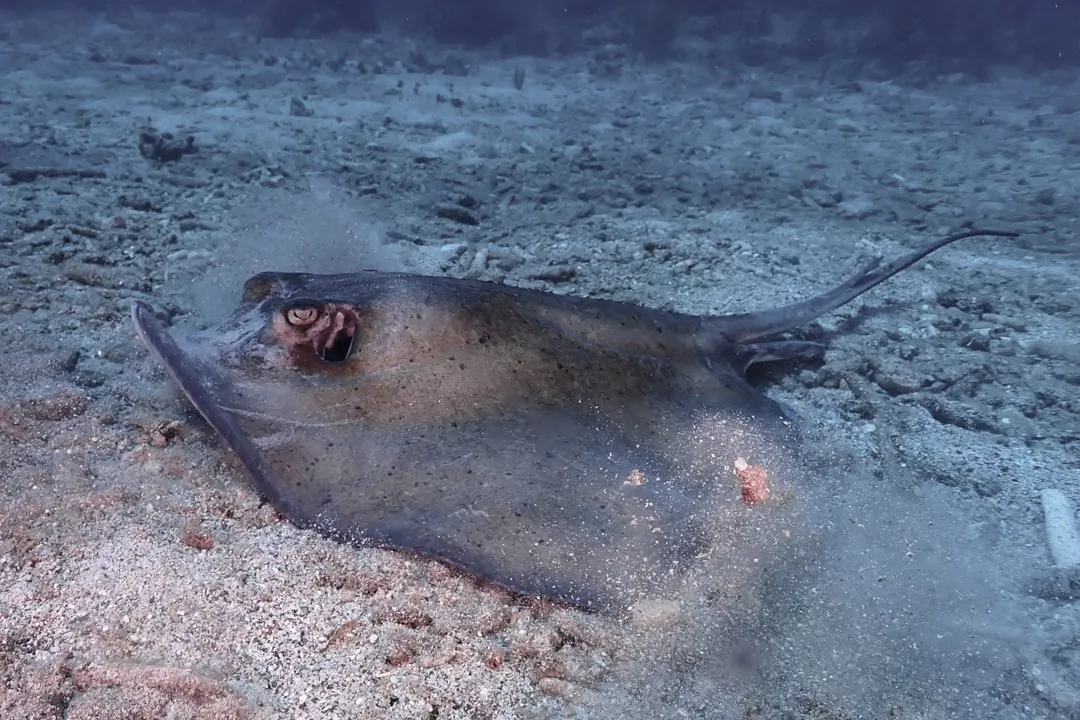
The winter operating season runs from December through April, when water temperatures average 23 °C to 26 °C. Alongside great hammerheads, divers frequently observe nurse sharks, Caribbean reef sharks, tiger sharks, lemon sharks, and southern stingrays gliding over the sand bottom.
 © seabook.appAll rights reserved
 © R VasconcellosCC BY 4.0 · iNaturalist
 © seabook.appAll rights reserved
 © seabook.appAll rights reserved
 © Robin WhiteCC BY 4.0 · iNaturalist
Cocos Island, Costa Rica: Seamounts of the Eastern Pacific
Cocos Island rises from deep ocean water 500 kilometres southwest of Costa Rica, anchored by submerged volcanic pinnacles such as Alcyone and Submerged Rock. According to long-term Cocos Island dive-log and telemetry research summarized by Marine Megafauna Foundation, scalloped hammerheads were recorded on 77.7% of 34,342 logged dives when present, averaging 42.1 sharks per sighting dive, though detections consistently declined from March through May.
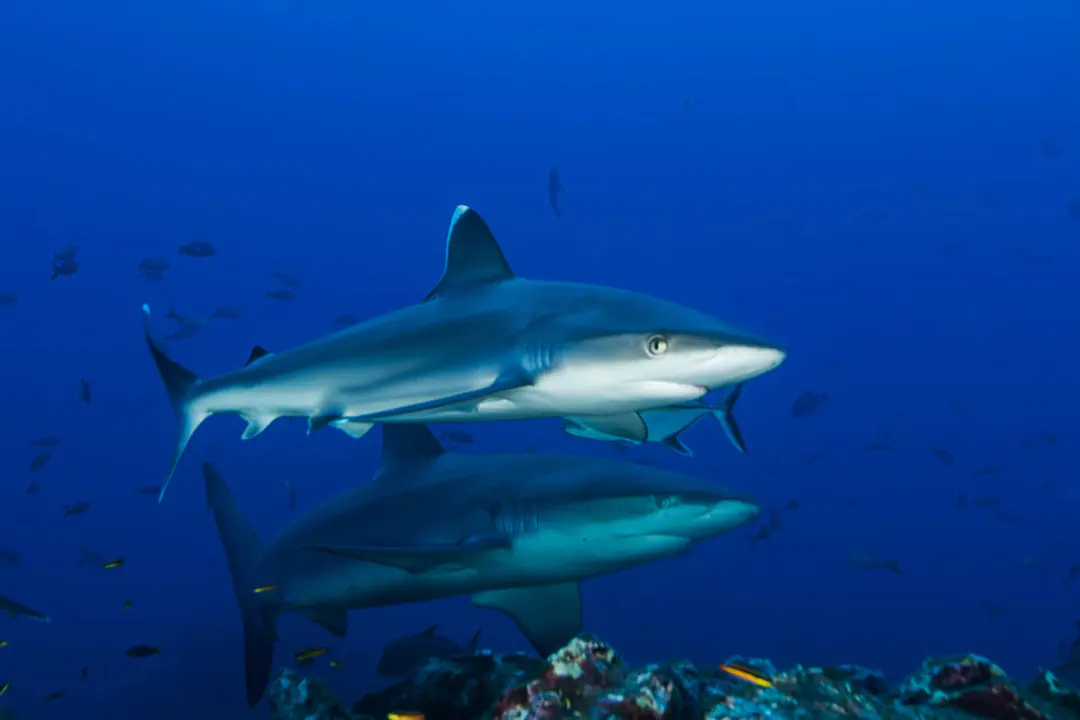
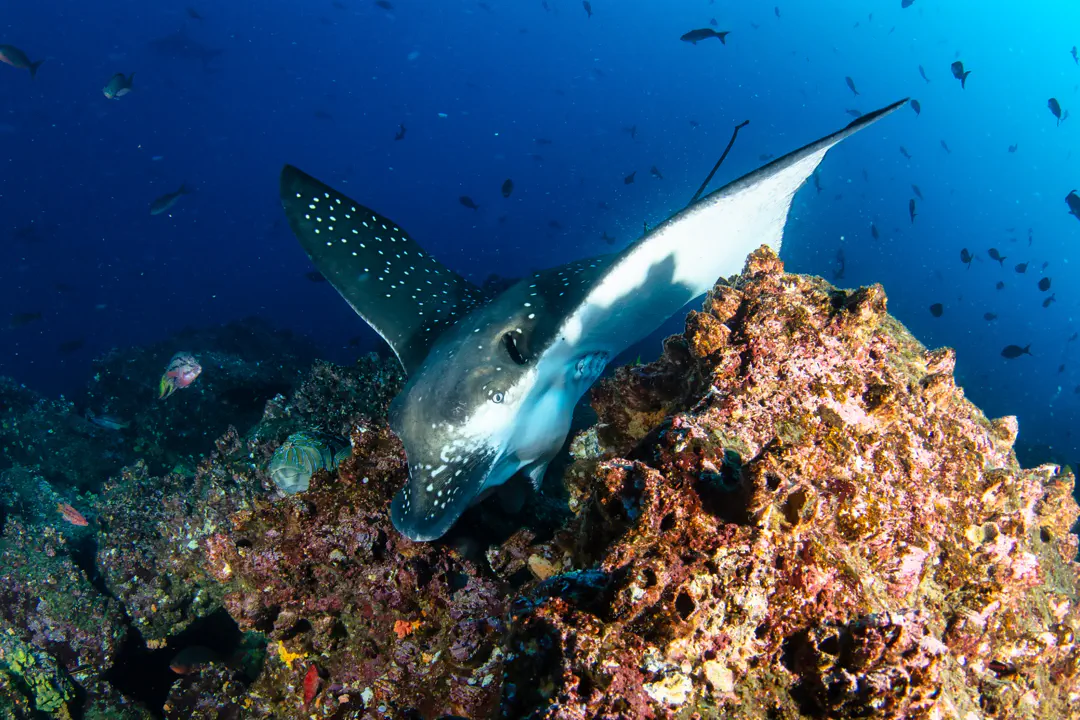
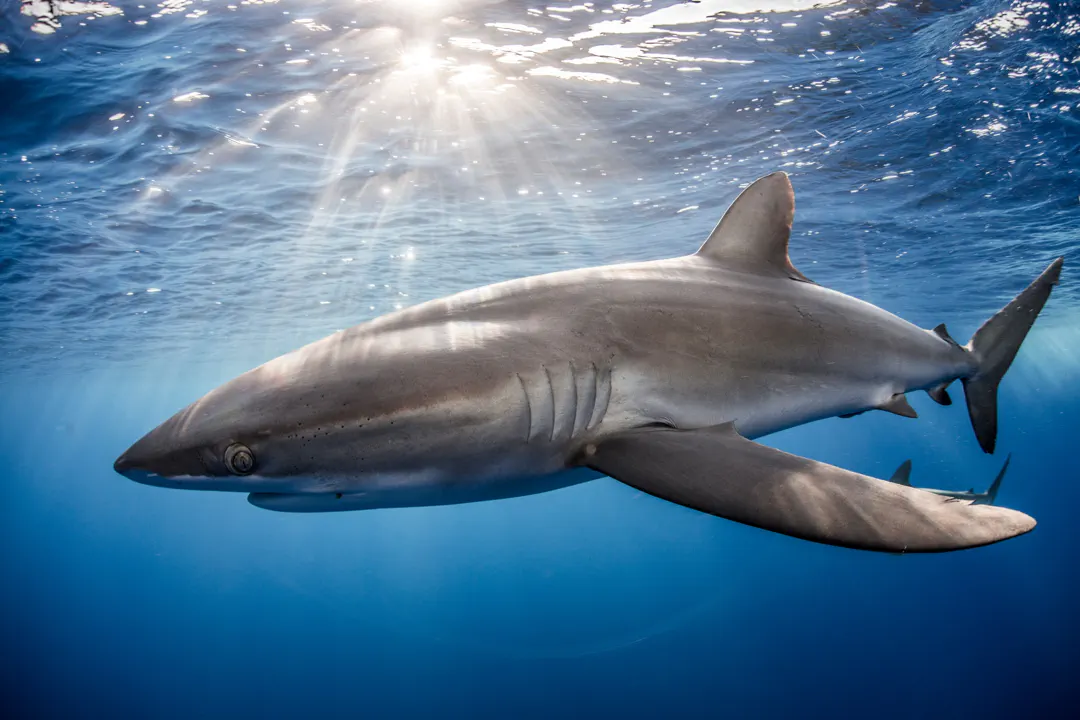
The rainy season from June through December brings heavy plankton blooms and cold upwellings, driving water temperatures down to 18–24 °C at depth while drawing maximum numbers of sharks to cleaning stations around 30 metres deep. Divers execute negative entries to drop past powerful surface currents, securing themselves to rocks using reef hooks while whitetip reef sharks, silvertip sharks, oceanic manta rays, spotted eagle rays, and silky sharks patrol the open water.
Visibility fluctuates between 15 and 30 metres depending on thermocline position. Liveaboard travel is mandatory, requiring a 30 to 36-hour crossing from mainland Puntarenas across open ocean swells.
 © seabook.appAll rights reserved
 © seabook.appAll rights reserved
 © seabook.appAll rights reserved
Red Sea, Egypt: Daedalus Reef and Jackson Reef
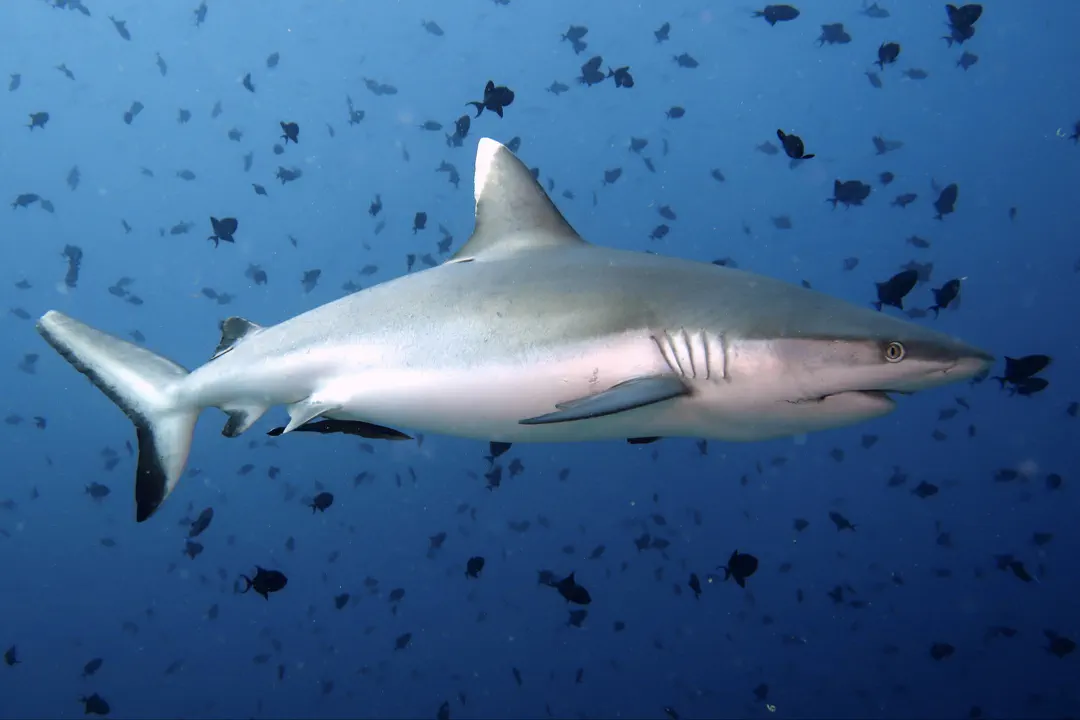
The Egyptian Red Sea features offshore reef walls that drop into abyssal waters, creating prime habitat for pelagic sharks. Daedalus Reef, an isolated offshore lighthouse reef 90 kilometres east of Marsa Alam, and Jackson Reef in the Straits of Tiran are prime locations for summer hammerhead sightings. Resident pods of scalloped hammerheads cruise along the northern walls where deep currents hit the reef face.
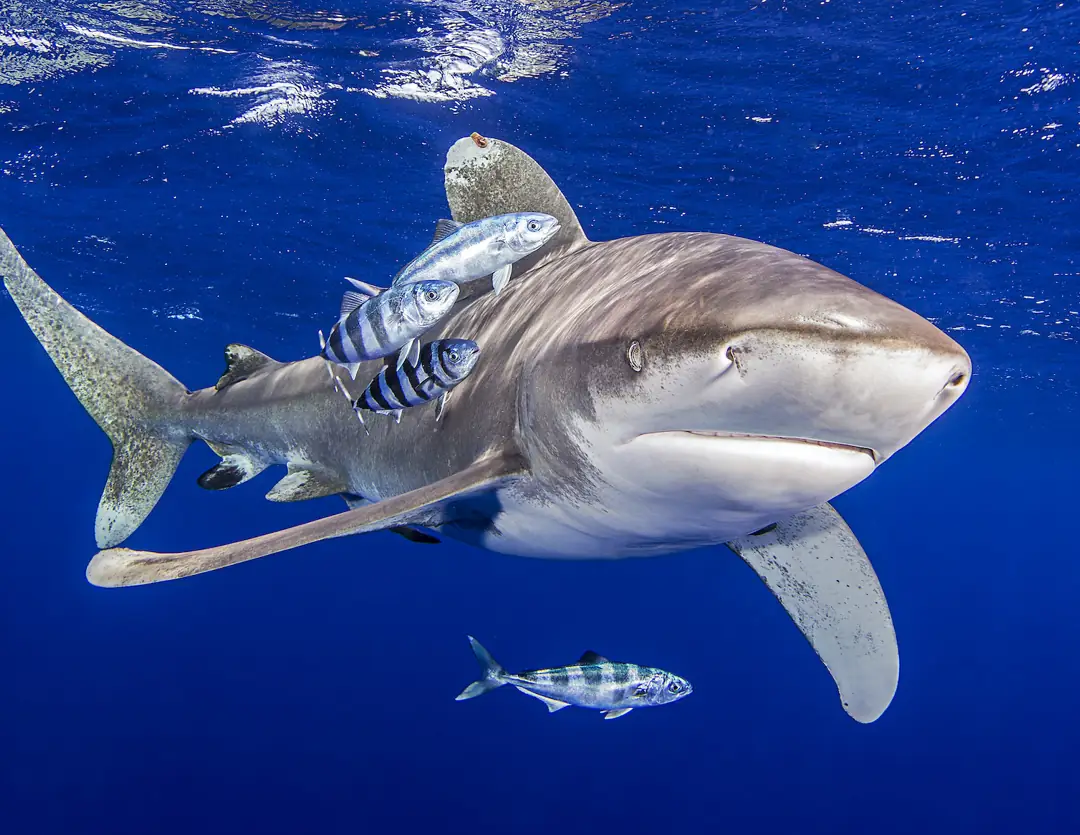
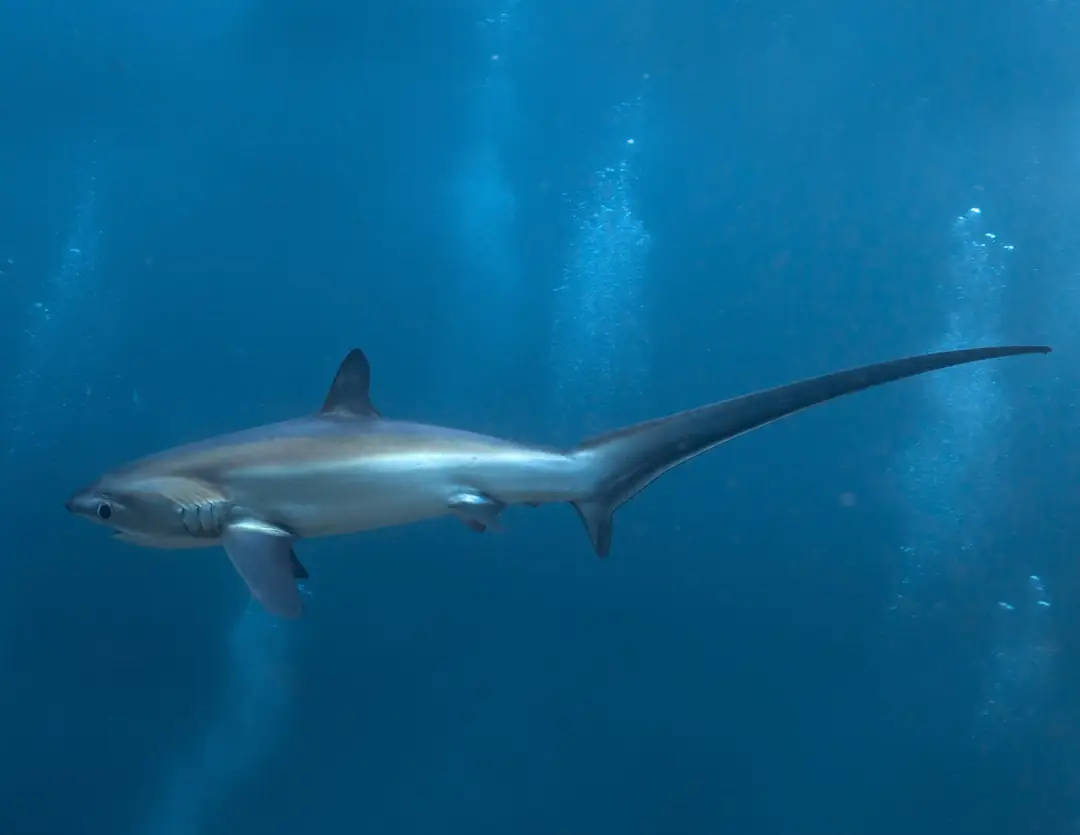
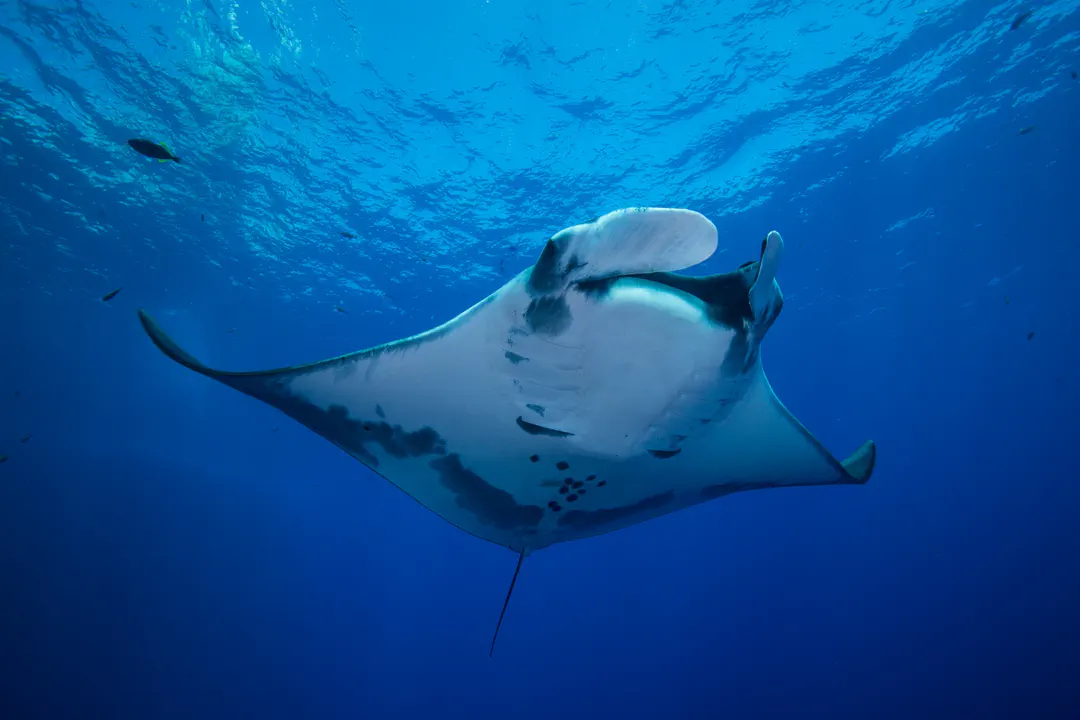
During the summer season from June through September, surface water temperatures rise to 28–30 °C, pushing the sharks down into cooler thermoclines between 25 and 40 metres deep. Divers drift along vertical walls covered in soft corals, keeping their eyes trained on the deep blue edge for patrolling scalloped hammerheads, oceanic whitetip sharks, pelagic thresher sharks, whitetip reef sharks, and reef manta rays.
Visibility is exceptionally high, frequently exceeding 30 metres. Reaching outer sites like Daedalus requires a liveaboard trip, whereas Jackson Reef can be dived via day boats departing from Sharm El Sheikh.
 © seabook.appAll rights reserved
 © Jenvit SeriburiAll rights reserved
 © seabook.appAll rights reserved
 © Daniel BenákCC BY 4.0 · iNaturalist
Fuvahmulah, Maldives: Equatorial Deep-Water Drop-Offs
Fuvahmulah sits isolated in the Maldivian far south, directly on the equator. Unlike the shallow barrier reefs of northern atolls, Fuvahmulah is a single oceanic island surrounded by deep oceanic waters. Deep upwellings push nutrients straight up the vertical reef walls, drawing scalloped hammerheads, tiger sharks, pelagic thresher sharks, whale sharks, and reef manta rays close to the shore drop-offs.
Early morning dives target deep plateaus between 30 and 45 metres where scalloped hammerheads swim through blue water before sunlight fully penetrates the surface layer. Water temperatures remain stable year-round between 27 °C and 30 °C, with visibility ranging from 20 to 35 metres depending on monsoon ocean currents.
Unlike Cocos or Galápagos, Fuvahmulah features land-based harbor access, allowing divers to reach deep drop-offs via short speedboat rides. Strong, unpredictable currents and rapid drop-offs mean these dives are tailored for experienced participants capable of controlling depth in open ocean drift conditions.
Best Time of Year for Hammerhead Shark Diving
Choosing the right month depends entirely on target species and ocean currents. The Eastern Tropical Pacific peak runs from June through November, when nutrient-heavy upwellings hit Galápagos and Cocos Island. Water temperatures dip to 18–24 °C, producing large aggregations of scalloped hammerheads along deep cleaning stations.
For great hammerhead encounters in Bimini, the winter window from December through April offers stable weather, warm 23–26 °C shallow water, and high site residency. The Red Sea's hammerhead season peaks in the summer from June through September, when deep thermoclines attract scalloped hammerheads to offshore drop-offs at Daedalus and Jackson Reef.
Fuvahmulah in the Maldives provides year-round encounters with pelagic megafauna due to its isolated equatorial geography. However, shift variations in current strength and plankton density between the Northeast Monsoon (November–April) and Southwest Monsoon (May–October) affect visibility and depth profiles on the outer plateau.
Requirements and Tips for Diving with Hammerheads
Diving with hammerhead sharks requires solid buoyancy control and comfort in strong current. Advanced Open Water certification is a baseline requirement for almost all sites, with many liveaboards requiring a minimum of 50 to 100 logged dives. Experience with deep descents, blue-water safety stops, and negative entry techniques is essential when jumping into rolling ocean swells.
Enriched Air Nitrox certification is recommended, as it expands bottom time on repetitive dives in the 18 to 30-metre depth range. Equipping a high-visibility surface marker buoy (SMB), reel, line cutter, and reef hook provides necessary safety margins when drifting along exposed seamounts where surface currents move rapidly.
Divers should maintain a low profile against rocky walls, refrain from chasing animals, and avoid blocking cleaning channels. Proper thermal protection, such as a 5mm to 7mm wetsuit with a hood for Pacific thermoclines or a 3mm shorty for Caribbean shallow flats, ensures comfort during extended observation dives.
Questions
Is diving with hammerhead sharks safe?
Yes, hammerhead encounters are safe when following established dive protocols. Scalloped and great hammerheads show caution around divers and do not view humans as prey. Primary operational hazards stem from strong currents, deep drop-offs, and separation, rather than shark behavior.
What experience level is required for hammerhead shark diving?
An Advanced Open Water certification with at least 50 logged dives is recommended for deep, current-heavy sites like Cocos, Galápagos, and Daedalus Reef. Shallow sites such as Bimini in the Bahamas are accessible to Open Water divers with good buoyancy control.
Which species of hammerhead shark can divers see?
Divers most commonly encounter scalloped hammerheads (Sphyrna lewini) schooling around ocean seamounts, great hammerheads (Sphyrna mokarran) along shallow sand bars, and occasionally smooth hammerheads (Sphyrna zygaena) in cooler temperate regions.
Where is the best place to see massive schools of hammerheads?
The Eastern Tropical Pacific—specifically Darwin and Wolf in the Galápagos Islands (Ecuador) and Cocos Island (Costa Rica)—is the top global region for viewing schools numbering dozens to hundreds of scalloped hammerheads.
Do I need a liveaboard to dive with hammerhead sharks?
Remote locations like Cocos Island, the northern Galápagos, and outer Red Sea reefs require a liveaboard due to distance from shore. However, Bimini in the Bahamas and Fuvahmulah in the Maldives offer land-based day boat operations.
Sources
- Frontiers | Philopatry and Regional Connectivity of the Great Hammerhead Shark, Sphyrna mokarran in the U.S. and Bahamas · 2017-01-20
- Why Do Hammerhead Sharks School, and Where Do They ... · 2026-11-05
- Frontiers | Effects of Food Provisioning on the Daily Ration and Dive Site Use of Great Hammerhead Sharks, Sphyrna mokarran · 2021-05-06

