Introduction to Norway's Underwater Realm
A dense forest of brown kelp, *Laminaria hyperborea*, sways gently in the clear 10°C water off a Norwegian fjord wall, perhaps near Gulen. At 15 meters deep, a small *Symphodus melops* wrasse darts between the fronds, its iridescent scales catching the dim light filtering from the surface. A European lobster, *Homarus gammarus*, carefully backs into a crevice, its antennae twitching, while a cluster of white plumose anemones, *Metridium senile*, blooms from a rocky overhang, filtering nutrients carried by the subtle current.
Norway is one of Europe’s most distinctive cold-water diving destinations because its coastline combines steep fjords, exposed skerries, kelp forests, and deep offshore basins in a relatively compact area. The country’s long, indented coast creates a wide range of underwater habitats, from sheltered bays with sediment and eelgrass to current-swept channels rich in anemones, nudibranchs, and schooling fish.
What sets Norwegian diving apart is not tropical-style reef color but clarity, structure, and biodiversity adapted to cold water. Divers regularly encounter sea anemones, kelp forests, crustaceans, and wrecks preserved by low temperatures, while some sites also support cetacean encounters at the surface in season. This combination makes Norway especially attractive to underwater photographers, wreck divers, and cold-water specialists.
Historical and geological forces shaped the modern dive scene. Glacial carving produced deep fjords and steep underwater walls, while the North Atlantic current moderates coastal conditions enough to keep many harbors ice-free through winter. Those same currents deliver nutrients that fuel productive marine food webs, so even sites at high latitude can support surprisingly dense life.
For divers, the practical appeal is variety: sheltered sites for training and macro photography, dramatic current dives such as Saltstraumen, and deeper cold-water coral and wreck locations. The trade-off is water that is often cold enough to require a drysuit, with local conditions changing quickly as wind, tide, and season shift visibility and current strength.
Geography and Climate: The Land of Fjords and Northern Lights
Norway’s coastline is among the longest in the world when fjords and islands are included, and that extreme complexity creates a huge amount of marine habitat. The coast runs for thousands of kilometers, but if you measure every inlet and island edge, the total becomes vastly larger than the straight-line national outline. That complexity is one reason Norway supports such a wide variety of dive environments in a relatively small country.
Climate strongly shapes diving here. Coastal waters are influenced by the North Atlantic current, a branch of the Gulf Stream system, which helps keep much of the shoreline free of winter sea ice and supports marine productivity. In summer, surface water can feel relatively mild in the south, but thermoclines are common, and temperatures drop quickly with depth, especially in fjords and on northern sites.
Visibility varies more than many first-time visitors expect. In clean, offshore-influenced water it can be excellent, but plankton blooms, rainfall, and river runoff can reduce clarity, especially in sheltered fjords and after storms. Winter and early spring often bring clearer water in some regions because plankton levels are lower, although daylight is limited at higher latitudes.
Seasonality matters for comfort and for wildlife encounters. Summer brings longer days and easier logistics, while late autumn and winter can offer excellent whale-watching opportunities in the north, particularly around herring concentrations. Divers planning multi-site trips should expect local microclimates, strong tidal movement in some channels, and rapidly changing weather even on the same day.
Unique Marine Ecosystems of the Norwegian Sea
Norway’s marine ecosystems are shaped by cold, nutrient-rich Atlantic water meeting Arctic influence along the north and east. That mix supports kelp forests, soft-sediment communities, rocky reef habitats, and deep-water coral formations. Compared with warm-water reef systems, Norwegian sites often have fewer reef-building corals but far more dominance by algae, anemones, sponges, and cold-adapted invertebrates.
Kelp forests are among the most important shallow-water habitats. Species such as *Laminaria hyperborea* form tall underwater canopies that shelter juvenile fish, crustaceans, and nudibranchs while also stabilizing the seabed and capturing carbon. These forests are especially valuable for divers because they create three-dimensional structure and dense life even in relatively cold water.
Deeper offshore, cold-water corals add another layer of biodiversity. Norway is famous for reefs built by *Lophelia pertusa* (now often placed in *Desmophyllum pertusum*) and associated coral communities that thrive without sunlight at depths well below recreational diving limits in many places. Divers can still see the ecological influence of these systems in the abundance of fish and invertebrates around suitable reef slopes and current-swept channels.
Norwegian waters are also famous for strong tidal exchange in places like Saltstraumen, which brings nutrient pulses that concentrate plankton and small prey. That productivity supports cod, coalfish, wrasse, crustaceans, and a wide range of nudibranchs and anemones. For divers, the key practical point is that some of the richest life appears where currents are strongest, but those same currents demand careful timing and local knowledge.
 © Charles HoodAll rights reserved
 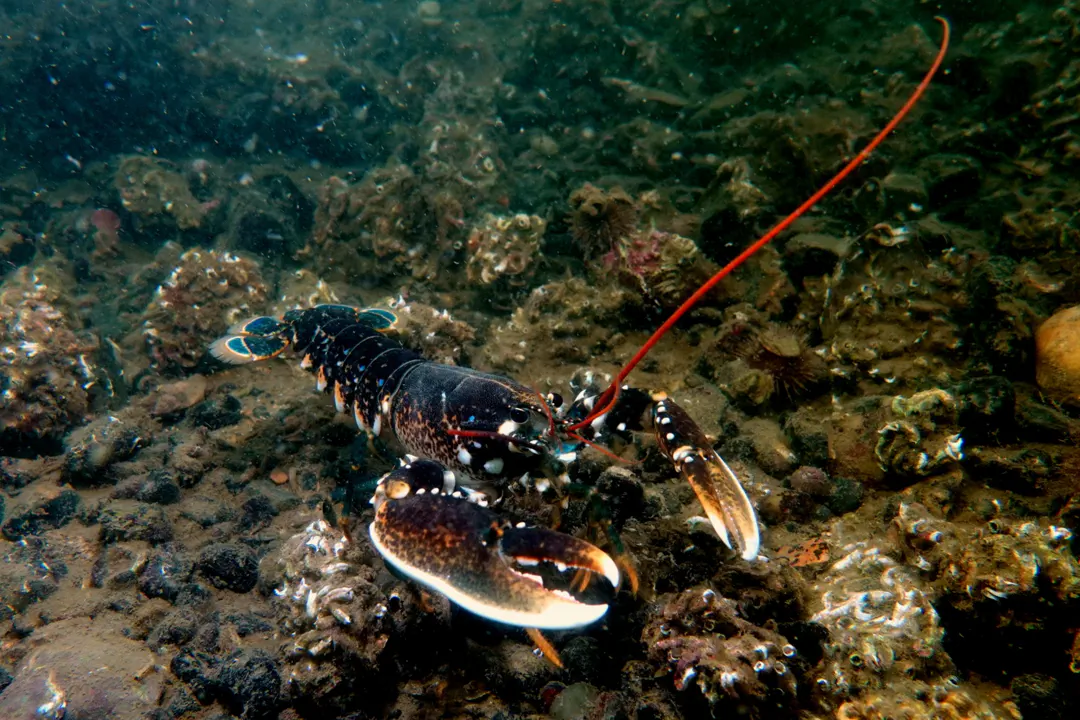 © Klaus Kevin KristensenCC BY 4.0 · iNaturalist
 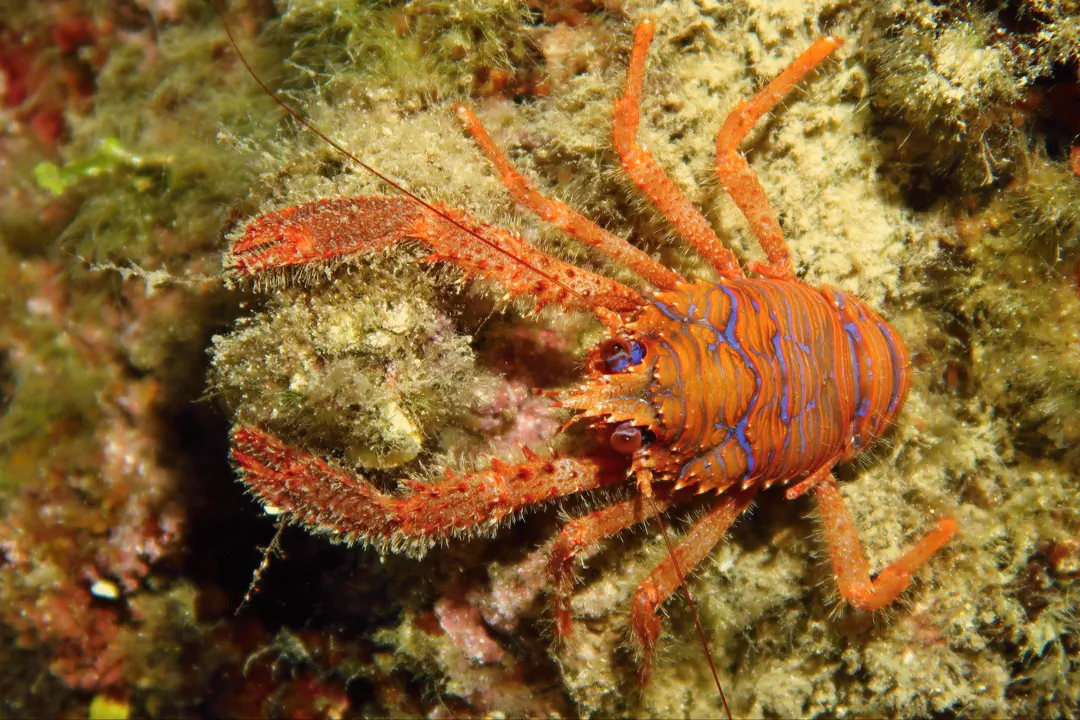 © Daniel BenákCC BY 4.0 · iNaturalist
 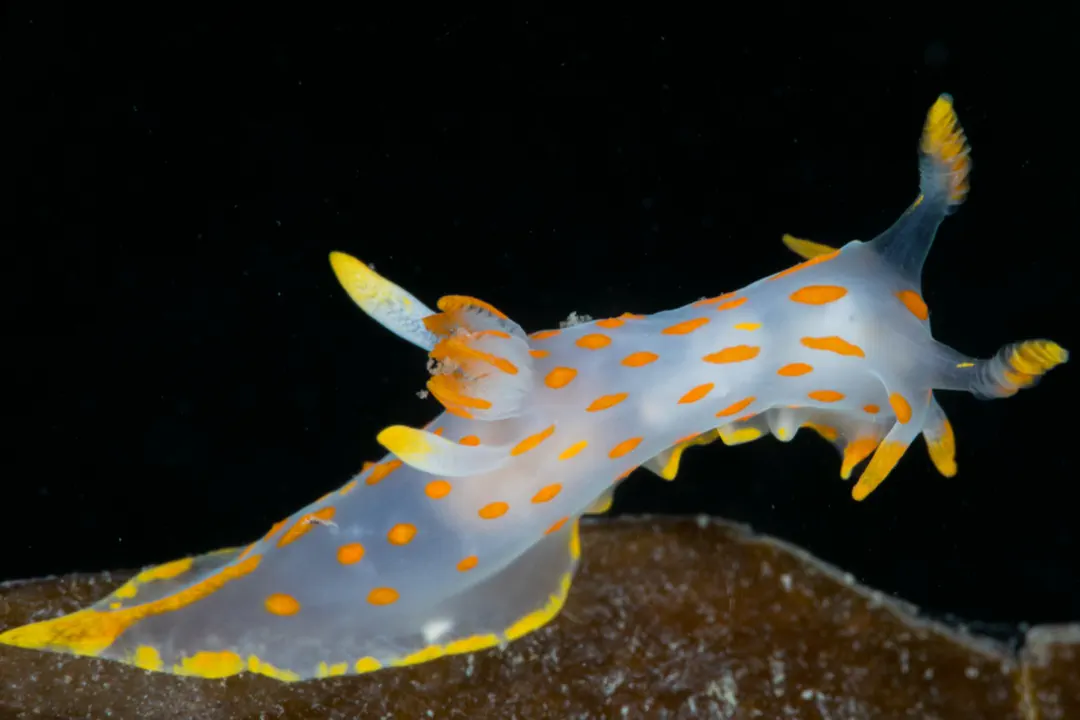 © Heine JensenCC BY 4.0 · iNaturalist
 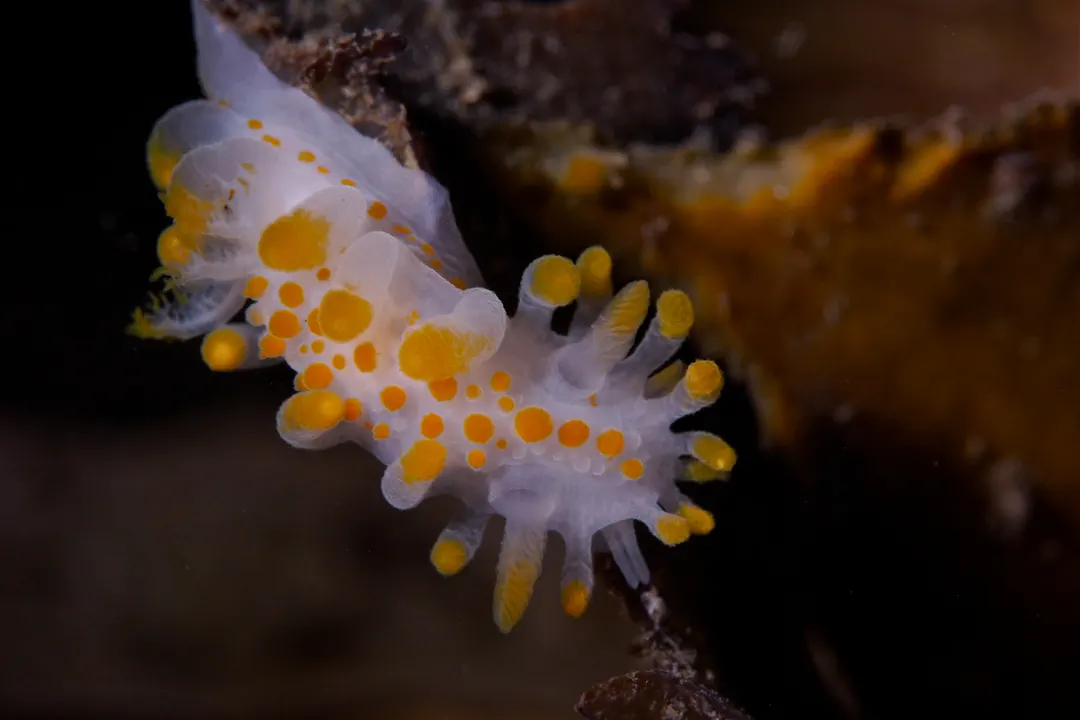 © Tine Kinn KvammeCC BY 4.0 · iNaturalist
 Best Time to Visit for Diving
The best time to dive in Norway depends on what you want to see. Summer, from roughly June to August, offers the easiest logistics, the warmest surface conditions, and the longest daylight, especially in the north where midnight sun can dramatically extend workable dive windows. In the south, this is usually the most comfortable season for new cold-water divers.
For visibility and macro life, late winter through spring can be excellent in many areas because plankton levels are lower and water can be clearer. At the same time, the water is colder, so divers need better insulation and more conservative exposure times. If your goal is photographing nudibranchs, anemones, and wreck growth, colder months can be very rewarding.
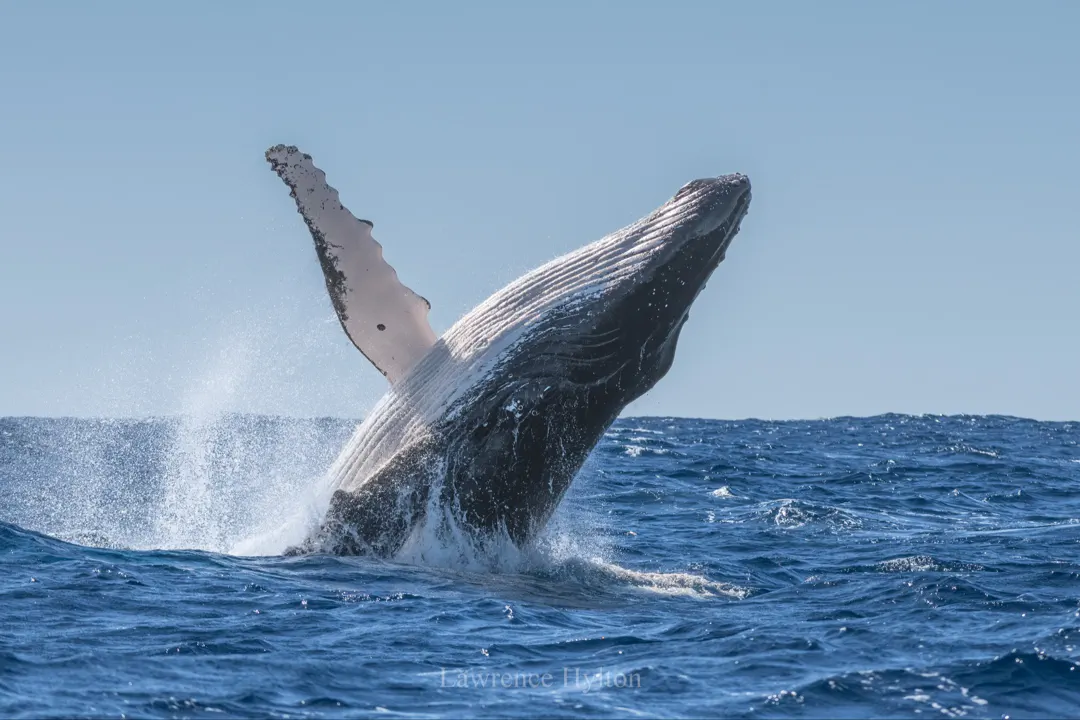
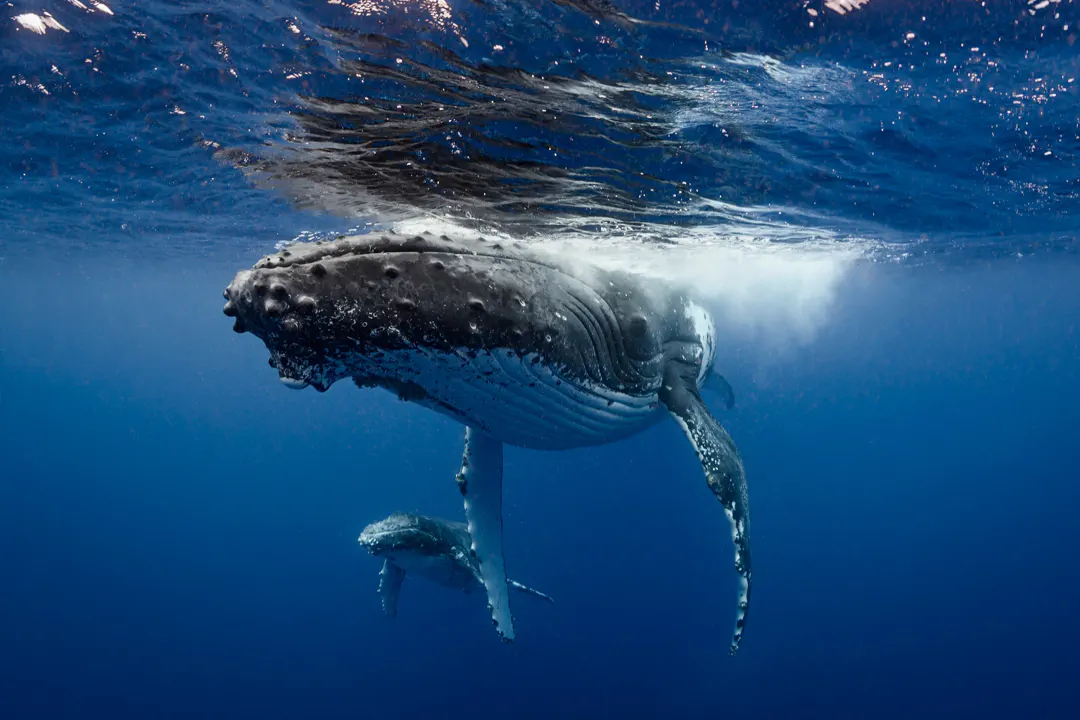
For whales and large pelagic mammals, autumn and winter are the key seasons in northern Norway. Herring migrations draw humpback whales and orcas to the north during the darker months, creating strong surface wildlife opportunities around places such as Andenes, the Troms region, and parts of the Lofoten area. These are usually surface-based encounters rather than standard recreational dive targets.
Practical planning should account for storms, tidal currents, and daylight. In the far north, winter diving can involve very short days or polar night, so many operators concentrate their dives around safe, predictable weather windows. A flexible itinerary and local guidance matter more here than in many temperate destinations because conditions can change fast.
Water temperature
Norway, monthly average
Oslofjord area (southern Norway near Oslo), typical surface waters for recreational diving sites; temperatures vary significantly northwards with Lofoten ~2-3°C cooler year-round
Notable Dive Sites in Norway
Saltstraumen: The World's Strongest Tidal Current
Saltstraumen, near Bodø in Nordland, is one of Norway’s most famous dive sites because it combines extreme tidal flow with highly productive water. The current is commonly described as the world’s strongest tidal current, and the passage can move enormous volumes of water through a narrow channel several times a day. That creates powerful eddies, standing waves, and feeding opportunities for fish and invertebrates.
For divers, Saltstraumen is not a casual sightseeing site. Timing is critical, because slack water windows are short and current strength changes rapidly around the tide. Local operators typically plan dives very carefully, and the site, often dived between 5 and 30 meters, is best suited to experienced divers comfortable with negative entries, drift control, and cold-water exposure.
The biological payoff is substantial. Current-driven nutrient flow supports dense schools of cod (*Gadus morhua*) and coalfish (*Pollachius virens*), along with large plumose anemones (*Metridium senile*), kelp fronds, sea stars (*Asterias rubens*), and mussels (*Mytilus edulis*) on nearby rock faces. Invertebrate life is often especially prolific on vertical surfaces and in protected pockets where flow delivers food without fully scouring the substrate.
Seasonality affects what divers see. In warmer months, kelp growth and fish activity are often more conspicuous near the surface, while colder periods can improve water clarity. Because the site is exposed and tidal, the most important factor is not the calendar but the exact tide cycle, weather, and the operator’s current assessment of safety.
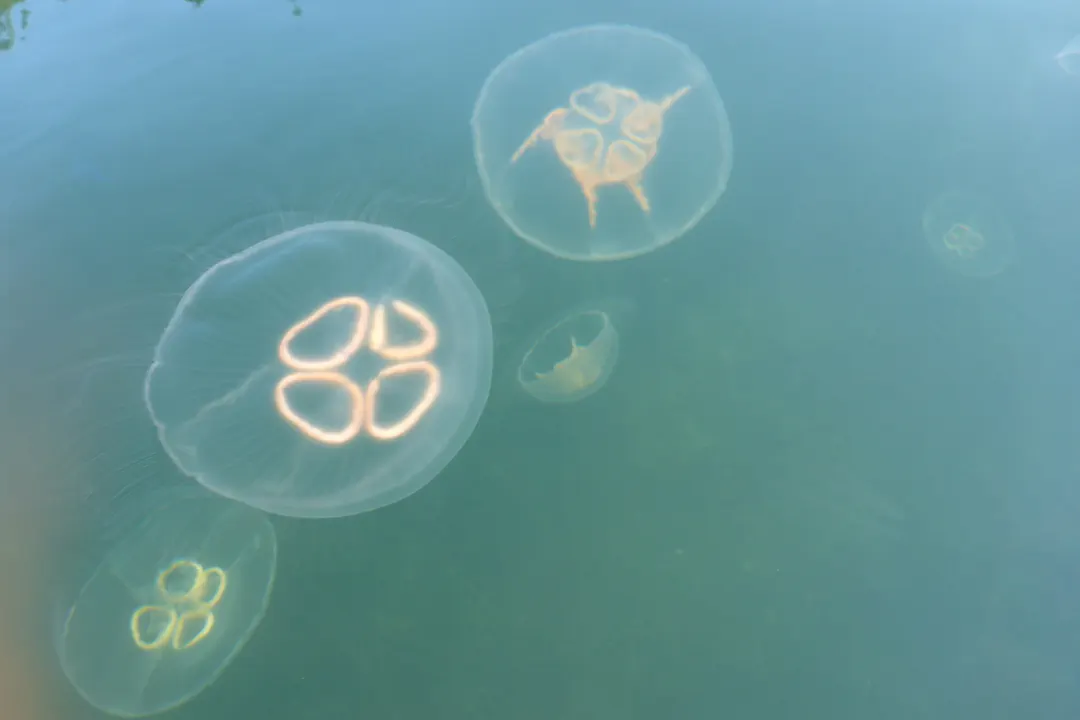 © mfeaverCC BY 4.0 · iNaturalist
 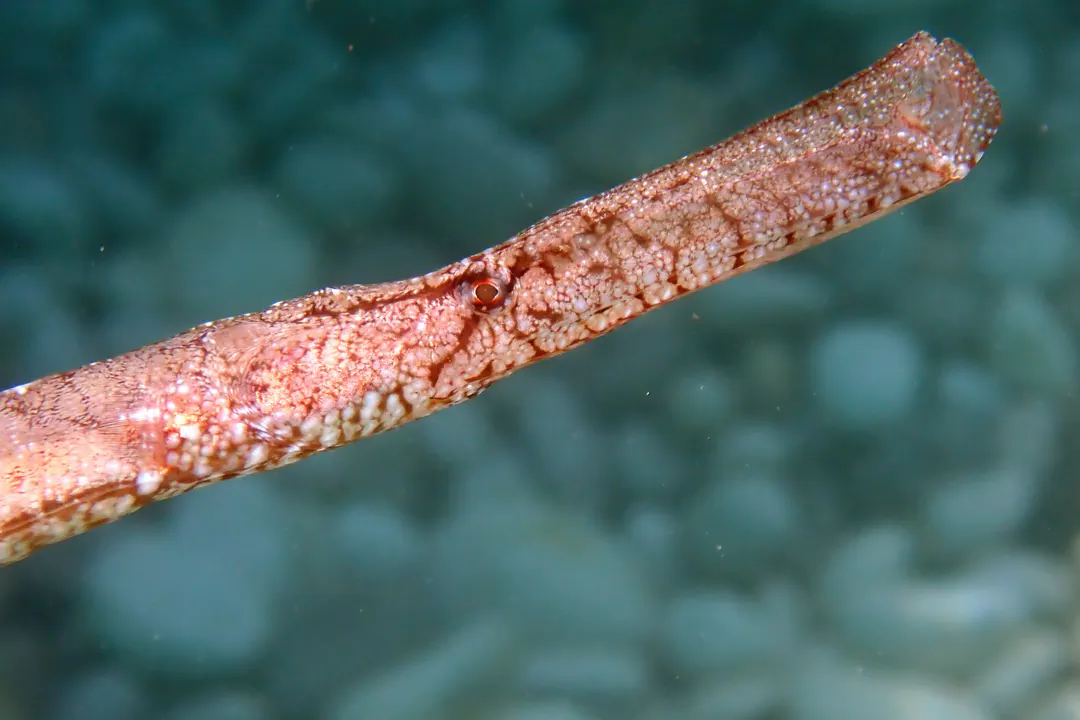 © Eridan XharahiCC BY 4.0 · iNaturalist
 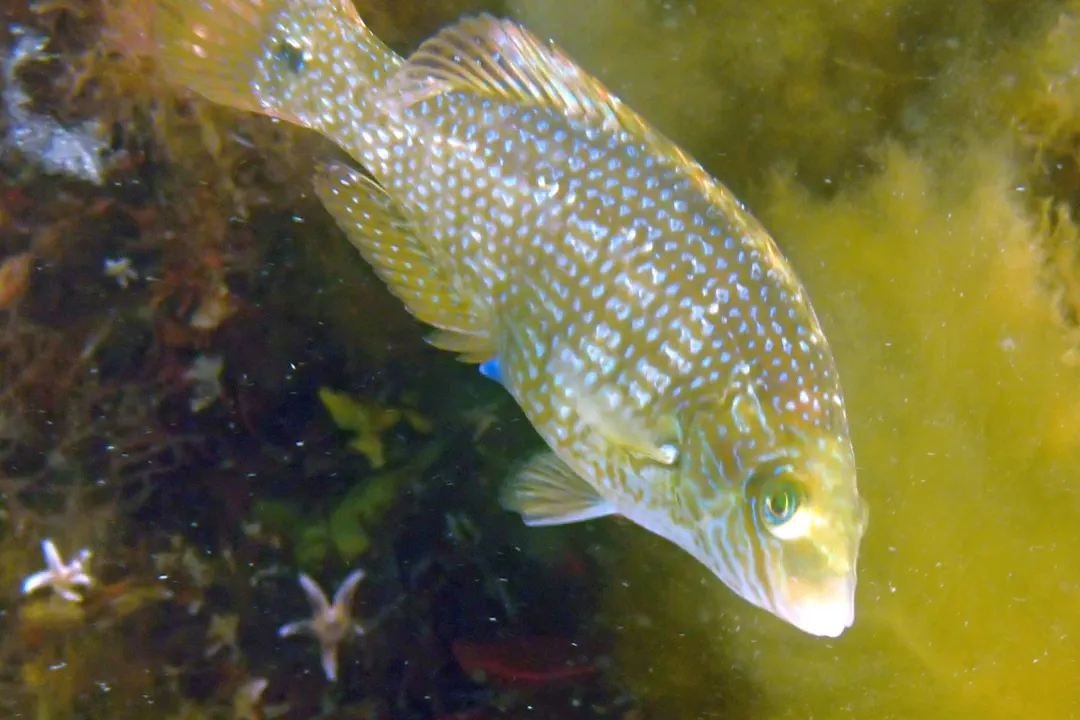 © Micha BaumCC BY-SA 4.0 · iNaturalist
 Gulen: Nudibranch Capital and Wreck Diving
Gulen, on Norway’s western coast near the Sognefjord, is one of the country’s best-known macro and wreck-diving regions, typically explored between 10 and 30 meters. The area has a strong reputation for small, colorful organisms, relatively accessible conditions, and good structure for photographers who want to spend time on nudibranchs, crustaceans, and rocky reef life. Cold, clear water also helps preserve wrecks and makes details easier to photograph.
The site’s ecological appeal comes from the combination of sheltered fjord water and productive coastal currents. In a Norwegian context, that often means a mix of kelp, mixed hard-bottom communities, and soft-bottom patches where burrowing and scavenging species can thrive. The result is a strong overlap between scenic diving and biological richness, especially for divers with lights and macro lenses.
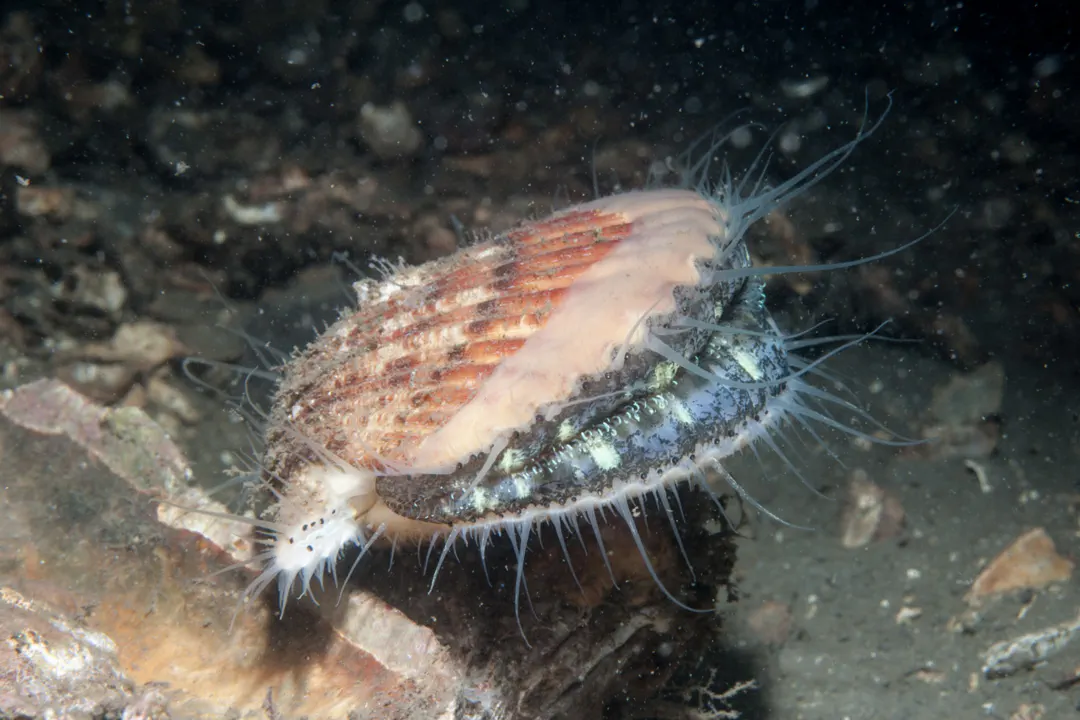
Gulen is especially suitable for divers who prefer moderate conditions over heavy current. Compared with places like Saltstraumen, it is generally easier to plan relaxed bottom time, which makes it better for observing nudibranchs such as *Polycera quadrilineata* and *Limacia clavigera*. Wreck dives here can also attract ballan wrasse (*Labrus bergylta*), crabs (*Cancer pagurus*), sea stars, and anemones as colonizers of hard surfaces.
For seasonal planning, late spring through early autumn is often the most practical window for extended boat access and more comfortable surface conditions. Colder months can still offer excellent visibility and macro life, but dive planning becomes more weather-dependent. Gulen’s strength lies in steady, detailed exploration rather than extreme conditions, which makes it a good fit for photographers and newer cold-water wreck divers.
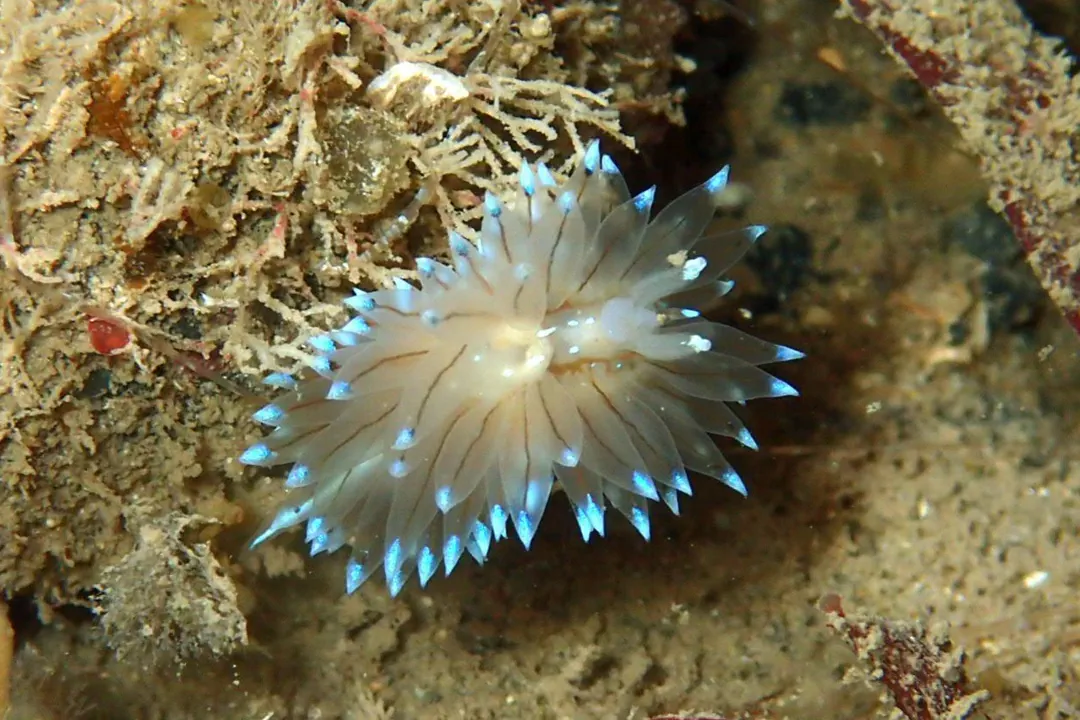 © Rebekah BajkóCC BY 4.0 · iNaturalist
  © Bernard PictonCC BY 4.0 · iNaturalist
 Lofoten Islands: Arctic Wonders and Whale Encounters
The Lofoten Islands offer some of the most dramatic underwater scenery in Norway, with steep walls, kelp-covered slopes, strong light effects, and cold-water visibility that can be excellent in the right conditions. The region sits well inside the Arctic Circle, so the seasonal cycle is extreme: long summer days and very short winter daylight shape when diving is most practical. Many sites are shore accessible or short boat rides away, typically explored between 5 and 25 meters.
Large marine mammals are part of Lofoten’s broader marine appeal, but they are usually encountered at the surface rather than underwater. Humpbacks and orcas can appear in northern Norway when herring are present, especially in the colder months, and that activity draws wildlife watchers to the region. Divers commonly combine underwater trips with whale-spotting from boats or shore-based excursions.
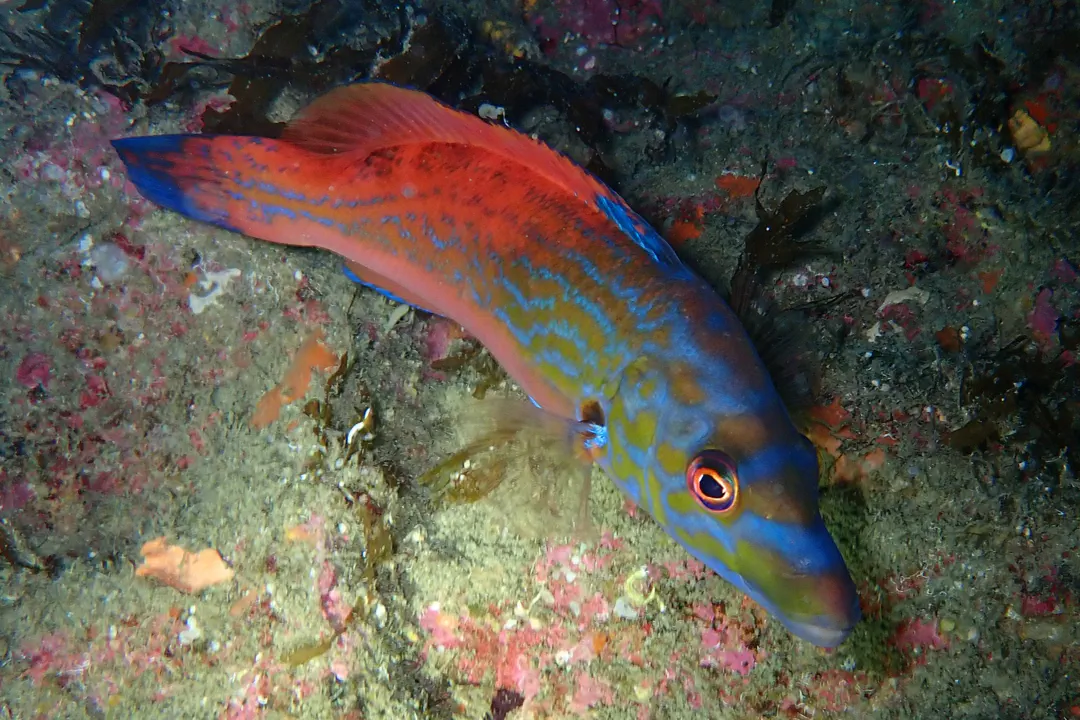
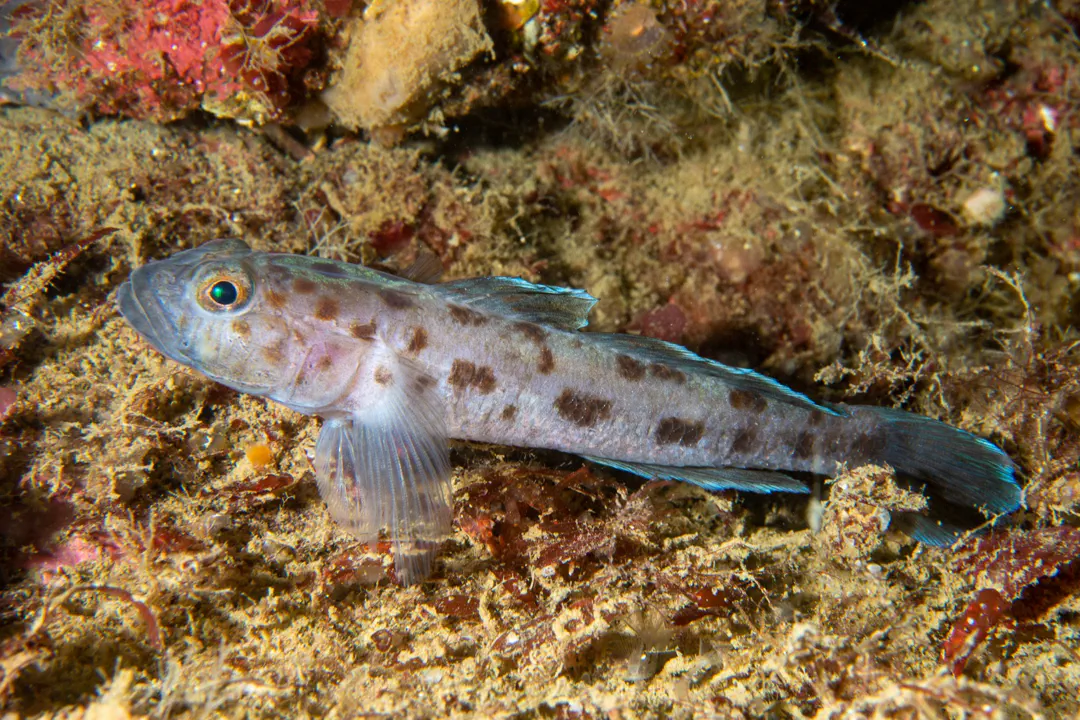
Underwater, the more reliable encounters are with cold-water reef fish, kelp forest species, and anemones rather than with large pelagic mammals. Species such as cuckoo wrasse (*Labrus mixtus*), two-spotted goby (*Thorogobius ephippiatus*), and plumose anemones (*Metridium senile*) fit the region’s cold temperate to subarctic habitats. The best dives often emphasize structure: kelp, rock walls, ledges, and sponge-covered boulders.
For divers, the practical value of Lofoten is the combination of scenery and accessibility. Summer conditions allow long working days with surface temperatures around 10-12°C. Winter brings stronger weather risks but also the highest chance of seeing migrating whales nearby, so the region rewards both underwater photographers and travelers who want a full marine experience.
 © Julien RenoultCC BY 4.0 · iNaturalist
  © Bernard PictonCC BY 4.0 · iNaturalist
 Narvik: A Wreck Diver's Paradise
Narvik is one of Norway’s most important wreck-diving destinations because the fjord played a major strategic role during the Second World War. Several wrecks from the 1940 Battle of Narvik lie in cold, deep, and often clear water, and the low temperatures have helped preserve structural details that would deteriorate faster in warmer seas. For technical and advanced recreational divers, that combination creates an unusually atmospheric underwater archive.
The wrecks around Narvik are not all shallow sightseeing dives. Some sit at depths between 15 and 60 meters that require advanced planning, and conditions can include cold water (often 4-8°C), limited bottom time, and the need for precise buoyancy control around fragile structure and entanglement hazards. Divers should treat these sites as historical wrecks first and biological reefs second, even though marine life has colonized them over time.
Colonization by cold-water species is an important part of the Narvik experience. Hard surfaces quickly attract anemones (*Metridium senile*), barnacles, mussels, crabs (*Cancer pagurus*), and mobile scavengers, while fish use the wrecks for shelter and feeding. Where current and light are sufficient, wreck superstructure can become densely decorated, creating a strong contrast between steel history and living communities.
Seasonally, many divers prefer the brighter months for logistics and visibility, but winter can also offer striking clarity if conditions cooperate. Because the area is northern and weather-sensitive, expedition-style planning is common. The main draw is not a single species list but the overall combination of preserved history, cold-water life, and the visual impact of large wrecks set in a fjord landscape.
 © Julien RenoultCC BY 4.0 · iNaturalist
 Practical Tips for Diving in Norway
Diving in Norway almost always means planning for cold water. A drysuit is the norm for most recreational diving because it allows the diver to stay dry and manage insulation with undergarments; neoprene wet suits are generally only comfortable for short dives in the warmest southern conditions. Gloves, a hood, and good thermal underlayers are just as important as the suit itself.
Local conditions can change quickly, so tide tables, wind direction, and site-specific briefing matter more than they do at many resort destinations. Strong currents at places like Saltstraumen or around narrow fjord mouths can completely alter the dive plan within minutes, and many of Norway’s best sites are best dived with operators who know the exact entry, exit, and slack-water timing.
Regulation and access vary by site, especially around wrecks and protected areas. Some historical wrecks should be treated with special caution because of depth, penetration risk, and preservation concerns, while nature reserves or marine protected zones may limit collecting, anchoring, or other impacts. Divers should confirm local rules before travel rather than assuming all fjord sites are open and interchangeable.
For comfort and safety, conservative gas planning, redundant exposure protection, and reliable surface support are all important. Even in summer, water temperature can be low enough to shorten bottom times for divers who are not well insulated, and fatigue sets in faster in cold water. The best approach is to dive shorter, well-planned profiles and prioritize thermal comfort over pushing duration.
Frequently Asked Questions About Diving in Norway
Questions
Is diving in Norway suitable for beginners?
Yes, but only at the right sites and with realistic expectations. Many Norwegian locations are accessible for beginners, yet cold water, variable visibility, and strong currents at places like Saltstraumen make drysuit experience and good buoyancy control valuable. Calm fjord sites in the south are better first choices than exposed tidal channels or deep wrecks.
What is the visibility like in Norwegian waters?
Visibility can range from poor to excellent depending on season, runoff, and site exposure, with many coastal dives offering roughly 5–20 meters and some clear-water days reaching 20 meters or more. Winter and early spring often improve clarity because plankton levels are lower, while summer blooms and rainfall can reduce visibility in fjords and near river mouths. Local conditions matter more than any single national average.
Do I need a drysuit to dive in Norway?
For most divers, yes. Coastal water temperatures are commonly cold enough that a drysuit is the practical standard, especially if you want longer dives or plan to visit northern sites, wrecks, or spring and autumn conditions. Even in summer, a well-insulated drysuit with proper undergarments, hood, and gloves is usually the safest and most comfortable choice.
Can I see whales while diving in Norway?
You can see whales in Norway, but direct underwater encounters are not the norm for recreational divers. Humpbacks and orcas are most often seen at the surface in northern Norway during herring season, especially in the colder months, and travelers frequently combine diving with whale watching rather than expecting regular underwater whale dives. In many cases, the whale experience is a boat-based or shoreline observation rather than part of the dive itself.