At a depth of 12 meters on the dark volcanic sand of Main Point in Anilao, a two-centimeter sliver of electric blue glides across a beige encrusting sponge. Two tiny orange shafts sweep through the gentle current like miniature radio antennas, flexing toward a passing trail of organic molecules. Above its tail, a delicate rosette of white feathery plumes expands into the water, pulsing steadily with every subtle shift in flow.
Identifying nudibranchs underwater requires moving past broad body colors and examining subtle physical structures. The primary focus of a nudibranch identification guide for divers lies in observing fine anatomical details rather than relying on flash memory. While a vivid pattern of yellow or violet draws the eye, true species identification rests on the fine architecture of the head, back, and mantle edge.
Whether diving in tropical muck sites at 28°C or cold temperate kelp forests at 12°C, these shell-less marine snails display consistent diagnostic features. By systematically observing the rhinophores on the head, the arrangement of respiratory gills or cerata along the body, and the shape of the mantle margin, divers can confidently distinguish between hundreds of lookalike species.
What Is a Nudibranch?
Nudibranchs are soft-bodied marine gastropod mollusks that belong to the order Nudibranchia, within the phylum Mollusca and class Gastropoda. Their name originates from Latin and Greek roots translating to "naked gills," referencing the exposed respiratory structures carried openly on their backs without the protection of a shell or mantle cavity. While juvenile nudibranchs possess a microscopic shell during their free-swimming larval stage, adult individuals discard this armor completely as they settle onto the sea floor.
According to the World Register of Marine Species (WoRMS), Nudibranchia taxonomic record, Nudibranchia is recognized as an accepted order within Gastropoda whose internal relationships continue to be refined through morphological and molecular studies. These animals lack the hard operculum found in typical sea snails, relying instead on chemical defenses, camouflage, or physical concealment to survive on reefs worldwide.
Most nudibranch species are simultaneous hermaphrodites, possessing both male and female reproductive organs, though they still require a partner to exchange genetic material during mating. Following fertilization, they deposit intricate ribbons or spiral coils containing thousands of tiny eggs directly onto rocks or host organisms. Despite their brief adult lifespans—which often range from a few weeks to less than a year—nudibranchs grow rapidly and fill highly specialized predatory niches.
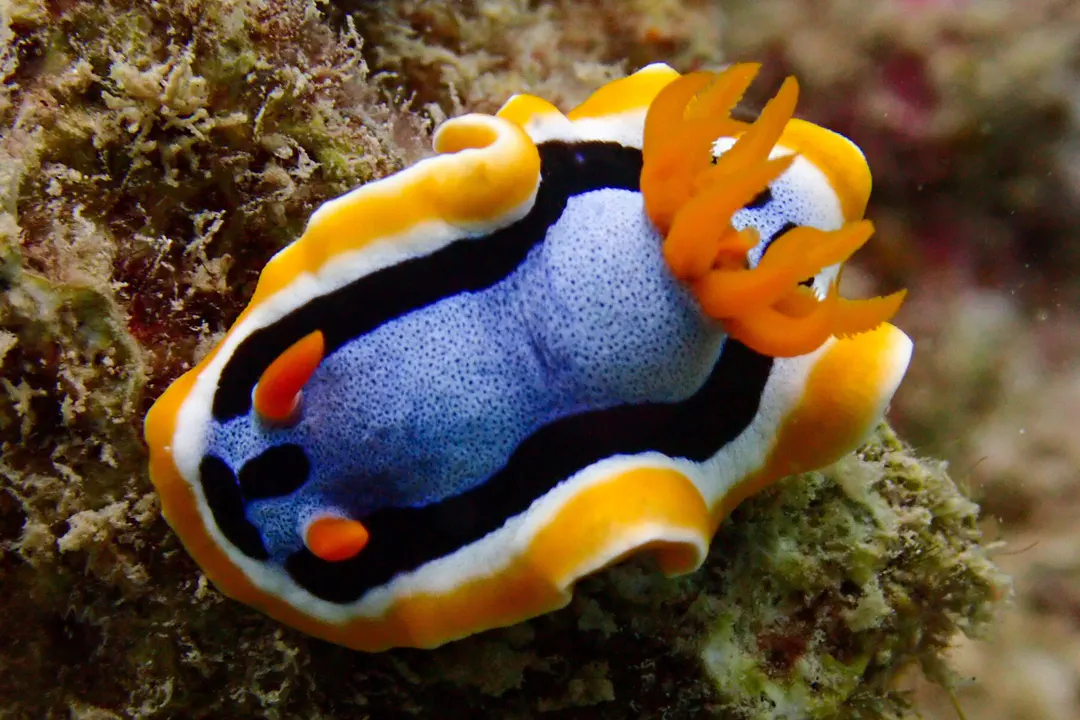
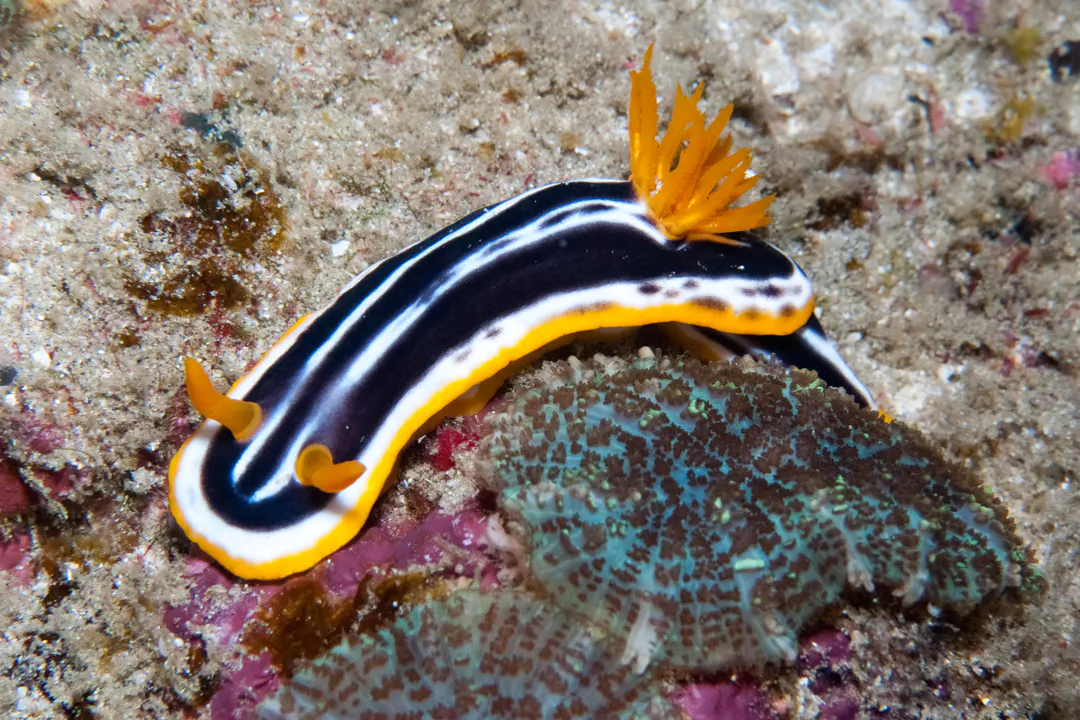 © Georgina JonesCC BY-SA 4.0 · iNaturalist
Chromodoris africana
***Chromodoris africana***, or four-coloured nudibranch, is a species of colourful sea slug, a dorid nudibranch, a marine gastropod mollusc in the family [Chromodorididae](seabook://category?id=0dba81...
Key Anatomical Features for Nudibranch Identification
Examining a nudibranch begins at the anterior end with the rhinophores, which are paired, horn-like sensory organs extending from the head. These structures are not eyes or ears; instead, they function as chemical receptors that detect dissolved scents carried by ocean currents. Rhinophores vary widely in structure between species, featuring smooth shafts, perfoliate rings with horizontal ridges, or elaborate branching projections designed to maximize surface area.
Next, shift your attention to the dorsal respiratory structures located farther back along the body. In dorid species, breathing occurs through a posterior branchial plume of feathery gills that surrounds the anus and can often be retracted into a protective pocket when threatened. In contrast, aeolid species lack a central plume, utilizing vertical finger-like processes called cerata that line the dorsal surface to absorb oxygen directly from the surrounding water column.
Finally, evaluate the mantle margins, body texture, and foot shape to complete the anatomical profile. The mantle skirt may extend outward like a flounced hem, lie flat against the sides, or display raised sensory nodules called tubercles. Observing whether the tail ends in a sharp point or a rounded spade, along with noting the presence of extended oral tentacles near the mouth, provides essential structural clues that narrow down difficult species matches.
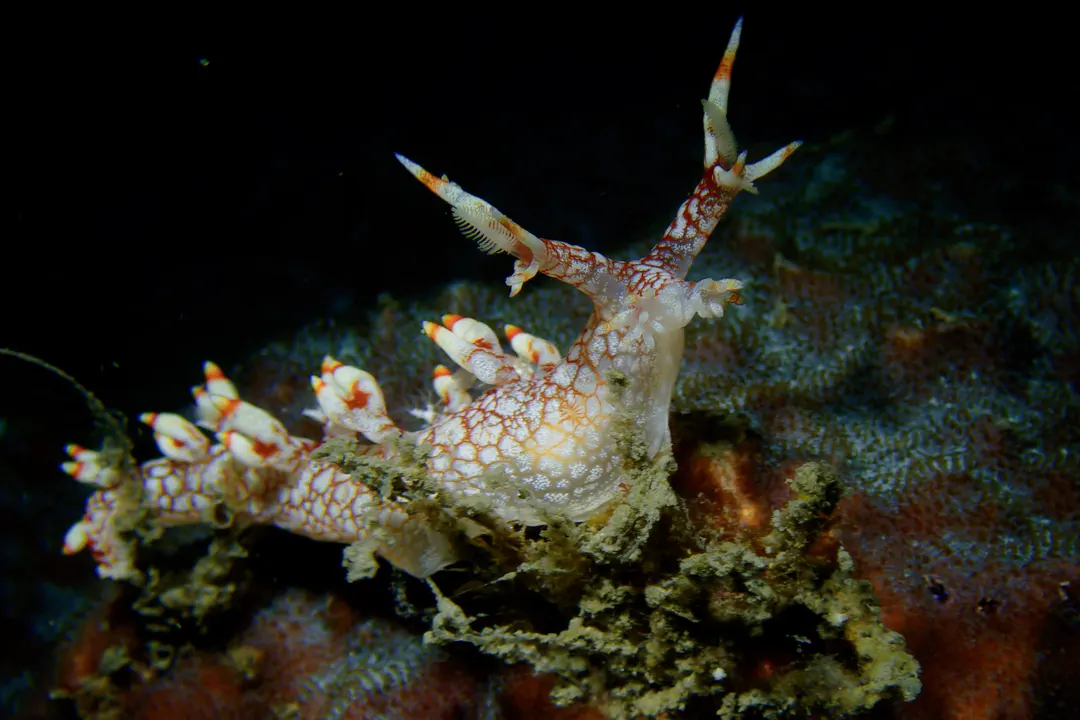 © Jay ParolineCC BY 4.0
Bornella stellifera
Bornella stellifera is a species of sea slug, a nudibranch, a marine gastropod mollusk in the family Bornellidae. ## Description The body is covered with cerata-like dorsal and lateral outgrowths, wit...
The Major Suborders of Nudibranchs
Divers typically encounter two primary structural forms on the reef: dorid nudibranchs and aeolid nudibranchs. Dorid nudibranchs generally present a flattened, oval body shape protected by a broad mantle skirt that covers the muscular foot beneath. Their defining characteristic is a ring of feathery, exposed gills situated near the rear of the body, which can vary from simple single plumes to intricate, twice-branched structures.
Aeolid nudibranchs display a narrower, more elongated body profile covered in dozens or hundreds of slender, finger-like projections called cerata. As noted by Encyclopaedia Britannica, Nudibranch cerata can function in gas exchange, contain digestive-gland branches, and in some species store nematocysts obtained from cnidarian prey. These cerata extend down the length of the back in distinct rows, arches, or clusters, providing both respiratory surface area and a formidable chemical barrier against predators.
Beyond these two prominent groups, divers may also spot dendronotid species on temperate or tropical reefs dominated by hydroids and soft corals. Dendronotids feature narrow bodies with branched or leaf-like processes along the back and prominent sheaths surrounding their rhinophores. Recognizing these overarching morphological divisions allows divers to quickly navigate field identification guides by narrowing down the broader evolutionary lineage before examining species-level details.
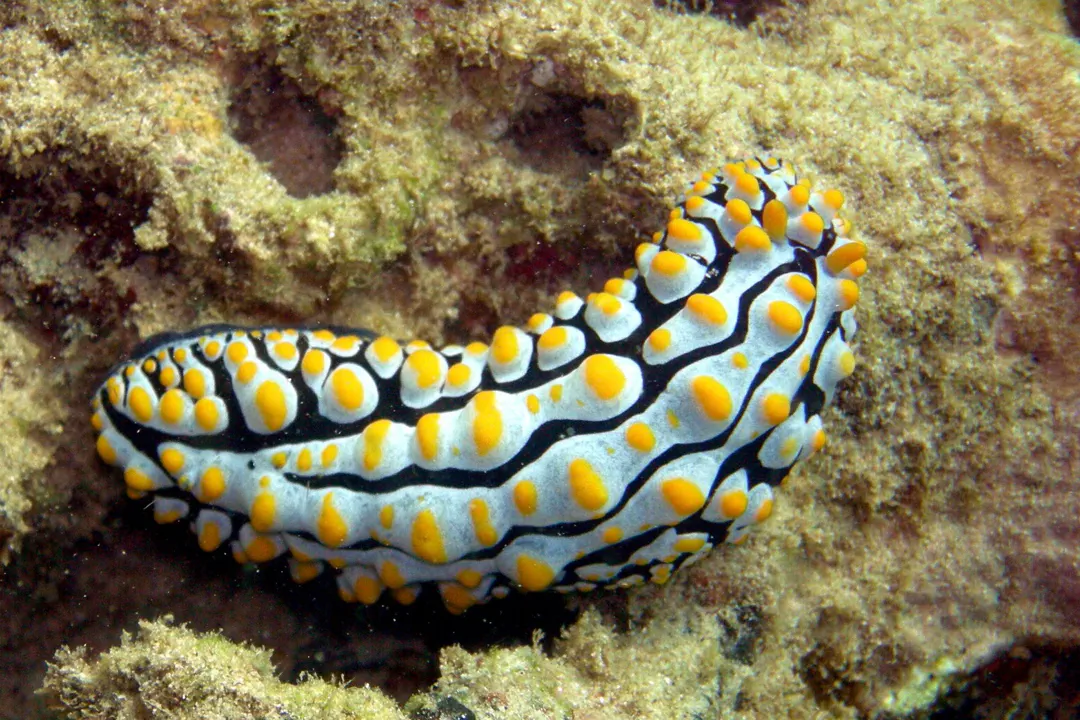 © Ian DugdaleCC BY 4.0 · iNaturalist
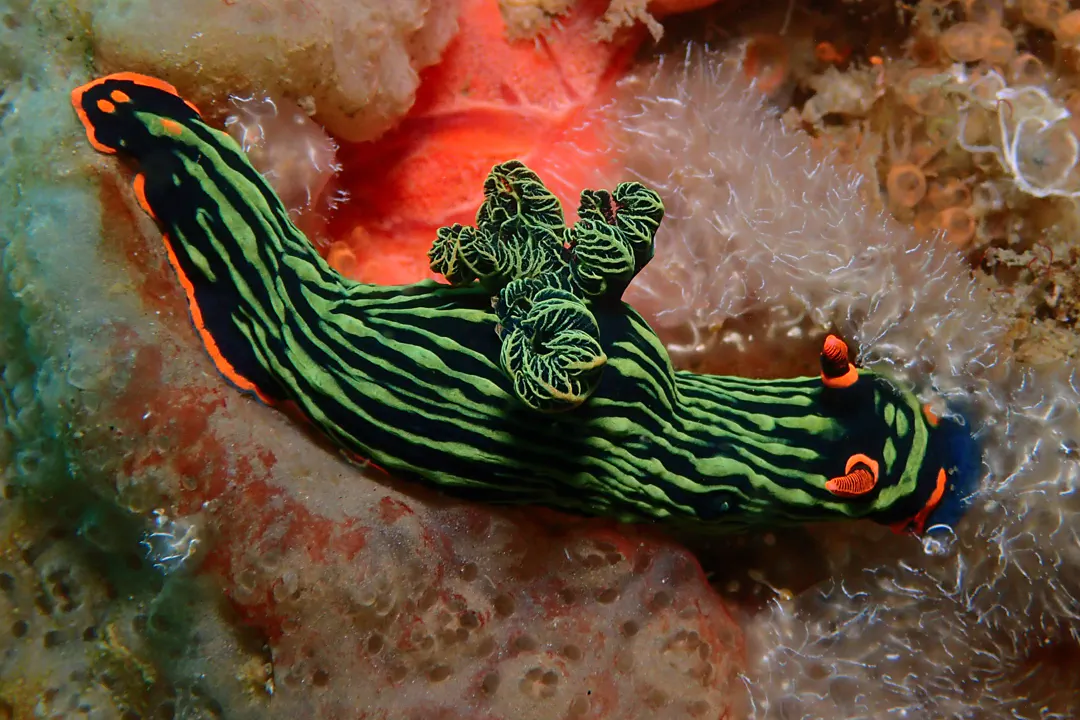 © Dan SchofieldCC BY 4.0
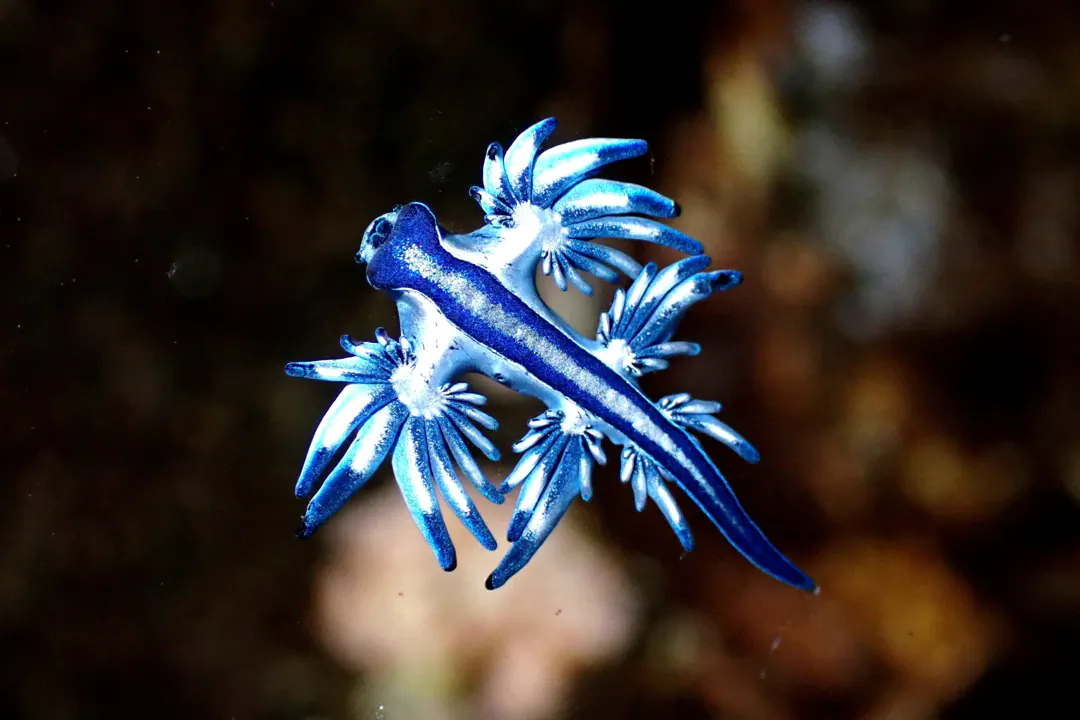 © Ben JobsonCC BY 4.0 · iNaturalist
 © Dan SchofieldCC BY 4.0 · iNaturalist
Distinguishing Nudibranchs from Flatworms and Sea Hares
A common hurdle for underwater naturalists is mistaking polyclad flatworms or sea hares for true nudibranchs. Marine flatworms belong to an entirely different phylum, Platyhelminthes, and possess exceptionally thin, papery bodies that slide smoothly across the reef surface without a muscular foot. While flatworms may feature colorful patterns and raised head folds called pseudotentacles, they lack true raised rhinophores with sensory lamellae and never possess external branchial plumes or cerata.
Sea hares, belonging to the order Aplysiida, are also sea slugs but differ from nudibranchs in both size and internal anatomy. They typically possess rounded, bulky bodies with soft internal shell remnants buried within their mantle cavity, along with rolled, rabbit-ear-like tentacles on their heads. Unlike carnivorous nudibranchs, sea hares are soft-bodied herbivores that feed primarily on macroalgae, often exuding a dark purple ink when disturbed on shallow reef flats.
Sap-sucking slugs (Sacoglossa) and headshield slugs (Cephalaspidea) represent additional sea slug orders that divers frequently encounter. Sacoglossans possess specialized mouthparts for piercing algal cells and sucking out sap, often displaying green coloration from functioning chloroplasts retained inside their bodies. Checking for raised, textured rhinophores and external respiratory structures immediately sets true Nudibranchia apart from these other marine gastropods.
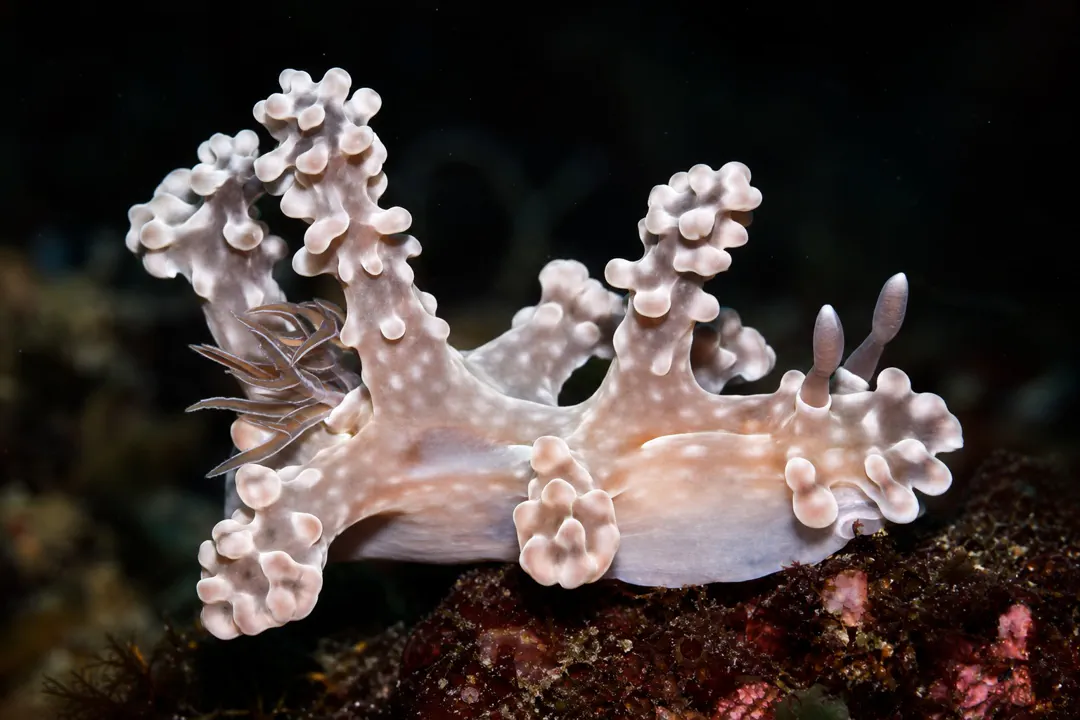 © seabook.appAll rights reserved
Miamira alleni
*Miamira alleni (Ceratosoma alleni)* is a species of colorful sea slug, a dorid nudibranch, a shell-less marine gastropod mollusk in the family [Chromodorididae](seabook://category?id=0dba8167-7887-4d...
Using Food Sources and Habitat to Narrow Identification
Many nudibranch species exhibit extreme dietary specialization, spending their entire adult lives living on or directly beside their primary food source. Dorid nudibranchs frequently feed on encrusting sponges, bryozoans, or tunicates, matching their body pigments to the underlying substrate for camouflage. Aeolid species generally prey upon hydroids, sea anemones, or soft corals, using specialized radular teeth to scrape individual polyps from hard surfaces.
Spotting a sea slug on a specific substrate provides an immediate shortcut for accurate field identification. For instance, finding a tiny, textured slug resting on a colony of blue stinging hydroids instantly narrows the possibilities to known hydroid-eating aeolid species. Using the Seabook app on your trip helps log sightings, cross-reference anatomical traits, and verify which species inhabit the specific host organisms you photograph.
Habitat conditions such as water depth, exposure to surge, and substrate type also dictate which nudibranch communities thrive in a given area. Exposed, high-current rock walls covered in hydroids attract swift-grazing aeolids, while sheltered muck slopes with volcanic silt host specialized sponge-feeding dorids and sand-dwelling species. Documenting the precise substrate and micro-habitat in your dive log transforms a simple photo into a valuable biological observation.
Photography Tips for Accurate Underwater Nudibranch Identification
Capturing macro photographs that serve as reliable scientific identification tools requires focusing on specific anatomical angles. Begin with a direct, top-down dorsal view that clearly shows the entire mantle outline, body symmetry, and pigment distribution across the back. This angle provides an immediate perspective on whether the animal possesses a central gill plume, paired rows of cerata, or broad mantle margins.
Next, adjust your position to capture a sharp, close-up photograph of the head region in profile or three-quarters view. Ensure the rhinophores are fully extended and in crisp focus, revealing the number of lamellar folds, shaft coloration, and rhinophore sheath shapes. A third detailed shot focusing on the posterior gill plume or individual cerata tips will capture subtle textures and internal digestive structures that prove vital for distinguishing cryptic species.
Lighting and camera setup play crucial roles in revealing fine micro-structures without washouts or harsh shadows. Position your strobes at oblique angles to illuminate raised tubercles and delicate gill filaments without blinding the camera sensor. Maintain a comfortable distance between your equipment and the reef surface, taking care never to touch or manipulate the animal or its delicate food substrate during the photo session.
Common Identification Pitfalls: Color Variations and Juveniles
Relying solely on body color is one of the most frequent mistakes made during underwater identification. Coloration within a single nudibranch species can vary significantly due to geographic distribution, age, lighting conditions, and specific dietary intake. Some dorids absorb pigments directly from the sponges they consume, resulting in individuals of the same species ranging from pale cream to deep blue depending on their recent meals.
Juvenile nudibranchs present additional challenges because their adult anatomical features and color patterns may still be developing. Young individuals often possess far fewer cerata, less intricate gill plumes, and broader, less defined mantle borders than fully grown adults of the same species. A juvenile measuring only three millimeters might look like an entirely different organism when compared against a mature 50-millimeter specimen featured in field guides.
Camera artifacts, flash glare, and water clarity can also distort diagnostic features in underwater photographs. Overexposed strobes can erase delicate white rings on rhinophore tips, while blue-shifted ambient light can obscure subtle yellow borders along the mantle margin. Always verify your identification by evaluating at least two distinct physical structures alongside color markings before reaching a definitive conclusion.
Questions
Are all sea slugs classified as nudibranchs?
No. "Sea slug" is an informal term covering several distantly related shell-reduced gastropod groups, including nudibranchs, sea hares, sacoglossans, headshield slugs, and side-gilled slugs. Nudibranchs belong strictly to the order Nudibranchia, characterized by exposed respiratory structures and complete loss of an external adult shell.
What is the difference between Dorid and Aeolid nudibranchs?
Dorid nudibranchs feature a broad body with a feathery posterior branchial plume surrounding the anus, whereas Aeolid nudibranchs possess numerous finger-like dorsal projections called cerata that handle gas exchange and defense.
Can nudibranchs sting or hurt humans?
Nudibranchs are completely harmless to humans and do not bite or inject venom. While some aeolid species store stinging cells from cnidarian prey in their cerata tips, these microscopic capsules are intended for defense against tiny predators and cannot penetrate human skin.
Why are nudibranchs brightly colored?
Vivid colors primarily serve as aposematic warning signals, advertising to potential predators that the nudibranch contains foul-tasting or toxic chemicals acquired from its prey. Color patterns can also provide effective camouflage against specific host sponges or hydroids.
What photo angle is best for identifying a nudibranch?
A complete identification set requires a top-down dorsal view showing body shape and mantle pattern, a close-up profile of the head focusing on rhinophore structure, and a clear shot of the respiratory gills or cerata.

