
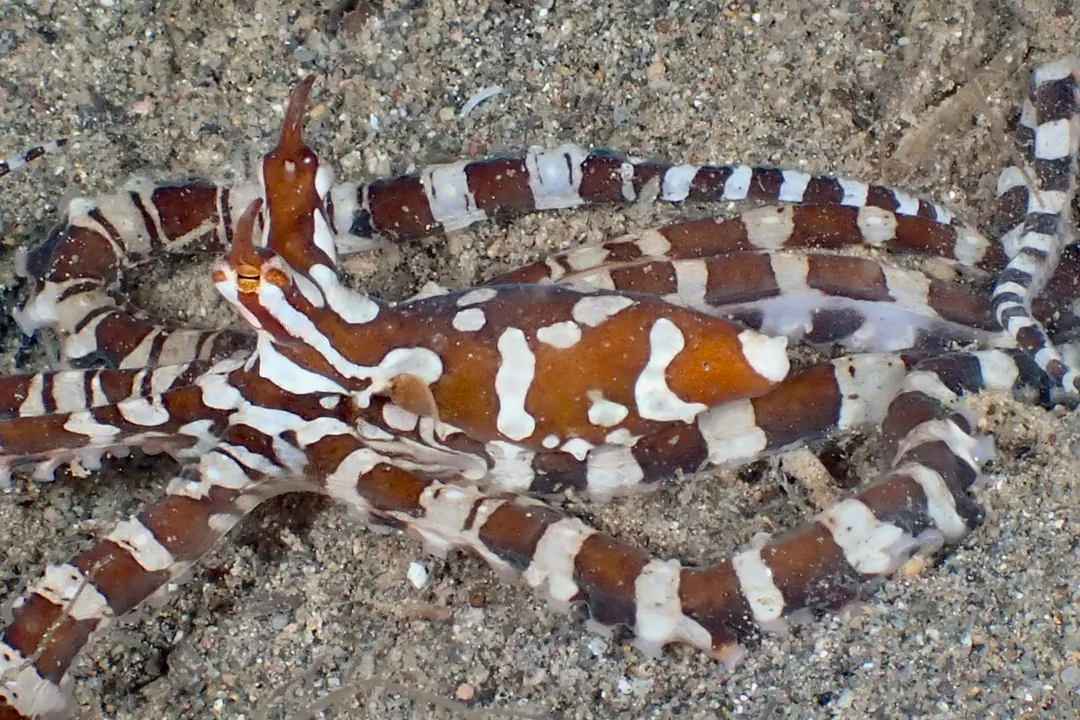
At a depth of twelve metres on the dark slope of Hairball in Lembeh Strait, a diver hovers two inches above fine volcanic sediment. A pale pair of stalked eyes emerges from an abandoned coconut shell, followed by eight banded arms marked in reddish brown and white. The wunderpus octopus glides across the dark silt, spreading its delicate webbing to blanket a small burrow before hunting for juvenile gobies in the dim daylight.
Exploring top muck diving destinations requires looking closely at habitats that appear empty at first glance. Sediment seabed temperatures across Equatorial Asia range from 25°C to 29°C year-round, with visibility typically varying between 5 and 15 metres depending on tidal movements and rainfall. Unlike coral walls bathed in sunlight, these silty slopes thrive on detritus, volcanic ash, and fallen organic matter.
Key regions including Lembeh Strait, Anilao, Dauin, Ambon Island, Milne Bay, and East Bali host extraordinary concentrations of rare marine life. Divers encounter flamboyant cuttlefish, spiny waspfish, ghost pipefish, and hundreds of sea slug species across these dark slopes. This style of diving suits both patient beginners with refined buoyancy control and experienced underwater observers seeking rare cephalopods and cryptic crustaceans.
What Is Muck Diving and What Critters Can You See?
Muck diving centers on exploring soft sediment bottoms, ranging from black volcanic sand and fine mud to crushed coral rubble and discarded coconut husks. While traditional reef diving focuses on expansive hard coral walls and large pelagic species, silt habitats reveal small animals that rely on camouflage, mimicry, and burrowing. Organisms here have evolved distinct physical adaptations to survive without hard reef structures for shelter.
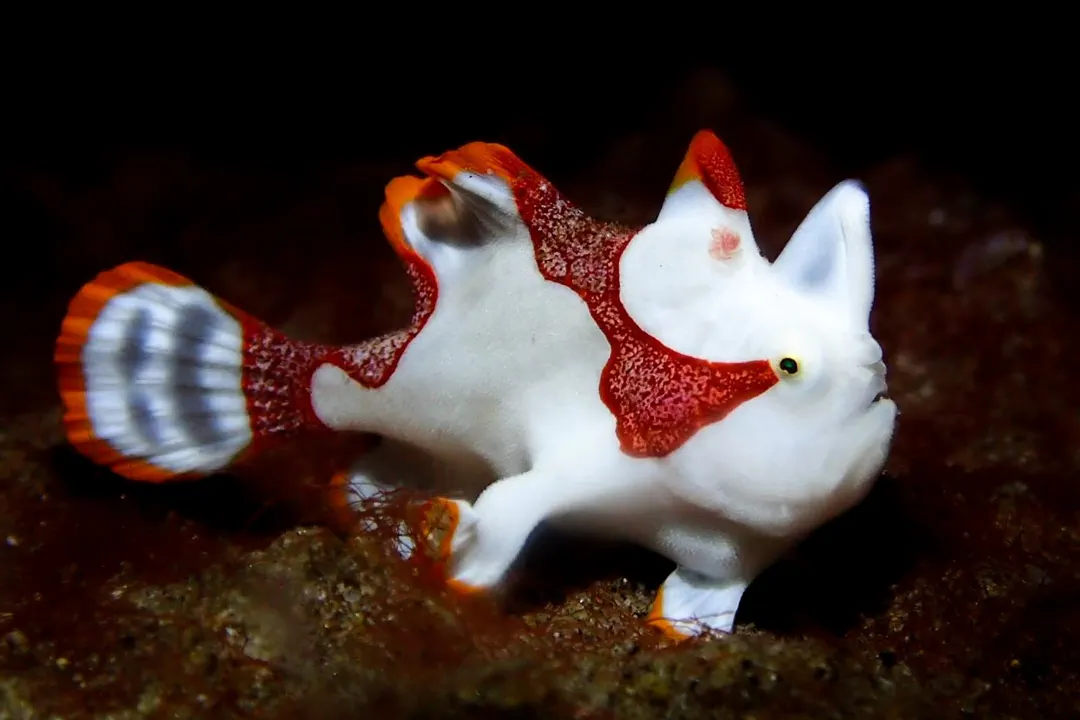
Bottom-dwelling animals utilize the soft substrate for protection and hunting. Flamboyant cuttlefish walk across the silt on modified arms, displaying pulsing bands of yellow, purple, and white when startled. Frogfish match the texture and colour of surrounding sponges or algae, using a modified dorsal spine topped with an esca lure to draw unsuspecting prey directly into their expansive mouths. Solar-powered nudibranchs and sap-sucking sea slugs graze on algae beds, while pipefish mimic blades of drifted seagrass.
Finding these creatures requires slow movement and careful scanning of the seafloor rather than covering long distances underwater. Divers logging their findings with the Seabook app can record exact micro-habitats, tracking where cryptic species settle on sand slopes. Careful observers often spot juvenile blue-ringed octopuses inside discarded glass bottles or notice dragon seamoths shuffling along sandy channels using modified pectoral fins.
 © Dan SchofieldCC BY 4.0 · iNaturalist
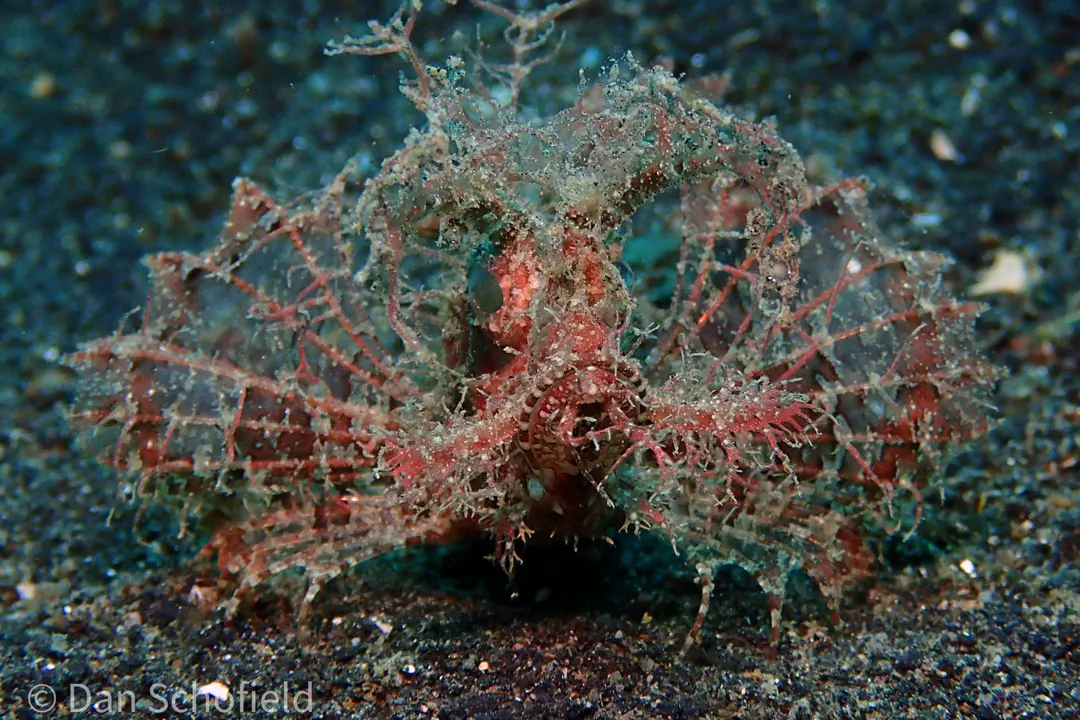
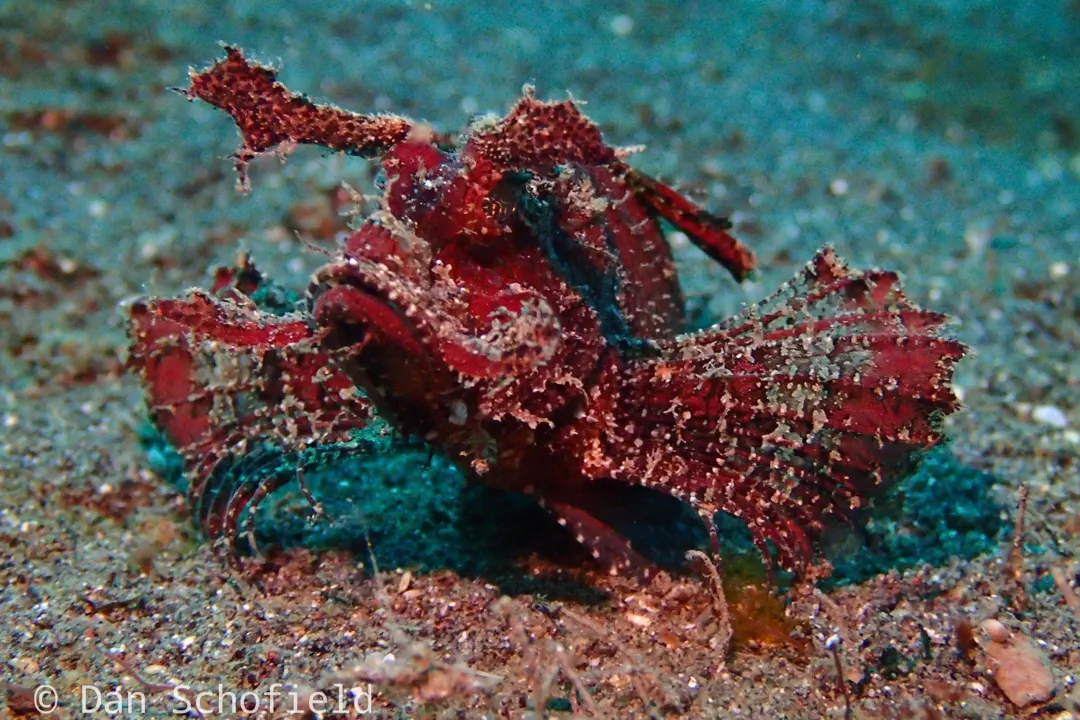
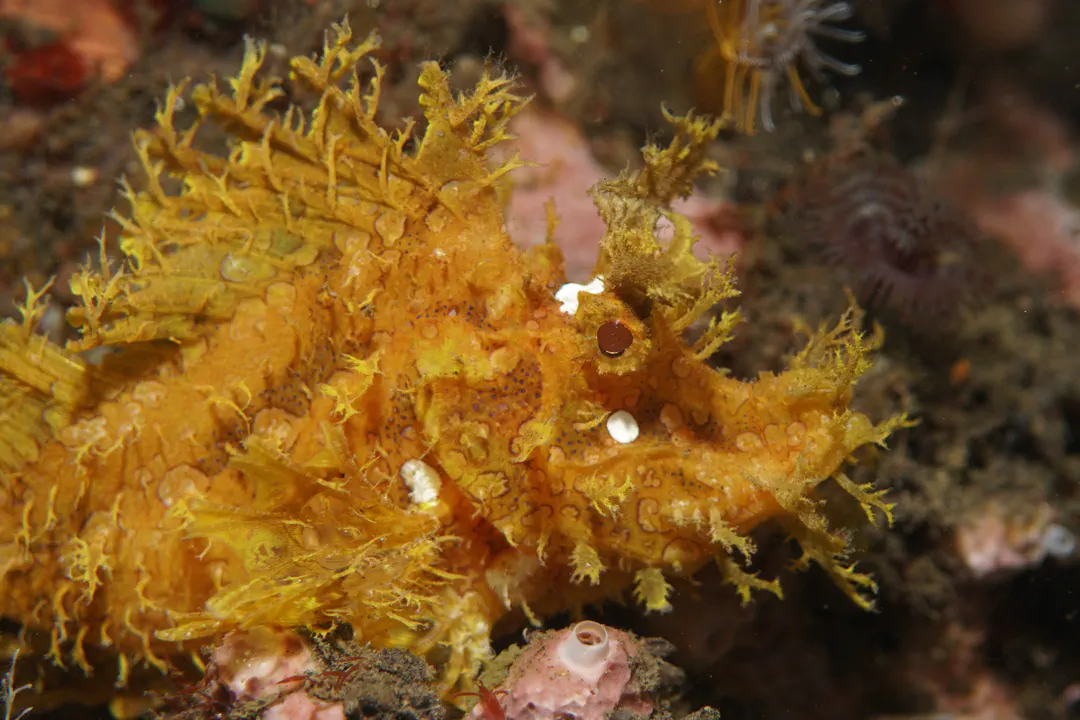
Pteroidichthys amboinensis
*Pteroidichthys amboinensis* is a scorpionfish native to the Indian and Pacific oceans. ## Description The Ambon scorpionfish is shaggy, and can change its color for the ideal camouflage. It has a wid...
Top Muck Diving Destinations Worldwide
The highest concentration of muck sites sits within the Coral Triangle, a region encompassing Indonesia, the Philippines, Papua New Guinea, and neighboring island nations. Deep ocean trenches, volcanic activity, and sheltered bays combine across this zone to create nutrient-dense basins with low wave energy. These conditions allow fine organic particles and volcanic sand to settle undisturbed along gentle marine slopes.
Each region within this tropical expanse presents distinct ecological niches shaped by coastal geography and local currents. Volcanic islands like Bali and North Sulawesi supply iron-rich black sand, whereas limestone regions and sheltered bays in the Philippines offer pale sand mixed with coral rubble. Water movement carries plankton through narrow channels, feeding suspension feeders like crinoids, tube anemones, and soft corals that double as critter homes.
Seasonal weather cycles dictate water clarity and animal activity across these regional hubs. Dry seasons generally reduce coastal runoff, improving clarity along shallow sand slopes while maintaining cool nutrient upwellings that bring deep-water organisms into shallow depths. Water temperatures remain between 25°C and 29°C year-round across most hubs, allowing marine life to breed continuously throughout the calendar year.
Lembeh Strait (North Sulawesi, Indonesia)
Separating Lembeh Island from the mainland of North Sulawesi, this narrow channel forms a natural shelter protected from heavy open-ocean swells. Dark volcanic sand washes down from nearby volcanoes, covering shallow slopes that drop into deep water. Nutrient-rich currents flow through the channel twice daily, sustaining dense populations of bottom-dwelling organisms across sites like Hairball, Aw Shucks, and Jahir.
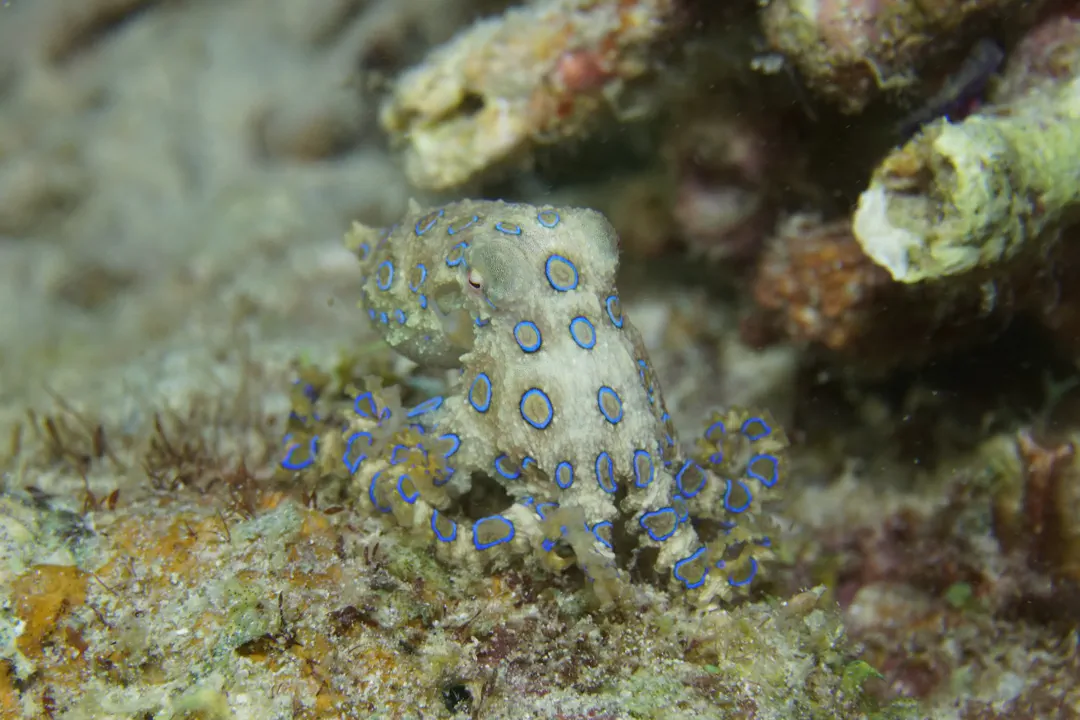
Divers scanning the black sand regularly spot rare scorpionfish and cephalopods resting in open sight. Paddle-flap rhinopias sit among soft sponges, matching their coloration to surrounding marine growth while waiting for small fish. Blue-ringed octopuses forage across open sand during late afternoon dives, displaying vivid iridescent rings across their skin when hunting for small crabs.
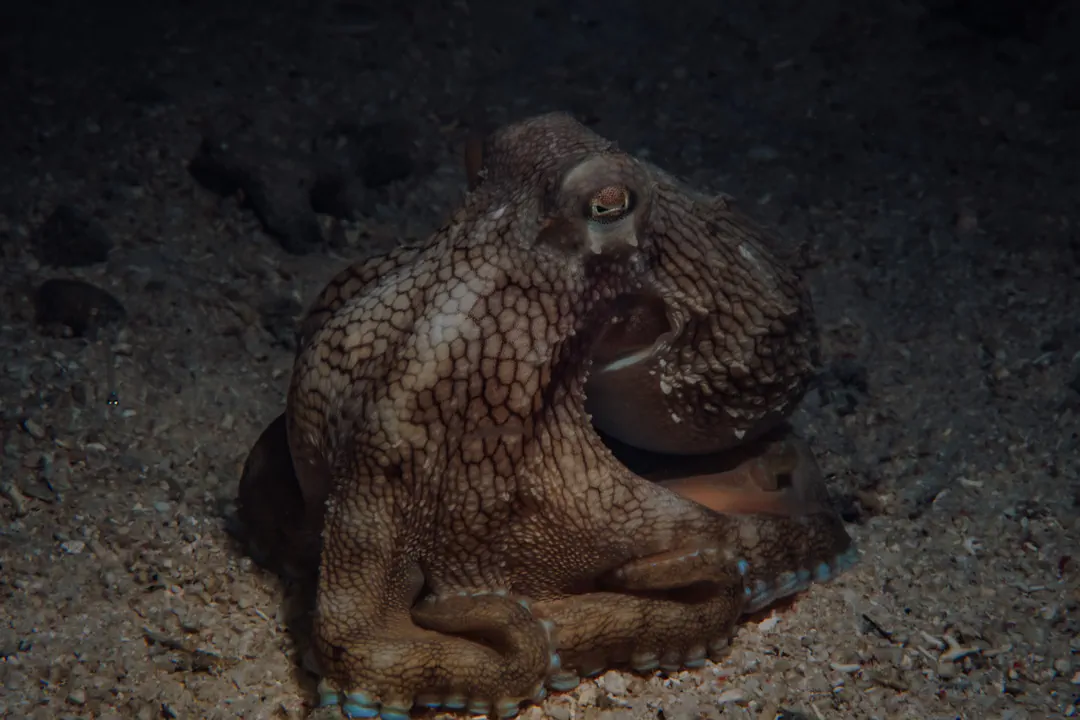
The sheltered waters allow for long, shallow dives with minimal current interference, maximizing bottom time for meticulous searches. Ghost pipefish float motionless near crinoids, and coconut octopuses carry clam shells across the silt to build protective shelters. Night dives reveal hunting bobbit worms extending iridescent jaws from burrows in the sediment.
Depth: 5-28 m. Access: boat, 10-25 minutes from Bitung resorts. Level: Open Water with good buoyancy. Best months: July-October.
 Chris SpainCC0 · iNaturalist
 © Stas KuryanAll rights reserved © Dan SchofieldCC BY 4.0 · iNaturalist
 © Dan SchofieldCC BY 4.0 · iNaturalist
 © Stas KuryanAll rights reserved
 © Stas KuryanAll rights reserved
Anilao (Batangas, Philippines)
Located on the Calumpan Peninsula three hours south of Manila, Anilao features a coastline dotted with rocky coves, pale sand patches, and rubble slopes. Sites like Secret Bay, Mainit, and Kirby's Rock combine shallow coral patches with soft sediment channels. The area benefits from tidal water exchange between Balayan Bay and the Verde Island Passage, supplying oxygenated water to shallow benthic communities.
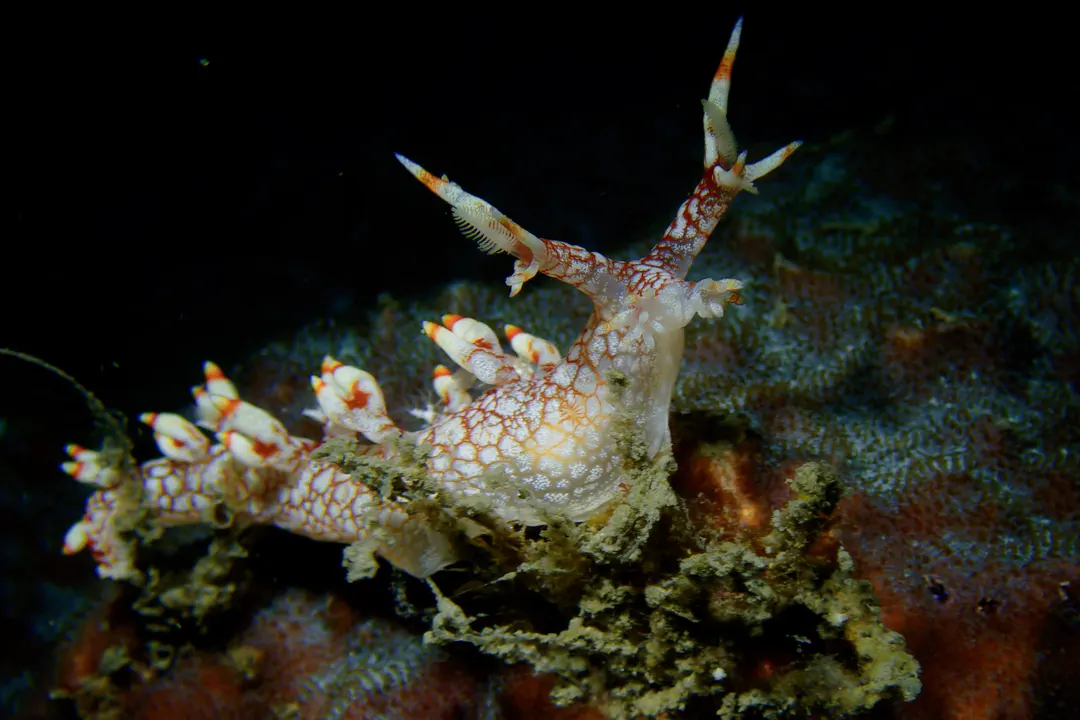
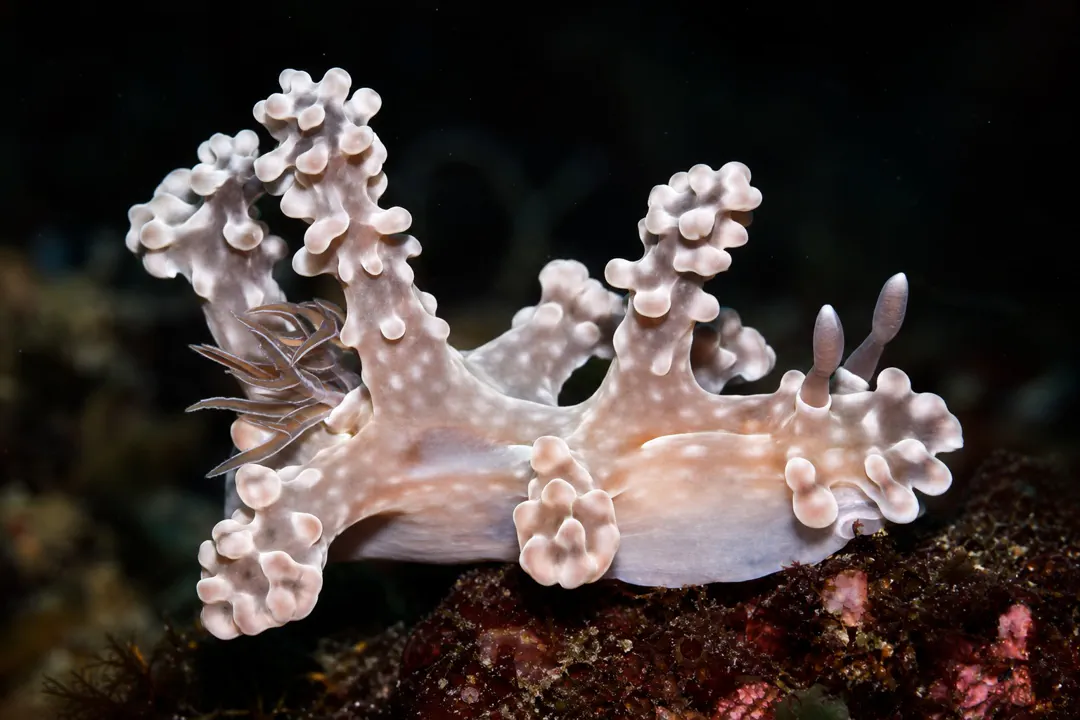
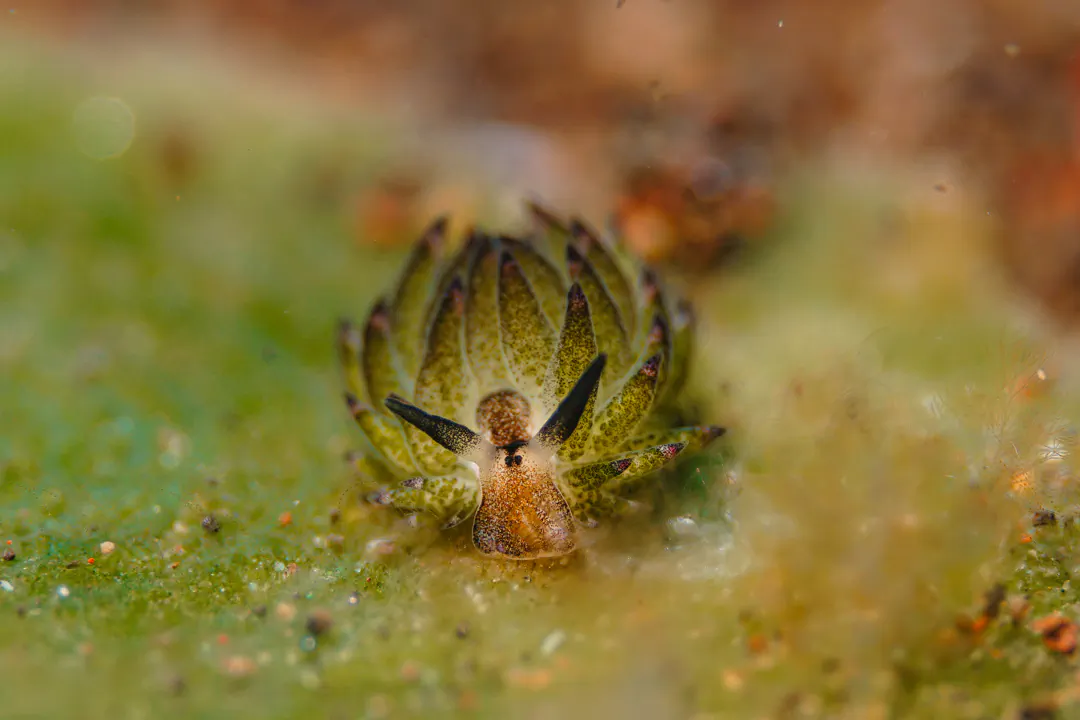
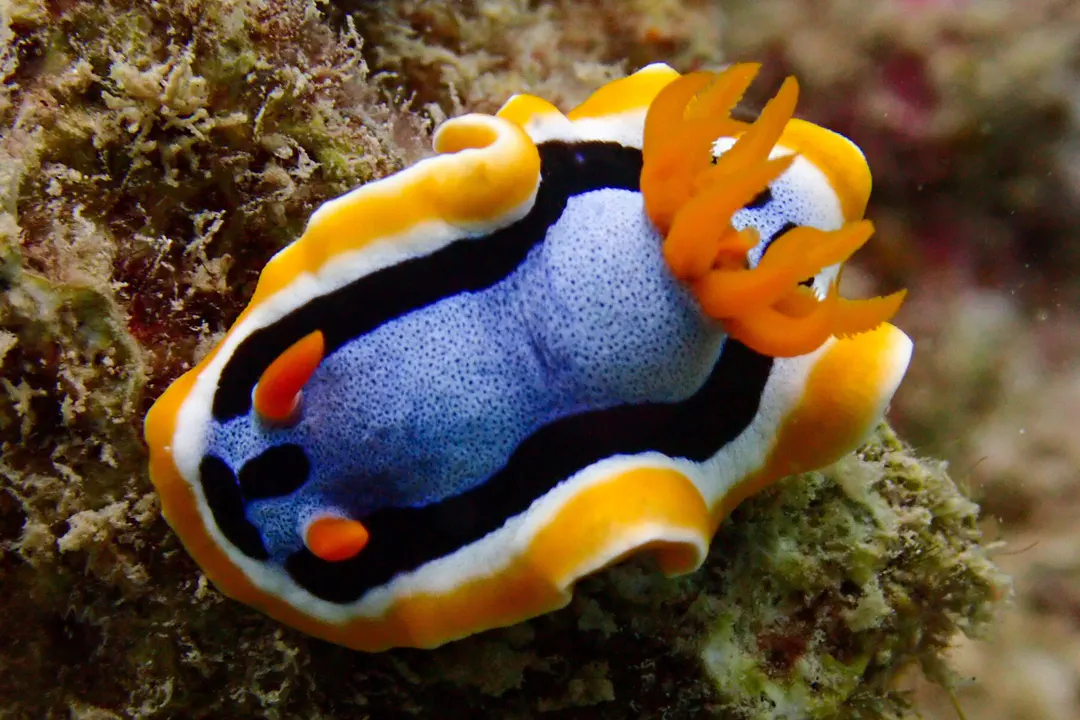
Shallow rubble slopes host a remarkable variety of sea slugs, earning the region global acclaim among sea slug enthusiasts. Nudibranchs including Bornella stellifera, Miamira alleni, and Chromodoris annae feed on hydroids and sponges along sandy ledges. In grassy patches, minute Costasiella kuroshimae sap-sucking slugs graze on algal fronds, absorbing chloroplasts to power their metabolism through photosynthesis.
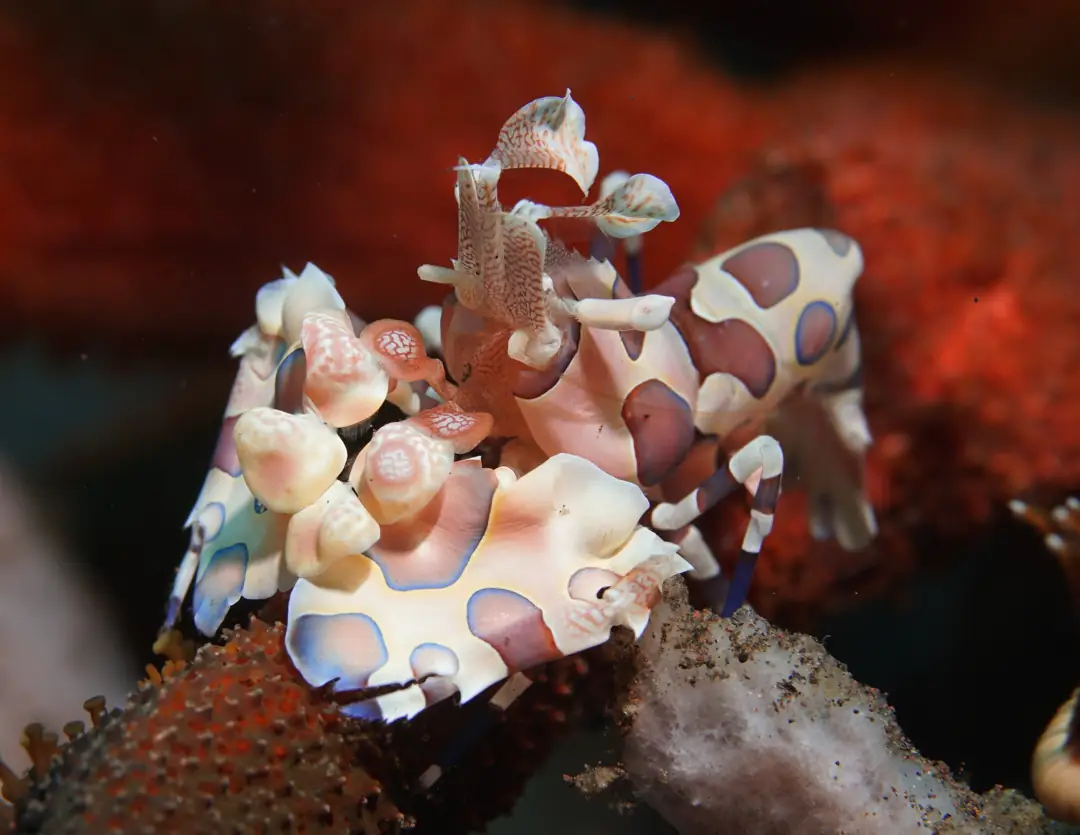
The shallow nature of Anilao's muck sites makes them accessible for extended bottom times and night exploration. After dark, harlequin shrimp emerge to hunt sea stars, while bobtail squid bury themselves in loose sand with only their eyes exposed. Soft coral bushes harbour tiny xeno crabs and porcelain crabs along their branches.
Depth: 3-25 m. Access: resort boat, 5-20 minutes. Level: Open Water. Best months: November-May.
 © Jay ParolineCC BY 4.0
 © seabook.appAll rights reserved
 © Stas KuryanAll rights reserved
 © Dan SchofieldCC BY 4.0 · iNaturalist
 © Stas KuryanAll rights reserved © seabook.appAll rights reserved
Miamira alleni
*Miamira alleni (Ceratosoma alleni)* is a species of colorful sea slug, a dorid nudibranch, a shell-less marine gastropod mollusk in the family [Chromodorididae](seabook://category?id=0dba8167-7887-4d...
Dauin and Dumaguete (Negros Oriental, Philippines)
Along the dark volcanic coastline of Negros Oriental, Dauin features a series of marine sanctuaries running parallel to the shore. Black sand slopes extend gently into the Tañon Strait, peppered with artificial structures, tyre reefs, and fallen palm fronds. Sites such as Car Bank, San Miguel, and Secret Corner provide protected habitats where delicate critters establish permanent territories.
Frogfish thrive along these dark sand slopes, with painted, warty, and giant frogfish perching on concrete blocks and ropes. Ornate ghost pipefish drift head-down beside sea urchins, while dragon seamoths walk across fine sand in mated pairs using modified pelvic fins. The dark substrate provides high contrast, making light-colored organisms stand out clearly.
Local marine protected areas strictly regulate diver numbers and anchorages, ensuring minimal habitat disturbance along the substrate. Coconut octopuses make frequent appearances, occupying glass jars or sea shell halves in shallow water. Night dives along Dauin's shore reefs reveal stargazers buried up to their nostrils in the sand, waiting to ambush passing prey.
Depth: 5-30 m. Access: shore entry or 5-minute boat ride. Level: Open Water. Best months: October-May.
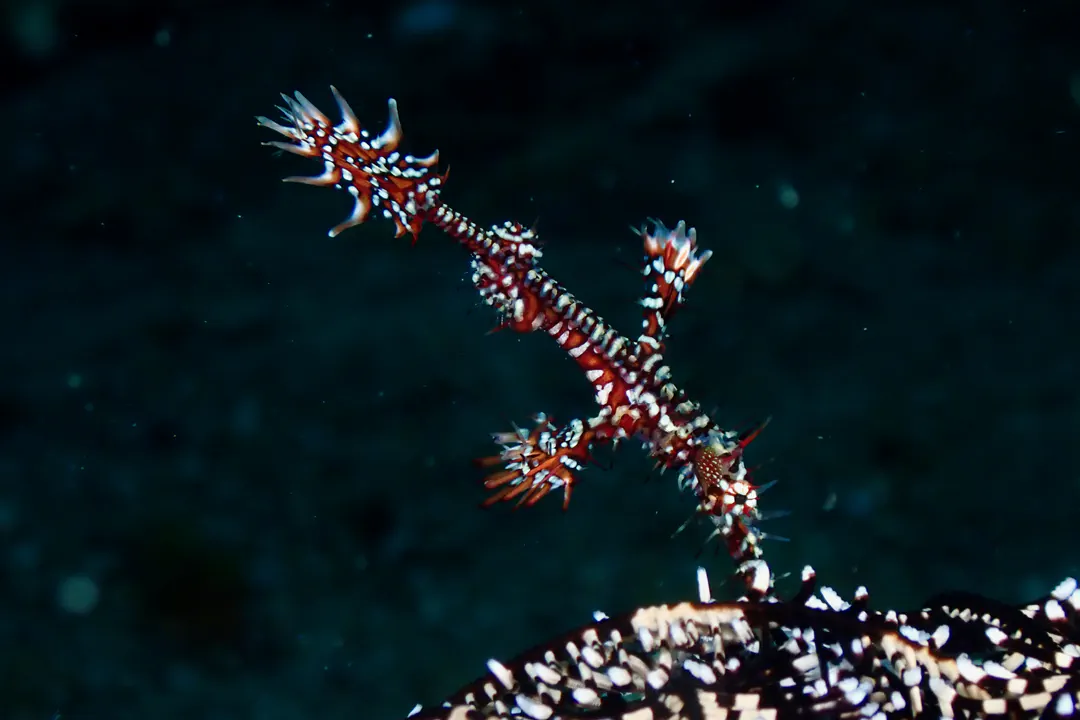 Chris SpainCC0
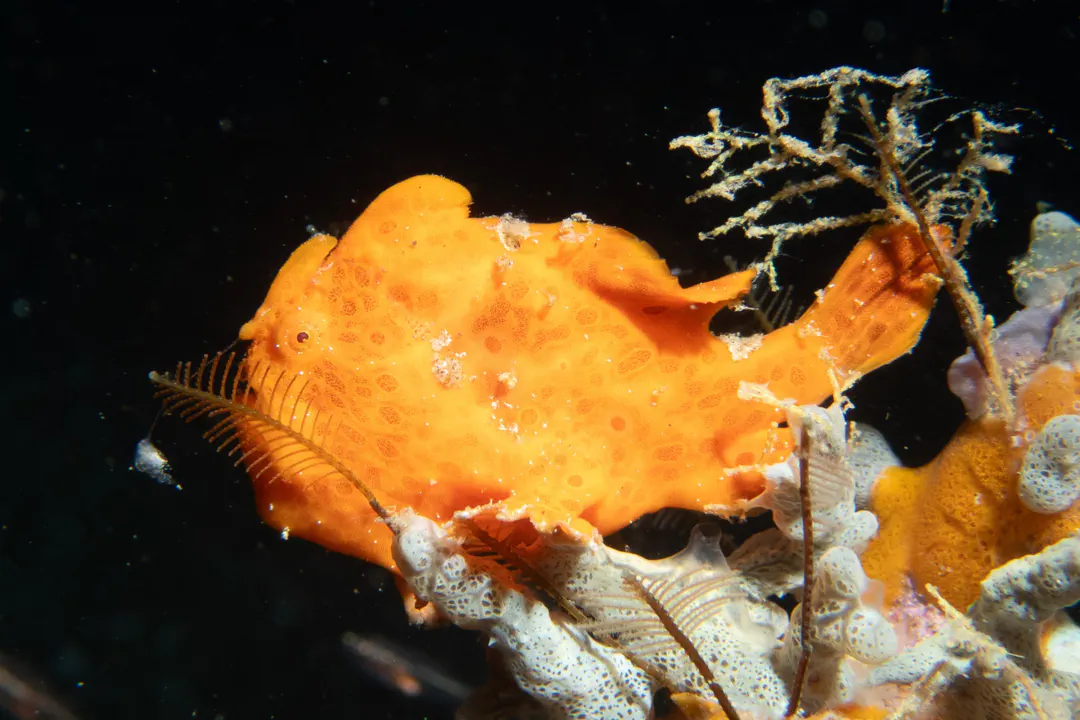 Justin PhilboisCC0 · iNaturalist
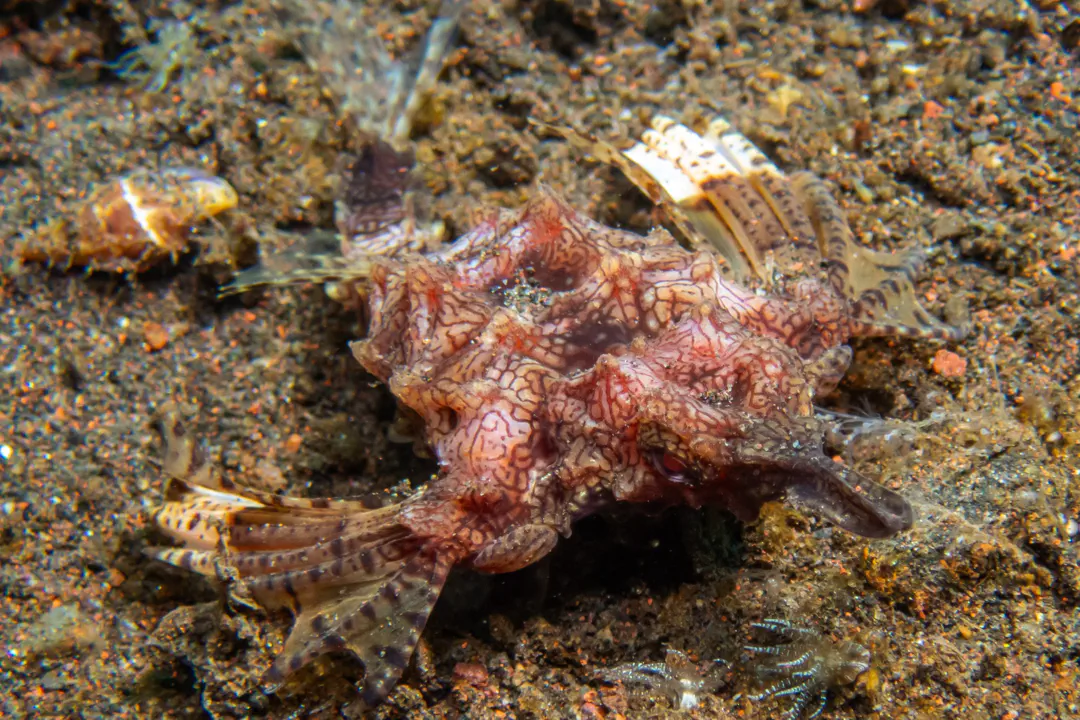 © portioidCC BY 4.0 · iNaturalist
Ambon Island (Maluku, Indonesia)
Located in the Spice Islands of eastern Indonesia, Ambon Bay is a deep natural harbour surrounded by steep hills and coastal villages. The bay's inner waters contain silty slopes, pier pilings, and urban debris that form unique habitats for macro organisms. Sites such as Laha and Twilight Zone feature calm conditions where organic sediment creates nutrient-rich feeding grounds for unusual species.
Ambon Bay is renowned for rare scorpionfish and cryptic anglerfish that inhabit shallow silt bottoms. Ambon scorpionfish display shaggy skin filaments and varied coloration, blending seamlessly with decaying organic matter. Crinoid shrimp and tiny squat lobsters take shelter inside feather stars, matching the exact color patterns of their host echinoderms.
Pier pilings along the harbour edge attract schooling juvenile fish, which in turn draw predatory cephalopods and frogfish. In 2008, the psychedelic frogfish was first described from these harbour slopes, capturing global attention with its labyrinthine skin patterns and unique hopping locomotion. Low visibility in the inner bay is offset by calm surface conditions and abundant macro life.
Depth: 3-25 m. Access: boat, 5-15 minutes from harbour resorts. Level: Open Water. Best months: March-May and September-November.
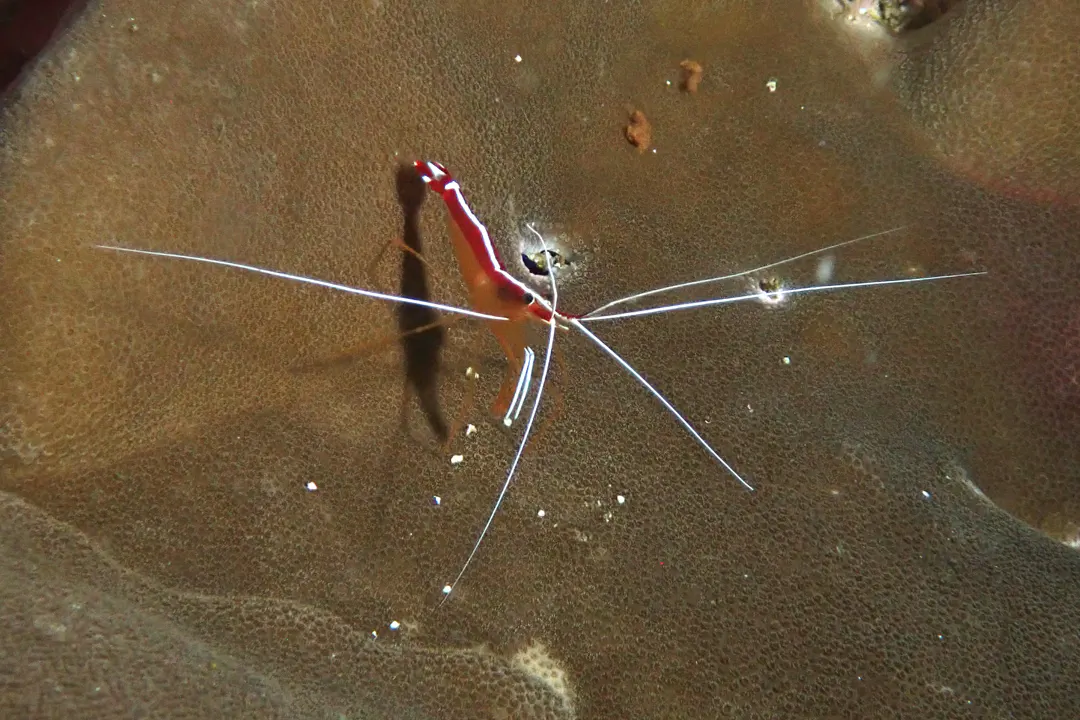 © Roger RittmasterCC BY 4.0
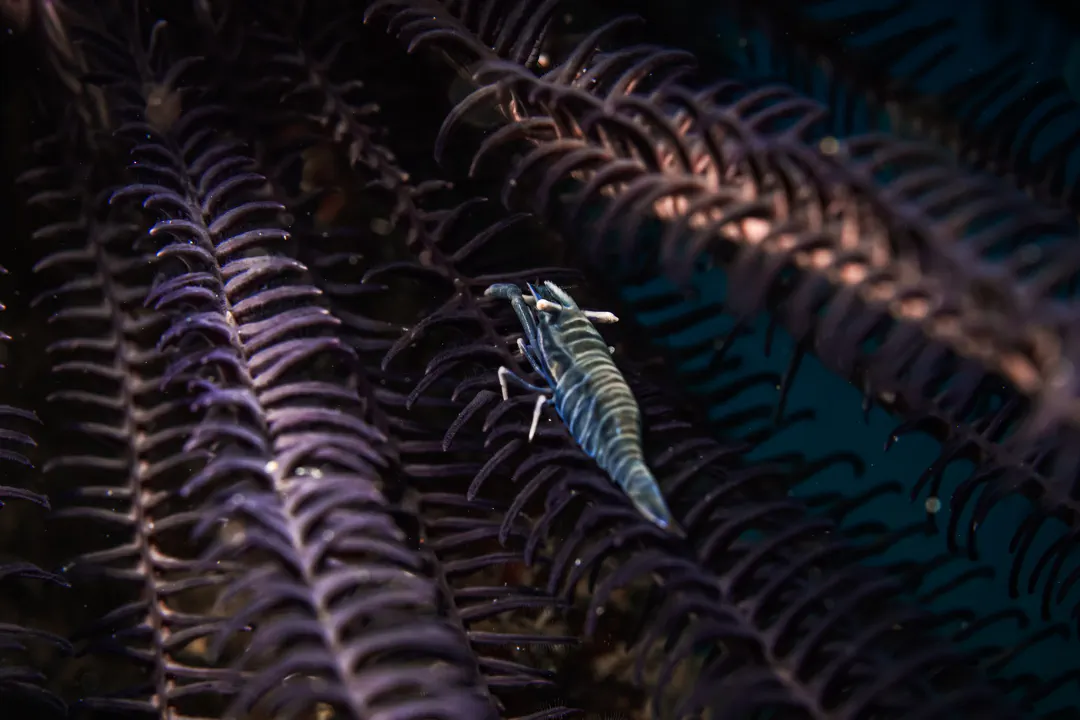 © Stas KuryanAll rights reserved © Stas KuryanAll rights reserved
Laomenes amboinensis
***Laomenes amboinensis*** is a species of shrimp found in waters off Indonesia, Queensland, New Caledonia, the Marshall Islands, the Ryukyu Islands and Papua New Guinea. It was first named by Johanne...
Milne Bay (Papua New Guinea)
Situated at the eastern tip of Papua New Guinea, Milne Bay features sheltered bays, volcanic black sand beaches, and mangrove-fringed shorelines. Pioneering divers exploring shallow wharves here in the late 1980s first recognized the richness of silt environments, coining the term muck diving. Sites like Dinah's Beach at Samarai Island drop gently from black pebbles into soft, dark silt.
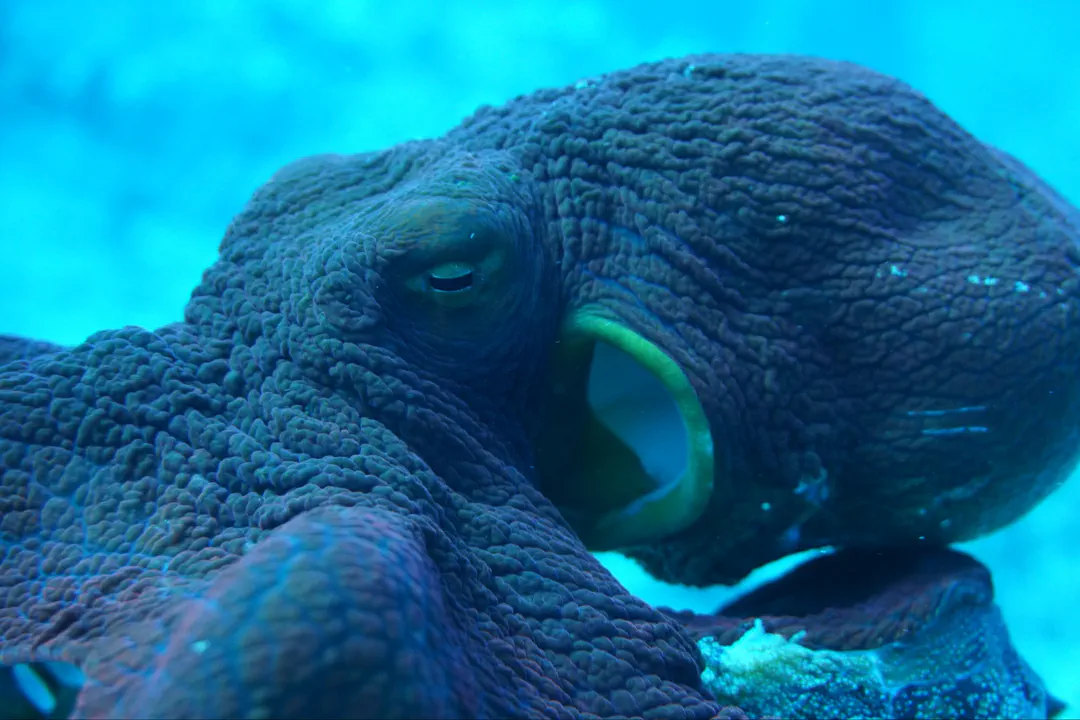
The dark volcanic slopes of Milne Bay house extraordinary pipefish and seahorse populations. Banded pipefish and spiny pipehorse shelter among fallen leaves and wood fragments washed down from rainforest rivers. Daytop octopus and blue-ringed octopuses forage among shallow shore rubble, while ghost pipefish float motionless near soft coral branches.
Isolation and low diving pressure preserve the natural state of these historic sand slopes. Divers explore shallow bays where water temperatures stay near 28°C, encountering delicate mimic octopuses and juvenile sweetlips fluttering like flatworms across the sand. The mix of deep water drop-offs nearby ensures clear, nutrient-laden tides flush the bays daily.
Depth: 2-20 m. Access: liveaboard or local boat, 10-40 minutes. Level: Open Water. Best months: April-June and September-December.
 © cello caruso-turielloCC BY 4.0 · iNaturalist
Amed and Seraya (Bali, Indonesia)
On the northeastern coast of Bali, beneath the shadow of active volcano Mount Agung, dark volcanic slopes plunge directly into the ocean. The coastline around Amed and Seraya features fine black ash sand, large basalt boulders, and gentle currents fed by the Indonesian Throughflow. Sites like Seraya Secrets, Melasti, and Ghost Bay offer shallow entry directly from shore or local outrigger boats.
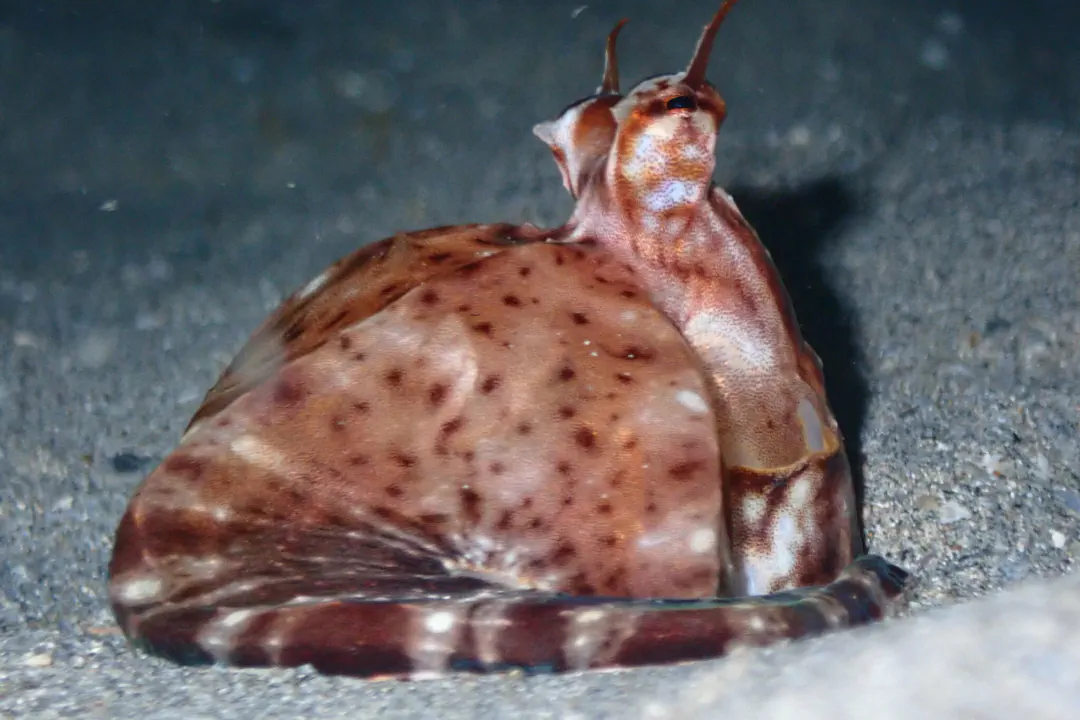
The rich black volcanic sediment creates a dark background where bright macro organisms stand out in sharp relief. Harlequin shrimp feed on blue starfish along rubble borders, while Coleman shrimp settle in pairs on venomous fire urchins. Mimic octopuses manipulate their shape and movement across open sand channels, impersonating lionfish, sea snakes, and flatfish to deter predators.
Shore accessibility makes Seraya and Amed ideal for flexible dive planning and long night dives. As dusk falls, blue-ringed octopuses leave their rocky crevices, and skeleton shrimp swarm over hydroid stalks. Calm morning conditions provide easy entries onto the black sand, with depths suited for extended search times across the upper slope.
Depth: 3-30 m. Access: shore entry or outrigger boat, 5-15 minutes. Level: Open Water. Best months: April-November.
 © Ewout KnoesterCC BY-SA 4.0 · iNaturalist
How to Prepare for a Muck Diving Trip
Success on soft sediment dive sites depends on buoyancy control and modified finning techniques. Standard flutter kicking directs water downward, kicking up fine silt clouds that destroy visibility for minutes and smother small benthic creatures. Muck divers rely on frog kicking and modified back kicking, keeping fins elevated well above the substrate while hovering horizontally inches above the sand.
Proper lighting and specialized camera setups aid in spotting well-camouflaged creatures against dark backgrounds. A narrow-beam focus light helps highlight translucent pipefish and small nudibranchs hiding inside dark crevices without blinding the animal. Underwater photographers utilize macro lenses with short focal lengths and dual strobes angled inward to reduce backscatter from suspended sediment particles.
A stainless steel or titanium pointer stick serves as a single stabilization point when steadying oneself on bare sand patches. Placing a single stick tip on dead rubble or empty sand allows divers to pause and inspect a small shell or photograph a critter without contacting live growth or disturbing sediment. Divers should also carry a compact dive light for daytime inspection of shadow zones underneath rocks and discarded coconut shells.
Questions
What equipment do I need for muck diving?
Essential gear includes a focus light or narrow-beam torch, a macro lens setup with strobes, a pointer stick for single-point stabilization, and short or stiff fins suitable for frog-kicking. Carrying a compact slate or magnifying lens also helps with locating small nudibranchs and crustaceans in loose silt.
Which month is best for muck diving in Indonesia and the Philippines?
In Indonesia (Lembeh Strait, Bali, and Ambon), the dry season from April to October provides calm seas and water temperatures between 25°C and 28°C. In the Philippines (Anilao and Dauin), the optimal season runs from October to May, when water temperatures average 26°C to 28°C with minimal rainfall.
Is muck diving suitable for beginner divers?
Yes, muck diving is suitable for beginners who possess solid neutral buoyancy control. Sites are generally shallow, ranging between 5 and 18 metres, with minimal current and low wave energy, creating a relaxed underwater setting for developing spotter skills.
Are venomous creatures common on muck dives?
Venomous species including stonefish, spiny waspfish, scorpionfish, sea wasps, and blue-ringed octopuses frequently inhabit sandy substrate. Divers must maintain good buoyancy, avoid touching the seafloor directly, and use a pointer stick on open sand when steadying themselves.
What is the water temperature at top muck diving destinations?
Water temperatures across premier Southeast Asian muck hubs range from 25°C to 29°C (77°F to 84°F) year-round. Thermoclines in deep channels like Lembeh Strait can occasionally drop water temperatures down to 23°C during southern winter months.

