
Off the rocky headlands of Cap de Creus at a depth of four metres, translucence drifts in gentle coastal swell. Pulsating bells four centimetres across move with rhythmic contractions, their pink-violet umbrellas catching afternoon light while hair-thin tentacles drift two metres behind. A single mauve stinger pulses past a granite wall before three more emerge from the blue shadows ahead.
Understanding jellyfish in the Mediterranean requires looking at seasonal pulse cycles and shifting currents across the basin. Jellyfish encounters are most frequent between May and October, when surface water temperatures climb from 18°C to 26°C and visibility stretches beyond 20 metres. While gelatinous animals drift through open offshore water year-round, coastal swarms appear primarily during these warm summer and autumn months.
Native populations include the stinging mauve stinger, the heavy barrel jellyfish, and the harmless fried egg jellyfish, alongside seasonal swarms of moon jellies. These floating drift-dwellers appear across the Western Mediterranean, the Tyrrhenian Sea, and coastal bays of the Adriatic. Swimmers, snorkellers, and divers operating in shallow bays encounter them regularly, making visual identification and simple defensive awareness essential.
Are Jellyfish Common in the Mediterranean?
Jellyfish population density in the Mediterranean fluctuates sharply from month to month and year to year rather than remaining constant across coastal waters. According to a 2019 study on global warming, reproduction and Mediterranean scyphozoans, mild winter ocean temperatures support earlier polyp reproduction and higher survival rates among juvenile medusae. When water column temperatures exceed historical averages during late spring, free-swimming medusae develop rapidly in coastal shelf waters.
Marine food webs also shape the size and frequency of these gelatinous swarms across the basin. Overfishing of commercial finfish removes natural competitors that feed on tiny crustacean zooplankton, leaving abundant food reserves for opportunistic jellyfish larvae. Reduced numbers of open-ocean predators like sea turtles and adult sunfish further allow drifting swarms to grow unchecked before coastal winds push them landward.
Nutrient runoff from agricultural coasts feeds microscopic plankton blooms, creating dense feeding zones near river mouths and sheltered gulfs. Many Mediterranean scyphozoans spend winter attached to rocky reefs as tiny benthic polyps before releasing thousands of swimming larvae when light levels increase. A quiet spring along a stretch of coastline does not mean local populations have vanished; it often indicates that polyps remain waiting on hard substrate for favourable surface conditions.
Most Common Jellyfish Species in the Mediterranean
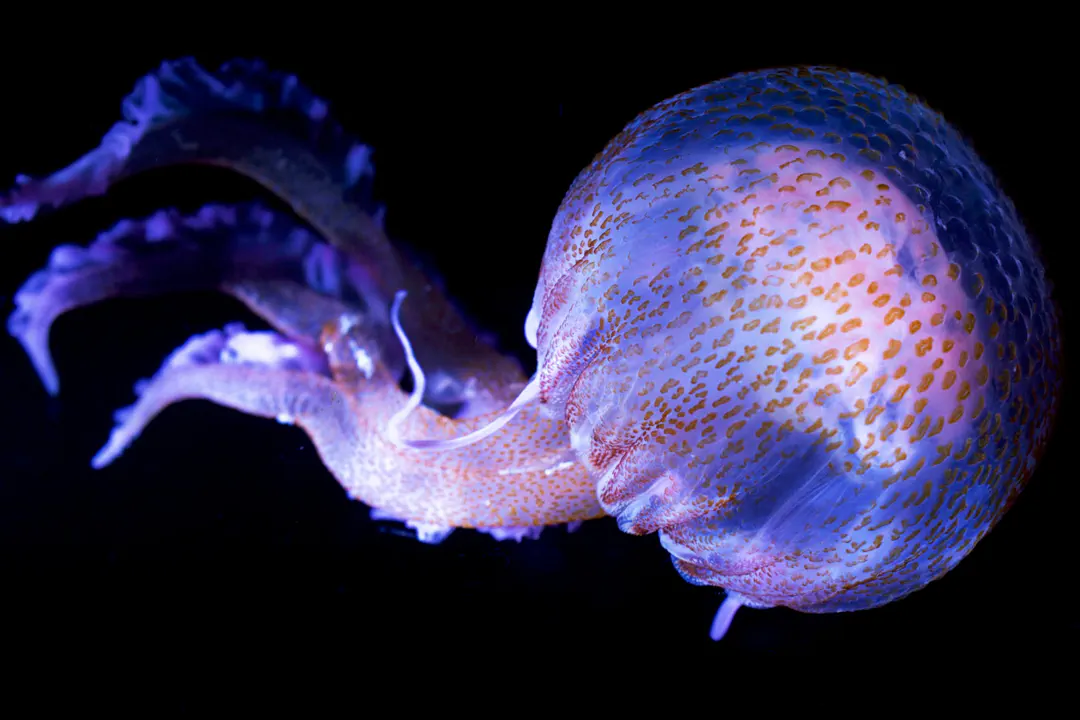
Four primary native jellyfish dominate surface encounters across Mediterranean coastal waters from spring to late autumn. The mauve stinger (Pelagia noctiluca) features a magenta or light-brown bell covered in tiny brown spots, trailing eight thin, highly stinging tentacles that reach over a metre in length. A 2025 study published through the National Library of Medicine noted that Pelagia noctiluca accounted for roughly 30 percent of reported jellyfish sightings in a regional citizen-science database, making it one of the most frequently recorded species in the basin.
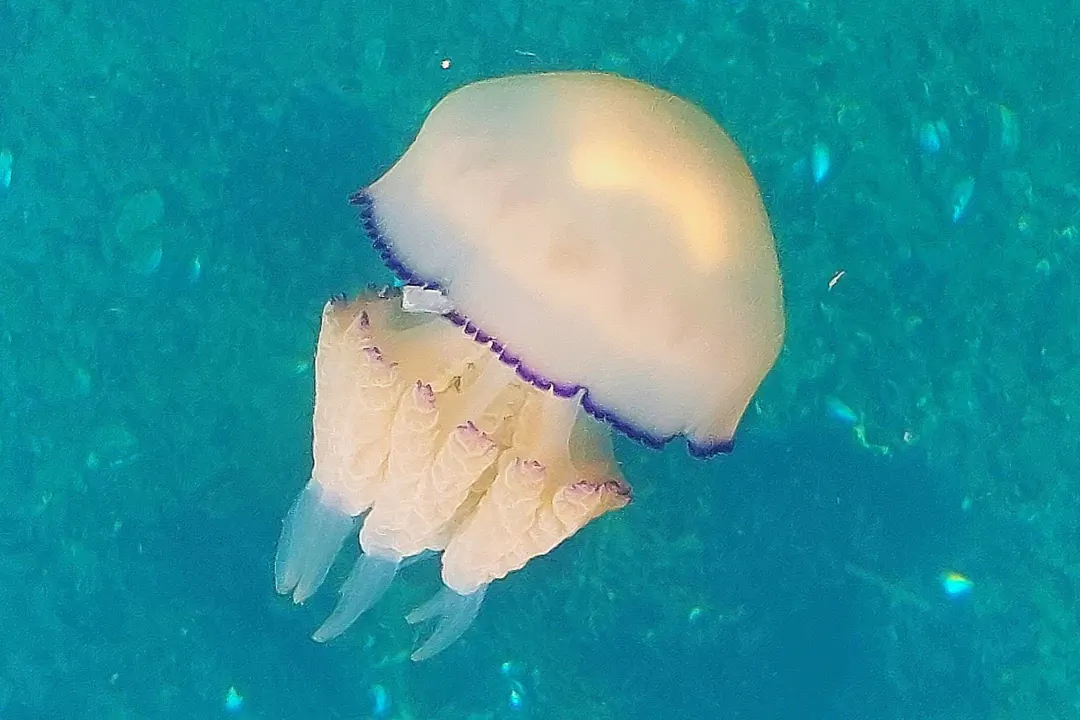
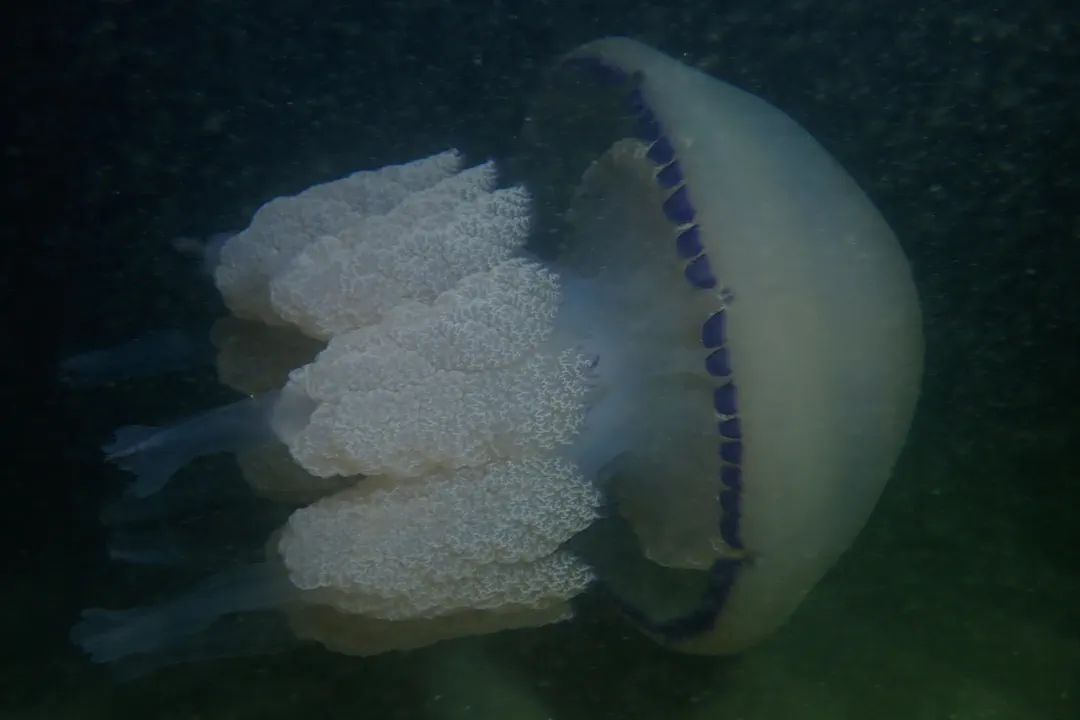
The barrel jellyfish (Rhizostoma pulmo) is among the largest native species, carrying a thick, dome-shaped white bell trimmed with a deep blue margin that can measure up to 40 centimetres across. Instead of long trailing tentacles, it possesses eight frilled oral arms fused together, giving it a heavy, solid silhouette as it swims through open water. The same 2025 study published through the National Library of Medicine found that Rhizostoma pulmo represented approximately 28 percent of recorded sightings across Mediterranean coasts.
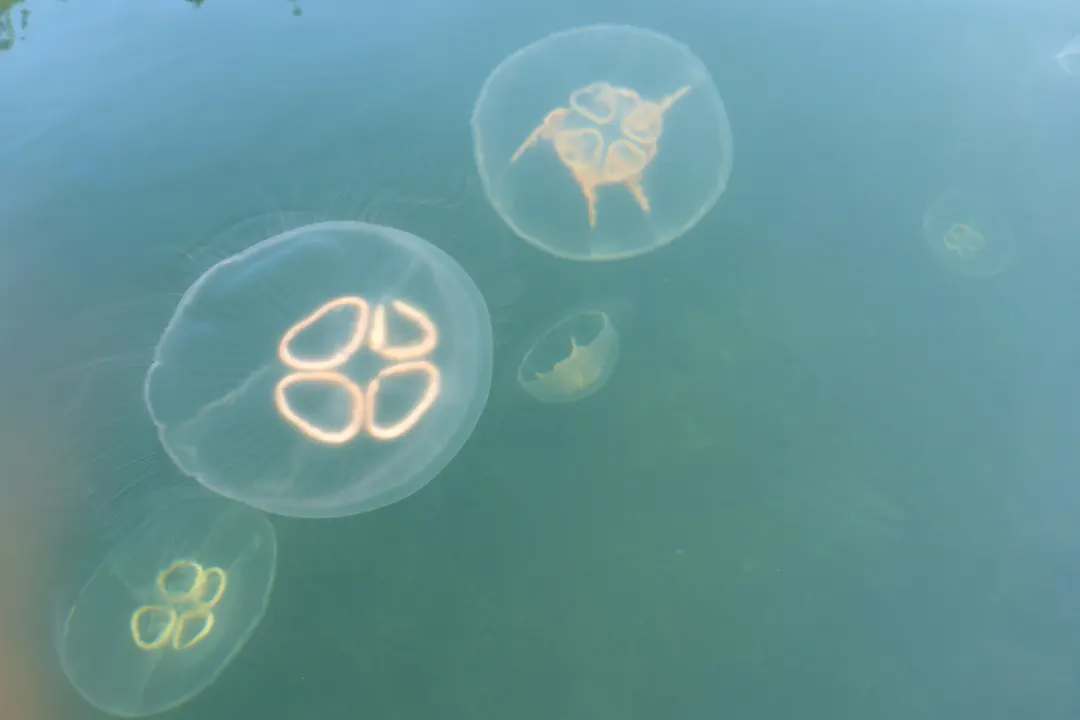
In calm gulfs and coastal lagoons, swimmers routinely observe the fried egg jellyfish (Cotylorhiza tuberculata), recognisable by its smooth central dome surrounded by a yellowish ring and purple button-like arm tips. Moon jellyfish (Aurelia aurita) also drift through bays in large numbers, carrying saucer-shaped transparent bells with four crescent-shaped purple gonads visible in the center. If you spot an unfamiliar free-swimming creature while diving, logging the sighting in the Seabook mobile app helps confirm local species distributions and keeps your personal dive history organized.
 © Julien RenoultCC BY 4.0 · iNaturalist
 © seabook.appAll rights reserved
 © mfeaverCC BY 4.0 · iNaturalist
Dangerous and Stinging Mediterranean Jellyfish
Contact with venomous jellyfish species in the Mediterranean causes localized skin irritation ranging from mild tingling to intense, burning whip-like welts. The mauve stinger (Pelagia noctiluca) represents the main hazard for swimmers and divers because its stinging cells cover both the trailing tentacles and the outer surface of its bell. Unlike many other scyphozoans, its tiny stinging nematocysts fire immediately upon contact, leaving red marks that can itch and burn for several days.
The Mediterranean box jellyfish (Carybdea marsupialis) is a small, transparent cubozoan that frequents shallow sandy shores and harbor margins during calm summer evenings. Its cube-shaped umbrella measures only two to three centimetres across, carrying four thin tentacles that stretch up to 30 centimetres behind its transparent body. While its sting causes acute burning pain and localized swelling, it lacks the severe systemic toxicity seen in tropical Pacific box jellyfish species.
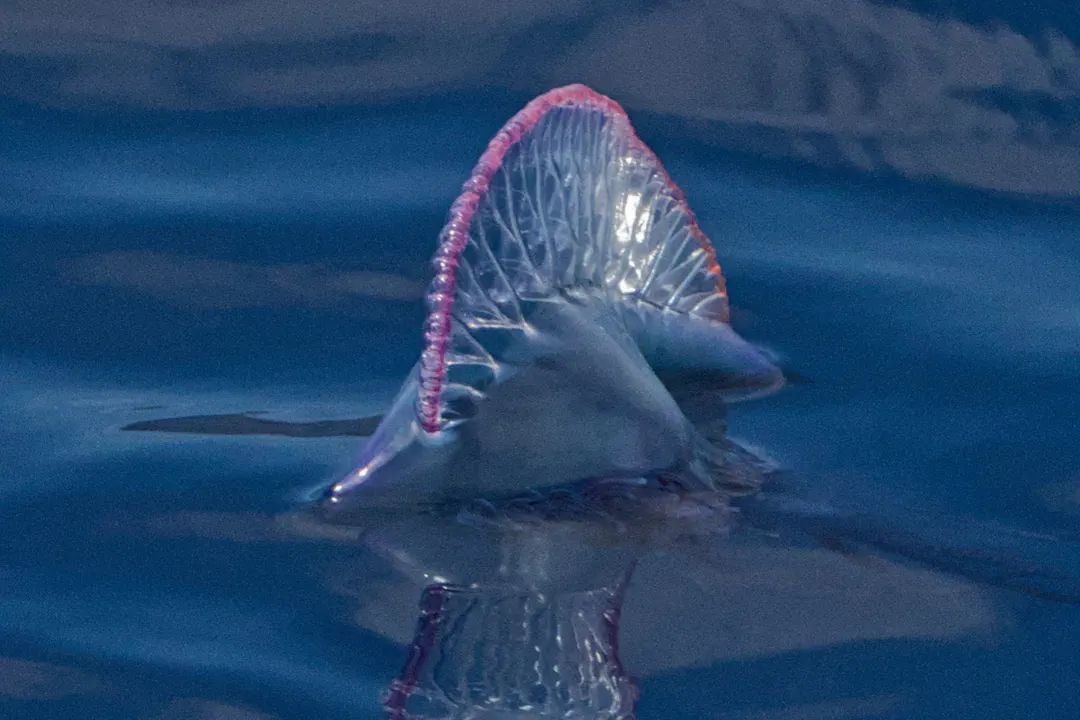
The Portuguese man o' war (Physalia physalis) is a floating hydrozoan colony from the Atlantic Ocean that occasionally enters the Western Mediterranean through the Strait of Gibraltar during sustained westerly gales. It floats via a blue-tinged gas bladder that sits on the surface, trailing submerged tentacle strands that can reach 10 metres in length. Another stinging hydrozoan, the cigar jellyfish (Olindias phosphorica), inhabits shallow seagrass beds and emits a noticeable yellow glow at night, inflicting painful stings if touched while night diving.
 © Michael, Antoni and Nihat HinczewskiCC BY 4.0 · iNaturalist
Harmless Jellyfish and Lookalikes
Many gelatinous organisms swimming in Mediterranean waters possess mild stings or no stinging capacity at all, posing no danger to human skin. The fried egg jellyfish (Cotylorhiza tuberculata) is one such benign giant, drifting through warm autumn seas surrounded by small juvenile fish that seek shelter among its thick oral arms. Its sting is so weak that human skin rarely registers any sensation, making it a favorite subject for underwater observation.
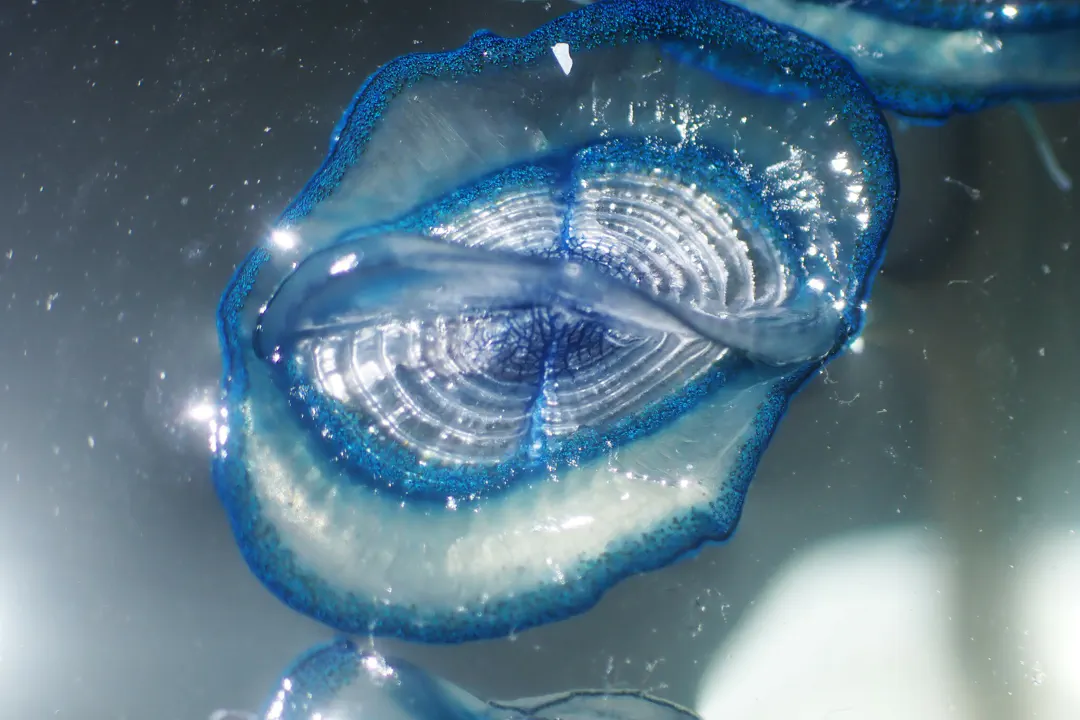
The by-the-wind sailor (Velella velella) is not a true single jellyfish but a floating colonial hydrozoan that travels across open surface waters. It features a flat blue oval disc three to six centimetres long, equipped with a vertical chitinous sail that catches prevailing sea breezes. Persistent onshore winds frequently wash thousands of these electric-blue sail-bearers onto beaches, where their short under-hanging tentacles remain harmless to human hands.
Ctenophores like Venus's girdle (Cestum veneris) and the sea walnut (Mnemiopsis leidyi) are completely non-stinging comb jellies that propel themselves using tiny hair-like cilia. Venus's girdle resembles a transparent, shimmering ribbon extending up to a metre in length, casting rainbow-like iridescence under dive lights. The crystal jelly (Aequorea forskalea) also drifts along coastal reefs, displaying a flat, transparent umbrella lined with delicate radial canals that glow with green bioluminescence when disturbed.
 © Luca Davenport-ThomasCC BY 4.0 · iNaturalist
When and Where Are Mediterranean Jellyfish Most Active?
Jellyfish activity across the Mediterranean reaches its annual peak between June and September when surface water temperatures climb above 22°C. Regional geography and wind patterns concentrate drifting populations into specific coastal hotspots rather than dispersing them evenly across the sea. Onshore winds push surface-dwelling aggregations into narrow coves along the Costa Brava, the Balearic Islands, and the southern coast of France, trapping thousands of animals against rocky shores.
In the Tyrrhenian and Ionian Seas around Italy, spring and summer currents carry large numbers of barrel jellyfish and fried egg jellyfish into shallow bays. The northern Adriatic Sea experiences seasonal concentrations where nutrient-rich river discharge feeds dense plankton populations, supporting temporary swarms of moon jellies and large scyphozoans. Coastal topography plays a major role: enclosed bays with weak tidal exchange act as natural traps for surface drift.
Water conditions can shift rapidly within a single afternoon as thermal sea breezes replace calm morning air. An offshore breeze sweeps surface water away from land, clearing swimming zones near the beach, whereas an onshore wind accumulates floating animals along headlands within hours. Winter brings a sharp drop in surface encounters as adult medusae die off or move into deeper water, leaving polyp populations dormant until spring warming returns.
What to Do If Stung by a Mediterranean Jellyfish
If you experience a jellyfish sting while swimming or diving, exit the water calmly and avoid rubbing the affected area with towel or bare hands. Rubbing intact stingers causes unexploded nematocysts to fire additional venom into the skin. Carefully rinse the sting area with clean seawater to wash away loose tentacles and cell debris, avoiding fresh water which triggers osmotic pressure changes that discharge remaining stinging cells.
First-aid application depends on the species involved, making correct identification valuable before applying surface treatments. A 2021 study in Marine Drugs on vinegar effects on Pelagia noctiluca and Carybdea marsupialis stings showed that applying vinegar to a mauve stinger sting has a neutral or adverse effect rather than a benefit, causing additional cell discharge. Consequently, standard Mediterranean first aid emphasizes seawater rinsing over routine vinegar application unless a box jellyfish or Portuguese man o' war is confirmed.
To relieve localized burning and pain after rinsing, submerge the affected area in hot water heated to roughly 40°C to 45°C for 20 minutes if available without risking skin burns. Alternatively, applying a wrapped cold ice pack offers effective pain relief along exposed limbs. Remove remaining visible tentacle fragments using a rigid plastic card or tweezers while wearing protective gloves, and seek immediate emergency medical care if breathing difficulty, dizziness, or chest tightness occurs.
Questions
Are jellyfish stings in the Mediterranean dangerous?
Most Mediterranean stings cause localized burning, pain, redness and itching rather than systemic emergencies, though species like the mauve stinger inflict painful welts. Severe allergic or systemic reactions are uncommon but require prompt emergency medical care if breathing difficulty or dizziness develops.
Can you swim with Fried Egg Jellyfish?
Yes, Cotylorhiza tuberculata possesses a very mild sting that human skin rarely registers, making it safe to swim around. Swimmers and photographers should still avoid rough contact or grabbing oral arms to prevent mild irritation on sensitive skin.
What is the best month to avoid jellyfish in the Mediterranean?
Jellyfish encounters are least frequent during late autumn, winter, and early spring from November to April when cold water reduces surface medusa populations. Peak bloom periods occur between June and August when warm temperatures and surface currents concentrate animals near shore.
Are there Box Jellyfish in the Mediterranean Sea?
Yes, the Mediterranean Box Jellyfish (Carybdea marsupialis) lives in shallow coastal waters, though its sting is far less dangerous than tropical Pacific species. It inflicts sharp localized burning and redness, so swimmers should avoid handling small transparent jellies.
Should you put freshwater or vinegar on a Mediterranean jellyfish sting?
Rinse gently with seawater and avoid fresh water, which forces unexploded stinging cells to discharge. Vinegar should not be used for common mauve stinger stings as studies show it can trigger nematocysts, so stick to seawater rinses and heat application for pain relief.
Does wearing a wetsuit protect against jellyfish stings?
Yes, wearing a full 3mm wetsuit, dive skin, or neoprene hood creates an effective physical barrier that prevents nematocysts from touching your skin. Exposed areas like the face, wrist gaps, and ankles should still be monitored around dense aggregations.
Sources
- Citizen science substantiates jellyfish occurrence in the ... - PMC - NIH · 2025-07-01
- Effects of global warming on reproduction and potential ... · 2019-01-01
- Differing Effects of Vinegar on Pelagia noctiluca (Cnidaria: Scyphozoa) and Carybdea marsupialis (Cnidaria: Cubozoa) Stings—Implications for First Aid Protocols · 2021-07-21