
At a depth of 14 metres off Playa Chica in Lanzarote, late morning sun rays slice through blue Atlantic water, striking a field of gray volcanic sand. A subtle flicker of silt reveals two dark, unblinking eyes beneath the sediment. With a gentle kick of its broad pectoral fins, a two-metre angel shark lifts itself off the bottom, settles back onto the sand three metres away, and vanishes once more under a dusting of fine basalt.
Exploring sea life in the Canary Islands brings divers face-to-face with an ocean ecosystem shaped by deep volcanic slopes and warm subtropical currents. Water temperatures range from 18.5°C in February to 24.2°C in October, while underwater visibility regularly reaches 20 to 30 metres. The best overall months for bottom-dwelling sharks and rays run from November through April, though cetacean sightings remain steady throughout the year.
Key dive locations span shore and boat sites across the islands. Puerto del Carmen in Lanzarote (depth 6–40m, shore/boat entry, beginner to technical) features shallow sand slopes that drop into lava caverns. El Bajón off El Hierro (depth 15–40m, boat entry, advanced level) is a submerged volcanic pinnacle surging with ocean currents. Radazul in Tenerife (depth 5–40m, shore entry, beginner to advanced) drops along vertical basalt ledges steps from the harbour.
What Is Sea Life in the Canary Islands Like?
The Canary Islands rise steeply from the eastern North Atlantic floor, positioned between 100 and 450 kilometres west of the Moroccan coastline. Deep oceanic trenches surrounding the islands force nutrient-rich water up along basalt platforms, black sand slopes, and underwater lava tubes. This geographic position creates a marine community where cold-water Atlantic species live alongside Mediterranean inhabitants and warm-water subtropical ocean fauna.
Scientific observations in the waters east of Lanzarote and Fuerteventura have identified nearly 2,000 marine species occupying habitats from shallow seagrass meadows down to deep continental slopes. Coastal sand flats harbour hidden elasmobranchs, while basalt ledges provide shelter for territorial fish, octopuses, and moray eels. Offshore channels descending beyond 2,000 metres depth create ideal feeding passages for deep-diving cetacean pods.
Volcanic topography shapes every dive in the archipelago, offering natural arches, vertical swim-throughs, and dark lava caves lined with orange cup corals and sponges. Because black basalt absorbs light, scanning the rock walls requires a dive light to reveal hiding invertebrates and nocturnal predators. Divers scanning sand-reef boundaries discover buried rays and sharks resting completely motionless in the current.
 © Matteo BellucciCC BY 4.0 · iNaturalist
 © Keith MitchellCC BY 4.0 · iNaturalist
Best Time to See Marine Life in the Canary Islands
Observing wildlife underwater in the Canaries is possible across all twelve months, though specific animals follow clear seasonal rhythms. The cooler period from November to April sees increased activity among angel sharks and bottom-dwelling rays in shallow sandy bays. During these months, water temperatures hover around 18.5°C to 20°C, bringing sharp visibility that allows divers to spot buried predators from several metres away.
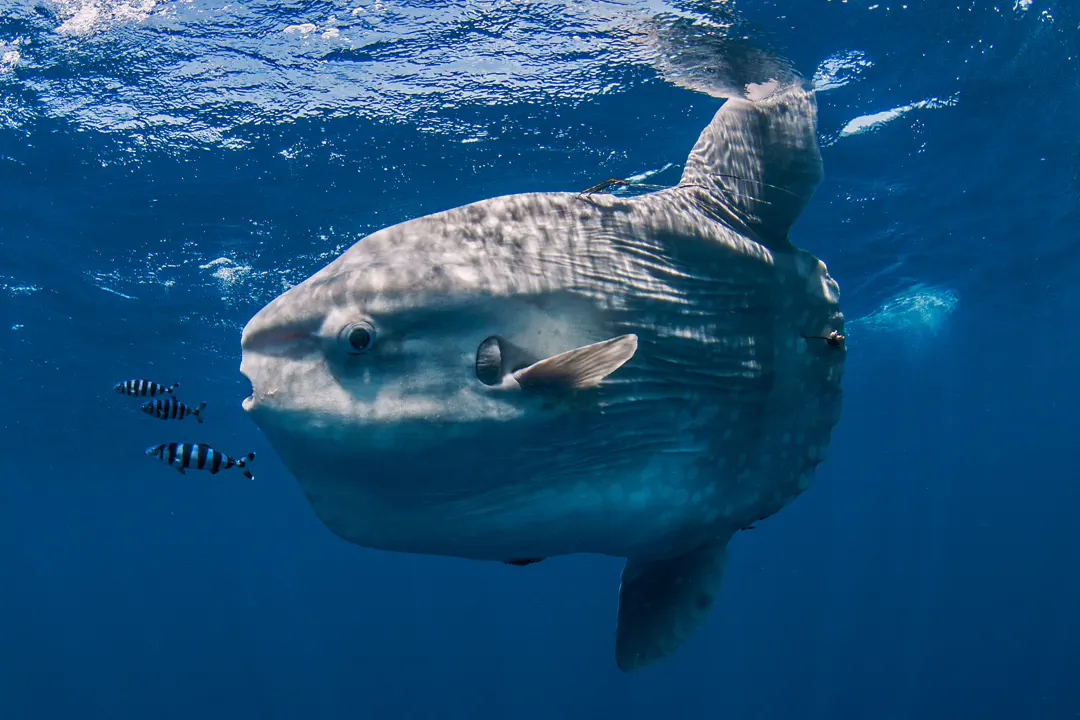
Late summer and autumn, from August through October, deliver the warmest water of the year at 23°C to 24.2°C. These months provide comfortable conditions for long exploratory dives along outer reefs, where pelagic visitors like ocean sunfish and schools of yellowmouth barracudas congregate near drop-offs. Calmer sea surface conditions during early autumn also make boat crossings between islands smooth and predictable.
Cetaceans inhabit the deep channels between islands year-round, meaning whale and dolphin watching does not depend strictly on the season. Regional wind patterns dictate site selection, with summer trade winds creating rougher water along exposed northern coasts. Checking daily swell forecasts helps divers select protected southern lees where marine life activity remains accessible.
Canary Islands Water Temperature by Month
Sea surface temperatures across the Canary Islands follow a gentle annual curve influenced by the cold Canary Current and seasonal sunlight. February and March represent the coldest period, averaging 18.6°C, while September and October mark the thermal peak at 24.2°C. Western islands such as El Hierro and La Palma record temperatures 1°C to 2°C warmer than eastern Lanzarote and Fuerteventura.
This moderate thermal range eliminates extreme seasonal shifts, allowing marine life to remain active near shore throughout the year. Thermal stratification is minimal down to 30 metres depth, so divers experience nearly uniform temperatures from entry to safety stop. A 5mm suit provides adequate insulation during early autumn, while a 7mm suit with a hood ensures warmth during winter dives.
Underwater visibility operates independently of water temperature, driven primarily by wind-driven swell and local plankton blooms. On calm days, horizontal clarity reaches 25 to 30 metres across basalt reefs, whereas strong Atlantic swells temporarily reduce visibility in shallow sandy bays. Monitoring local shore forecasts helps divers find clear water regardless of the calendar month.
Sharks, Rays, and Pelagic Species
The sandy seafloors and volcanic drop-offs of the Canary Islands support one of the most distinct elasmobranch populations in the North Atlantic. Angel sharks (Squatina squatina) lie buried in fine sediment at depths from 5 to 45 metres, using their cryptic coloration to ambush passing prey. Spiny butterfly rays (Gymnura altavela) and roughtail stingrays (Dasyatis centroura) share these sand margins, with wingspans reaching over two metres across.
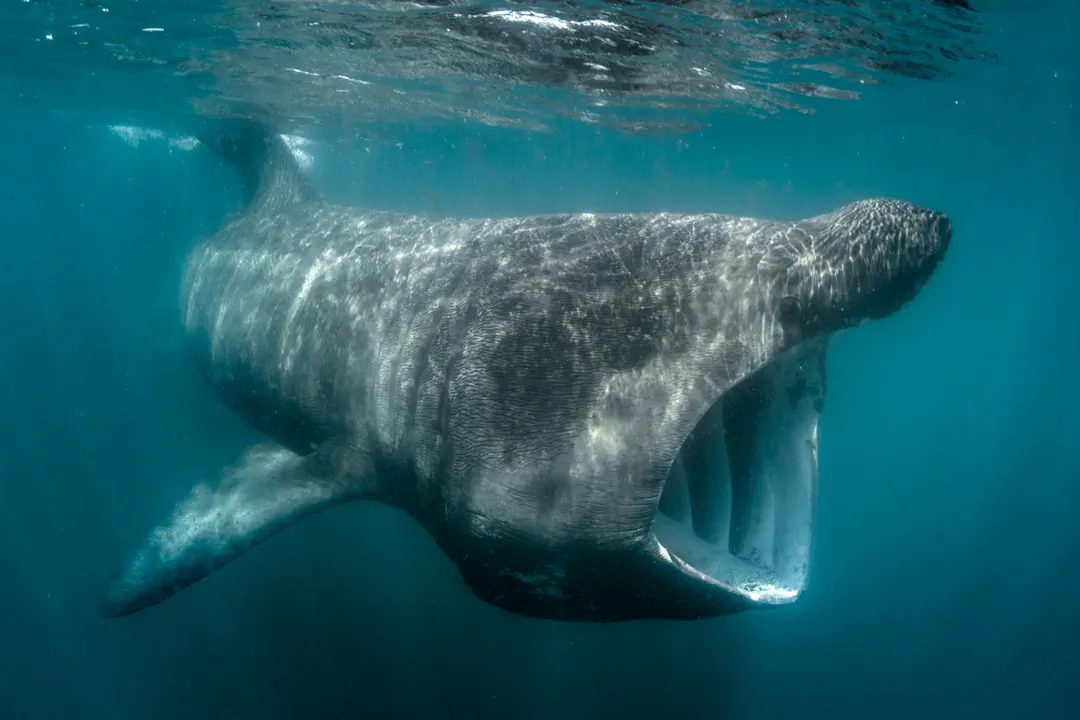
Schooling common eagle rays (Myliobatis aquila) cruise over deeper sandy channels, flapping their wing-like fins in steady synchronization. In blue water beyond outer reef drop-offs, massive ocean sunfish (Mola mola) drift upward from deep water to visit cleaning stations managed by resident reef fish. Encounters with open-ocean filter feeders like basking sharks (Cetorhinus maximus) occur along offshore banks during spring plankton surges.
Approaching bottom-dwelling sharks requires precise buoyancy control to avoid stirring up sand or disturbing the animals' natural camouflage. Remaining two to three metres away allows divers to observe feeding and breathing behaviors without inducing stress. Using the Seabook app on shore after a dive helps log specific ray wing patterns and identify distinct elasmobranch species encountered along the seabed.
 © seabook.appAll rights reserved
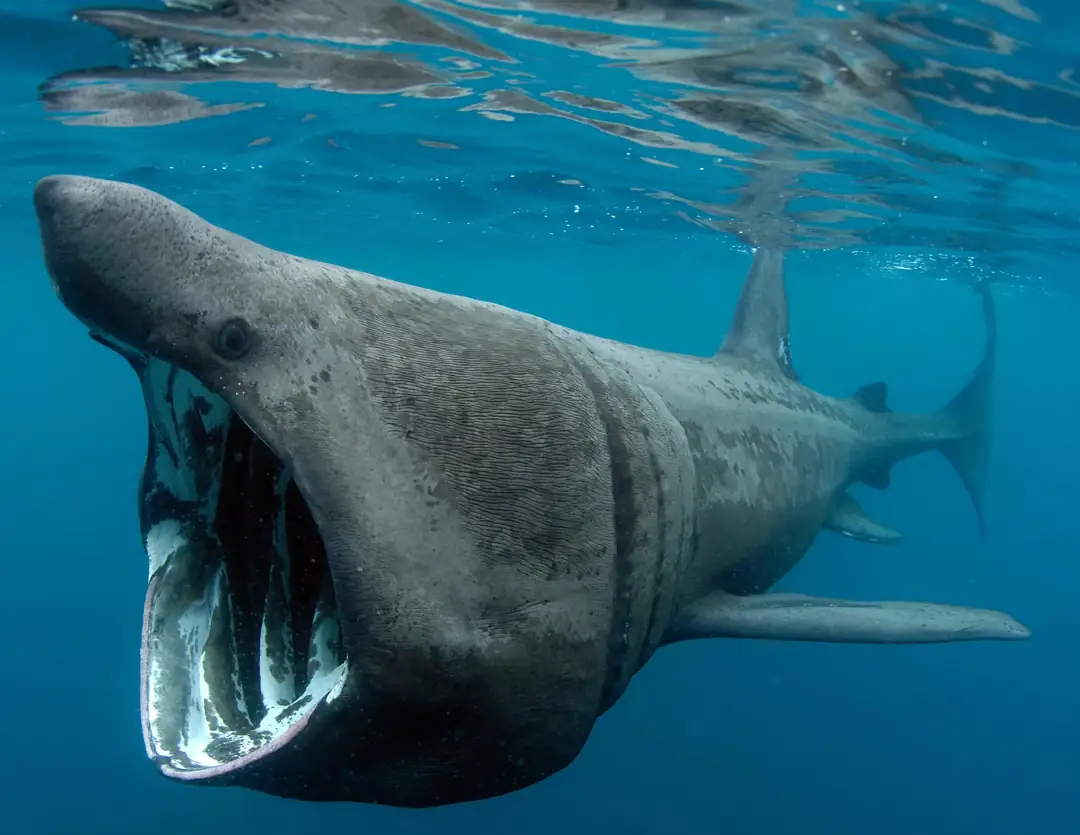 © Charles HoodAll rights reserved
Volcanic Reef Fish and Invertebrates
Dark lava reefs provide structural shelter for a high density of resident fish and invertebrates adapted to rocky substrates. Mediterranean parrotfish (Sparisoma cretense) dominate shallow basalt ridges, using fused beak-like teeth to scrape turf algae from volcanic stone. Female parrotfish display red and yellow body patterns, while mature males exhibit subtle gray and reddish hues along their flanks.
Dusky groupers (Epinephelus marginatus) occupy deep overhangs and cave entrances down to 40 metres, their heavy bodies hovering near security crevices. Barred hogfish (Bodianus scrofa) and ornate wrasses (Thalassoma pavo) dart across boulder slopes, while black morays (Muraena augusti) and viper morays (Enchelycore anatina) extend their tooth-filled jaws from narrow rock fissures.
Night dives on volcanic reefs bring out common octopuses (Octopus vulgaris), which emerge from stone dens to hunt crabs across open sand. Looking into small crevices with a narrow-beam torch reveals slipper lobsters, arrow crabs, and encrusting anemones clinging to basalt ceilings. Divers should take care not to touch sharp volcanic edges, which harbour delicate marine growth.
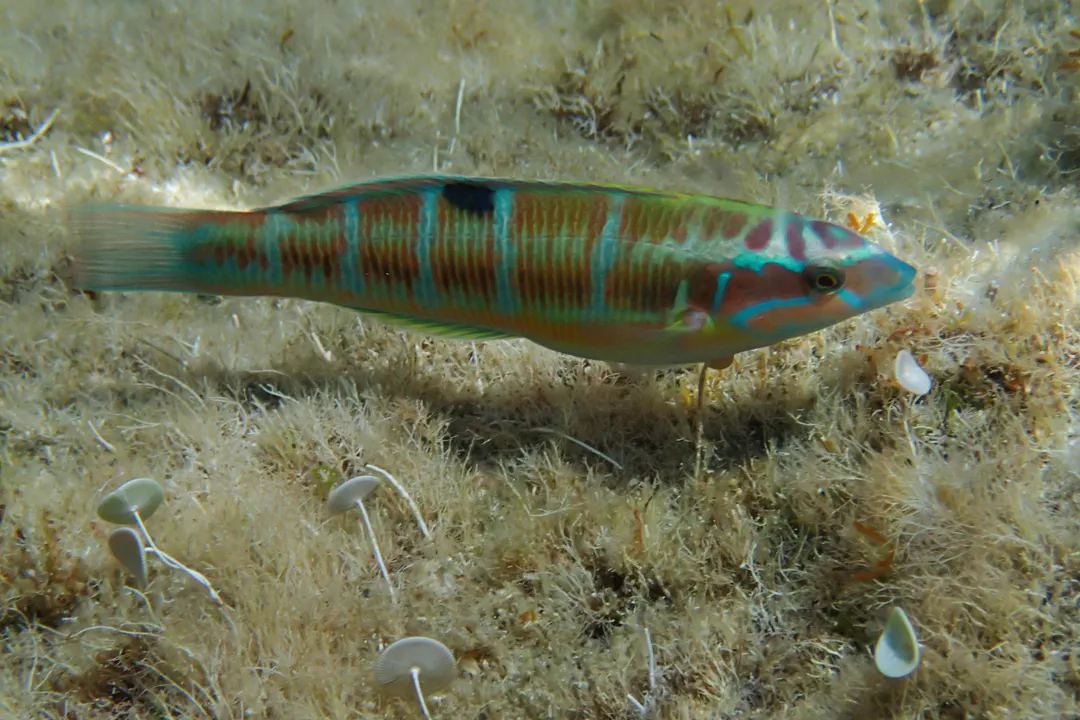 © Emanuele SantarelliCC BY-SA 4.0 · iNaturalist
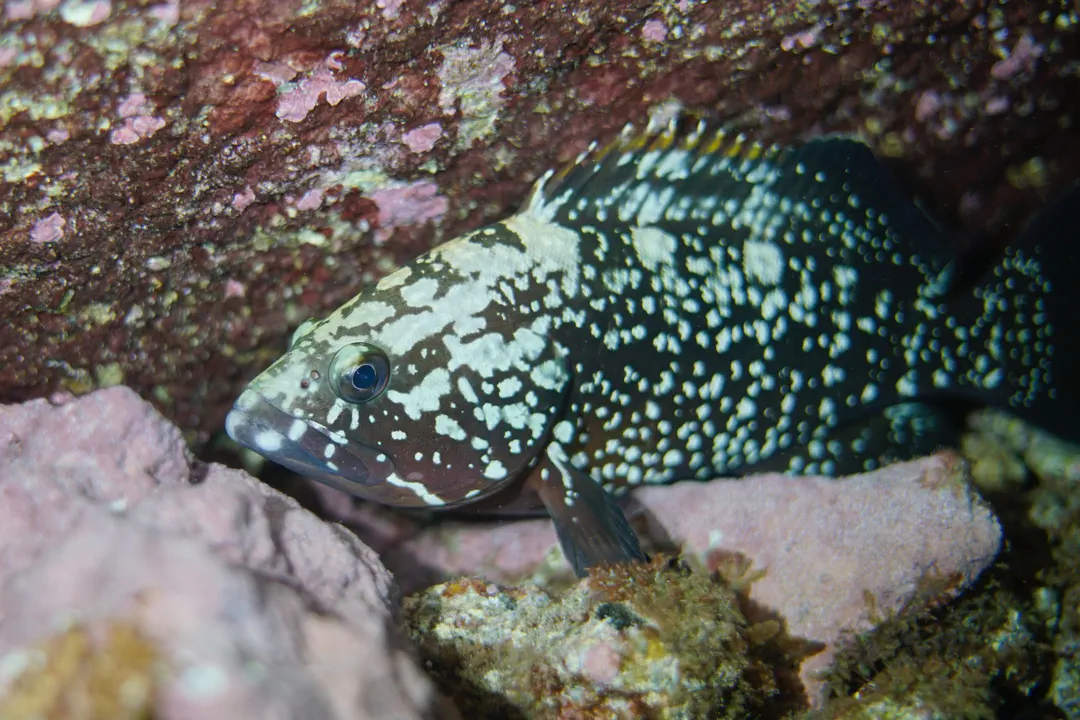 © Michael BommererCC BY 4.0 · iNaturalist
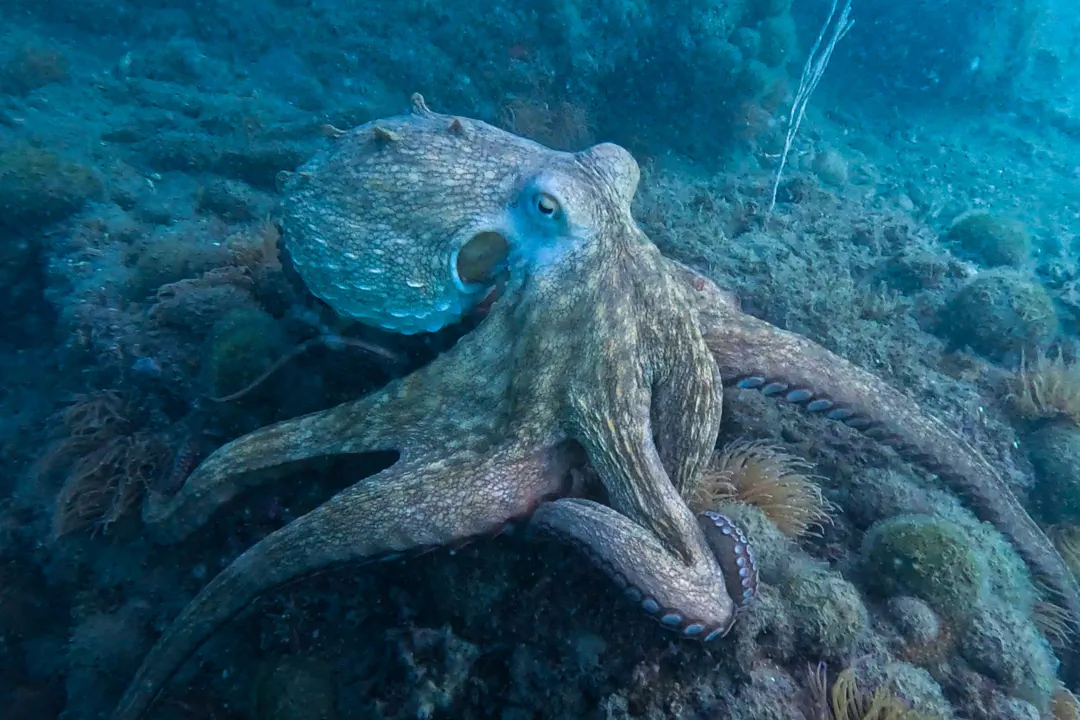 Justin PhilboisCC0 · iNaturalist
Whales and Dolphins Around Tenerife and La Gomera
The oceanic trench separating Tenerife and La Gomera drops beyond 2,000 metres within a few miles of shore, creating a sanctuary for marine mammals. A 2021 study in Frontiers in Marine Science documented that at least 30 cetacean species have been recorded in Canary Islands waters, with a 2007–2018 monitoring programme recording 1,688 sightings involving 18 distinct species.
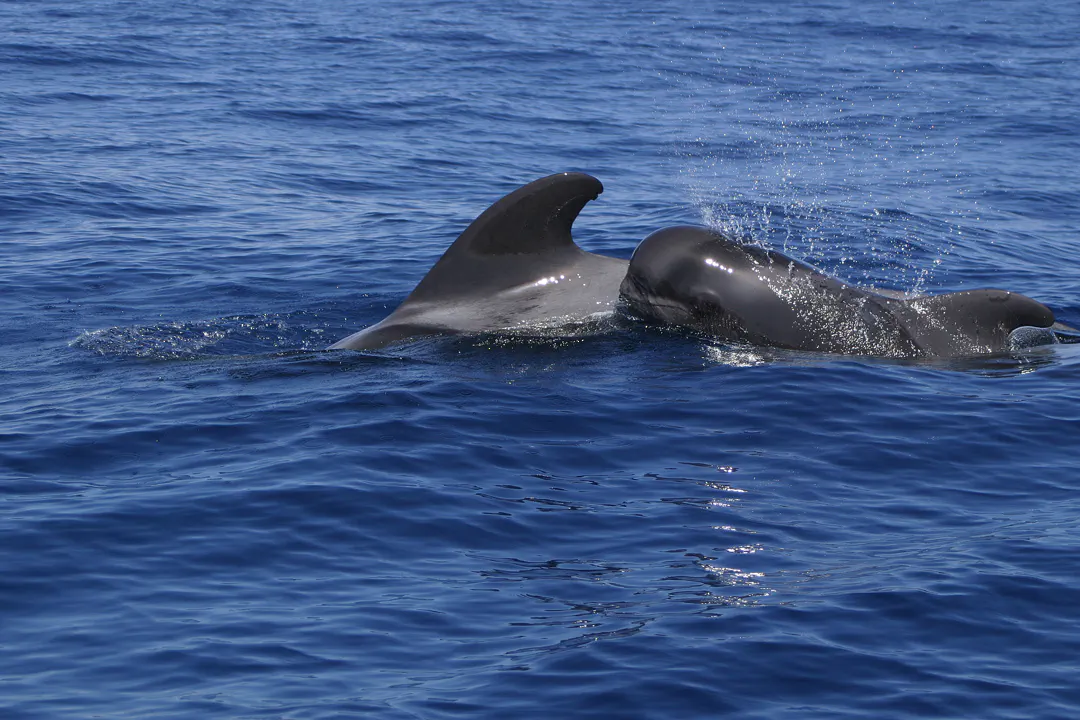
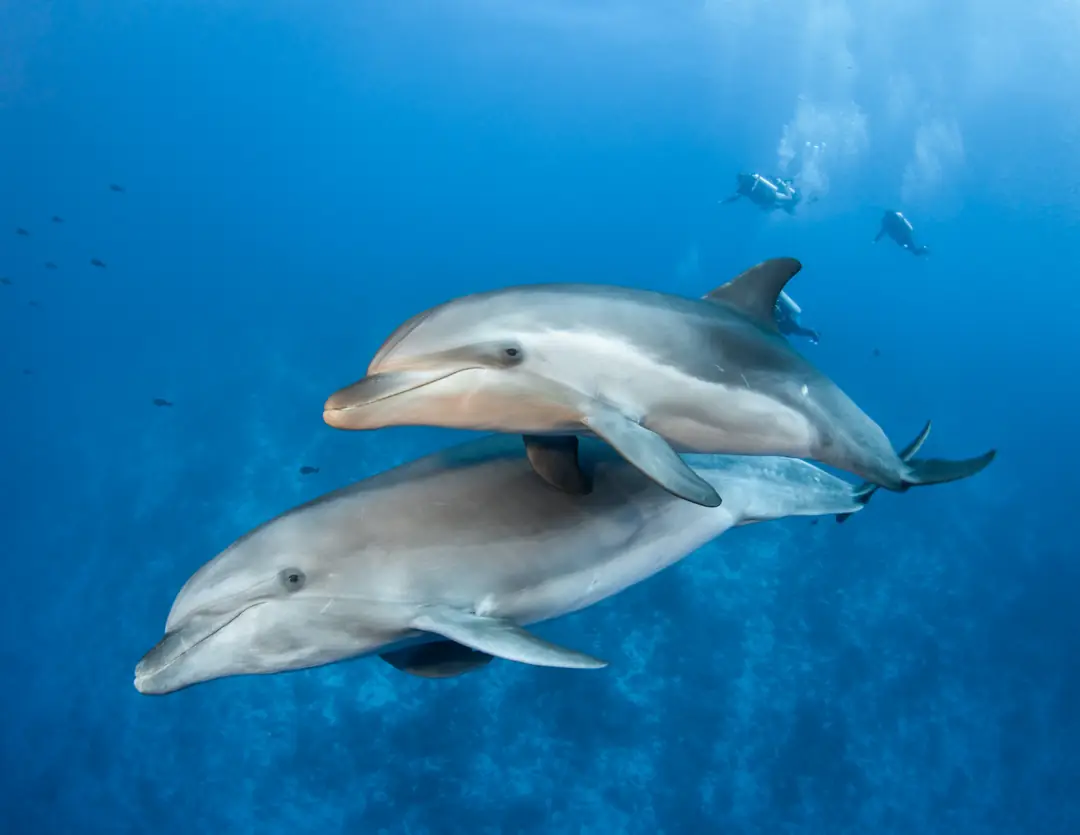
Resident pods of short-finned pilot whales (Globicephala macrorhynchus) and bottlenose dolphins (Tursiops truncatus) live in these deep island channels year-round. Pilot whales rest near the surface in family groups between deep foraging dives where they hunt squid at depths exceeding 500 metres. Atlantic spotted dolphins (Stenella frontalis) frequently join boat wakes, executing athletic leaps above the waves.
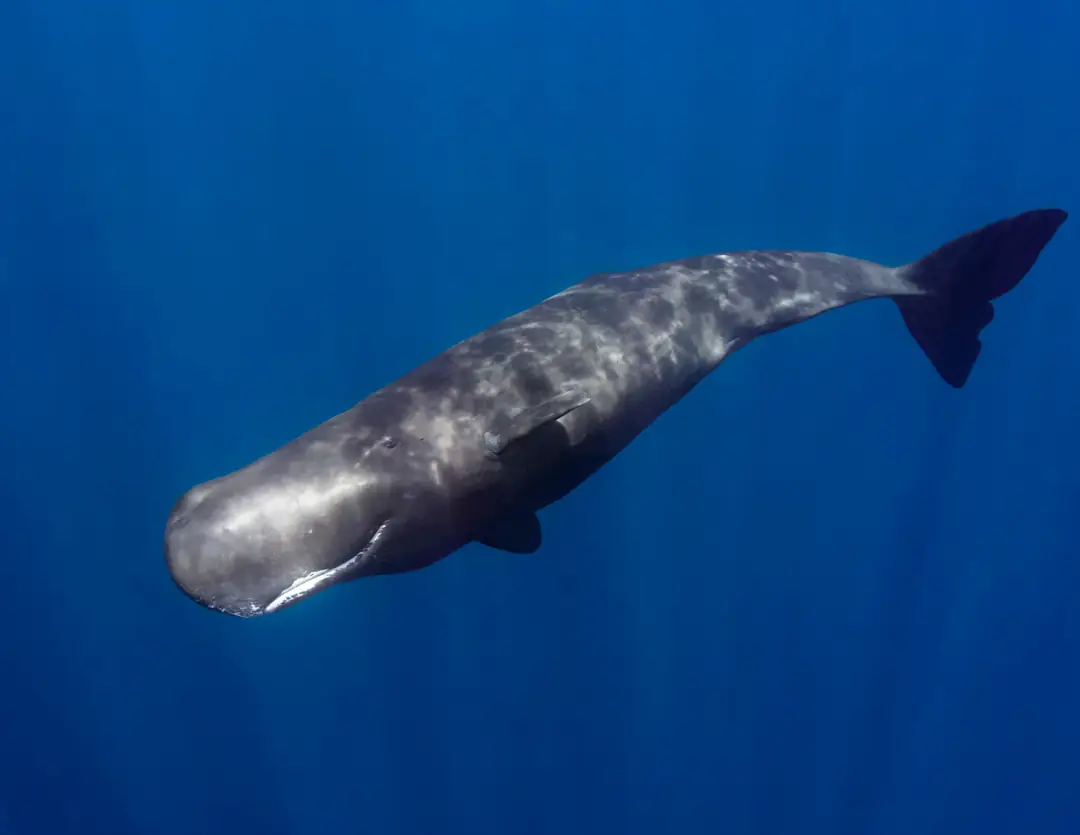
Sperm whales (Physeter macrocephalus) pass through the archipelagic channels periodically, detected by acoustic hydrophones before breaking the surface to breathe. Boat operators must adhere to distance guidelines, maintaining at least 60 metres from cetaceans and avoiding sudden directional changes. Divers encountering wild cetaceans should remain passive observers from the vessel, respecting regional marine mammal protection laws.
 © seabook.appAll rights reserved
 © seabook.appAll rights reserved
Is the Canary Islands Good for Snorkelling and Beginners?
Protected coves and shallow volcanic bays across the Canary Islands offer accessible conditions for novice divers and snorkellers. Locations like Playa Chica in Lanzarote (depth 2–12m, shore entry, beginner level), Las Canteras in Gran Canaria (depth 2–8m, shore entry, beginner level), and Radazul in Tenerife (depth 3–15m, shore entry, beginner level) feature sheltered entries protected from strong ocean swells. Shallow depths allow easy observation of marine life without complex deep-diving logistics.
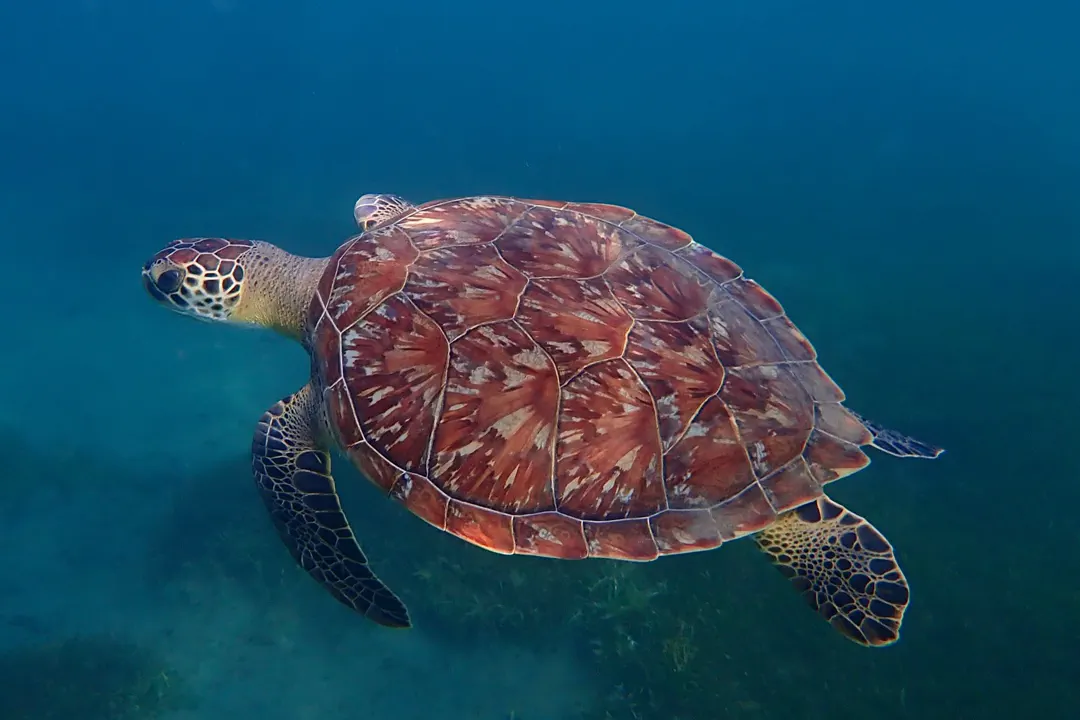
Green sea turtles (Chelonia mydas) feed on algae and seagrass beds in several shallow bays around Tenerife and Fuerteventura, offering clear views for surface swimmers. Common stingrays glide across sunny sand patches just metres from shore. Snorkellers equipped with a 3mm or 5mm wetsuit can explore shallow basalt platforms teeming with damselfish, wrasses, and juvenile parrotfish.
Entry over rocky shores demands caution, as ocean swells create surge along slippery basalt platforms. Beginners should enter only at established dive entries or sandy beaches, wearing boots to protect feet against sharp volcanic stone. Guided tours ensure new divers stay within sheltered boundaries while learning to navigate local currents safely.
Practical Tips for Marine Life Encounters in the Canary Islands
Proper exposure protection ensures comfort across long immersion times in Atlantic waters. A 5mm wetsuit works well from July through November when water temperatures stay above 22°C. During winter and spring, when water drops to 18°C, a 7mm suit paired with a neoprene hood and gloves prevents cold fatigue during repetitive dives.
Observing wildlife responsibly preserves the fragile ecosystems of the Canary Islands. Divers must avoid touching resting angel sharks or unearthing buried stingrays, as disturbing their sediment skin coating increases susceptibility to infection. Maintaining a distance of three metres allows marine animals to maintain natural resting and feeding routines.
Choosing certified eco-friendly operators ensures compliance with local marine reserve regulations. Designated reserves like La Restinga off El Hierro (depth 6–40m, boat entry, marine reserve permit required, beginner to advanced) enforce strict dive quotas and fishing prohibitions, supporting high fish densities and healthy reef habitats. Divers should carry a surface marker buoy on every dive to signal position in ocean currents.
Questions
Are there sharks in the Canary Islands?
Yes, the Canary Islands support notable populations of bottom-dwelling elasmobranchs, most famous being the Critically Endangered angel shark (Squatina squatina). Small houndsharks and deep-water shark species also inhabit the region's volcanic slopes. Dangerous open-ocean pelagic sharks are extremely rare near coastal recreational dive sites, making underwater encounters safe when respecting wildlife distance.
Can you see turtles in the Canary Islands?
Green sea turtles (Chelonia mydas) and loggerhead sea turtles (Caretta caretta) frequent the waters around Tenerife, Gran Canaria, and Fuerteventura. Green turtles exhibit resident feeding behaviour in specific shallow bays with seagrass beds, while loggerheads move through as oceanic migrants. Divers and snorkellers can spot them in depths ranging from 3 to 15 metres near sheltered coastlines.
Is it dangerous to swim with sea life in the Canary Islands?
Swimming with marine life in the Canary Islands poses very little risk to humans when standard safety guidelines are followed. Stingrays and moray eels only react defensively if stepped on, touched, or cornered in rock crevices. The primary environmental hazards stem from ocean currents, surge along rocky entry points, and sudden weather changes rather than animal interactions.
What is the best month to see angel sharks in the Canaries?
Angel sharks are most frequently encountered between November and April when water temperatures hover around 18°C to 20°C. During these cooler months, adult angel sharks move into shallow sandy bays at depths of 5 to 25 metres to feed and rest. Divers scanning sand-reef margins during winter dives have the highest statistical probability of spotting them.
What thickness wetsuit do I need for diving in the Canary Islands?
A 5mm wetsuit provides sufficient thermal insulation during late summer and autumn when water temperatures reach 22°C to 24°C. From January through May, when water temperatures fall to 18°C–20°C, a 7mm wetsuit with a hood and gloves is recommended for multi-dive days. Cold-sensitive divers should opt for a 7mm suit year-round to account for wind chill on surface intervals.
Where is the best marine reserve in the Canary Islands?
The La Restinga Marine Reserve, located off the southern tip of El Hierro, is widely recognised as the primary protected marine area in the archipelago. Established with strict fishing controls and zoning rules, the reserve features steep lava drop-offs, underwater caverns, and deep oceanic waters. Divers at La Restinga regularly observe large groupers, schooling pelagic fish, and migratory elasmobranchs.