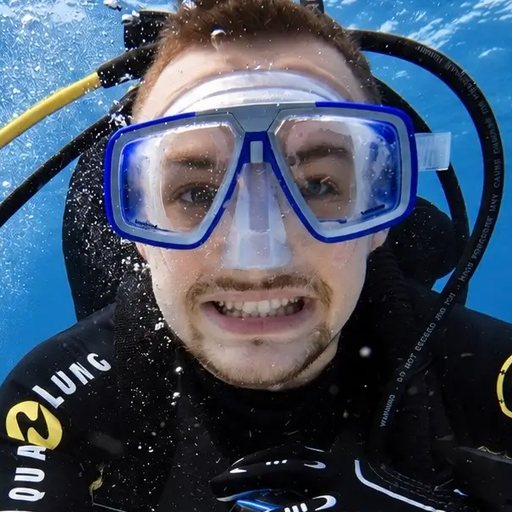
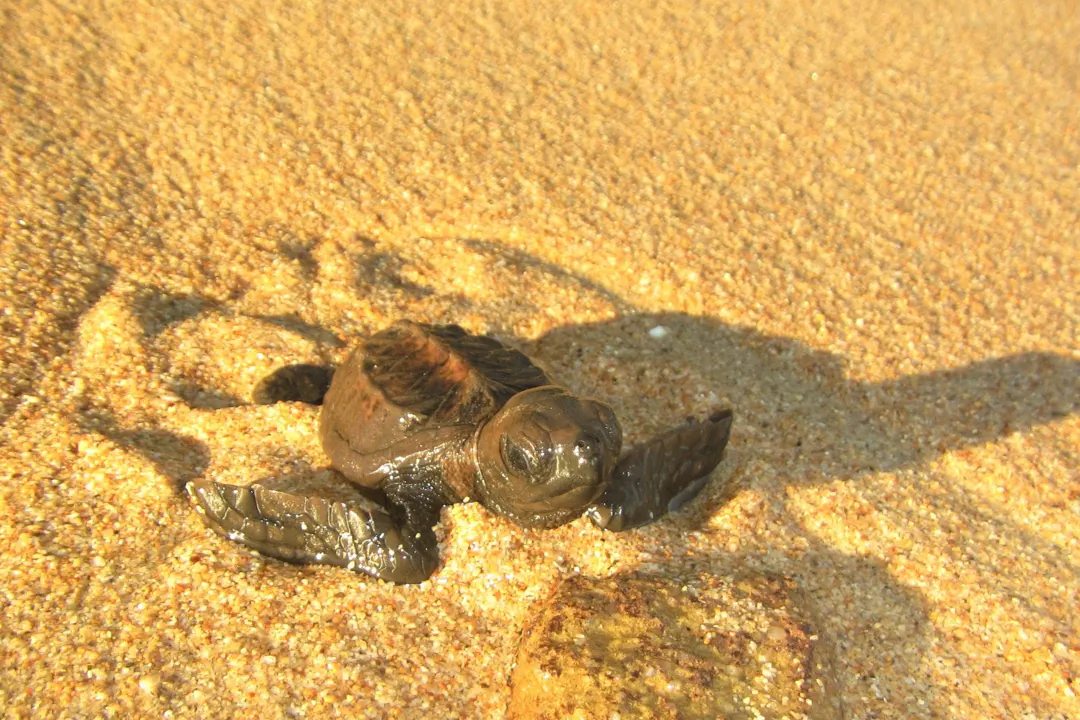
At a depth of 18 meters along the eastern drop-off of Giftun Small, the current pushes gently past giant gorgonian sea fans. A hawksbill turtle uncurls its paddle-like flippers from a coral ledge, kicking upward toward the sunlit surface to draw a breath. Red Sea bannerfish flutter in pairs around yellow brain corals, while red-and-white striped lionfish hang motionless inside deep rock crevices.
Scuba diving in Hurghada provides access to western Red Sea fringing reefs, shallow coral gardens, and historic shipwrecks. Sea temperatures range from 21°C in February to 29°C in August and September. Underwater visibility consistently measures between 15 and 30 meters throughout the year, affected occasionally by coastal winds or localized plankton blooms. The main diving season spans from April through November, when air temperatures are pleasant and sea conditions remain calm.
Day-boat excursions from local marinas reach celebrated reefs including Giftun Small, Shaab El Erg, Abu Ramada North, Carless Reef, and the sunken military vessel El Mina. Divers frequently encounter Indo-Pacific bottlenose dolphins, blue-spotted ribbontail rays, giant moray eels, and masked butterflyfish. The region welcomes complete beginners taking their Open Water course as well as advanced divers seeking deep walls and drift routes.
What Is Diving in Hurghada Like?
Day boats depart daily from Hurghada's modern marinas, carrying divers out to offshore islands and sheltered reefs within 30 to 90 minutes. The coastline offers a mix of sheltered turquoise lagoons for entry-level training and exposed oceanic drop-offs suited for drift diving. Most operators run two-dive or three-dive itineraries, serving lunch on board between morning and afternoon submerged explorations.
Navigating these waters involves swimming alongside dramatic hard coral walls, broad sandy plateaus, and isolated coral pinnacles. The absence of major river runoff keeps water clarity high, allowing light to reach reef structures as deep as 30 meters. Currents vary significantly by location, ranging from nonexistent inside protected lagoons to strong north-to-south flows along outer island points.
Surface logistics are straightforward, with hotel transfers picking up divers each morning and dropping them off by late afternoon. Daily dive boats feature shaded sun decks, dive platforms with twin ladders, and dedicated gear storage. Nitrox is widely available at local dive centers for those looking to extend their bottom times on repetitive reef profiles.
Safety protocols on Egyptian dive boats emphasize dive guides conducting detailed site briefings before every entry. Surface marker buoys are standard safety gear for all drift entries, ensuring boat crews track divers in open water. No-decompression limits are strictly enforced to keep recreational divers safe across multiple dives over several consecutive days.
Best Time to Dive in Hurghada
Planning a dive trip to Hurghada depends heavily on seasonal weather variations and sea surface conditions. Summer months from June through September bring high air temperatures exceeding 35°C and sea temperatures near 28°C. During this period, seas remain generally calm, making long crossings to outer reefs like Carless Reef smooth and comfortable.
Autumn from September through November is considered by many locals to offer the best overall conditions. Water temperatures hold at 25°C to 27°C, visibility frequently exceeds 25 meters, and ambient air temperatures drop to a comfortable 28°C. Marine life remains active across all reef zones, and winds are generally lighter than in early spring.
Winter conditions from December through February see water temperatures drop to 21°C or 22°C, accompanied by stronger northerly winds. Rough surface swells can occasionally restrict access to exposed outer walls, forcing boats to dive in protected leeward bays. However, winter skies remain clear, and underwater visibility remains sharp despite the cooler water column.
Spring months from March to May bring rising sea temperatures from 22°C to 25°C alongside periodic wind events known as the Khamsin. Plankton blooms during late spring can temporarily lower visibility near the coast, but they also draw filter-feeding fish to offshore plateaus. Pelagic encounters with barracuda and trevally increase as water temperatures begin their summer ascent.
Hurghada Water Temperature by Month
Sea temperatures in Hurghada show a predictable thermal swing of roughly 8°C between mid-winter and late summer. Water thermal profiles remain relatively uniform from the surface down to 30 meters, without sharp thermoclines interrupting recreational dives. Knowing these numbers helps divers pack the correct exposure protection for their specific travel dates.
From January to March, water temperatures bottom out between 21°C and 23°C, requiring a 5mm or 7mm full wetsuit for comfortable multi-dive days. Thermal hoods or neoprene vests are beneficial for divers who chill easily during 50-minute profiles. Surface winds after exiting the water can cause evaporative cooling, making a warm jacket essential on the boat deck.
Between April and June, the water warms steadily from 23°C to 26°C, making a 5mm full suit ideal for most divers. By July, August, and September, sea surface temperatures peak between 27°C and 29°C. During these midsummer months, a 3mm full suit or shorty provides sufficient insulation while protecting against sun exposure and incidental stings.
October through December sees water temperatures gradually decline from 27°C back down to 23°C. Transitioning back to a 5mm wetsuit in November ensures warmth during longer safety stops on exposed walls. Monitoring individual cold tolerance remains key, as repetitive dives over a week-long trip lower body heat reserves over time.
Water temperature
Hurghada, Egypt, monthly average
Reference point: Hurghada, Egypt on the western Red Sea coast; values represent typical average sea-surface temperatures for the Hurghada diving area, roughly nearshore reef waters.
Best Dive Sites in Hurghada
The reefs scattered offshore from Hurghada display remarkable physical variation, ranging from shallow island gardens to deep military wrecks. Daily dive boats select sites each morning based on local wind direction, swell, and guest certification levels.
Whether exploring high-energy current walls or calm training lagoons, every location offers distinct species encounters and submerged structures.
Giftun Small (Giftun Islands): Gorgonian Wall and Hawksbill Turtles
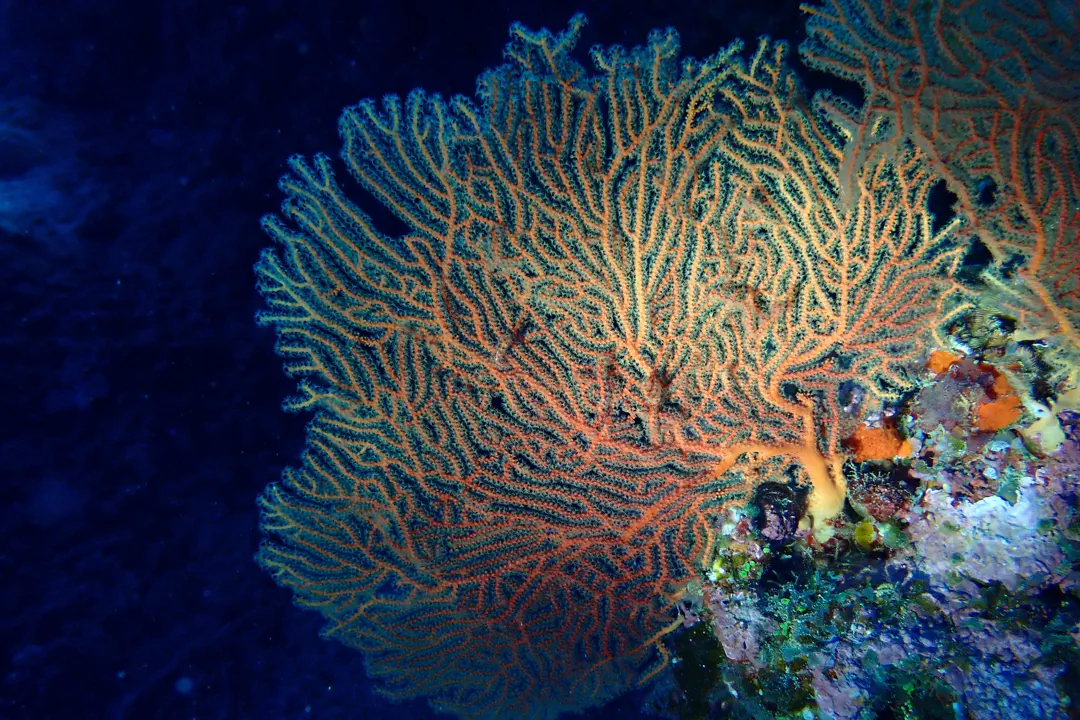
Located off the eastern side of Giftun Small Island, this site features a steep drop-off bordering a broad sandy plateau at 20 meters. Divers typically roll off the boat for a drift dive, following the wall southward while keeping the deep abyss on one side. Dense forests of giant gorgonian sea fans, Annella mollis, extend from the rock face into the open current.
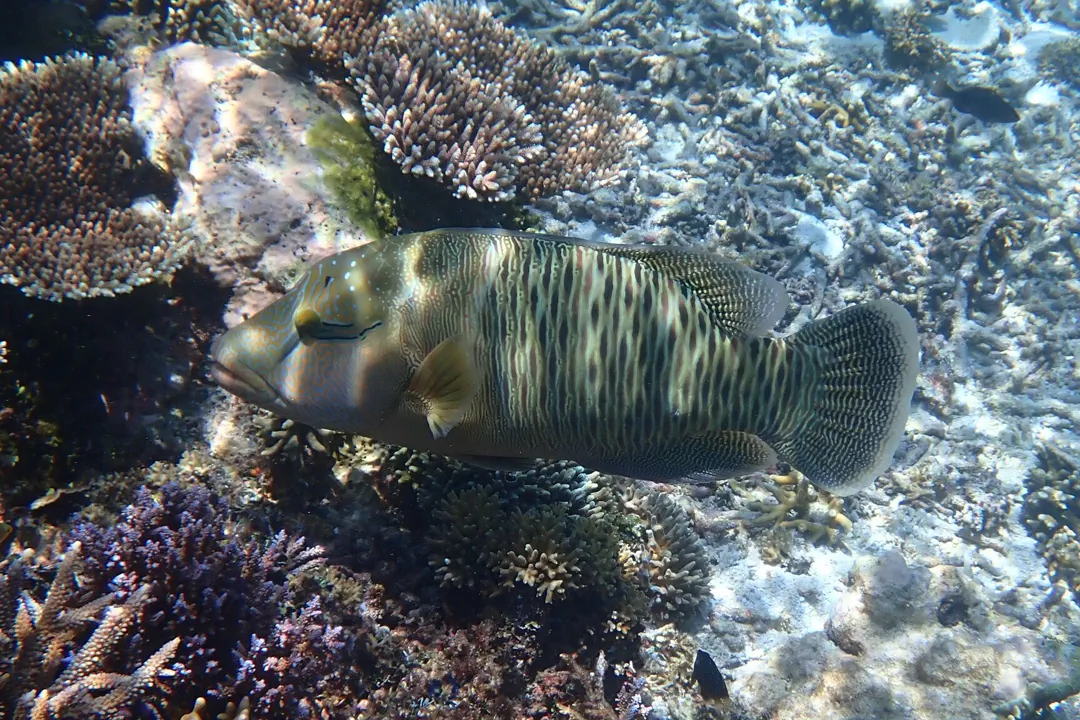
Hawksbill sea turtles, Eretmochelys imbricata, regularly feed along the coral plateau, searching for sponges among hard coral heads. Pairs of Red Sea anemonefish, Amphiprion bicinctus, guard their host anemones in shallow coral outcrops, while masked butterflyfish cruise the wall edge. Large Napoleon wrasse sometimes swim up from deeper water to inspect passing divers along the plateau margin.
Current along Giftun Small can range from mild drift to strong surges, making buoyancy control essential near the wall edge. Divers must maintain a respectful distance from gorgonian fans to avoid damaging their delicate frames with fins. Returning to the shallow plateau allows for slow, safety-stop exploration as the dive boat tracks surface marker buoys overhead. Depth: 10-30 m. Access: boat, 45 minutes from Hurghada Marina. Level: Advanced Open Water. Best months: April-November.
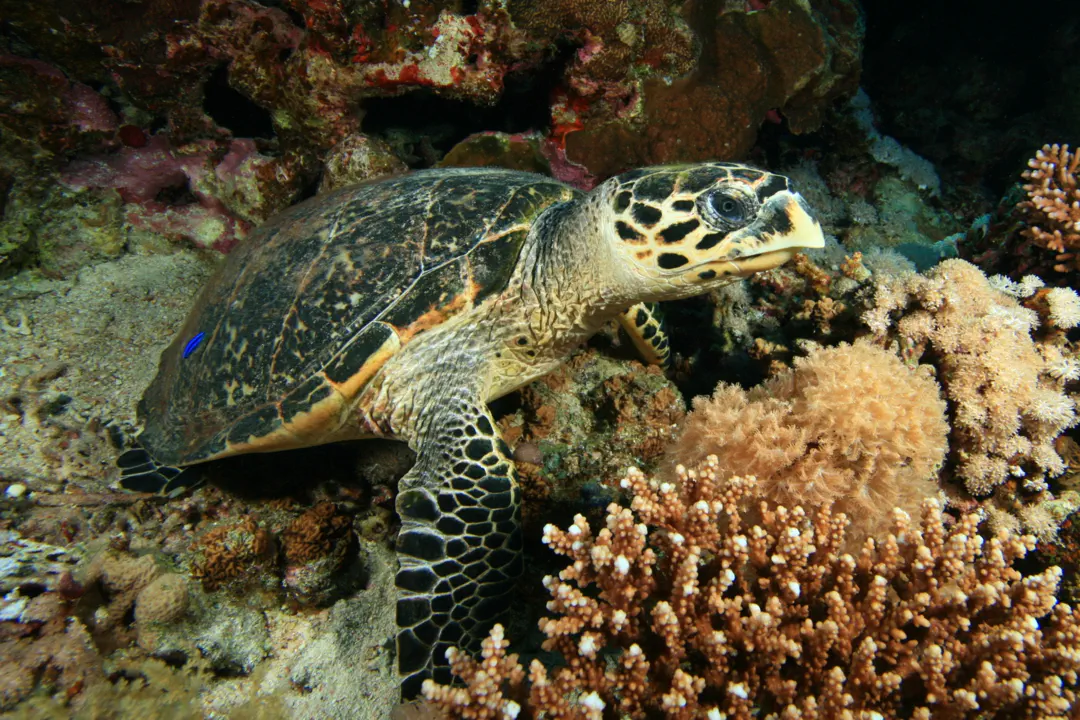
 © Debra BakerCC BY 4.0 · iNaturalist
  © Nicola CrockfordCC BY 4.0 · iNaturalist
 Shaab El Erg (North Hurghada): Resident Pod of Bottlenose Dolphins
Shaab El Erg is a massive horseshoe-shaped reef complex situated roughly two hours north of Hurghada's central port. The interior lagoon is protected from wave action, creating a calm, turquoise haven with depths averaging 8 to 12 meters. A resident pod of Indo-Pacific bottlenose dolphins, Tursiops aduncus, frequently uses this quiet lagoon to rest and socialize during morning hours.
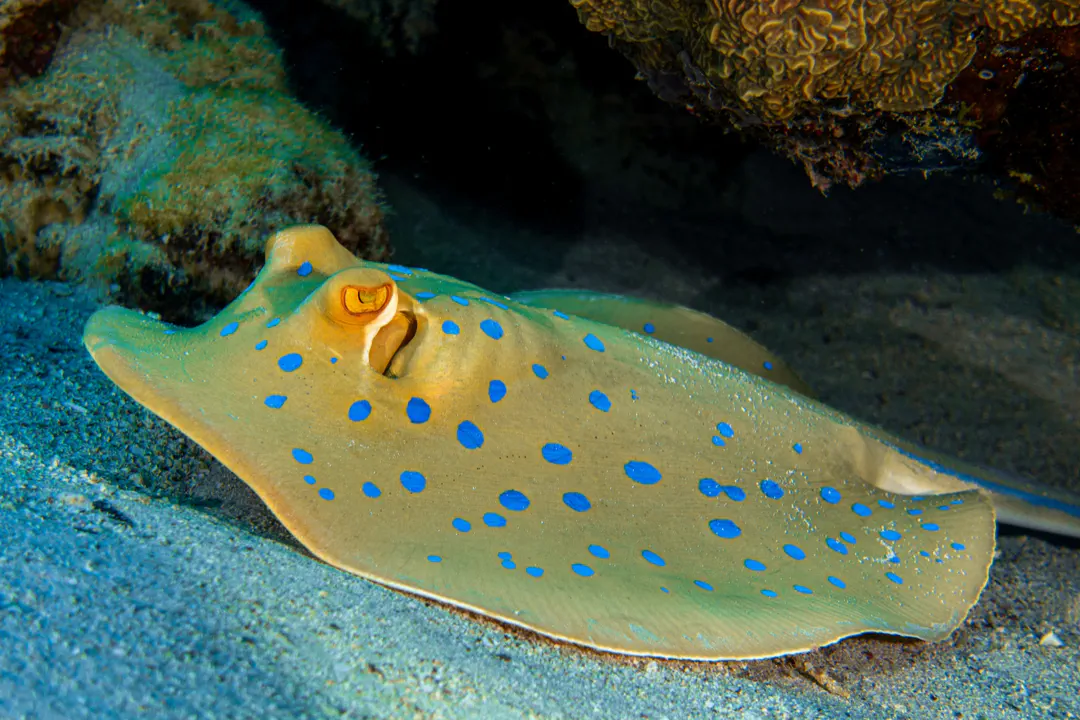
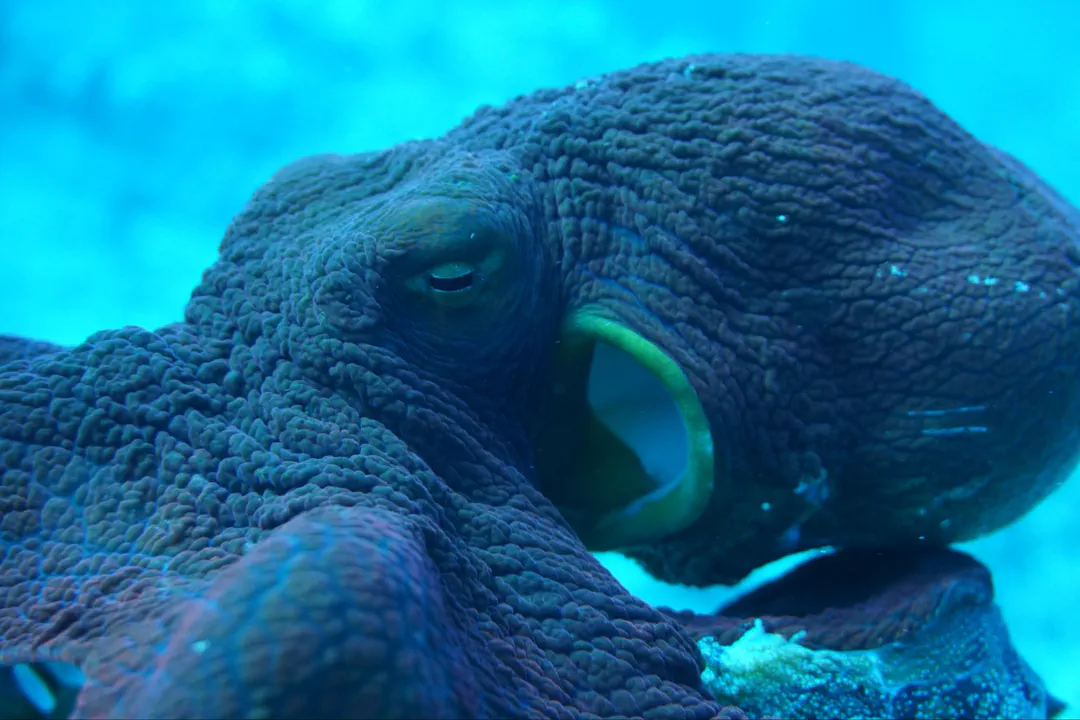
Beyond dolphin encounters, the outer reef slope features coral gardens peppered with table corals and blue-spotted ribbontail rays, Taeniura lymma. Day octopus, Octopus cyanea, hunt along hard coral ridges, changing color and texture in seconds as they move across shadows. Parrotfish and surgeonfish graze along the reef top, keeping the coral substrate clear of competing algae.
Strict conservation guidelines govern visits to Shaab El Erg to protect the resident dolphin population from disturbance. Swimmers and divers must enter the water quietly and maintain a passive presence without chasing or touching the mammals. Boat captains cooperate to limit vessel density inside the lagoon, ensuring wildlife can enter and exit freely. Depth: 5-18 m. Access: boat, 90 minutes from Hurghada Marina. Level: Open Water. Best months: Year-round.
 © Dirk FroebelCC BY 4.0 · iNaturalist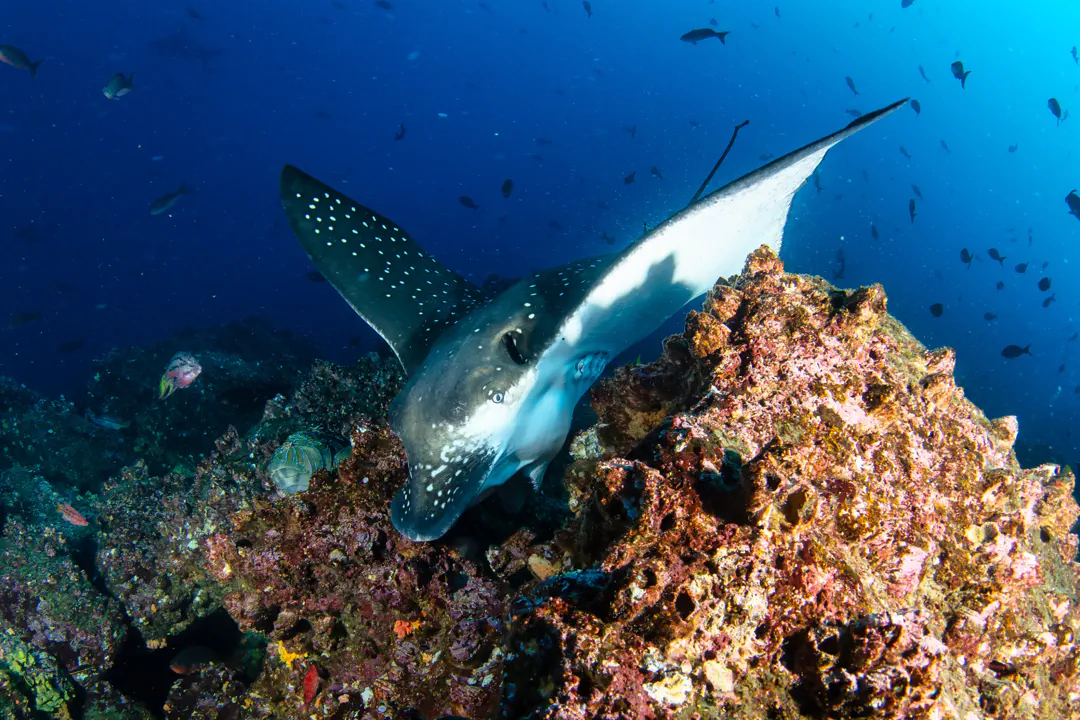
 © cello caruso-turielloCC BY 4.0 · iNaturalist
 El Mina Wreck (Hurghada Harbor): Egyptian Minesweeper Historic Dive
Resting just outside Hurghada Harbor, the El Mina is an Egyptian military minesweeper sunk during combat operations in 1970. The 70-meter-long steel vessel sits on a sandy sea floor at a depth of 30 meters, leaning slightly on her starboard side. Her bow section, deck gun, and anchor winch remain intact, offering clear structural silhouettes against the open water.
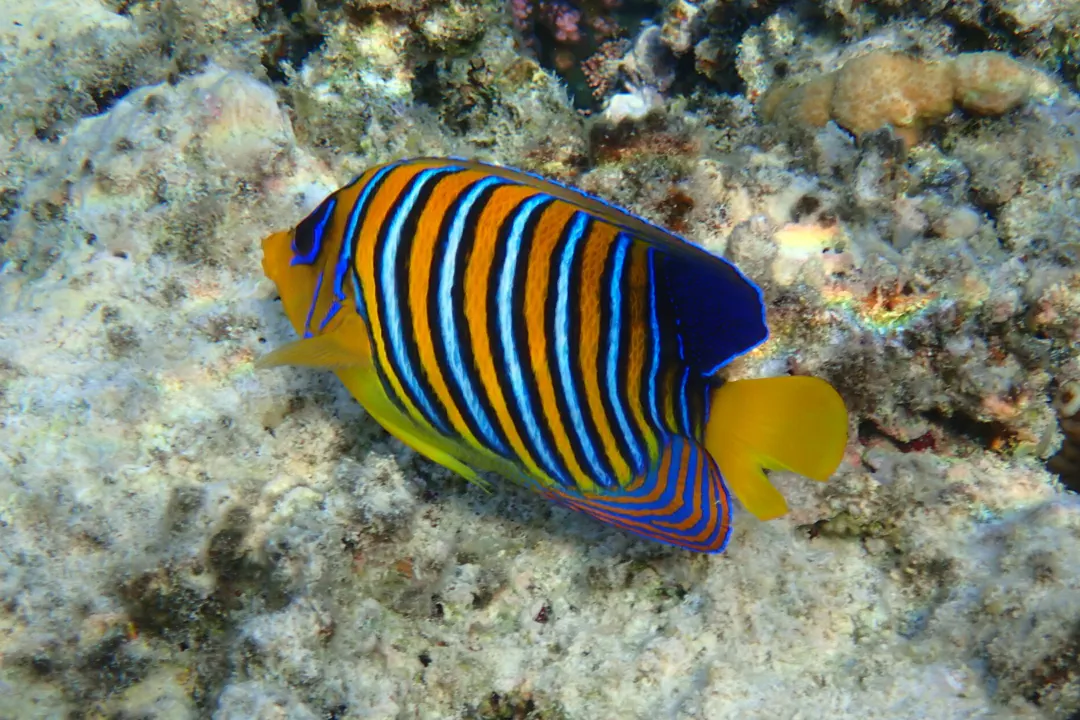
The steel hull now acts as an artificial reef, supporting dense clusters of soft corals and sheltering schools of glassfish inside open holds. Red Sea lionfish, Pterois miles, hunt near dark hatches, while masked butterflyfish, Chaetodon semilarvatus, hover along upper railings. Regal angelfish and soldierfish shelter in shadow zones underneath overturned hull plates.
Visibility inside the harbor area averages 15 to 20 meters, slightly lower than outer reefs due to harbor traffic and sediment. Because maximum depth reaches 30 meters, non-decompression limits require careful monitoring on standard tanks. Divers should remain on the outer structure unless trained for overhead wreck penetration environments. Depth: 25-30 m. Access: boat, 15 minutes from Hurghada Marina. Level: Advanced Open Water. Best months: Year-round.
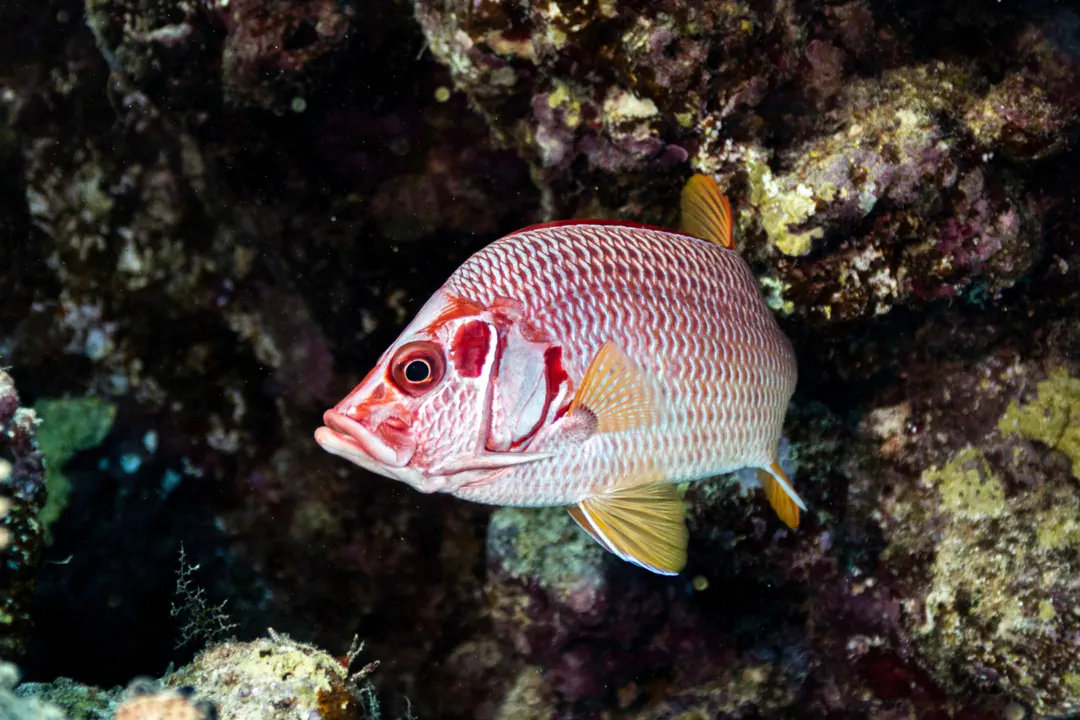 © R VasconcellosCC BY 4.0 · iNaturalist
 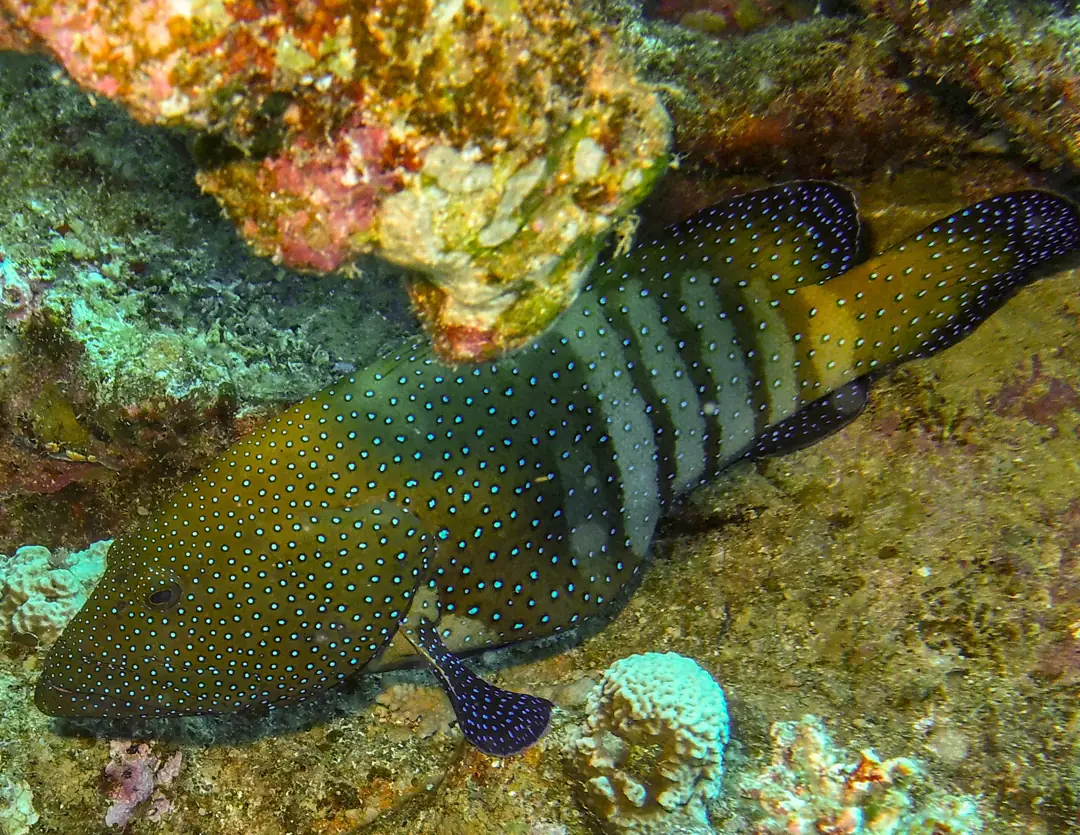 © Lesley ClementsAll rights reserved
 Abu Ramada North: Deep Wall Drop-offs and Pelagic Activity
Known locally as The Aquarium, Abu Ramada North offers dramatic underwater topography on the windward side of Abu Ramada Island. A shallow wall drops sharply from the surface to a wide plateau at 20 meters, beyond which the sea floor plunges into deep blue water. Northerly currents hit the island point head-on, washing nutrient-rich water across the reef edge.
The swift current attracts predatory fish species, including schools of pickhandle barracuda, Sphyraena barracuda, and giant trevally, Caranx ignobilis. Grey reef sharks, Carcharhinus amblyrhynchos, and whitetip reef sharks, Triaenodon obesus, occasionally patrol the deep edge of the plateau where currents are strongest. Giant moray eels coil inside deep ledges, opening their mouths to let cleaner wrasse service their gills.
Exits at Abu Ramada North are almost always executed as drift pickups in open water behind the island's shelter. Divers need confident buoyancy control and comfortable deep-water entry techniques to handle ocean swell. Deploying a bright surface marker buoy at 5 meters is mandatory so surface tenders can spot divers amidst choppy waves. Depth: 15-35 m. Access: boat, 60 minutes from Hurghada Marina. Level: Advanced Open Water. Best months: May-October.
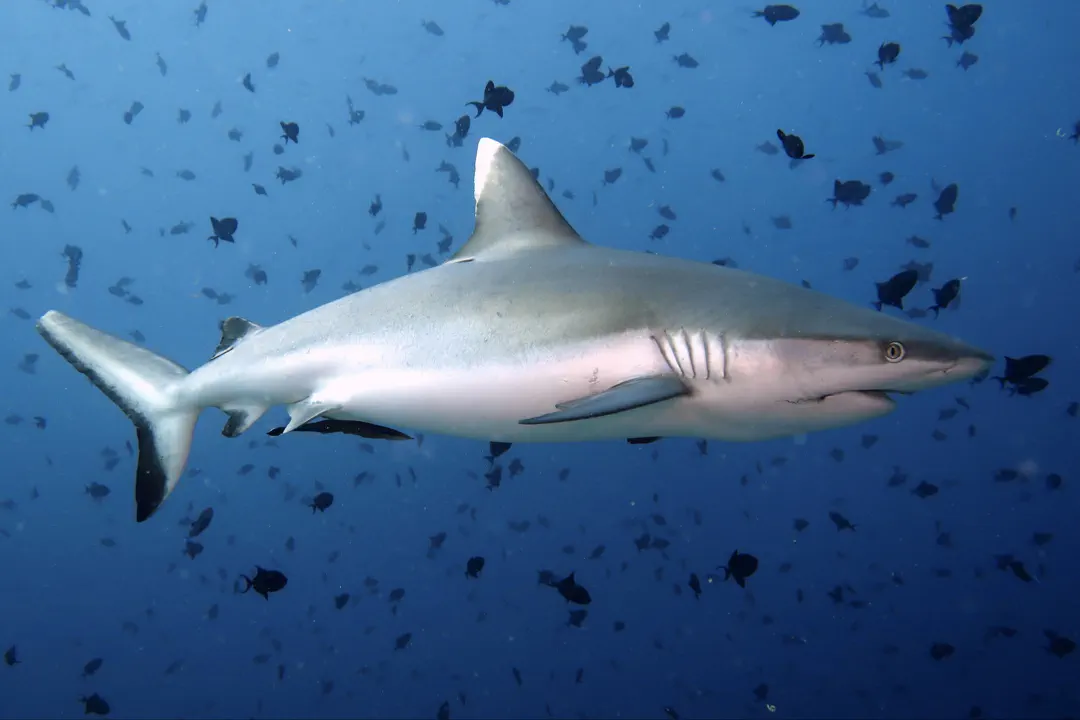 © Daniel BenákCC BY 4.0 · iNaturalist
 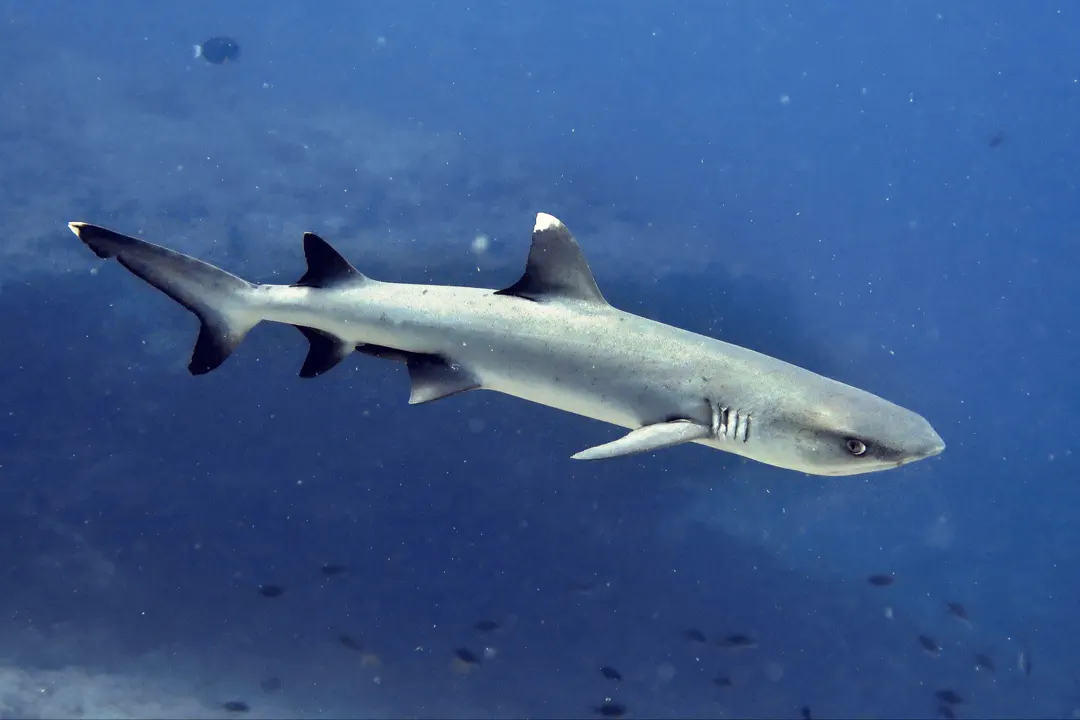 © Daniel BenákCC BY 4.0 · iNaturalist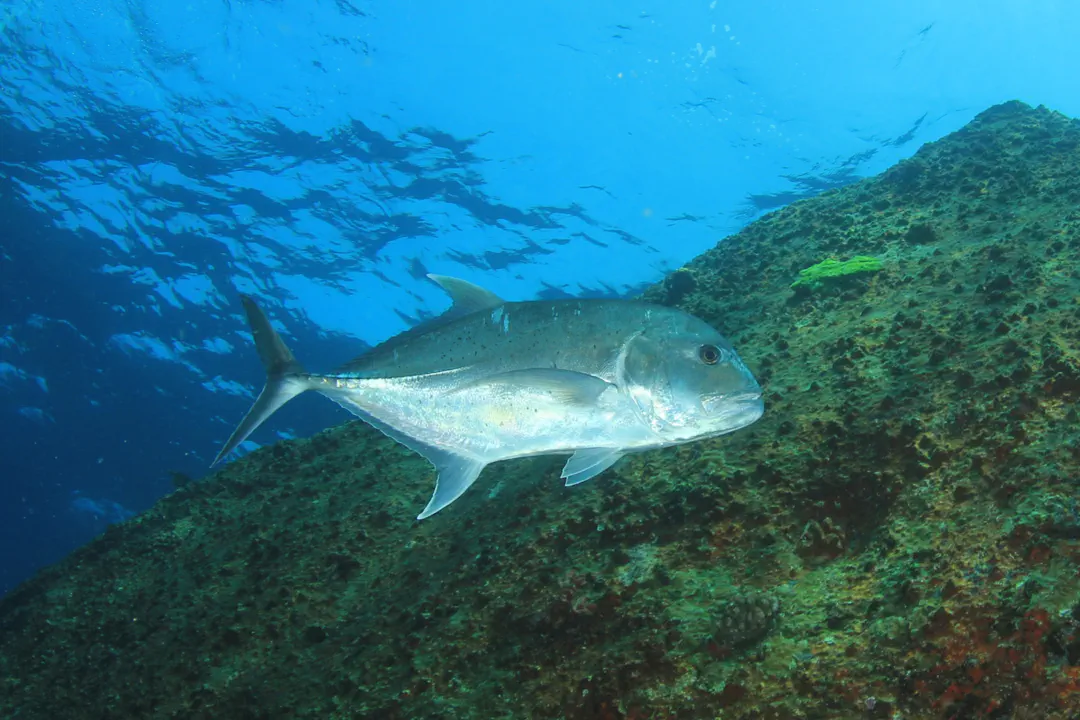
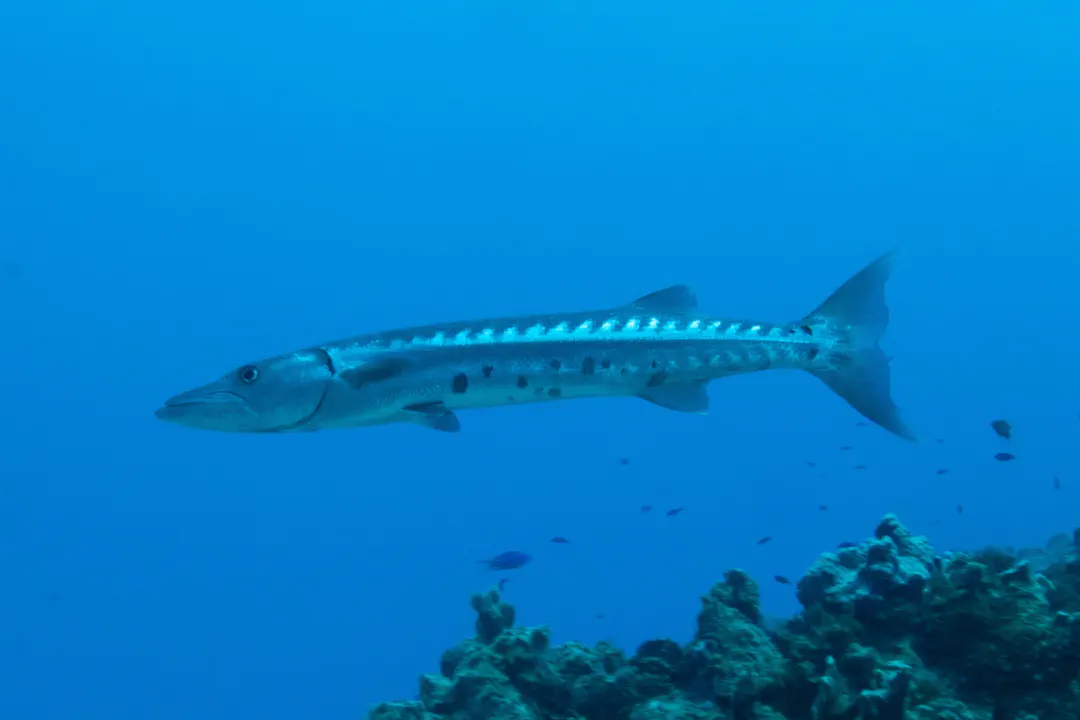 © Dan SchofieldCC BY 4.0 · iNaturalist
 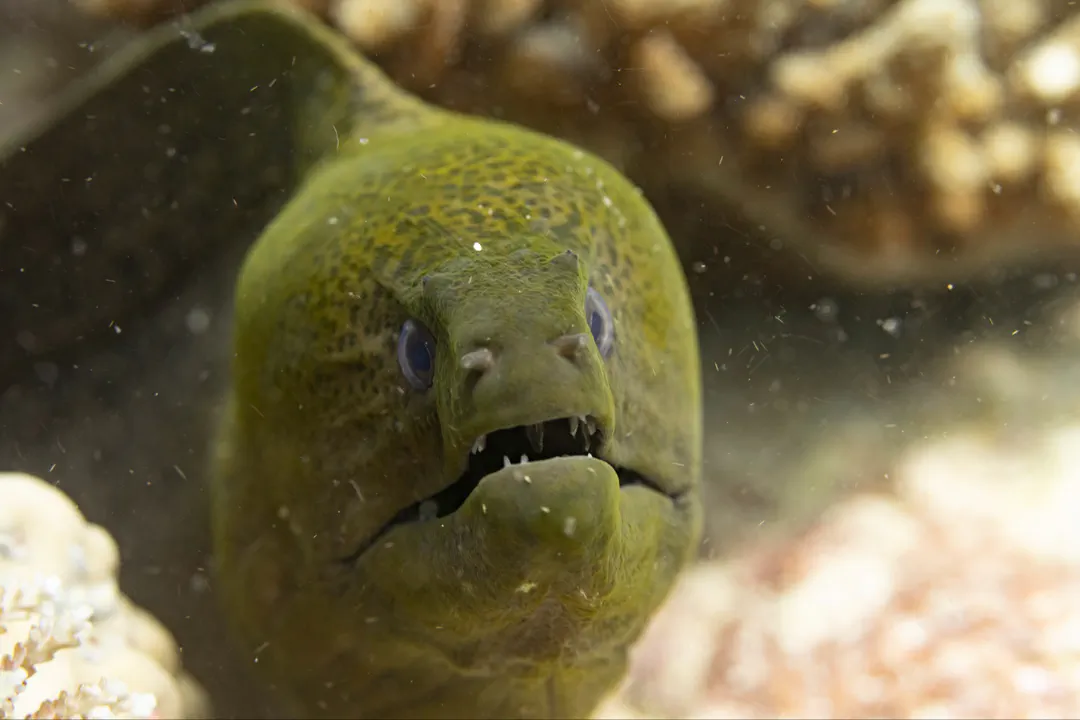 © cello caruso-turielloCC BY 4.0 · iNaturalist
 Carless Reef: Twin Coral Pinnacles and Giant Moray Eels
Situated in open ocean far from the mainland, Carless Reef consists of two large coral pinnacles rising from a flat plateau at 16 meters. The pinnacles terminate just 2 to 3 meters below the surface, separated by a narrow saddle of sand and hard corals. Because the site is fully exposed to open sea, boat trips require calm weather conditions for safe mooring.
Carless Reef is famous for its dense population of giant moray eels, Gymnothorax javanicus, which often swim freely between coral heads during daylight. Sohal surgeonfish, Acanthurus sohal, defend shallow territories with lateral displays against intruding fish. Nearby sand beds host colonies of garden eels, Heteroconger hassi, swaying like underwater grass stems in gentle current.
The surrounding wall drops off into depths exceeding 40 meters, where pelagic species occasionally sweep past the pinnacles. Strong currents can sweep across the plateau without warning, requiring divers to seek shelter in the lee of the pinnacles. Gas management must account for mid-water ascents if current carries divers off the reef structure into blue water. Depth: 12-35 m. Access: boat, 75 minutes from Hurghada Marina. Level: Advanced Open Water. Best months: April-November.
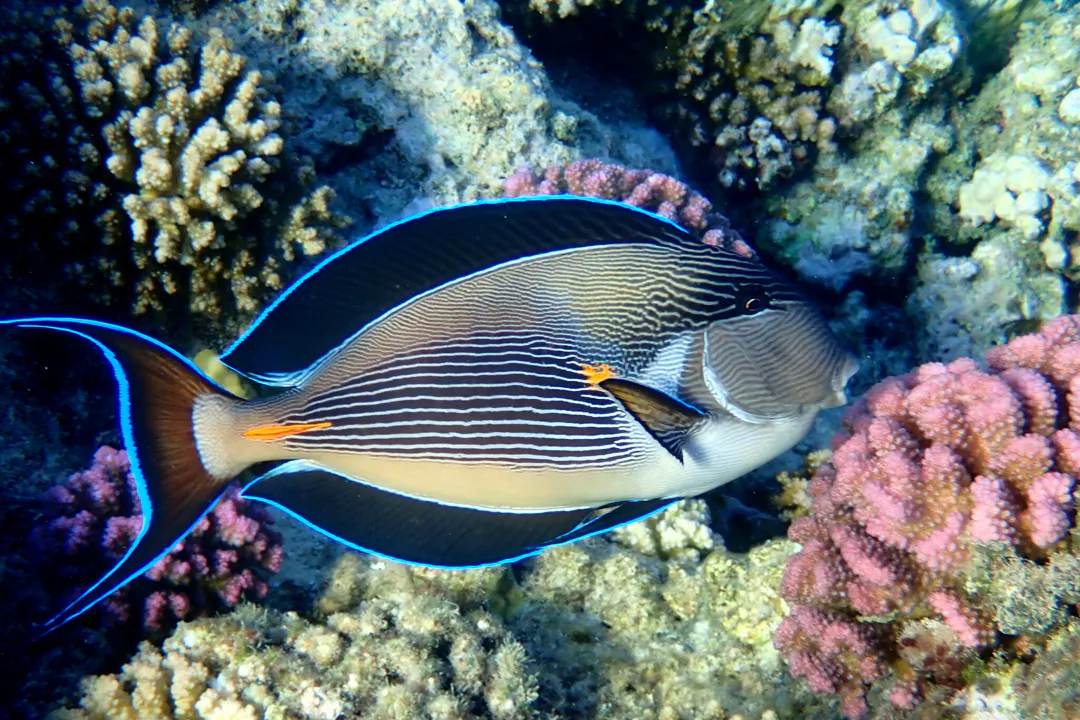
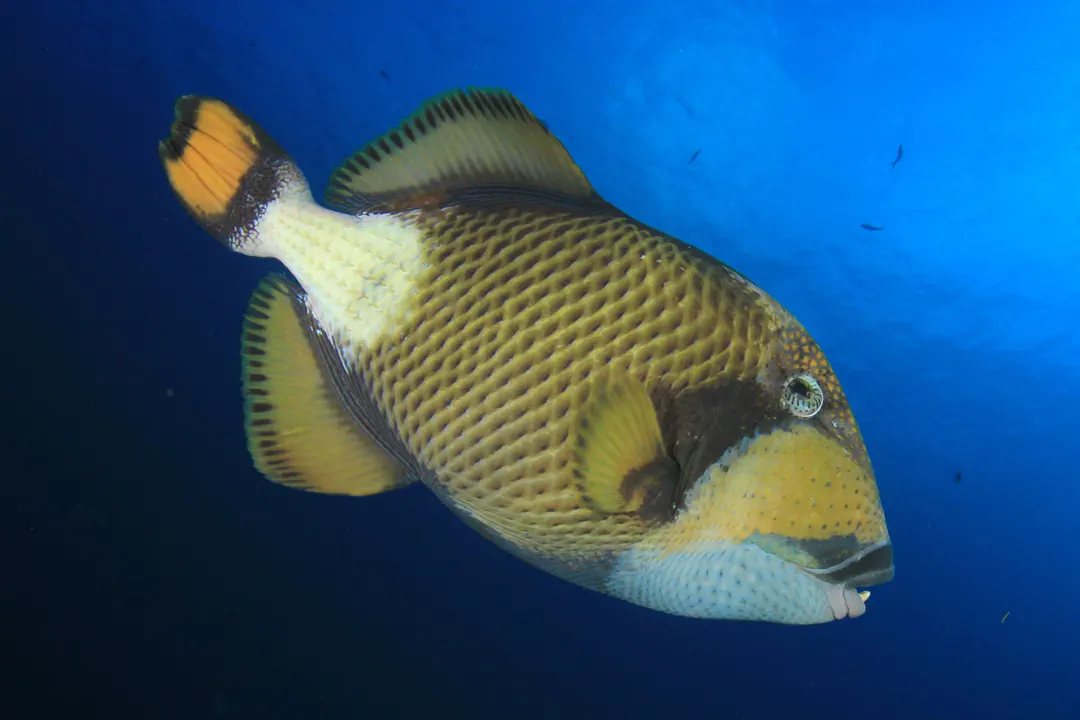
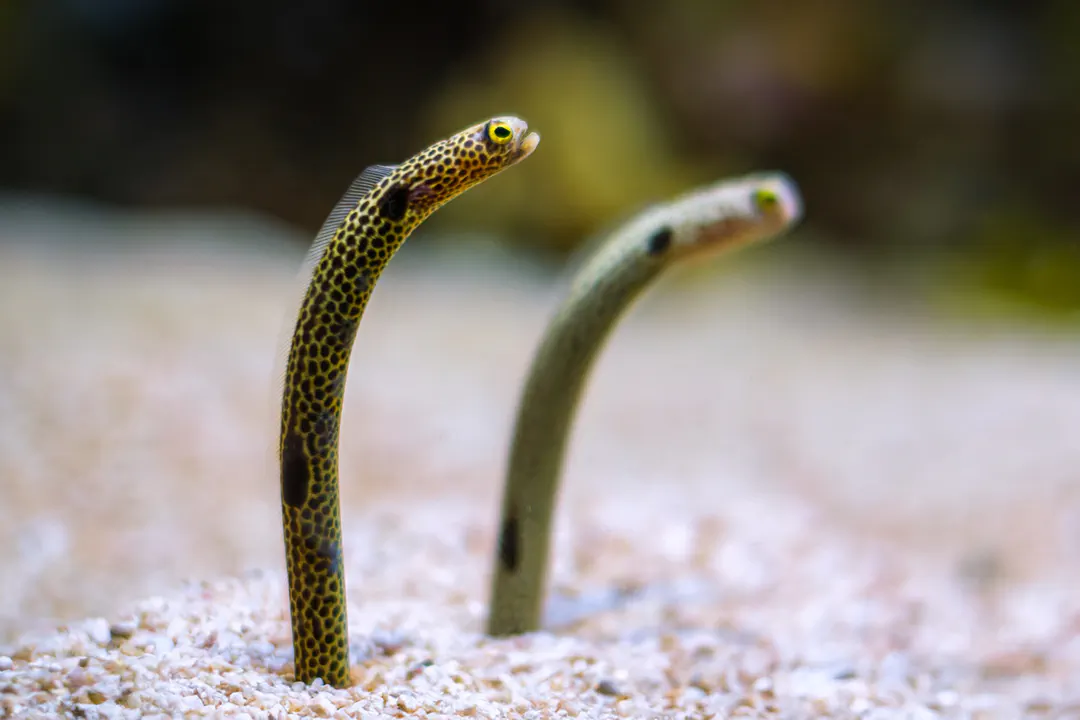
Fanadir Reef: Protected Slope for Macro Life and Night Dives
Stretching for several kilometers along Hurghada's northern coastline, Fanadir Reef is an elongated coral wall protected from prevailing ocean swells. A shallow reef crest slopes gently down to a flat ledge at 12 to 15 meters, before dropping off again into deeper water. Its sheltered position makes Fanadir a dependable backup site when outer island crossings are rough.
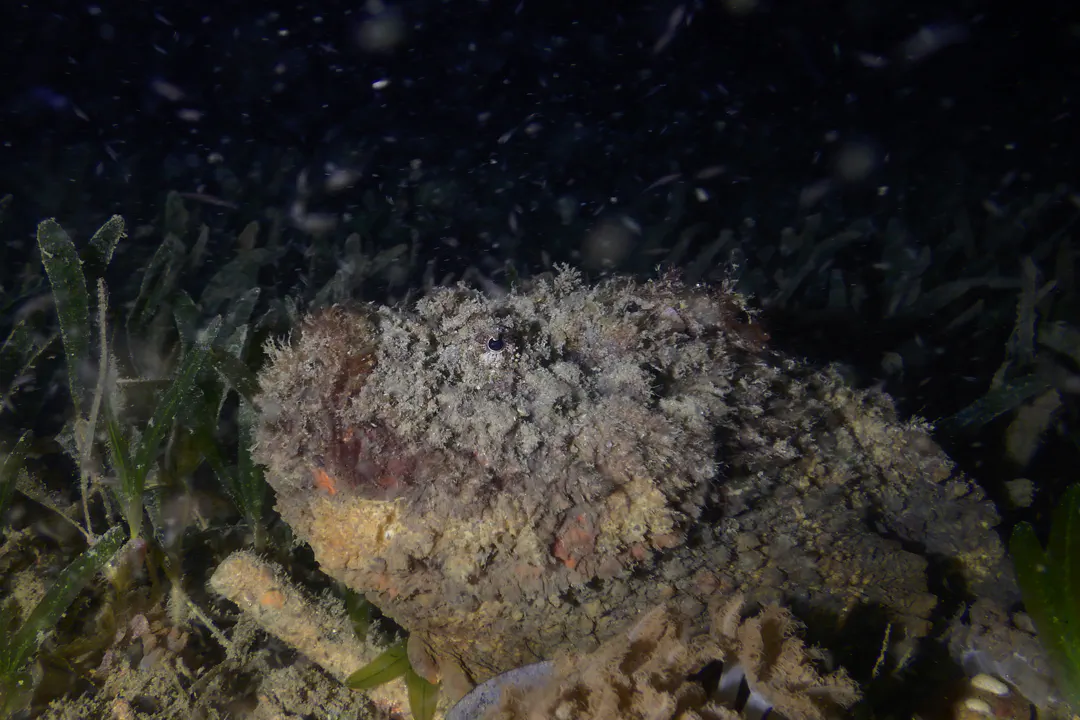
The ledge at Fanadir is a haven for cryptic macro organisms and camouflaged predators hiding on sandy patches. Venomous stonefish, Synanceia verrucosa, and bearded scorpionfish, Scorpaenopsis barbata, blend into coral rubble and rock ledges. Red Sea lionfish hunt openly over the plateau, while Pharaoh cuttlefish, Sepia pharaonis, hover over sand beds displaying color patterns.
Excellent protection from wave action makes Fanadir the primary location for introductory night dives in Hurghada. Under dive lights, nocturnal octopuses emerge from crevices to forage across open coral heads while parrotfish sleep inside mucous cocoons. Shallow depths and gentle currents allow for long, relaxed dive profiles with minimal gas consumption. Depth: 8-22 m. Access: boat, 25 minutes from Hurghada Marina. Level: Open Water. Best months: Year-round.
 © Ewout KnoesterCC BY-SA 4.0
 Marine Life in Hurghada
The northern Red Sea harbors over 1,000 fish species and 200 species of hard and soft corals. Due to geographic isolation during past ice ages, roughly 14% of fish species in these waters are endemic to the Red Sea. Diving along Hurghada's coastal drop-offs offers reliable encounters with endemic species like masked butterflyfish, Chaetodon semilarvatus, and Red Sea bannerfish, Heniochus intermedius.
Larger marine life frequenting these reefs includes hawksbill sea turtles, blue-spotted ribbontail rays, and giant moray eels. Schooling fusiliers and unicornfish hang in current-swept water columns, while red-and-white lionfish hunt small damselfish along coral walls. Divers can use the Seabook app on their phones between boat dives to identify captured fish photos and log observed species against Red Sea marine database entries.
Preserved hard coral formations like massive acropora table corals, brain corals, and vertical soft coral walls provide vital structure for this aquatic ecosystem. Maintaining neutral buoyancy, avoiding contact with fragile structures, and refusing to touch marine life ensures these reef systems remain healthy. Local environmental organizations actively monitor reef conditions, maintain mooring buoys, and enforce environmental protection regulations.
While rare pelagic visitors such as whale sharks or hammerheads occasionally pass offshore reefs during summer plankton surges, the core attraction remains the resident reef species. Small macro critters like nudibranchs, pipefish, and mantis shrimp inhabit inner reef crevices for attentive eyes to discover. Balanced ocean conditions ensure every dive reveals intricate ecological interactions across all depth zones.
 Andrew DeaconCC0 · iNaturalist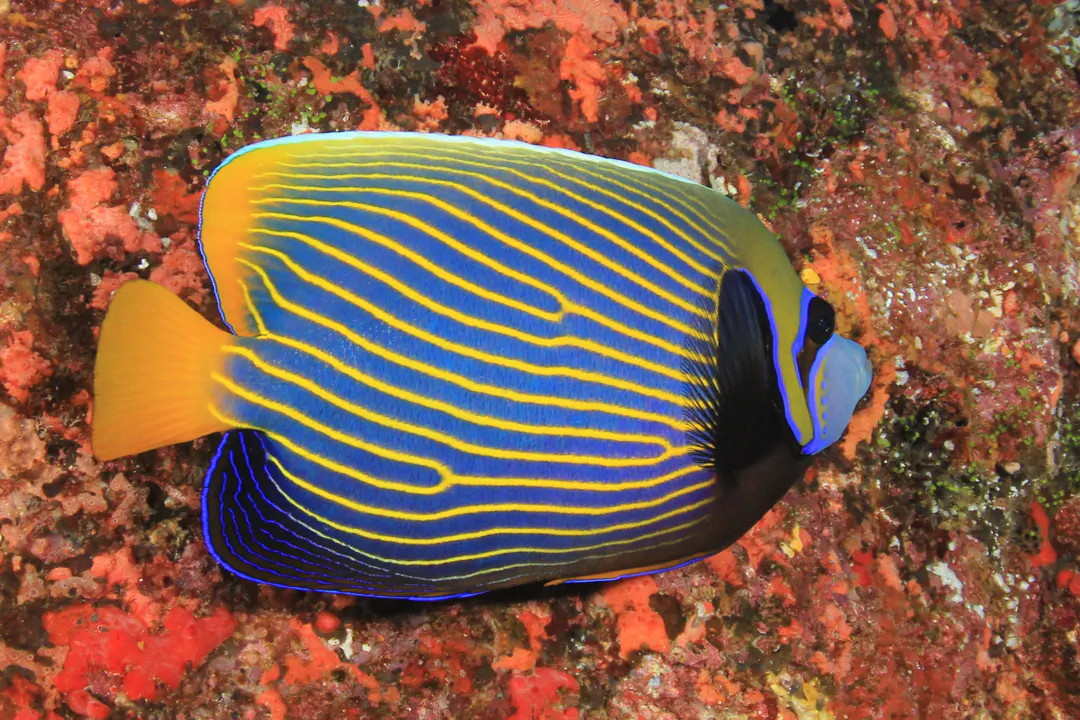
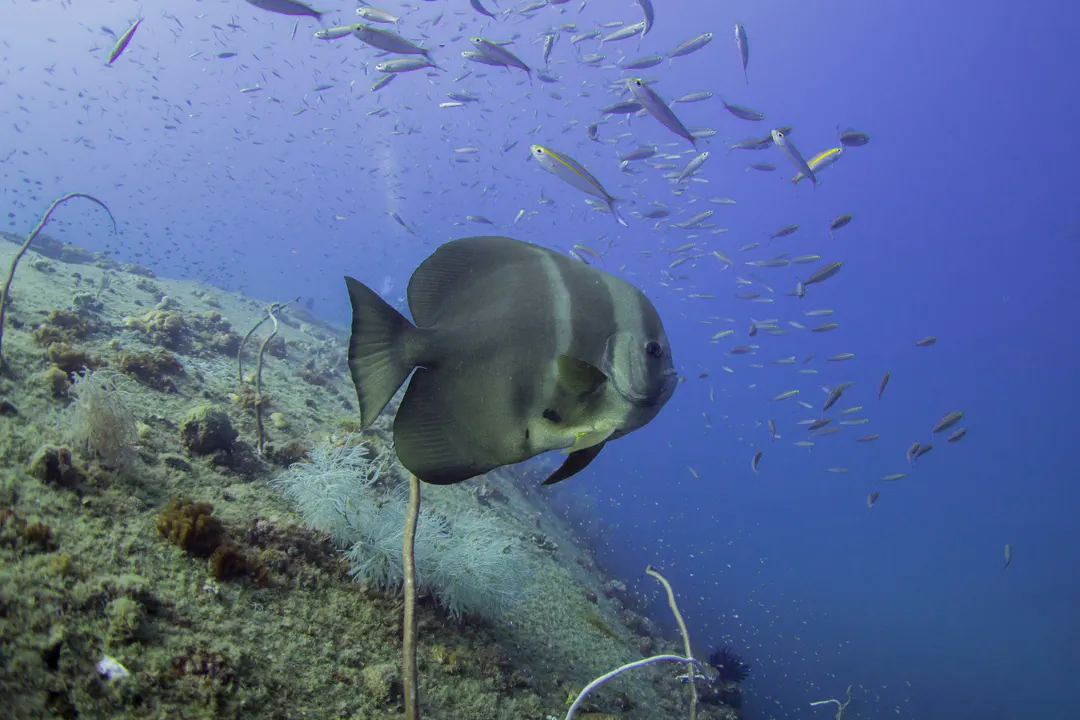 © Christopher MarkCC BY 4.0 · iNaturalist
 Is Hurghada Good for Beginners and Snorkellers?
Hurghada ranks among the most accommodating destinations in the world for individuals learning to scuba dive or trying it for the first time. The availability of shallow, low-current reef slopes like Fanadir and inner Giftun lagoon provides safe, controlled environments for Open Water Diver course training. Clear water with visibility reaching 20 meters helps student divers stay relaxed while mastering basic mask-clearing and regulator-recovery skills.
Dive centers in Hurghada operate spacious daily boats that make multi-day training comfortable for beginners. Students complete academic theory and confined water training in hotel pools before transitioning to the calm, warm sea for their four open water dives. Experienced instructors provide close supervision, taking advantage of flat surface conditions inside sheltered bays to build confidence in open ocean settings.
Non-diving family members and snorkellers can enjoy underwater views without wearing scuba equipment. Day trips to Giftun Island drop snorkellers over shallow coral gardens where damselfish, angelfish, and sea turtles swim in just 2 to 5 meters of water. Snorkellers should wear thermal rash guards or shorty wetsuits to protect against sun exposure and provide light flotation while floating over reef tops.
Beginner divers should communicate clearly with boat guides regarding their experience levels before selecting daily dive groups. Sites like Abu Ramada North or Carless Reef feature deep drop-offs and stronger currents that are better reserved for advanced certification levels. Choosing appropriate dive profiles ensures new divers gain confidence while keeping underwater excursions safe and enjoyable.
Getting There and Practical Tips
Hurghada International Airport serves as the primary entry gateway, receiving direct flights from major European cities and domestic connections from Cairo. Most hotels and marinas are located within a 15 to 30-minute drive from the airport, making arrival logistics swift and seamless. Visitors from most European nations can obtain a 30-day tourist visa upon arrival at the airport bank kiosks or via Egypt's official e-visa portal prior to departure.
Daily dive trips depart between 8:00 AM and 8:30 AM from central marinas, returning around 4:00 PM after completing two scheduled dives and lunch on board. Nitrox certification is highly recommended to optimize non-decompression limits during repetitive daily dive schedules. Hyperbaric chamber facilities operate in Hurghada city center, providing emergency medical assistance if unexpected decompression sickness symptoms arise.
When packing for a Hurghada dive vacation, essential personal equipment includes a logbook, certification cards, a surface marker buoy, and reef-safe sunscreen. Divers should budget for compulsory national park entry fees, which are collected daily on dive boats to support marine conservation efforts around Giftun and northern reefs. Allowing a minimum interval of 18 to 24 hours between your final dive and your flight home is crucial to prevent decompression illness.
Local dive sites combine clear visibility between 15 and 30 meters with water temperatures from 21°C in winter to 29°C in midsummer. Planning trips around weather forecasts and respecting local reef conservation regulations ensures a safe, rewarding experience along Egypt's western Red Sea coast.
Questions
Are there sharks in Hurghada?
Yes, reef sharks can occur at exposed offshore sites, including grey reef sharks (Carcharhinus amblyrhynchos) and whitetip reef sharks (Triaenodon obesus). Hammerheads and whale sharks are uncommon visitors rather than dependable Hurghada sightings, and encounters vary with site, season, visibility and current.
Can you swim with dolphins in Hurghada?
Shaab El Erg is known for repeated encounters with wild Indo-Pacific bottlenose dolphins (Tursiops aduncus), but no operator can guarantee an encounter. Visitors should not chase, feed, surround or touch the dolphins; passive observation from the surface gives the animals space to leave.
How warm is the water in Hurghada in winter?
Sea temperature is typically about 21–23°C from January through March, with February often near the lower end of that range. Many divers choose a 5 mm wetsuit, while cold-sensitive divers may prefer 6–7 mm protection, particularly on long or repetitive boat dives.
Is Hurghada suitable for first-time divers?
Yes. Sheltered sites, generally good visibility and many shallow reef profiles support introductory dives and Open Water training, but students still need formal instruction, medical clearance where required and close supervision. Wind, current and boat traffic can make some offshore sites unsuitable for beginners on a particular day.
What is the visibility like when diving in Hurghada?
Visibility commonly falls in the 15–30 m range and can exceed 30 m on clear offshore days. Harbor sites, strong wind, plankton and seasonal conditions can reduce visibility, so 20–30 m should be presented as a typical planning range rather than a year-round guarantee.
Should I choose a liveaboard or daily diving boats in Hurghada?
Daily boats are the standard choice for Hurghada’s local reefs and allow divers to return to shore each afternoon. A liveaboard is more suitable for reaching distant northern Red Sea wrecks and reefs, but it involves repeated dives, limited shore access and stricter flight and surface-interval planning.