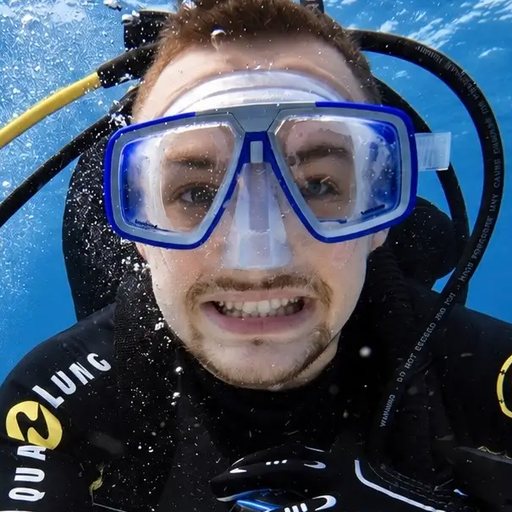
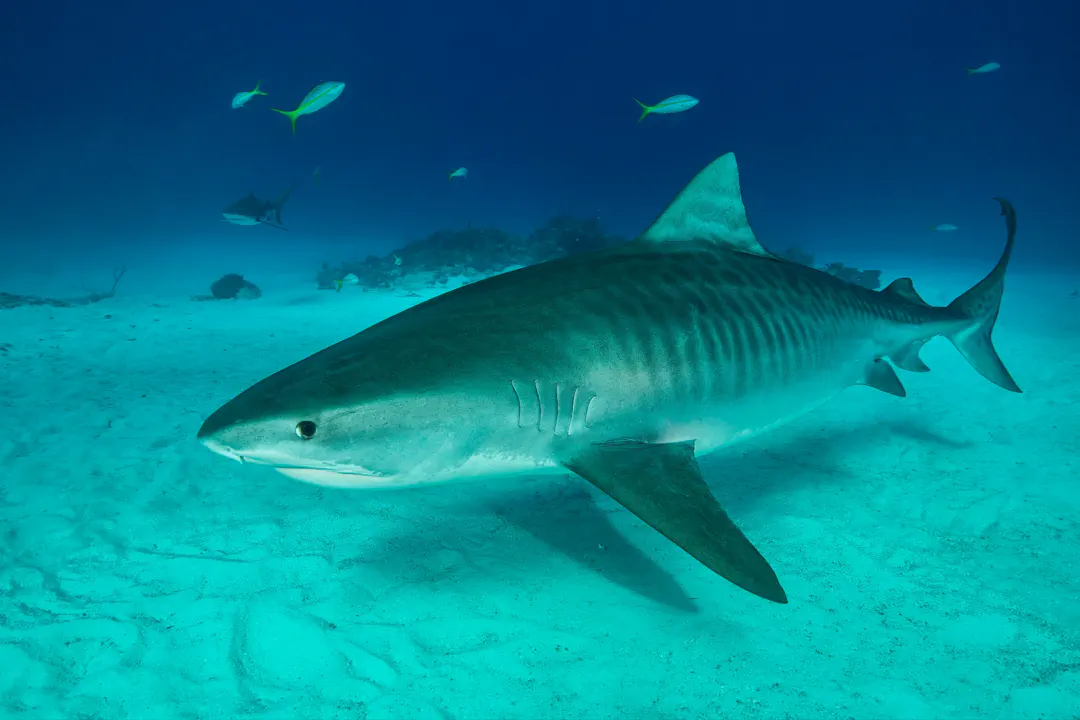
At a depth of 6 metres on the sand flats of Tiger Beach off Grand Bahama, sunbeams flicker through clear water as a 4-metre female tiger shark sweeps past. Her broad, barred flank passes inches above the coarse sediment while a dozen lemon sharks circle in slow arcs behind her. Current is gentle here, barely disturbing the sand as the large predator tilts her head to inspect the stationary group of divers.
For anyone planning a trip, diving in the Bahamas delivers some of the most reliable underwater conditions in the Atlantic Ocean. The prime season runs from November through May when weather systems are calmest, though operations run year-round. Seawater temperatures range from 23°C in northern winter up to 30°C during peak summer, while horizontal visibility routinely spans 20 to 40 metres across open shallow banks and outer wall drop-offs.
Key locations include Tiger Beach for large coastal predators, Dean's Blue Hole on Long Island for vertical abyss exploration, Runway Reef near Nassau for Caribbean reef shark encounters, and Cat Island for pelagic oceanic whitetip sharks. The 700 islands cater to all experience levels, offering shallow, sheltered sand flats for novice divers alongside open-water blue drifts for advanced technical explorers.
What Is Diving in the Bahamas Like?
The underwater geography of the archipelago stretches across massive shallow limestone platforms known as the Bahama Banks. These shallow carbonated sand flats sit at depths between 3 and 15 metres before dropping vertically into oceanic trenches. Sunlight penetrates straight to the seabed across these shallow zones, warming the water and illuminating extensive seagrass beds and patch coral structures.
At the outer edges of the banks, the seafloor plunges into deep abyss. The most famous of these oceanic features is the Tongue of the Ocean, a deep trench separating Andros and New Providence that plunges to depths exceeding 1,800 metres. Diving along these vertical drop-offs exposes divers to sheer limestone walls covered in deep-water sea whips, black coral trees, and frequent passes by open-ocean marine life.
Water clarity is a defining characteristic of the region, supported by low land runoff and constant ocean exchange. Horizontal visibility commonly reaches 20 to 40 metres when sea conditions are calm, though localized wind and plankton surges can temporarily reduce clarity. Water movement spans from non-existent in protected lagoons to strong tidal currents within island cuts and along exposed drop-offs.
Best Time to Dive in the Bahamas
Diving occurs year-round across the archipelago, but conditions shift markedly between the dry winter and warm summer seasons. The winter dry season spans November to May, bringing cooler water temperatures averaging 23°C to 25°C in northern areas around Freeport and Bimini, and 24°C to 26°C farther south near Long Island. This cooler period aligns with high concentrations of migratory sharks, including great hammerheads and oceanic whitetips.
Summer brings warmer conditions from June through October, when surface water temperatures reach 28°C to 30°C. Winds drop during midsummer, creating glassy surface conditions and exceptional underwater light for wide-angle photography. However, this period also coincides with the Atlantic hurricane season, with peak storm probability extending from August through October.
Thermal protection requirements reflect these seasonal water shifts. A 3mm wetsuit provides sufficient insulation during summer months, whereas a 5mm suit with an optional hooded vest is recommended during winter to counter heat loss over repetitive multi-dive days. Monitoring marine wind forecasts remains essential when planning trips to offshore banks.
Water temperature
Bahamas, monthly average
Nassau/New Providence area, most popular diving location; average sea surface temperatures
From the community's dive logs
What divers log in Bahamas
From 13 dives logged by 6 Seabook divers. What this group recorded, not a verdict on the destination.
Months these logs come fromwhen people dived, not when it is best
Best Dive Sites in the Bahamas
The archipelago contains hundreds of dive sites scattered across discrete island groups. Below are the primary locations that highlight the country's varied underwater topography, wrecks, and shark aggregation zones.
Tiger Beach (Grand Bahama): face-to-face encounters with tiger sharks
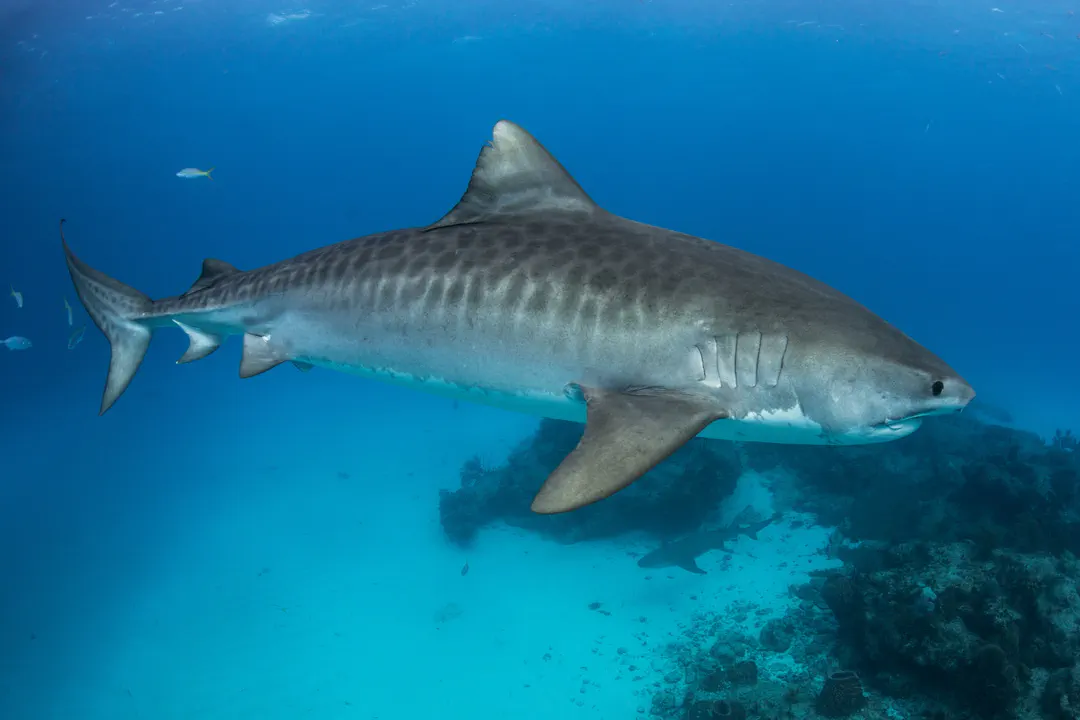
Located 30 kilometres off the western tip of Grand Bahama, Tiger Beach is a shallow sand flat bathed in sunlight. Stationary divers rest on coarse white sand at a depth of 6 to 12 metres while large tiger sharks (Galeocerdo cuvier) cruise calmly through the water column. The open profile allows for long bottom times and continuous observations of natural shark behavior.
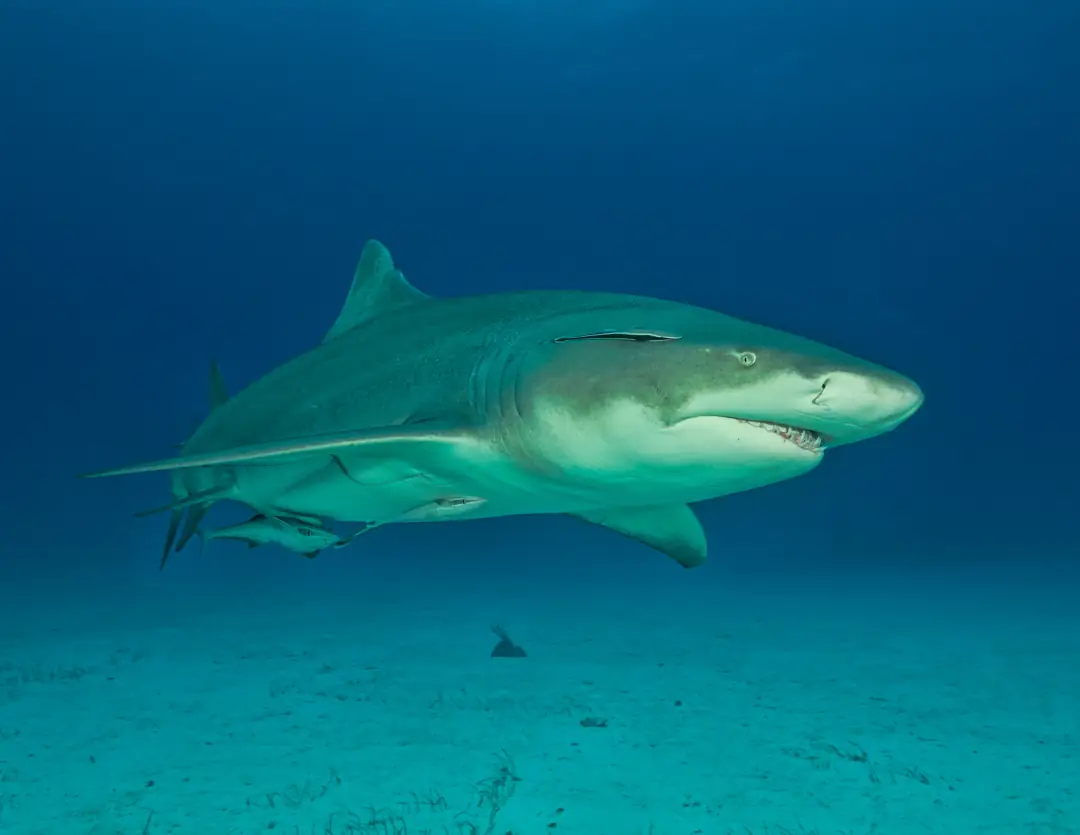
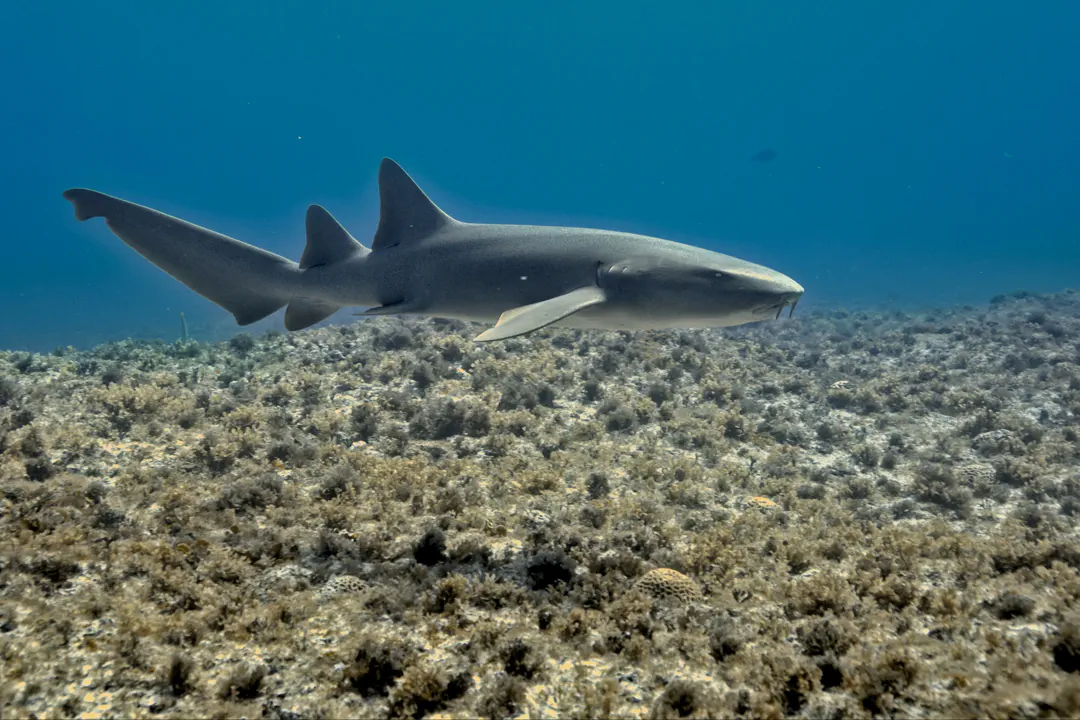
In addition to tiger sharks, the shallow bank attracts constant numbers of lemon sharks (Negaprion brevirostris) and Caribbean reef sharks (Carcharhinus perezi). Nurse sharks (Ginglymostoma cirratum) often rest directly on the seabed near groupers, while southern stingrays (Hypanus americanus) glide across the sand margins. Calm conditions make the site accessible, but strict positioning briefings must be followed.
Because depth is shallow, light levels remain high throughout the day, providing ideal conditions for underwater photography. Current is typically light, though wind surges can stir bottom sediment. Divers remain stationary on the sand bed in a tight formation throughout the immersion.
Depth: 6-12 m. Access: boat, 1 hour from West End, Grand Bahama. Level: Open Water. Best months: October-May.
 © seabook.appAll rights reserved
 © seabook.appAll rights reserved
 © R VasconcellosCC BY 4.0 · iNaturalist
Dean's Blue Hole (Long Island): world's second deepest blue hole
Plunging into a sheltered bay near Clarence Town on Long Island, Dean's Blue Hole opens as a circular surface neck before widening into a cavernous underwater room. The vertical shaft drops to a total depth of 202 metres, making it the third-deepest known blue hole in the world. The dark void presents a striking contrast against the pale sand flats surrounding its rim.
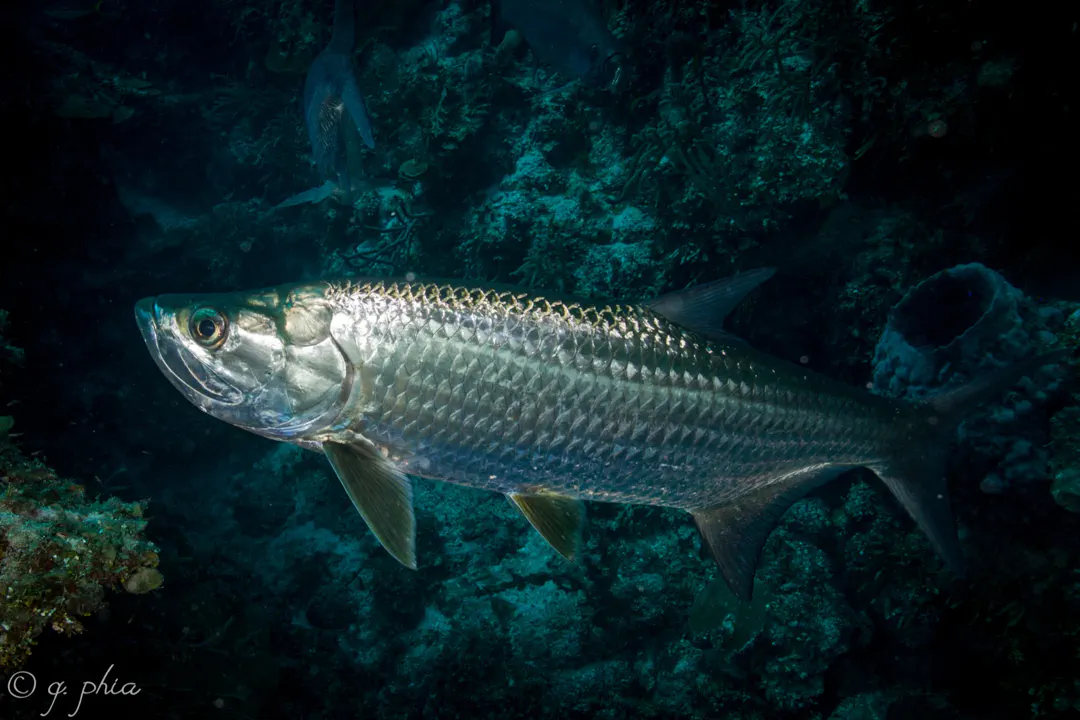
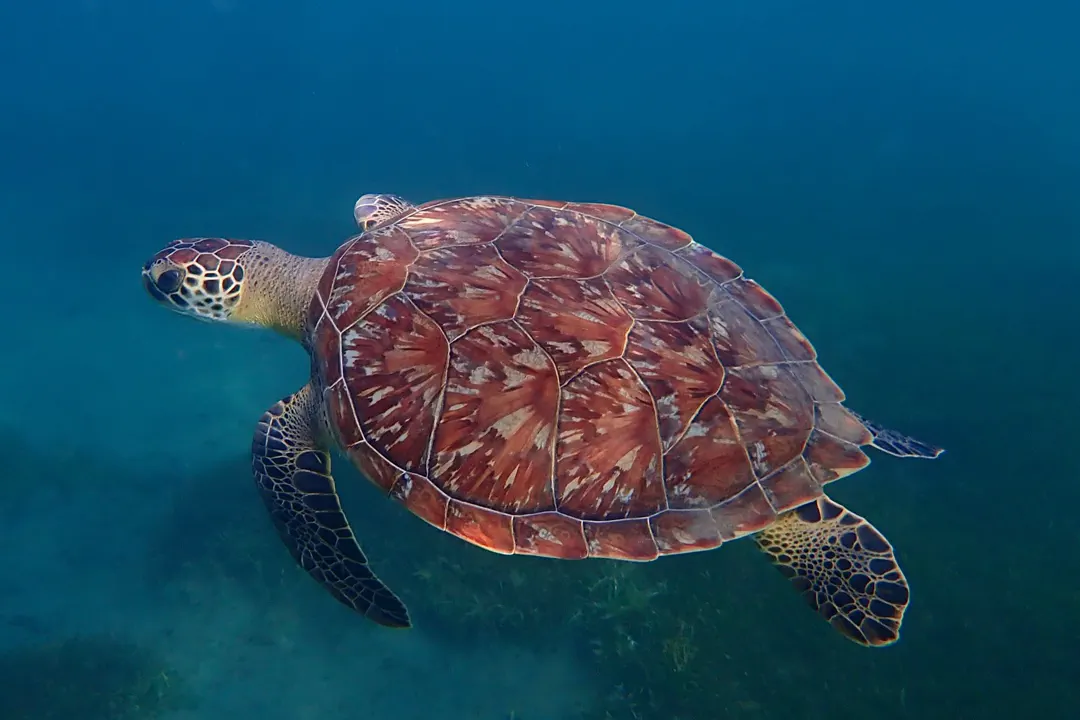
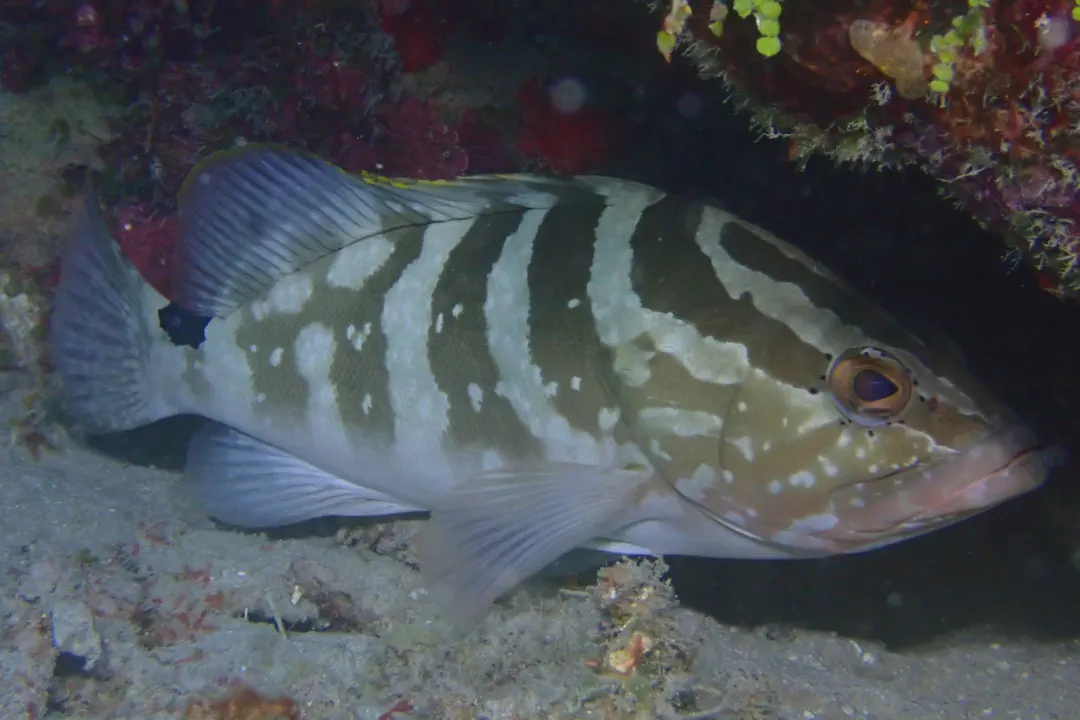
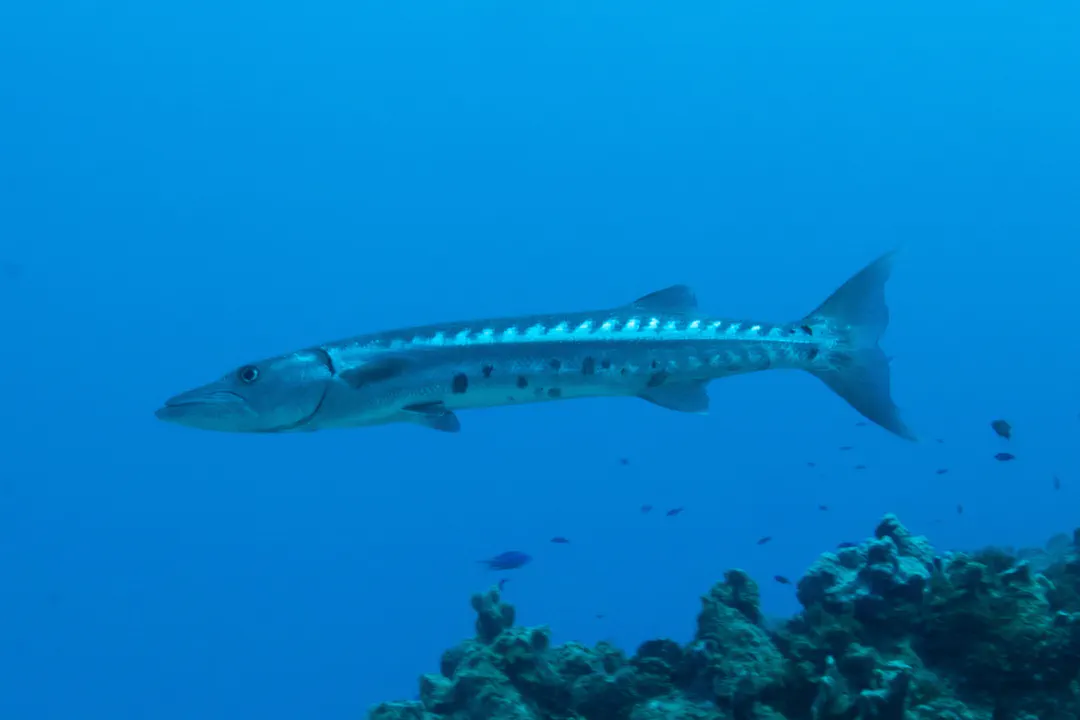
Recreational divers explore the upper lip and vertical rock faces between 5 and 30 metres depth. Tarpon (Megalops atlanticus) hover in shadow beneath overhangs, while green sea turtles (Chelonia mydas) feed on seagrass along the shallow perimeter. Nassau groupers (Epinephelus striatus), Caribbean reef sharks (Carcharhinus perezi), and great barracuda (Sphyraena barracuda) patrol the inner walls.
Descending beyond 30 metres into the main shaft requires full technical diving credentials due to complete darkness, enclosed walls, and rapid changes in buoyancy control. The surface pool remains completely flat, sheltered from waves by surrounding limestone cliffs.
Depth: 5-202 m (Recreational limit 30 m). Access: shore entry from beach. Level: Open Water (rim), Technical (shaft). Best months: Year-round.
 © q phiaCC BY 4.0 · iNaturalist
 © Matteo BellucciCC BY 4.0 · iNaturalist
 © Robin WhiteCC BY 4.0 · iNaturalist
 © Dan SchofieldCC BY 4.0 · iNaturalist
Runway Reef (Nassau): controlled Caribbean reef shark feeds
Situated off the southwest coast of New Providence Island, Runway Reef serves as Nassau's primary shark feeding arena. Divers descend to a flat sand floor at 14 metres depth, forming a perimeter around a central coral head. Dozens of Caribbean reef sharks (Carcharhinus perezi) circle through the water column, passing within arm's reach of kneeling participants.
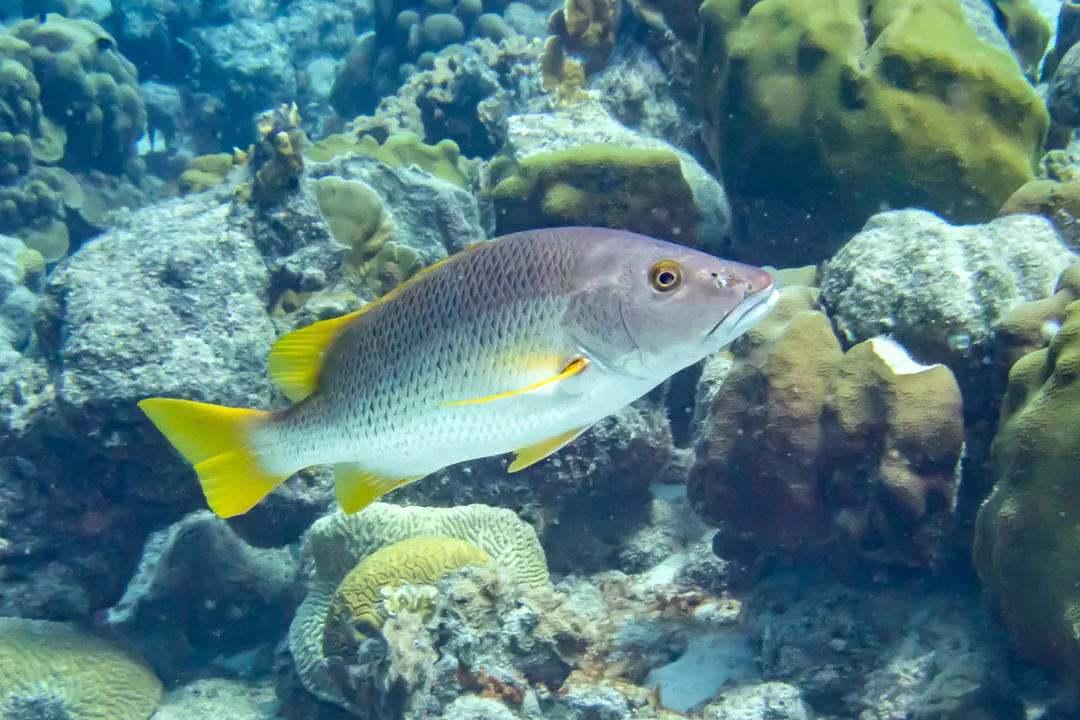
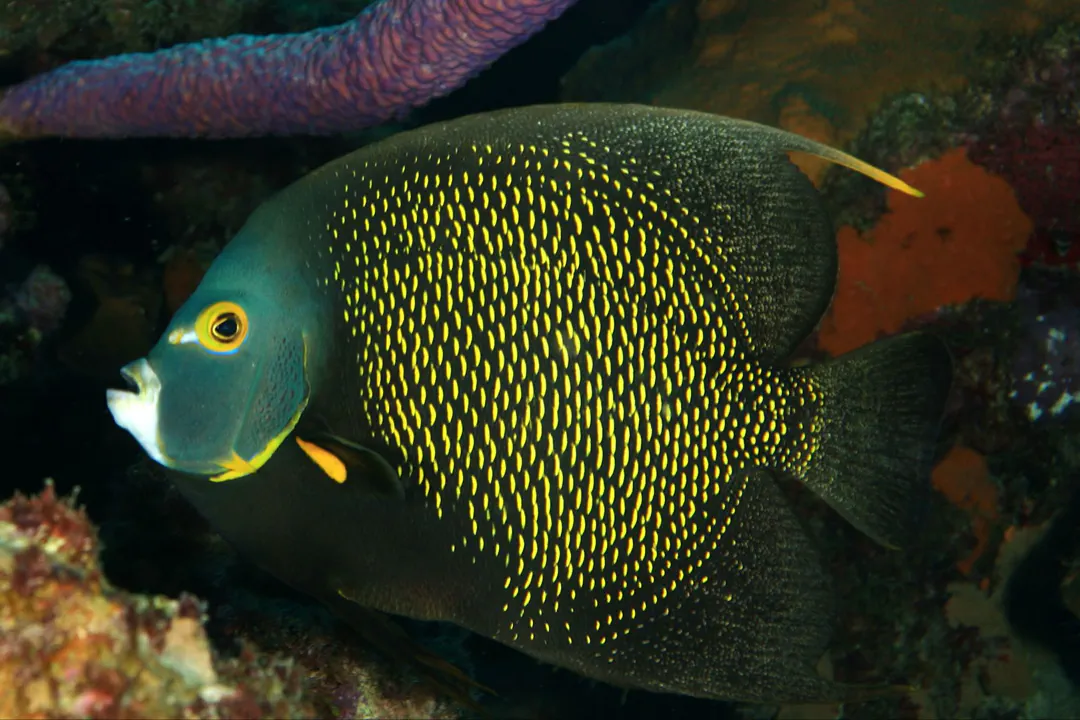
Large Nassau groupers (Epinephelus striatus) and schoolmaster snappers (Lutjanus apodus) weave between the sharks to pick up stray food particles. French angelfish (Pomacanthus paru) graze nearby along the reef edge, while green moray eels (Gymnothorax funebris) extend their heads from low coral crevices.
The structured profile makes this site ideal for divers seeking close shark encounters without strong currents. The dive relies on established protocols led by professional shark handlers wearing chainmail protection to maintain safety.
Depth: 12-15 m. Access: boat, 15 minutes from south New Providence. Level: Open Water. Best months: Year-round.
 © Jay BrasherCC BY 4.0 · iNaturalist
 © LASZLO ILYESCC BY 4.0 · iNaturalist
Bimini Road (Bimini): mysterious shallow stone structures for all levels
Stretching for nearly 800 metres in shallow water off North Bimini, Bimini Road consists of large, rectangular limestone blocks arranged in linear tracks on the seafloor. Resting at a shallow depth of 5 to 6 metres, the origin of these smooth stone rows remains a subject of geological debate, drawing both divers and snorkellers.
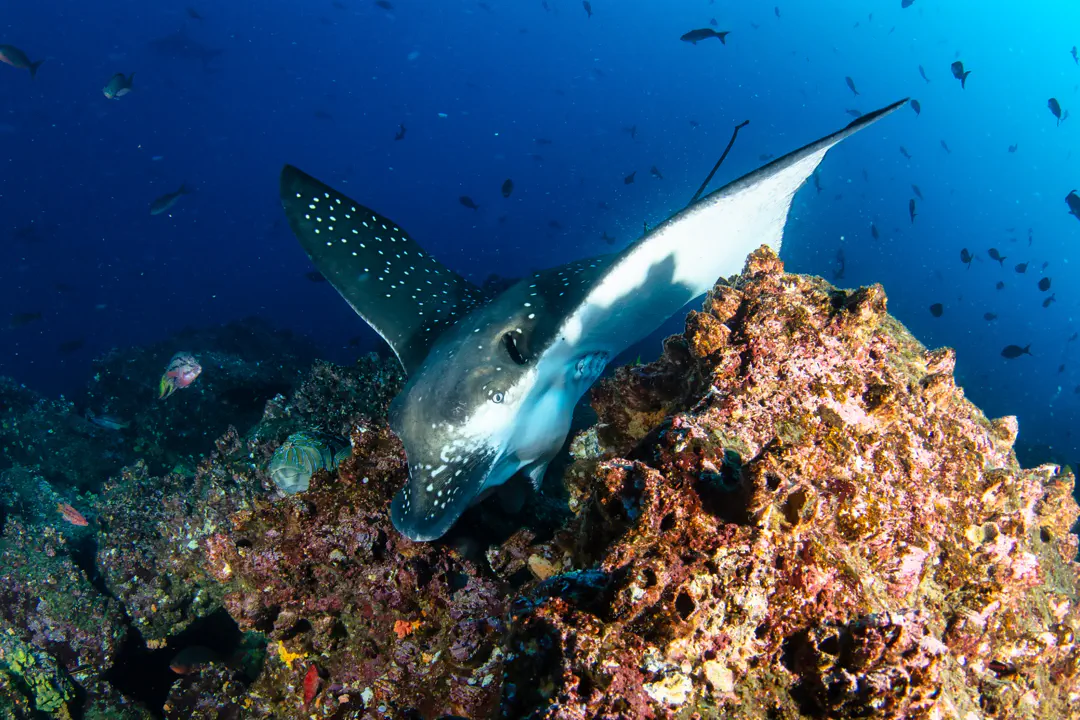
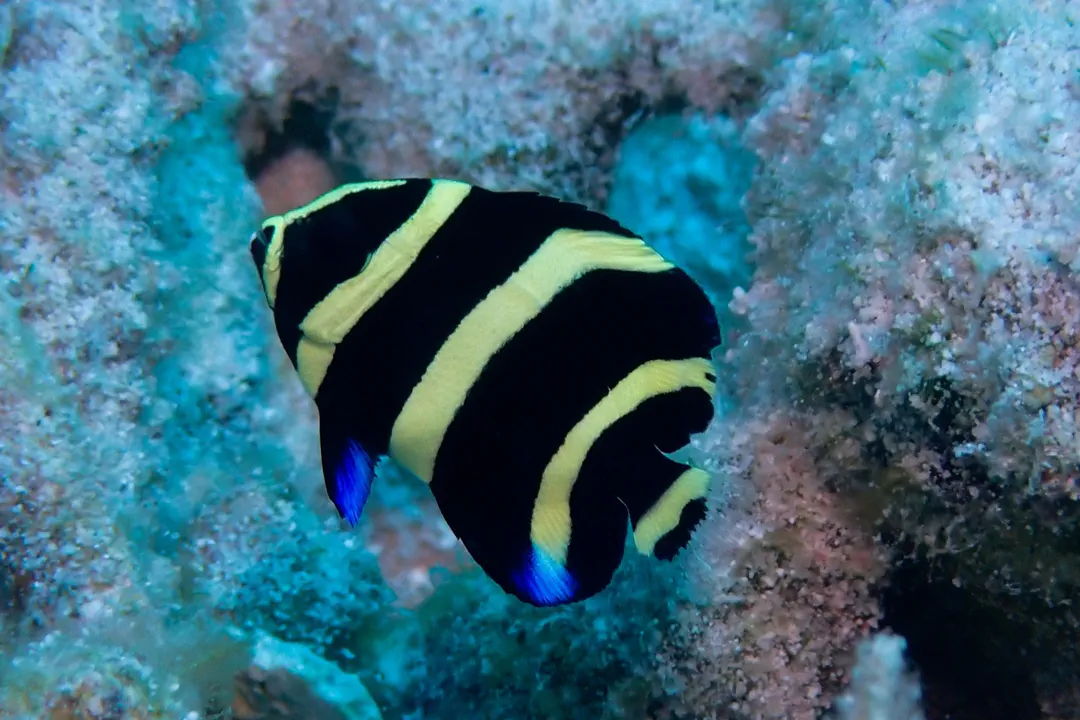
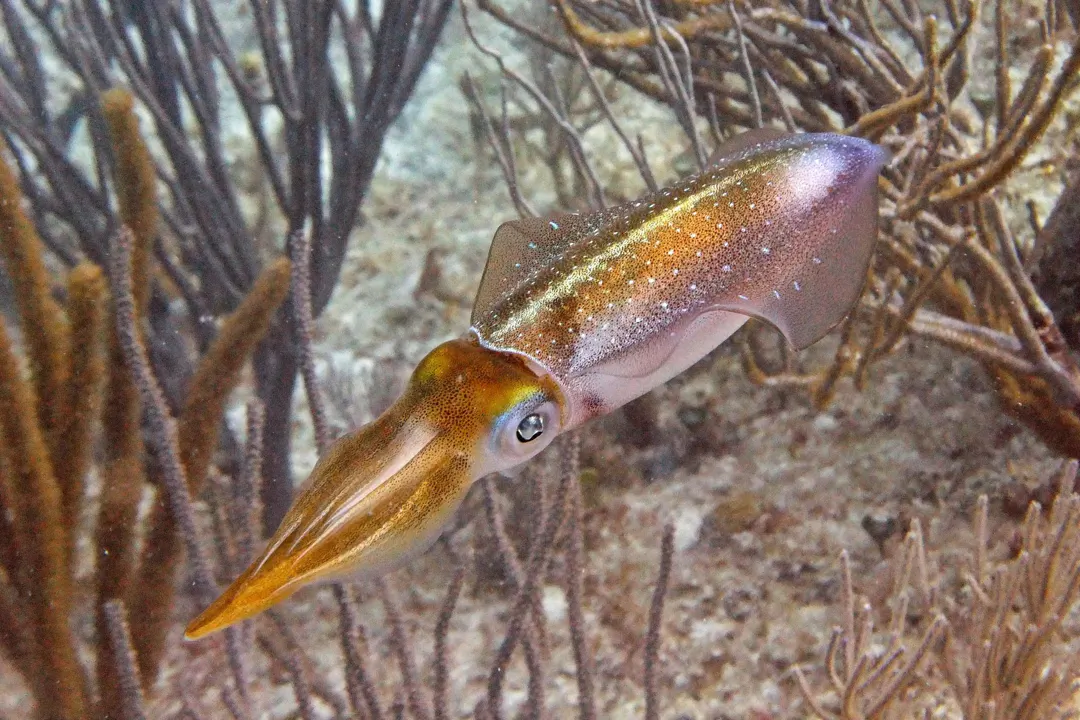
The sandy intervals between stone blocks provide habitat for southern stingrays (Hypanus americanus) and spotted eagle rays (Aetobatus narinari) digging for buried molluscs. Green sea turtles (Chelonia mydas) glide above the formation, while gray angelfish (Pomacanthus arcuatus) and schools of Caribbean reef squid (Sepioteuthis sepioidea) hover in the mid-water.
Minimal depth and high sunlight availability allow extended dive times with negligible nitrogen load. Light wave surge can occur during strong north winds, but under normal conditions the site offers effortless navigation for entry-level divers.
Depth: 5-6 m. Access: boat, 10 minutes from Alice Town, Bimini. Level: Open Water / Snorkeller. Best months: November-May.
 © seabook.appAll rights reserved
 © Dan SchofieldCC BY 4.0 · iNaturalist
 © Matteo CassellaCC BY-SA 4.0 · iNaturalist
Cat Island: deep-water encounters with oceanic whitetip sharks
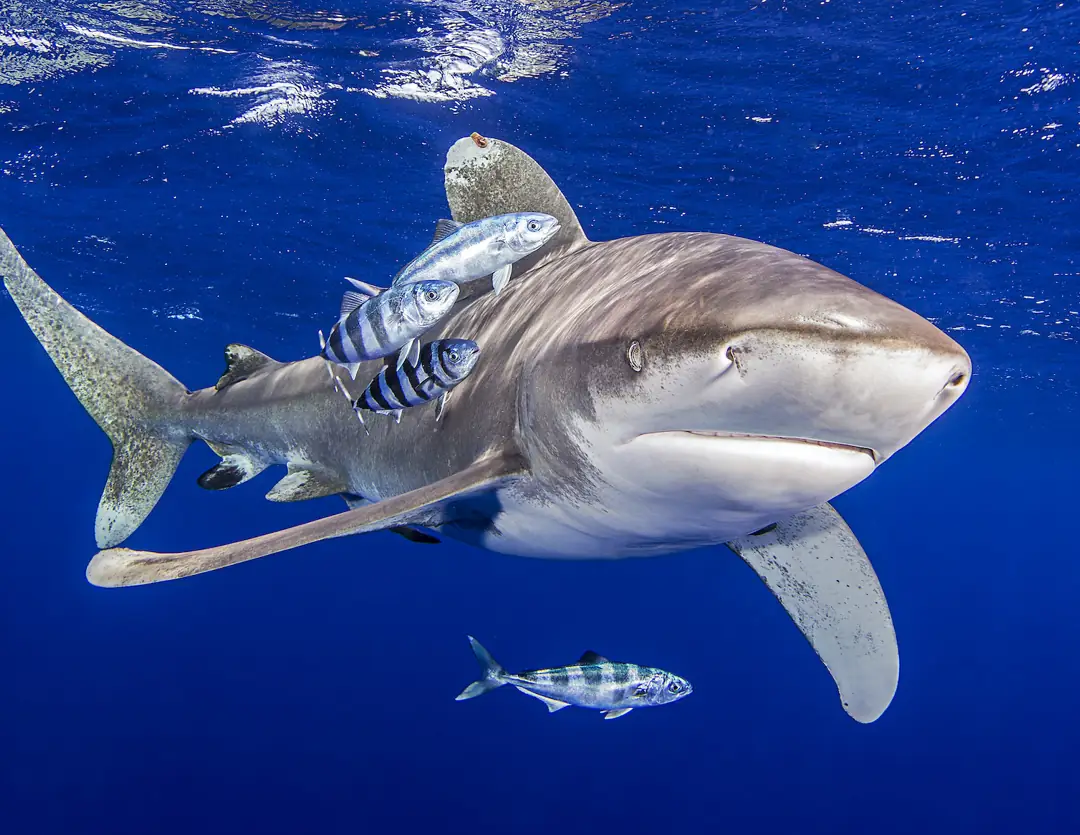
Off the deep ocean drop-offs of Cat Island, diving takes place in pristine blue water thousands of metres deep. Divers enter the water directly into the open ocean, drifting near floating surface lines at depths between 5 and 15 metres. The target of these pelagic drifts is the oceanic whitetip shark (Carcharhinus longimanus), which migrates through these waters in spring.
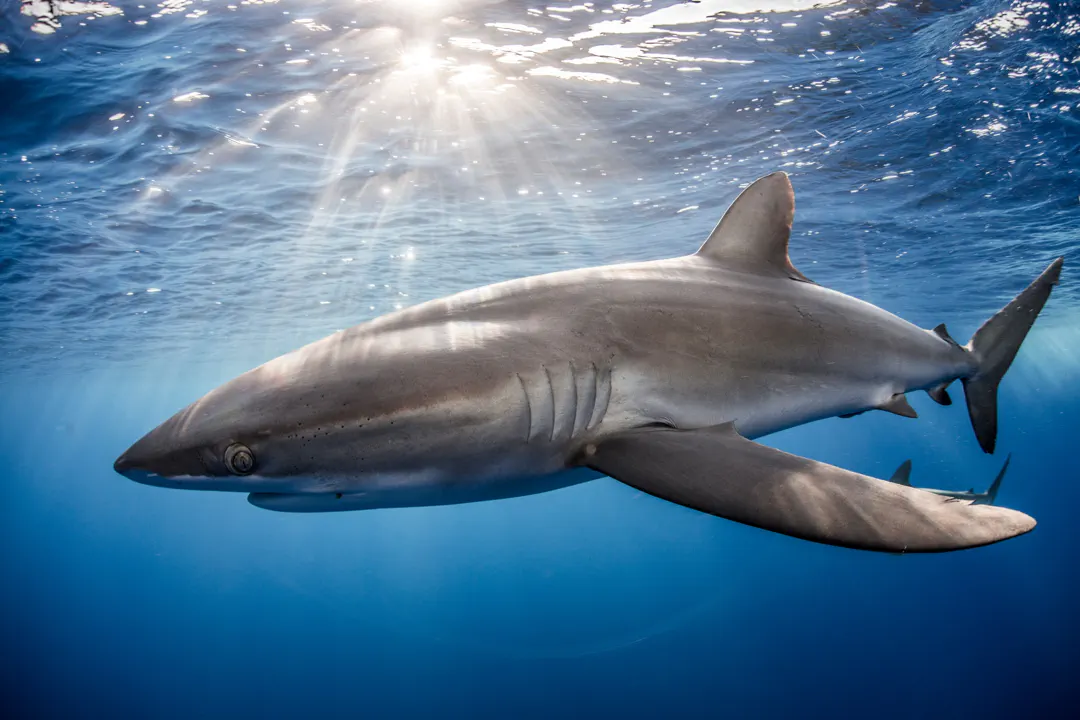
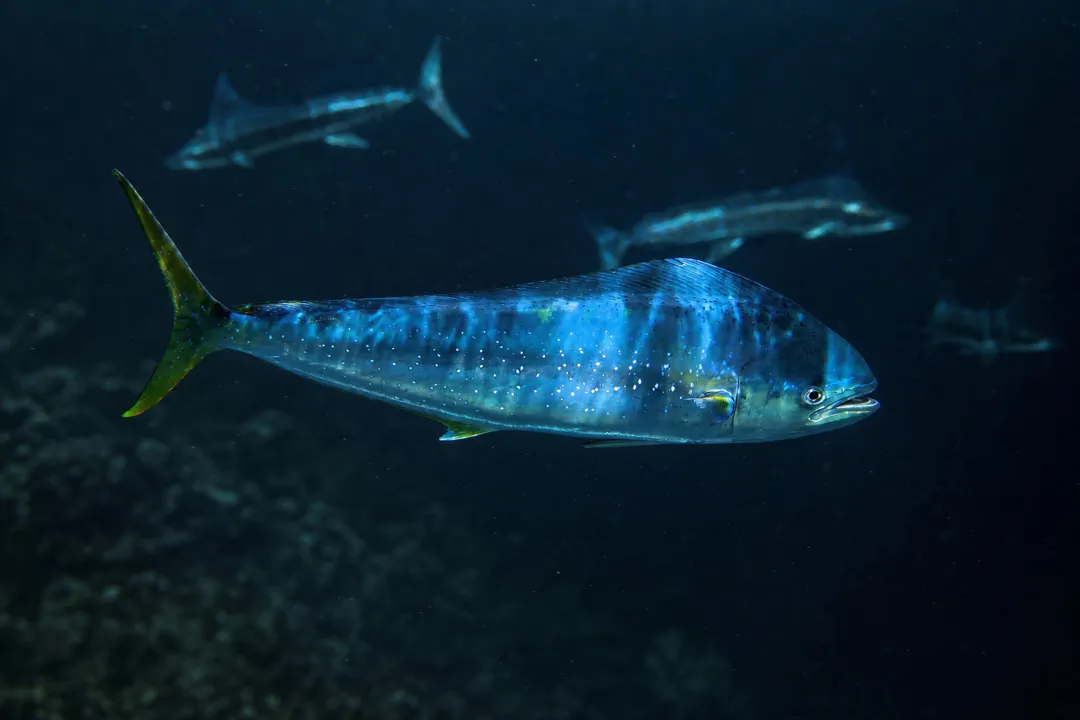
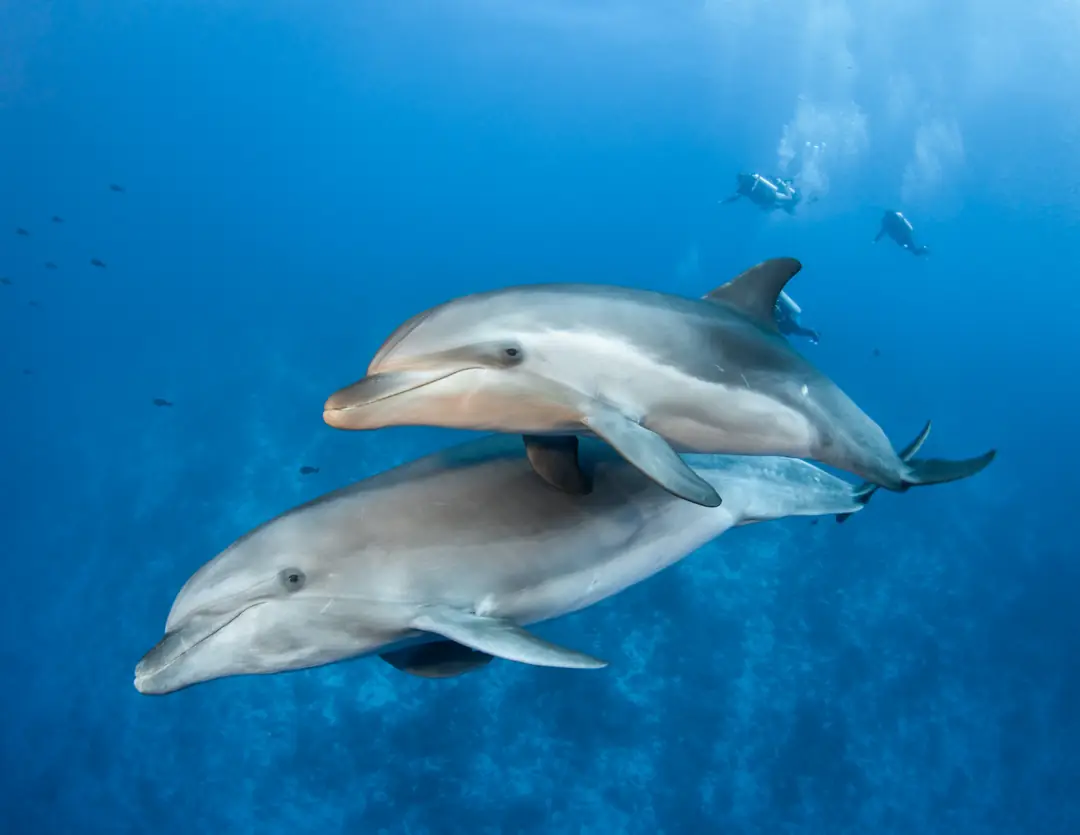
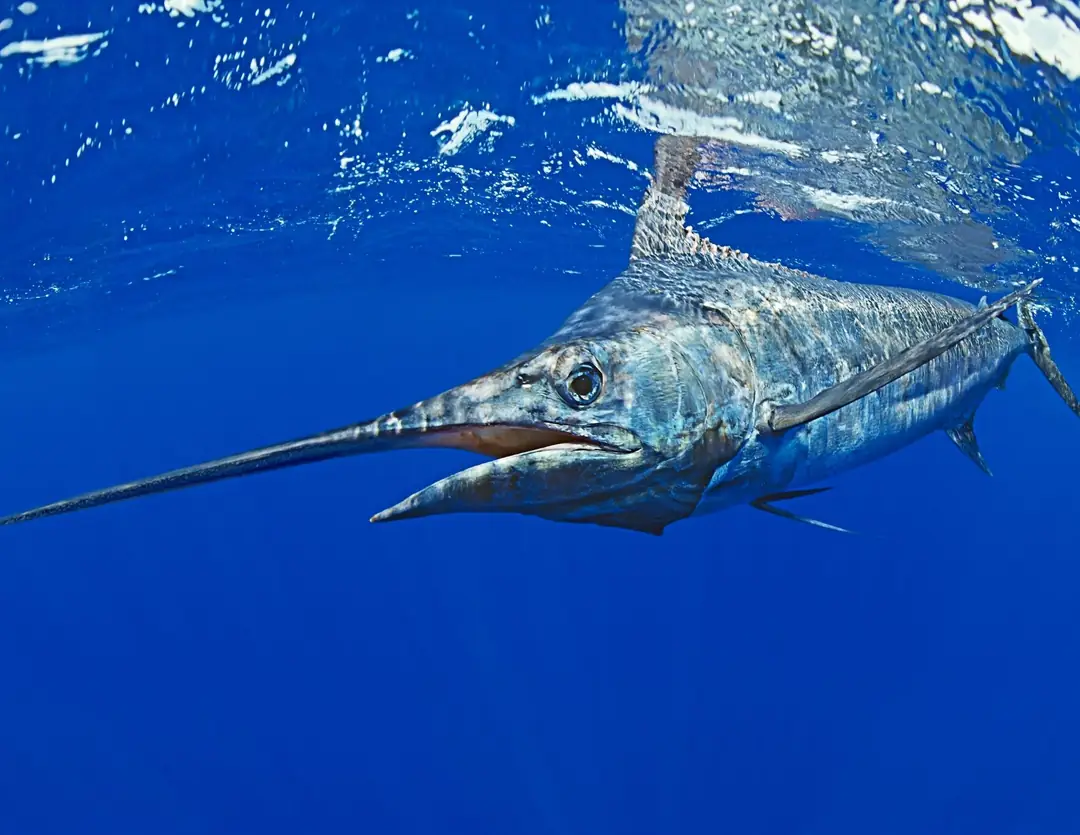
These curious open-ocean predators approach divers closely in the clear blue column, accompanied by sleek silky sharks (Carcharhinus falciformis). Swift pelagic hunters like dolphinfish (Coryphaena hippurus), blue marlin (Makaira nigricans), and pods of bottlenose dolphins (Tursiops truncatus) pass through the offshore region.
Because there is no seafloor to provide spatial context, precise buoyancy control and constant awareness of depth are required. Surface marker buoys and close group cohesion are mandatory during open-water ascents in blue water.
Depth: 5-20 m over deep water. Access: boat, 30 minutes offshore from Cat Island. Level: Advanced Open Water. Best months: April-June.
 © seabook.appAll rights reserved
 © seabook.appAll rights reserved
 © seabook.appAll rights reserved
 © seabook.appAll rights reserved
 © seabook.appAll rights reserved
Thunderball Grotto (Exumas): shallow sunlit cavern rich in reef life
Located near Staniel Cay in the Exuma Cays, Thunderball Grotto is a hollow limestone island pierced by underwater tunnels and overhead light holes. At low tide, divers and snorkellers swim through shallow submerged entrances into a wide inner chamber flooded with golden sunlight beams.
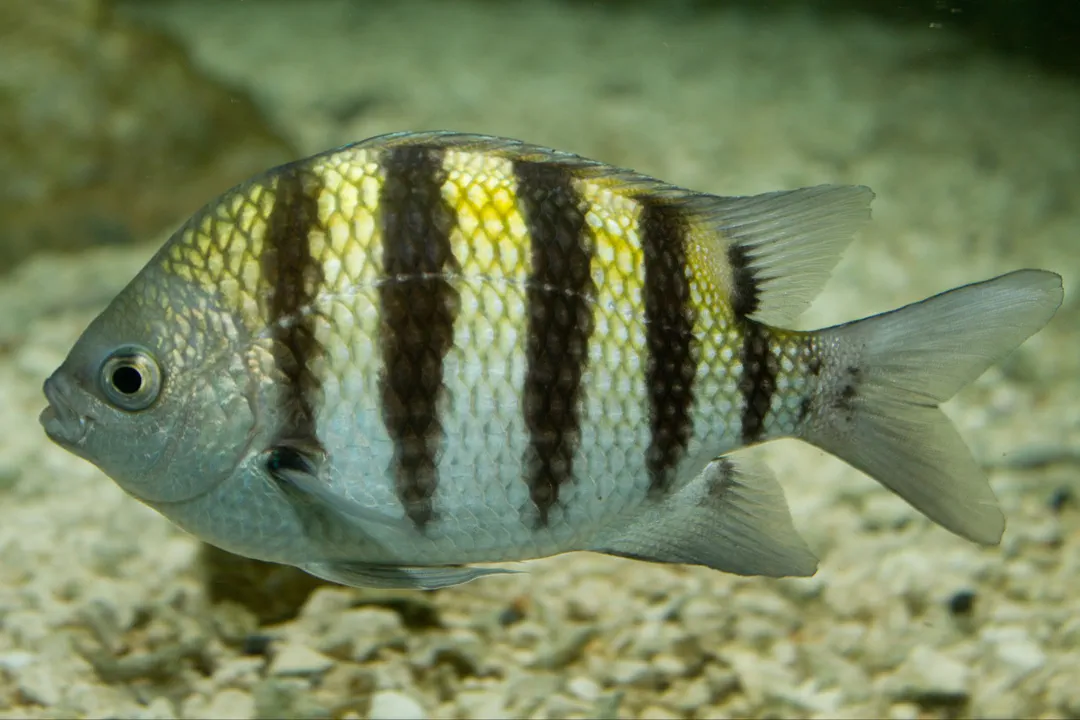
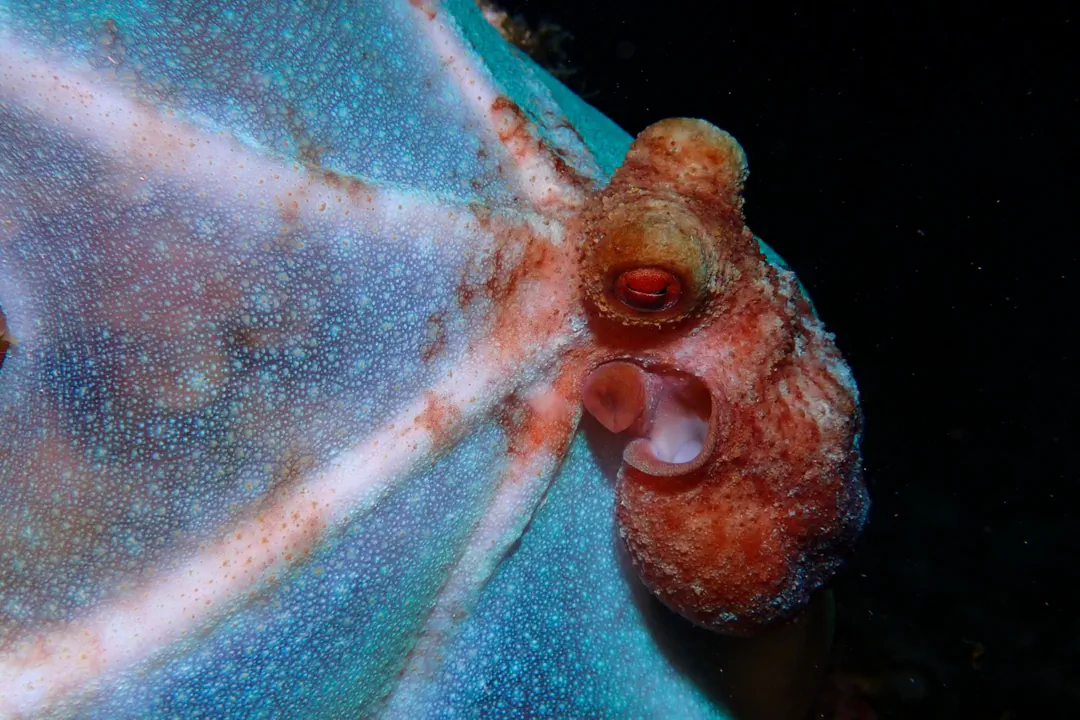
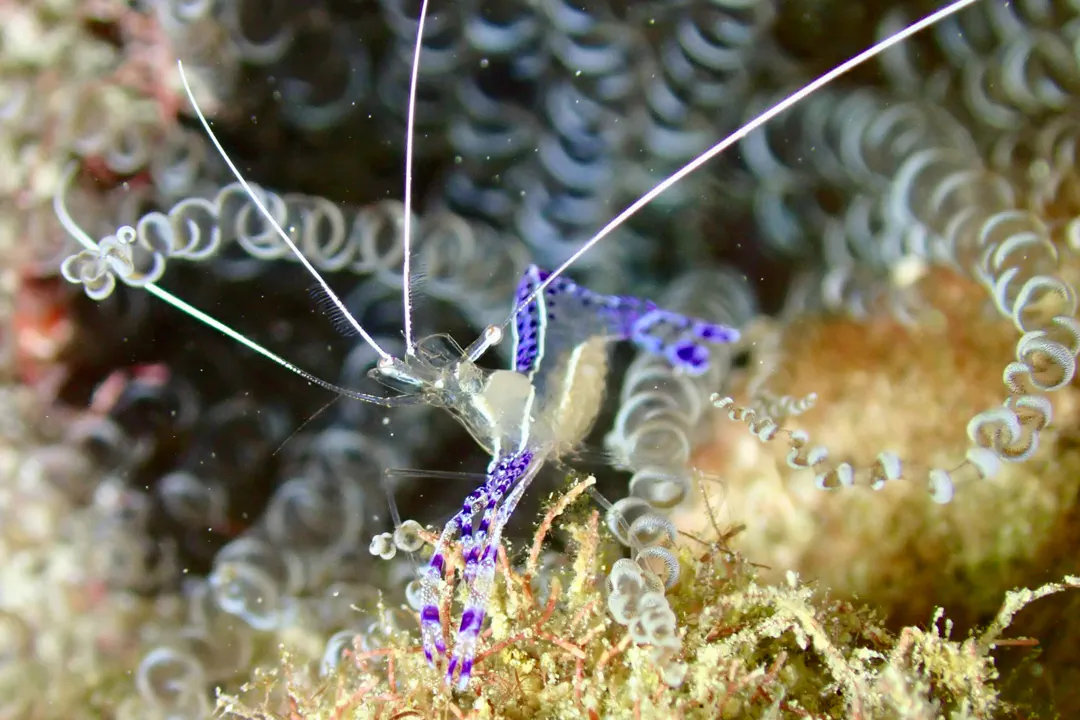
Dense aggregations of sergeant majors (Abudefduf saxatilis) and yellow French angelfish (Pomacanthus paru) swim through the sunlit cavern air pocket. Exotic bottom dwellers like scrawled cowfish (Acanthostracion quadricornis) feed near the rock base, while Caribbean reef octopuses (Octopus briareus) and translucent Pederson cleaner shrimp (Ancylomenes pedersoni) hide within shaded rock crevices.
Tidal currents run fast through the entrance cuts outside the grotto, making slack tide the safest window for entry. Scuba divers must take care not to damage delicate marine growth on the narrow tunnel walls.
Depth: 2-6 m. Access: boat, 5 minutes from Staniel Cay. Level: Open Water / Snorkeller. Best months: Year-round.
 © Brian GratwickeCC BY 4.0 · iNaturalist
 © Dan SchofieldCC BY 4.0 · iNaturalist
 © Robin WhiteCC BY 4.0 · iNaturalist
Austin Smith Wreck (Exumas): vibrant marine life around an artificial reef
The Austin Smith is a 27-metre Bahamian Defence Force cutter resting upright on a sandy seabed at a depth of 18 metres off Highbourne Cay. Sunk in 1995 while being towed to an artificial reef site, the steel hull now acts as an oasis for marine life amidst open sand.
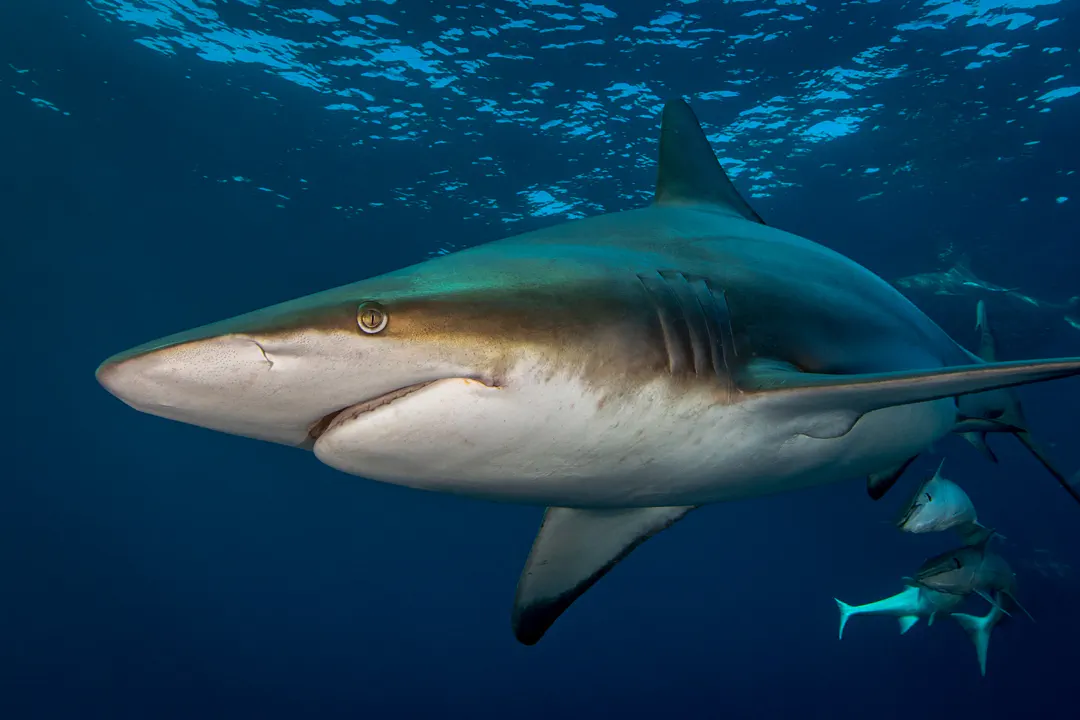
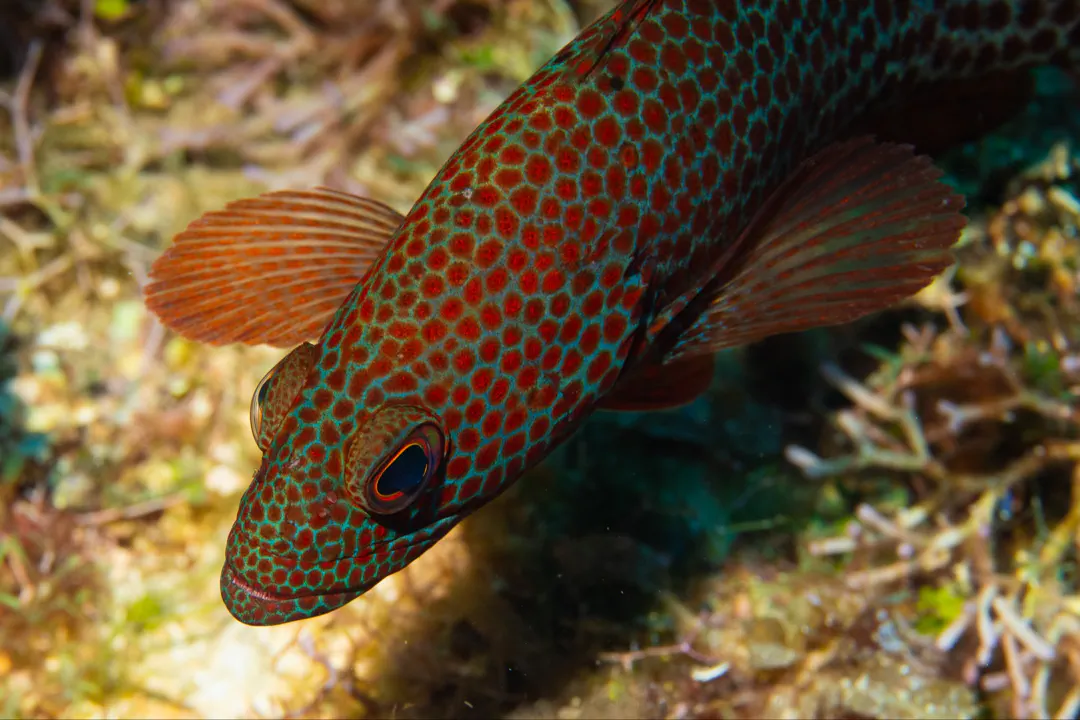
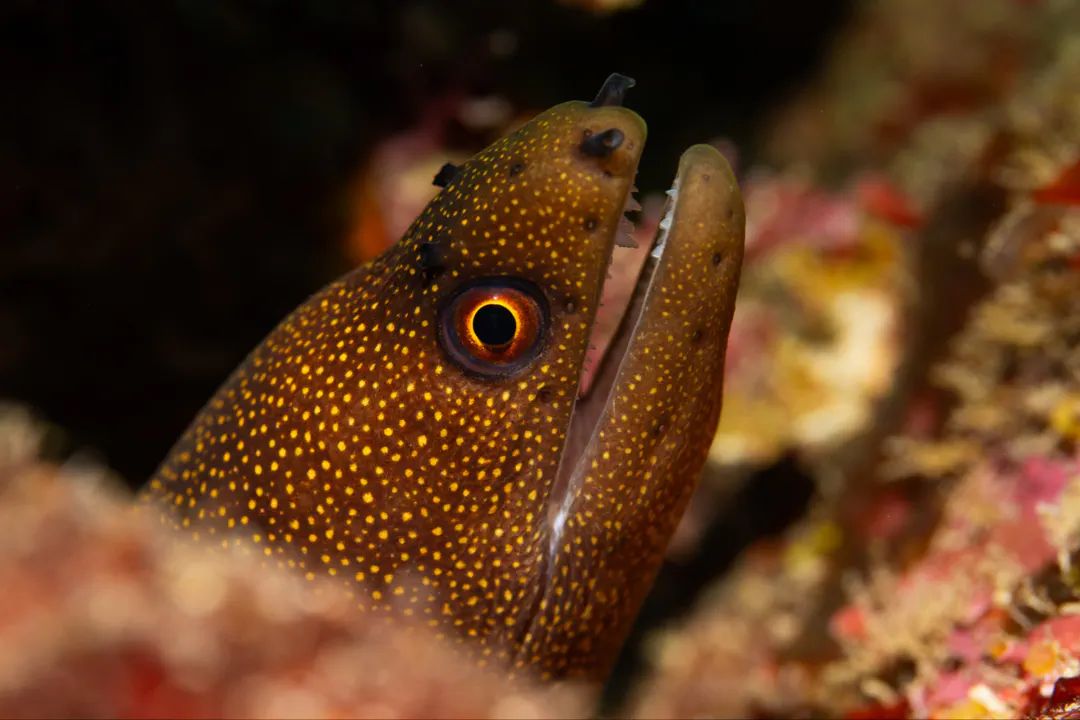
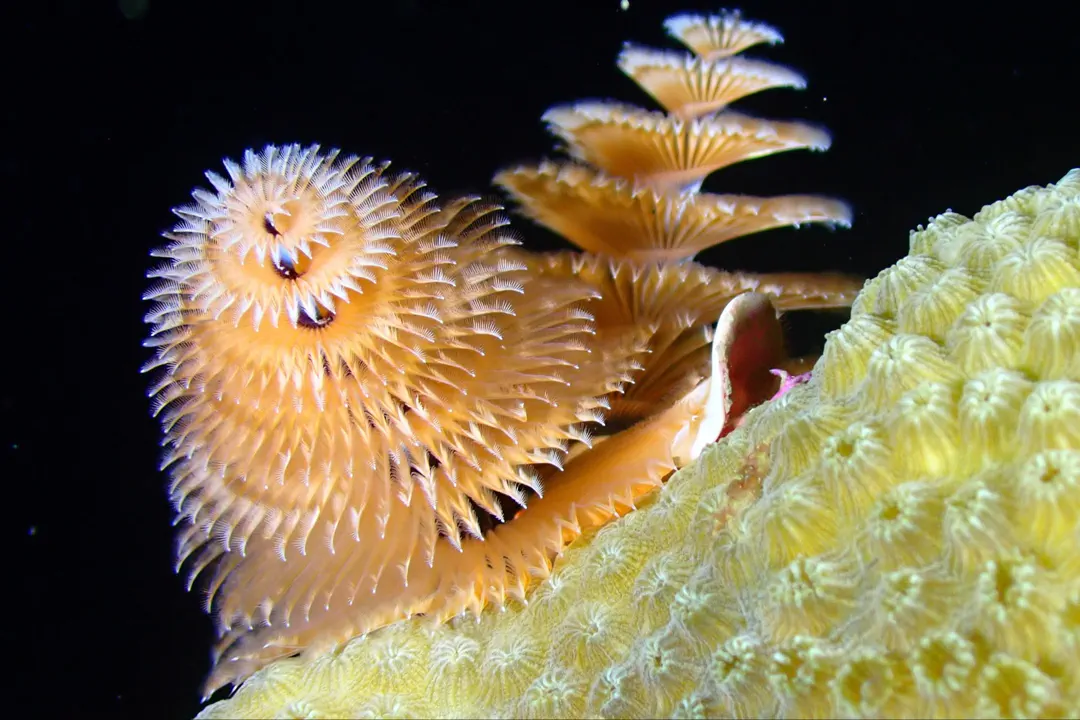
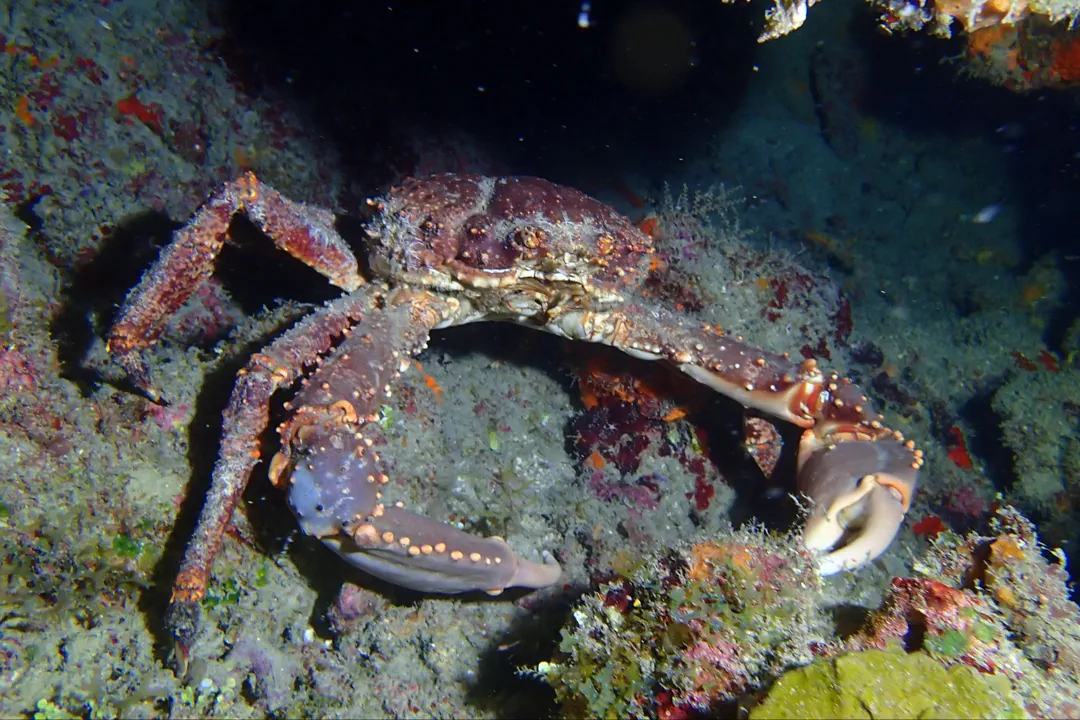
Blacktip sharks (Carcharhinus limbatus) sweep around the stack, while graysby groupers (Cephalopholis cruentata) defend territories inside the open wheelhouse. Goldentail moray eels (Gymnothorax miliaris) peer from open pipe joints, while Christmas tree worms (Spirobranchus giganteus) and channel cling crabs (Maguimithrax spinosissimus) encrust the outer railings.
The metal structure remains stable with low surge, permitting safe exterior exploration for divers of all levels. Light penetration into open deck hatches allows easy photography without entering hazardous enclosed spaces.
Depth: 14-18 m. Access: boat or liveaboard, Exuma Cays. Level: Open Water. Best months: Year-round.
 © seabook.appAll rights reserved
 © cello caruso-turielloCC BY 4.0 · iNaturalist
 © cello caruso-turielloCC BY 4.0 · iNaturalist
 © Robin WhiteCC BY 4.0 · iNaturalist
 © Robin WhiteCC BY 4.0 · iNaturalist
Marine Life in the Bahamas
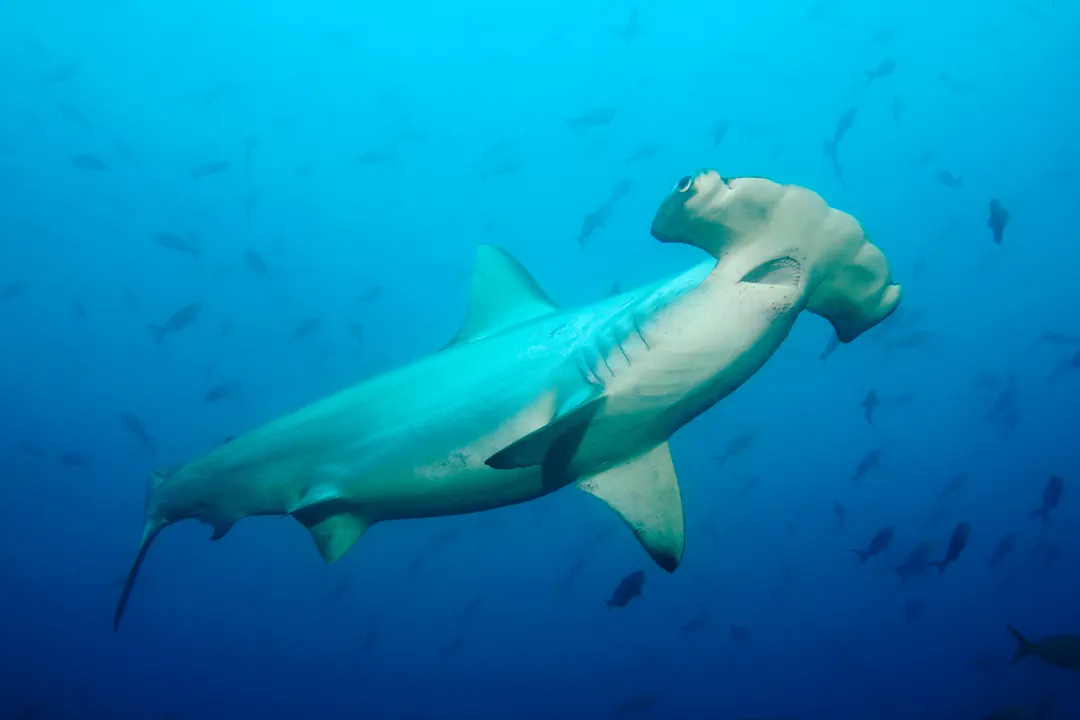
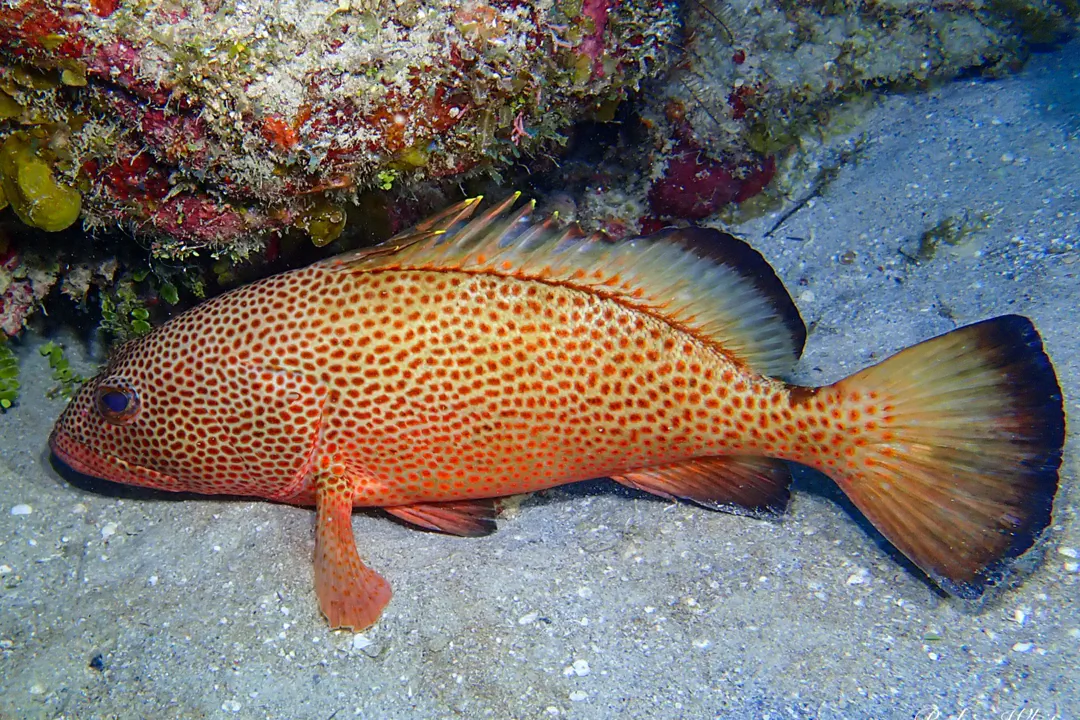
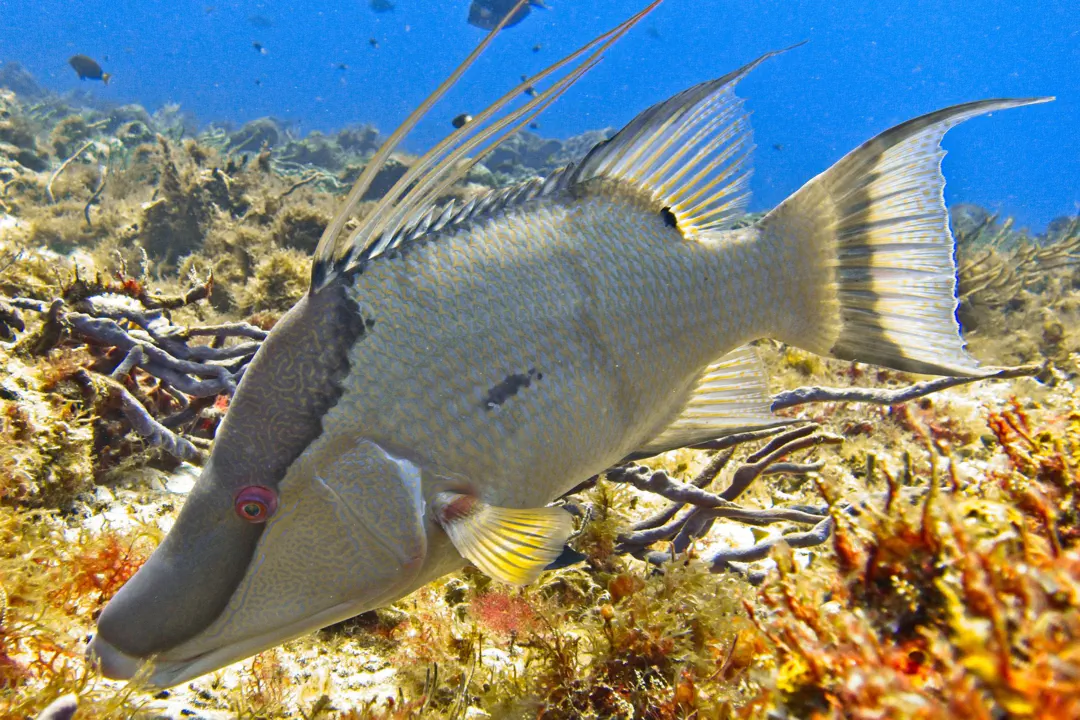
Beyond large shark species, Bahamian reefs support diverse marine organisms across shallow sand banks, hard coral knolls, and deep trenches. Large pelagic species including scalloped hammerhead sharks (Sphyrna lewini) and resident pods of bottlenose dolphins (Tursiops truncatus) travel along outer reef slopes. Groupers like the red hind (Epinephelus guttatus) and large hogfish (Lachnolaimus maximus) populate hard coral structures.
A 2022 study in Nature Communications documented that the Bahama Banks contain the world’s largest known seagrass ecosystem, covering an estimated minimum area of approximately 66,900 square kilometres. These vast seagrass meadows store immense carbon reserves while serving as critical nursery habitat for juvenile fish, queen conch, and sea turtles.
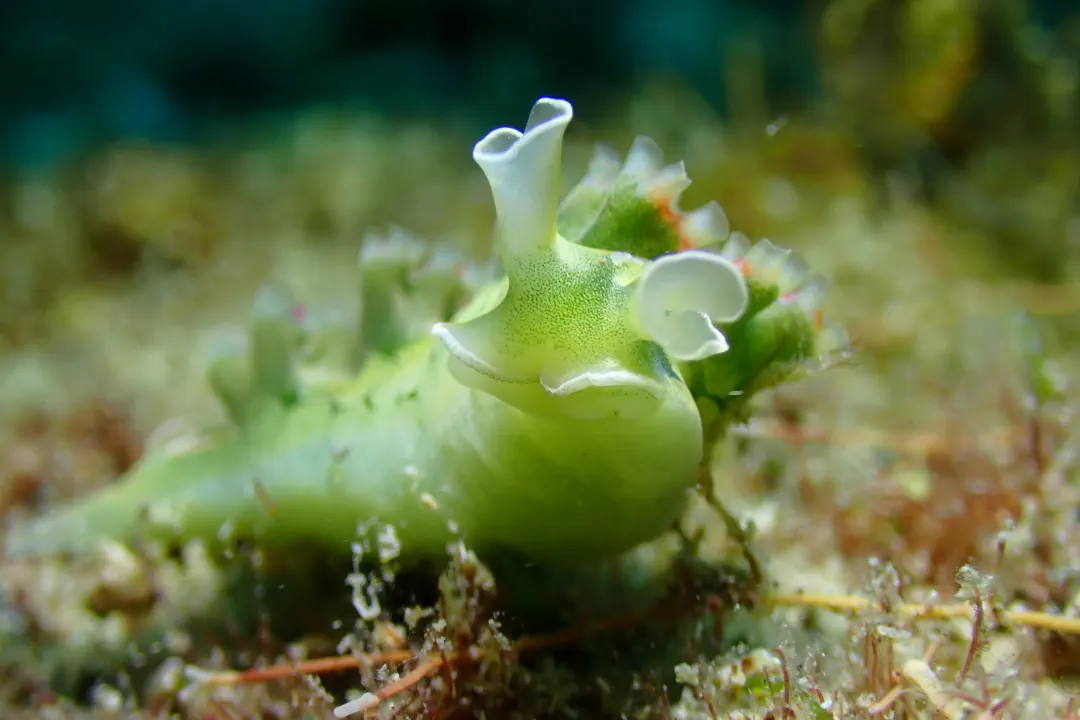
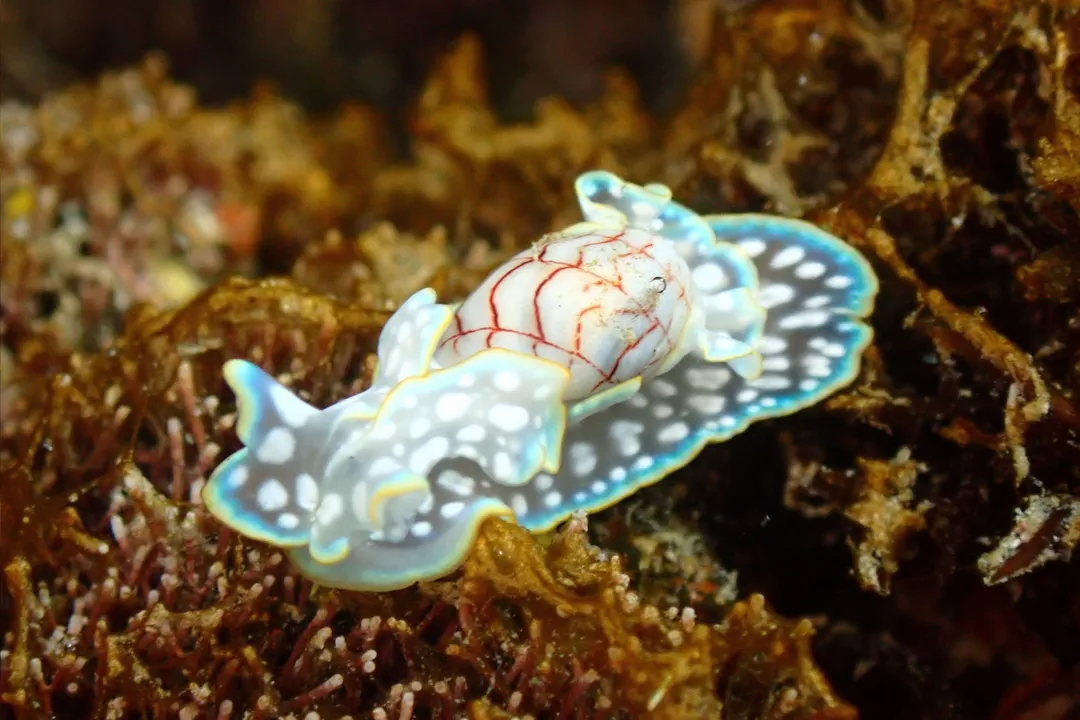
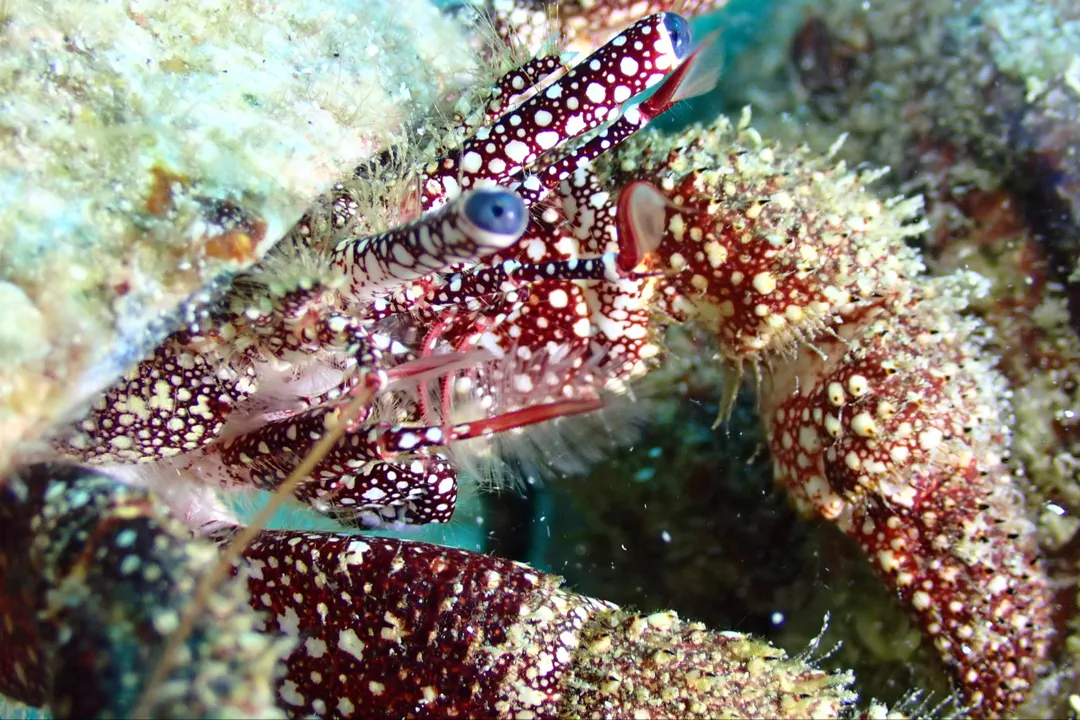
Macro enthusiasts can search soft corals and algae beds for specialized invertebrates. Small species such as the lettuce sea slug (Elysia crispata), paper bubble shell (Micromelo undatus), white-spotted hermit crab (Paguristes puncticeps), and painted nudibranch (Felimare picta) hide within coral rubble. Slipper lobsters (Parribacus antarcticus), yellow-headed nudibranchs (Chelidonura hirundinina), warty nudibranchs (Doris verrucosa), and camouflaged sargassumfish (Histrio histrio) inhabit weed drifts. Divers can record their sightings and check species identification details using the Seabook mobile app while logging dives after each excursion.
 © seabook.appAll rights reserved
 © Robin WhiteCC BY 4.0 · iNaturalist
 © Matteo CassellaCC BY-SA 4.0 · iNaturalist
 © Robin WhiteCC BY 4.0 · iNaturalist
 © Ben JobsonCC BY 4.0 · iNaturalist
 © Robin WhiteCC BY 4.0 · iNaturalist
Is the Bahamas Good for Beginners and Snorkellers?
The archipelago offers exceptional conditions for beginner scuba divers and snorkellers. Warm water temperatures averaging 24°C to 29°C, high sunlight levels, and horizontal visibility frequently exceeding 20 metres reduce stress for uncertified or newly qualified divers. Shallow sites like Bimini Road (5 m) and Thunderball Grotto (3 m) permit long surface-accessible explorations without deep water exposure.
Sheltered island bays around New Providence, Grand Bahama, and Bimini feature minimal tidal current and direct access to surface light. Local dive centres offer introductory Discover Scuba Diving courses in flat swimming pools before guiding students onto calm shallow reefs in 6 to 10 metres of water.
Snorkellers can explore patch reefs, seagrass beds, and shallow wreck structures located minutes from shore. Flotation vests are recommended when snorkelling over outer sand channels where tidal flows increase during rising and falling tides.
Getting There and Practical Tips
Lynden Pindling International Airport in Nassau and Grand Bahama International Airport in Freeport serve as the main international arrival hubs, receiving direct flights from North America and Europe. Domestic airlines and regional inter-island ferries connect Nassau to Out Island destinations including Bimini, Long Island, Cat Island, and the Exumas.
Choosing between land-based dive resorts and liveaboard vessels depends on your target dive sites. Land-based resort operations work best for day trips around Nassau, Freeport, and Bimini. Conversely, exploring remote wall sites across the 190-kilometre stretch of the Exuma Cays requires booking a liveaboard dive vessel departing from Nassau.
Standard dive equipment should include a dive computer, a surface marker buoy for ocean drifts, and appropriate exposure gear. Bring a 3mm wetsuit for summer months or a 5mm suit during winter. Ensure a surface interval of at least 18 to 24 hours between your final dive and flying home on international flights.
Questions
Are there sharks in the Bahamas?
Yes, the Bahamas hosts diverse populations of tiger sharks, great hammerheads, oceanic whitetips, lemon sharks, Caribbean reef sharks, and nurse sharks. Different species aggregate across specific islands and seasons, such as tiger sharks at Tiger Beach and oceanic whitetips off Cat Island.
Is it dangerous to swim or dive with sharks in the Bahamas?
Guided shark dives follow strict safety protocols led by experienced divemasters who control diver positioning and movement on the seabed. Divers keep hands close to their body, refrain from touching animals, and remain in compact groups, making unprovoked incidents extremely rare.
What fish can you see in the Bahamas?
Divers regularly observe Nassau groupers, French angelfish, great barracuda, schoolmaster snappers, hogfish, and southern stingrays. Macro life such as lettuce sea slugs, cleaner shrimp, and octopuses can also be found across coral heads and seagrass beds.
Can you see turtles in the Bahamas?
Green sea turtles, hawksbill turtles, and loggerhead turtles are commonly encountered along shallow reef slopes and seagrass beds throughout the Exumas, Bimini, and Long Island. Divers should maintain a respectful distance and never block a turtle's path to the surface.
How warm is the water in the Bahamas in winter?
Winter water temperatures from December through February average between 23°C and 25°C in northern areas like Freeport and 24°C to 26°C around southern islands. Divers typically use a 3mm to 5mm wetsuit for comfort during repetitive winter dives.
Do I need a liveaboard to dive the Bahamas?
A liveaboard is not mandatory, as resort-based operators run daily boat trips from Nassau, Freeport, and Bimini. However, liveaboards offer the most efficient access to remote wall sites and uninhabited reefs throughout the Exuma Cays.

