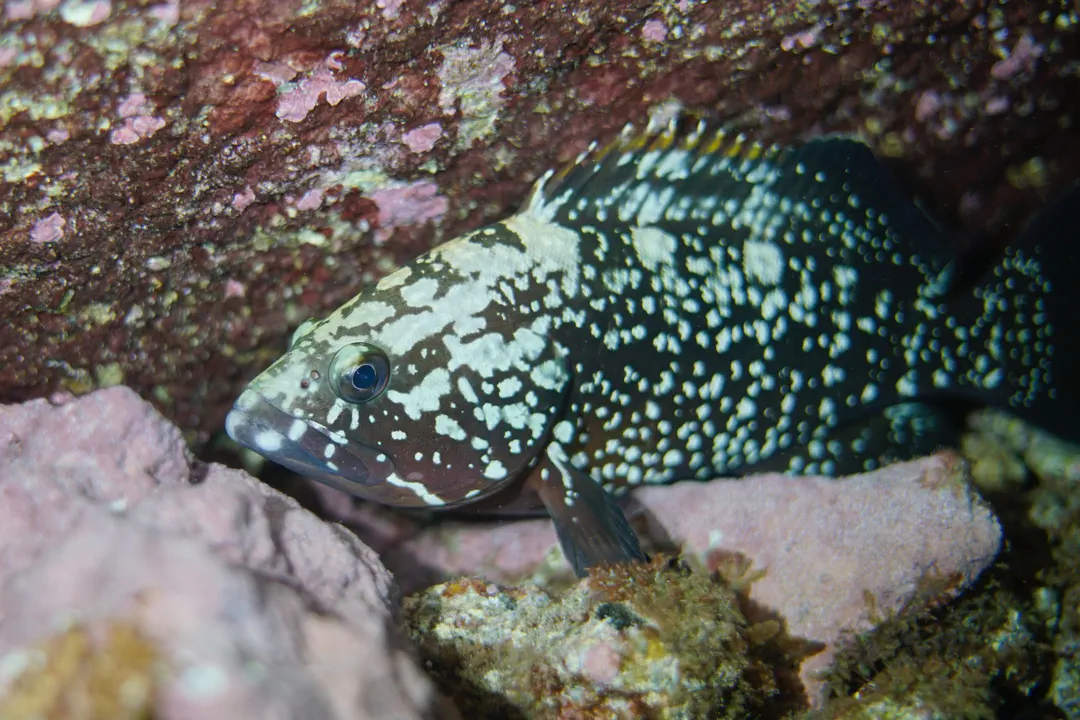
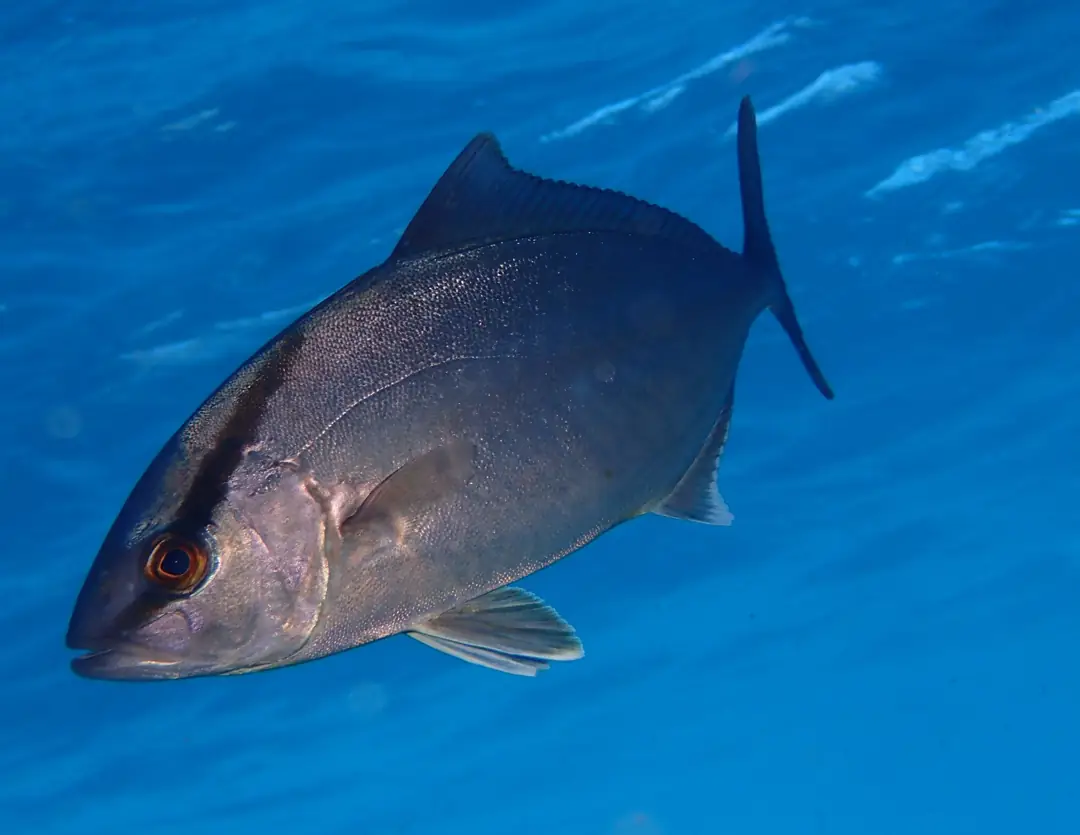
At 18 metres depth, sunbeams pierce blue water and illuminate the rust-red starboard hull of the MS Zenobia. The 172-metre Swedish cargo ferry rests motionless on her port side across a flat seabed. A pair of greater amberjacks wheels through a shadow above the propeller blades while a dusky grouper retreats slowly into an open hatchway, its thick tail pushing against a faint coastal swell.
Diving in Cyprus is defined by calm sea conditions, long Mediterranean daylight, and horizontal visibility that routinely reaches 15 to 35 metres. The main diving season runs from April through November, when surface temperatures warm up significantly. Water temperatures range from winter lows around 16°C in February up to 28°C during July and August, allowing divers to comfortably wear 3mm to 5mm wetsuits throughout summer.
The island caters to a wide spectrum of sub-aquatic explorers, from novice training students to experienced wreck divers. Key dive sites include the historic MS Zenobia off Larnaca, the shallow turtle sanctuaries of Green Bay in Protaras, the rocky archways of The Caves in Ayia Napa, and artificial reefs like the Lady Thetis off Limassol. Submerged life ranges from green sea turtles and octopus to schools of sea bream and heavy groupers.
What Is Diving in Cyprus Like?
Low tidal variation in the Eastern Mediterranean creates stable, manageable conditions along the Cyprus coastline. Underwater currents remain modest at most inshore sites, making entries, exits, and underwater navigation predictable for recreational dive profiles. Sloping limestone formations drop off into sandy plains, providing a varied backdrop of archways, narrow fissures, and sunken cargo vessels.
Horizontal underwater visibility regularly spans 15 to 35 metres across summer, though localized wind and seasonal plankton blooms can occasionally reduce clarity near shore. Sunlight penetrates cleanly into shallow caverns and overhangs, casting bright illumination across white sand beds and rocky drop-offs. These bright, low-stress conditions offer fine settings for both skills training and wide-angle underwater photography.
Shore entries dominate the sheltered eastern bays near Protaras and Ayia Napa, whereas boat charters handle deeper wrecks and western headlands off Paphos. Standard recreational dives focus on depths between 6 and 30 metres, where light is plentiful and water movement is mild. Deeper sections of offshore wrecks down to 42 metres demand advanced planning, redundant gas supplies, and appropriate certifications.
Best Time to Dive in Cyprus
The primary diving season in Cyprus spans eight months, starting in April and stretching into late November. Spring brings clearing waters around 19°C to 21°C as solar heating increases across the Eastern Mediterranean basin. Marine life becomes noticeably more active along rocky ledges as ambient water temperatures climb steadily each week.
July and August mark the peak of the summer season, with water temperatures reaching 27°C to 28°C at the surface. Calm, glass-like sea states prevail across south and east coast sites, delivering maximum underwater clarity. Dive operations run daily boat charters to the island's offshore wrecks and deep reef drop-offs during these warm months.
September and October offer ideal conditions for divers seeking quieter sites and warm seas. Water temperatures remain around 24°C to 25°C while surface tourism crowds diminish significantly after August. As detailed in a study published in the Journal of Coastal Conservation, Cyprus supports nesting by loggerhead turtles (Caretta caretta) and green turtles (Chelonia mydas), both of which are frequently sighted near coastal bays during late summer and autumn.
Cyprus Water Temperature by Month
Mediterranean sea temperatures around Cyprus experience a pronounced annual variation of approximately 12 degrees Celsius. February marks the coldest month underwater, with temperatures dropping to 16°C across coastal regions. During this winter period, a 7mm wetsuit with an attached hood is standard for multi-dive days.
Surface waters warm rapidly through late spring, rising from 18°C in April to roughly 22°C by June. A standard 5mm wetsuit provides sufficient thermal protection during these transition weeks. By July, surface temperatures regularly touch 26°C, peaking at 28°C in August and early September.
Late autumn holds ambient heat effectively, keeping underwater temperatures around 23°C throughout October and 20°C in November. Many divers switch down to a 3mm suit during mid-summer before returning to 5mm suits as autumn progresses. Thermoclines occasionally form in deeper waters between 20 and 30 metres, dropping local temperatures by 2°C to 3°C below surface readings.
Water temperature
Cyprus, monthly average
Paphos area (southwest coast, popular diving region like Paphos and Akamas); based on NOAA and Seatemperature.org averages for eastern Mediterranean surface waters
Best Dive Sites in Cyprus
Cyprus features distinct diving zones along its perimeter, each defined by unique geology and marine ecosystems. From historic shipwrecks off Larnaca to shallow turquoise bays near Protaras and wild limestone caverns along the Akamas Peninsula, the island offers varied underwater topography.
Zenobia Wreck (Larnaca): world-class cargo ship wreck
The MS Zenobia sank in 1980 during her maiden voyage, coming to rest on her port side in 42 metres of water off Larnaca. The top of the starboard side sits at an accessible depth of 16 metres, allowing intermediate divers to inspect the superstructure, lifeboats, and giant propellers. Sunbeams filter through open metal framework, illuminating dense shoals of silver fish.
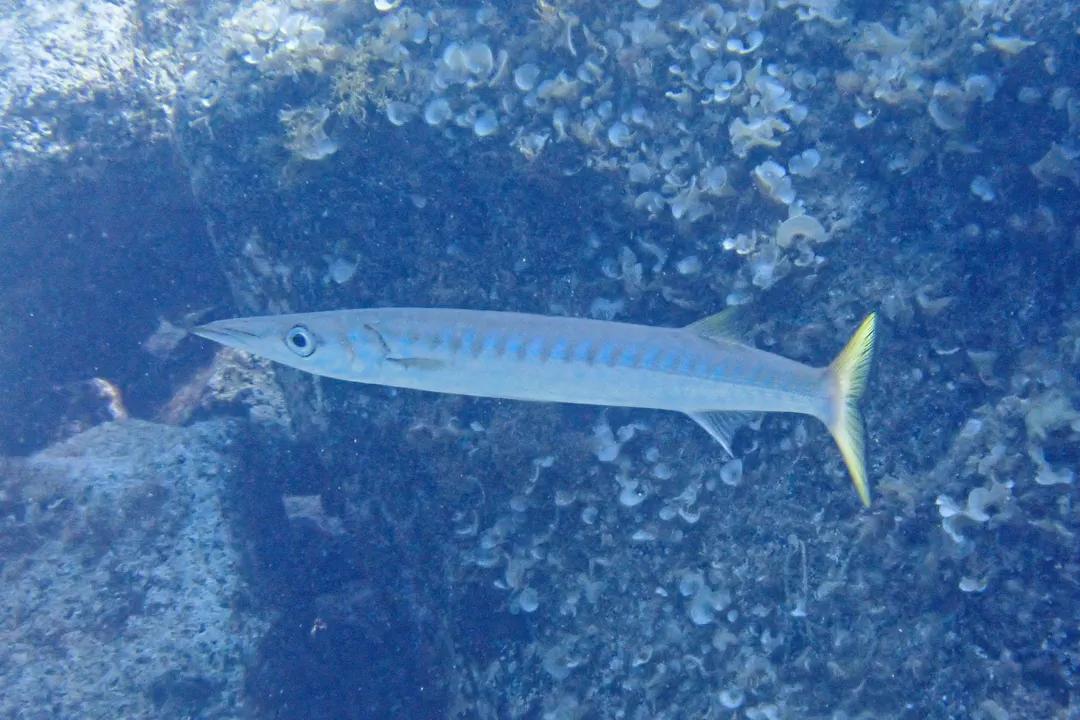
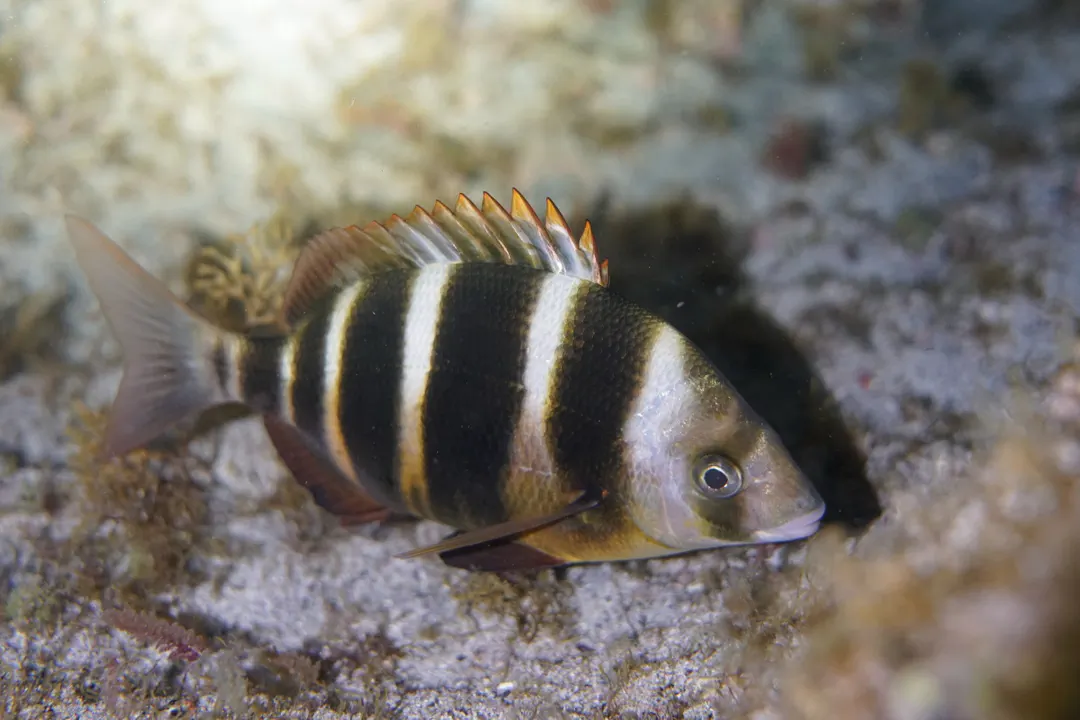
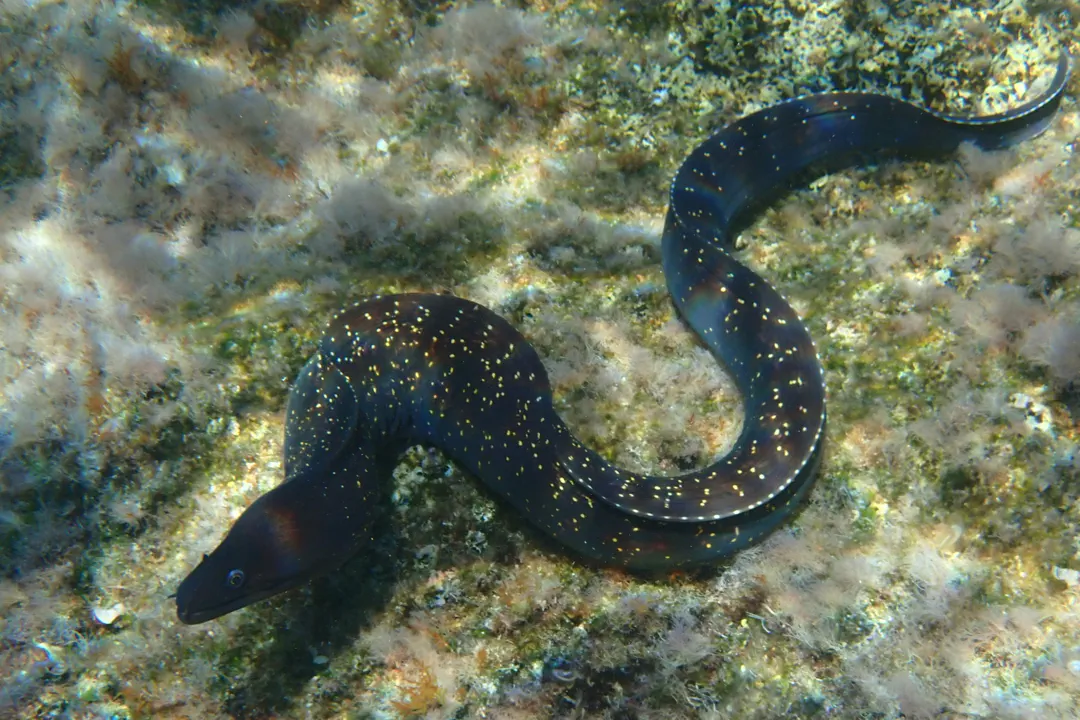
Large dusky groupers (Epinephelus marginatus) hold position inside shadowed companionways and around the stern deck. Schools of yellowmouth barracuda (Sphyraena viridensis) and greater amberjack (Seriola dumerili) cruise through open water above the wreck, hunting for smaller prey. Zebra seabream (Diplodus cervinus) and gilthead seabream (Sparus aurata) forage along encrusted steel plates while European conger (Conger conger) and Mediterranean moray (Muraena helena) hide inside dark pipework.
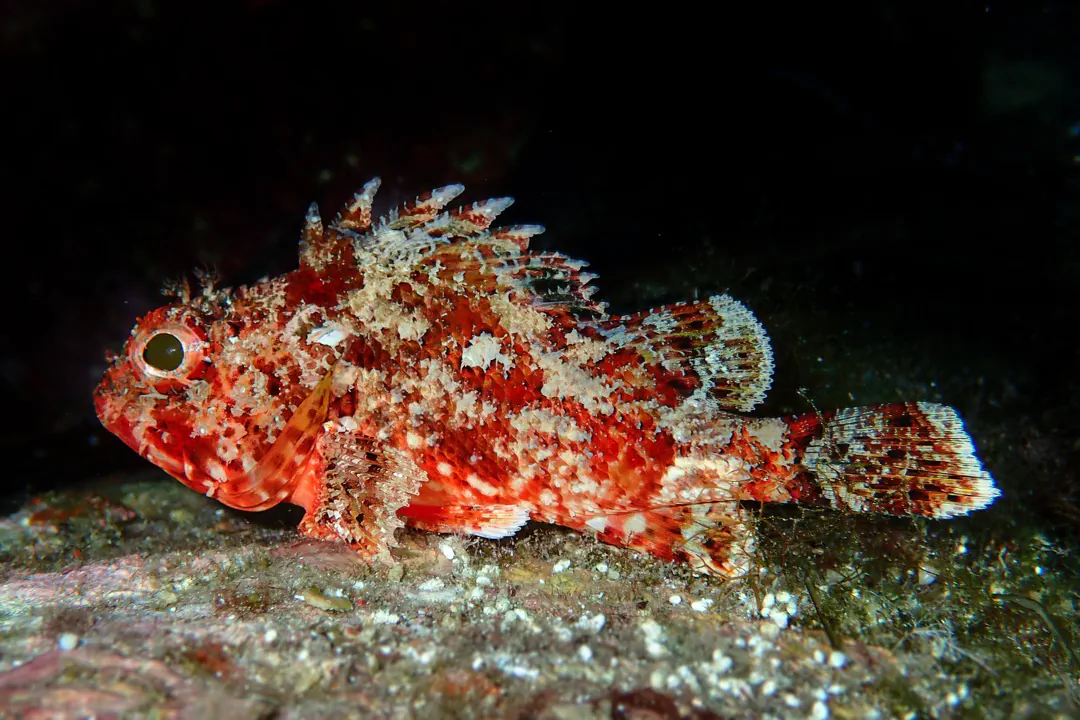
Penetration into vehicle decks reveals cargo trucks suspended on their side chains. Exploring these enclosed spaces requires specialized wreck training, gas planning, and precise buoyancy control to avoid disturbing fine silt. Outside, small red scorpionfish (Scorpaena notata) blend seamlessly into rusted deck plates and algae growth.
Depth: 16-42 m. Access: boat, 15 minutes from Larnaca Marina. Level: Open Water to Technical. Best months: May-October.
 © Michael BommererCC BY 4.0 · iNaturalist
 © Ian ShawAll rights reserved
 © Donald DavesneCC BY 4.0 · iNaturalist
 © Michael BommererCC BY 4.0 · iNaturalist
 © Julien RenoultCC BY 4.0 · iNaturalist
 © Juraj AhelCC BY 4.0 · iNaturalist
Green Bay (Protaras): easy entry and sea turtles
Green Bay is a shallow, sheltered cove located along the southeastern shore near Protaras. The site features a gradual sandy slope punctuated by rocky ridges, submerged columns, and classical statue replicas. Minimal swell and clear, shallow water make this bay an practical location for entry-level training and snorkelers.
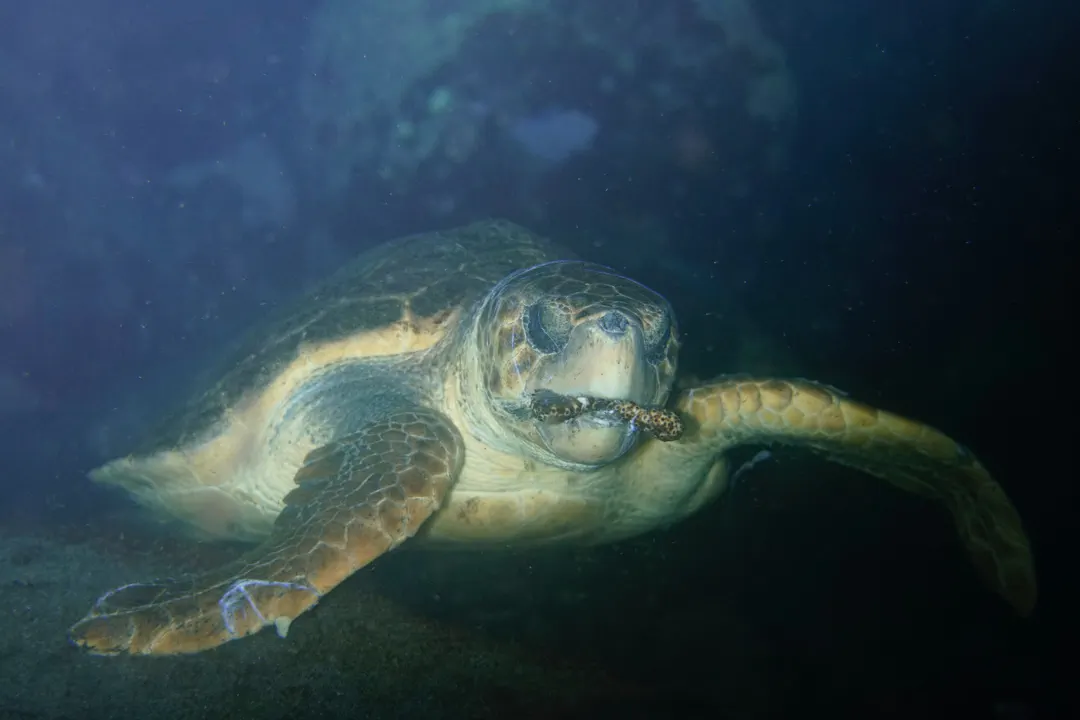
Both green sea turtles (Chelonia mydas) and loggerhead sea turtles (Caretta caretta) frequent the inner bay, feeding on dense patches of marine vegetation. Bright Mediterranean rainbow wrasses (Coris julis) and ornate wrasses (Thalassoma pavo) dart between submerged rocks, while white seabream (Diplodus sargus) aggregate around visiting divers.
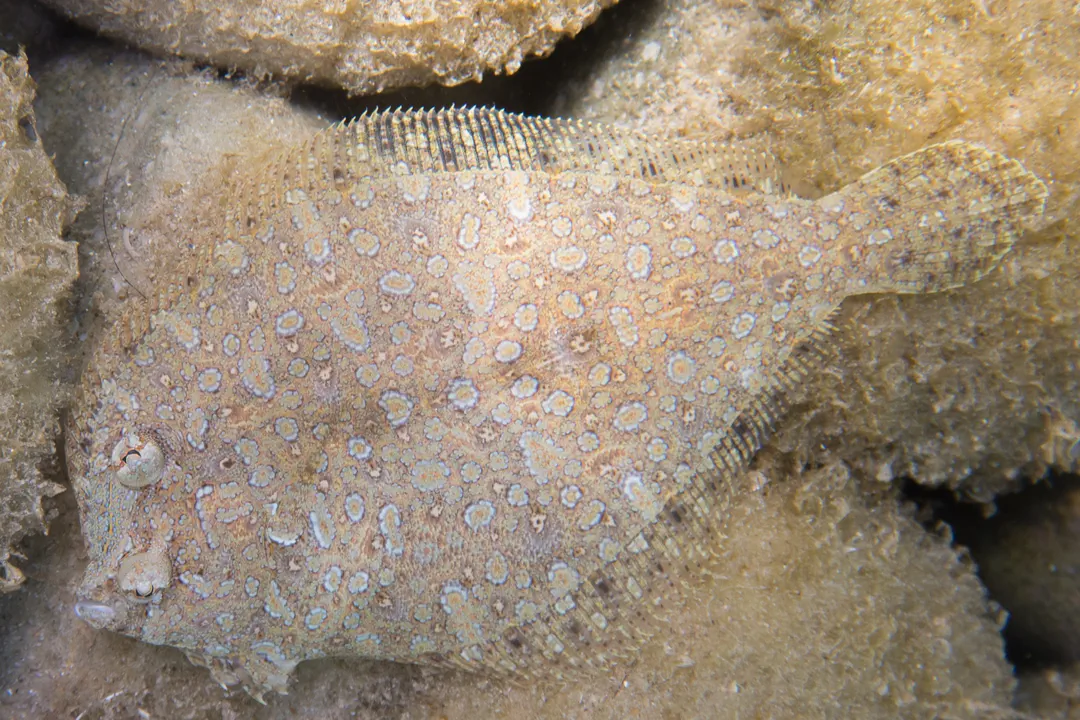
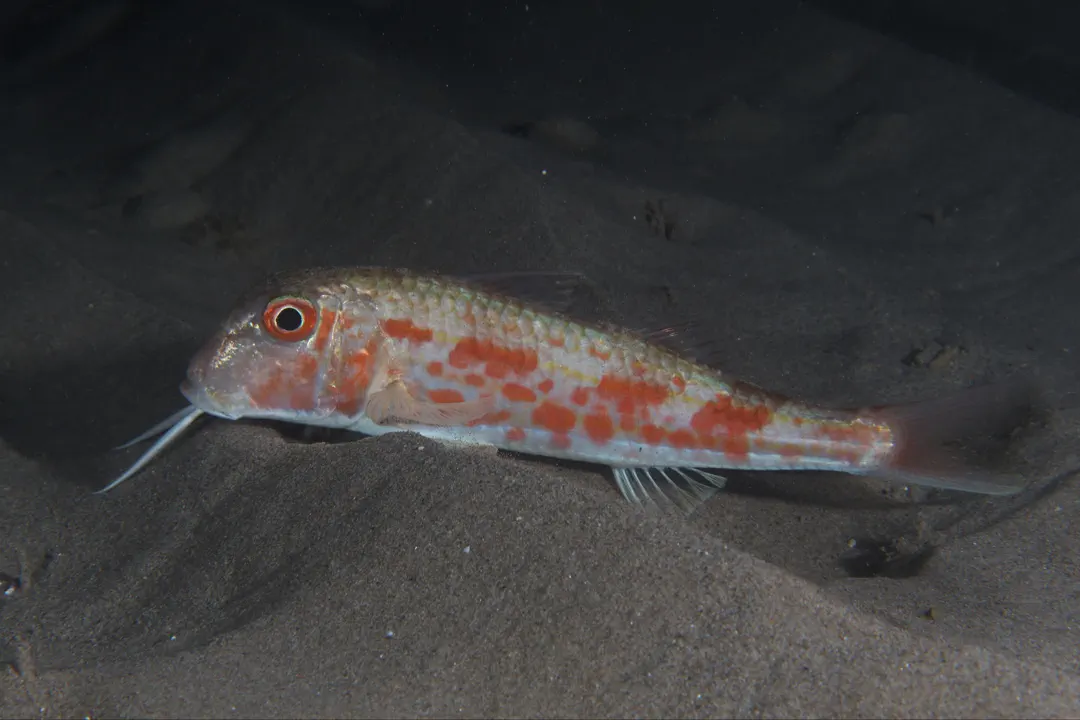
On the sandy seabed, wide-eyed flounders (Bothus podas) camouflage themselves against fine silt. Red mullets (Mullus barbatus) sift through sediments with chin barbels searching for invertebrates, accompanied by invasive dusky spinefeet (Siganus luridus). The site's shallow depth guarantees extended bottom time and ample natural light.
Depth: 3-12 m. Access: shore entry from Green Bay beach. Level: Beginner / Open Water. Best months: April-November.
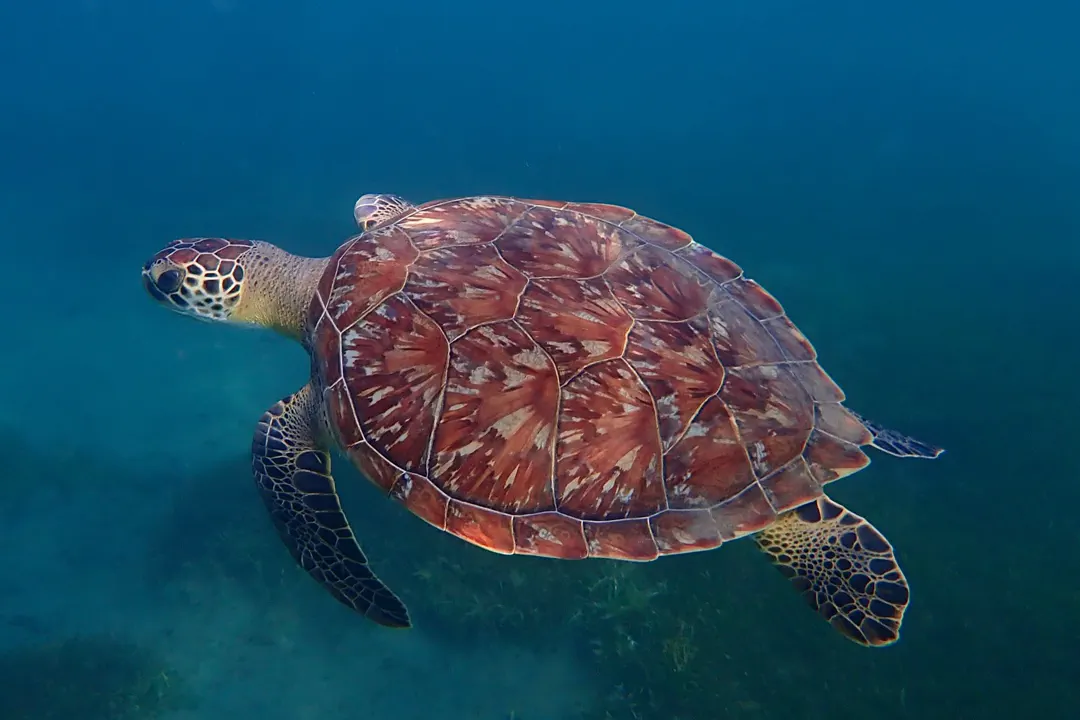 © Matteo BellucciCC BY 4.0 · iNaturalist
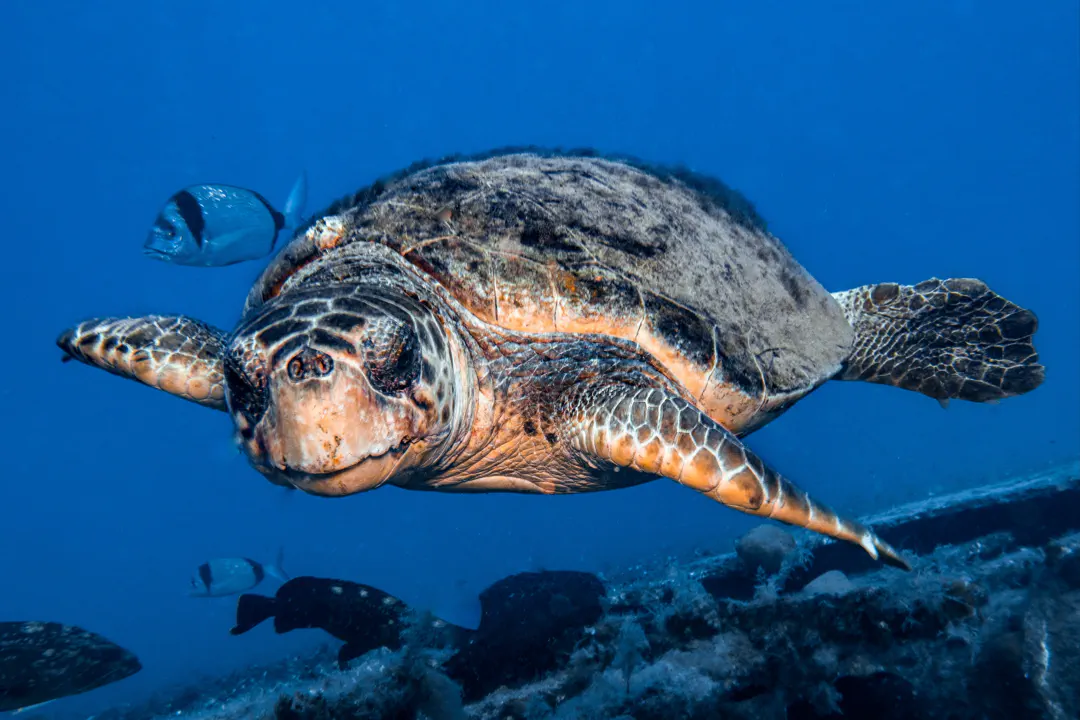 © seabook.appAll rights reserved
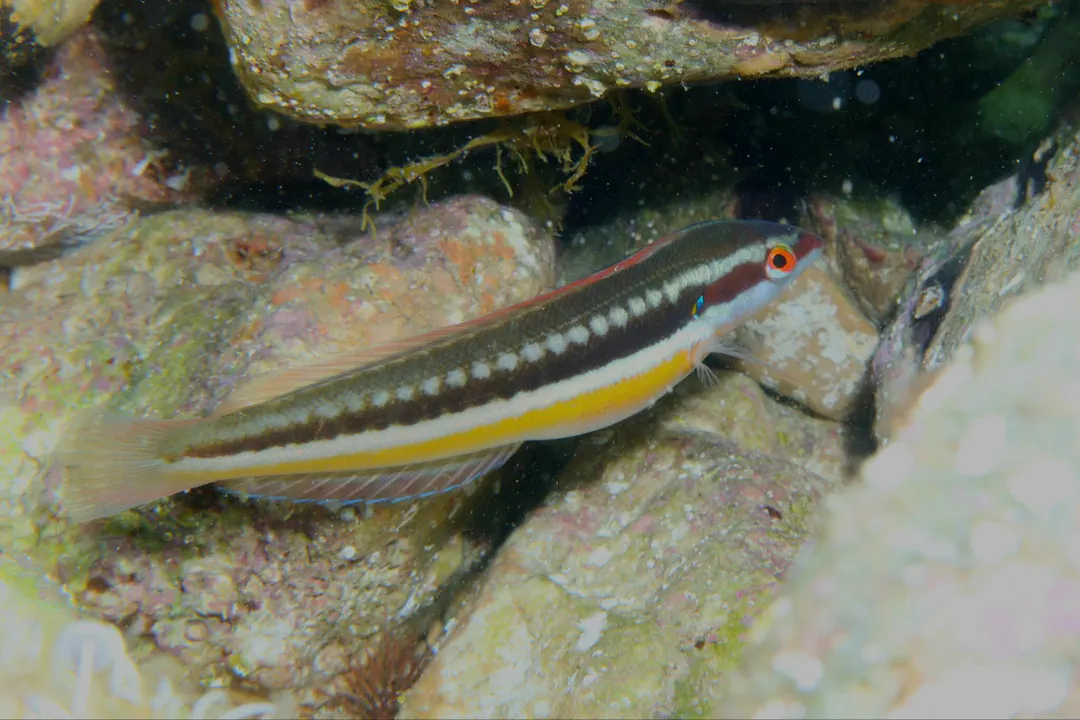 © Julien RenoultCC BY 4.0 · iNaturalist
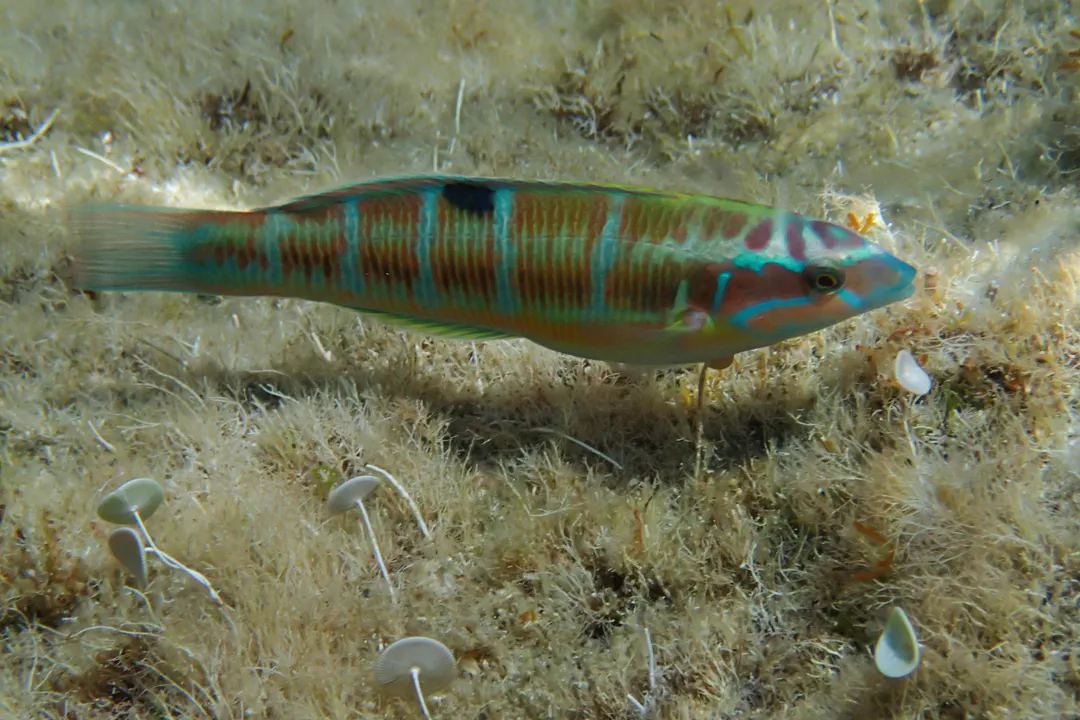 © Emanuele SantarelliCC BY-SA 4.0 · iNaturalist
 © BartCC BY 4.0 · iNaturalist
 © Julien RenoultCC BY 4.0 · iNaturalist
The Caves (Ayia Napa): swim-throughs and overhangs
The coastline around Ayia Napa consists of eroded limestone cliffs that drop into shallow, turquoise waters. Beneath the surface, wave action has carved a network of interconnected overhangs, natural archways, and light-filled swim-throughs. Daylight penetrates overhead openings, creating natural spotlights across the white rocky floor.
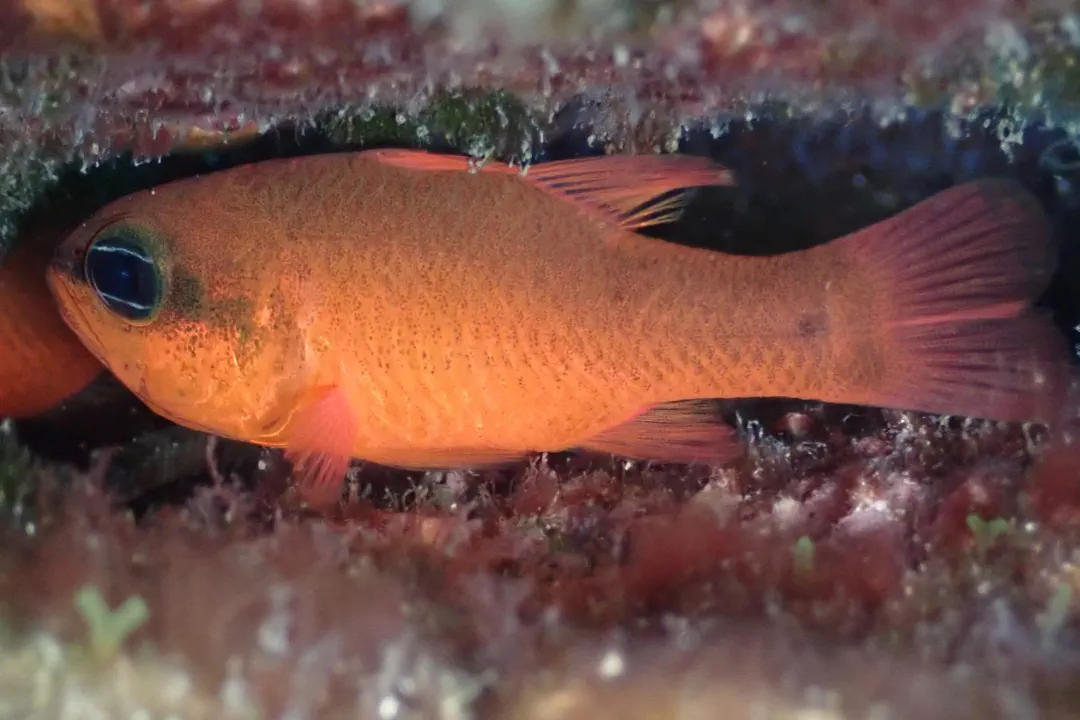
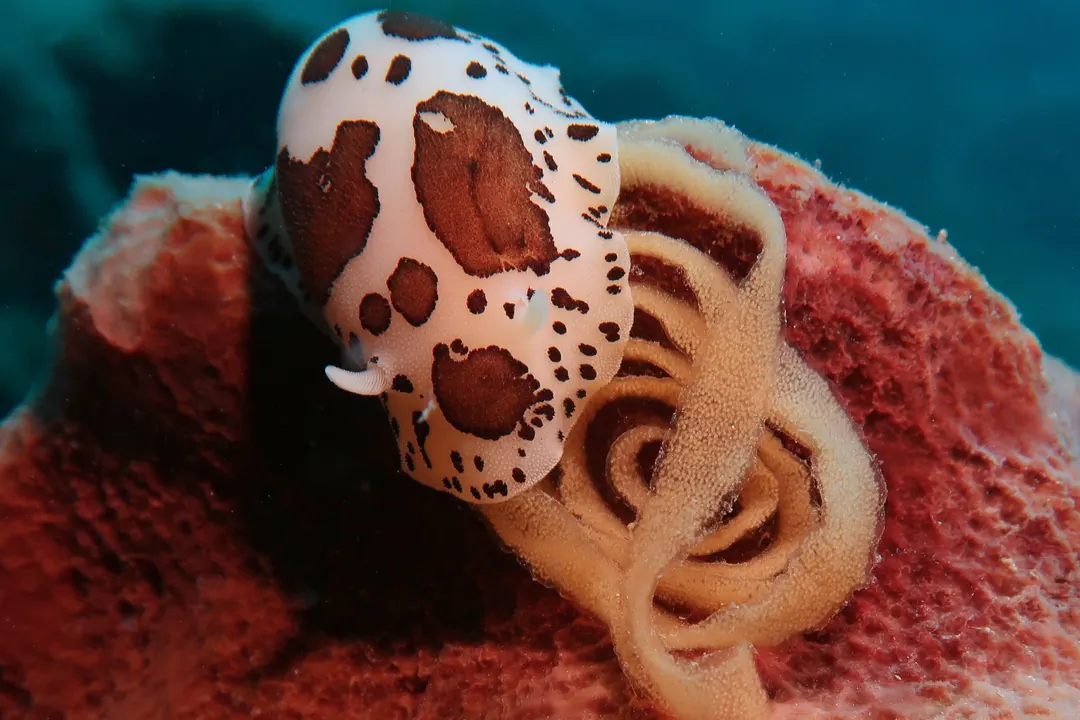
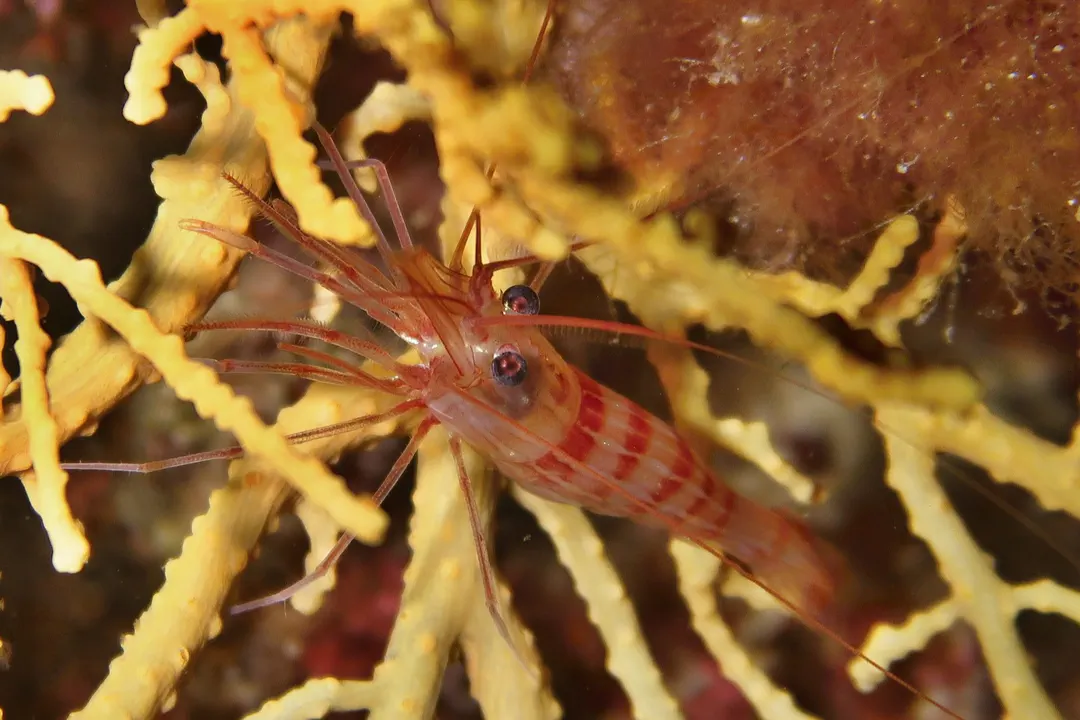
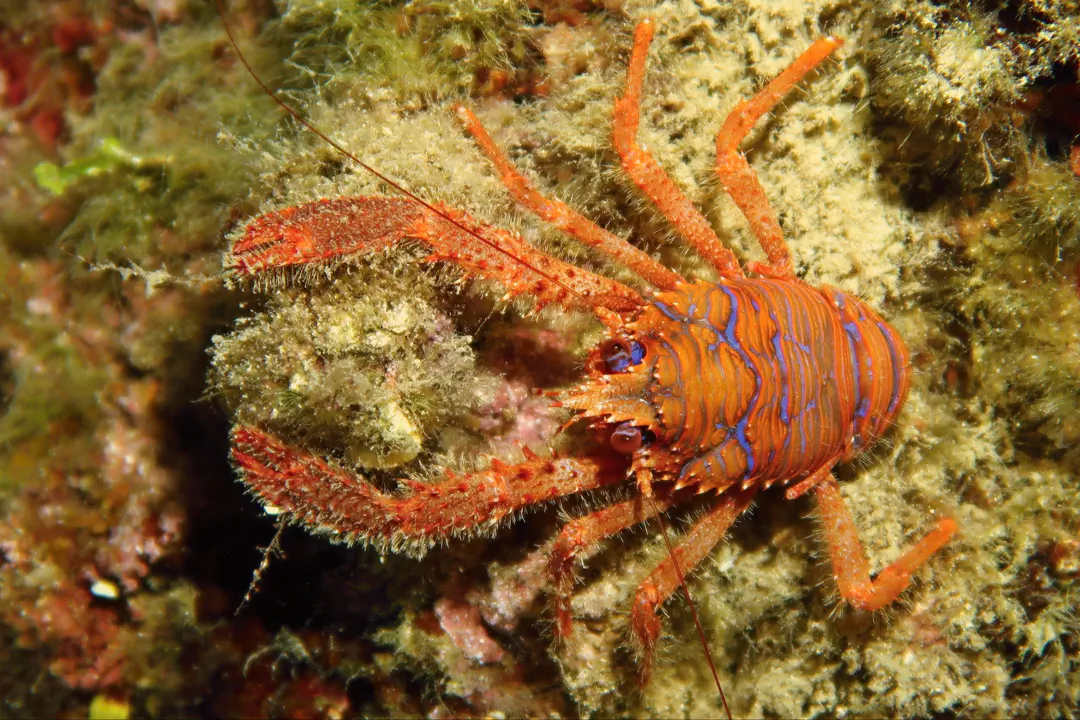
Mediterranean cardinalfish (Apogon imberbis) shelter in dark recesses, hovering in dense clusters. Macro observers can spot the spotted sea slug (Peltodoris atromaculata) grazing on sponges along shaded walls, alongside delicate Monaco shrimp (Lysmata seticaudata). Mediterranean slipper lobsters (Scyllarides latus) and squat lobsters (Galathea strigosa) hide within deep rock crevices.
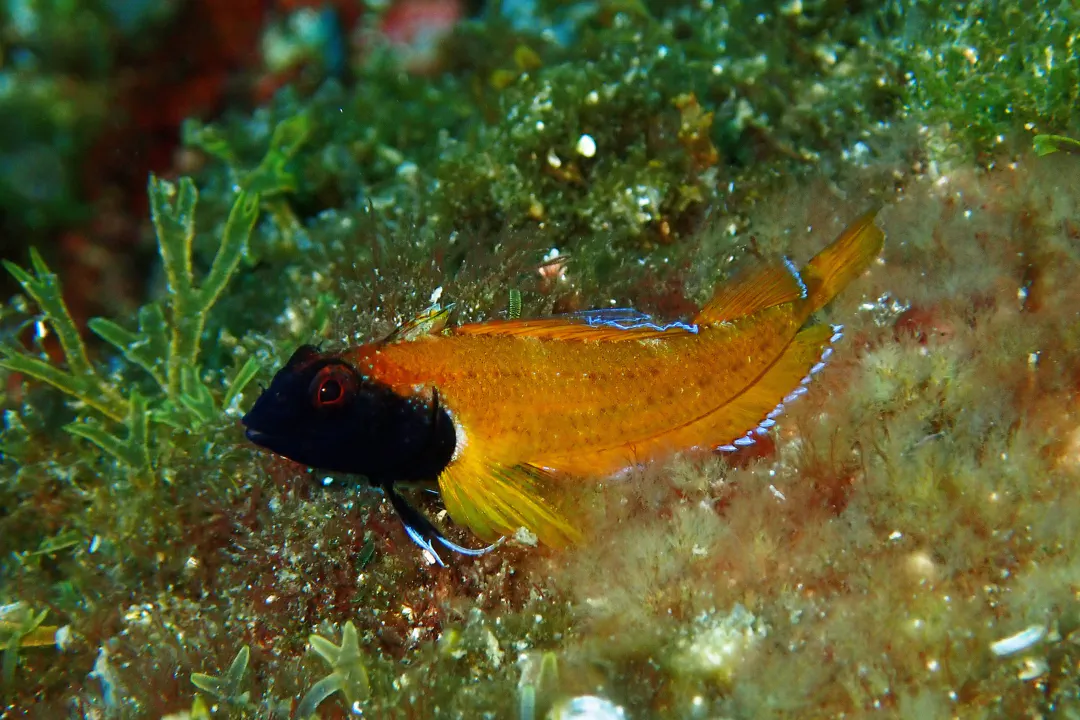
Small yellow triplefins (Tripterygion delaisi) perch on algal turf, guarding territories against rival fish. The absence of strong currents allows divers to maneuver through channels with minimal effort. Buoyancy control is required to prevent contact with encrusted overhangs and delicate crevice dwellers.
Depth: 5-12 m. Access: shore or boat, 10 minutes from Ayia Napa Harbour. Level: Open Water. Best months: May-October.
 © shahar chaikinCC BY 4.0 · iNaturalist
 © Daniel BenákCC BY 4.0 · iNaturalist
 © Daniel BenákCC BY 4.0 · iNaturalist
 © Donald DavesneCC BY 4.0 · iNaturalist
 © Daniel BenákCC BY 4.0 · iNaturalist
Devil's Head (Akamas Peninsula): underwater tunnels and arches
Situated along the wild coast of the Akamas Peninsula, Devil's Head offers dramatic rock architecture far from major urban centers. The dive features deep limestone gullies, natural arches, and complex tunnel formations carved by geological processes. Unspoiled landscape scenery above water transitions into deep drop-offs below.
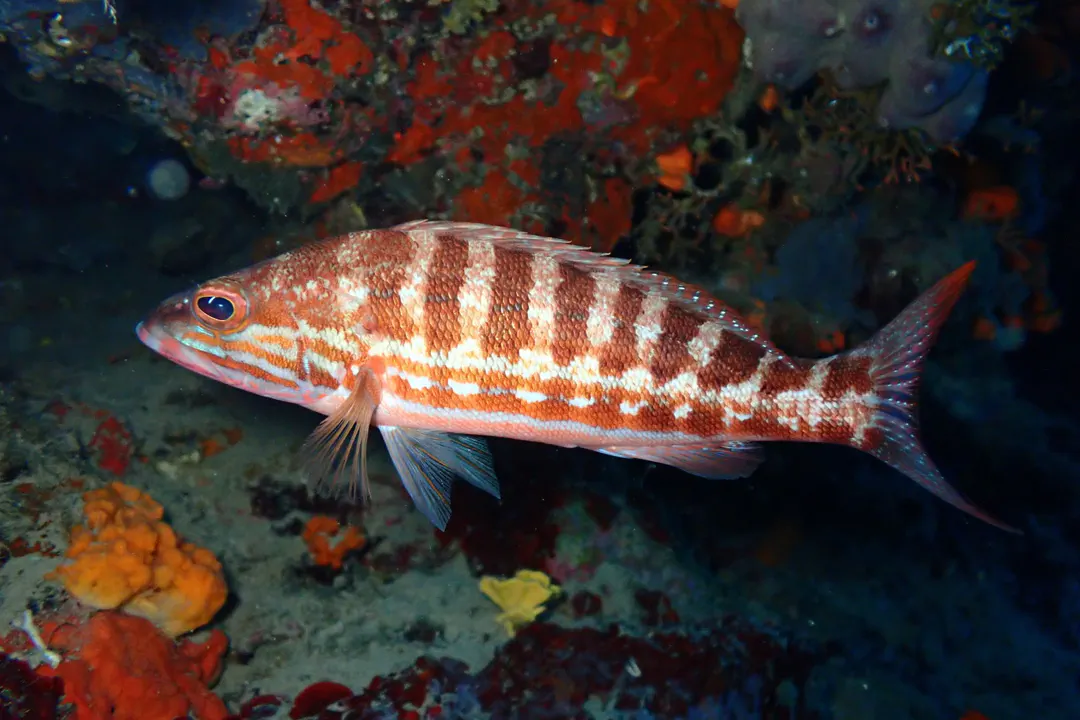
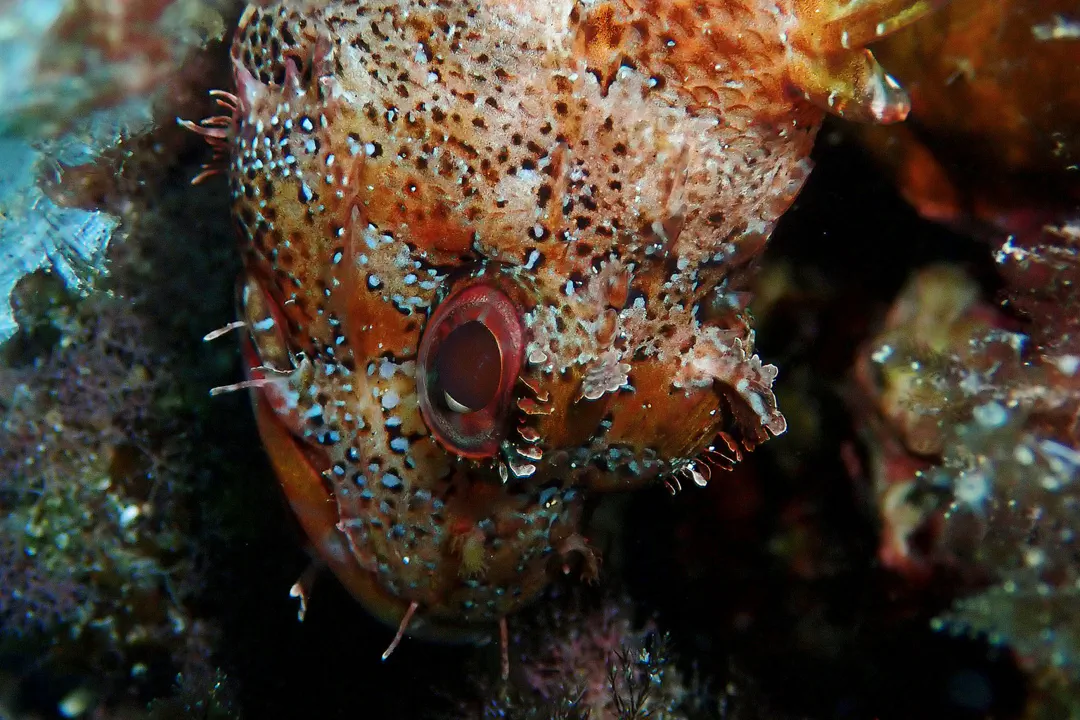
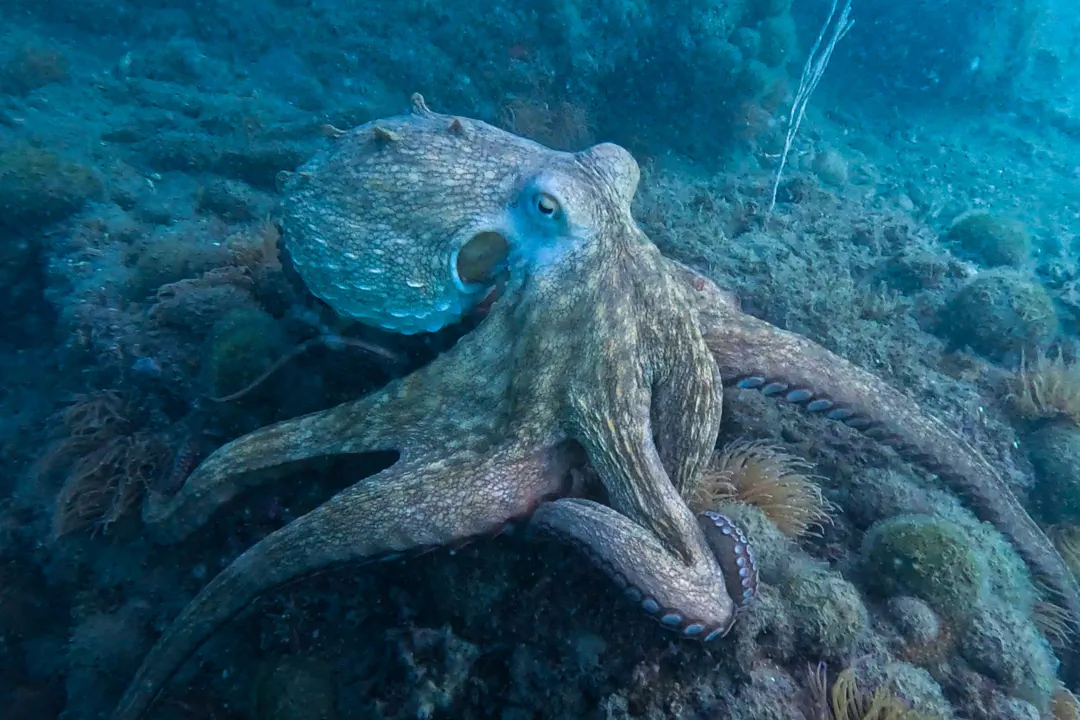
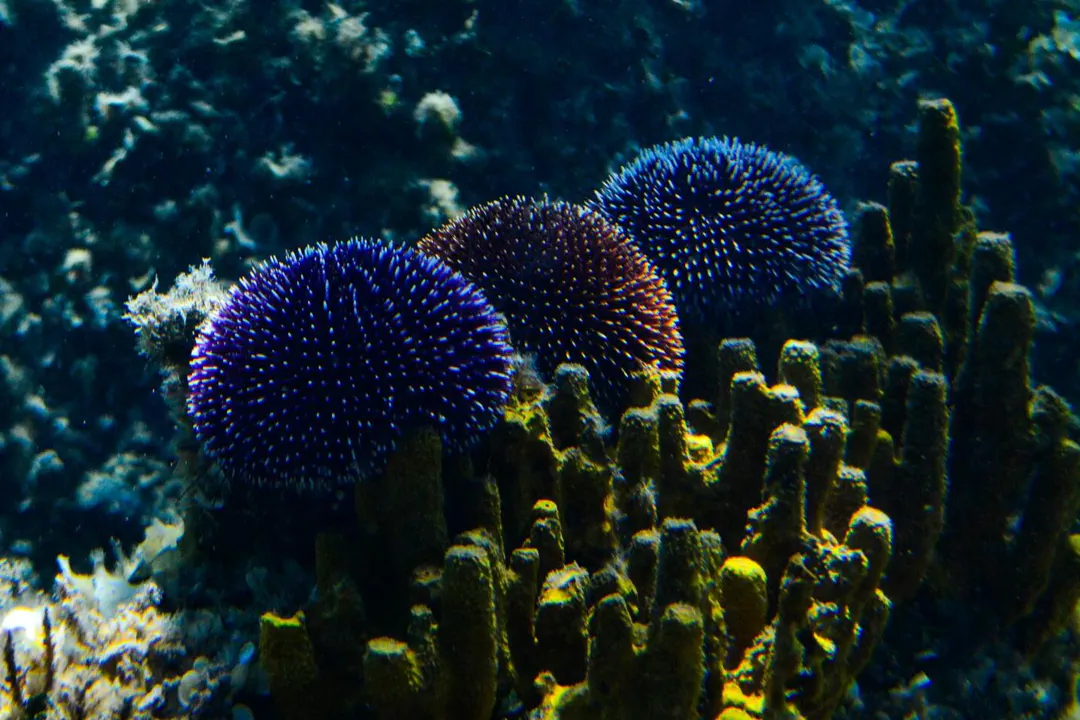
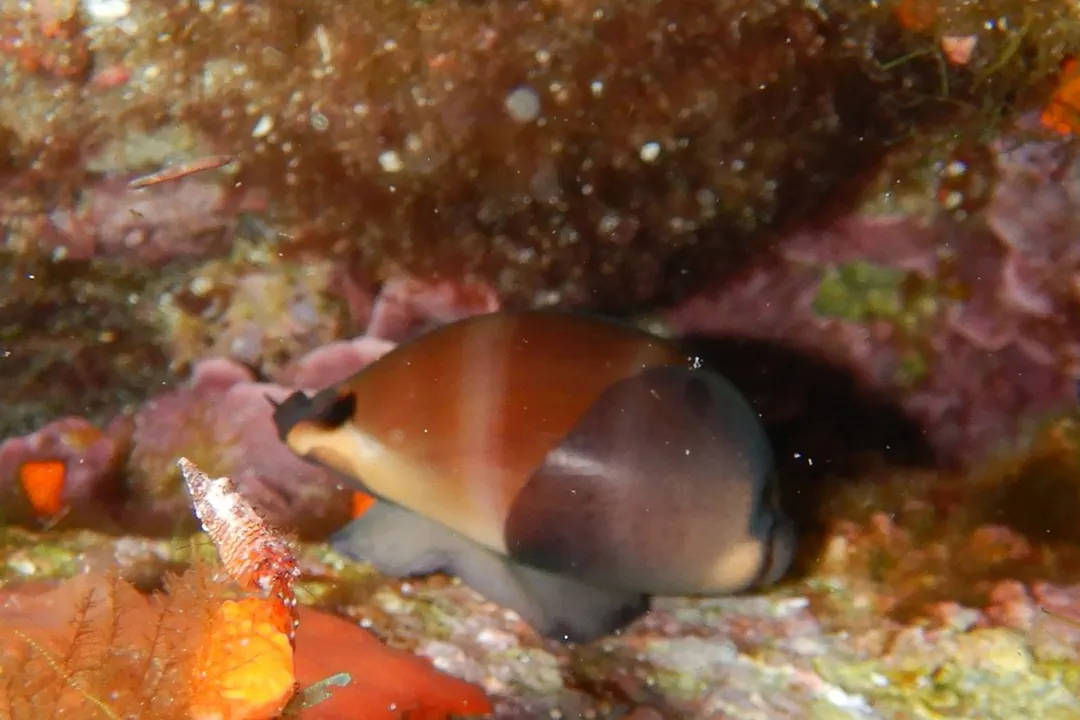
Common octopuses (Octopus vulgaris) inhabit rocky dens, surrounded by discarded mollusc shells and gravel barriers. Combers (Serranus cabrilla) patrol rock ledges while Madeira rockfish (Scorpaena maderensis) lie motionless against algae-covered stone. Violet sea urchins (Sphaerechinus granularis) dot crevices alongside brown cowries (Luria lurida).
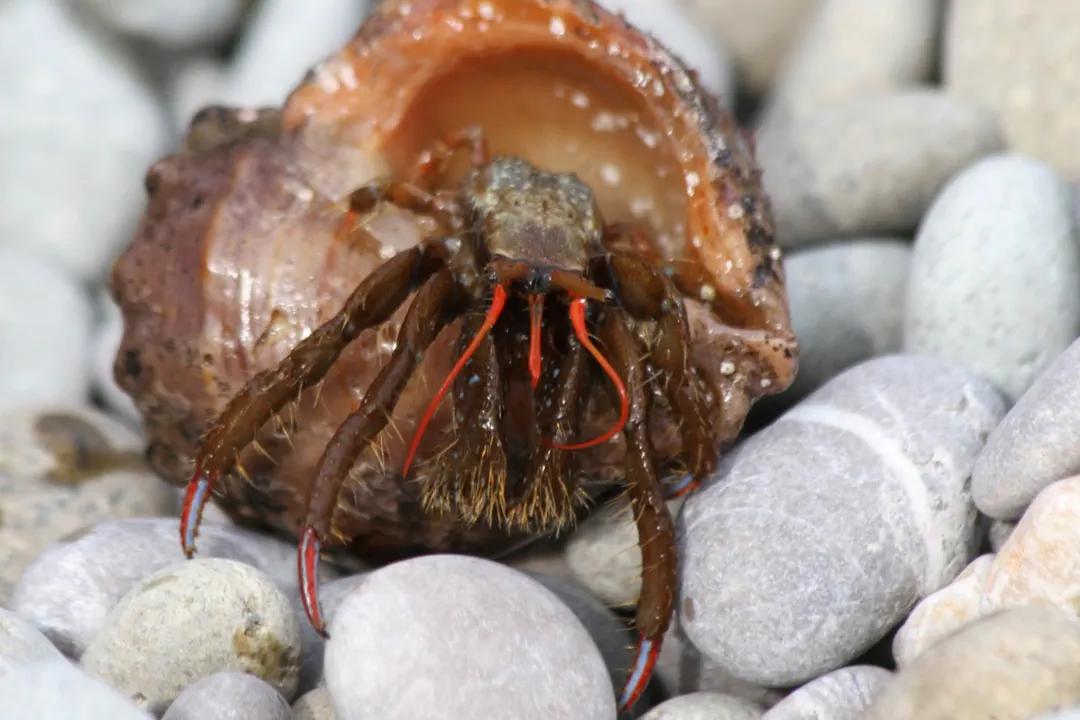
Red-legged hermit crabs (Clibanarius erythropus) scramble across shallow boulders near the entrance of deep passages. Surge can develop around narrow openings when open sea swells strike the headland, requiring careful position monitoring. Navigation through the interconnected tunnel layout requires torch illumination and buddy awareness.
Depth: 8-30 m. Access: boat, 45 minutes from Latchi Harbour. Level: Intermediate / Advanced Open Water. Best months: May-October.
 © Sarah FaulwetterCC BY 4.0 · iNaturalist
 © Donald DavesneCC BY 4.0 · iNaturalist
 Justin PhilboisCC0 · iNaturalist
 Marino LinićCC0 · iNaturalist
 © Valentin MoserCC BY 4.0 · iNaturalist
 © Dmitry KulakovCC BY 4.0 · iNaturalist
Amphitheatre (Coral Bay): natural rock formations
Located near Coral Bay off Paphos, the Amphitheatre is named after a semi-circular rock wall eroded into tiers by marine currents. The limestone wall resembles an ancient theater, dropping vertically from 4 to 12 metres before meeting a sandy floor. Clear water and low surge make this a popular spot for relaxed dive profiles.
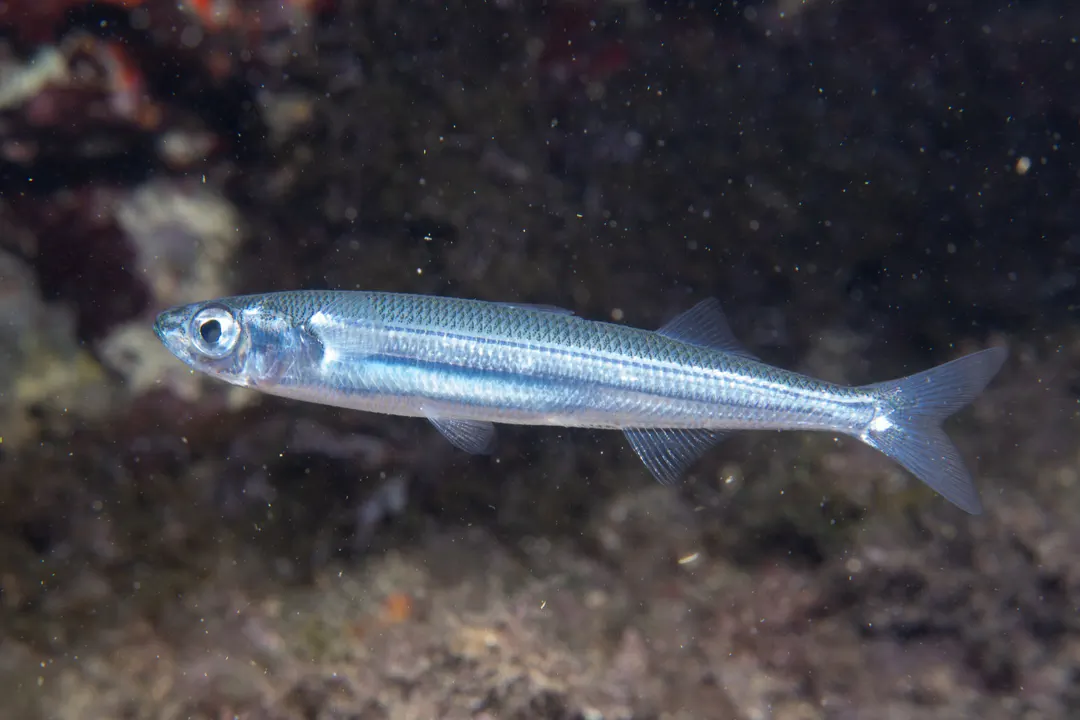
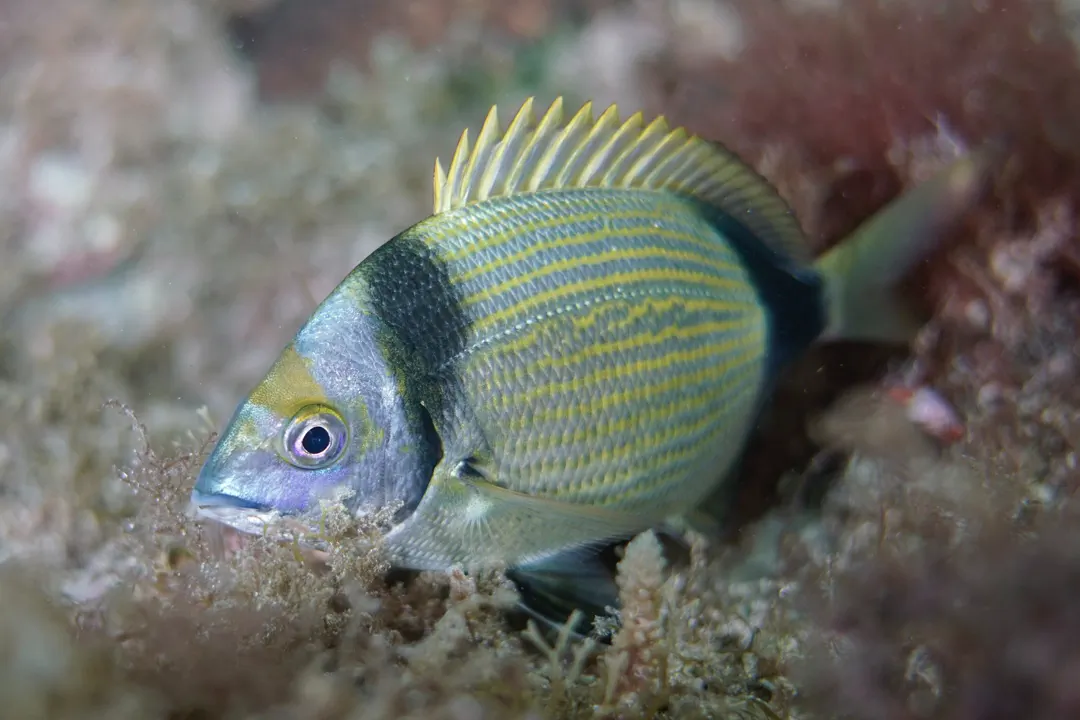
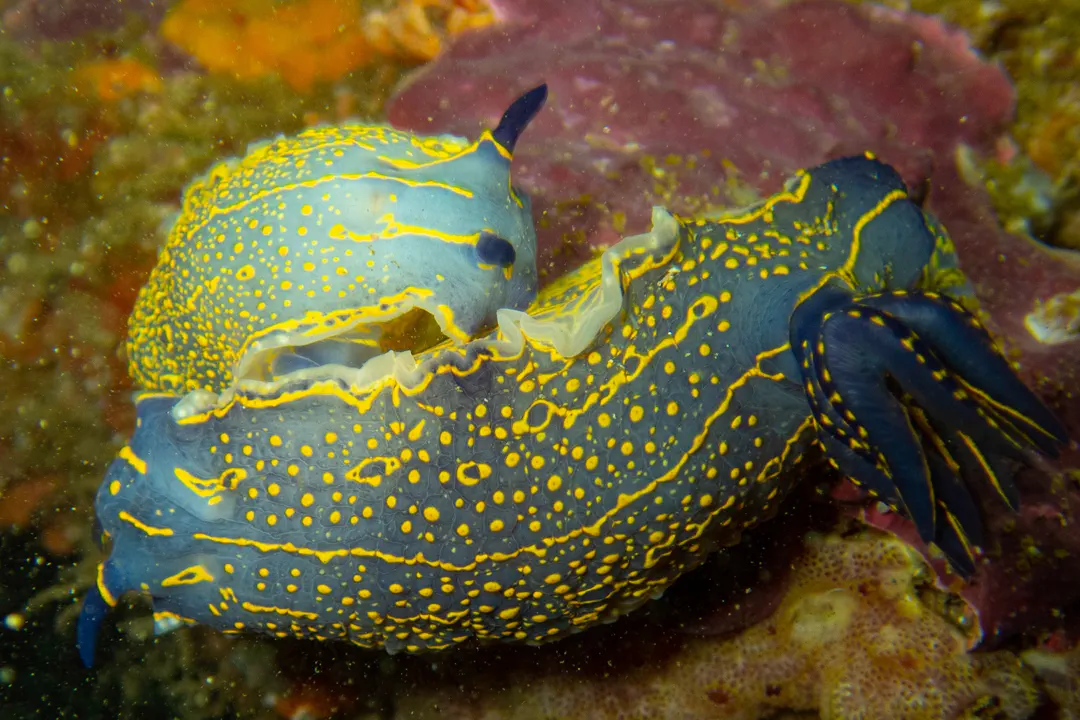
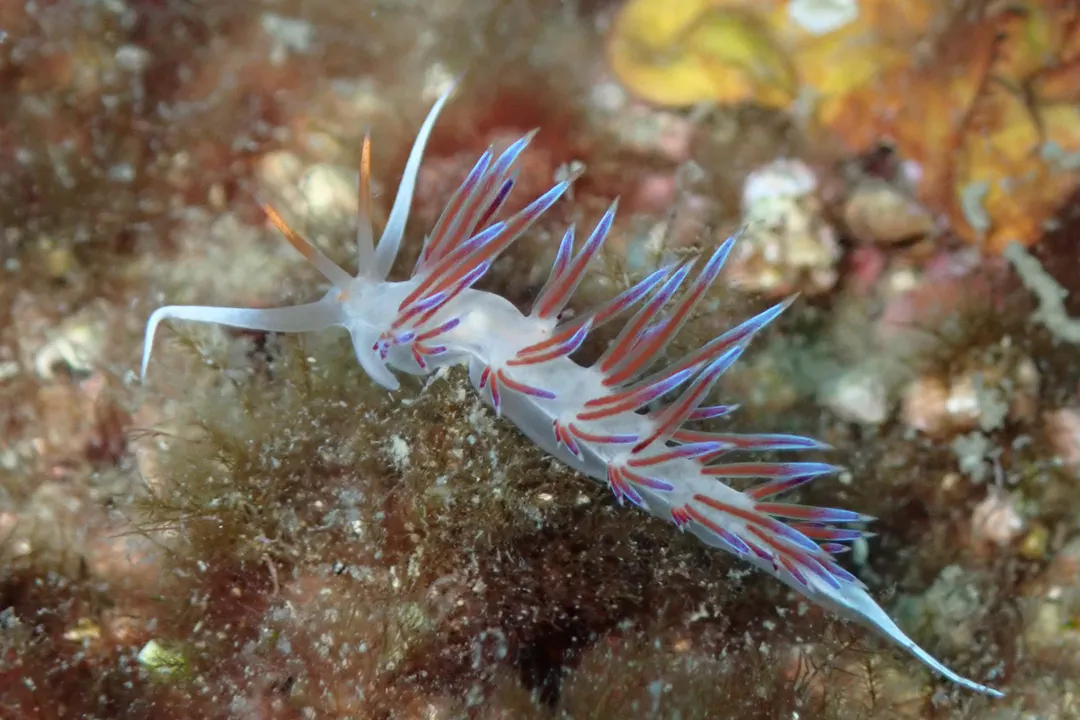
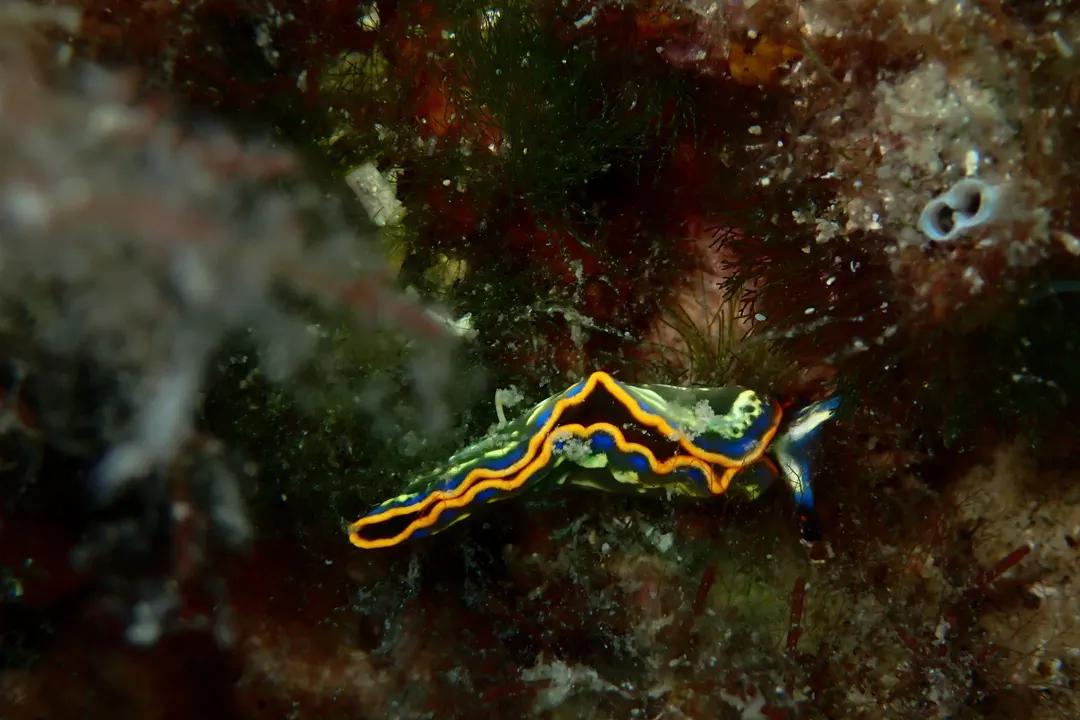
Dense schools of silversides (Atherina hepsetus) hover inside the shaded recess of the main wall, shimmering in daylight. Two-banded seabream (Diplodus vulgaris) graze along the upper rim while small marine molluscs seek shelter under overhangs. Colorful sea slugs, including the regal sea slug (Felimare picta), pilgrim nudibranch (Cratena peregrina), and Thuridilla hopei, inhabit algae-covered ledges.
Wide-angle photographic opportunities abound along the curved wall structure, especially when sunbeams hit the rock amphitheatre during mid-day. Photographers should maintain stable buoyancy off the sandy bottom to preserve water clarity. The surrounding seabed holds small amphora fragments embedded in calcified rock.
Depth: 4-12 m. Access: shore entry or 10-minute boat ride from Coral Bay. Level: Beginner / Open Water. Best months: April-November.
 © Julien RenoultCC BY 4.0 · iNaturalist
 © Michael BommererCC BY 4.0 · iNaturalist
 © Bernard PictonCC BY 4.0 · iNaturalist
 © Juraj AhelCC BY 4.0 · iNaturalist
 © Vsevolod RudyiCC BY 4.0 · iNaturalist
Lady Thetis Wreck (Limassol): artificial reef marine sanctuary
The Lady Thetis is a 30-metre German passenger vessel intentionally scuttled off Limassol in 2014 to form an artificial reef within a protected marine reserve. She rests upright on a sandy seabed at a depth of 21 metres, with her upper deck rising to 15 metres. The wreck structure remains intact and accessible to recreational divers.
Goldblotch groupers (Epinephelus costae) have colonized the wheelhouse and lower deck openings, sharing shelter with juvenile fish. Shoals of Mediterranean chromis (Chromis chromis) hovering around upper railings create continuous movement against open blue water. Zebra seabream (Diplodus cervinus) forage along encrusted metal surfaces.
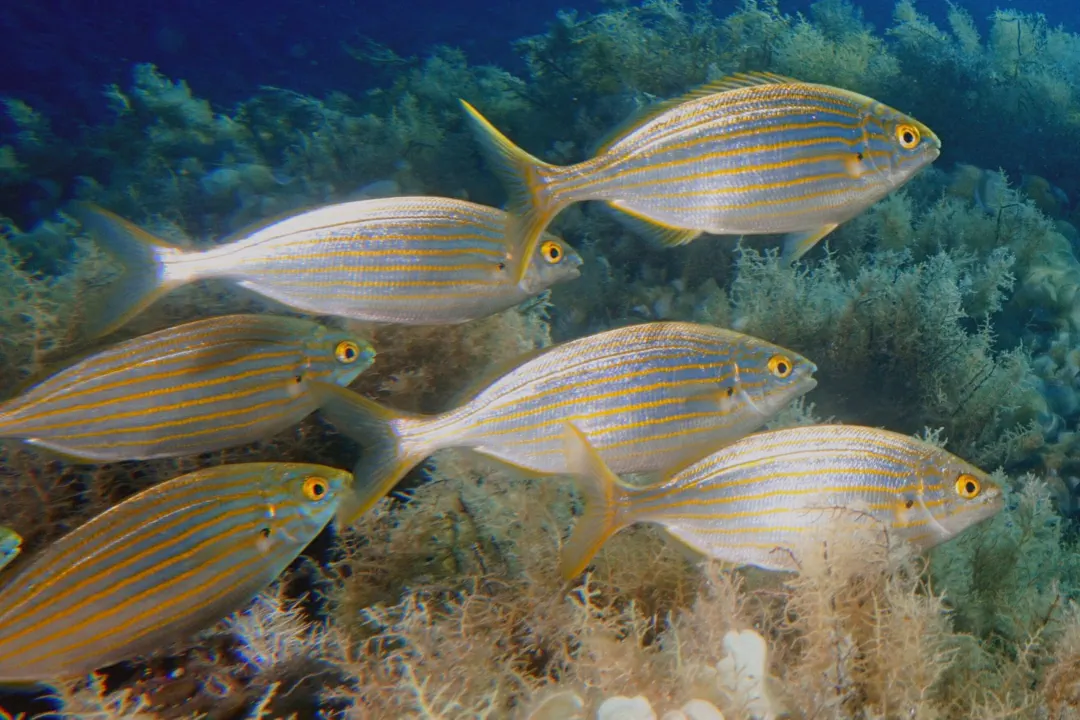
Flocks of shimmering salema (Sarpa salpa) strip algae from metal plates, while fast-moving Mediterranean horse mackerel (Trachurus mediterraneus) pass above the stacks. The absence of strong currents and manageable depths make this wreck an excellent progression site for intermediate divers. Marine reserve status protects resident fish populations from commercial fishing.
Depth: 15-21 m. Access: boat, 10 minutes from Limassol Marina. Level: Open Water / Advanced Open Water. Best months: April-November.
 © Guido and Carrara familyCC BY 4.0 · iNaturalist
Is Cyprus Good for Beginners and Snorkellers?
Cyprus is well regarded for scuba training due to its mild sea conditions. Minimal tidal fluctuations and negligible currents across sheltered bays provide a predictable environment for mastering basic buoyancy and mask skills. Clear water ensures students retain comfortable visual contact with instructors throughout open-water training sessions.
Many key training sites feature easy beach or concrete ramp entries directly into shallow, sand-bottomed bays. Depths increase gradually from 2 to 10 metres, allowing beginners to build confidence without abrupt drop-offs. Established dive centers line the resort areas of Protaras, Ayia Napa, and Paphos, offering modern rental equipment and professional instruction.
Snorkelers benefit from calm surface conditions and bright sunlight that illuminates shallow reefs down to 8 metres depth. Sites like Green Bay and the Amphitheatre permit surface viewing of wrasses, seabream, and grazing sea turtles. Surface buoy markers are recommended when snorkeling near popular boat channels or rocky headlands.
Marine Life in Cyprus
Marine life in Cyprus represents a mixture of indigenous Mediterranean species and recent Lessepsian migrants arriving through the Suez Canal. Posidonia oceanica seagrass meadows carpet shallow sandy basins, providing nursery habitat for juvenile fish and anchorage for benthic invertebrates. Rocky reefs host groupers, moray eels, and octopus in natural crevices.
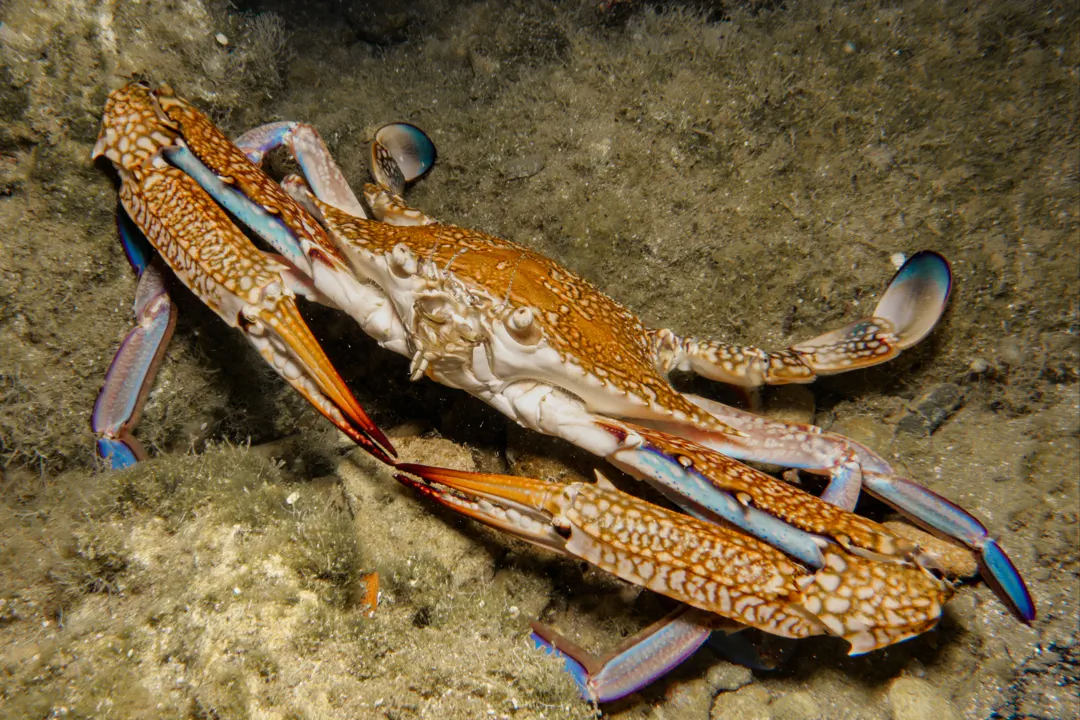
Sandy seabeds support bottom-dwelling species such as common stingrays (Dasyatis pastinaca) and common eagle rays (Myliobatis aquila), which glide over soft sediment searching for molluscs. Reef squid (Sepioteuthis lessoniana) hover in mid-water, changing color patterns when approached, while blue swimmer crabs (Portunus segnis) roam sandy flats. Short-snouted seahorses (Hippocampus hippocampus) anchor themselves to seagrass blades in calm bays.
Detailed inspection of rocky surfaces reveals Mediterranean pillow coral (Balanophyllia europaea), spider crabs (Inachus phalangium), and hermit crabs (Pagurus prideaux) inhabiting empty shells. Divers can log species sightings and verify local marine identification on their mobile devices using the Seabook app during surface intervals. Predatory fish such as common dentex (Dentex dentex) patrol deeper reef edges on incoming tides.
 © seabook.appAll rights reserved
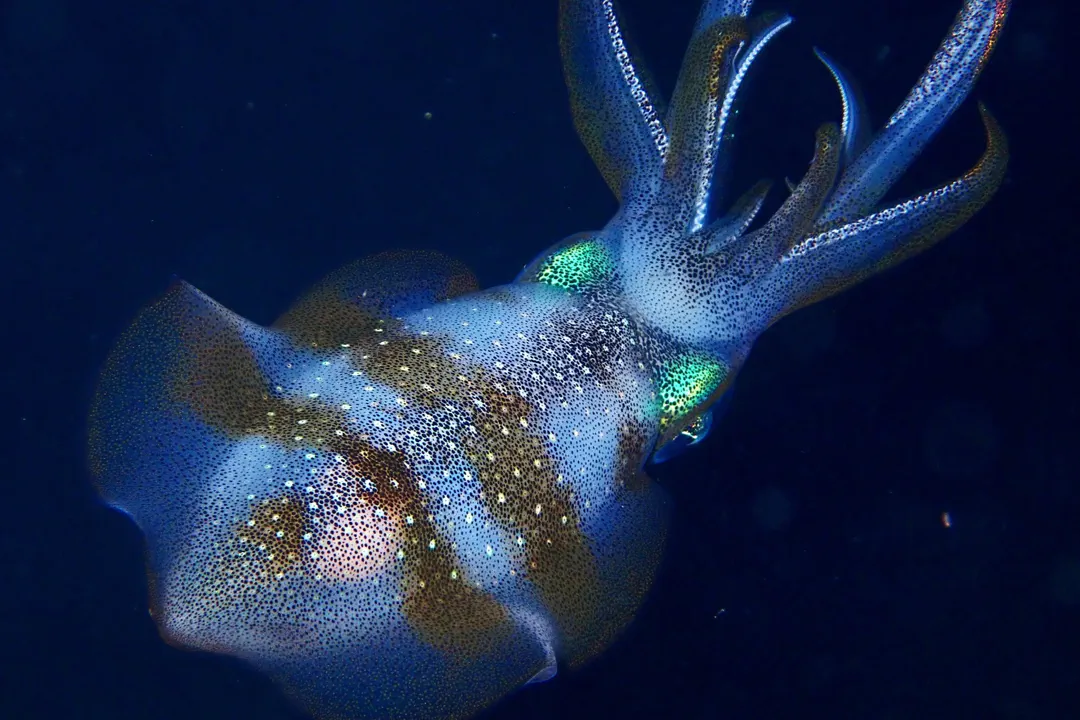 Jean-Paul BoerekampsCC0 · iNaturalist
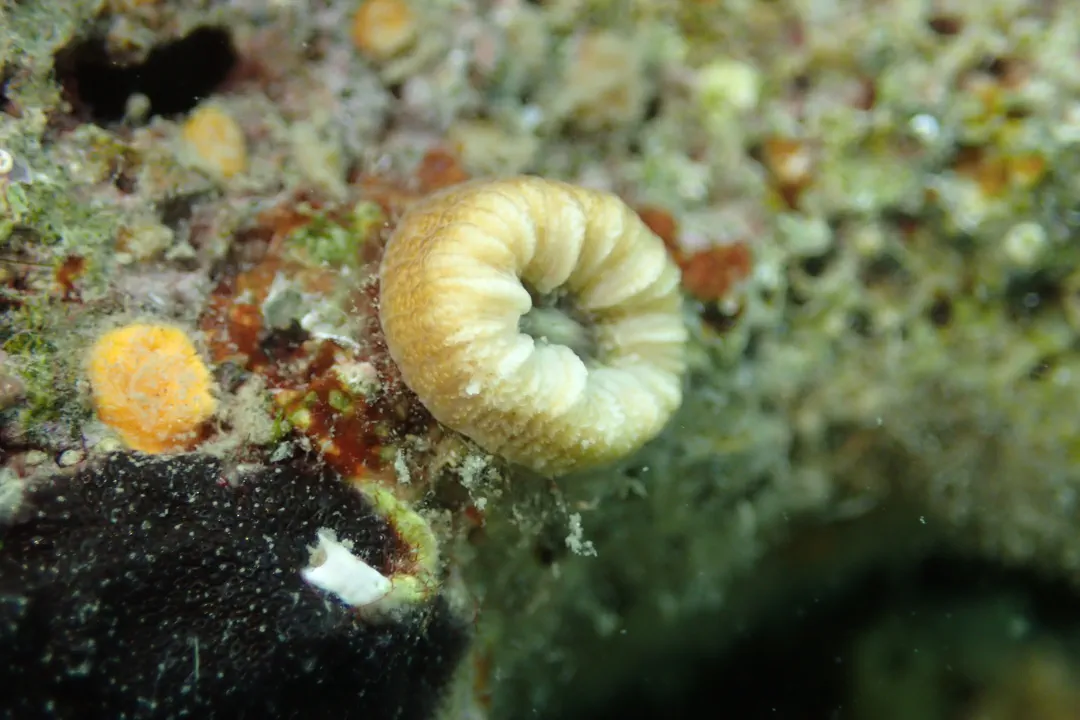 © Juraj AhelCC BY 4.0 · iNaturalist
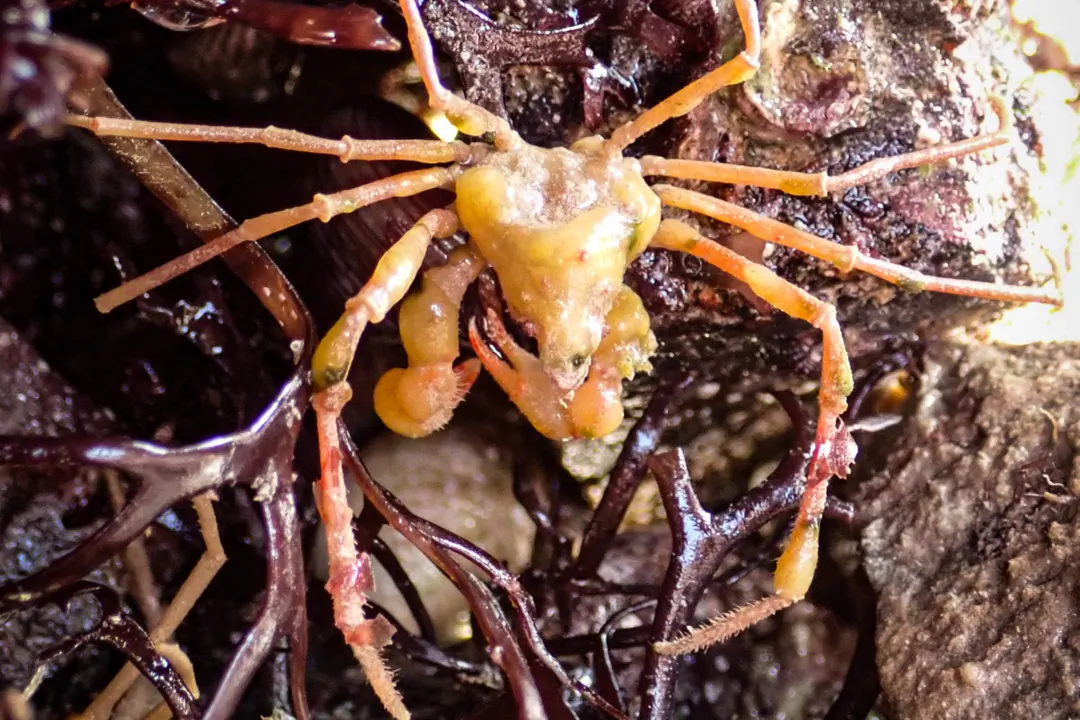 © Lou WagstaffeCC BY 4.0 · iNaturalist
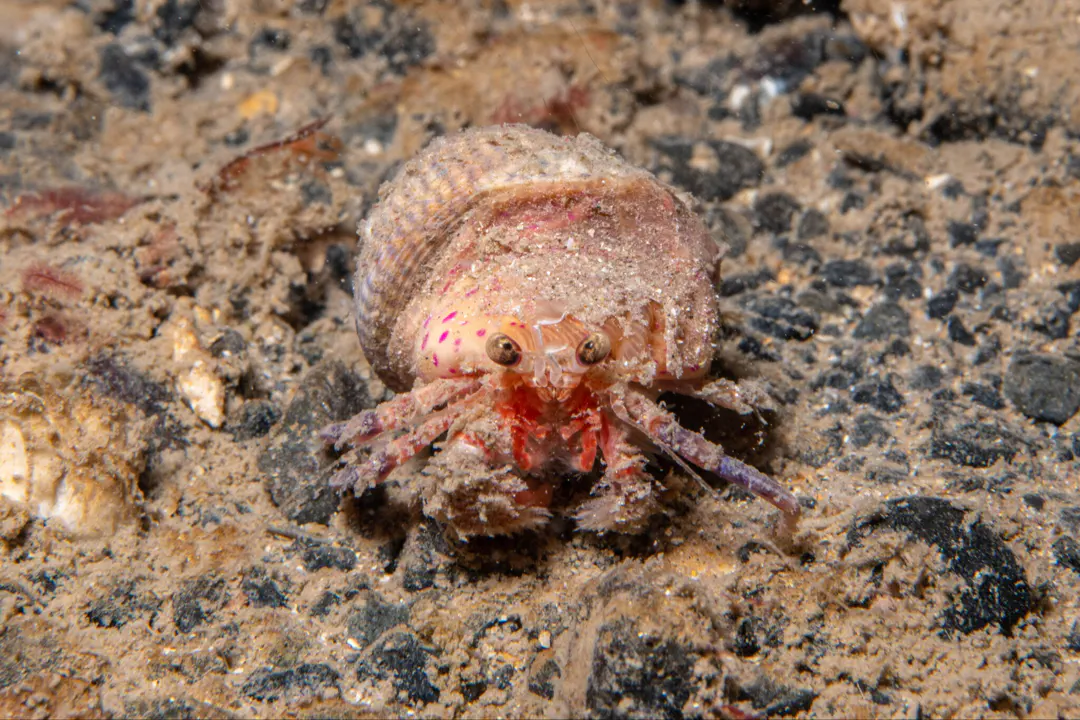 © Libby KeatleyCC BY 4.0 · iNaturalist
Getting There and Practical Tips
Cyprus is served by two international airports, located in Larnaca on the east coast and Paphos on the west coast. Larnaca Airport offers direct access to the MS Zenobia wreck and resort diving around Protaras and Ayia Napa. Paphos Airport provides convenient transit to Coral Bay, the Akamas Peninsula, and Limassol artificial reefs.
Wetsuit thickness depends heavily on the month of travel. A 3mm wetsuit or shorty is suitable for summer dives between July and September when water temperatures average 26°C to 28°C. During spring and autumn transitions, a 5mm suit is recommended, while winter diving requires 7mm exposure protection or a drysuit.
A hyperbaric chamber facility is located in Larnaca to handle decompression medical emergencies. Divers should confirm dive boat oxygen equipment and emergency contact protocols during pre-dive briefings. Carrying a surface marker buoy is essential when diving offshore wrecks or sites with boat traffic.
Questions
Are there sharks in Cyprus?
Sharks occur in the eastern Mediterranean, but encounters by recreational divers in Cyprus are uncommon. Species records include small dogfish and other deeper-water sharks, so shore dives rarely feature shark sightings. Divers should follow standard safety guidelines and avoid attempting to feed or attract marine wildlife.
Can you see turtles in Cyprus?
Yes, Cyprus waters support loggerhead turtles (Caretta caretta) and green turtles (Chelonia mydas). Sightings occur around shallow bays like Green Bay, seagrass beds, and the Akamas coastline from May to October. Divers should keep a respectful distance and avoid touching or chasing turtles as they surface to breathe.
Is it dangerous to swim in Cyprus?
Swimming and diving are very safe in designated coastal areas due to minimal tides and mild currents. Wind-driven surface waves and surge can develop near exposed rock formations, so checking local weather forecasts before entering the water is recommended. Beginners should remain within sheltered bays with surface marker buoys deployed.
How warm is the water in Cyprus?
Sea temperatures range from winter lows of 16°C in February up to 28°C in August and September. A 5mm or 7mm wetsuit provides adequate insulation in spring and autumn, whereas a 3mm suit is comfortable throughout peak summer months.
What certification do I need to dive the Zenobia wreck?
The upper section of the Zenobia sits at 16 metres and is accessible to Open Water certified divers under proper supervision. Deeper deck areas descending to 42 metres and interior cargo penetration require Advanced Open Water or technical wreck certifications along with conservative gas planning.
Is Cyprus suitable for beginner divers and snorkellers?
Cyprus is widely considered an ideal training ground due to warm summer waters, low currents, and clear visibility. Sheltered bays with shallow shore access provide stress-free conditions for introductory scuba courses and casual snorkeling excursions.