
At 14 meters along Shark Reef in the Red Sea, morning sun strikes a massive brain coral head. A pair of yellowtail butterflyfishes flutter their pectoral fins, hovering inches above the polyps to nibble delicately. Nearby, a heavy-bodied peacock grouper rests on a ledge, its lower jaw protruding into the moderate current while small damselfishes dart in and out of branching Acropora.
Mastering reef fish identification underwater becomes straightforward once you ignore fleeting color patterns and focus on anatomical structure. Water filters out red light past 10 meters depth, making shades shift dramatically, while juveniles and adults of the same species often share zero visual patterns. By assessing body depth, mouth orientation, tail shape, and swimming mechanics, divers can accurately group unfamiliar animals into their correct marine families within seconds of observation.
This guide breaks down the core identification markers for the most common tropical fish families, including butterflyfishes, angelfishes, wrasses, parrotfishes, surgeonfishes, and groupers. Whether you are snorkelling shallow lagoons in water between 24 and 30 °C or logging deep drop-offs down to 30 meters, recognizing family silhouettes lets you categorize underwater sightings immediately. Understanding these foundational traits transforms an overwhelming wall of fish into an orderly, recognizable ecosystem.
What Body Features Help Identify Coral Reef Fish Families?
Body silhouette serves as the primary sorting mechanism when encountering an unknown fish underwater. A pancake-flat disc suggests lateral compression found in butterflyfishes or angelfishes, whereas a streamlined cylinder indicates a wrasse designed for swift horizontal cruising. Observing body depth relative to total length narrows down the potential families instantly before finer details come into view.
Propulsion mechanics offer an equally reliable clue that works even from several meters away. Wrasses and parrotfishes row through the water using beat-like strokes of their pectoral fins while holding their tails completely rigid. In contrast, triggerfishes undulate their elongated dorsal and anal fins in a rhythmic wave pattern, reserving tail beats strictly for high-speed emergency escapes across open sand.
Mouth structure and jaw orientation reveal how an animal interacts with reef substrate and what food it targets. Downward-pointing snouts and tiny terminal mouths belong to pickers that harvest coral polyps or small invertebrates from narrow cracks. Heavy, wide jaws with a protruding lower mandible mark ambush predators that swallow whole prey, showing how form directly matches feeding behavior across different depth zones.
Environmental conditions like light penetration and water clarity further highlight why physical structure beats color as a field marker. In tropical seas where visibility fluctuates between 10 and 30 meters, vibrant blues and yellows fade into monochromatic grey as you descend deeper into the water column. Recording body profile, fin placement, and swimming style on a slate or camera creates a precise record for post-dive analysis.
How to Identify Butterflyfishes (Chaetodontidae)
Butterflyfishes belonging to the family Chaetodontidae display a distinct laterally compressed, pancake-thin profile that allows them to slip through tight coral branches. Their disc-like bodies are typically paired with a continuous dorsal fin running along the back and a small, square or rounded tail fin. Most species measure between 10 and 22 centimeters in length, maintaining a compact silhouette that makes them easy to spot across shallow reef flats.
The defining anatomical feature of butterflyfishes is their narrow, extended snout outfitted with fine, comb-like teeth tailored for precise picking. Many species forage continuously on living hard coral, plucking individual polyps from tiny calyxes without damaging the surrounding calcium carbonate skeleton. Their swimming motion features quick, fluttery adjustments using small pectoral fin pulses, allowing them to turn abruptly in mid-water while hovering over coral heads.
While markings like dark eye bars and tail spots are widespread, structural traits remain the most constant indicator across regional variations. Observing pair-bonding behavior provides an additional behavioral cue, as adult butterflyfishes often roam the reef in dedicated monogamous pairs. When logging sightings in the Seabook app, checking the relative snout length can help distinguish obligate coral feeders from species that target free-floating plankton.
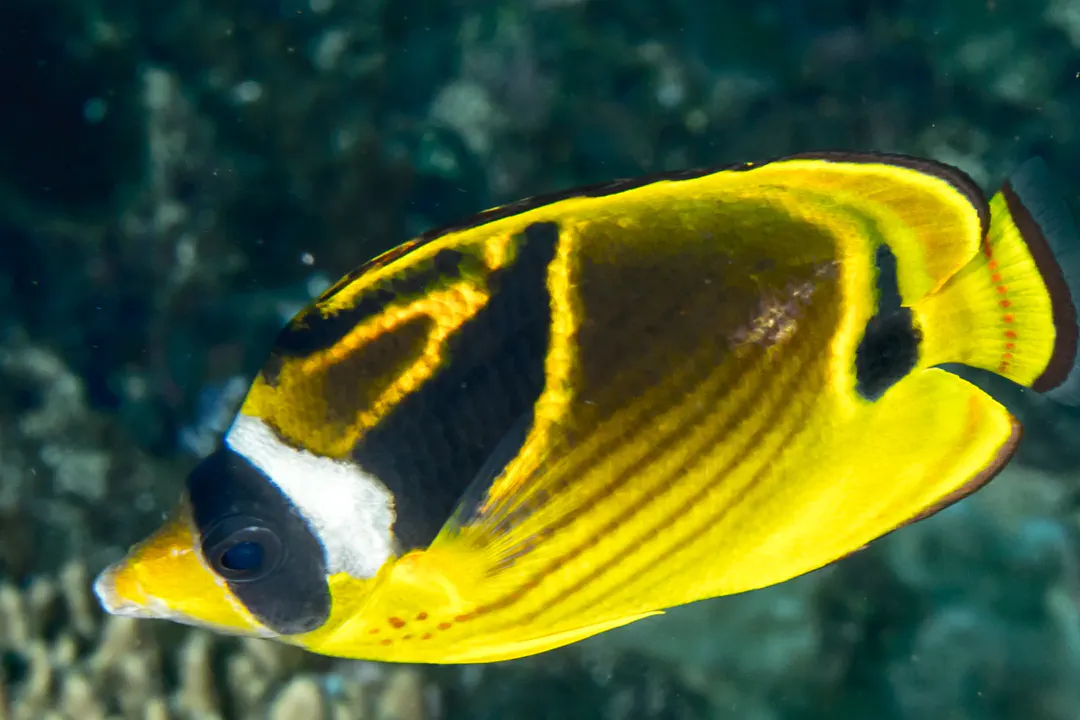 © Rickard ZerpeCC BY 4.0 · iNaturalist
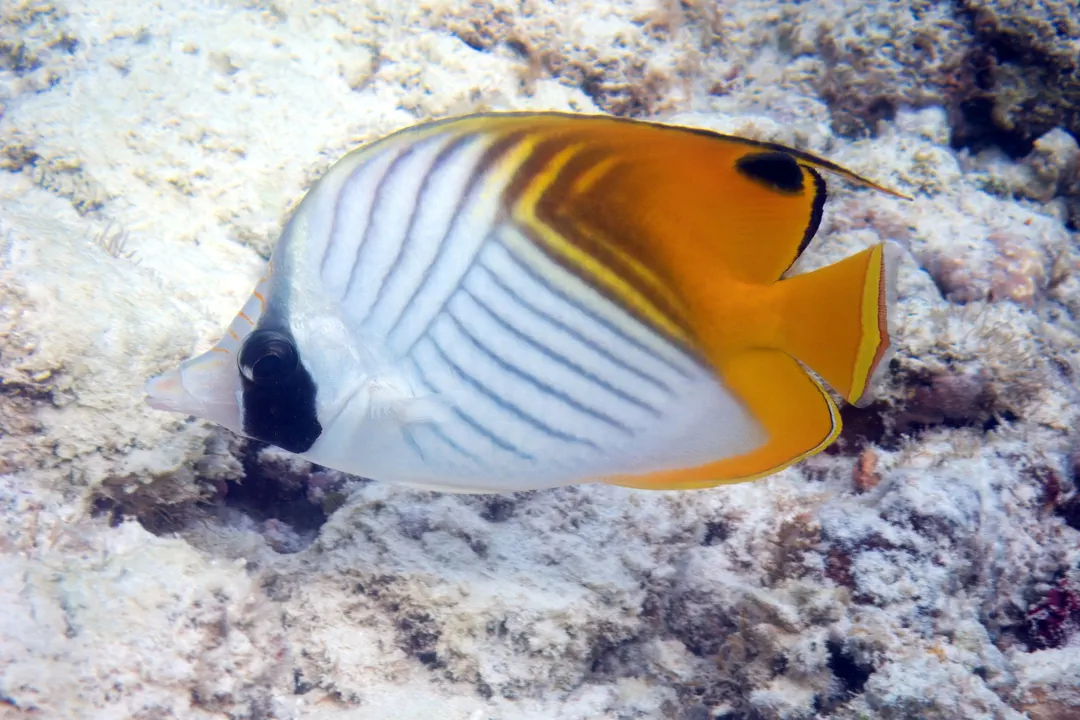 © Darren ObbardCC BY 4.0 · iNaturalist
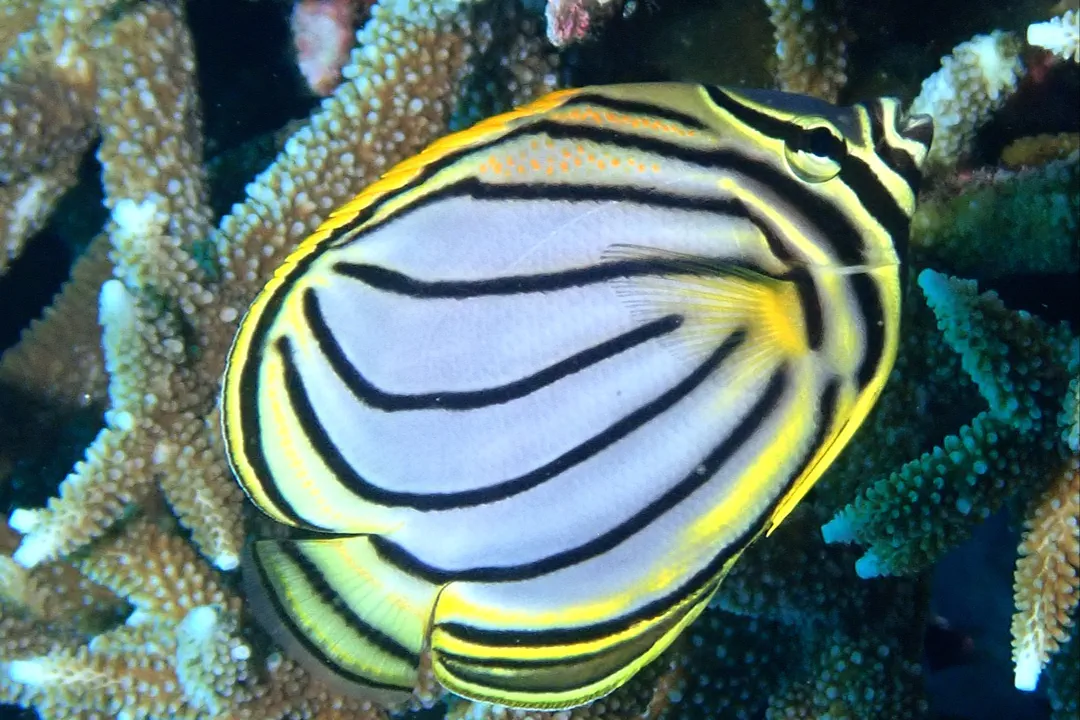 © desertnaturalistCC BY 4.0 · iNaturalist
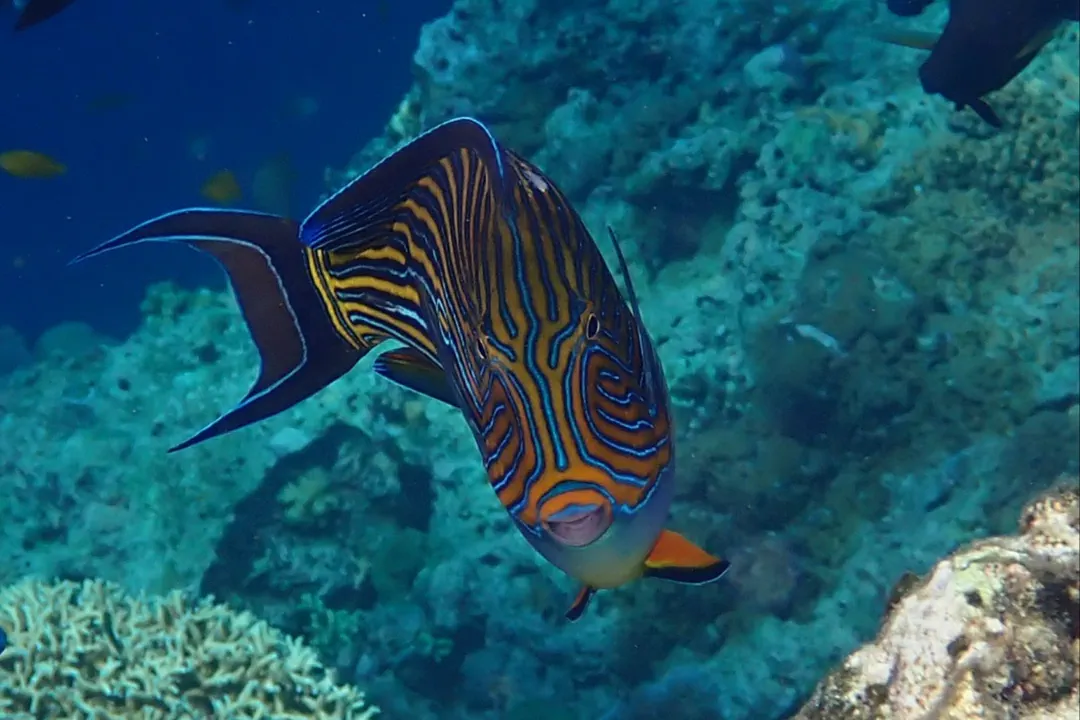
How to Distinguish Angelfishes (Pomacanthidae) from Butterflyfishes
Angelfishes in the family Pomacanthidae closely resemble butterflyfishes at first glance due to their deep, disk-shaped bodies and flattened sides. However, angelfishes generally reach larger overall sizes, with heavy-set foreheads and thicker muscular profiles. Their continuous dorsal and anal fins often extend backward into long, trailing filaments that give them an elegant silhouette as they glide along vertical reef drop-offs.
The definitive physical test to separate these two families lies on the gill cover. Every angelfish possesses a sharp, backward-pointing preopercular spine located on the lower margin of its cheek bone, a feature completely absent in butterflyfishes. This robust spine acts as a defensive anchor when the fish wedges itself inside coral caves, preventing larger predators from pulling it free.
Diets and vertical distribution also set angelfishes apart during dive observations. While butterflyfishes focus heavily on polyps, angelfishes feed extensively on tough sponges, tunicates, and benthic algae using specialized jaw structures. Diver observations require getting a broadside view from 2 to 3 meters away to clearly spot the cheek spine, especially on dark or heavily patterned specimens resting under overhanging ledges.
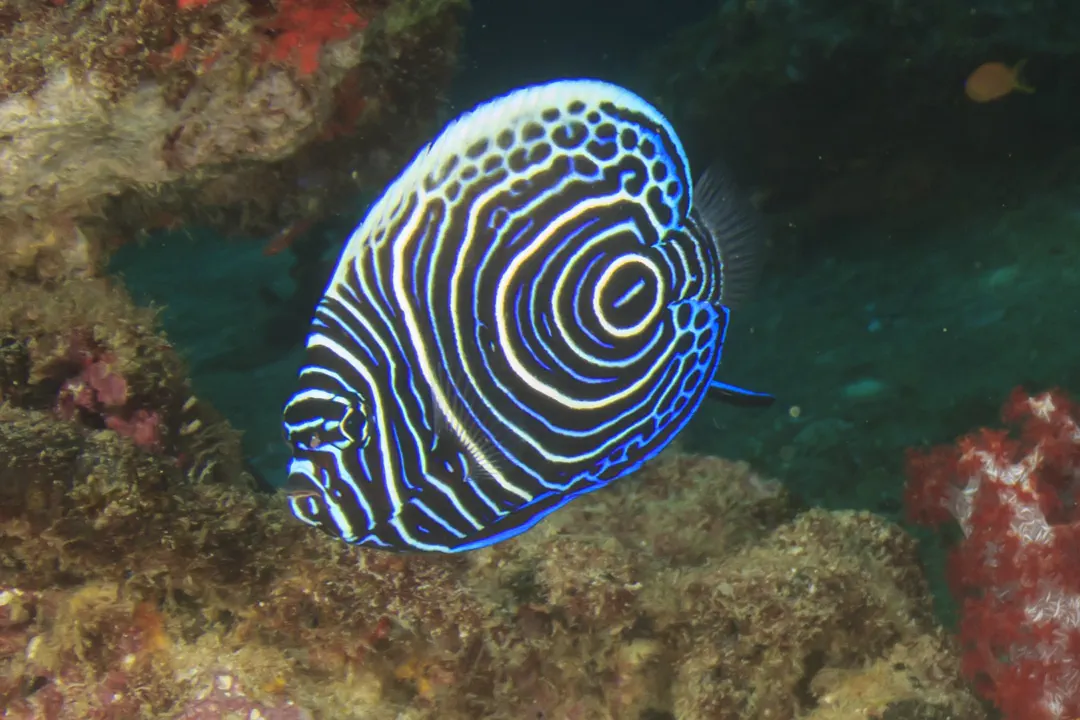 © seabook.appAll rights reserved
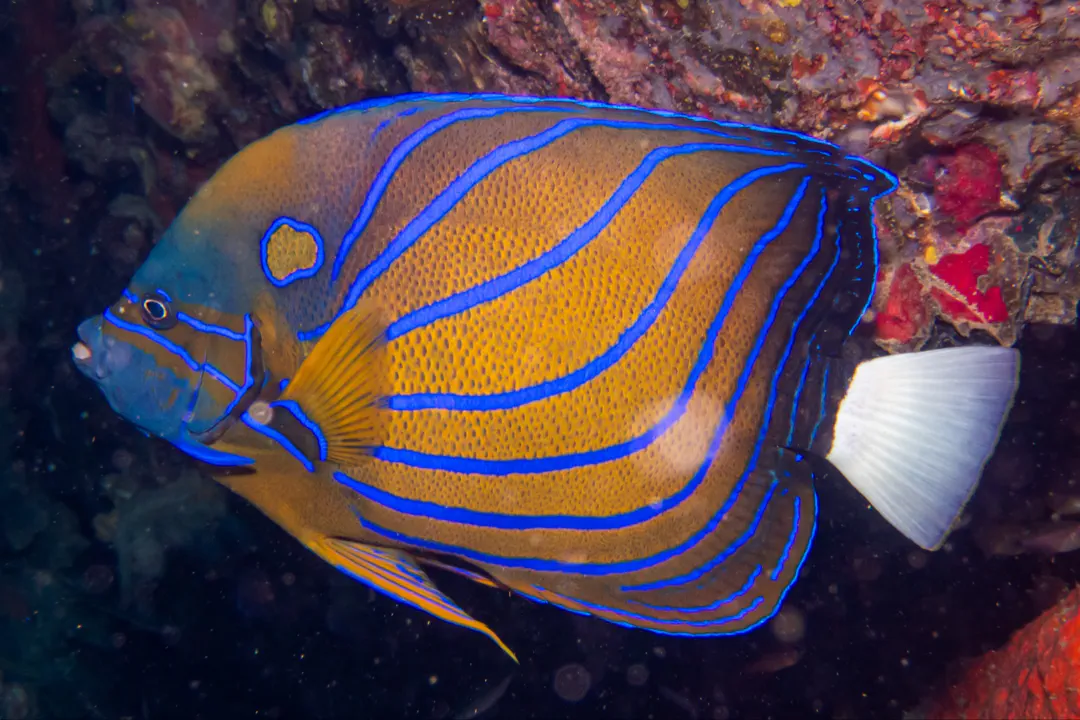 © portioidCC BY 4.0 · iNaturalist
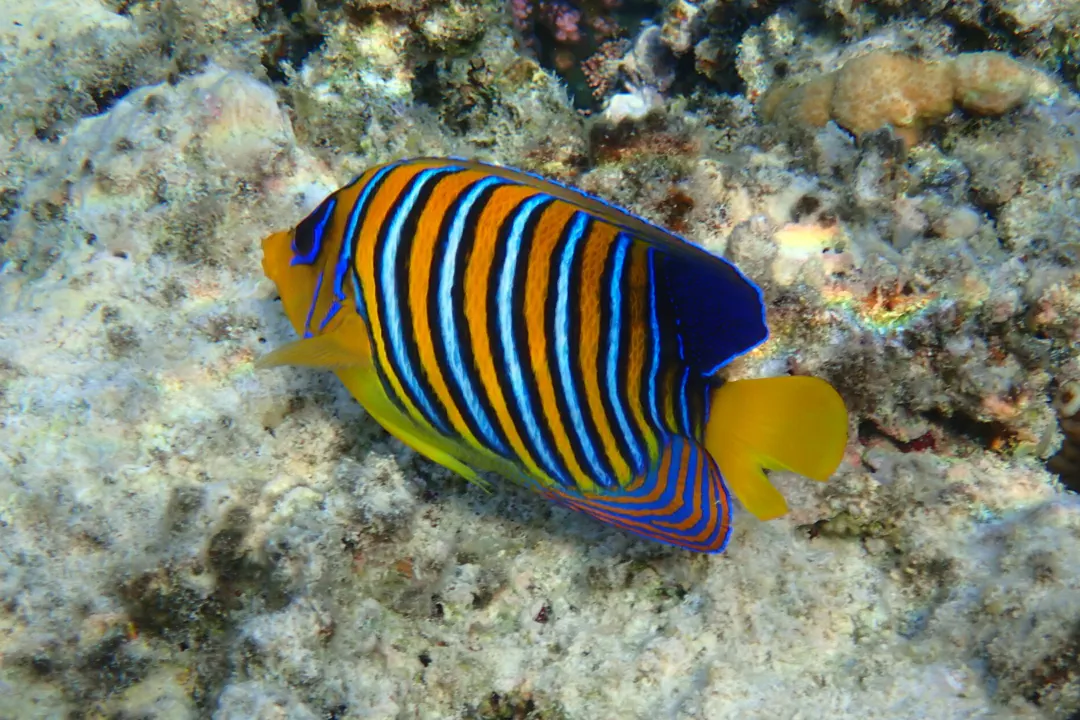 Andrew DeaconCC0 · iNaturalist
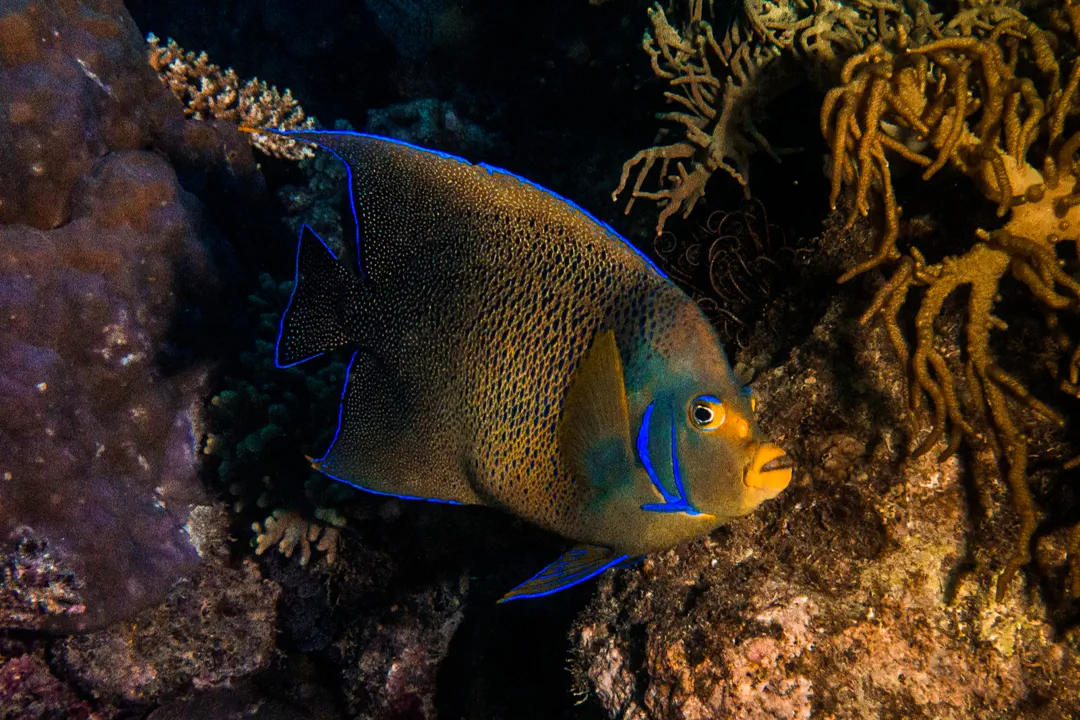 © João D'AndrettaCC BY 4.0 · iNaturalist
How to Identify Wrasses (Labridae) and Parrotfishes (Scaridae)
Wrasses and parrotfishes share an elongated, torpedo-shaped body plan optimized for agile maneuverability around rocky structures and coral heads. Both groups belong to the same broader lineage, exhibiting a characteristic rowing propulsion where pectoral fins flap in rhythm while the tail remains stationary. Their smooth, thick scales and streamlined profiles allow them to dart quickly into sand or coral crevices when threatened by open-water predators.
Parrotfishes diverge from standard wrasses through their highly specialized dental structures. Their teeth are fused together into a hard, bird-like beak capable of scraping microscopic algae directly off dead coral heads and limestone rock. This intense grazing action plays a vital role in reef mechanics, constantly clearing space for free-swimming coral larvae to settle and build new reef framework.
The bioerosion caused by parrotfish feeding produces massive volumes of clean sand. According to a 2015 study reported by the University of Exeter, parrotfishes produced more than 85% of new sand-grade sediment on surveyed outer reef flats around Maldivian reef islands. Furthermore, a 2021 study in Ecology and Evolution demonstrated that parrotfish sediment production varies among Maldivian reef-platform habitats, with the material consisting predominantly of eroded reef framework in coral-sand grain sizes.
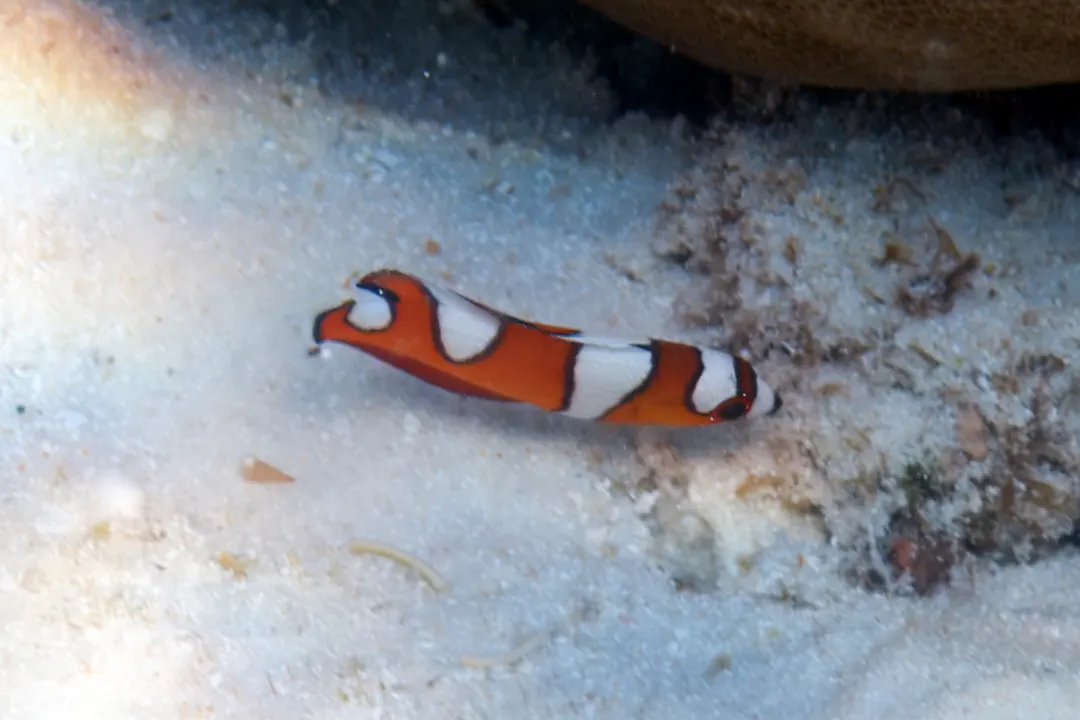 © Darren ObbardCC BY 4.0 · iNaturalist
Coris cuvieri
***Coris cuvieri***, the **African wrasse**, **African coris** or **false clowwrasse**, is a species of marine ray-finned fish from the wrasse family [Labridae](seabook://category?id=25405b19-27bd-48b...
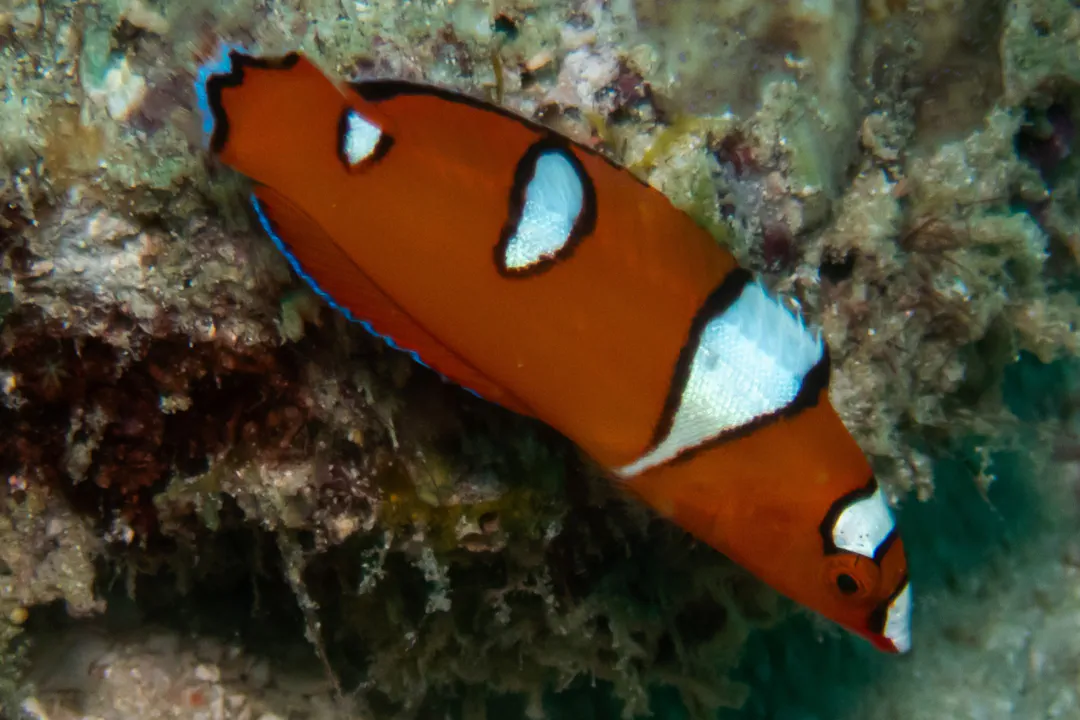 © portioidCC BY 4.0 · iNaturalist
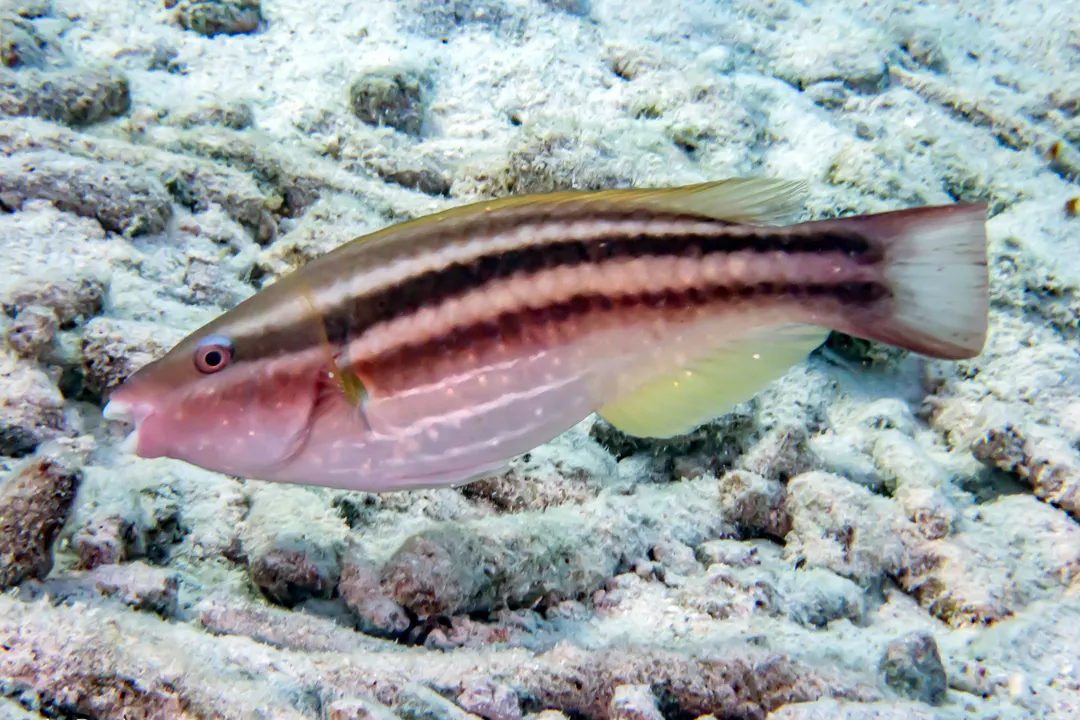 © Jay BrasherCC BY 4.0 · iNaturalist
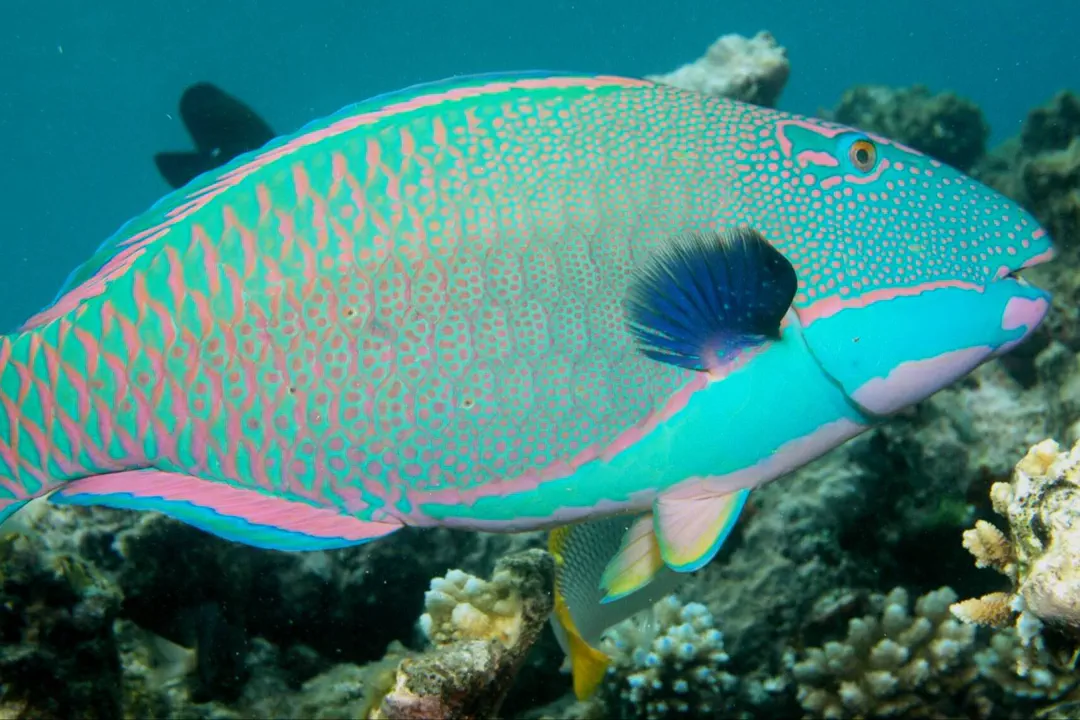 © Leonard LowCC BY 4.0 · iNaturalist
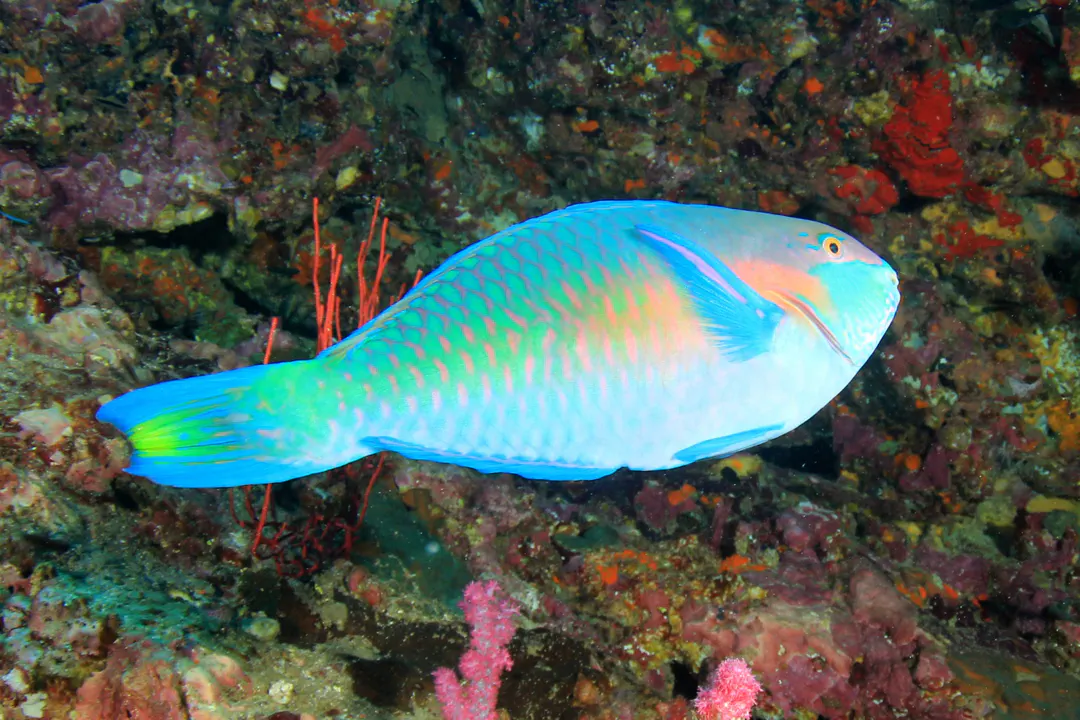 © seabook.appAll rights reserved
How to Spot Damselfishes and Anemonefishes (Pomacentridae)
Damselfishes and clownfishes of the family Pomacentridae are compact, oval-bodied reef residents rarely exceeding 15 centimeters in length. They feature high-backed, laterally compressed profiles with a single continuous dorsal fin spanning most of the spine. Their small size is balanced by steep body profiles and sturdy tail bases that enable instant acceleration over short distances.
High territoriality defines damselfish behavior underwater, offering an easy diagnostic clue for observant divers. Many damselfish species cultivate and defend small gardens of turf algae on dead coral branches, aggressively chasing away much larger herbivores that wander nearby. Anemonefishes expand this territorial trait by living in obligate symbiosis with sea anemones, nestling safely among stinging tentacles that ward off potential predators.
Recognizing pomacentrids relies on watching their movement relative to a fixed home structure. Unlike wider-ranging species that patrol large areas of the reef, damselfishes rarely travel more than a couple of meters from their designated shelter crevice or host anemone. Keeping a respectful distance of 1 to 2 meters prevents defensive charges and allows divers to observe their energetic hovering and feeding behavior in calm water.
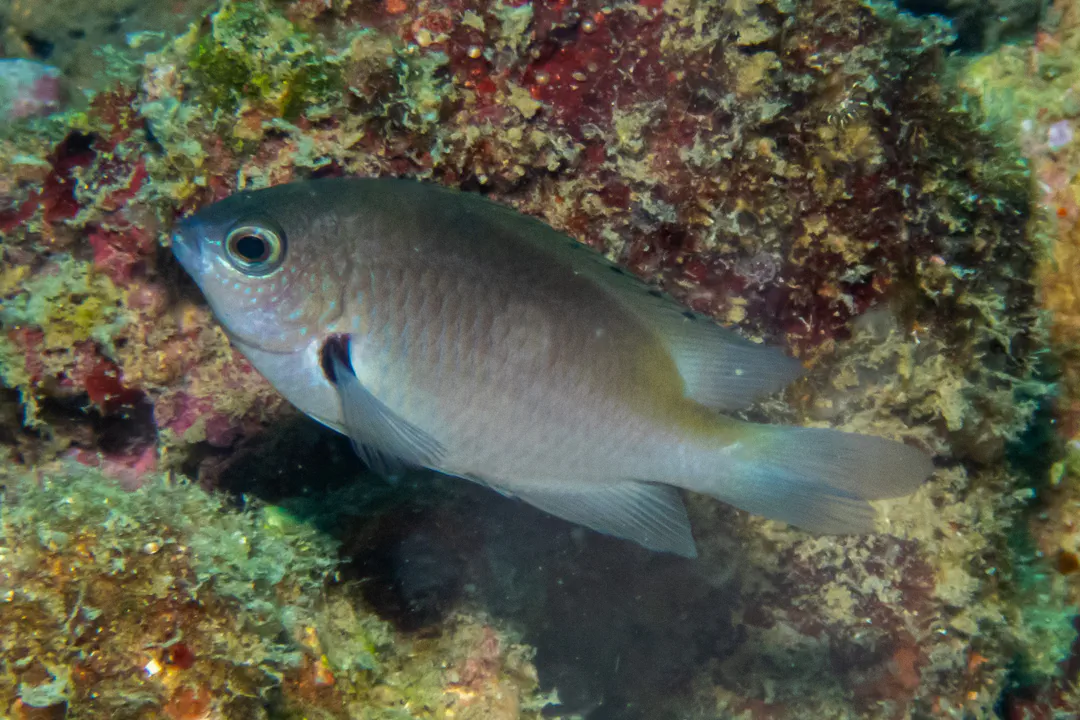 © portioidCC BY 4.0
Pomacentrus alexanderae
*Pomacentrus alexanderae* is a species of marine damselfish in the family [Pomacentridae](seabook://category?id=1f361bc0-beab-4b6b-bf7f-f68ac5d19588). ## Description It has a pale greyish body with a ...
How to Recognize Surgeonfishes and Tangs (Acanthuridae)
Surgeonfishes and tangs within the family Acanthuridae carry a deep, oval body silhouette paired with flat sides and small, high-set eyes. Their bodies taper sharply toward a narrow caudal peduncle, leading into a crescent-shaped or truncate tail fin. A low, small terminal mouth equipped with specialized cropping teeth sits at the front of a steep head profile.
The signature anatomical characteristic of acanthurids is the sharp, scalpel-like spine folding into a groove on either side of the tail base. When threatened or displaying dominance, the fish flexes its tail laterally, extending these razor-sharp spines outward as formidable defensive weapons. These blades can inflict clean, painful cuts on careless handlers or competing fish, giving the family its common name.
Most surgeonfishes swim in energetic schools across shallow reef flats and steep outer slopes in depths between 2 and 30 meters. They use synchronized pectoral movements to graze continuously on filamentous algae covering hard substrate, preventing algal blooms from smothering live coral polyps. Maintaining neutral buoyancy 2 meters away ensures divers can watch these swift grazers without disrupting their vital maintenance work on the reef.
 © seabook.appAll rights reserved
 © Petr KnotekCC BY 4.0 · iNaturalist
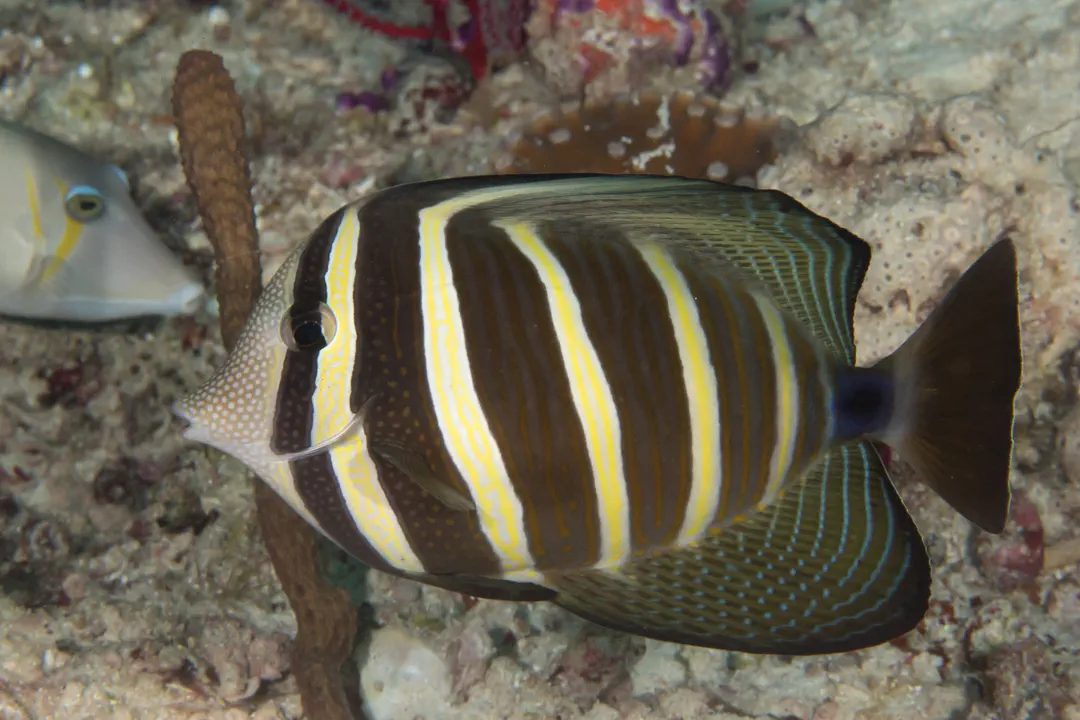 © Rickard ZerpeCC BY 4.0 · iNaturalist
How to Identify Triggerfishes (Balistidae)
Triggerfishes of the family Balistidae are recognized by their distinct rhomboidal, wedge-shaped bodies covered in tough, armor-like scales. Their eyes sit far back on a large, elongated head, protecting them while their strong jaws crush hard-shelled invertebrates like sea urchins and crabs. This sturdy, leathery skin provides complete protection against coral scrapes and spine punctures during feeding.
Swimming technique in triggerfishes is entirely unique and easily spotted from a distance. They propel themselves through the water by undulating their large, symmetric dorsal and anal fins sideways in a fluid wave, keeping the main body completely rigid. The caudal fin is reserved almost exclusively for sudden, powerful bursts of acceleration when fleeing danger or defending territory.
Defensive armor in triggerfishes includes a specialized locking dorsal spine mechanism used inside reef crevices. When threatened, the fish wedges itself inside a tight hole and erects its stout first dorsal spine, locking it rigidly into place using a smaller second spine. Divers should maintain a wide margin of 3 to 5 meters around nesting triggerfishes, as larger species will aggressively defend an inverted cone of water extending toward the surface.
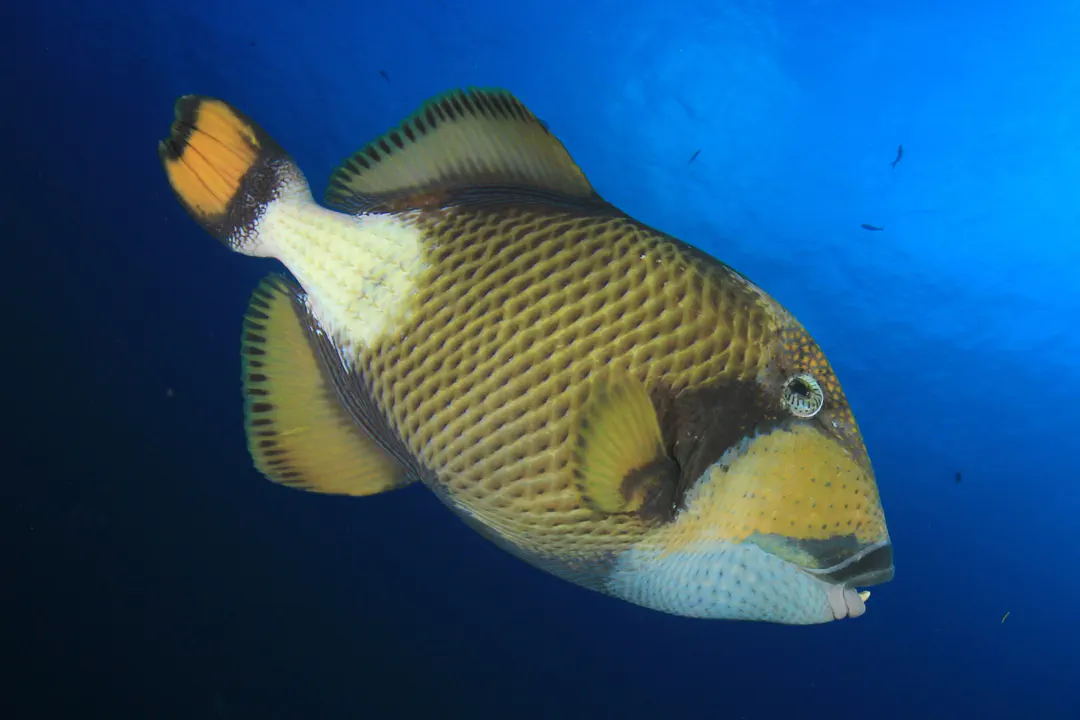 © seabook.appAll rights reserved
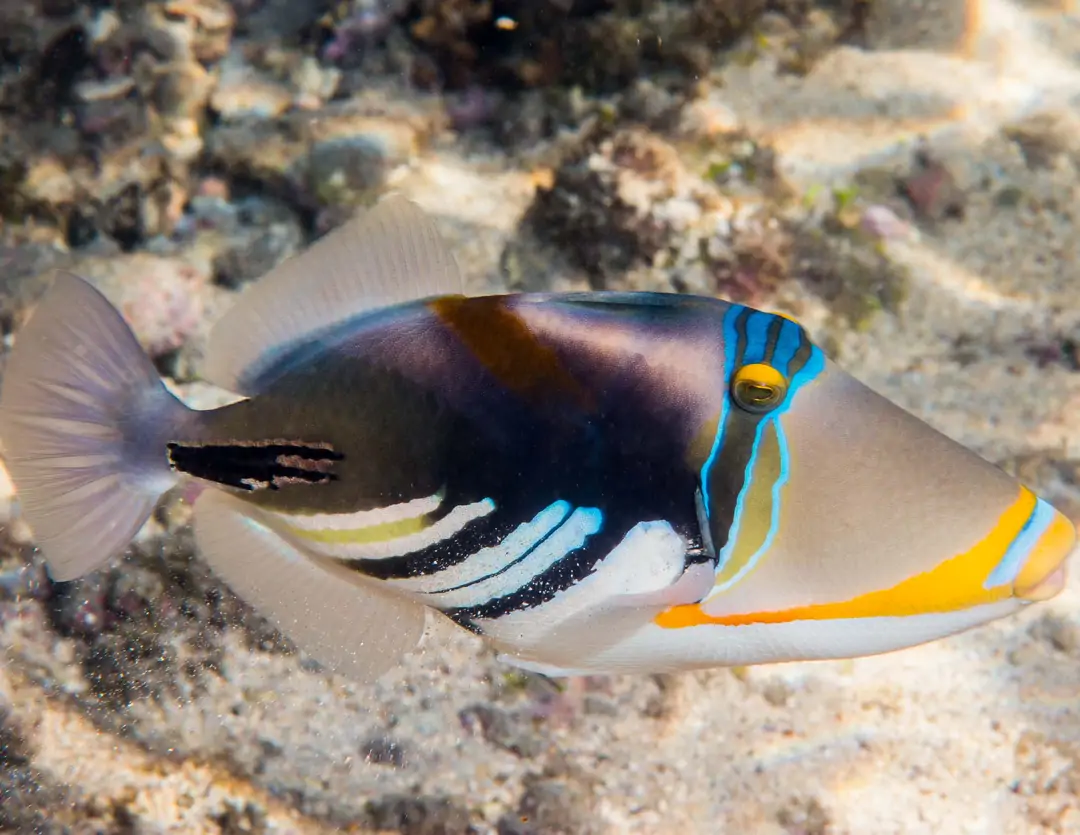 © Francois LibertAll rights reserved
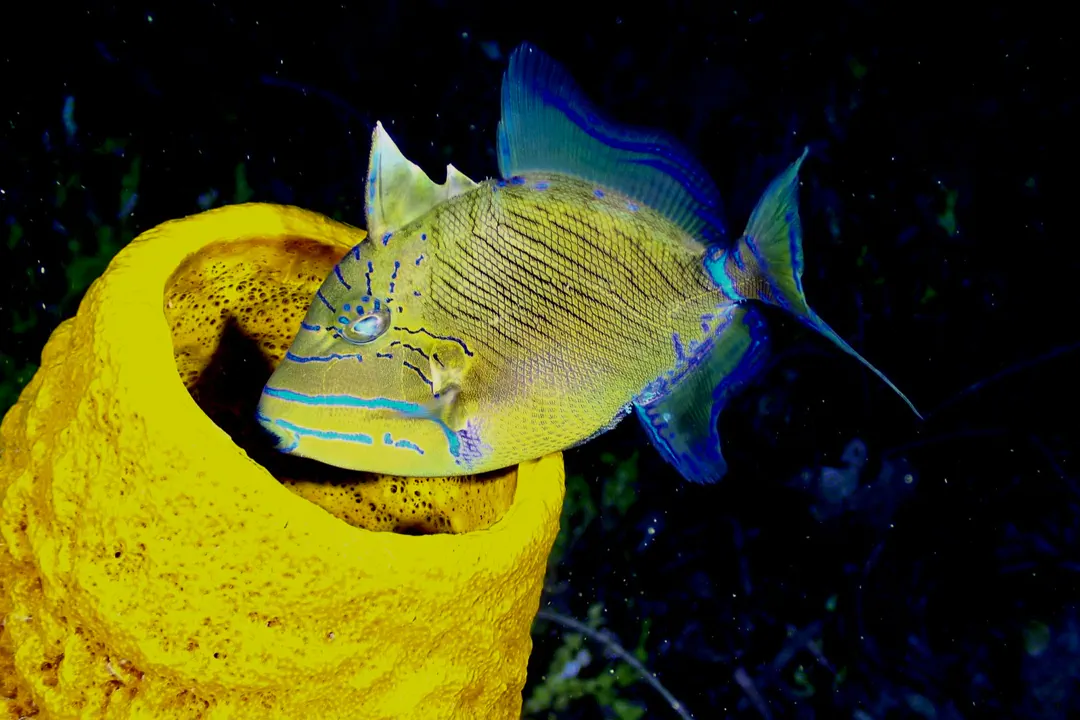 © Robin WhiteCC BY 4.0 · iNaturalist
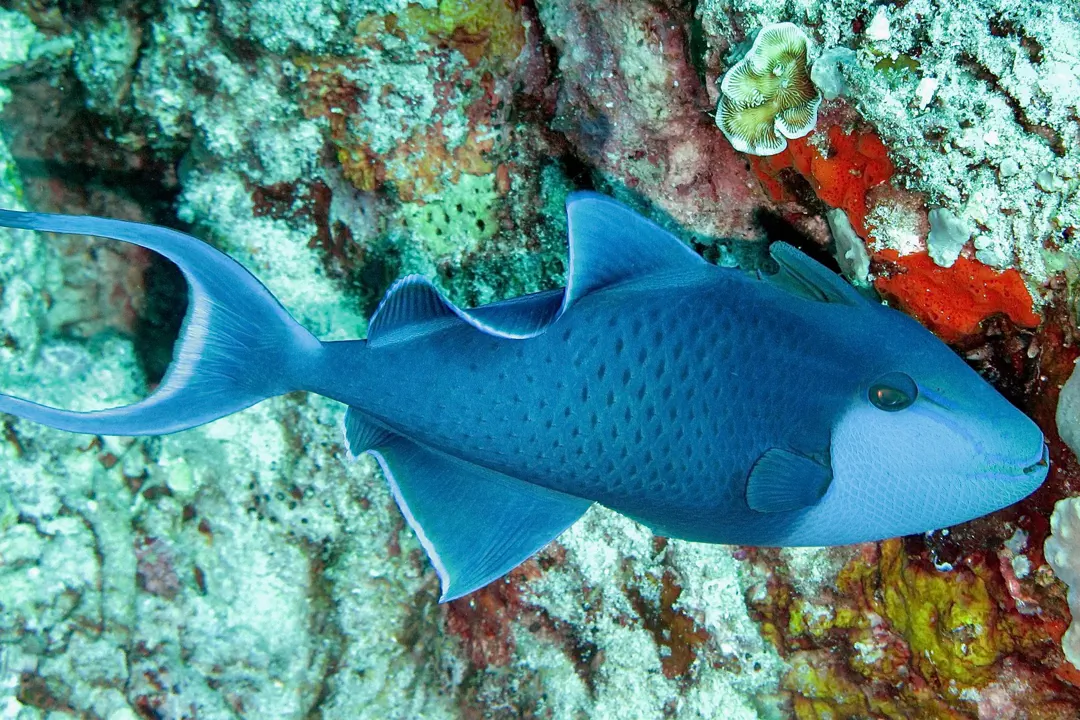 © Bernard DUPONTCC BY 4.0 · iNaturalist
How to Recognize Groupers and Seabasses (Serranidae)
Groupers and sea basses belonging to Serranidae feature heavy-set, robust bodies built for power rather than speed. Their profiles are deep and muscular, featuring broad heads, large gill covers, and wide, rounded tail fins. Unlike delicate reef pickers, groupers maintain a stationary posture, hovering motionless near ledges, cave entrances, or large coral bommies.
The head of a grouper is dominated by a cavernous mouth lined with small, inward-pointing teeth and a prominently projecting lower jaw. This suction-feeding apparatus allows the fish to drop its mouth floor rapidly, drawing in water and unsuspecting prey like a powerful vacuum cleaner. Their cryptic color patterns provide effective camouflage against dark reef overhangs, allowing them to ambush passing fish without moving.
Most groupers are solitary ambush predators occupying defined depth zones from shallow 5-meter reefs down past 50 meters. Observing these heavy fish requires slow, deliberate movements, as sudden fin kicks will cause them to retreat deep into dark limestone caverns. They play an essential ecological role as apex predators, keeping prey populations healthy and maintaining natural balance across tropical marine environments.
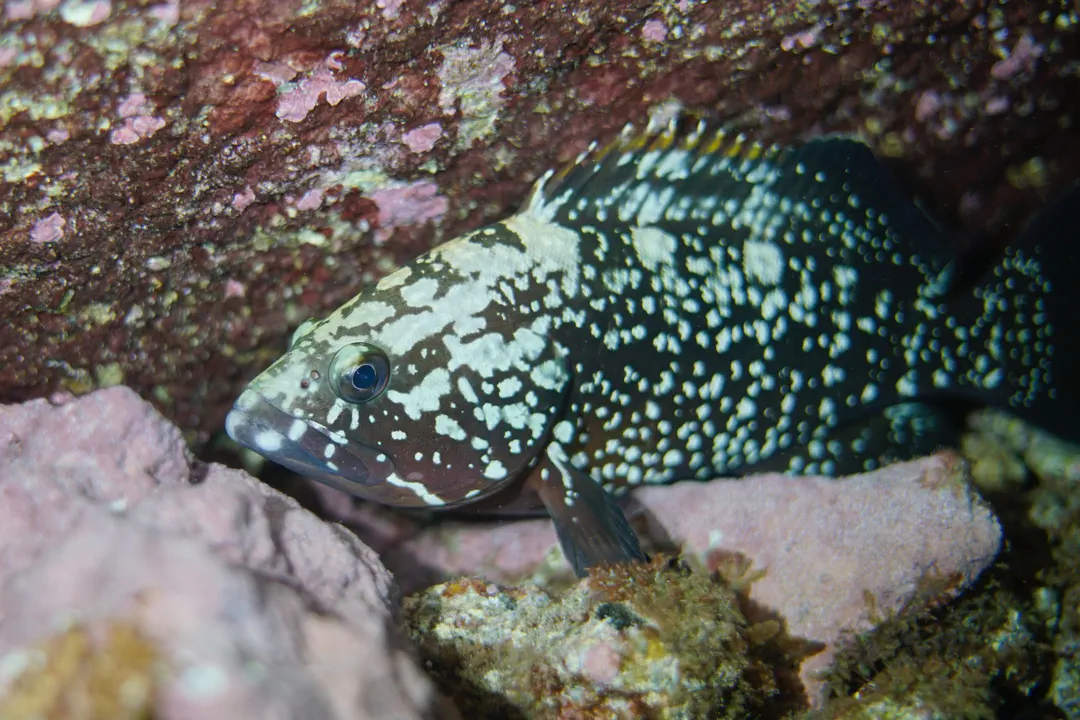 © Michael BommererCC BY 4.0 · iNaturalist
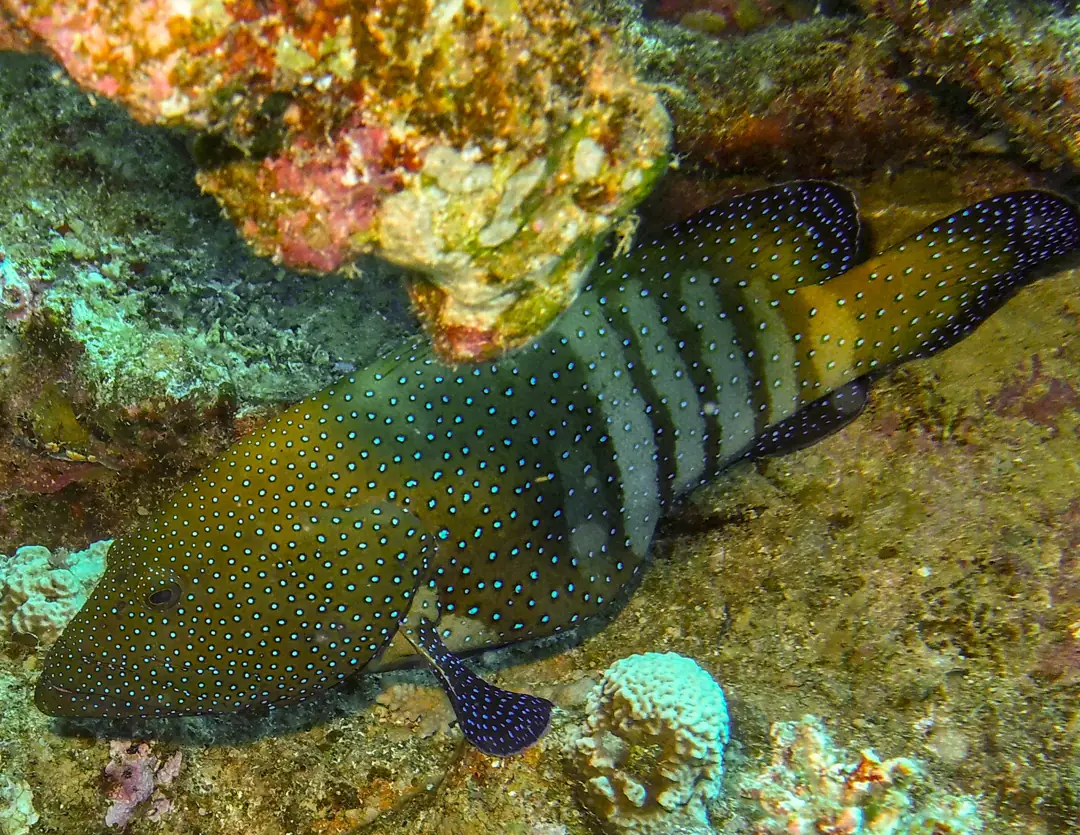 © Lesley ClementsAll rights reserved
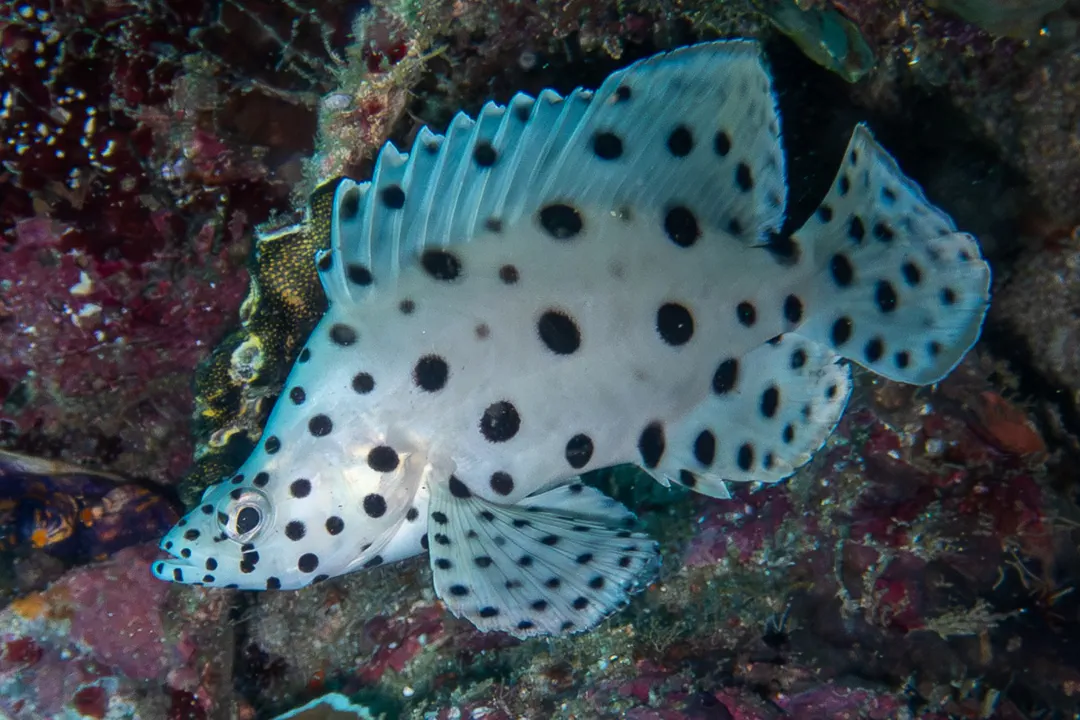 © Piotr LukasikCC BY 4.0 · iNaturalist
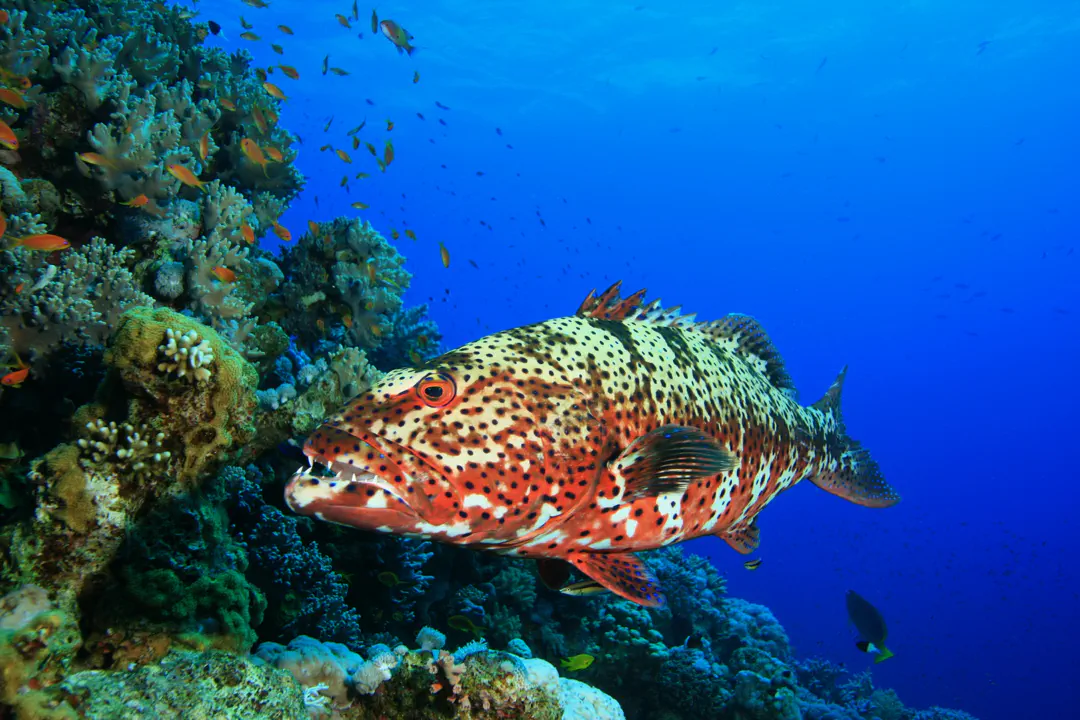 © seabook.appAll rights reserved
Questions
What is the easiest way to start identifying fish underwater?
Start by analyzing the overall silhouette, body depth, mouth placement, and fin movement before examining color patterns. Assigning an unknown specimen to its correct fish family first makes narrow species identification far easier. Divers should record physical structure, depth, and swimming mechanics on an underwater slate for accurate post-dive reference.
How can I tell a butterflyfish from an angelfish?
Examine the lower edge of the gill cover for a prominent, backward-pointing preopercular cheek spine, which is present on all angelfishes but completely missing on butterflyfishes. Angelfishes also tend to feature larger, deeper bodies with trailing fin filaments. Observing the head profile from a side angle 2 meters away provides instant clarification.
Why do parrotfish and wrasses swim similarly?
Parrotfishes belong to the subfamily Scarinae within the wrasse family Labridae, sharing a common evolutionary lineage and swimming mechanics. Both families rely almost entirely on their pectoral fins to row through the water while holding their caudal fin rigid. This shared propulsion style provides agile maneuvering around branching corals and complex reef topography.
Are surgeonfish dangerous to divers?
Surgeonfish are completely non-aggressive toward divers, but the sharp caudal spines near their tail base can cause deep lacerations if the fish is cornered or handled. Divers should maintain a respectful distance of 1 to 2 meters and avoid placing hands near the tail. Seeking prompt medical attention is necessary if a minor cut occurs on the reef.
Why do juvenile reef fish look so different from adults?
Juvenile reef fish adopt dramatically different color patterns and body markings to reduce territorial aggression from established adults of their own species. Distinct juvenile coloration also provides specialized camouflage against predators in shallow nursery habitats like mangrove roots and lagoon seagrass beds. As the fish matures into an adult, these markings transform to signal social rank and breeding readiness.
Sources
- University of Exeter · 2026-09-23
- Quantifying production rates and size fractions of parrotfish ... · 2021-11-03

