At a depth of 20 meters inside Mary’s Place, deep volcanic fissures split the limestone shelf into narrow shadow-drenched corridors. Sunlight filters down through blue water, illuminating massive barrel sponges and black coral branches protruding from vertical rock faces. A blackcap basslet swims upside down against an overhang while gentle currents push cool ocean water through the crevices. Slender gorgonian sea fans sway rhythmically against the drop-off as the reef plunges into the abyss below.
Scuba diving in Roatan provides access to the southern extension of the Mesoamerican Reef, an underwater system spanning more than 1,000 kilometers across the western Caribbean. The best months to dive around the island run from March to September, when dry weather maintains calm seas and predictable conditions. Water temperatures remain warm throughout the year, ranging between 26°C in winter and 30°C in late summer. Underwater visibility routinely reaches 15 to 30 meters, though localized rain during the late autumn months can temporarily reduce clarity near shallow bays.
Divers visit prominent sites such as Mary's Place, the El Aguila wreck, Cara Cara, West End Wall, and Mandy's Eel Garden to experience varied underwater terrain. The surrounding waters harbour Caribbean reef sharks, hawksbill sea turtles, spotted eagle rays, goliath groupers, and colonies of garden eels along sandy plateaus. Calm entry points along the western shore create ideal conditions for beginner training and snorkellers, while sheer outer drop-offs cater to experienced divers seeking deeper profiles.
What Is Diving in Roatan Like?
Roatan is an island measuring roughly 60 kilometers in length and 5 kilometers across at its widest point, positioned along the edge of a deep oceanic trench. This geography creates dramatic vertical walls that begin just minutes from shore, allowing boats to reach deep drop-offs without long transit times. Massive pillar corals, brain corals, and sea whips cover the shallow plateaus, creating sheltered habitats for juvenile reef fish before the seabed drops steeply past 30 meters.
Water conditions around the island are largely defined by protected lee shores along the western and southern coasts. Gentle surface currents mean divers spend less energy navigating routes, making long bottom times standard across most recreational sites. Visibility averages 20 meters during settled weather, allowing clear lines of sight along wall edges where pelagic species drift past encrusted sponges.
Because the reef structures sit so close to land, dive operations run short surface intervals on shore or aboard customized local vessels. Novice divers can practice skills on calm 6-meter sand flats, while advanced divers move directly to deep fissures, caverns, and artificial structures. The proximity of varied depths within a single geographic area allows divers of different technical backgrounds to explore the same coastal stretch easily.
Best Time to Dive in Roatan
The optimal window for diving in Roatan occurs during the dry season, which extends from March through September. During these months, minimal rainfall reduces runoff along the coast, keeping visibility high and water conditions placid. Trade winds remain predictable, allowing dive boats easy access to both north-shore and south-shore sites without encountering heavy swells.
The rainy season begins in October and runs through February, bringing periodic cold fronts known locally as 'nortes' from the north. These weather systems can generate waves on the northern shore, though boat captains easily shift operations to sheltered south-coast bays. Rain squalls during this period can temporarily lower visibility in shallow areas, but deep wall profiles remain clear and clear of surface surge.
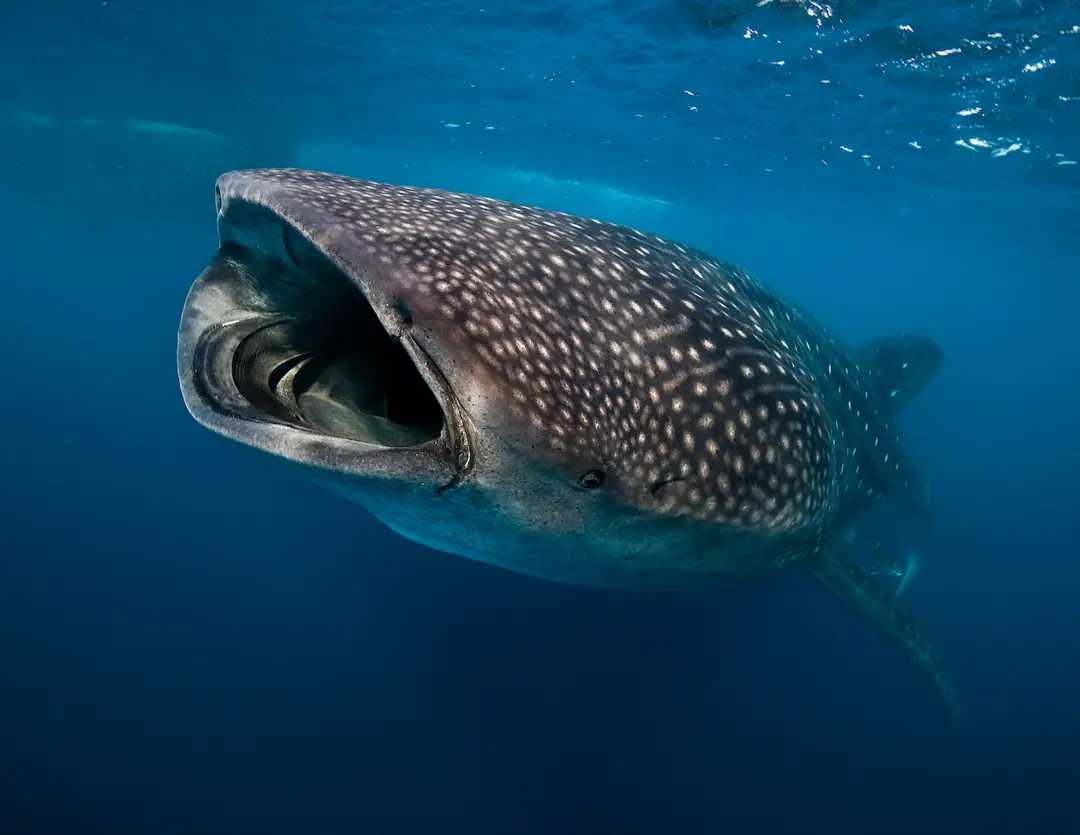
Seasonal wildlife sightings follow subtle environmental shifts across the Bay Islands. Whale sharks travel through the deep oceanic channels separating Roatan from nearby Utila, with encounters reported most frequently between February and May. Plankton blooms during spring months attract filter-feeding ocean giants, giving attentive divers occasional surface and mid-water sightings along deep outer reef drop-offs.
Roatan Water Temperature by Month
Water temperatures in Roatan remain tropical throughout the entire calendar year, fluctuating by only four degrees Celsius between winter and summer. The coolest water temperatures arrive in January and February, hovering at 26°C. Temperatures slowly rise through spring, reaching 28°C by May and peaking at 30°C in August and September.
Thermal protection requirements depend on individual cold tolerance and the number of dives planned per day. During late summer when surface layers heat up, a simple 1mm skin or 3mm shorty wetsuit provides sufficient insulation for multiple 50-minute dives. In winter, a full 3mm wetsuit helps retain body heat over repetitive profiles, especially when diving deeper wall sites where thermoclines can drop temperatures slightly below surface readings.
Wind chill during surface intervals can also affect body temperature, particularly during the breezy months of December and January. Wearing a boat coat or windproof jacket between descents keeps divers comfortable before jumping back into the water. Constant warm temperatures keep marine life active across all twelve months, ensuring year-round access to the island's coastal ecosystems.
Best Dive Sites in Roatan
Roatan's dive sites spread along its extensive coastline, offering distinct sub-environments shaped by wind exposure and geological features. The western tip and southern shore feature shear drops, intricate swim-throughs, and artificial structures resting on deep sand beds. North-coast sites consist of gentler reef slopes, shallow coral gardens, and spur-and-groove formations that shelter small macro life.
Boat rides from local dive docks are exceptionally short, rarely exceeding 5 to 15 minutes. This proximity allows dive centers to return to shore between single-tank dives, giving guests flexible schedules and comfortable surface intervals. Sites along the south coast offer protection when northern winds blow, ensuring that dive operations run continuously regardless of shifting weather patterns.
Whether exploring historical cargo ship hulls, hovering along quiet eel beds, or stepping into dark vertical chutes, each site presents distinct depth profiles and marine inhabitants. Selecting dive sites based on current conditions and skill levels guarantees safe, rewarding underwater profiles across every region of the island.
Mary's Place (Roatan): Deep crevices and black coral
Mary's Place is defined by a series of narrow, vertical crevasses formed by ancient volcanic activity along the south coast. Divers drop onto a coral plate at 12 meters before entering narrow rock fractures that plunge past 30 meters. The sheer rock walls inside these passages block direct sunlight, creating shaded environments where delicate deep-water sea fans and black coral colonies flourish.
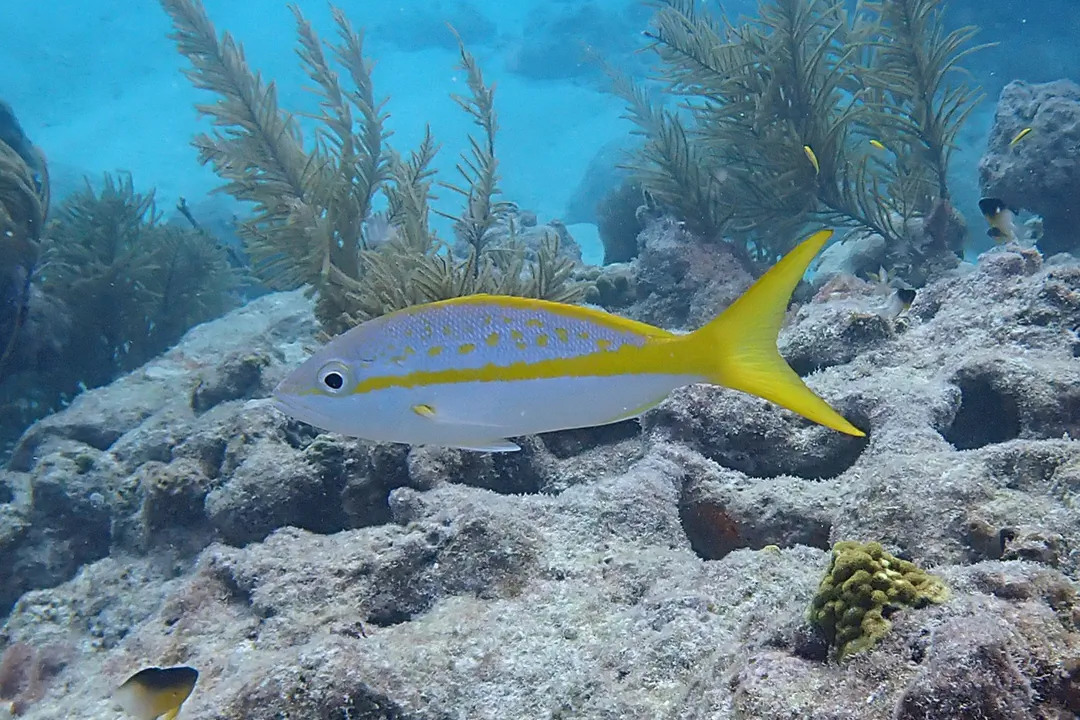
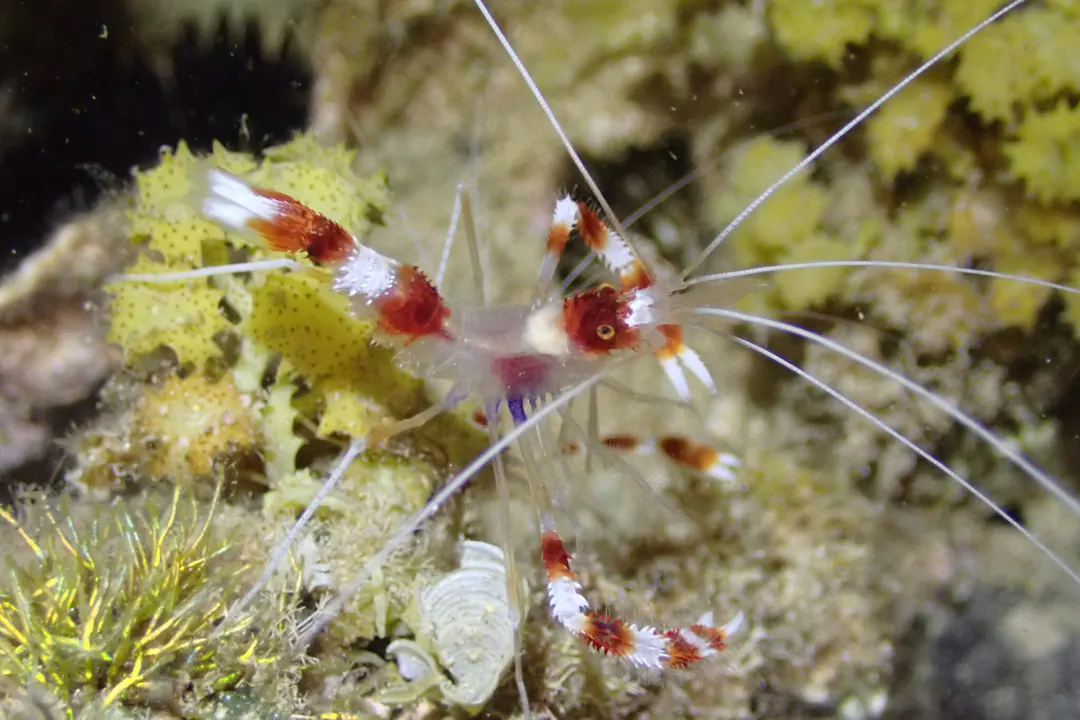
Navigating through these tight swim-throughs requires accurate neutral buoyancy to protect fragile encrusting marine life. Sunlight streams through top openings in the rock, casting brilliant blue light beams down onto schooling yellowtail snappers and hidden glassy sweepers. Looking into shaded overhangs reveals spotted spiny lobsters and banded coral shrimp resting in limestone crevices.
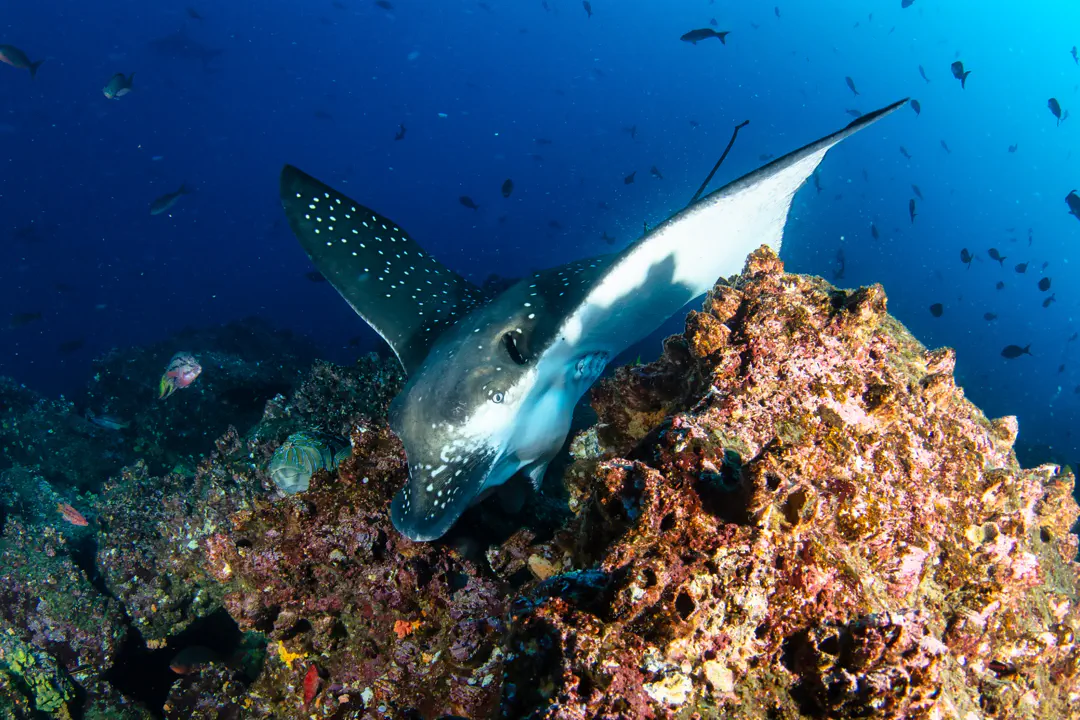
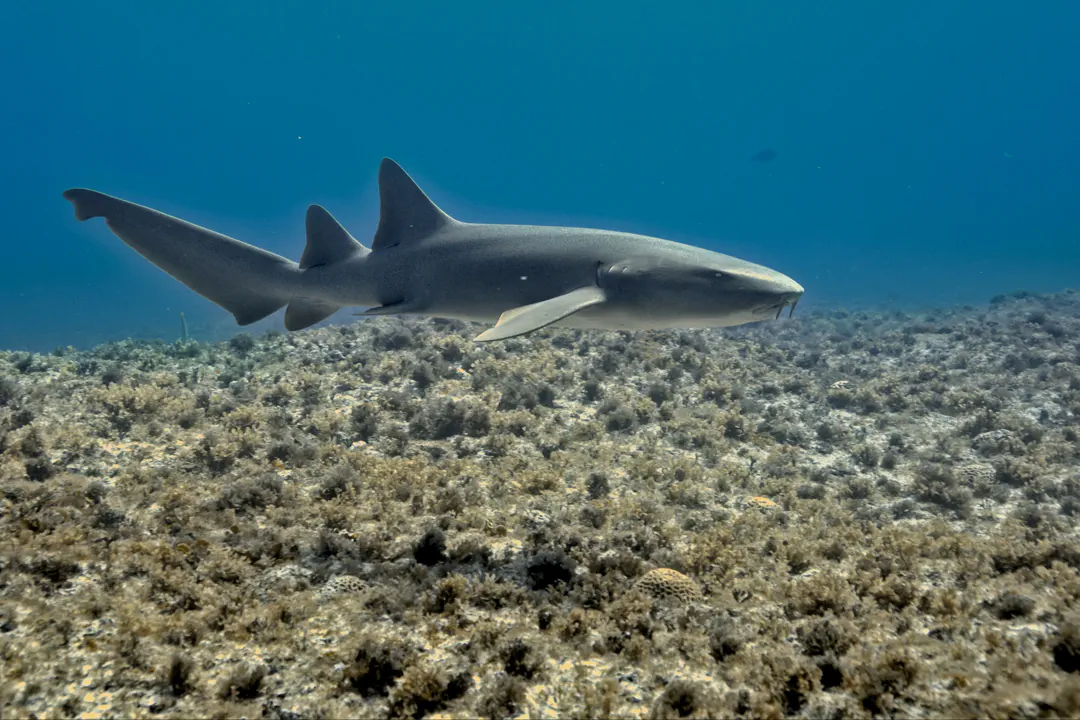
After exiting the fissures, the route leads out onto a steep outer wall facing deep oceanic water. Spotted eagle rays frequently glide past the wall in gentle currents, while nurse sharks rest on sandy ledges below. Monitoring depth and bottom time is essential here, as the dramatic walls tempt divers toward deeper profiles.
Depth: 12-30 m. Access: boat, 15 minutes from French Harbour. Level: Advanced Open Water. Best months: March-September.
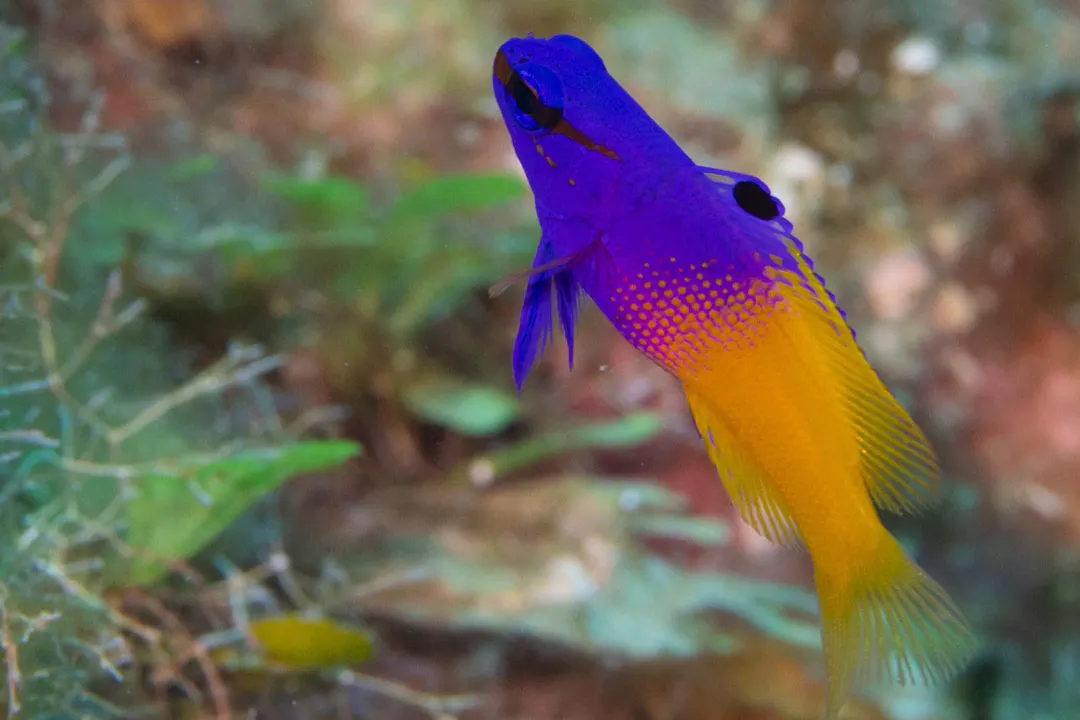 © cello caruso-turielloCC BY 4.0 · iNaturalist
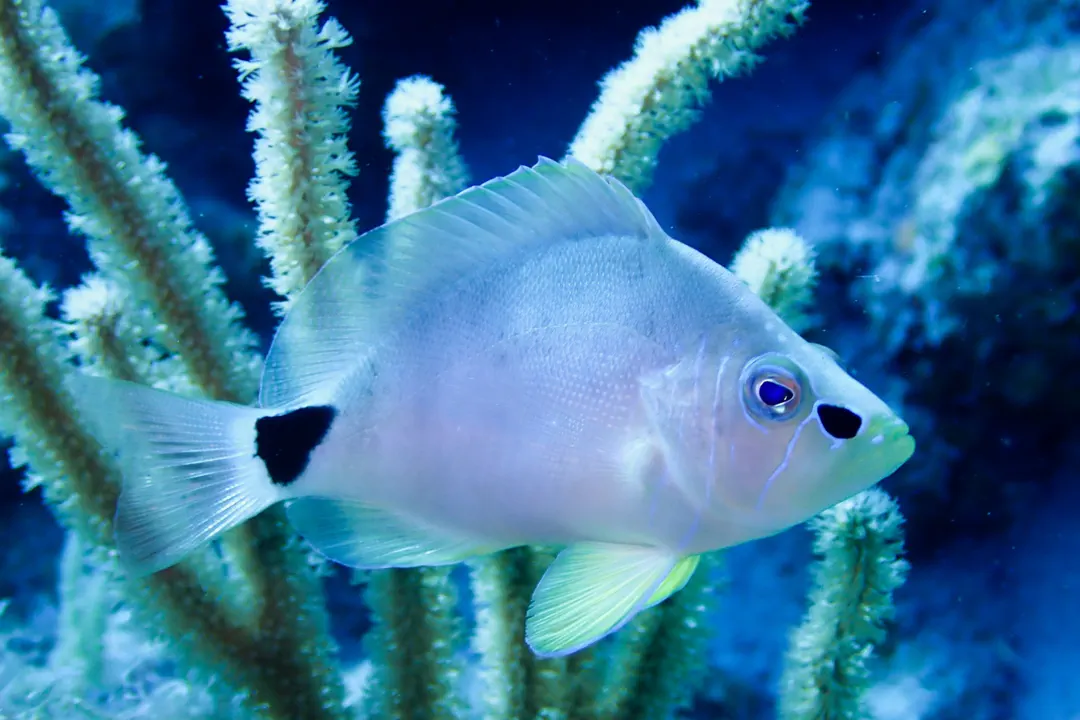 © Dan SchofieldCC BY 4.0 · iNaturalist
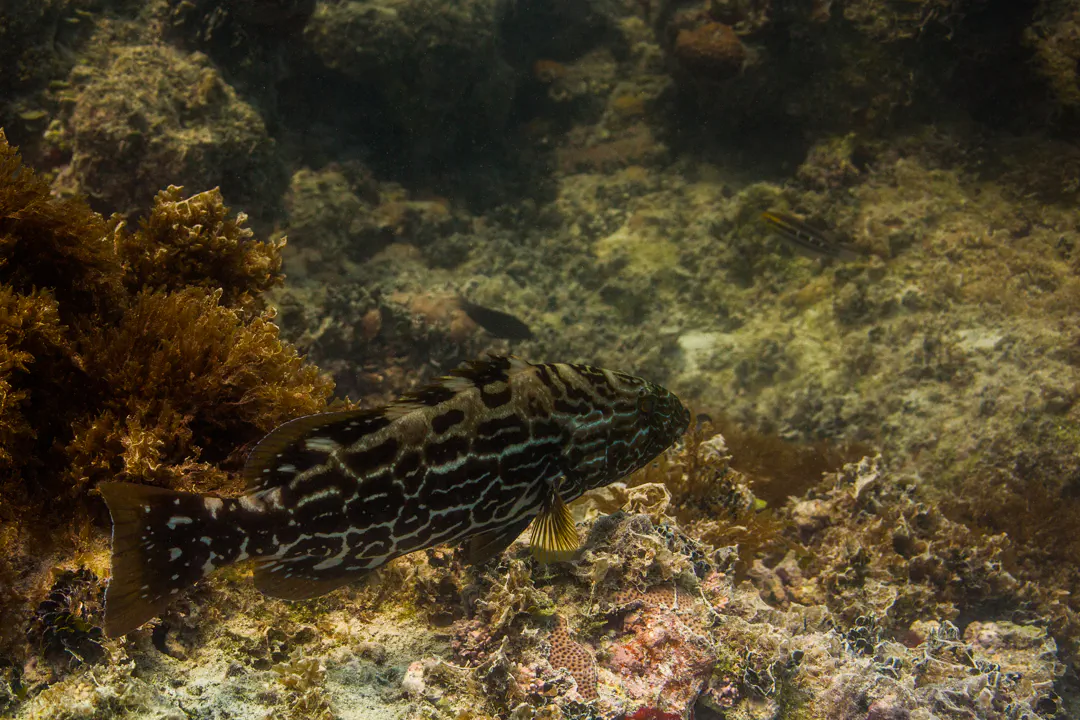 © João D'AndrettaCC BY 4.0 · iNaturalist
 © Robin WhiteCC BY 4.0 · iNaturalist
 © seabook.appAll rights reserved
 © R VasconcellosCC BY 4.0 · iNaturalist
El Aguila Wreck (Roatan): Cargo ship home to massive groupers
El Aguila is a 70-meter-long cargo vessel intentionally sunk in 1997 to establish an artificial reef along Roatan's northern shore. The steel hull sits upright on a white sand bottom at a depth of 33 meters. In 1998, a hurricane broke the ship into three distinct sections, opening up the internal structure and creating easy access points for marine creatures.
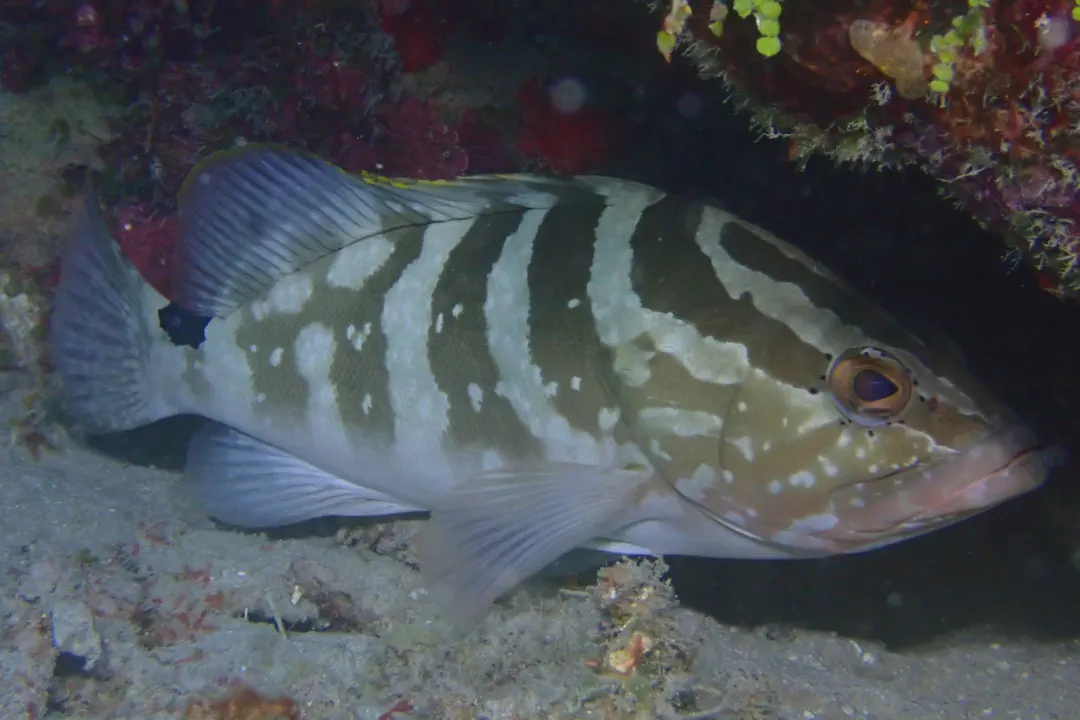
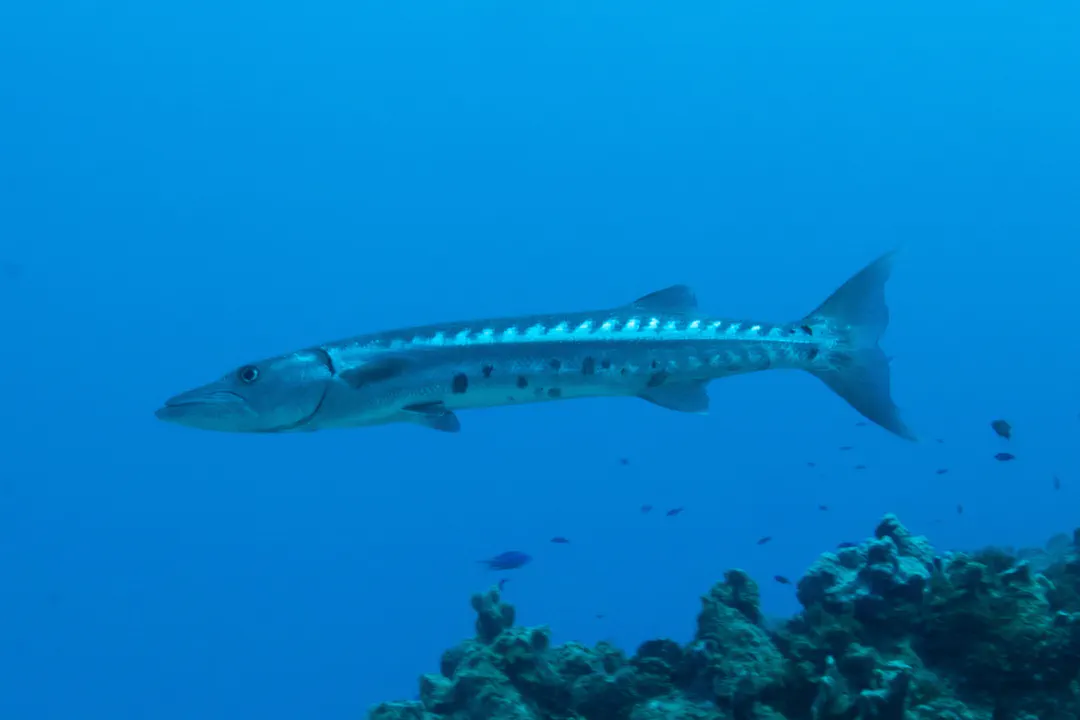
The exterior hull is now completely encrusted with colorful cup corals, tunicates, and encrusting sponges. Huge goliath groupers, some weighing over 100 kilograms, reside around the broken bow and midship sections. Schooling Great barracuda hang motionless above the deck beams in mid-water, while massive green moray eels weave through exposed metal piping along the cargo hold.
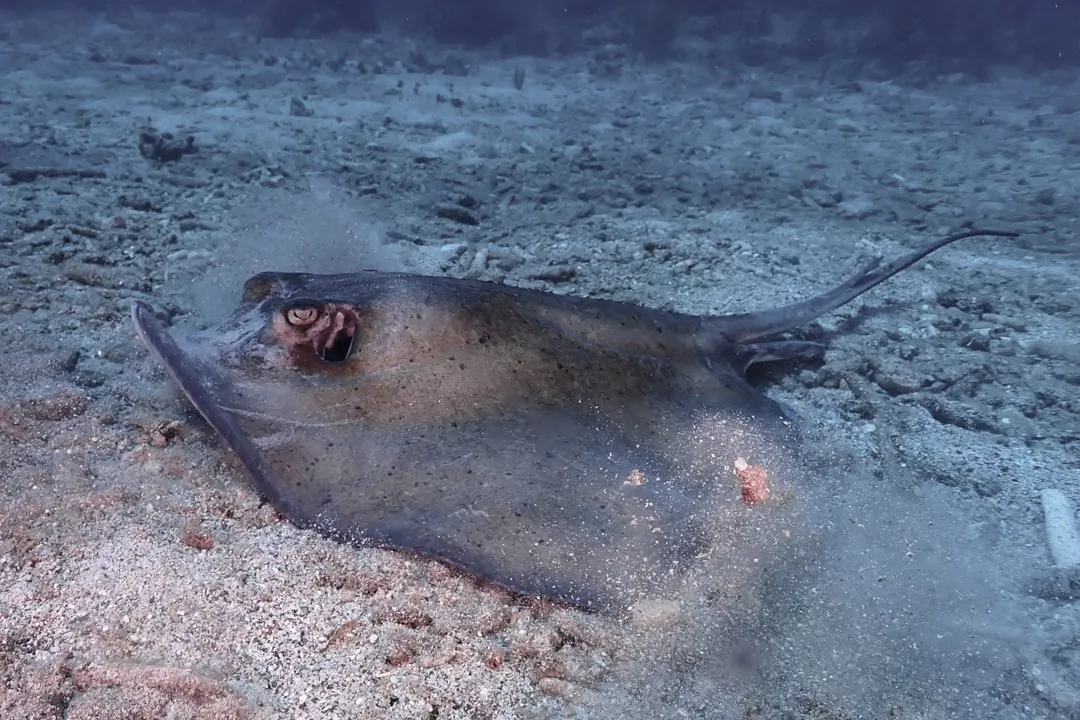
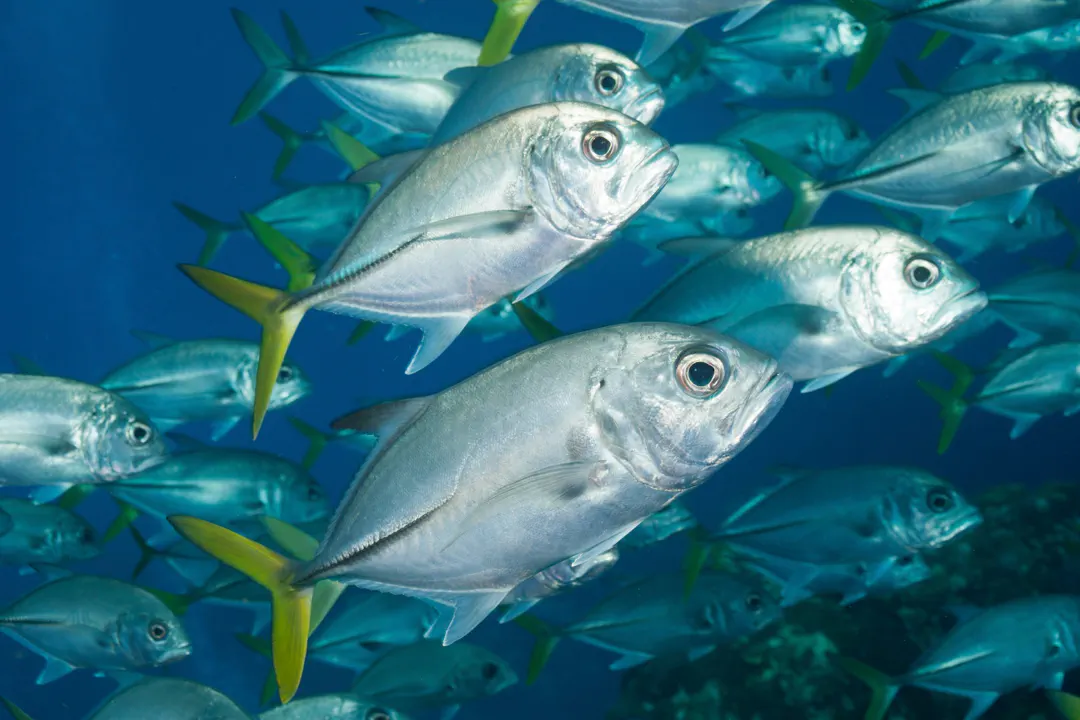
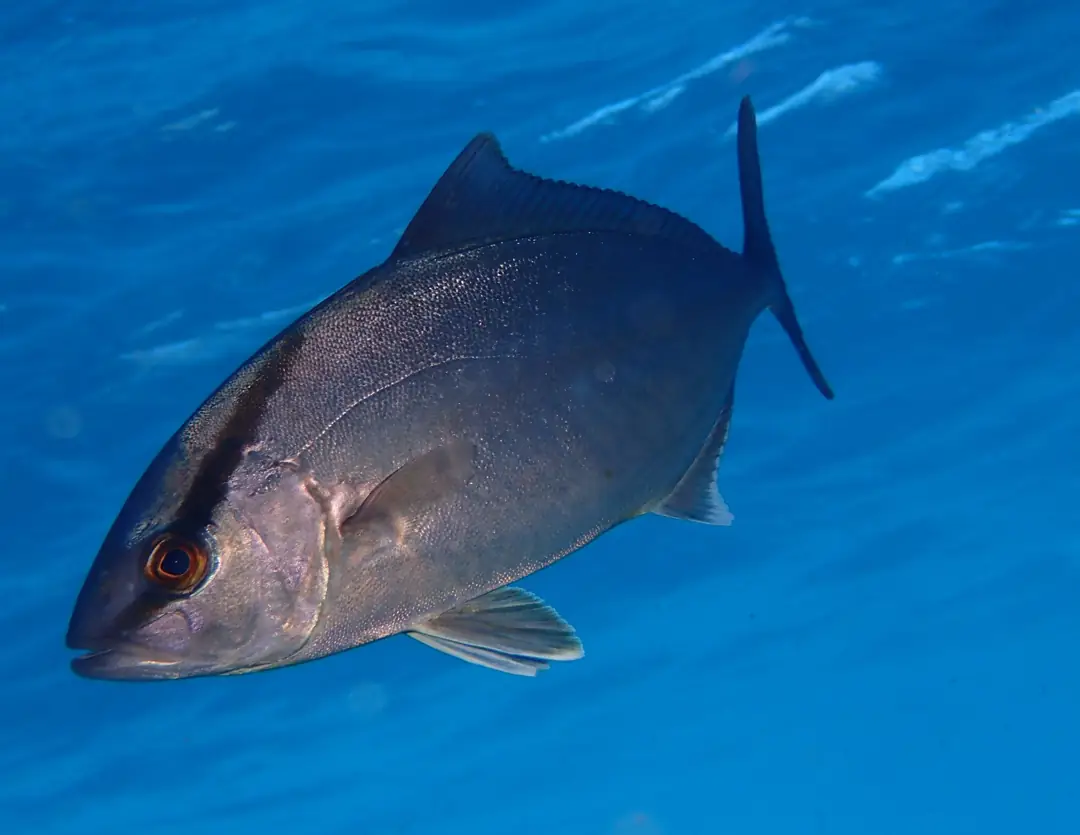
Advanced divers can explore the perimeter and look down into open compartments where silver jacks dart through shadows. Gentle currents regularly sweep across the open sand bed surrounding the wreck, bringing southern stingrays and peacock flounders into view. Excellent visibility allows divers to take in the entire length of the broken ship from above before beginning a slow ascent along the mooring line.
Depth: 15-33 m. Access: boat, 10 minutes from Sandy Bay. Level: Advanced Open Water. Best months: March-September.
 © Dan SchofieldCC BY 4.0 · iNaturalist
 © Robin WhiteCC BY 4.0 · iNaturalist
 © João D'AndrettaCC BY 4.0 · iNaturalist
 © seabook.appAll rights reserved
 ZygyCC0 · iNaturalist
 © Dan SchofieldCC BY 4.0 · iNaturalist
Cara Cara (Roatan): Caribbean reef shark action
Positioned off Roatan's southern shore, Cara Cara is a specialized dive site where female Caribbean reef sharks assemble in high numbers. The action takes place along a flat, exposed limestone plateau at a depth of 18 to 21 meters. Divers settle back against a natural coral ridge while dozens of grey sharks swim in slow, controlled circles just meters away.
These medium-bodied predators, measuring between 1.5 and 2.5 meters in length, move effortlessly through mild currents sweeping across the plateau. Large black groupers, horse-eye jacks, and bar jacks join the sharks, darting through the water column in search of small fish scraps. The clear open water provides unobstructed views of apex predator behavior in a natural reef context.
Strict dive safety protocols govern every descent at Cara Cara to ensure calm, predictable interactions. Divers keep arms tucked in close and remain stationary on the substrate throughout the presentation. After 20 minutes on the plateau, the group drifts back toward the reef crest to complete safety stops while sharks continue circling along the drop-off edge.
Depth: 18-21 m. Access: boat, 15 minutes from Coxen Hole. Level: Advanced Open Water. Best months: March-September.
 © Ian ShawAll rights reserved
 © Robin WhiteCC BY 4.0 · iNaturalist
 © Roger RittmasterCC BY 4.0 · iNaturalist
Hole in the Wall (Roatan): Vertical chute onto the abyss
Hole in the Wall offers one of Roatan's most thrilling topography dives, starting in a shallow reef lagoon at 10 meters depth. Divers enter a dark, chimney-like limestone shaft that descends vertically straight down through the solid coral matrix. Falling single-file through the chute, divers emerge out of an opening on the face of a sheer vertical drop-off at 28 meters.
Exiting the dark tunnel into open blue space creates a dramatic visual transition as the wall plunges hundreds of meters into deep water. Flashlights reveal fairy basslets, arrow crabs, and peppermint shrimp clinging to the shadowy ceiling of the shaft. Along the outer wall, deep-water gorgonians and wire corals spiral out into passing currents.
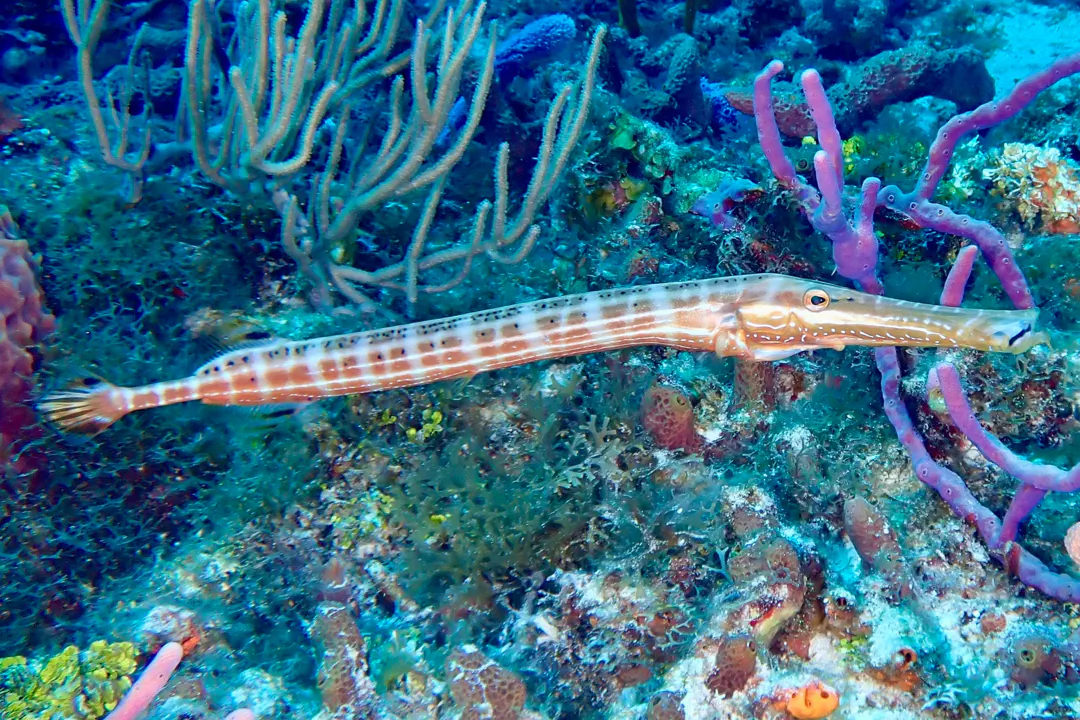
Alternative routes around the chute allow less experienced buddies to bypass the overhead environment while still enjoying the wall face. Schooling creole wrasses cascade down the reef slope like liquid ribbons, while trumpetfish hover vertically beside soft coral whips to camouflage themselves. Careful air monitoring is vital when exploring deep exit points.
Depth: 10-30 m. Access: boat, 10 minutes from West End. Level: Advanced Open Water. Best months: March-September.
 © Brian GratwickeCC BY 4.0 · iNaturalist
 Chris SpainCC0 · iNaturalist
 © Robin WhiteCC BY 4.0 · iNaturalist
 © Cricket RaspetCC BY 4.0 · iNaturalist
West End Wall (Roatan): Drift dive with sea turtles
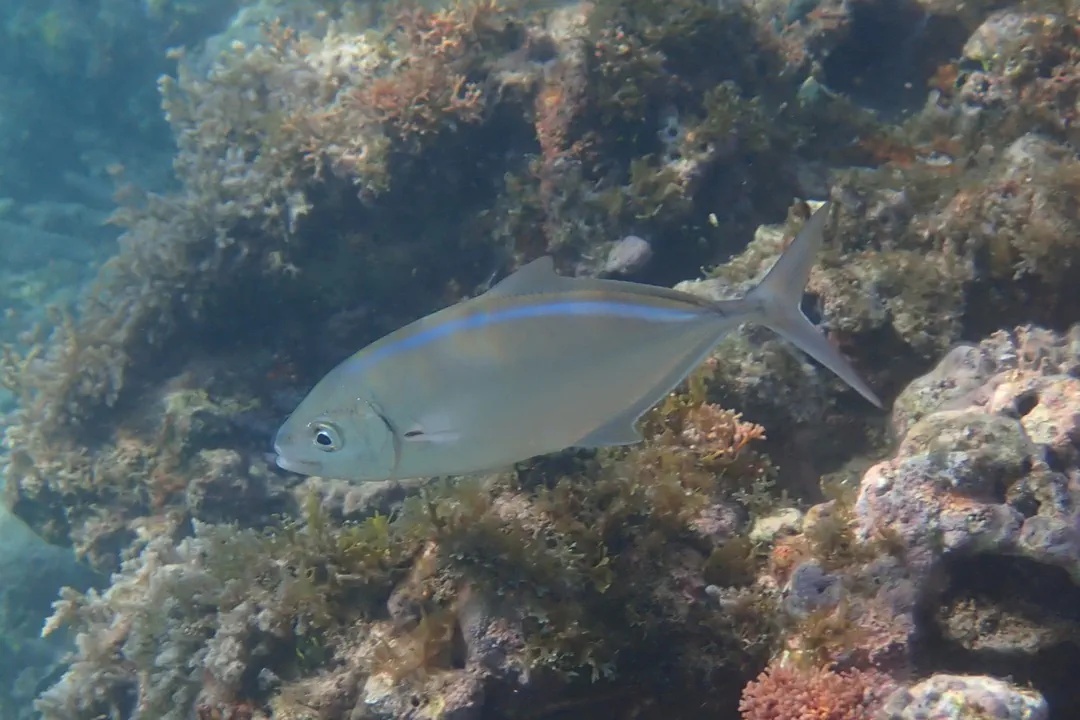
West End Wall is a classic Caribbean drift dive along a dramatic coral drop-off at the western end of the island. A gentle current carries divers parallel to vertical rock faces covered in massive azure vase sponges and vibrant purple sea fans. The top of the reef sits at 12 meters, dropping steadily away into deep blue water.
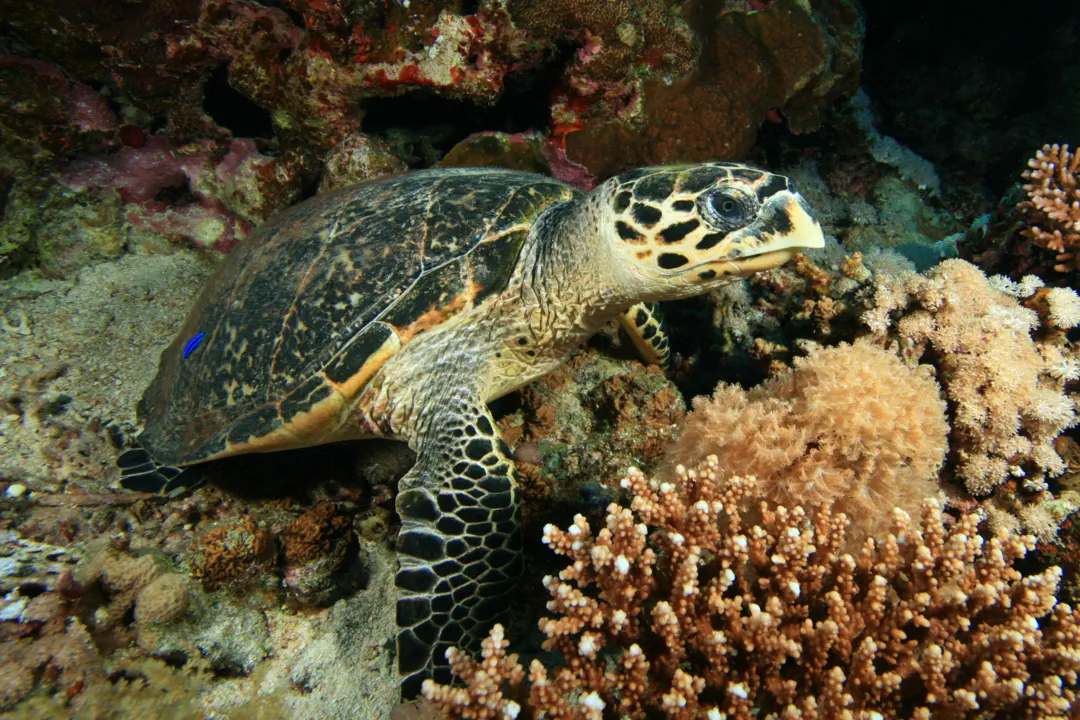
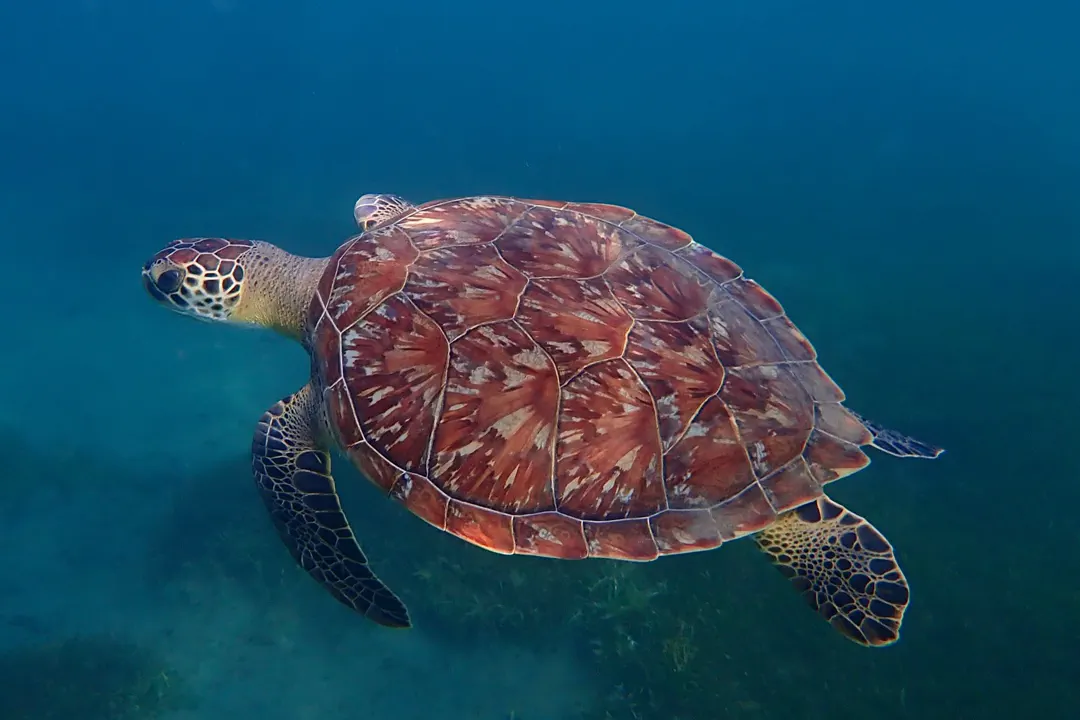
Hawksbill and green sea turtles frequent this stretch of coast, feeding on sponges growing along the wall ledges. These marine reptiles often permit close inspection as they surface for air or rest under coral shelves. Spotted eagle rays frequently glide past in formation along the outer edge, their spotted wings contrasting against the open ocean background.
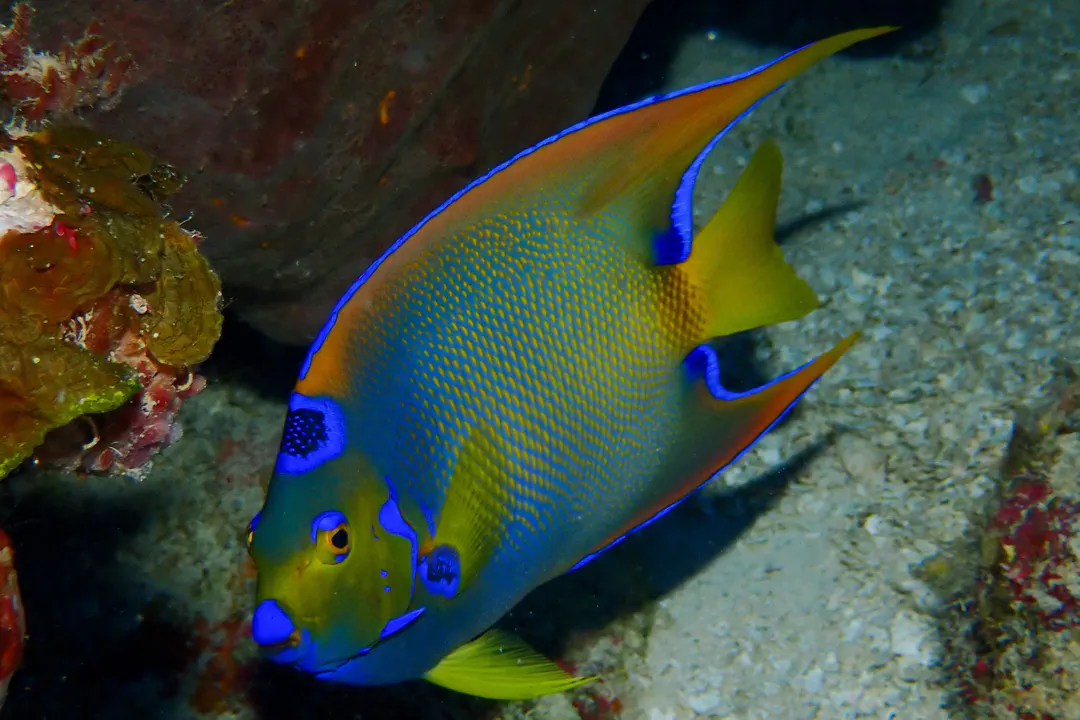
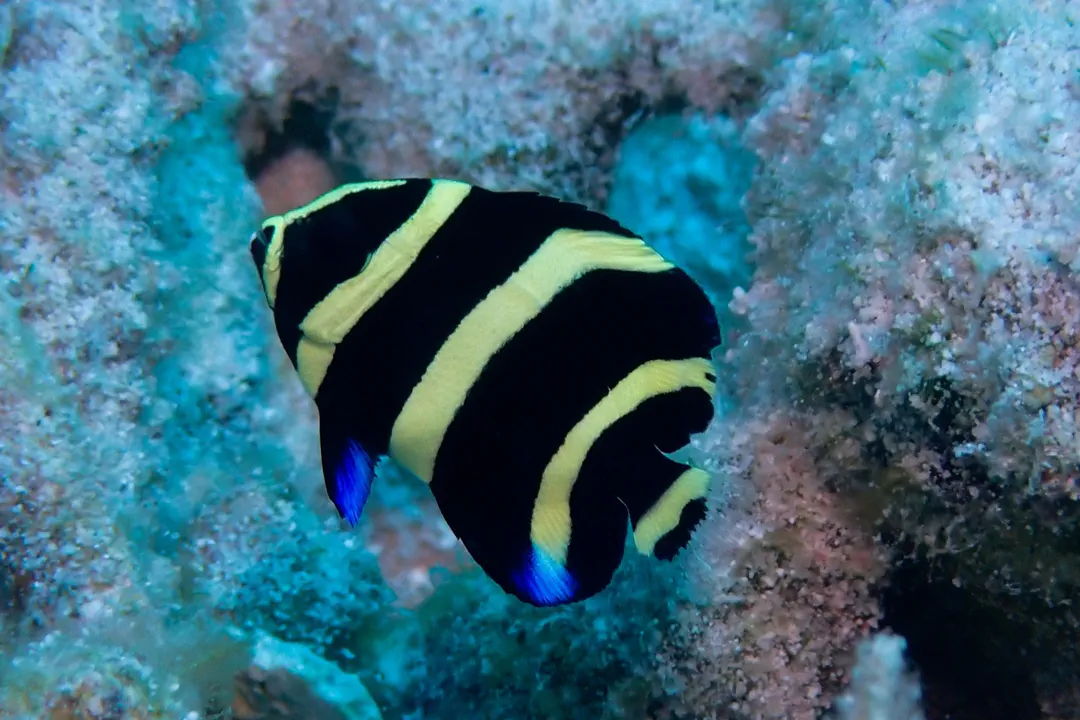
Large French angelfish and queen angelfish swim in pairs through shallow coral heads, picking at small invertebrates. Because the current does the work, gas consumption remains low, allowing extended profiles along the top of the wall. Divers finish the dive by drifting into shallow water above brilliant brain coral gardens for safety stops.
Depth: 12-30 m. Access: boat, 5 minutes from West End. Level: Open Water. Best months: March-September.
 © seabook.appAll rights reserved
 © Matteo BellucciCC BY 4.0 · iNaturalist
 © Fish and DiveCC BY 4.0 · iNaturalist
 © Dan SchofieldCC BY 4.0 · iNaturalist
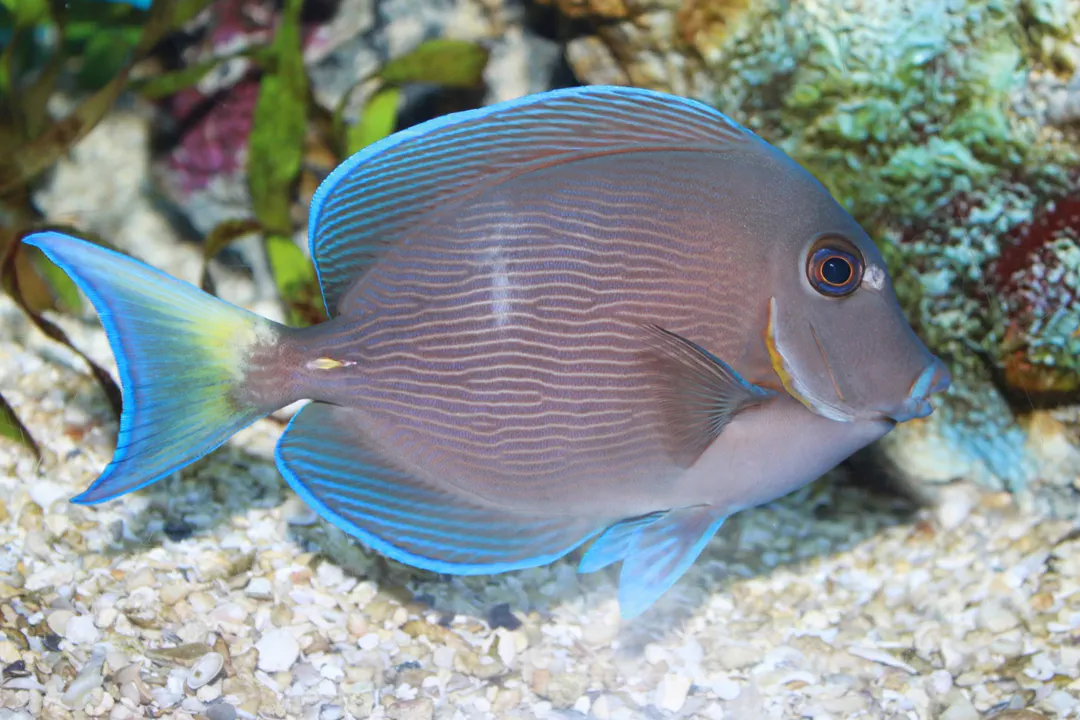 © Brian GratwickeCC BY 4.0 · iNaturalist
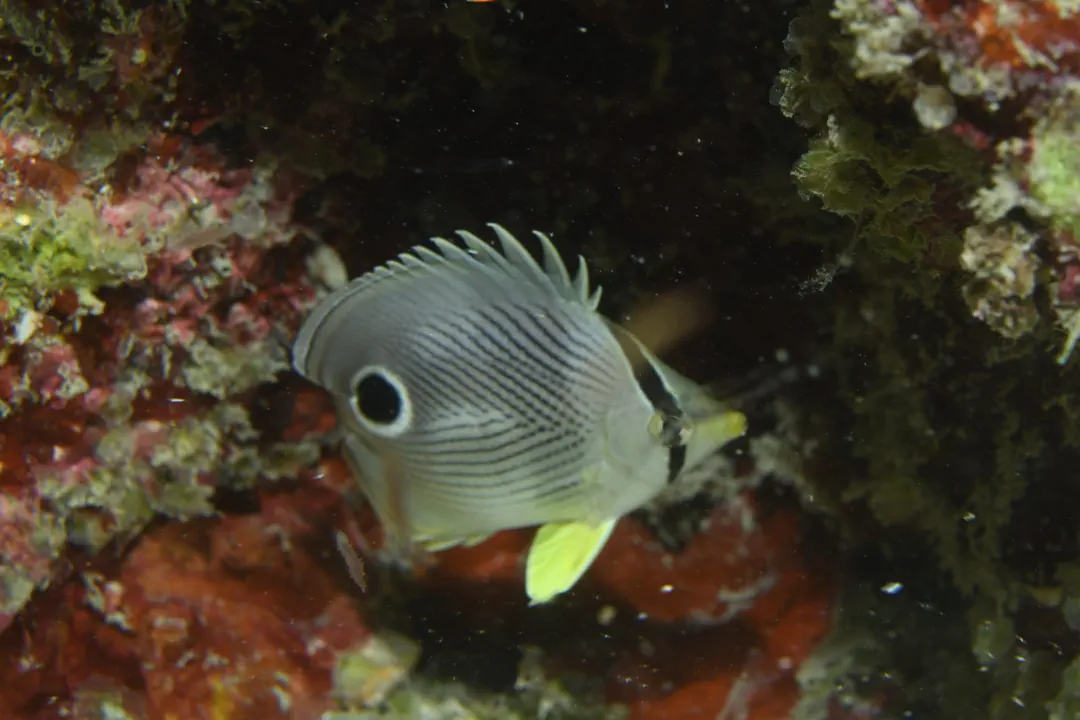 © Robin WhiteCC BY 4.0 · iNaturalist
Mandy's Eel Garden (Roatan): Shallow sandy slope for beginners
Mandy's Eel Garden provides a peaceful, shallow dive profile situated near West Bay Beach. The site starts at a depth of 6 meters along a sandy slope before dropping gently toward a healthy coral wall at 18 meters. Clear water and low wave action make this site an optimal choice for warm-up dives, buoyancy practice, and photography.
The site earns its name from hundreds of brown garden eels protruding from individual burrows in the open sand. When divers hover quietly meters away, these shy creatures sway in unison to pick passing plankton out of the gentle current. Southern stingrays and yellow stingrays frequently bury themselves in the sand nearby, leaving only their eyes exposed.
Along the sand-and-coral boundary, yellowhead jawfish construct burrows out of small coral pebbles and shell fragments. Male jawfish can occasionally be seen brooding bright pink eggs inside their open mouths during spring breeding months. To identify juvenile reef fish and log observed species during your trip, the Seabook app serves as an easy digital field reference.
Depth: 6-18 m. Access: boat or shore, 5 minutes from West Bay. Level: Open Water. Best months: Year-round.
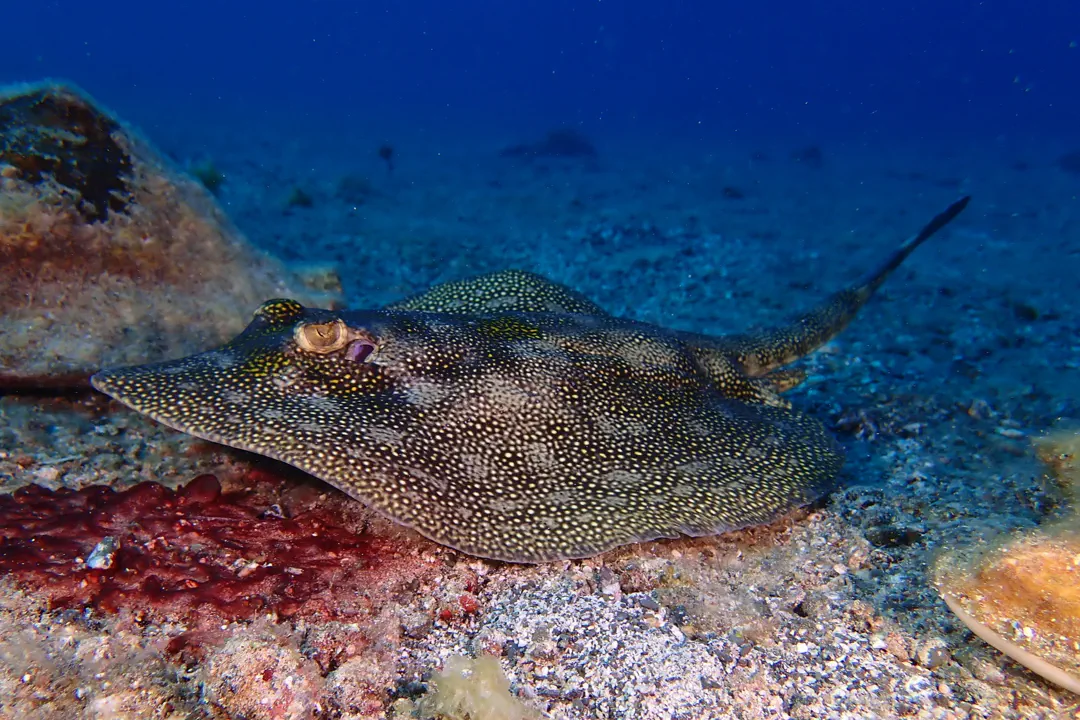 © Robin WhiteCC BY 4.0 · iNaturalist
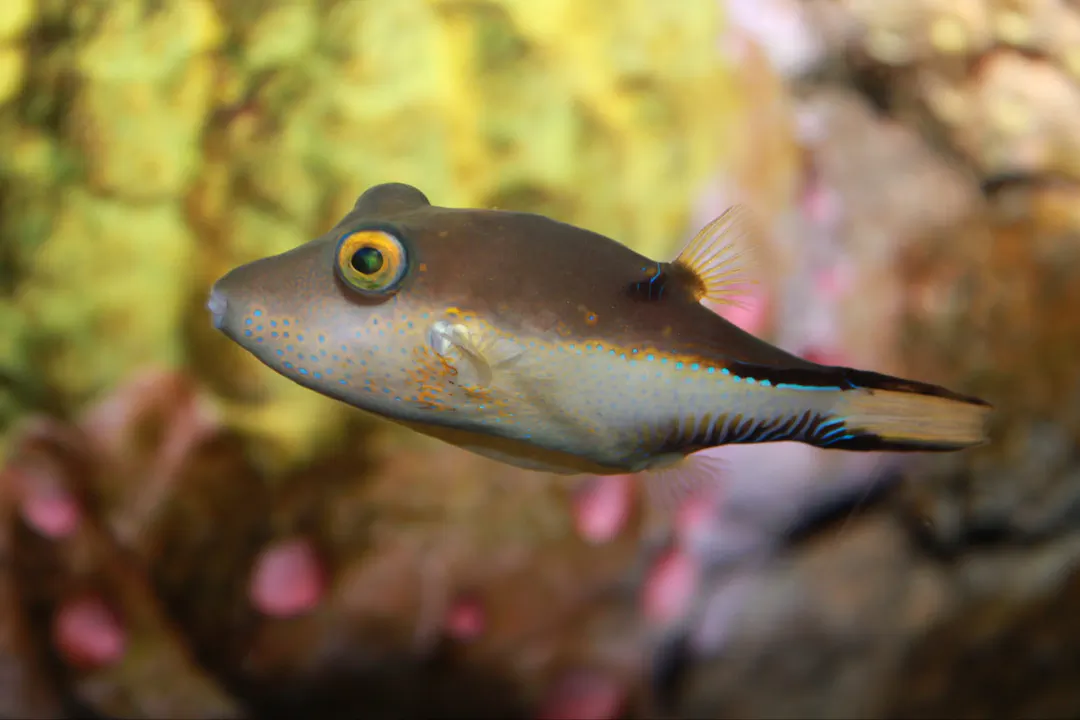 © Brian GratwickeCC BY 4.0 · iNaturalist
 © seabook.appAll rights reserved
Marine Life in Roatan
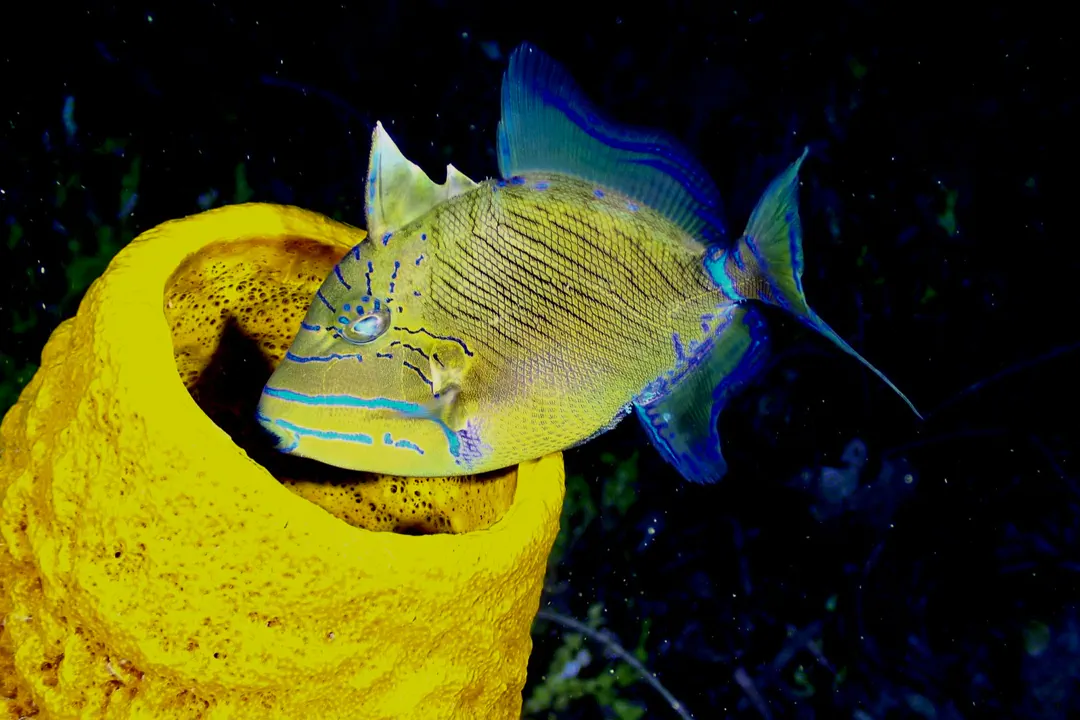
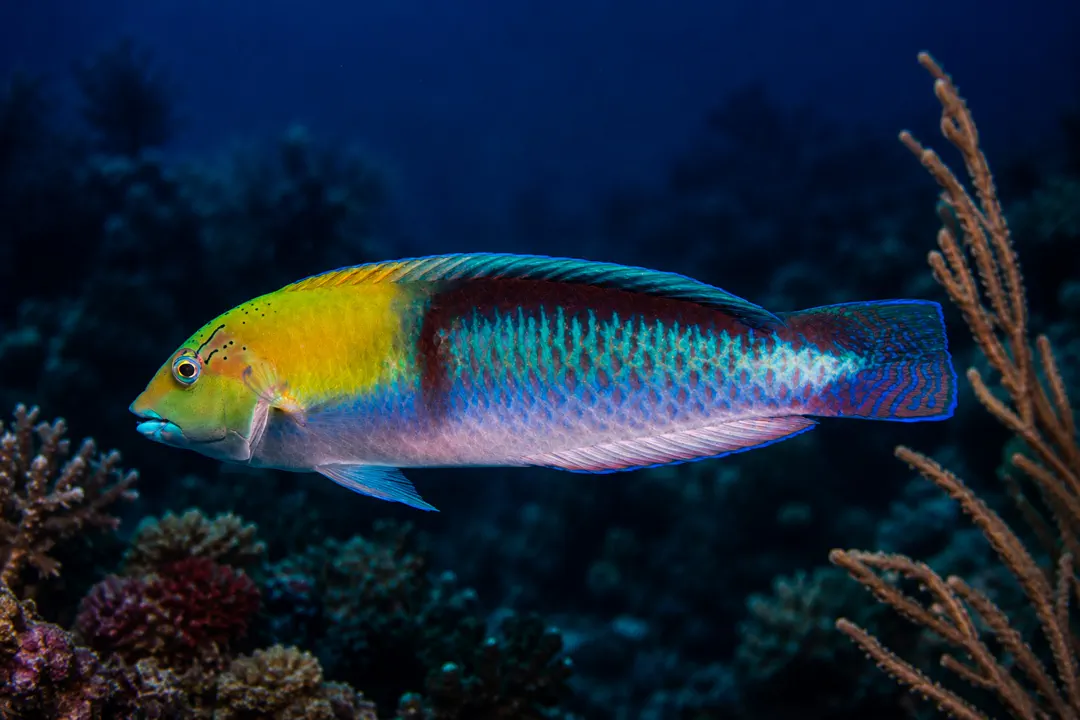
Roatan hosts a high concentration of Caribbean marine species spread across diverse coastal habitats, including mangrove roots, seagrass meadows, shallow fringing reefs, and deep walls. Herbivorous parrotfish and surgeonfish graze continuously along hard coral surfaces, keeping algae levels low and maintaining balance on the reef structure. Brightly colored queen triggerfish, stoplight parrotfish, and rock beauties add constant movement across shallow coral heads.
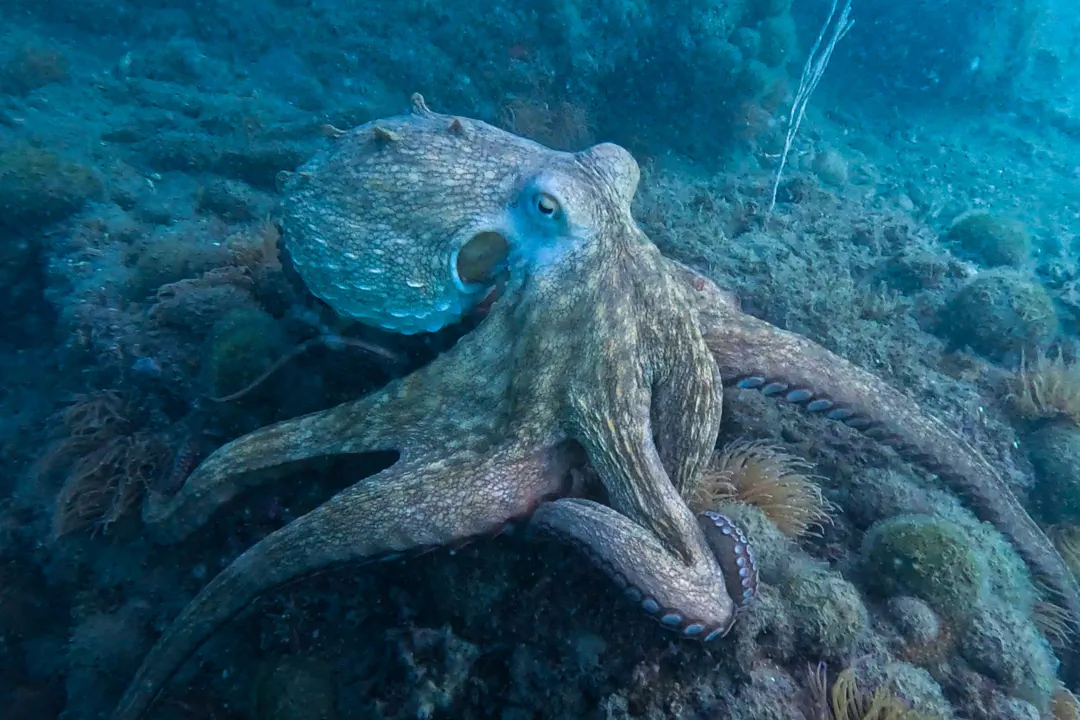
Invert life across the reef is equally rich and diverse. Night dives reveal Caribbean reef octopuses hunting across coral heads, changing color and texture instantaneously to blend into limestone surfaces. Caribbean spiny lobsters emerge from deep crevices after dark, while channel clinging crabs forage along sand channels. Green moray eels and chain morays inhabit hollow rock spaces, extending their heads into passing currents to detect scent trails.
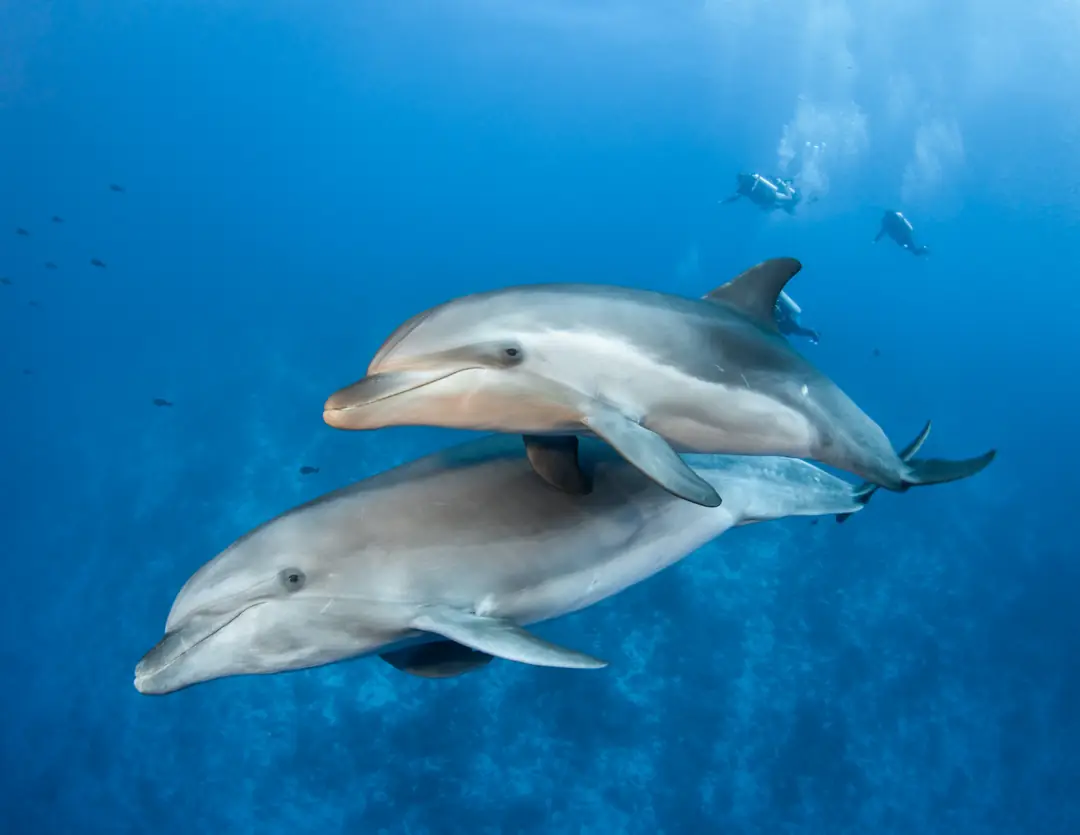
Pelagic ocean visitors regularly cruise past outer drop-offs where deep waters meet the island's coastal shelf. Common bottlenose dolphins are seen playing in boat wakes and occasionally join divers on outer wall profiles. Seasonal visitors like whale sharks pass through offshore channels, providing memorable encounters for lucky groups during spring months.
 © seabook.appAll rights reserved
 © seabook.appAll rights reserved
 Justin PhilboisCC0 · iNaturalist
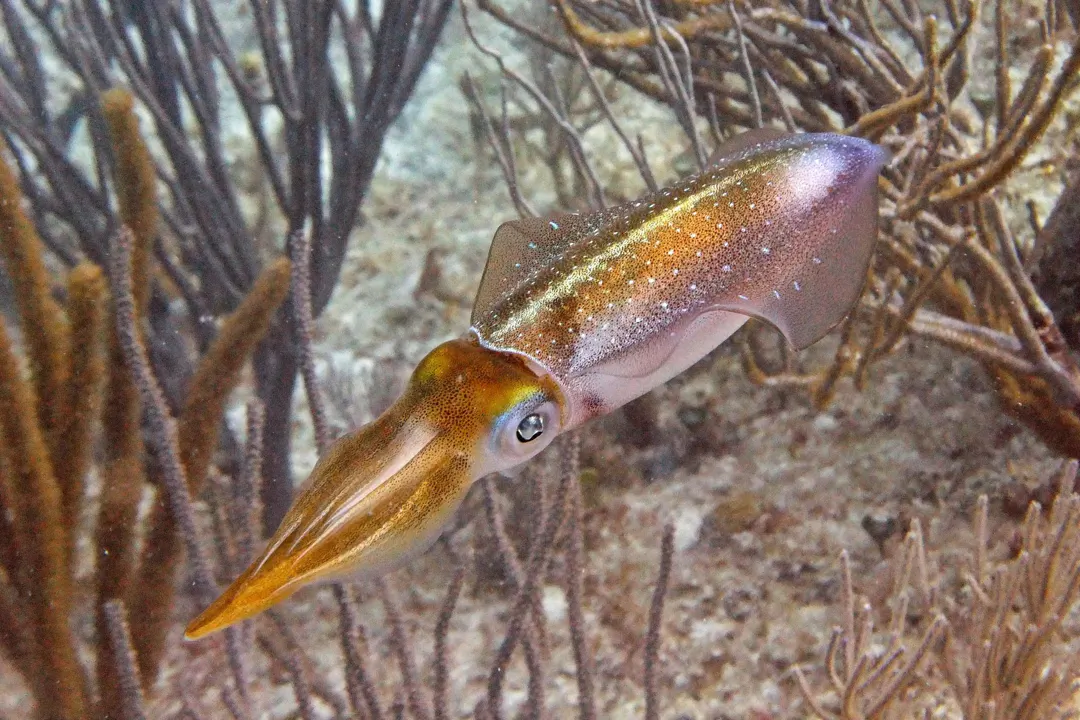 © Matteo CassellaCC BY-SA 4.0 · iNaturalist
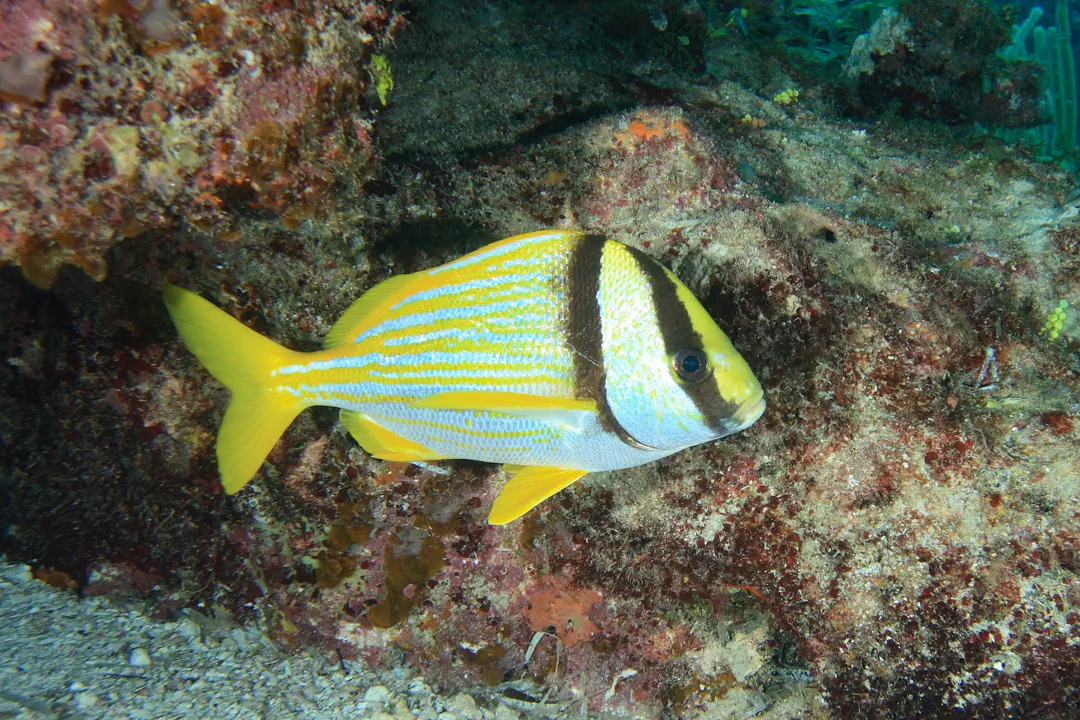 © seabook.appAll rights reserved
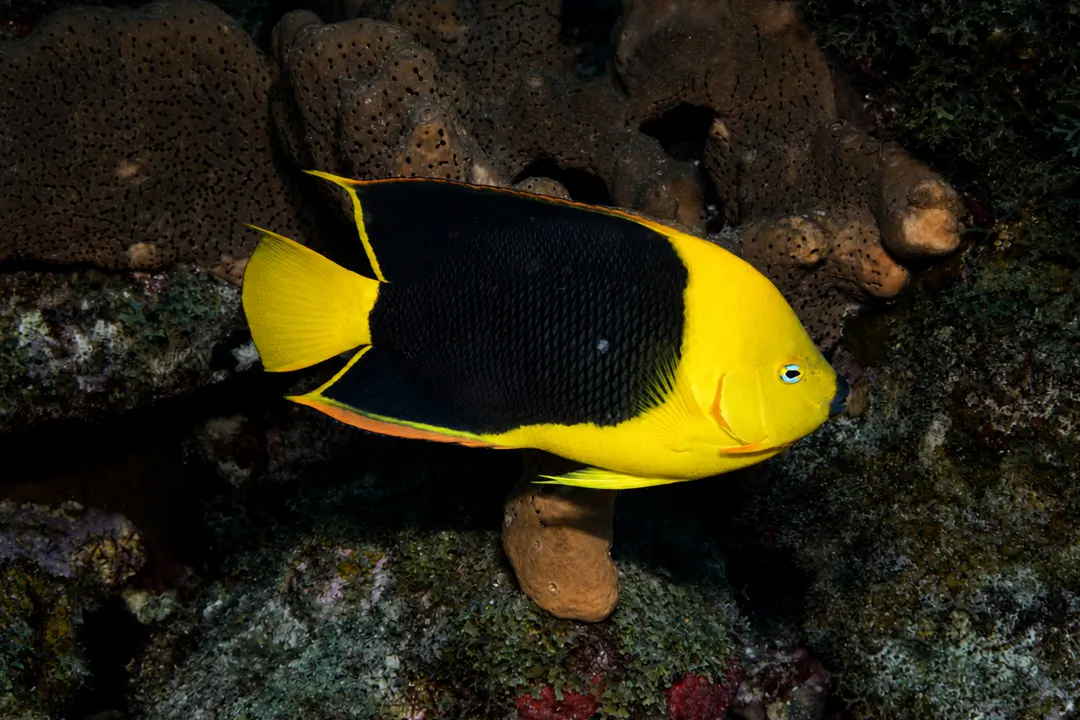 © seabook.appAll rights reserved
Is Roatan Good for Beginners and Snorkellers?
Roatan stands out as one of the most practical environments in the western Atlantic for learning to dive or completing entry-level certifications. Warm water temperatures averaging 28°C eliminate cold-water stress, while minimal surface currents create relaxed conditions for practicing skills like mask clearing and regulator recovery. Shallow sand plateaus at 5 to 10 meters depth provide stable bases for open water training modules.
Snorkellers enjoy exceptional access directly from public shorelines along the island's western end. At West Bay Beach, the coral reef edge sits less than 50 meters from shore, allowing swimmers to glide over brain corals and sea fans without needing a boat charter. Shallow depth ranges from 1 to 4 meters give snorkellers clear views of parrotfish, damselfish, blue tangs, and hawksbill turtles in natural sunlight.
Guided boat tours take snorkellers to offshore sites like Blue Channel and Half Moon Bay where surface conditions remain calm year-round. Wearing a lightweight neoprene top or rashguard provides protection against sun exposure during long surface sessions. Safety conscious facilities and clear conditions make the island welcoming for non-divers and families.
Getting There and Practical Tips
International travelers reach the island by flying directly into Juan Manuel Gálvez International Airport (code RTB), located near Coxen Hole. Several major airlines offer direct flights from North American transport hubs like Houston, Miami, and Atlanta. Alternatively, passenger ferries run daily routes connecting the island with the mainland Honduran port city of La Ceiba, taking approximately 75 minutes across the channel.
Local transportation around Roatan relies on water taxis between West End and West Bay, as well as land taxis and rental vehicles for longer trips. English and Spanish are spoken widely across the island, and the US dollar is accepted universally alongside the Honduran lempira. Modern medical clinics operate locally, and a hyperbaric recompression chamber is located on the island at Anthony's Key Resort for emergency dive medical support.
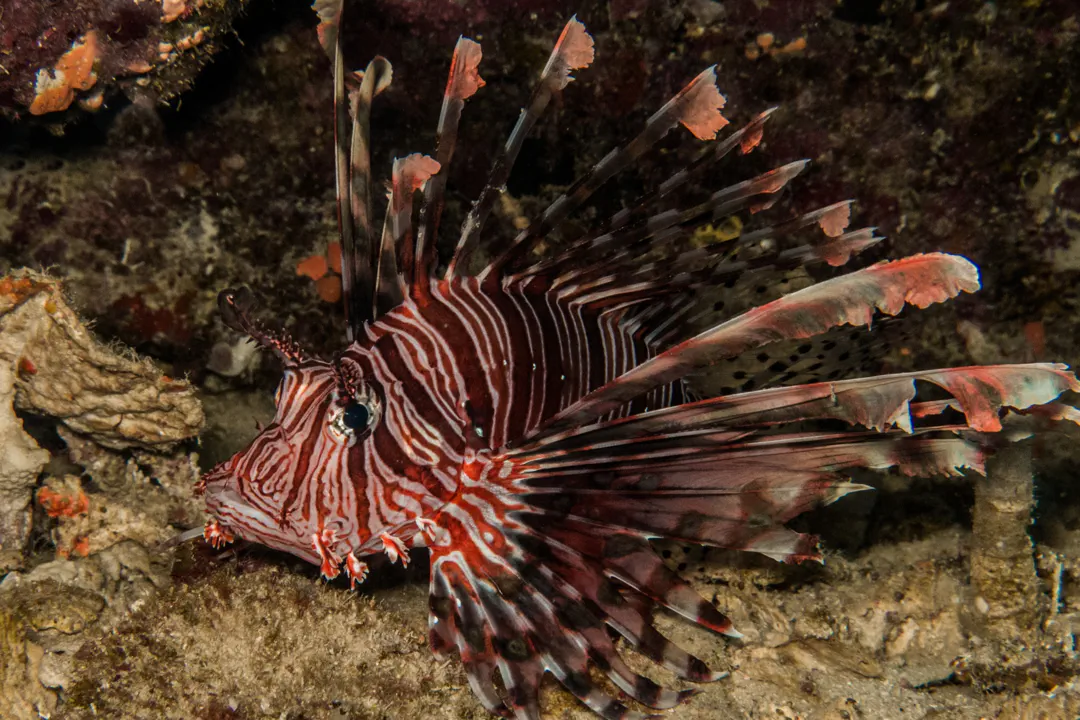
All divers contribute to conservation efforts governed by local marine reserve regulations. The surrounding waters fall inside protected marine zones where anchoring on live coral, spearfishing, and collecting shell specimens are strictly illegal. Dive shops enforce eco-friendly practices such as neutral buoyancy checks, zero-touch policies, and participation in lionfish removal initiatives to protect the reef ecosystem.
Questions
Are there sharks in Roatan?
Yes, Caribbean reef sharks are consistently seen at dedicated sites like Cara Cara off the southern coast at depths around 20 meters. Nurse sharks are also widely distributed across shallow reefs, wrecks, and sand channels across the island.
Can you see whale sharks in Roatan?
Whale sharks travel through the deep oceanic waters surrounding the Bay Islands, particularly between February and May. While sightings are more frequent near neighboring Utila, occasional encounters occur off Roatan's outer reef walls.
Is Roatan safe for beginner divers?
Roatan offers warm 28°C water, high visibility up to 30 meters, and minimal currents, making it an ideal destination for beginner divers. Sheltered shallow sand plateaus starting at 6 meters provide comfortable locations for entry-level training.
What is the water temperature in Roatan in March?
Water temperatures in March average between 26°C and 27°C (79°F–81°F). Most divers find a 3mm shorty or full wetsuit comfortable for repetitive daily dives during this spring transition month.
Do I need a suit for diving in Roatan?
A 3mm full or shorty wetsuit is recommended for thermal protection over repetitive dives, especially when exploring deeper wall sites. In late summer when water reaches 30°C, a thin skin or rashguard may be sufficient.
How do you get to Roatan for a diving trip?
Travelers fly directly into Juan Manuel Gálvez International Airport (RTB) from major North American cities like Houston or Miami. Alternatively, passenger ferries operate daily crossings between mainland La Ceiba and Roatan.

